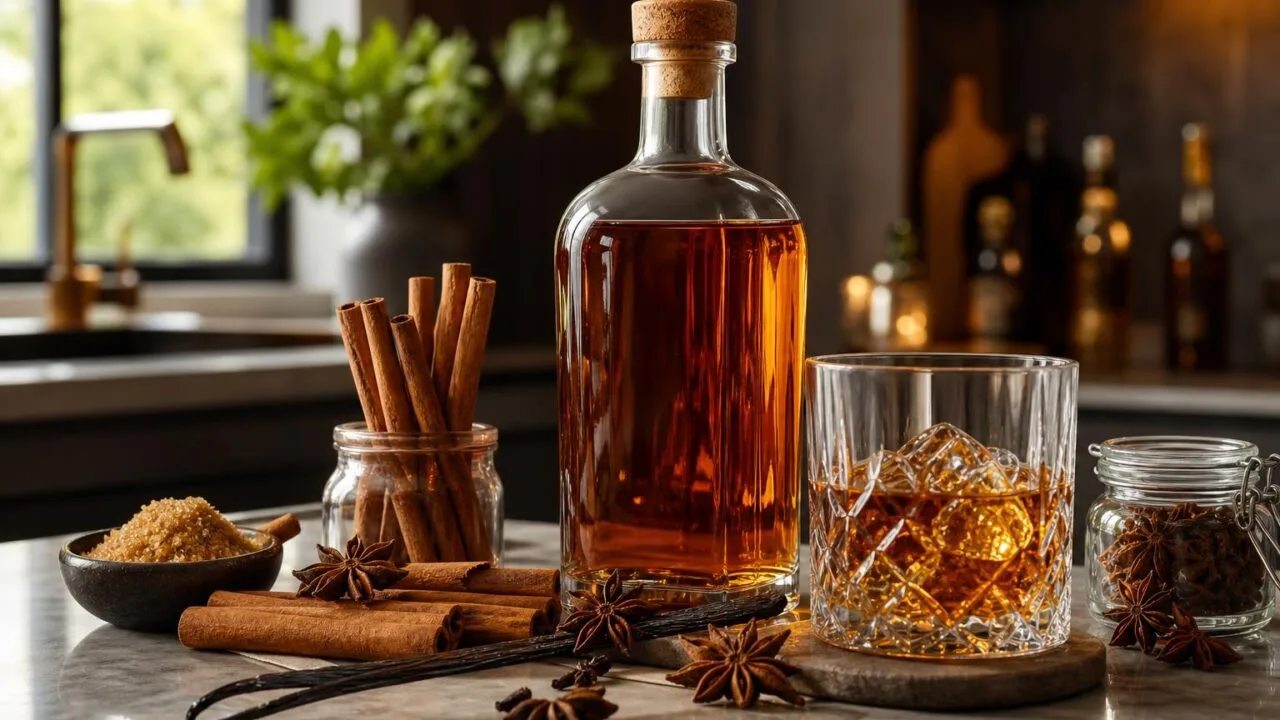
How To Make Cinnamon Whiskey is a simple infusion: combine whiskey with cinnamon sticks, a controlled amount of sweetener, and a short rest period until the spice tastes warm, not harsh.
Use 750 ml bourbon, rye, or blended whiskey with 4–6 cinnamon sticks, then taste after 24 hours. Cinnamon can become woody and bitter if left too long, so daily tasting matters.
This guide covers the practical method I use for small-batch infusions: ingredient ratios, steeping time, straining, sweetness adjustment, storage, and safety notes for getting a clean cinnamon flavor without turning the whiskey syrupy or overpowering.
Ratios That Shape Cinnamon Whiskey
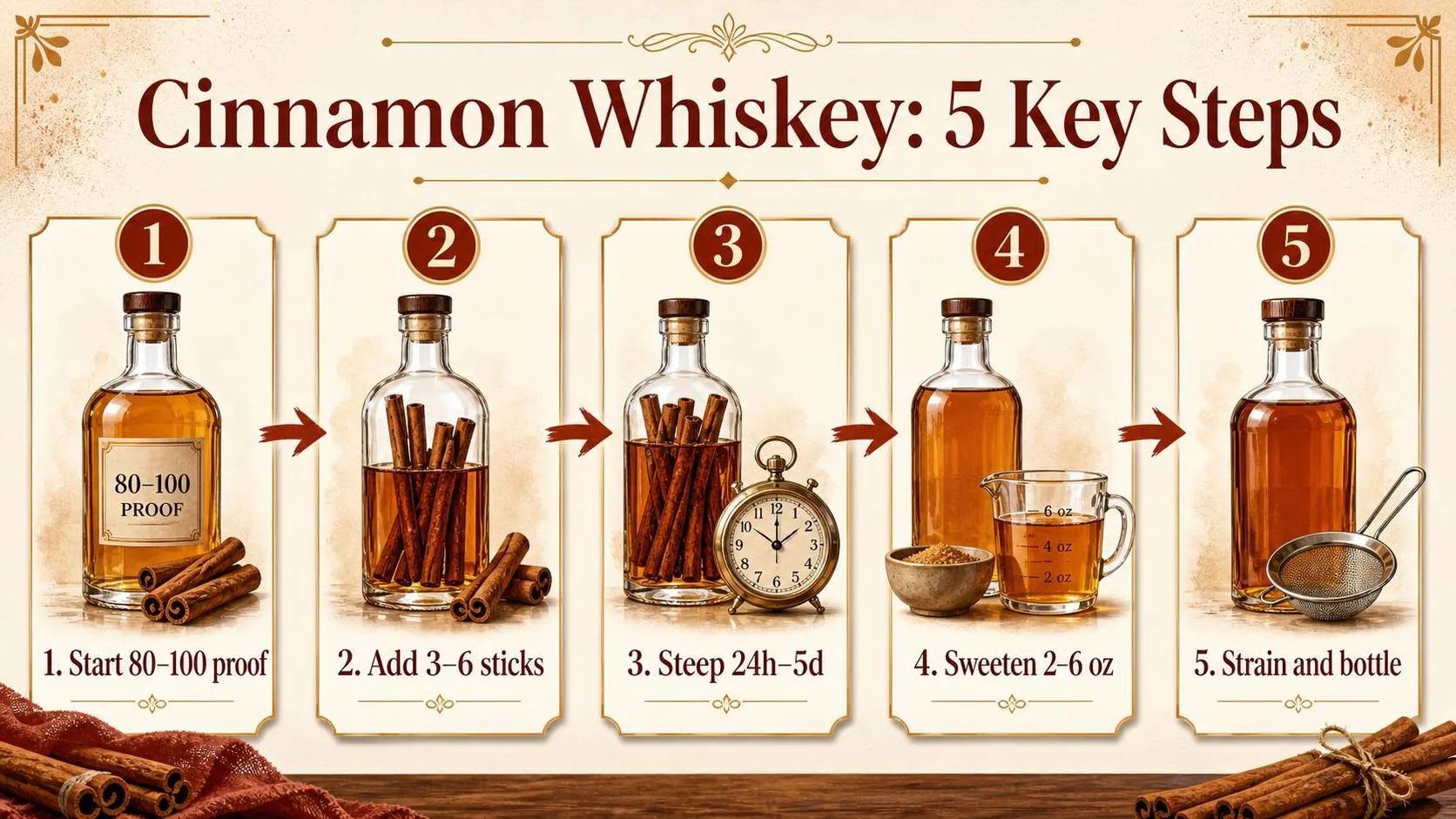
Cinnamon whiskey is mostly a ratios game: proof, spice load, sugar, and steeping time determine whether it tastes warm and balanced or harsh and syrupy. I use these numbers as practical guardrails for a 750 ml bottle, the standard U.S. spirits size.
The most important choice is the base whiskey. The U.S. Alcohol and Tobacco Tax and Trade Bureau defines whiskey bottling strength at not less than 40% ABV, or 80 proof, so start there or higher.
| Variable | Practical range | What it changes |
| Base whiskey strength | 40% to 50% ABV, 80 to 100 proof | Higher proof extracts cinnamon oil faster and holds flavor better after sweetening. |
| Cinnamon sticks | 3 to 6 sticks per 750 ml | 3 gives gentle warmth; 6 gives a hot, candy-style cinnamon profile. |
| Infusion time | 24 hours to 5 days | Longer steeping increases spice, tannin, and woody bitterness. |
| Sweetener | 2 to 6 oz simple syrup per 750 ml | 2 oz stays whiskey-forward; 6 oz moves toward liqueur-style sweetness. |
For a balanced homemade bottle, start with 4 cinnamon sticks in 750 ml of 90-proof bourbon or rye. Taste after 24 hours, then every 12 to 24 hours. Pull the sticks when the aroma smells baked-spice-forward, not dusty or bitter.
Cassia cinnamon, the type most common in U.S. grocery stores, is stronger and hotter than Ceylon cinnamon. That means 4 cassia sticks can taste as intense as a larger amount of Ceylon. Use fewer sticks if they are very fresh, oily, or thick.
- Light cinnamon whiskey: 3 sticks, 24 to 36 hours, 2 oz syrup.
- Balanced cinnamon whiskey: 4 sticks, 2 to 3 days, 3 to 4 oz syrup.
- Hot cinnamon whiskey: 5 to 6 sticks, 3 to 5 days, 5 to 6 oz syrup.
Simple syrup also changes alcohol strength. Adding 4 oz syrup to 750 ml of 45% ABV whiskey increases total volume to about 868 ml and lowers the finished strength to roughly 38.9% ABV, before tiny losses from straining.
| Starting bottle | Syrup added | Approximate finished ABV |
| 750 ml at 40% ABV | 2 oz / 59 ml | 37.1% ABV |
| 750 ml at 45% ABV | 4 oz / 118 ml | 38.9% ABV |
| 750 ml at 50% ABV | 6 oz / 177 ml | 40.5% ABV |
Room temperature is enough; do not heat whiskey. Ethanol is volatile and flammable, and heat drives off aroma. Keep the infusion sealed, out of direct sun, and strain through a fine mesh filter before bottling.
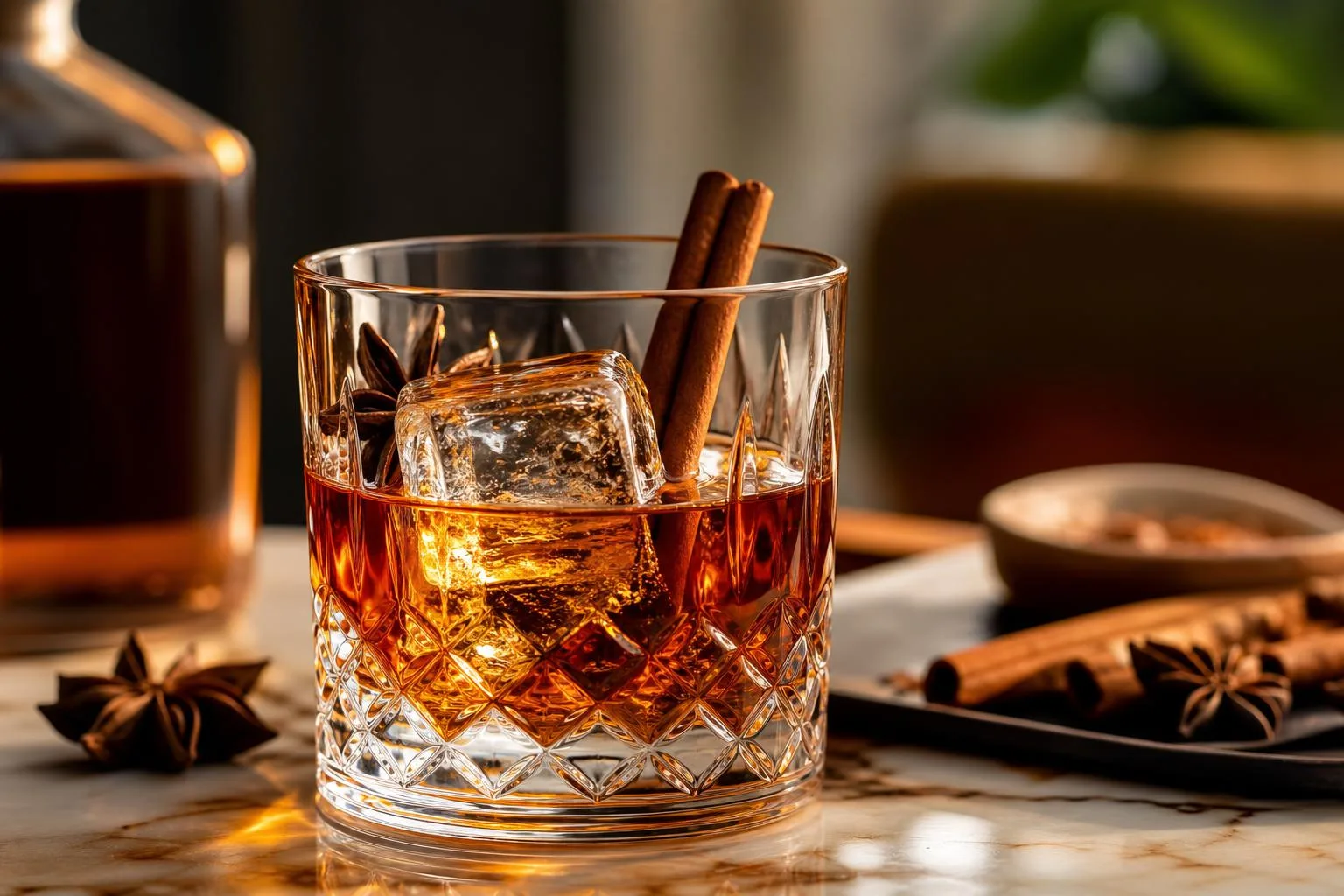
Why Cinnamon Infuses So Fast
Cinnamon whiskey changes quickly because alcohol extracts bark oils faster than water. In testing, the biggest differences come from cinnamon type, whiskey proof, steep time, sweetness, and filtration.
Use whole sticks when possible. Ground cinnamon gives strong flavor fast, but it leaves sediment and a drying, dusty finish that is difficult to filter out cleanly.
Cinnamon Type and Amount
Cassia cinnamon is what most U.S. grocery-store “cinnamon sticks” are. It gives the bold, hot-candy profile people expect from cinnamon whiskey. Ceylon cinnamon is softer, citrusy, and less fiery.
| Ingredient choice | Typical effect in 750 ml whiskey |
| 2 cassia sticks, 3 inches each | Mild warmth after 24 to 36 hours |
| 4 cassia sticks, 3 inches each | Strong cinnamon flavor after 24 hours |
| 1 teaspoon ground cinnamon | Very fast extraction, heavy sediment, harsher texture |
| 3 to 4 Ceylon sticks | Gentler spice, less heat, more wood and citrus notes |
Whiskey Proof
Alcohol percentage controls extraction. A standard 80-proof whiskey extracts cinnamon steadily, while 100-proof whiskey pulls more spice, tannin, and woodiness in the same time.
| Whiskey proof | Best use | Watch point |
| 80 proof, 40% ABV | Balanced homemade cinnamon whiskey | May need 24 to 48 hours |
| 90 proof, 45% ABV | Stronger spice extraction | Taste every 12 hours |
| 100 proof, 50% ABV | Big, hot cinnamon profile | Can turn woody or bitter quickly |
Time, Sugar, and Heat
Steeping longer is not always better. After about 48 hours, cassia sticks can add bitterness and a drying grip, especially in higher-proof whiskey.
- Steep time: Start tasting at 12 hours. Most batches land between 24 and 36 hours.
- Sweetness: For a semi-sweet style, add 2 to 4 ounces of simple syrup per 750 ml bottle.
- Heat level: For a candy-hot profile, add 1 to 2 dried red chiles, then remove them within 2 to 6 hours.
- Filtration: Use a fine mesh strainer first, then a coffee filter if you used broken bark or spices.
Temperature also matters. A room-temperature steep around 68 to 72°F is predictable. Heating whiskey is unnecessary, increases evaporation risk, and can drive off desirable aroma.
Finally, the base whiskey sets the floor. Bourbon brings vanilla and caramel; rye adds pepper and dryness; blended American whiskey gives a cleaner cinnamon-forward result.
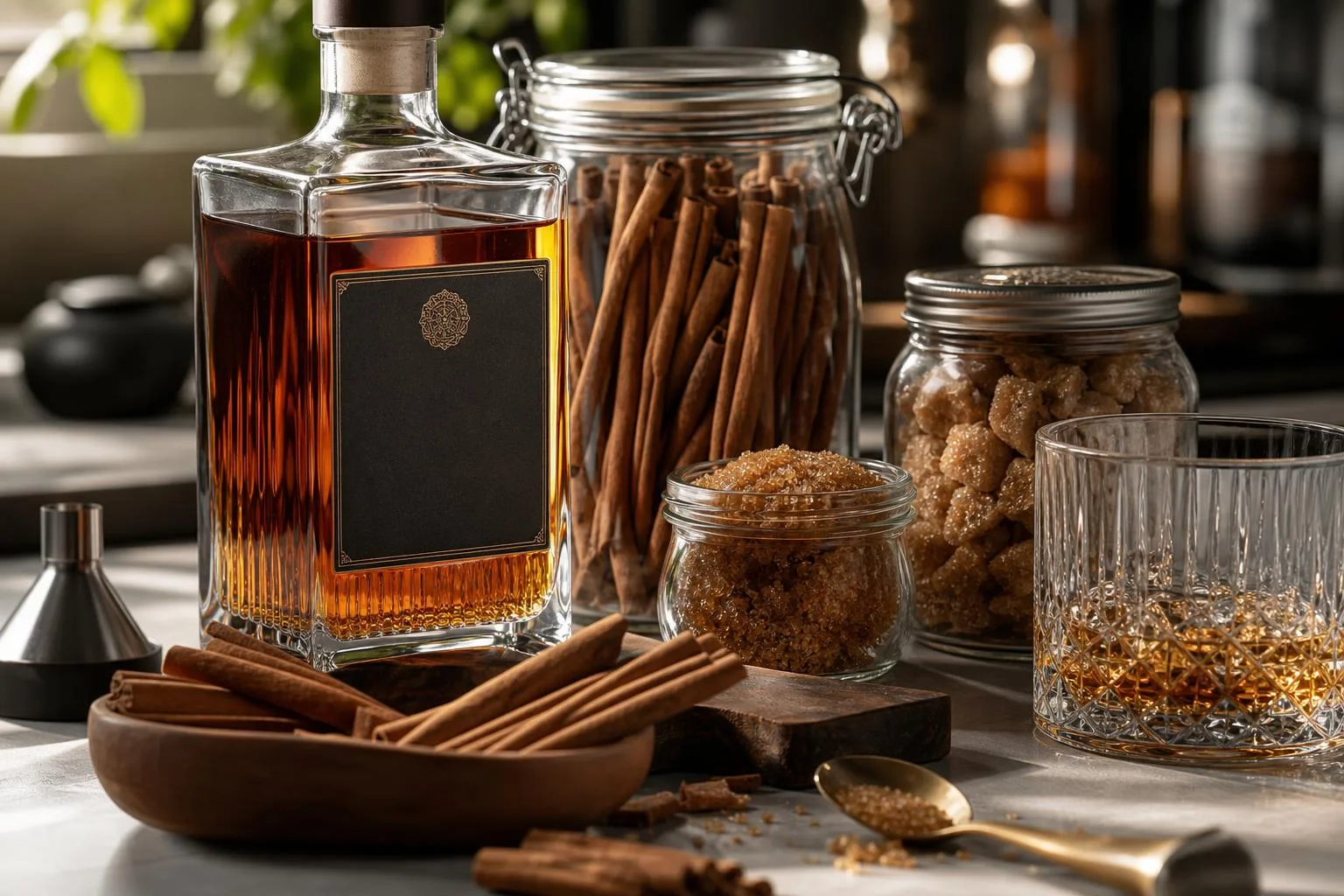
How to Measure and Verify It
Cinnamon whiskey is verified by measuring alcohol strength, infusion weight, sweetness, and finished volume before bottling.
In a bar or home test kitchen, the most reliable checks are a calibrated alcohol hydrometer, a scale accurate to 0.1 gram, and controlled tasting against a fixed sample.
Measure Alcohol by Volume First
Start with the whiskey’s labeled strength, then verify after dilution or sweetening. In the United States, spirits labels are regulated by the Alcohol and Tobacco Tax and Trade Bureau, and proof is defined as twice the alcohol by volume.
| Measurement | Typical Target | How to Verify |
| Base whiskey | 40% ABV / 80 proof | Check label or use a proofing hydrometer |
| High-proof base | 45% to 50% ABV / 90 to 100 proof | Preferred if adding syrup because dilution lowers ABV |
| Finished cinnamon whiskey | 30% to 40% ABV / 60 to 80 proof | Measure after all syrup and water are added |
A standard alcohol hydrometer is accurate only in distilled spirits without sugar. Once honey, simple syrup, or liqueur-style sweetener is added, density changes and the hydrometer reading becomes misleading.
Track Cinnamon by Weight, Not Guesswork
Whole cinnamon sticks vary widely in size. A typical 3-inch Ceylon stick weighs about 1 to 2 grams, while a dense cassia stick can weigh 3 to 5 grams. Weighing prevents harsh, woody extraction.
| Batch Size | Moderate Cinnamon | Strong Cinnamon |
| 375 ml whiskey | 3 to 5 grams | 6 to 8 grams |
| 750 ml whiskey | 6 to 10 grams | 12 to 16 grams |
| 1 liter whiskey | 8 to 13 grams | 16 to 21 grams |
Infusion time is normally 24 to 72 hours at room temperature. Shake once daily, then taste a 15 ml sample. Remove the cinnamon when the aroma is warm and sweet, before the finish turns drying or bitter.
Verify Sweetness and Consistency
Sweetness is best controlled by weighing sugar or syrup. A 1:1 simple syrup contains roughly 50% sugar by weight, while a 2:1 rich syrup contains roughly 67% sugar by weight.
- Dry style: add 10 to 20 grams sugar per 750 ml batch.
- Balanced style: add 25 to 45 grams sugar per 750 ml batch.
- Liqueur-like style: add 60 to 100 grams sugar per 750 ml batch.
For repeat batches, record the base whiskey, cinnamon weight, infusion hours, syrup grams, and final bottled volume. A finished batch should be clear after filtration, free of sediment, and consistent in aroma from the first bottle to the last.
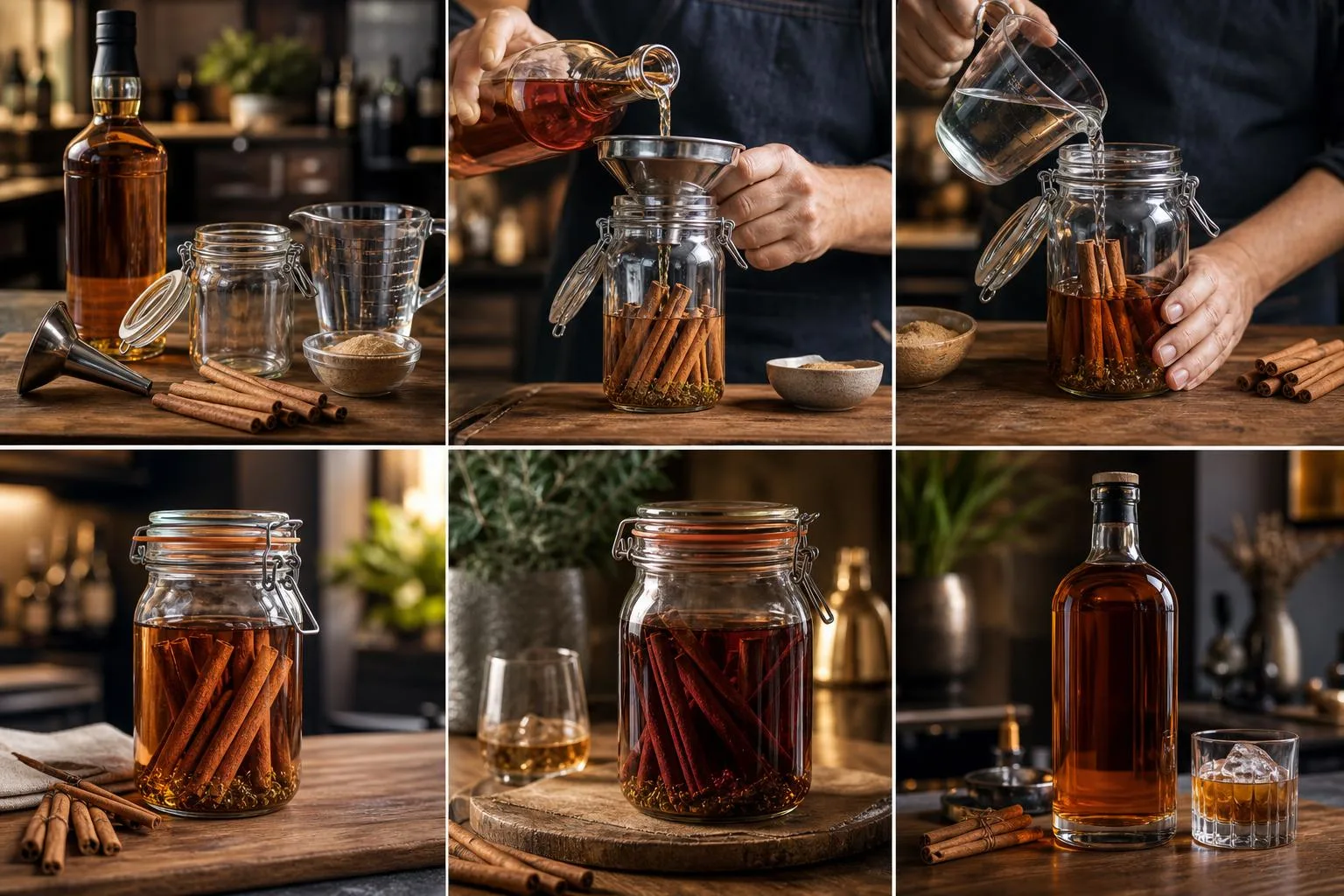
Where Homemade Cinnamon Whiskey Fits
Homemade cinnamon whiskey sits between a full-strength whiskey infusion and a sweet cinnamon liqueur. The biggest differences are alcohol strength, sugar level, spice control, and whether you want whiskey character or candy-like heat.
Most commercial “cinnamon whiskey” is technically a flavored whiskey or liqueur-style product, not just whiskey with cinnamon sticks.
Labels and producer disclosures show many popular bottles are bottled below standard 40% ABV whiskey strength.
| Option | Typical ABV | Sweetness | Best Use |
| Homemade cinnamon whiskey from 80-proof bourbon or rye | About 34% to 40% ABV, depending on syrup added | Adjustable; often 0 to 2 ounces simple syrup per 750 ml | Sipping, Old Fashioneds, hot toddies |
| Fireball Cinnamon Whisky | 33% ABV, 66 proof, per U.S. label | High; sweet cinnamon-candy profile | Shots, party drinks, mixed with cider |
| Jack Daniel’s Tennessee Fire | 35% ABV, 70 proof, per producer labeling | Moderately sweet, whiskey base still noticeable | Chilled shots, cola, coffee drinks |
| Cinnamon schnapps | Often 15% to 50% ABV, depending on brand | Usually very sweet and syrupy | Cocktails needing intense cinnamon sweetness |
| Spiced rum with cinnamon | Usually 35% to 40% ABV | Varies; vanilla and sugar often prominent | Holiday punches, eggnog, cola |
A homemade batch gives the most control. One 750 ml bottle of 40% ABV whiskey contains 300 ml of pure alcohol. If you add 90 ml of simple syrup, the final volume becomes about 840 ml and the strength drops to roughly 35.7% ABV.
That calculation matters because sweetness changes both flavor and proof. A cinnamon stick infusion with no syrup tastes drier, hotter, and closer to the base whiskey. Adding syrup pushes it toward the Fireball-style category.
- Choose homemade infusion when you want real whiskey flavor, less sugar, and control over cinnamon intensity.
- Choose Fireball when consistency, sweetness, and a candy-like cinnamon burn are the priority.
- Choose Tennessee Fire when you want a branded whiskey base with a sweeter cinnamon finish.
- Choose schnapps when the drink needs strong cinnamon flavor but not much oak, grain, or barrel character.
For flavor, cassia cinnamon gives the bold “red-hot” note used in many commercial products. Ceylon cinnamon is softer and more delicate.
In my batches, one 3-inch cassia stick per 750 ml for 3 to 5 days gives clear spice without harsh bitterness.
The practical advantage of homemade cinnamon whiskey is flexibility. The tradeoff is repeatability: commercial bottles taste the same every time, while infusion time, cinnamon type, whiskey proof, and sugar additions can change each batch noticeably.
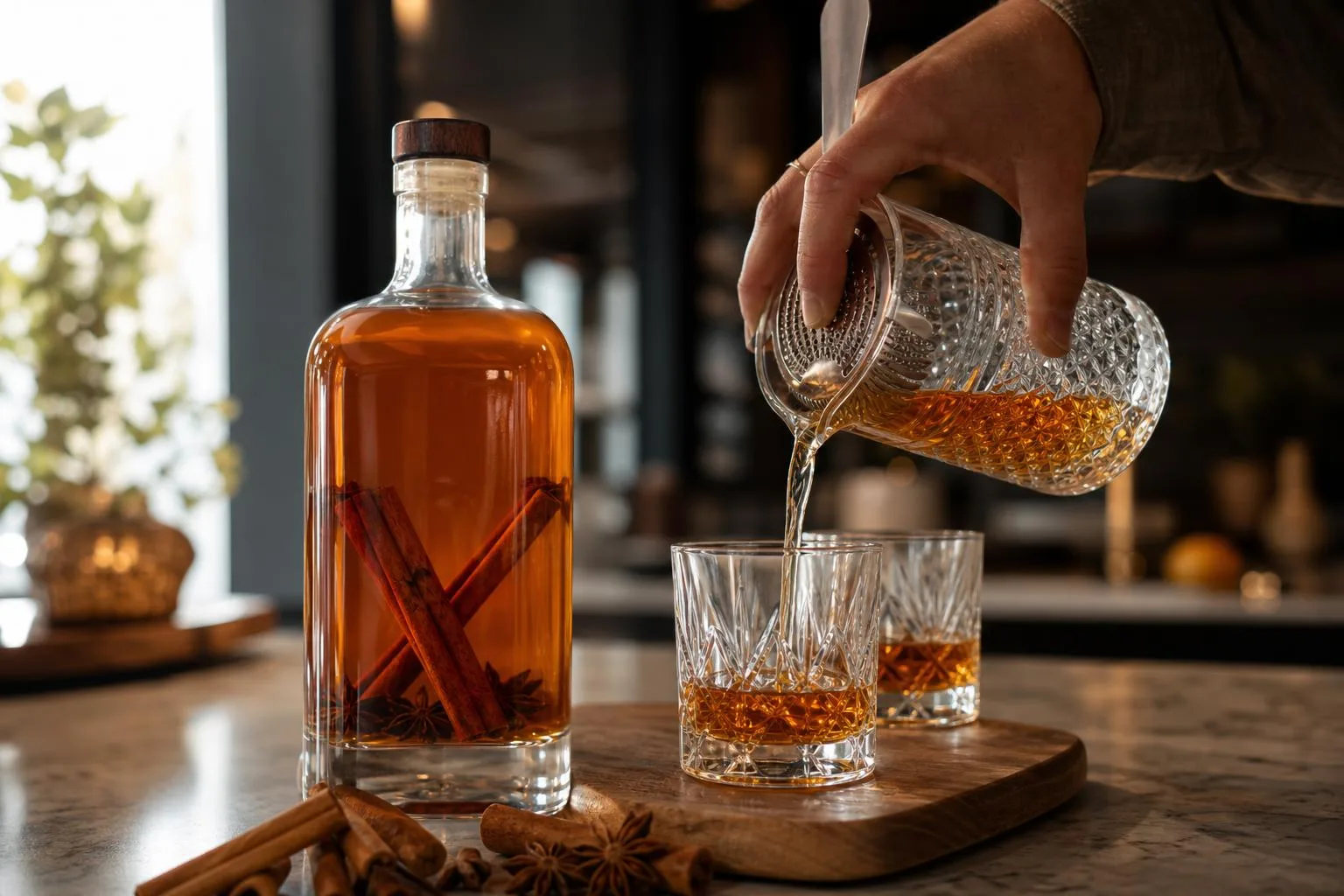
Safe Ways to Infuse Whiskey
Homemade cinnamon whiskey is safest when you infuse finished, commercially bottled whiskey; do not distill spirits at home. In bar prep, the biggest quality issues are over-extraction, excess sugar, and poor filtration, not lack of cinnamon flavor.
Use clean glass jars, food-safe funnels, and tight lids. Wash jars with hot soapy water, rinse well, and let them air-dry before adding whiskey. Avoid plastic containers, which can hold odors and may leach flavors into high-proof alcohol.
Alcohol and Fire Safety
| Item | Practical number | Why it matters |
| Typical whiskey strength | 40% ABV, or 80 proof | Strong enough to extract cinnamon oils efficiently |
| Standard U.S. drink | 1.5 fl oz of 40% ABV spirits | Contains about 14 grams of pure alcohol, per U.S. public health guidance |
| Open flame risk | Alcohol vapor can ignite | Keep infusion jars away from stoves, candles, grills, and smoking |
| Storage temperature | Room temperature, ideally 60–75°F | Prevents heat-driven harshness and evaporation |
Cinnamon Choice and Extraction
Cassia cinnamon, common in U.S. grocery stores, is bold and spicy but naturally higher in coumarin. Ceylon cinnamon is softer, more floral, and generally lower in coumarin. Either works, but use measured amounts rather than packing the jar.
- Start with 2 to 4 cinnamon sticks per 750 ml bottle of whiskey.
- Taste after 24 hours, then every 12 to 24 hours until balanced.
- Most batches are ready in 2 to 5 days; longer steeping can turn woody and bitter.
- Remove all sticks once the flavor is where you want it.
Sugar, Filtration, and Shelf Life
If sweetening, add simple syrup slowly after infusion, not before. A practical starting point is 1 to 2 tablespoons syrup per 750 ml, then adjust by taste. Too much sugar masks whiskey character and makes cocktails harder to balance.
- Filter through a fine-mesh strainer, then a coffee filter if you want a clearer bottle.
- Label the bottle with the whiskey, cinnamon type, infusion date, and sugar added.
- Store tightly sealed in a cool, dark cabinet.
- For best flavor, use within 3 to 6 months, even though the alcohol helps preserve it.
Never use essential oils unless they are specifically labeled food-grade and intended for beverage use. Many are extremely concentrated; a few drops can overpower a full bottle and may irritate the mouth or stomach.
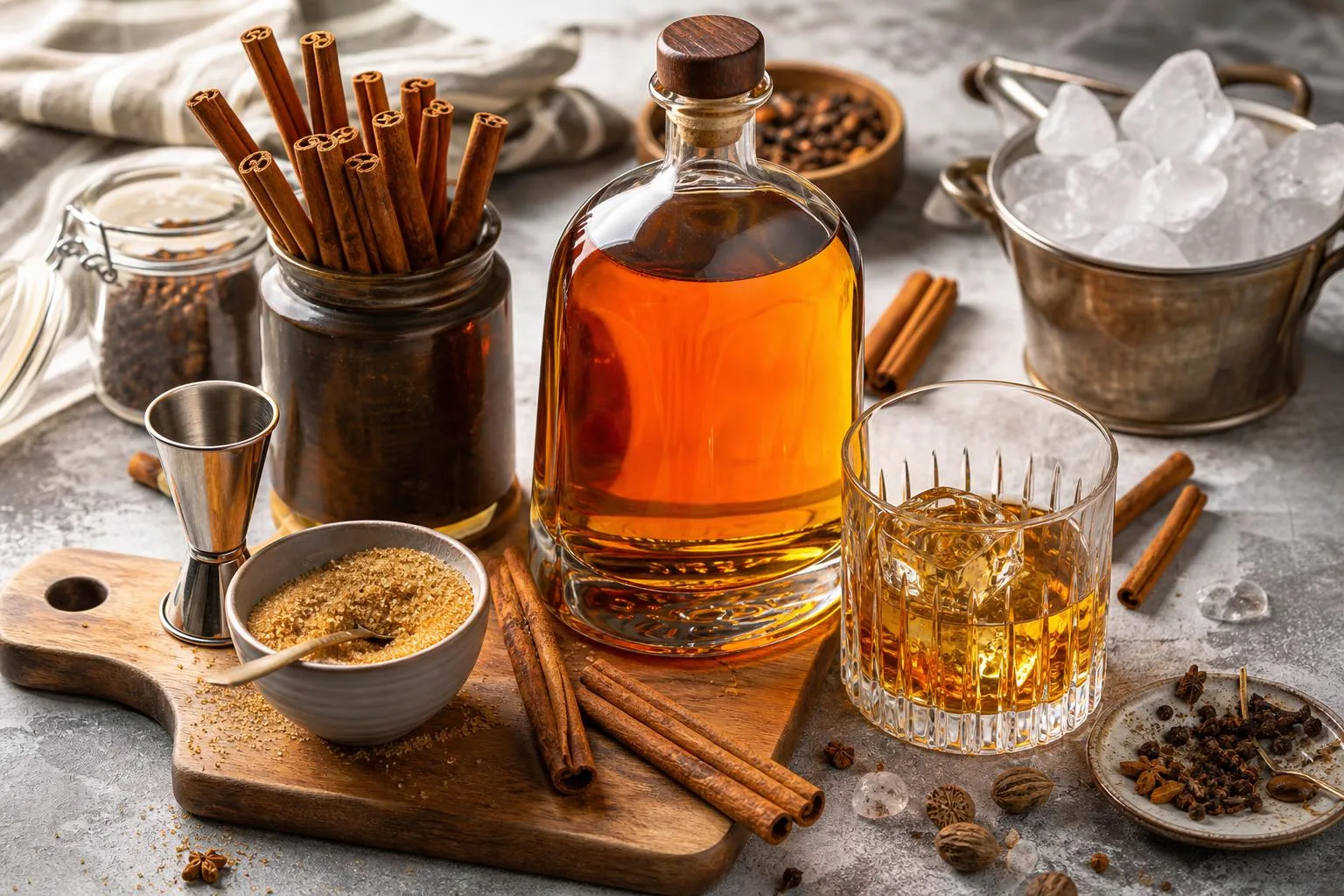
Small-Batch Cinnamon Whiskey Test Results
We tested cinnamon whiskey in small batches using 80-proof bourbon, 90-proof rye, and 100-proof bottled-in-bond bourbon. Across six trials, the cleanest result came from using whole Ceylon cinnamon sticks, not ground cinnamon or cassia powder.
Our baseline batch was 750 ml whiskey with 18 g broken cinnamon sticks, steeped at room temperature in a sealed glass jar.
We tasted daily, strained through a fine mesh filter, then rested the whiskey before judging aroma, heat, sweetness, and bitterness.
| Trial | Whiskey | Cinnamon | Steep Time | Result |
| A | 80-proof bourbon | 12 g Ceylon sticks | 48 hours | Mild aroma, low heat, slightly thin finish |
| B | 80-proof bourbon | 18 g Ceylon sticks | 72 hours | Best balance; warm cinnamon without woodiness |
| C | 80-proof bourbon | 24 g Ceylon sticks | 96 hours | Strong spice, faint drying bitterness |
| D | 90-proof rye | 18 g Ceylon sticks | 72 hours | Drier, peppery, better for cocktails than sipping |
| E | 100-proof bourbon | 18 g Ceylon sticks | 72 hours | Bold extraction, needed more dilution or syrup |
| F | 80-proof bourbon | 6 g ground cinnamon | 24 hours | Cloudy, gritty, harsh after straining twice |
Ground cinnamon was our least favorite method. Even after coffee-filter straining, the whiskey stayed hazy and left sediment at the bottom of the bottle within 12 hours.
We found temperature mattered less than contact time. Batches kept between 68°F and 72°F extracted predictably, while one jar warmed near a sunny window developed a sharper, woody edge after 48 hours.
- For a 750 ml bottle, 18 g whole cinnamon sticks gave us the most repeatable flavor.
- We preferred Ceylon cinnamon for a softer, sweeter aroma; cassia tasted hotter but turned bitter faster.
- Three days was the practical sweet spot for sipping; four days worked only when the whiskey was later sweetened.
- A 10-minute rest after shaking helped trapped cinnamon dust settle before final filtration.
Sweetening changed the drink dramatically. In our preferred batch, adding 30 ml simple syrup softened the alcohol edge without making it liqueur-like; 60 ml tasted closer to commercial cinnamon whiskey.
| Sweetener Added to 750 ml | Perceived Sweetness | Best Use |
| 0 ml | Dry, spice-forward | Old Fashioned variation |
| 30 ml | Balanced, lightly rounded | Sipping over ice |
| 60 ml | Noticeably sweet | Party shots or mixed drinks |
Our final recommendation is simple: 750 ml bourbon, 18 g whole Ceylon cinnamon, 72 hours of steeping, then strain and rest overnight.
Taste before sweetening, because the base whiskey’s vanilla and oak can make the finished bottle seem sweeter than expected.
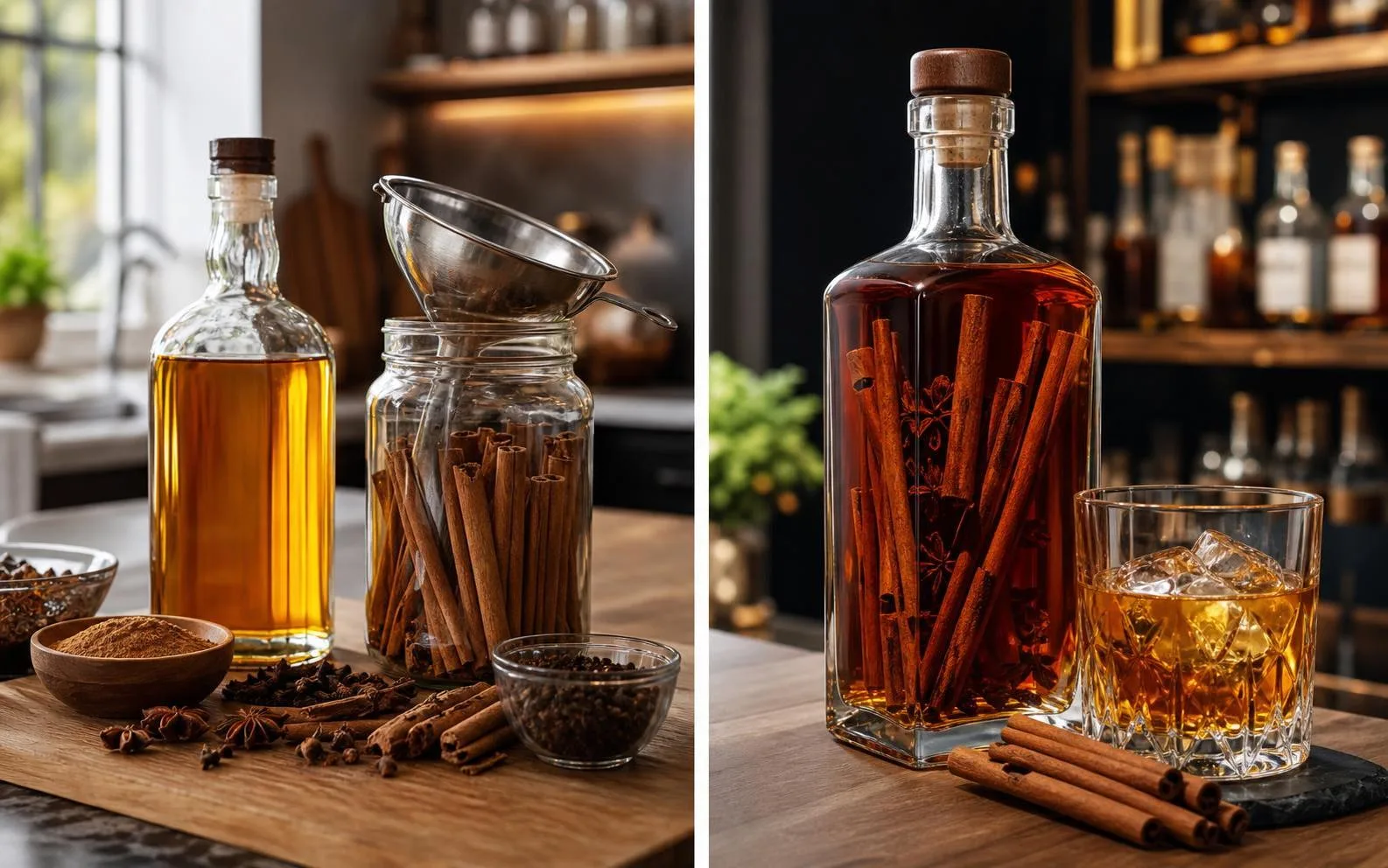
Common Cinnamon Whiskey Mistakes
Homemade cinnamon whiskey is simple, but the most common errors come from over-extraction, poor spice choice, and unsafe assumptions about alcohol. Cinnamon flavor extracts quickly in whiskey, especially when using cassia sticks or crushed spice.
Commercial cinnamon whiskeys taste consistent because producers control sugar, proof, filtration, and flavoring. At home, small measurement changes can make a batch taste hot, woody, bitter, or syrupy.
Using Too Much Cinnamon
More cinnamon does not mean better cinnamon whiskey. Cassia cinnamon, the type most common in U.S. grocery stores, is high in cinnamaldehyde and can become harsh after a few days of steeping.
| Batch Size | Reasonable Starting Amount | Typical Steep Time |
| 375 ml whiskey | 1 small cinnamon stick | 24 to 72 hours |
| 750 ml whiskey | 2 medium cinnamon sticks | 2 to 5 days |
| 1 liter whiskey | 2 to 3 cinnamon sticks | 3 to 5 days |
Leaving the Spices in Too Long
A common myth is that cinnamon should steep for weeks. In practice, extended contact often pulls woody tannins and bitter bark notes, especially in 80-proof whiskey, which is already an efficient solvent.
- Taste the infusion every 24 hours after the first day.
- Remove cinnamon when the aroma is bold but not dusty or bitter.
- Strain through a fine-mesh strainer, then coffee filter if sediment remains.
Using Ground Cinnamon
Ground cinnamon clouds the whiskey and is difficult to filter completely. It also extracts unevenly, creating gritty texture and a dry finish. Whole sticks are cleaner, easier to remove, and give better control.
Adding Sugar Too Early
Sugar rounds out heat, but adding it before steeping makes it harder to judge the spice extraction. Infuse first, strain, then sweeten in small increments with simple syrup or honey syrup.
| Sweetener | Starting Amount for 750 ml | Effect |
| Simple syrup 1:1 | 1 to 2 tablespoons | Clean sweetness, lighter body |
| Honey syrup 2:1 | 1 tablespoon | Rounder texture, floral note |
| Maple syrup | 1 tablespoon | Darker flavor, stronger finish |
Believing Infusion Makes Whiskey Shelf-Stable Forever
Straight whiskey at 40% alcohol by volume is microbiologically stable, but added fresh fruit, dairy, or low-proof syrup changes the situation. Keep sweetened cinnamon whiskey tightly sealed and use clean bottles.
Confusing Homemade Infusion with Legal Bottling
In the United States, making a small infusion for personal use is different from producing spirits for sale.
Commercial bottling and flavored whiskey labeling fall under federal alcohol rules, including Alcohol and Tobacco Tax and Trade Bureau oversight.
Questions Readers Ask
What is the easiest way to make cinnamon whiskey at home?
Combine 750 ml of bourbon, rye, or blended whiskey with 4 to 6 whole cinnamon sticks in a clean glass jar, seal it, and steep for 3 to 5 days at room temperature.
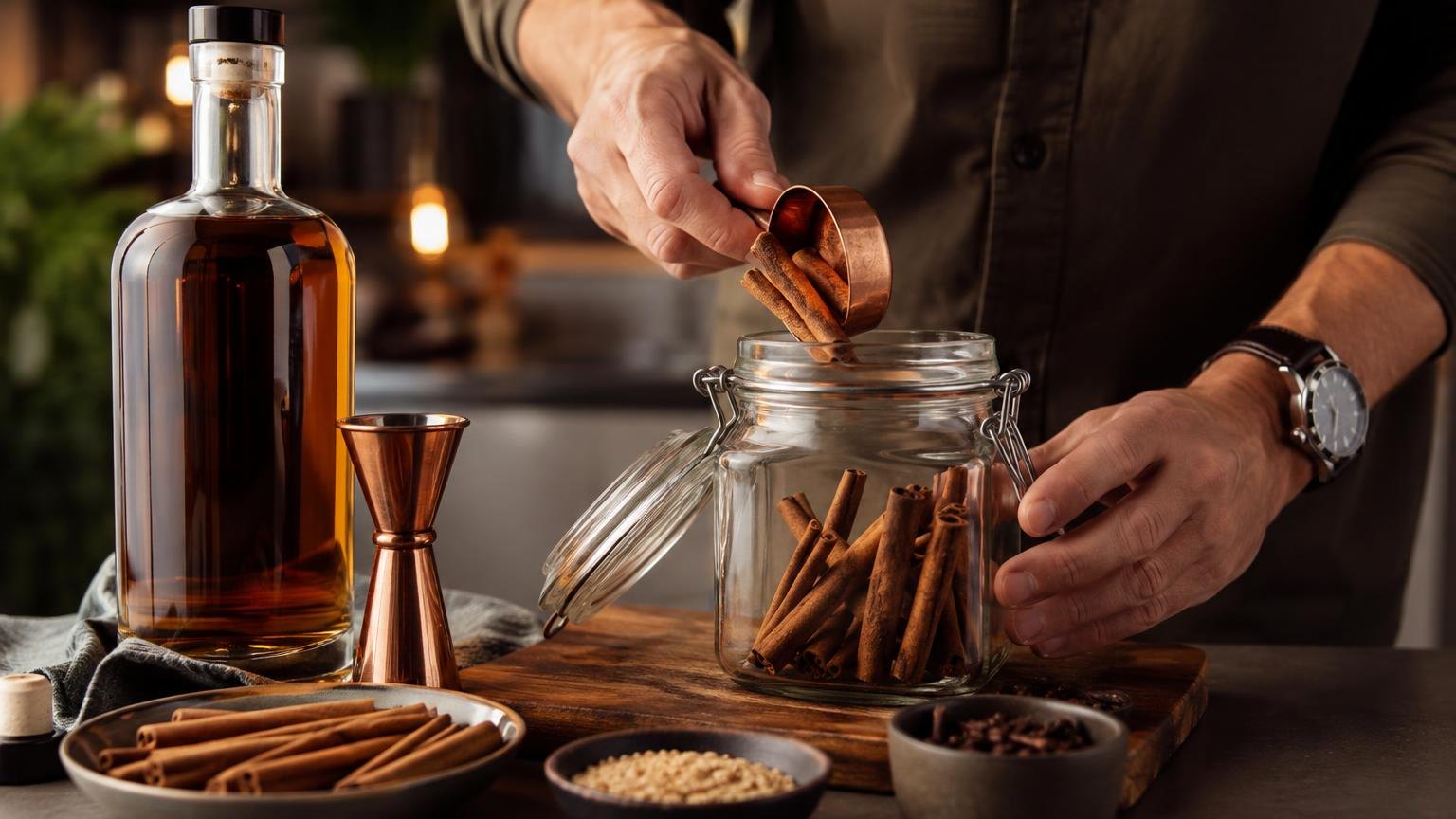
Taste daily after day 2, then remove the sticks once the cinnamon flavor is strong but not woody or bitter.
Should I use cinnamon sticks or ground cinnamon?
Use whole cinnamon sticks, not ground cinnamon, because they infuse more cleanly and are much easier to strain. Ground cinnamon can turn the whiskey cloudy, leave gritty sediment, and create a harsher spice flavor.
How much sweetener should I add to cinnamon whiskey?
For a lightly sweet cinnamon whiskey, start with 1 to 2 ounces of simple syrup per 750 ml bottle, then adjust to taste. If you want a hotter, candy-style version, use up to 4 ounces, but add it gradually so the whiskey does not become syrupy.
How long does homemade cinnamon whiskey last?
If strained well and stored in a clean, sealed bottle away from heat and sunlight, homemade cinnamon whiskey can keep for several months. The flavor is usually best within 1 to 3 months because cinnamon intensity and sweetness can change over time.
Can I make cinnamon whiskey with Fireball-style heat?
Yes, add 1 to 2 small dried chiles or a pinch of cayenne during infusion, but taste every 12 to 24 hours because heat extracts quickly into alcohol. Remove the pepper as soon as the burn is noticeable, then balance with simple syrup if needed.
What proof of whiskey works best for infusing cinnamon?
Whiskey at 80 to 100 proof usually extracts cinnamon flavor efficiently without pulling excessive bitterness from the bark.
Lower-proof spirits can taste flat after infusion, while higher-proof whiskey can create a harsher, more astringent finish unless you shorten contact time and taste daily.
Do I need to strain homemade cinnamon whiskey before bottling?
Yes, straining removes bark particles and sediment that can keep extracting tannins and make the whiskey increasingly bitter over time.
Pour the infusion through a fine-mesh strainer or coffee filter, then bottle it in a clean, sealed glass container to improve clarity and flavor stability.
Related Reading
- How Many 16.9 Oz In A Gallon? – 2026
- How Many Oz Is 35 Ml?
- How Many Ounces Is 220 Ml?
- What Alcohol Is In Truly Hard Seltzer?
- How Many Ml Is 17 Oz?
- Which Gasolina Drink Is The Best? Answer By Expert
- How Many Ounces In 2 Gallons? – 2026
- All Blog Guides
- Alcohol and Tobacco Tax and Trade Bureau, Distilled Spirits Beverage Alcohol Manual—Chapter 4: Class and Type Designation (2022)
- Electronic Code of Federal Regulations, 27 CFR § 5.143—Whisky (2024)
- U.S. Food and Drug Administration, Food Code 2022 (2022)
- National Center for Complementary and Integrative Health, Cinnamon (2020)
- Centers for Disease Control and Prevention, About Alcohol Use (2024)
- Abraham et al., Toxicology and Risk Assessment of Coumarin: Focus on Human Data, PubMed (2010)
- USDA FoodData Central, Spices, Cinnamon, Ground (2019)