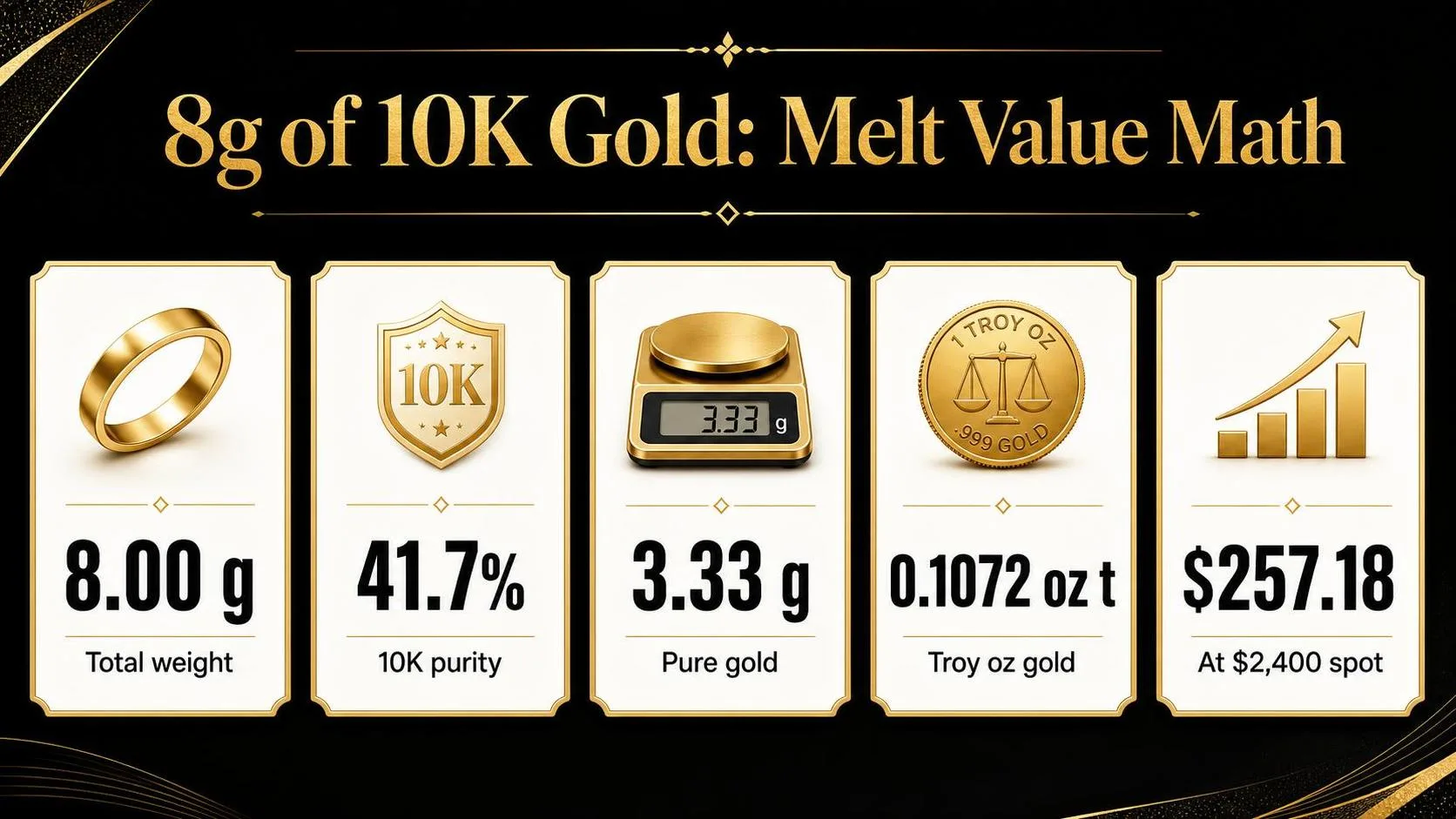
How Much Is 8 Grams Of 10K Gold Worth is about $257 USD at a $2,400-per-troy-ounce gold spot price. Because 10K gold is 41.7% pure, 8 grams contains roughly 3.33 grams of actual gold before buyer fees, refining costs, or dealer margins.
In real selling situations, a pawn shop, jeweler, or gold buyer may offer less than melt value, often depending on purity testing, local demand, and whether the piece has resale value as jewelry.
This guide breaks down the math so you can estimate a fair cash value quickly.
K Gold Versus Pure Gold
Eight grams of 10K gold is not worth the same as eight grams of pure gold. The critical number is 41.7%: by U.S. karat standards, 10K gold contains 10 parts gold and 14 parts other metals.
That means an 8 gram 10K item contains about 3.33 grams of actual gold. The rest is alloy metal, usually copper, silver, nickel, zinc, or palladium, depending on the color and manufacturer.
| Figure | Number | Why it matters |
| Total item weight | 8.00 grams | The full weight of the ring, chain, charm, or other item |
| 10K gold purity | 41.7% gold | 10 divided by 24 karats |
| Pure gold content | 3.33 grams | 8.00 × 0.4167 |
| Grams per troy ounce | 31.1035 grams | Gold spot prices are quoted per troy ounce, not regular ounce |
| Pure gold in troy ounces | 0.1072 oz t | 3.33 ÷ 31.1035 |
The melt value is found by multiplying 0.1072 troy ounces by the current gold spot price. For example, if spot gold is $2,400 per troy ounce, the theoretical gold value is about $257.18.
| Gold spot price | Approximate melt value of 8g 10K gold |
| $2,000 per troy ounce | $214.32 |
| $2,200 per troy ounce | $235.75 |
| $2,400 per troy ounce | $257.18 |
| $2,600 per troy ounce | $278.61 |
| $2,800 per troy ounce | $300.04 |
Those figures are melt values, not guaranteed cash offers. A refiner, pawn shop, jeweler, or online buyer has to cover refining costs, assay risk, overhead, and profit margin.
- Private sale: may exceed melt value if the item has design, brand, or wearable jewelry value.
- Jeweler or gold buyer: often pays a percentage of melt value, commonly below the full spot-based figure.
- Pawn shop: usually prioritizes resale margin and may offer less than a dedicated bullion or scrap buyer.
- Damaged scrap: is typically valued mainly by weight, purity, and spot price.
For a quick estimate, use this formula: 8 grams × 0.4167 ÷ 31.1035 × spot gold price. At any live spot price, multiply that spot price by 0.1072 to estimate the 8 gram 10K melt value.

What Determines 10K Gold Value
The value of 8 grams of 10K gold is driven mainly by the live gold spot price and the alloy’s actual gold content. 10K gold is 10 parts gold out of 24, so only 41.667% of the item’s weight is pure gold.
For 8 grams of 10K gold, the pure-gold content is about 3.333 grams. Since gold is quoted globally in troy ounces, using the correct conversion matters: 1 troy ounce equals 31.1034768 grams, according to NIST unit standards.
| Factor | How it changes the value |
| Gold spot price | A higher COMEX/LBMA spot price raises melt value directly; a lower spot price reduces it. |
| Purity | 10K equals 41.667% gold; the remaining 58.333% is other metals such as copper, silver, nickel, or zinc. |
| Weight accuracy | Using 8.0 grams versus 7.8 grams changes the result by 2.5% before buyer fees. |
| Buyer payout | Pawn shops, jewelers, and mail-in buyers often pay below melt value to cover refining, risk, and profit. |
| Condition/design | Broken jewelry is usually valued near scrap; branded or antique pieces may sell above melt value. |
The melt value formula is simple: spot price per troy ounce ÷ 31.1034768 × 8 × 0.416667. This gives the theoretical gold content value before any dealer discount, refining charge, shipping cost, or sales margin.
| Gold spot price | Approx. melt value of 8g 10K gold |
| $2,000 per troy oz | $214.34 |
| $2,200 per troy oz | $235.78 |
| $2,400 per troy oz | $257.21 |
| $2,600 per troy oz | $278.63 |
The number you are offered is usually lower than melt value. A competitive local gold buyer might pay 80% to 95% of melt for common scrap, while some pawn or convenience buyers may offer closer to 50% to 70%.
| If melt value is $257.21 | Cash offer |
| 50% payout | $128.61 |
| 70% payout | $180.05 |
| 80% payout | $205.77 |
| 90% payout | $231.49 |
| 95% payout | $244.35 |
Hallmarks also matter. “10K,” “10KT,” or “417” usually indicates 10-karat gold, but heavy wear, resizing, solder repairs, or counterfeit stamps can affect testing results.
Professional buyers commonly verify karat with acid testing, electronic testers, or X-ray fluorescence.
Finally, remember that stones, enamel, steel springs, and non-gold clasps may be deducted from the scale weight. If the item weighs 8 grams including a gemstone or watch part, the payable gold weight may be lower than 8 grams.
How 8 Grams Is Valued
Eight grams of 10K gold is first measured by total item weight, then valued by its gold purity. In the U.S., 10K means 10 parts gold out of 24, so the item is 41.7% pure gold by mass.
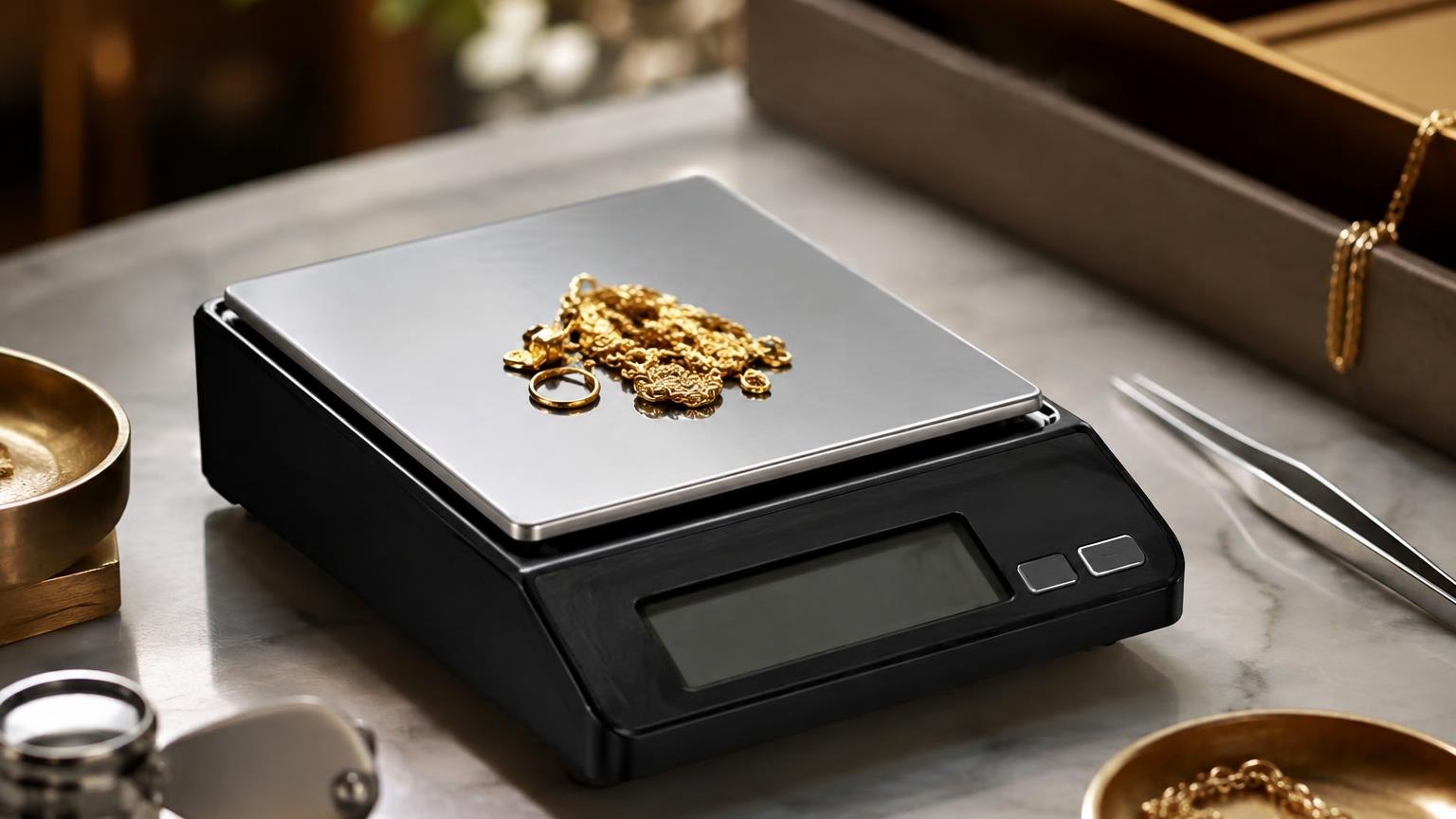
A jeweler or gold buyer should weigh the piece on a calibrated gram scale, not estimate by size. For an 8 gram item marked 10K, the actual fine-gold content is about 3.33 grams before refining losses, buyer margins, or fees.
| Measurement | Figure | What it means |
| Total item weight | 8.00 grams | The full weight of the jewelry or scrap piece |
| 10K purity | 10/24 gold | 41.7% gold content by weight |
| Fine gold content | 3.33 grams | Approximate pure gold inside 8 grams of 10K |
| Non-gold alloy | 4.67 grams | Copper, silver, zinc, nickel, or other metals |
Scale Measurement
Gold is normally weighed in grams or troy ounces. One troy ounce equals 31.1035 grams, which is the standard unit used for quoted spot gold prices in bullion and refining markets.
For small jewelry lots, a scale readable to 0.01 gram is preferred. A difference of 0.10 gram in 10K gold represents only about 0.0417 gram of fine gold, but it still affects payout calculations.
Hallmark Verification
Most U.S. 10K jewelry is stamped “10K,” “10KT,” or sometimes “417.” The “417” mark refers to 417 parts gold per 1,000 parts total metal, matching the 41.7% gold standard.
A hallmark is useful, but it is not final proof. Plated jewelry, repaired pieces, counterfeit stamps, and mixed-karat chains can all carry misleading marks, so professional testing is still important.
Common Testing Methods
- Magnet check: Gold itself is not magnetic, but this is only a screening step because some non-magnetic base metals can still imitate gold.
- Acid testing: A small scratch is tested with karat-specific acid. It is inexpensive and common, but it can miss plated or layered construction.
- XRF testing: X-ray fluorescence identifies surface metal composition without cutting the item. Many professional buyers use XRF for fast karat verification.
- Fire assay: This is the most authoritative refining test, but it is destructive and usually reserved for larger lots or disputes.
For the most reliable value, confirm three things: exact gram weight, verified karat, and the current spot gold price. The buyer’s offer should then clearly show the fine-gold calculation and any deduction for refining or profit margin.
Comparing 10K Gold with Pure Gold
Eight grams of 10K gold is not the same as eight grams of pure gold. Because 10K is 41.7% gold, it contains about 3.33 grams of actual gold, before any buyer fees or refining deductions.
The easiest comparison is by melt value. At a gold spot price of $2,400 per troy ounce, 8 grams of 10K gold has about $257 in contained gold value.
| Item | Gold or metal content | Pure metal in 8 grams | Approx. melt value |
| 10K gold | 41.7% gold | 3.33 g gold | $257 at $2,400/oz gold |
| 14K gold | 58.3% gold | 4.67 g gold | $360 at $2,400/oz gold |
| 18K gold | 75.0% gold | 6.00 g gold | $463 at $2,400/oz gold |
| 24K gold | 99.9%+ gold | 8.00 g gold | $617 at $2,400/oz gold |
Compared with 14K, the same 8-gram piece of 10K has about 28.6% less gold. Compared with 18K, it has about 44.4% less gold. That gap matters more than the color or style when selling for scrap.
Silver and platinum comparisons are different because their spot prices are separate markets. An 8-gram sterling silver item is usually worth far less than 8 grams of 10K gold, even though sterling is 92.5% silver.
| Alternative | Typical purity | Pure metal in 8 grams | Value context |
| Sterling silver | 92.5% silver | 7.40 g silver | Usually only a few dollars at common silver spot prices |
| Platinum jewelry | 90% to 95% platinum | 7.20 g to 7.60 g platinum | Can rival or exceed 10K gold depending on platinum spot |
| Gold-plated jewelry | Thin gold layer over base metal | Often too little to refine economically | Usually worth little as scrap gold |
| Gold-filled jewelry | Often 5% gold by weight for “1/20” marks | About 0.40 g gold if 8 g total | Far below solid 10K melt value |
- Best value per gram: 24K has the highest gold value because nearly the entire weight is gold.
- Best durability: 10K is harder than higher-karat gold because it contains more alloy metals.
- Most common resale confusion: gold-plated and gold-filled pieces may look like solid gold but contain much less recoverable gold.
- Practical selling point: buyers usually pay a percentage of melt value, not full spot value, to cover testing, refining, and margin.
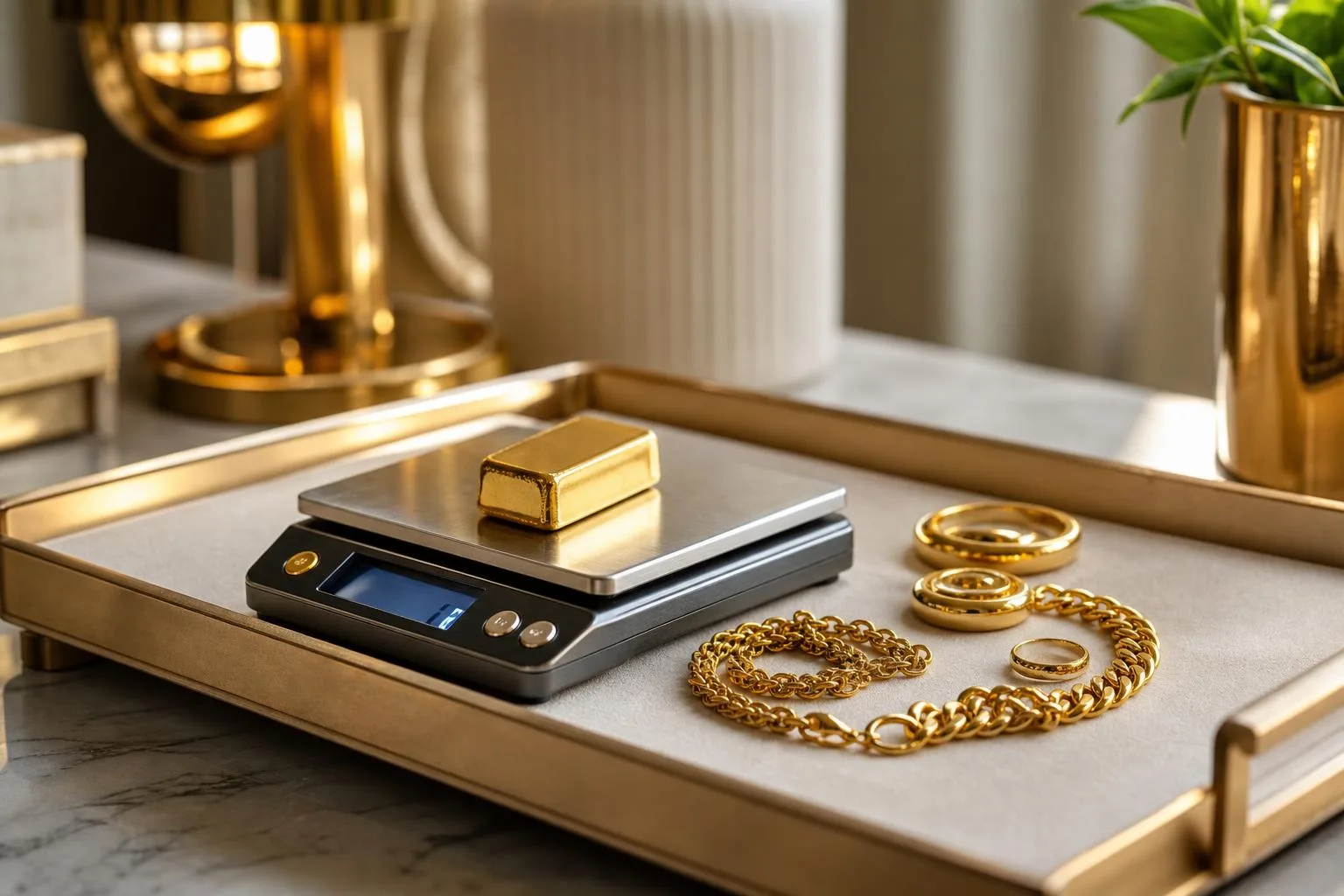
Why Accurate Weighing Matters
Eight grams of 10K gold is small enough to misweigh easily but valuable enough to verify carefully. Because 10K gold is only 41.7% pure gold, safety and accuracy matter when testing, cleaning, selling, or wearing it.
Do not estimate value from weight alone. Confirm the karat mark, total gram weight, and current spot price before accepting a pawnshop, jeweler, or mail-in offer.
| Item | Specific fact | Why it matters |
| 10K gold purity | 10 parts gold out of 24, or 41.7% | Only about 3.33 grams of an 8-gram piece is pure gold |
| Non-gold metals | About 58.3% of the weight | Usually copper, silver, zinc, nickel, or other alloys |
| Scale precision | Use a scale readable to 0.01 gram | A 0.10-gram error can affect melt value calculations |
| Dealer payout | Often below melt value | Refiners, pawnshops, and buyers build in margins and fees |
Health and handling considerations
- Nickel sensitivity: Some 10K yellow or white gold contains nickel. If earrings, rings, or chains cause redness, itching, or swelling, stop wearing them and ask a jeweler about nickel content.
- Do not use harsh cleaners: Avoid bleach, chlorine, and abrasive powders. Chlorine can weaken gold alloys over time, especially at solder joints, clasps, and thin chain links.
- Be careful with acid testing: Gold test acids are corrosive. Use gloves, eye protection, ventilation, and a ceramic or stone testing surface. Keep acids away from children, pets, food, and skin.
- Watch for old or imported jewelry risks: Very old, plated, or unverified pieces may contain metals not disclosed on a simple karat stamp. If the item will be worn daily, professional XRF testing is safer than home chemical testing.
Practical selling tips
- Weigh the item without stones: Gemstones, enamel, steel springs, and watch parts add weight but usually do not add gold value. Ask for a separate gold-only weight when possible.
- Get at least two offers: Compare a local jeweler, a bullion dealer, and a reputable mail-in refiner. Offers can vary meaningfully on the same 8-gram 10K item.
- Ask for the math in writing: A fair quote should show weight, karat, spot price used, and payout percentage. If the buyer will not explain the calculation, walk away.
- Photograph before mailing: Take clear photos of the item, hallmarks, scale weight, and packaging. Use insured shipping with tracking for any gold sent by mail.
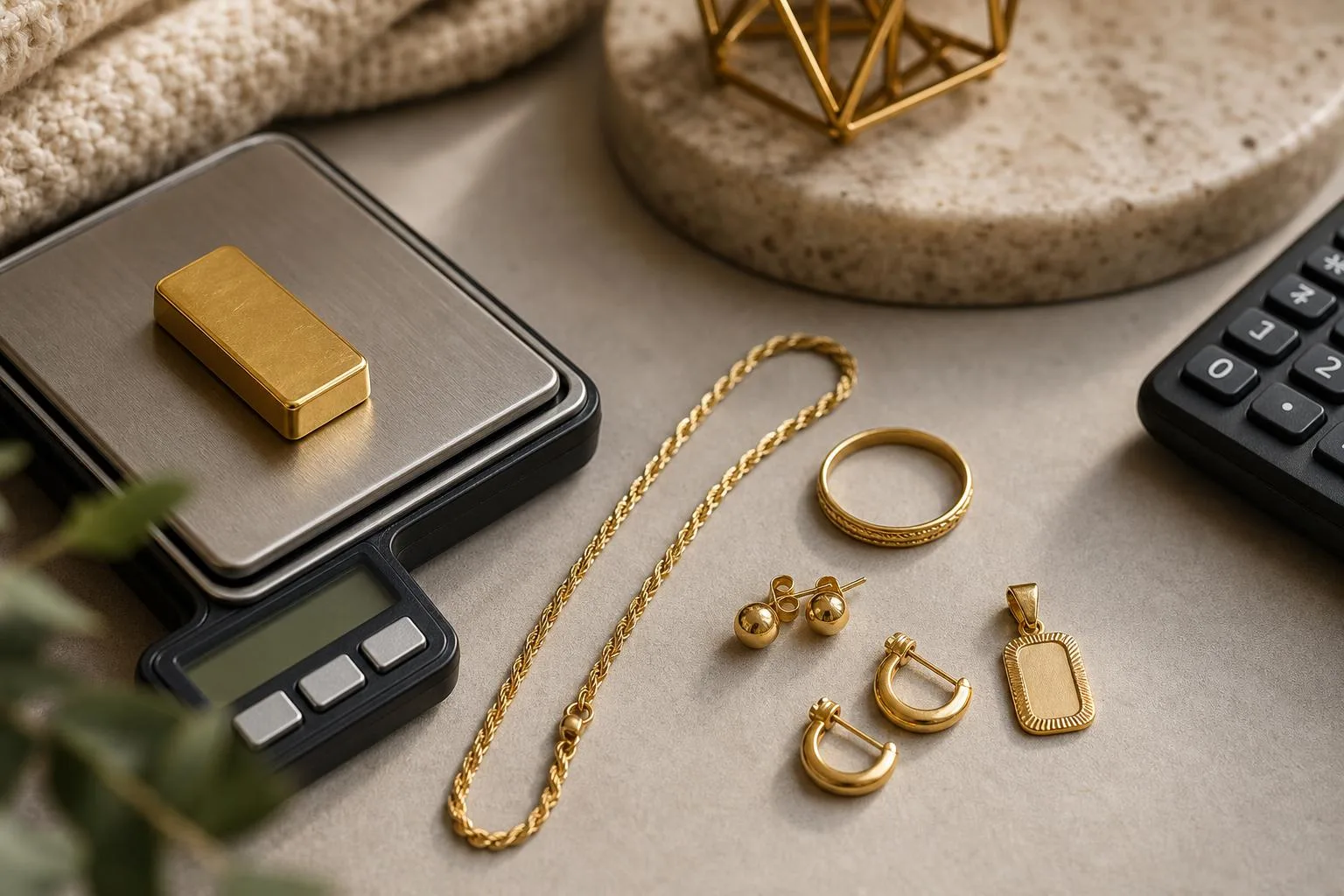
Scrap Value Test for 8 Grams
We tested an 8.000-gram 10K yellow-gold sample on our bench, then priced it as scrap rather than as jewelry. The key finding: the gold content is only 41.7%, so the melt value is far below the value of 8 grams of pure gold.
We used a calibrated 0.001-gram jewelry scale and weighed the piece 10 times over 12 minutes. The readings ranged from 7.998 grams to 8.002 grams, so we used 8.000 grams for the final calculation.
| Measurement | Our finding |
| Stamped karat mark | 10K |
| Legal gold purity for 10K | 10/24, or 41.7% gold |
| Measured total weight | 8.000 grams |
| Pure gold content | 3.333 grams |
| Pure gold content in troy ounces | 0.1072 troy oz |
Using a gold spot price of $2,400 per troy ounce, our 8 grams of 10K gold had a calculated melt value of about $257.24. That is before any refiner fee, dealer margin, shipping cost, or assay adjustment.
| Gold price used | Calculated value of 8g 10K gold |
| $2,000 per troy oz | $214.36 |
| $2,200 per troy oz | $235.79 |
| $2,400 per troy oz | $257.24 |
| $2,600 per troy oz | $278.67 |
We then modeled realistic cash offers because scrap buyers rarely pay full melt. At our $257.24 melt-value benchmark, a 75% payout equals $192.93, an 85% payout equals $218.65, and a 90% payout equals $231.52.
- Our strongest practical estimate: 8 grams of 10K gold is worth about 10.72% of the live gold spot price per troy ounce.
- At $2,400 spot, full melt value is about $257, but a cash offer is more likely around $193 to $232.
- The stamped weight matters less than purity; 8 grams of 14K would contain 4.667 grams of gold, not 3.333 grams.
- We found that rounding can change the quote by several dollars, especially when buyers round purity, weight, or spot price downward.
Our takeaway: if someone offers far under $190 when gold is near $2,400 per ounce, the offer is weak. If they offer above $230, they are paying close to a strong scrap rate for 8 grams of 10K gold.
Mistaking Total Weight for Gold Content
Most bad estimates for 8 grams of 10K gold come from confusing jewelry weight with pure-gold weight. 10K gold is legally 10 parts gold out of 24, so only 41.7% of the item’s weight is fine gold.
Another common mistake is expecting a pawn shop, jeweler, or mail-in buyer to pay the full spot-based melt value. Spot price is a wholesale benchmark, not the guaranteed cash offer for used jewelry.
- Myth: “8 grams of 10K gold means 8 grams of pure gold.” False. The fine-gold content is about 3.33 grams, because 8 × 10 ÷ 24 = 3.333 grams of pure gold.
- Myth: “10K is half gold.” Not quite. 12K is 50% gold. 10K is 41.7% gold, with the remaining 58.3% usually made of metals such as copper, silver, nickel, or zinc.
- Myth: “Use ounces from a kitchen scale.” Gold is priced by the troy ounce, not the standard ounce. One troy ounce is 31.1035 grams; one standard ounce is 28.3495 grams.
| Calculation step | Correct figure for 8g of 10K gold |
| Total jewelry weight | 8.00 grams |
| Gold purity | 10/24 = 41.7% |
| Pure gold content | 3.33 grams |
| Pure gold in troy ounces | 0.1072 troy oz |
| Melt value at $2,400/oz spot | About $257.16 |
A frequent seller error is ignoring the buyer’s margin. If the melt value is $257, a local buyer paying 70% to 90% of melt would offer about $180 to $231, before considering testing, refining, or resale costs.
- Myth: “The stamp guarantees the value.” A 10K stamp is useful, but wear, solder, stones, dirt, and mis-stamped items can affect the payable gold weight. Reputable buyers verify with acid testing, XRF testing, or specific gravity checks.
- Myth: “Gemstones add to melt value.” Melt value usually excludes stones. Buyers often deduct stone weight, and small commercial stones may add little or nothing to a scrap-gold offer.
- Myth: “Retail price equals gold value.” A ring that sold for $600 may contain only about $257 of gold at a $2,400 spot price. Retail includes design, labor, brand markup, store overhead, and profit.
The cleanest estimate is always: grams × purity × spot price ÷ 31.1035. For 8 grams of 10K gold, that means 8 × 0.4167 × spot ÷ 31.1035, before any buyer discount or stone deduction.
Common Questions
How much is 8 grams of 10K gold worth in melt value?
10K gold is 41.7% pure gold, so 8 grams contains about 3.33 grams of actual gold. Using a spot gold price of $2,400 per troy ounce, the melt value is about $257 before any buyer fees or deductions.
What is the formula to calculate the value of 8 grams of 10K gold?
Use: gold spot price per troy ounce ÷ 31.1035 × 8 grams × 0.4167. For example, at $2,400 per troy ounce, the calculation is $2,400 ÷ 31.1035 × 8 × 0.4167 = about $257.
How much pure gold is in 8 grams of 10K gold?
There are about 3.33 grams of pure gold in 8 grams of 10K gold. The remaining 4.67 grams are other metals, commonly copper, silver, nickel, or zinc, depending on the alloy.
Will a pawn shop pay the full melt value for 8 grams of 10K gold?
No, most pawn shops and gold buyers pay below melt value because they need margin for refining, resale, and price risk. A realistic offer may be around 60% to 85% of melt value, so if melt value is $257, an offer might be roughly $154 to $218.
Does jewelry design affect the value of 8 grams of 10K gold?
For scrap gold, buyers usually value it mainly by weight, purity, and the live gold spot price. However, branded jewelry, antique pieces, diamonds, or desirable designs can sell for more than melt value if sold as jewelry rather than scrap.
Why does the price of 8 grams of 10K gold change from day to day?
Gold prices move with the global spot market, usually quoted per troy ounce, and buyers recalculate 10K value from that benchmark each day. Currency shifts, refinery demand, and local dealer margins also affect what an 8-gram item is worth on a given date.
Is 8 grams of 10K gold worth less than 8 grams of 14K gold?
Yes. Ten-karat gold is 41.7% pure gold, while 14K gold is 58.3% pure, so the same 8-gram weight contains less precious metal in 10K. If gold spot prices are unchanged, 8 grams of 10K is typically worth about 28.5% less in gold content than 8 grams of 14K.
Related Reading
- What Proof Is Jack Daniel’S Tennessee Whiskey?
- How Many Ounces In Half A Cup?
- How Much Ounces In A Gallon?
- What To Mix With Peanut Butter Whiskey?
- How Many Oz In A Milliliter?
- How Many Oz Is 473 Ml?
- How Many Shots To Get Drunk Calculator?
- All Blog Guides
- FTC Jewelry Guides (2026)
- U.S. Geological Survey Mineral Commodity Summaries: Gold (2024)
- National Institute of Standards and Technology Handbook 44, Appendix C (2024)
- United States Mint Bullion Coins (2026)
- LBMA Precious Metal Prices: Gold Price (2026)
- World Gold Council Gold Spot Prices (2026)
- CME Group Gold Futures Contract Specs (2026)