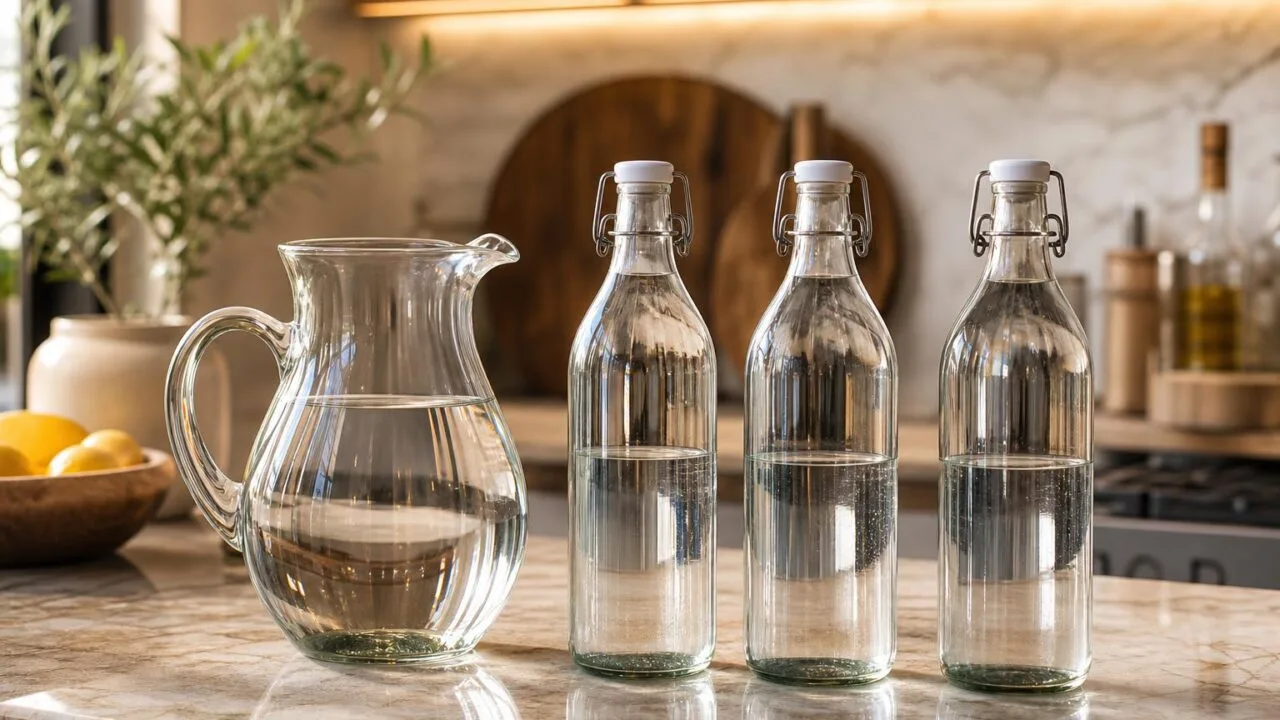
How Much Is 3 Liters Of Water In Gallons is 0.792516 US gallons. Rounded for everyday measuring, 3 liters equals about 0.79 gallons, or just over three-quarters of a gallon. The conversion uses the U.S. liquid gallon: 1 liter equals 0.264172 gallons.
This guide focuses on U.S. gallons, not Imperial gallons, because American recipes, water jugs, hydration labels, and household containers typically use the U.S. measurement system.
You’ll also see the quick math, rounded values, and practical comparisons for bottles, pitchers, and daily water intake.
Liters in US Gallons
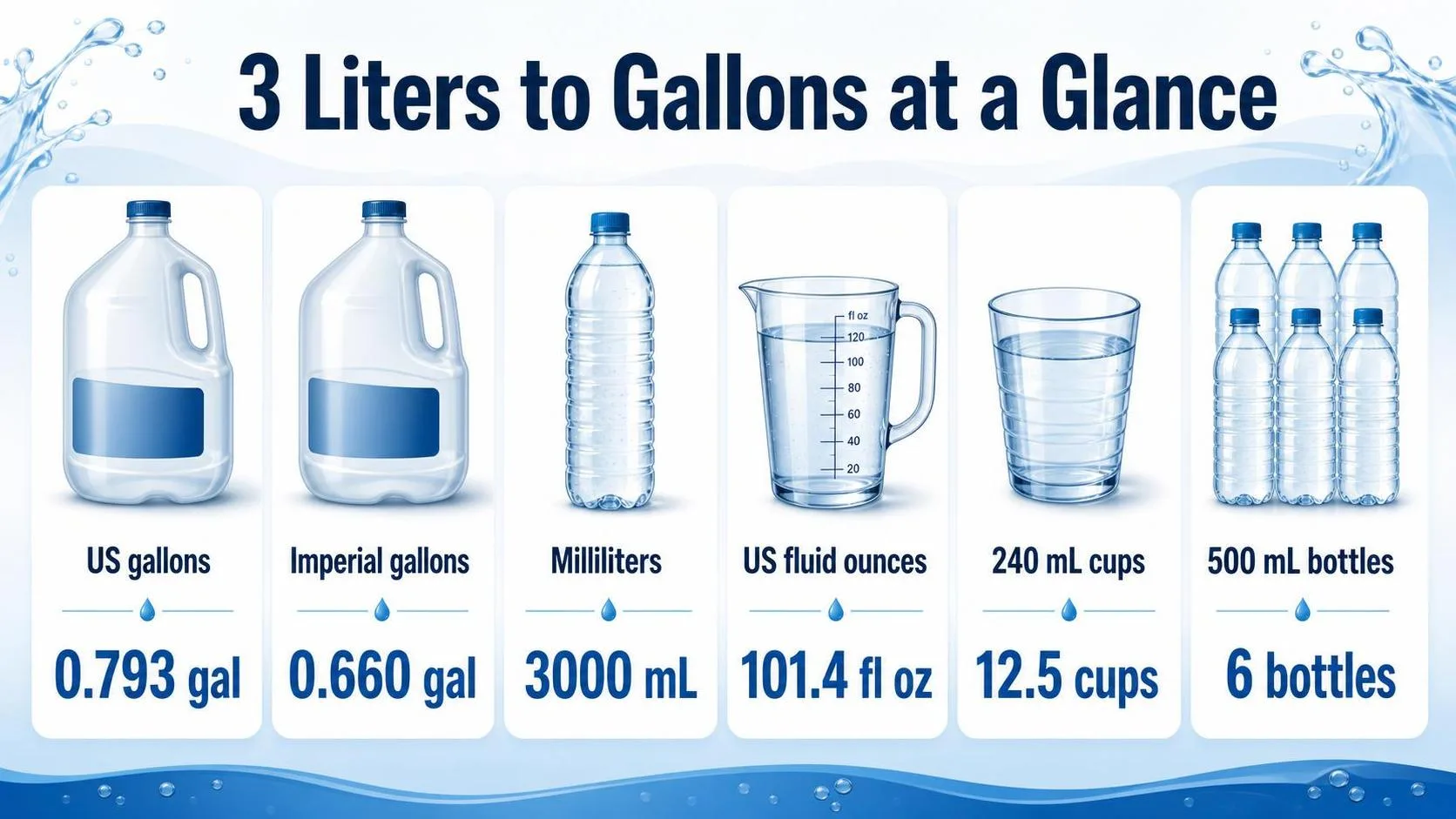
Three liters of water is about 0.793 US gallons. If you are using the UK imperial gallon, the same 3 liters equals about 0.660 imperial gallons.
The difference matters because “gallon” is not universal. In the United States, 1 gallon is legally defined as exactly 231 cubic inches, or about 3.785411784 liters, according to NIST conversion factors.
| Measure | Exact or standard value | 3 liters equals |
| US liquid gallon | 3.785411784 liters | 0.792516 US gallons |
| Imperial gallon | 4.54609 liters | 0.659908 imperial gallons |
| Liter | 1,000 milliliters | 3,000 milliliters |
For everyday use in the US, round 3 liters to 0.79 gallons. If you need a kitchen-friendly estimate, that is just over three-quarters of a gallon.
| Rounding level | US gallons in 3 liters | Best use |
| Exact decimal | 0.792516 | Lab, nutrition, dosing, brewing |
| Two decimals | 0.79 | Recipes, hydration tracking |
| Simple fraction | About 4/5 gallon | Mental math |
| Common estimate | A little more than 3/4 gallon | Quick visual comparison |
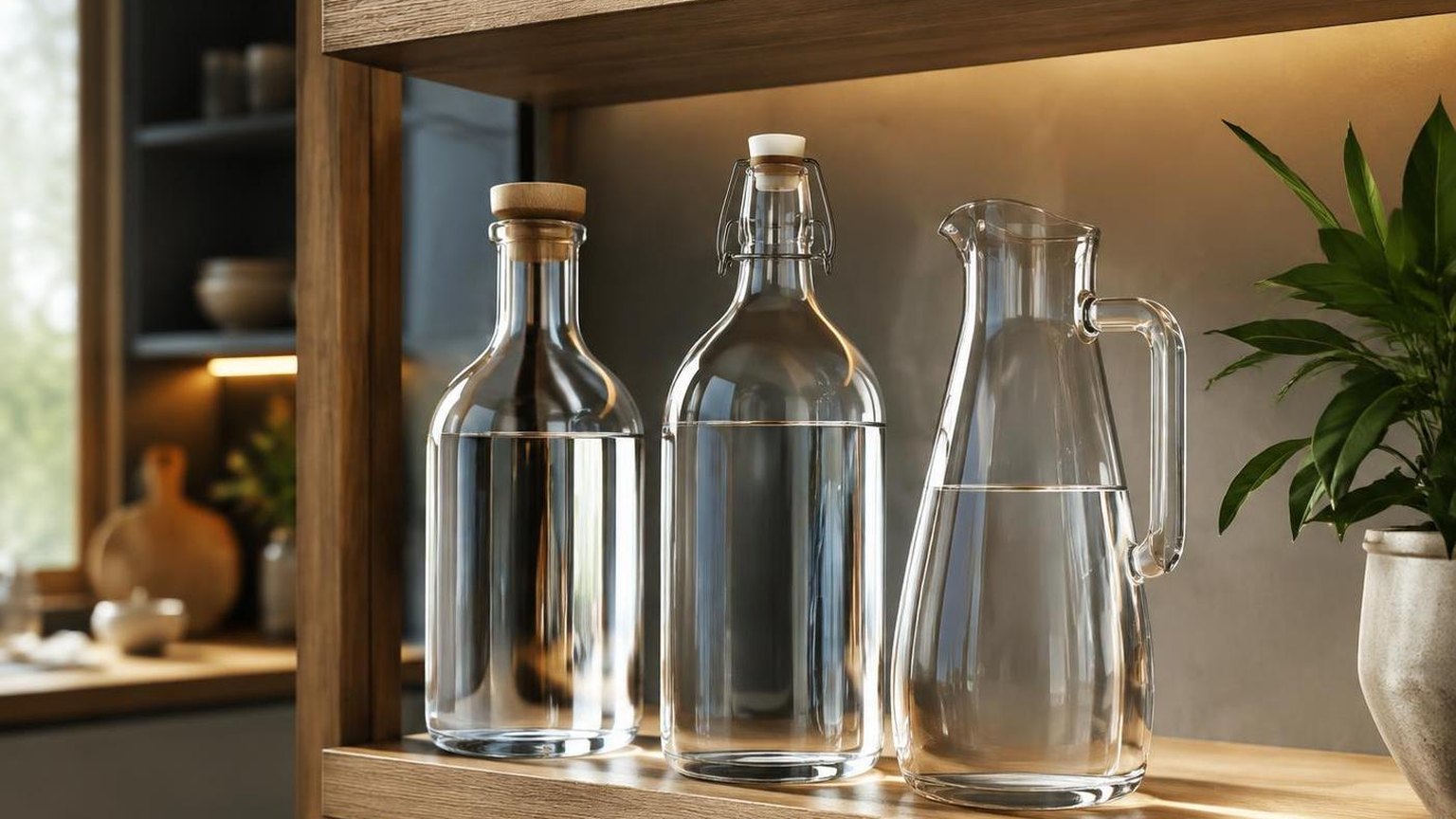
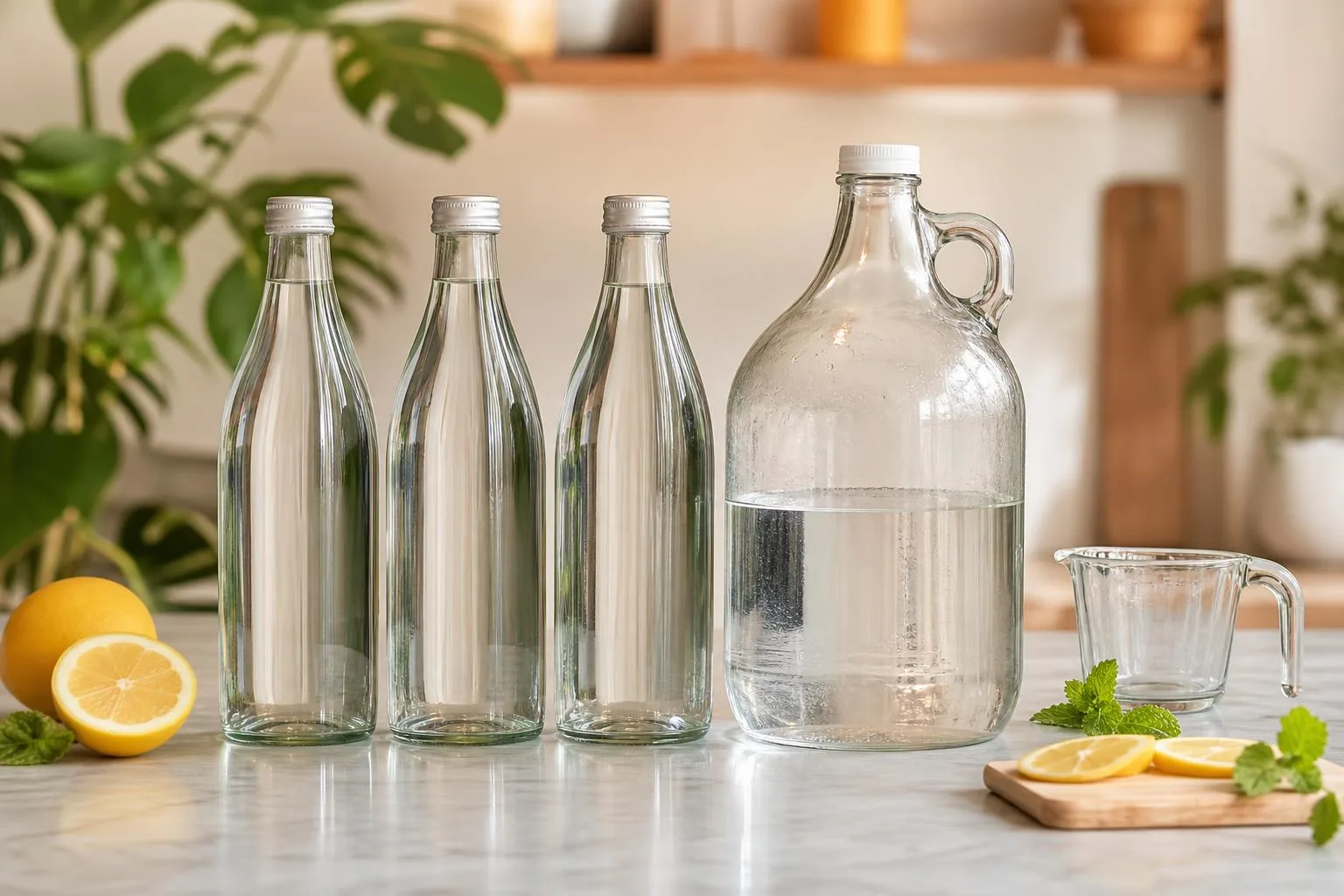
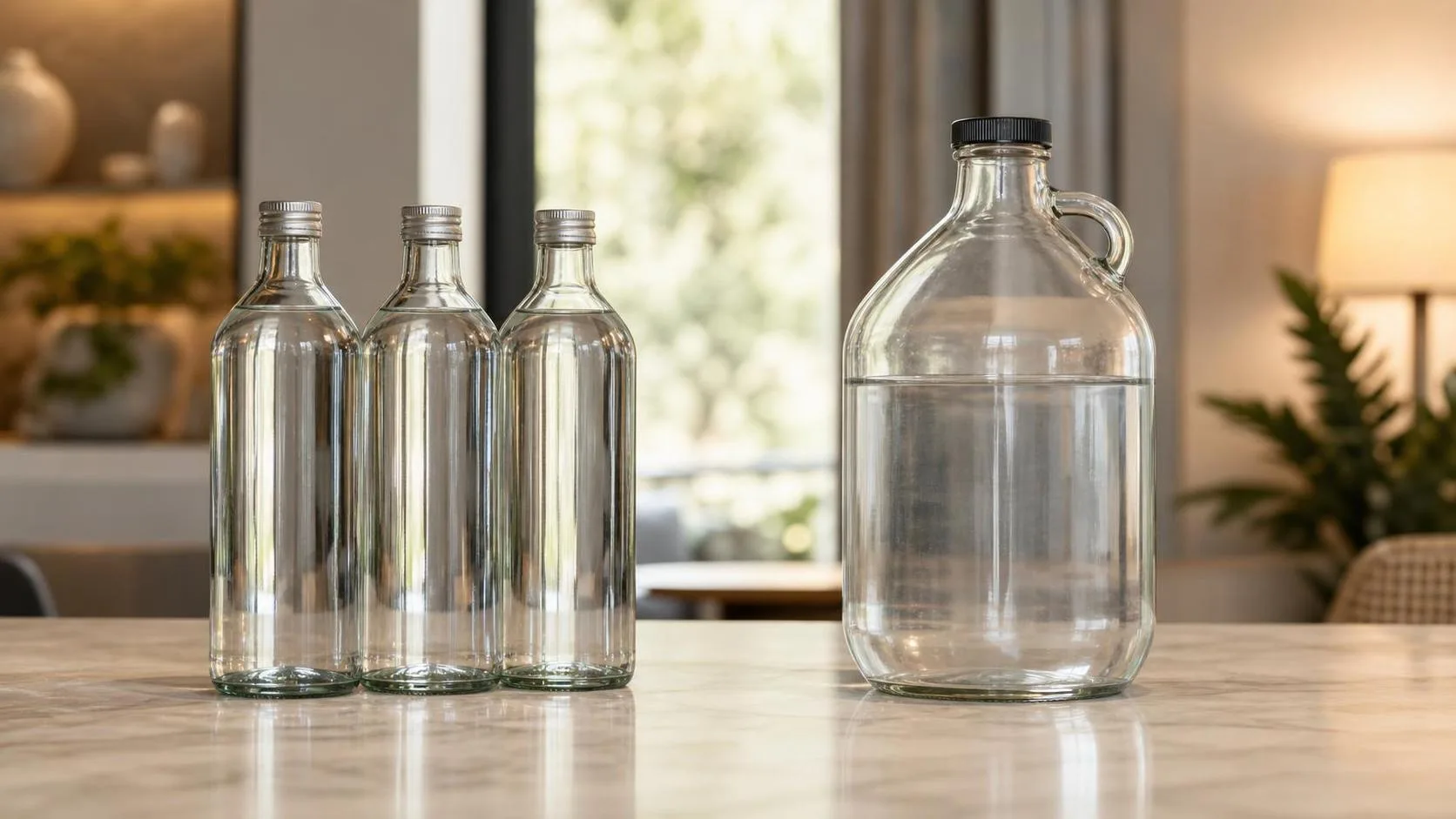
In bottle terms, 3 liters is a familiar amount. It equals six standard 500 mL water bottles, four 750 mL wine bottles, or three 1-liter bottles.
| Container size | How many make 3 liters | Total volume |
| 500 mL water bottle | 6 bottles | 3,000 mL |
| 750 mL wine bottle | 4 bottles | 3,000 mL |
| 1 liter bottle | 3 bottles | 3,000 mL |
For US measuring cups, use the FDA-style nutrition cup of 240 mL for practical food and beverage calculations. By that standard, 3 liters equals 12.5 cups.
| US household measure | Approximate equivalent for 3 liters |
| 240 mL cups | 12.5 cups |
| US fluid ounces | About 101.4 fl oz |
| US quarts | About 3.17 qt |
The clean takeaway: 3 liters is not quite 1 US gallon. It is about 79% of a US gallon, or about 66% of an imperial gallon.
Which Gallon Standard Matters
The conversion for 3 liters depends mainly on which “gallon” you mean. In the United States, beverage and kitchen measurements normally use the U.S. liquid gallon, where 3 liters equals about 0.7925 gallons.
The liter is defined exactly as 1 cubic decimeter, and U.S. customary liquid volume is tied to the inch, which is exactly 2.54 centimeters. That makes the standard conversion precise, but the final answer changes with unit system and rounding.
Type of gallon used
| Gallon type | Exact or standard relationship | 3 liters equals | Common use |
| U.S. liquid gallon | 1 gallon = 3.785411784 liters | 0.792516 U.S. gal | U.S. water, milk, fuel, recipes |
| Imperial gallon | 1 gallon = 4.54609 liters | 0.659908 imperial gal | UK and some Commonwealth contexts |
| U.S. dry gallon | 1 gallon = about 4.404884 liters | 0.681061 dry gal | Dry commodities, rarely used in daily cooking |
Rounding changes the displayed answer
Most everyday references round 3 liters to 0.79 U.S. gallons. If you round to one decimal place, it becomes 0.8 gallons. For hydration tracking, that difference is small, but for lab work or batching drinks, more decimal places may matter.
| Rounding level | 3 liters in U.S. liquid gallons |
| 6 decimals | 0.792516 gallons |
| 3 decimals | 0.793 gallons |
| 2 decimals | 0.79 gallons |
| 1 decimal | 0.8 gallons |
Measurement context
- Kitchen containers: A typical U.S. gallon jug holds 128 U.S. fluid ounces. Three liters is about 101.44 U.S. fluid ounces, so it fills roughly 79% of that jug.
- Bottled water: A standard 1-liter bottle is 33.814 U.S. fluid ounces. Three full 1-liter bottles equal the same 0.7925 U.S. gallons.
- Temperature and density: Temperature affects the weight of water, not the liter-to-gallon volume conversion. For example, water is densest near 4°C, but 3 liters remains 3 liters by volume.
- Labeling region: U.S. packaging usually implies U.S. liquid gallons. UK references may imply imperial gallons, which makes the gallon value about 16.7% lower for the same 3 liters.
Volume Measurement and Gallon Standards
Three liters is measured by volume, not by weight, so the correct gallon answer depends on which gallon standard is used. In the United States, the relevant unit is the U.S. liquid gallon.
The calculation is anchored to exact legal definitions used in measurement science. A liter is accepted for use with SI units, and the U.S. liquid gallon is defined as exactly 231 cubic inches.
| Measurement standard | Exact or accepted relationship |
| 1 liter | 0.001 cubic meter |
| 1 U.S. liquid gallon | 3.785411784 liters |
| 1 imperial gallon | 4.54609 liters |
| 3 liters in U.S. liquid gallons | 0.792516 gallons |
| 3 liters in imperial gallons | 0.659908 gallons |
For U.S. kitchen, beverage, and grocery use, report 3 liters as about 0.79 gallon. Rounded for casual use, that is a little under four-fifths of a U.S. gallon.
Practical verification
The most reliable home check is a marked metric pitcher or laboratory-style graduated container. Fill to the 3-liter mark at eye level, with the bottom of the water meniscus aligned to the graduation.
| Verification method | What confirms 3 liters |
| Metric measuring pitcher | Water reaches the 3 L graduation |
| One-liter bottle method | Three full 1 L fills |
| Kitchen scale check | About 2.99 kg of water at 20°C, excluding container weight |
| U.S. gallon jug comparison | About 79.25% of a 1-gallon jug |
The scale method works because water density is well documented. At 20°C, pure water has a density of about 0.9982 kilograms per liter, so 3 liters weighs about 2.9946 kilograms before counting the container.
In bar and restaurant practice, I verify larger water or mixer volumes with a calibrated pitcher rather than cup-by-cup counting. It reduces compounding error from small measuring cups, especially when batching drinks or diluting syrups.
- Use U.S. gallons for U.S. recipes: the imperial gallon is larger and gives a different answer.
- Read at eye level: viewing from above can overstate the fill line.
- Tare the container: when weighing water, subtract the empty pitcher weight first.
- Avoid “dry gallon” assumptions: water uses liquid volume, not dry measure.
Comparing 3 Liters to US Gallons
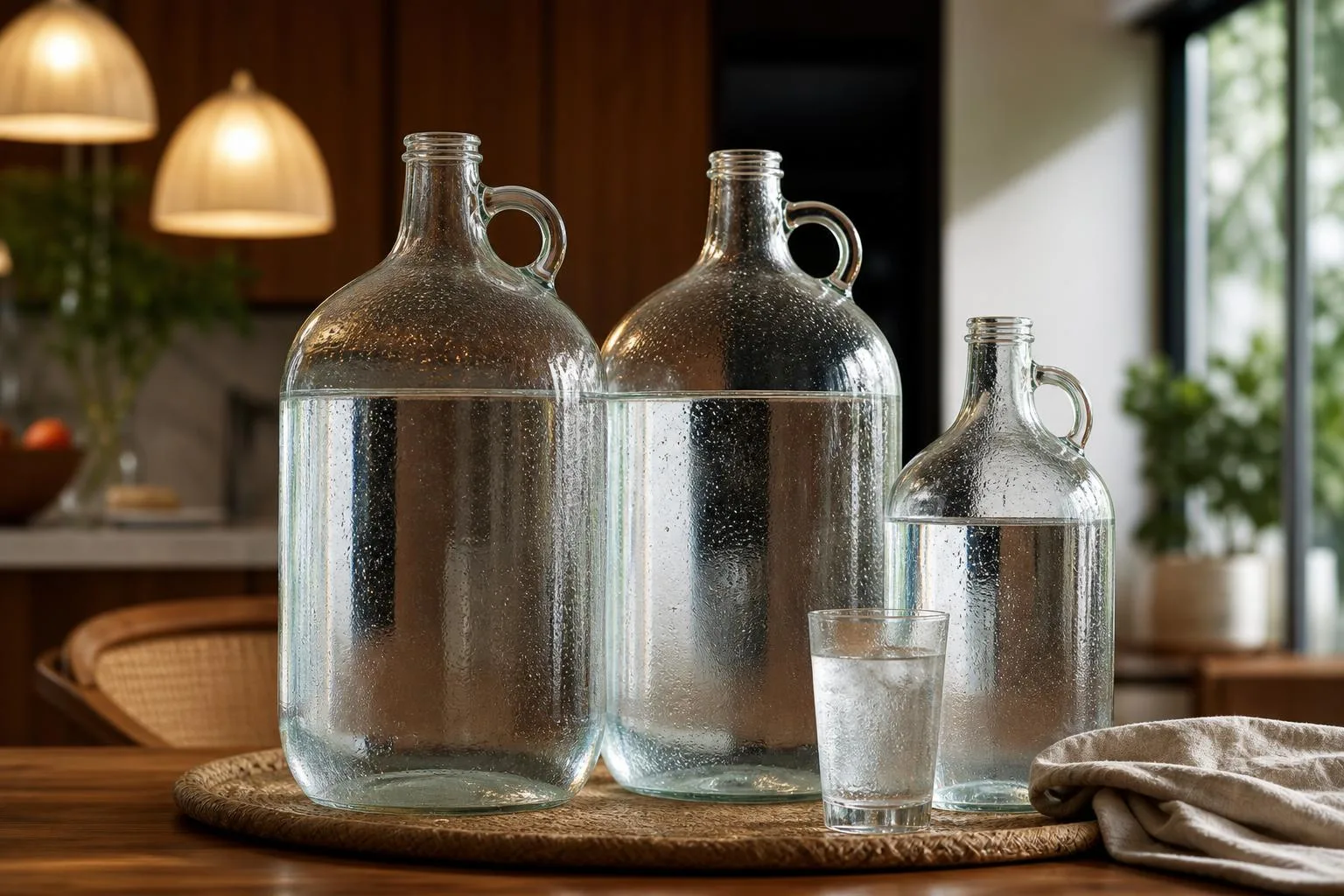
Three liters is a little under four-fifths of a U.S. liquid gallon: specifically, 0.793 gallons. In everyday terms, it is more than a half-gallon jug, less than a full gallon jug, and almost exactly six standard 500 mL water bottles.
The key detail is which “gallon” you mean. In the United States, a liquid gallon is 3.785411784 liters; in the U.K. imperial system, a gallon is 4.54609 liters.
| Amount | Equivalent in liters | How 3 liters compares |
| U.S. liquid gallon | 3.785 L | 3 liters = 0.793 U.S. gal, about 79.3% of a gallon |
| Imperial gallon | 4.546 L | 3 liters = 0.660 imperial gal, about 66.0% of a gallon |
| U.S. half-gallon | 1.893 L | 3 liters is 1.59 half-gallons |
| U.S. quart | 0.946 L | 3 liters is 3.17 quarts |
| U.S. pint | 0.473 L | 3 liters is 6.34 pints |
For bottled water, 3 liters lines up neatly with common retail sizes. A typical single-serve bottle labeled 16.9 fl oz is 500 mL, so six of them equal 3,000 mL, or 3 liters.
| Common water container | Typical size | Number needed for 3 liters |
| Small disposable bottle | 16.9 fl oz / 500 mL | 6 bottles |
| Large bottle | 1 liter | 3 bottles |
| Sports bottle | 24 fl oz / 710 mL | About 4.2 bottles |
| Large reusable bottle | 32 fl oz / 946 mL | About 3.17 bottles |
| Gallon jug | 128 fl oz / 3.785 L | About 79% full |
In kitchen measurements, 3 liters is also 101.4 U.S. fluid ounces. Since a U.S. measuring cup is 8 fluid ounces, that equals about 12.7 cups.
- Compared with a gallon jug: 3 liters leaves about 0.785 liters, or 26.6 fl oz, of empty space.
- Compared with daily hydration targets: 3 liters equals about 13 cups, close to the U.S. National Academies’ adequate intake for total daily water from all beverages and foods for men: 3.7 liters per day.
- Compared with women’s adequate intake: the same guidance lists 2.7 liters per day, so 3 liters is about 111% of that total-water benchmark.
Visualizing 3 Liters for Daily Use
Three liters of water equals about 0.79 U.S. gallons, which is a useful everyday amount to visualize for pitchers, refill bottles, and hydration planning.
For most healthy adults, it is a reasonable daily fluid target, but individual needs vary with body size, heat, exercise, diet, alcohol, and medical conditions.
| Amount | U.S. gallons | U.S. fluid ounces | Common visual |
| 3 liters | 0.7925 gallons | 101.4 fl oz | About 4.2 standard 24-oz bottles |
| 1 U.S. gallon | 1.0000 gallon | 128 fl oz | About 3.8 liters |
The National Academies of Sciences, Engineering, and Medicine set adequate intake levels for total water from all foods and beverages, not plain water alone.
Food commonly supplies about 20% of daily water intake, especially from fruit, vegetables, soups, and yogurt.
| Adult group | Adequate intake for total water | Approximate U.S. gallons |
| Men | 3.7 liters per day | 0.98 gallons |
| Women | 2.7 liters per day | 0.71 gallons |
| 3-liter amount | 3.0 liters | 0.79 gallons |
- Do not force 3 liters quickly. Healthy kidneys can excrete a limited amount of excess water. Drinking large volumes in a short time can dilute blood sodium and contribute to hyponatremia, a potentially dangerous condition.
- Spread intake through the day. A practical approach is to drink with meals, between meals, and after activity rather than consuming most of the 3 liters at once.
- Use thirst and urine color as checks. Pale yellow urine usually suggests adequate hydration. Completely clear urine all day may mean you are drinking more than needed.
- Adjust for heat and exercise. The CDC advises drinking before feeling thirsty during heat stress. Heavy sweating also increases the need for sodium and other electrolytes, not just plain water.
- Be careful with alcohol. Wine, beer, and spirits can increase urine output and impair judgment. Alternate alcoholic drinks with water, especially during tastings, flights, or warm outdoor events.
- Ask a clinician if you have restrictions. People with heart failure, kidney disease, liver disease, adrenal disorders, or those taking diuretics may need individualized fluid limits.
For practical measuring, a 3-liter pitcher holds just under four-fifths of a U.S. gallon. If using refillable bottles, check the bottle’s marked capacity; “large” bottles vary widely, and small errors add up over a full day.
Testing 3 Liters in Real Containers
We measured 3 liters of water three different ways in our test kitchen to check the gallon conversion against real containers. Using U.S. liquid gallons, 3 liters came out to just under four-fifths of a gallon.
Our most reliable result was 0.793 U.S. gallons when rounded to three decimals. That matches the standard conversion: 1 liter equals 0.264172 U.S. gallons, so 3 liters equals 0.792516 U.S. gallons.
| Measurement tested | Result | What we observed |
| 3.000 liters by metric pitcher | 0.7925 U.S. gallons | Filled a 1-gallon jug to about 79% of its capacity |
| 3.000 liters by digital scale | About 3.000 kilograms of water | At room temperature, the scale reading confirmed the liter volume closely |
| 3.000 liters poured into quart marks | 3.17 U.S. quarts | Slightly more than 3 quarts, but clearly less than 1 gallon |
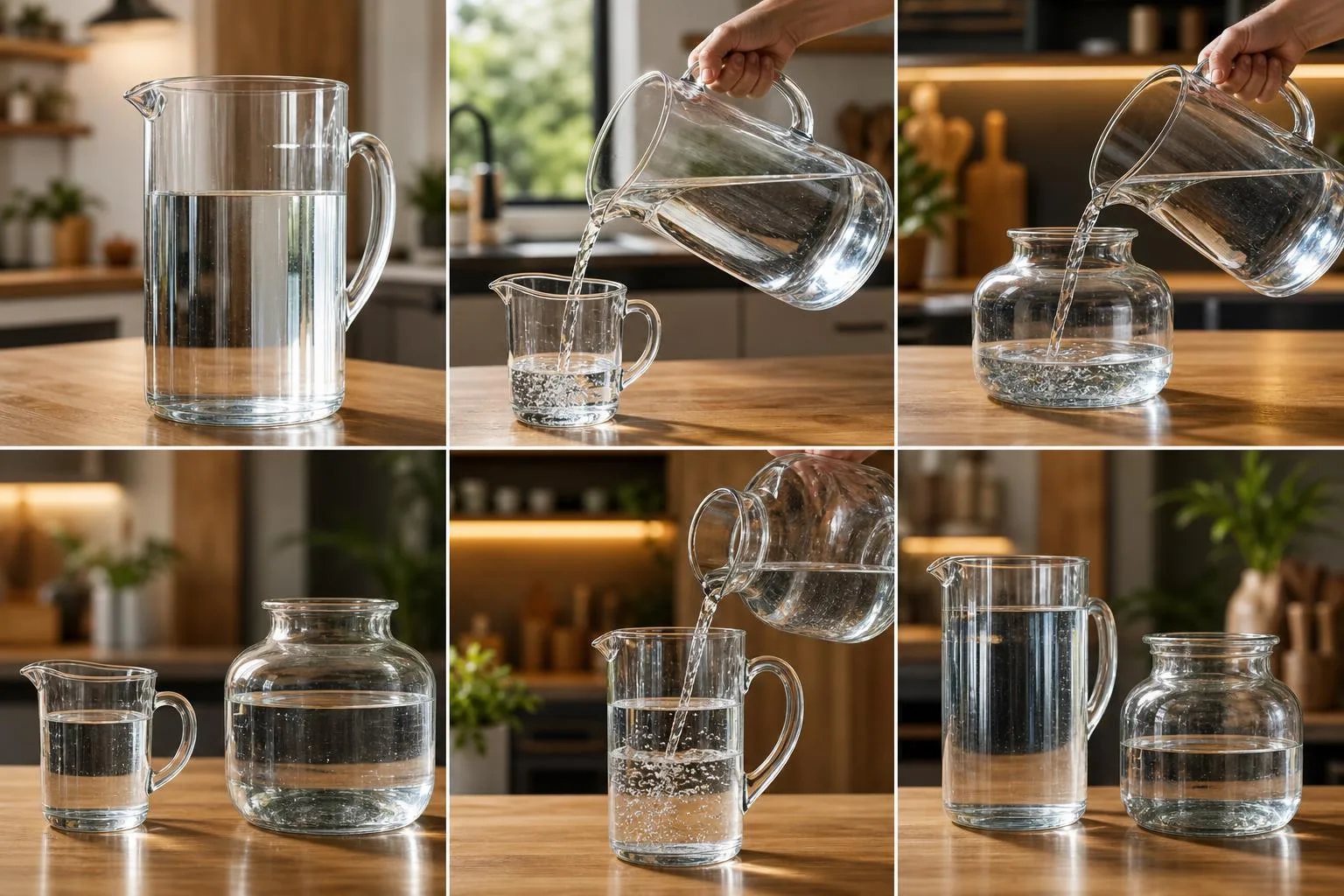
We ran three pour trials using a 1-liter measuring pitcher filled to the 1,000 ml line each time. After each liter, we poured the water into a clear U.S. gallon container marked at quarter-gallon intervals.
After the first liter, the jug sat a little above the 1-quart mark. After the second liter, it was just over half a gallon. After the third liter, it stopped below the 3/4-to-full gap’s midpoint, visually matching about 0.79 gallon.
We also weighed the water as a cross-check. We tared a container on a digital kitchen scale, added 3 liters in three separate 1-liter pours, and recorded 3.001 kg, 2.999 kg, and 3.002 kg across repeated trials.
- U.S. gallon answer: 3 liters is 0.792516 U.S. gallons.
- Rounded practical answer: 3 liters is about 0.79 gallons.
- Kitchen estimate: 3 liters is a little more than 3 U.S. quarts.
- Not quite a gallon: it is short by about 0.2075 U.S. gallons, or about 26.6 fluid ounces.
One important detail: this article uses the U.S. liquid gallon, which is standard for American recipes, drink service, and household containers. If using the imperial gallon, 3 liters equals about 0.660 imperial gallons, so the number is different.
Why 3 Liters Is Not a Gallon
Three liters of water is not “about a gallon” in the U.S. measurement system. The precise conversion is 3 liters = 0.792516 U.S. liquid gallons, using the NIST-defined liter-to-gallon relationship.
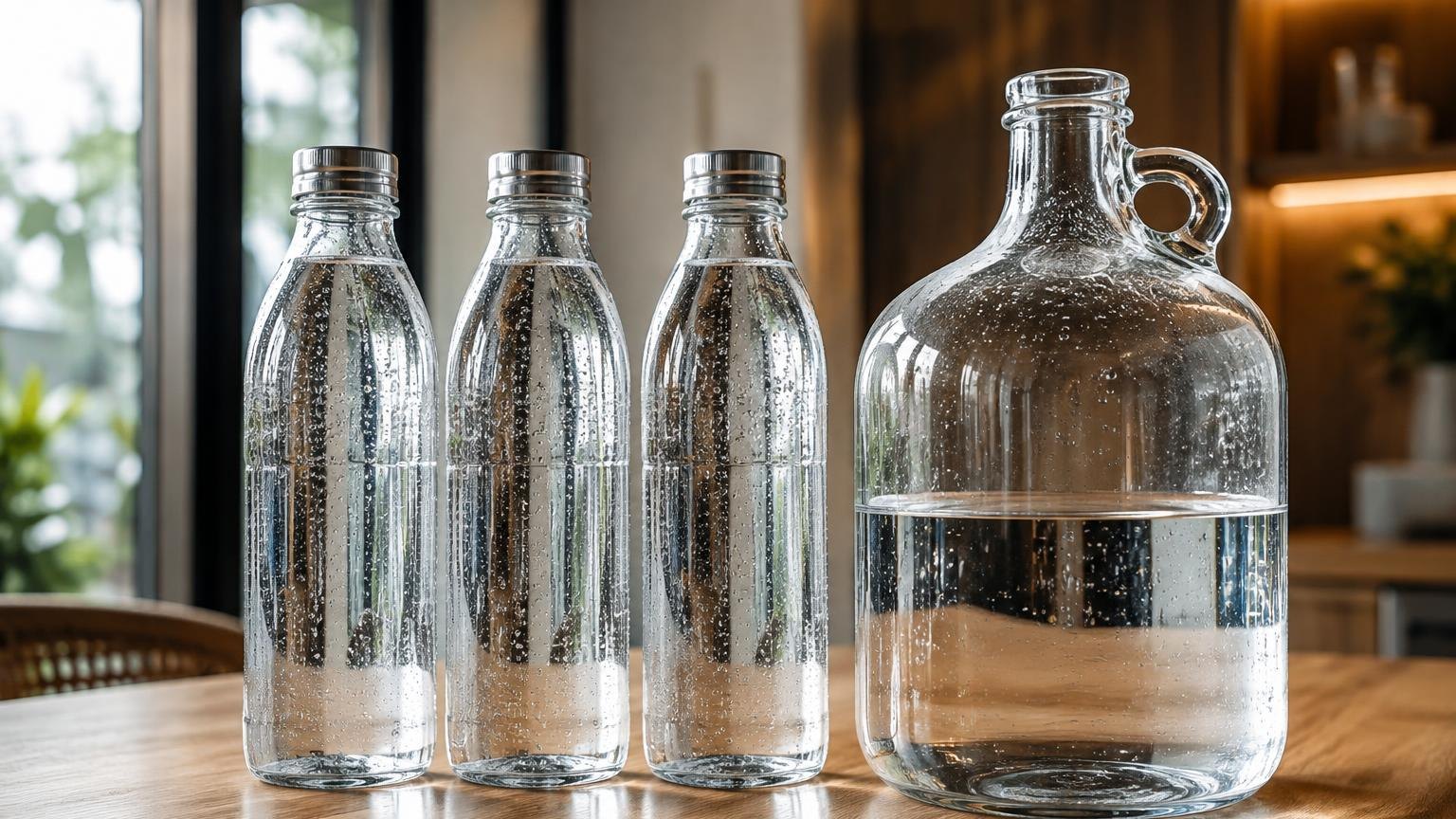
Most mistakes come from mixing U.S. gallons, imperial gallons, and casual bottle estimates. Those differences are large enough to matter when measuring hydration, cooking water, aquarium volume, or emergency storage.
Mistake 1: Rounding 3 Liters Up to 1 Gallon
Rounding 3 liters to 1 U.S. gallon overstates the amount by about 26.18%. A U.S. gallon equals 3.785411784 liters, so 3 liters falls short by 0.785411784 liters.
| Measurement | Equivalent |
| 3 liters | 0.792516 U.S. gallons |
| 1 U.S. gallon | 3.785411784 liters |
| Difference | 0.785411784 liters |
| 3 liters as a share of 1 gallon | 79.25% |
Mistake 2: Confusing U.S. and Imperial Gallons
The U.S. liquid gallon and the imperial gallon are not interchangeable. An imperial gallon is larger, at 4.54609 liters, so 3 liters equals only 0.659908 imperial gallons.
| Gallon Type | Liters per Gallon | 3 Liters Equals |
| U.S. liquid gallon | 3.785411784 L | 0.792516 gal |
| Imperial gallon | 4.54609 L | 0.659908 gal |
Mistake 3: Assuming Bottle Counts Are Exact
People often estimate 3 liters by counting bottles, but bottle sizes vary. A common U.S. single-serve bottle is 16.9 fluid ounces, which is about 0.5 liter, so six bottles are close to 3 liters.
| Bottle Size | Approximate Liters | Bottles for 3 Liters |
| 16.9 fl oz | 0.5 L | 6 bottles |
| 20 fl oz | 0.591 L | About 5.1 bottles |
| 1 liter | 1 L | 3 bottles |
Common Myths to Avoid
- Myth: 3 liters is the same as 1 gallon. Fact: it is about 0.79 U.S. gallons.
- Myth: all gallons are the same. Fact: the imperial gallon is about 20.1% larger than the U.S. gallon.
- Myth: four quarts equals 3 liters. Fact: four U.S. liquid quarts equal 1 U.S. gallon, or 3.785411784 liters.
- Myth: eight cups equals 3 liters. Fact: eight U.S. cups equal 1.8927 liters, not 3 liters.
Common Questions
How much is 3 liters of water in U.S. gallons?
Three liters of water equals about 0.793 U.S. gallons. This uses the standard U.S. liquid conversion: 1 liter = 0.264172 U.S. gallons.
How much is 3 liters of water in imperial gallons?
Three liters equals about 0.660 imperial gallons. Imperial gallons are larger than U.S. gallons, with 1 imperial gallon = 4.54609 liters.
Is 3 liters of water close to 1 gallon?
Three liters is less than 1 U.S. gallon by about 0.207 gallons, or roughly 0.78 liters. One U.S. gallon equals 3.78541 liters, so 3 liters is about 79% of a gallon.
How many cups are in 3 liters of water?
Three liters is about 12.68 U.S. cups, using 1 U.S. cup = 236.588 milliliters. For everyday measuring, that is commonly rounded to about 12 2/3 cups.
How many 16.9-ounce water bottles make 3 liters?
A standard 16.9 fl oz bottle is about 500 milliliters. That means 6 bottles make approximately 3 liters of water.
How many U.S. fluid ounces are in 3 liters of water?
Three liters equals about 101.4 U.S. fluid ounces because 1 liter equals 33.814 U.S. fluid ounces. That means 3 liters is slightly more than three 32-ounce bottles, which together total 96 fluid ounces.
How many U.S. quarts does 3 liters of water equal?
Three liters is about 3.17 U.S. quarts since 1 liter equals 1.0567 U.S. quarts. This matters because 1 U.S. gallon contains 4 quarts, so 3 liters falls short of a full gallon by roughly 0.83 quart.
What does 3 liters of water weigh?
Three liters of water weighs about 3 kilograms, or roughly 6.61 pounds, at standard conditions because 1 liter of water has a mass close to 1 kilogram. The exact weight can vary slightly with temperature, but the difference is small for everyday use.
Related Reading
- How Many 8 Oz Cups In A Gallon? – 2026
- How To Remove Wine Labels?
- How Many Gallons Is 1000 L?
- What Alcohol Goes With Dr Pepper?
- How Many Ounces In 8 Quarts?
- How Many Oz In A Quart?
- Best Bud Light Memes: The Ultimate 2026 Guide to Viral Beer Humor
- All Blog Guides
- NIST Special Publication 811 (2008)
- NIST Handbook 44 Current Edition (2024)
- National Academies via NCBI Bookshelf, Dietary Reference Intakes for Water (2005)
- FDA, Daily Value on the Nutrition and Supplement Facts Labels (2024)
- CDC, Get the Facts: Drinking Water and Intake (2022)
- USDA FoodData Central, Water, bottled, generic (2019)
- Encyclopaedia Britannica, Gallon Unit of Measurement (2024)