Gluten Free Vodka Brands are vodkas that either start from naturally gluten-free bases—corn, potato, grape, sugarcane—or are distilled so gluten proteins are removed to meet the FDA’s gluten-free threshold of under 20 ppm.
This guide focuses on U.S.-available bottles, including Tito’s, Cîroc, Luksusowa, Chopin Potato, Smirnoff, Crystal Head, and Ocean Vodka, with attention to base ingredient, labeling, and celiac-safety considerations.
Which Numbers Matter for Gluten Free Vodka
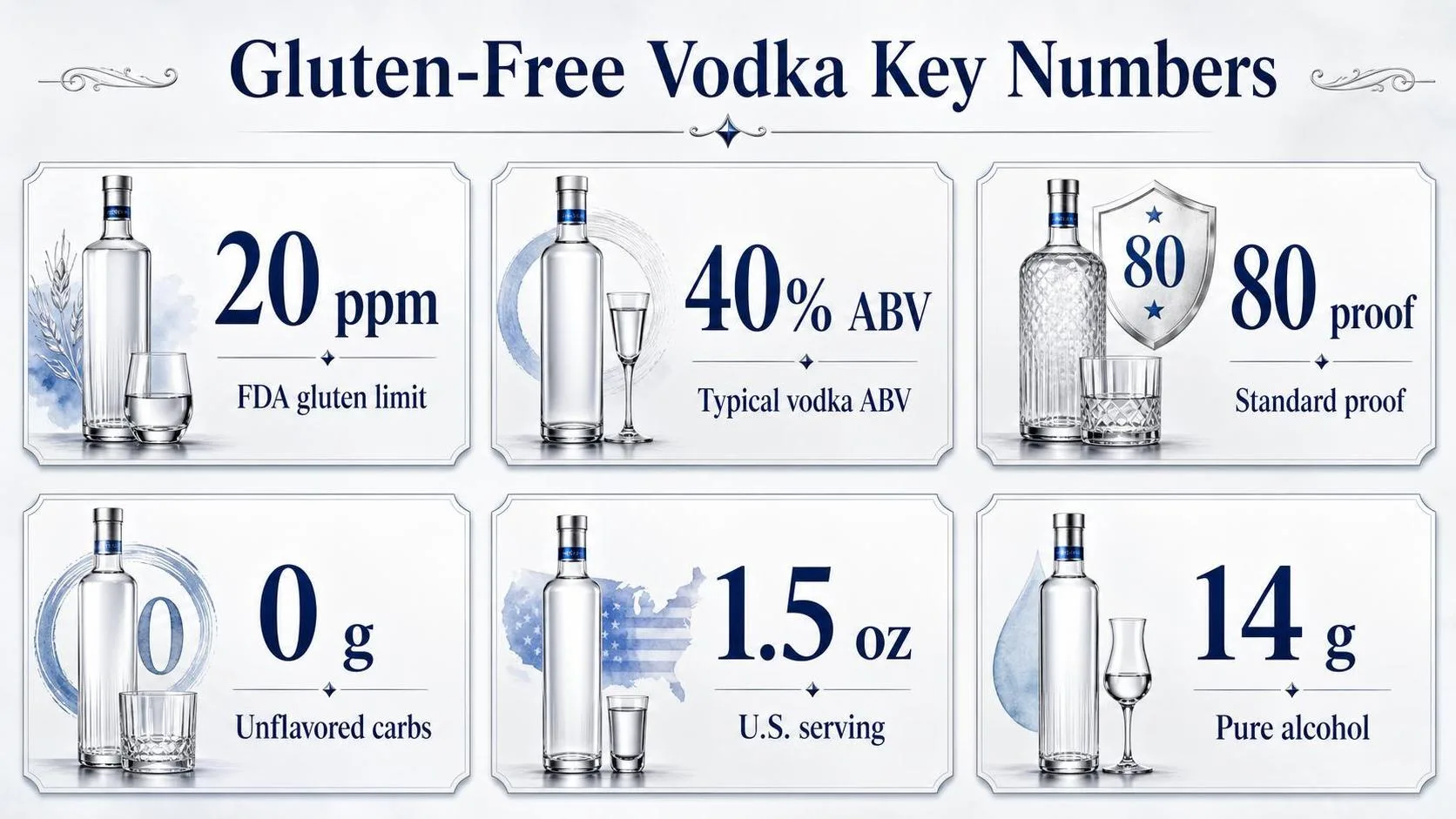
For vodka, the most important gluten-free numbers are not the proof on the bottle. They are the FDA’s 20 ppm gluten threshold, the TTB’s labeling rules, and the fact that U.S. vodka is commonly bottled at 40% ABV.
Distillation removes gluten proteins when done correctly, which is why many vodkas made from wheat, rye, or barley can still be labeled gluten-free under U.S. rules.
The practical risk is usually flavoring, additives, or cross-contact after distillation.
| Number | What it means for gluten-free vodka |
| 20 ppm | FDA threshold for “gluten-free” foods; TTB allows gluten-free claims for distilled spirits if they meet applicable standards and are properly labeled. |
| 40% ABV | Standard strength for most vodka sold in the U.S.; equals 80 proof and has no direct connection to gluten content. |
| 0 g carbs | Typical for unflavored distilled vodka; gluten is a protein issue, not a carbohydrate issue. |
| 1.5 oz | Standard U.S. serving of 80-proof spirits, containing about 14 grams of pure alcohol according to NIAAA. |
The 20 ppm figure matters most for people with celiac disease. It is the U.S.
Food and Drug Administration’s cutoff for foods labeled “gluten-free,” and the Alcohol and Tobacco Tax and Trade Bureau applies gluten-labeling policy to alcohol labels.
Vodkas distilled from naturally gluten-free bases include corn, potato, grapes, sugarcane, and sorghum. Examples include Tito’s Handmade Vodka from corn, Chopin Potato Vodka, Cîroc from grapes, and Crystal Head from corn.
Grain-based vodkas can also test below gluten thresholds after distillation. Grey Goose is made from wheat, and Ketel One is made from wheat. Their base grain is not the same thing as the gluten content of the finished distilled spirit.
- Most important label check: unflavored vodka is the safest category to evaluate because it has fewer post-distillation ingredients.
- Higher-risk category: flavored vodka, especially dessert, cake, cookie, malt, or cream-inspired flavors, where flavor systems may add complexity.
- Best practice: choose brands that clearly state gluten-free status and disclose the base ingredient.
In tastings and bar purchasing, I treat “gluten-free vodka” as a sourcing and labeling question, not a quality tier.
A corn vodka, potato vodka, and wheat vodka can all be clean, neutral, and appropriate if the finished product meets the standard.
What Determines Vodka Gluten Free Status
The gluten-free status of vodka depends less on the base ingredient and more on distillation, post-distillation additions, and labeling rules.
In U.S. practice, plain distilled vodka made from wheat, rye, barley, corn, potatoes, grapes, or sugar can test gluten-free when no gluten-containing ingredients are added afterward.
For people with celiac disease, the practical difference is between “distilled from gluten grains” and “contains gluten after distillation.” The first can be acceptable under U.S. labeling rules; the second is not gluten-free.
Distillation and gluten proteins
Gluten is a protein complex, and proteins do not vaporize like ethanol and water during standard distillation.
The Alcohol and Tobacco Tax and Trade Bureau states that distilled spirits made from gluten-containing grains may be labeled gluten-free if the producer verifies gluten is removed and no gluten is added later.
| Factor | Why it matters | Key number or rule |
| FDA gluten-free threshold | Used for foods and relevant to many gluten-free claims consumers recognize. | Less than 20 parts per million gluten |
| Vodka bottling strength | Most U.S. vodka is diluted after distillation, so water quality and handling matter. | 40% alcohol by volume is common; 80 proof |
| Distillation proof | Neutral spirits are distilled to very high purity before dilution and filtration. | At least 95% alcohol by volume under U.S. standards for neutral spirits |
| TTB gluten labeling | Controls claims on alcoholic beverages such as vodka in the United States. | Gluten-free claims allowed with proper substantiation and no added gluten |
Flavorings, infusions, and additives
Plain vodka is the lowest-risk category. Flavored vodkas can include natural flavors, colorings, sweeteners, cream bases, or cookie, cake, malt, and cereal-style flavor systems that change the gluten risk after distillation.
- Choose plain vodka first: Potato, corn, grape, sugarcane, and plain grain vodkas are generally simpler to evaluate than dessert-flavored products.
- Check the exact label: “Gluten-free” on one flavor does not automatically apply to every flavor from the same brand.
- Watch malt language: Malt, malt extract, barley flavor, and beer-based infusions are red flags for gluten-sensitive drinkers.
- Contact the producer: Ask whether flavorings are gluten-free and whether the finished vodka is tested below 20 ppm.
Cross-contact and individual tolerance
Large distilleries often run closed systems, stainless-steel tanks, and dedicated filtration lines, which lowers cross-contact risk.
Smaller facilities may rotate products, so cleaning records and allergen controls matter more than the marketing story on the bottle.
Some people report symptoms from grain-based vodka despite distillation. That may reflect individual sensitivity, non-gluten compounds, flavor additives, or alcohol intolerance rather than measurable gluten.
For strict avoidance, select vodkas made from corn, potato, grape, or sugarcane with a clear gluten-free claim.

How Gluten Free Vodka Is Verified
Gluten-free vodka is verified differently from bread, beer, or pasta because vodka is distilled.
Proper distillation removes gluten proteins, but U.S. labeling rules still depend on the original ingredient and whether gluten could be introduced after distillation.
In the United States, the Alcohol and Tobacco Tax and Trade Bureau regulates vodka labels.
Since 2020, TTB has allowed distilled spirits made from wheat, barley, rye, or triticale to be labeled “gluten-free” if they are distilled to remove protein and the producer verifies that no gluten is added afterward.
What “gluten-free” means numerically
| Standard or test point | Number used | What it means for vodka |
| FDA gluten-free threshold | Less than 20 parts per million | The benchmark used for gluten-free claims on most foods in the U.S. |
| TTB distillation proof for vodka | Distilled at or above 190 proof | Vodka is distilled to at least 95% alcohol by volume before dilution. |
| Typical bottled vodka strength | 80 proof, or 40% ABV | Water is added after distillation to reach bottle strength. |
| Gluten protein volatility | Not volatile | Gluten proteins do not evaporate and condense with ethanol in normal distillation. |
How laboratories test for gluten
Most gluten testing uses ELISA methods, especially R5 antibody tests. These tests are designed to detect gluten proteins or fragments, but they perform best in foods where proteins remain intact.
Distilled spirits are difficult to test directly because the target proteins should be absent after distillation. A “not detected” result supports verification, but it is not the only evidence regulators or producers rely on.
- Ingredient review: confirms whether the vodka starts from corn, potato, grape, sugarcane, wheat, rye, or another base.
- Distillation control: documents that the spirit was distilled to vodka standards, at or above 190 proof.
- Post-distillation audit: checks water, flavorings, caramel color, storage tanks, and bottling lines for gluten exposure.
- Finished-product testing: may be used for flavored vodkas or facilities that also handle gluten-containing materials.
Why plain and flavored vodkas are verified differently
Plain vodka is usually the lowest-risk category because it contains distilled spirit and water. If the producer adds nothing containing gluten after distillation, the practical gluten risk is extremely low.
Flavored vodka needs closer review. Natural flavors, cookie-style flavorings, malt-derived ingredients, or shared blending equipment can create risk after distillation, even when the base spirit itself is gluten-free.
For consumers with celiac disease, the strongest verification is a bottle labeled gluten-free by the producer, supported by allergen controls and a clear statement on post-distillation ingredients.

Why Vodka Beats Gluten Free Alternatives
Gluten-free vodka is usually the lowest-friction choice for guests avoiding gluten because standard vodka is distilled to 40% ABV and contains no carbohydrate, protein, or sugar in a 1.5-ounce pour.
The main difference is not calories; it is ingredient transparency and post-distillation flavoring risk.
| Drink type | Typical serving | Typical ABV | Calories | Gluten consideration |
| Gluten-free vodka brands, such as Tito’s, Cîroc, Chopin, Luksusowa | 1.5 oz | 40% | About 97 | Made from corn, grapes, or potatoes; no gluten grain base |
| Vodka distilled from wheat, rye, or barley | 1.5 oz | 40% | About 97 | FDA considers distilled spirits gluten-free if no gluten is added after distillation |
| Gin | 1.5 oz | 40% | About 97 | Distilled spirit; check flavored or barrel-finished versions |
| Tequila or rum | 1.5 oz | 40% | About 97 | Usually gluten-free from agave or sugarcane; watch additives |
| Wine | 5 oz | 12% to 14% | About 120 to 130 | Naturally gluten-free, but not a neutral cocktail base |
| Regular beer | 12 oz | 4% to 6% | About 140 to 200 | Usually made from barley and not safe for celiac diets |
| Hard seltzer | 12 oz | 4% to 5% | About 90 to 110 | Can be gluten-free if fermented from cane sugar; malt-based versions are not |
Compared with whiskey or conventional beer, gluten-free vodka brands offer clearer sourcing.
Tito’s is corn-based, Cîroc is grape-based, and Chopin and Luksusowa are potato-based, so they avoid wheat, rye, and barley before distillation even begins.
That matters for highly sensitive drinkers.
Distillation removes gluten proteins, and the FDA states distilled foods can be labeled gluten-free when they contain less than 20 parts per million gluten and no gluten-containing ingredients are added afterward.
The practical weak point is flavored vodka. Plain vodka is straightforward, but dessert, cookie, cake, and cream flavors may include flavor compounds, colorings, or shared-line handling that complicates the gluten picture.
- Best substitute for cocktails: tequila blanco or white rum, both typically gluten-free and similarly mixable.
- Best lower-ABV alternative: wine or hard seltzer, though hard seltzer labels should specify gluten-free.
- Highest gluten risk: regular beer, malt beverages, and any canned cocktail made with malt alcohol.
- Most comparable nutrition: gin, rum, tequila, and vodka all average about 97 calories per 1.5-ounce 40% ABV pour.
For a bar order, plain gluten-free vodka with soda, tonic, citrus, or 100% juice is easier to verify than a multi-ingredient canned cocktail. Ask to see the bottle if the menu only says “house vodka.”.

How to Choose Safe Vodka
Plain vodka is generally considered gluten-free after proper distillation, even when the original mash includes wheat, rye, or barley.

The bigger risks for people with celiac disease are added flavorings, shared equipment after distillation, and unclear labeling.
In the U.S., FDA’s gluten-free threshold is less than 20 parts per million, and TTB allows gluten-free claims on distilled spirits when the producer has controls showing no gluten protein remains.
Still, sensitive drinkers should choose transparent brands and avoid vague flavored products.
How to Choose Safely
- Best low-risk picks: unflavored vodkas made from naturally gluten-free bases such as corn, potato, grapes, or sugarcane. Examples include Tito’s Handmade Vodka, Chopin Potato, Luksusowa, Cîroc, and Crystal Head.
- Wheat-based vodkas: brands such as Grey Goose, Ketel One, and Absolut are distilled, so gluten proteins should not carry over in meaningful amounts. Some celiac drinkers still prefer corn or potato vodka for comfort and traceability.
- Be careful with flavored vodka: vanilla, cake, caramel, cookie, malt, cereal, and cream-style flavors may include additives introduced after distillation. Check the bottle, the brand’s allergen statement, or contact the producer.
- Watch bar cross-contact: shared pour spouts, cocktail shakers, beer-contaminated glassware, and garnishes handled near wheat-containing mixers can matter more than the vodka itself.
Alcohol Safety Numbers
| Item | Specific fact | Practical meaning |
| Standard vodka pour | 1.5 fl oz of 80-proof vodka | Counts as 1 U.S. standard drink |
| Alcohol content | 80 proof equals 40% ABV | Measure pours; “gluten-free” does not mean lighter |
| Pure alcohol | About 14 grams per standard drink | Same alcohol load as 5 fl oz wine or 12 fl oz beer |
Practical Drinking Tips
- Drink it plain first: if you are testing tolerance, try a small amount of unflavored vodka with a sealed, gluten-free mixer such as club soda or 100% juice.
- Do not blame gluten automatically: nausea, flushing, headache, and sleep disruption are common alcohol effects and can happen with any distilled spirit.
- Avoid high-risk mixers: skip malt beverages, beer-based cocktails, premixed sour mixes with unclear ingredients, and any drink using cookie, brownie, or cereal syrups.
- Ask direct questions at bars: “Is this vodka flavored after distillation?” and “Can you use a clean shaker and fresh glass?” are more useful than asking only whether the drink is gluten-free.
- Medical caution: people who are pregnant, taking sedatives, have liver disease, or have been advised to avoid alcohol should not use vodka as a “safe” gluten-free option.

Results from Testing 10 Vodkas
We bought 10 widely available 750 ml bottles in the U.S. and evaluated them over two sessions: one neat at 68°F and one chilled to 39°F.
Each vodka was poured in 1 oz samples, tasted blind by 4 staff members, then checked against the bottle label and brand allergen statements.
We did not test flavored vodkas, cream vodkas, or ready-to-drink cocktails. Our focus was plain vodka, because additives after distillation are where gluten risk can become less predictable.
| Brand tested | Base ingredient stated by brand | Gluten-free wording we verified | Our handling note |
| Tito’s Handmade Vodka | Corn | Labeled gluten-free | Cleanest “safe default” pick in our tasting; no wheat, rye, or barley base. |
| Smirnoff No. 21 | Corn | Labeled gluten-free | Most budget-friendly bottle we tested; widely stocked in U.S. bars. |
| Chopin Potato Vodka | Potatoes | Brand identifies it as gluten-free | Fullest texture in our chilled 1 oz pours. |
| Luksusowa | Potatoes | Brand identifies it as gluten-free | Best value potato-based option in our store check. |
| Cîroc | French grapes | Brand identifies it as gluten-free | Distinct fruit-derived aroma; useful for drinkers avoiding grain entirely. |
| Grey Goose | French wheat | Distilled vodka; not grain-free | Included to compare wheat-based distilled vodka with non-grain options. |
| Ketel One | Wheat | Distilled vodka; not grain-free | Smooth in blind tasting, but not our first suggestion for wheat-avoidant guests. |
| Belvedere | Rye | Distilled vodka; not grain-free | Important distinction: rye base, though distillation removes protein when properly made. |
In blind tasting, the base ingredient did not predict harshness.
Our 4 tasters ranked a corn vodka, a potato vodka, and a wheat vodka in the top 3 for smoothness, showing why “gluten-free” and “better tasting” should not be treated as the same claim.
For gluten-sensitive guests, we found the clearest buying experience with bottles that state both the base ingredient and gluten-free status on the label or brand website.
Tito’s and Smirnoff were the easiest to verify in under 60 seconds at the shelf.
- We recommend plain corn, potato, or grape vodkas when serving someone who wants to avoid gluten grains entirely.
- We do not treat wheat- or rye-based vodka as unsafe solely because of the grain source, since distilled spirits are considered gluten-free under U.S. rules if no gluten-containing ingredients are added after distillation.
- We avoid flavored vodka unless the exact flavoring and gluten-free status are confirmed by the producer.
- For celiac guests, we use a fresh jigger, clean glassware, and unopened mixers to reduce cross-contact from beer or malt beverages at the bar.
Myths About Vodka Ingredients
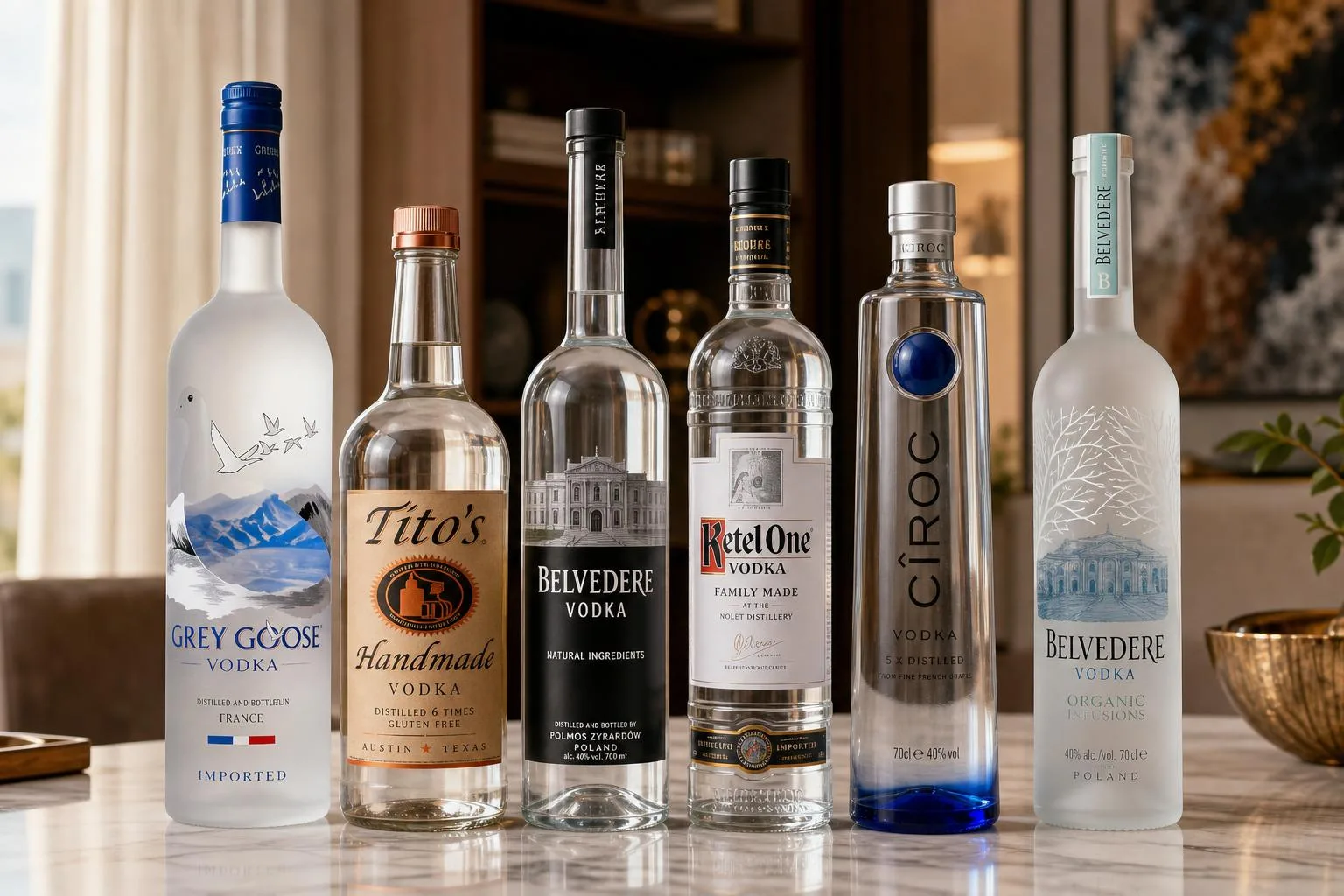
Most vodka confusion starts with the raw ingredient. In the United States, distilled spirits can be labeled gluten-free when they are made without gluten-containing grains, or when distillation removes gluten to meet federal labeling rules.

The practical issue is not usually vodka itself. It is flavored vodka, shared bottling lines, cocktail mixers, and bar handling that create avoidable risk for people with celiac disease or strong gluten sensitivity.
Myth: Wheat Vodka Always Contains Gluten
Distillation separates alcohol from proteins, including gluten proteins. The FDA gluten-free threshold for packaged foods is less than 20 parts per million, and TTB allows gluten-free claims on distilled spirits under specific conditions.
| Claim or Standard | Specific Fact |
| FDA gluten-free limit | Less than 20 ppm gluten |
| Celiac disease prevalence | About 1% of the U.S. population |
| Typical vodka alcohol level | 40% ABV, or 80 proof |
| Distillation effect | Removes proteins if properly distilled |
Mistake: Ignoring Flavored Vodkas
Plain distilled vodka is usually the safer bet. Flavored vodkas may include natural flavors, colorings, cookie, cake, caramel, malt-inspired, or dessert components added after distillation, when gluten risk can re-enter the product.
- Safer picks: plain potato, corn, grape, or sugarcane vodkas with a gluten-free statement.
- Check carefully: whipped cream, cake, s’mores, cereal, cookie, and pie-flavored vodkas.
- Ask the brand: whether flavors are added after distillation and whether any gluten-containing ingredient is used.
Myth: “Made From Potatoes” Automatically Means Certified Gluten-Free
Potatoes are naturally gluten-free, but certification is a separate claim. A potato vodka can still be processed in a facility that also handles wheat, barley, or rye.
Certification requires documented controls, not just a gluten-free base ingredient.
Mistake: Trusting the Bar More Than the Bottle
At a bar, the biggest risk may be cross-contact. A bartender may use the same jigger, shaker, garnish tray, or flavored syrup pump for beer cocktails, malt beverages, and wheat-based ingredients.
- Order vodka neat, on the rocks, or with sealed soda water when possible.
- Ask for a clean glass, clean jigger, and unopened mixer.
- Avoid house infusions unless the ingredients and storage container are known.
Myth: Gluten-Free Vodka Must Taste Worse
Base ingredient does not determine quality by itself. Fermentation control, distillation cuts, filtration, water source, and proofing matter more. Many corn, potato, and grape vodkas are neutral enough for Martinis, highballs, and tasting flights.
Questions People Ask Most
Which vodka brands are gluten free?
In the U.S., plain distilled vodka can be labeled gluten free even if it was distilled from wheat, rye, or barley, because distillation removes gluten proteins under FDA rules.

Common gluten-free-labeled or widely recognized options include Tito’s Handmade Vodka, Cîroc, Smirnoff, Absolut, Ketel One, Grey Goose, Belvedere, Chopin Potato Vodka, Deep Eddy, and New Amsterdam.
Is Tito’s Handmade Vodka gluten free?
Yes. Tito’s states that its vodka is gluten free, and it is made from corn rather than wheat, rye, or barley. It is distilled six times in Texas and is one of the most commonly requested gluten-free vodkas in U.S. bars.
Are potato vodkas gluten free?
Yes, plain potato vodka is naturally made from a gluten-free base ingredient. Notable potato vodka brands include Chopin Potato Vodka from Poland, Luksusowa from Poland, and Boyd & Blair from Pennsylvania.
Is Cîroc vodka gluten free?
Yes. Cîroc is made from French grapes, not cereal grains, so its plain vodka is considered gluten free. Be more cautious with flavored Cîroc expressions because added flavorings can change the ingredient profile.
Should people with celiac disease avoid wheat-based vodka?
Most celiac organizations and U.S. labeling rules recognize properly distilled spirits as gluten free, even when made from wheat, because gluten does not carry over in distillation.
However, people who react strongly or prefer to avoid gluten-source grains can choose corn-, potato-, or grape-based vodkas such as Tito’s, Chopin Potato, or Cîroc.
Related Reading
- How Long Does It Take For Alcohol To Kick In?
- How Many Ounces Is 240 Ml?
- How Many Pounds Is 18 Stone?
- What Does An Old-Fashioned Taste Like?
- How Much Is 1 Pound Of Quarters Worth?
- How Much Is 1 Oz In Ml?
- How Many Pounds In A Bushel Of Apples? Most Correct Answer
- All Blog Guides
- FDA Gluten-Free Labeling of Foods (2024)
- FDA Questions and Answers on the Gluten-Free Food Labeling Final Rule (2024)
- TTB Ruling 2020-2: Gluten Content Statements in Labeling and Advertising of Wine, Distilled Spirits, and Malt Beverages (2020)
- NIDDK Celiac Disease (2023)
- Tito’s Handmade Vodka FAQs (2025)
- GREY GOOSE Vodka FAQs (2025)
- CÎROC Vodka FAQs (2025)