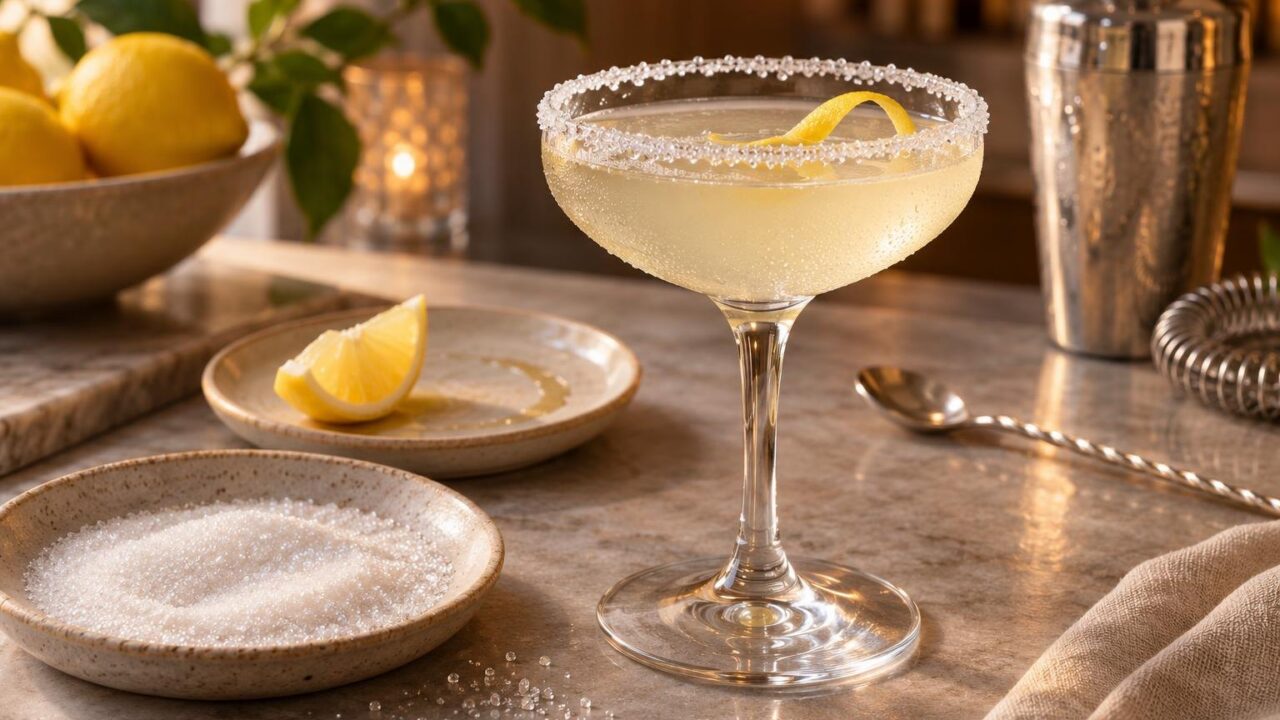
A drink with sugar on the rim is a cocktail served with a coating of sugar around the glass’s edge, adding sweetness and a lightly crisp texture to each sip.
The coating can be fine granulated sugar, coarse crystals, or flavored sugar, chosen to complement the drink rather than overwhelm it.
To make one, moisten the outside edge of a glass with citrus juice or water, then dip it into a shallow plate of sugar. A partial rim leaves some sips unsweetened; a full rim gives sweetness throughout.
Let the sugar set briefly before pouring to help keep it in place.
Rim choice matters: superfine sugar adheres evenly, while larger crystals create more crunch. Citrus zest, spices, or colored sugar can add aroma and visual contrast.
Apply the rim before adding ice or liquid, and avoid soaking the glass edge, which can dissolve the sugar.
Best Drinks for a Sugar Rim
A sugar rim works best when a drink has enough citrus to balance the sweetness picked up with each sip. The Sidecar is the classic example; a Lemon Drop and a tart strawberry daiquiri also benefit, while a Cosmopolitan calls for a lighter touch.
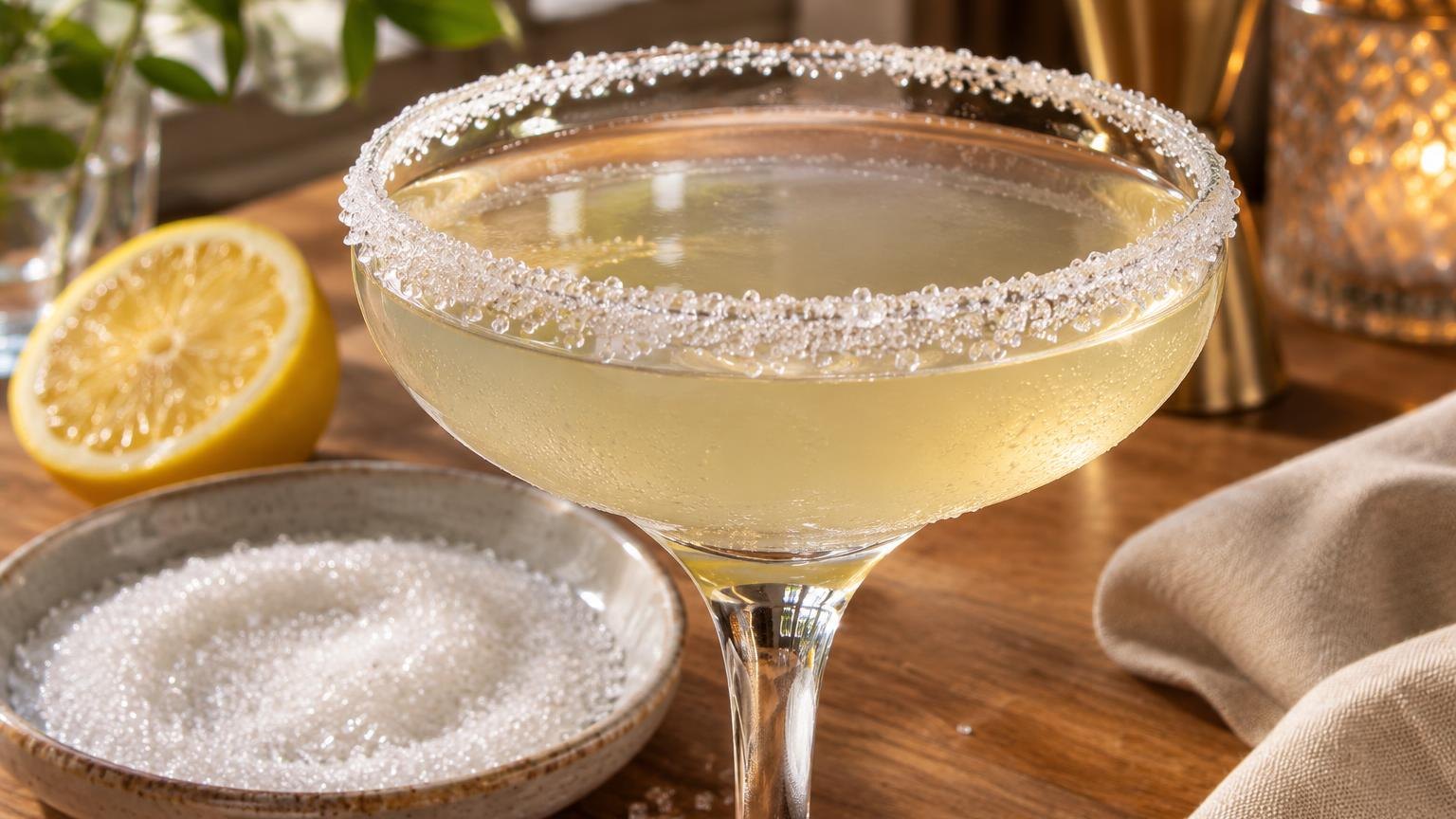
The amounts below make one drink. The Sidecar follows the International Bartenders Association (IBA) recipe; the other builds are practical starting points, not official standards.
| Drink | Ingredients | Suggested rim |
| Sidecar | 50 ml Cognac; 20 ml triple sec; 20 ml fresh lemon juice | Fine granulated sugar |
| Lemon Drop | 60 ml vodka; 25 ml fresh lemon juice; 15 ml simple syrup | Fine granulated sugar |
| Strawberry daiquiri | 60 ml white rum; 25 ml fresh lime juice; 15 ml simple syrup; 75 g strawberries | Fine sugar or lime-zest sugar |
| Cosmopolitan | 45 ml vodka; 15 ml triple sec; 15 ml fresh lime juice; 30 ml unsweetened cranberry juice | A light, half-glass sugar rim |
Sidecar and Lemon Drop
The IBA specifies 50 ml Cognac, 20 ml triple sec, and 20 ml fresh lemon juice for a Sidecar, with a sugar rim listed as an optional garnish. That matters: the rim adds sweetness without changing the measured ingredients in the shaker.
Use a thin coating so the Cognac and lemon remain noticeable.
A Lemon Drop puts lemon at the center of the drink. With the build above, the syrup sweetens the liquid, while the rim makes the first taste sweeter than the last.
If a full rim tastes excessive, coat half the glass; guests can choose a sugared or unsugared sip.
Strawberry Daiquiri and Cosmopolitan
Strawberries bring their own sweetness, so taste the blended daiquiri before adding more syrup. A lime-zest sugar rim gives it a fresh aroma without adding another sweet liqueur.
For a frozen version, chill the glass first: sugar adheres more neatly to a lightly moistened rim than to one already wet with condensation.
A Cosmopolitan needs restraint. Unsweetened cranberry juice and lime can support a little sugar, but a heavy rim can mask the cranberry.
Cranberry juice cocktail is already sweetened, so skip the rim or reduce the drink’s other sweet ingredients if using it.
For any of these drinks, moisten only the outside edge of the glass with citrus, then dip it in a shallow plate of sugar.
Keeping crystals off the inside edge prevents loose sugar from dissolving into the drink and changing the balance you just measured.
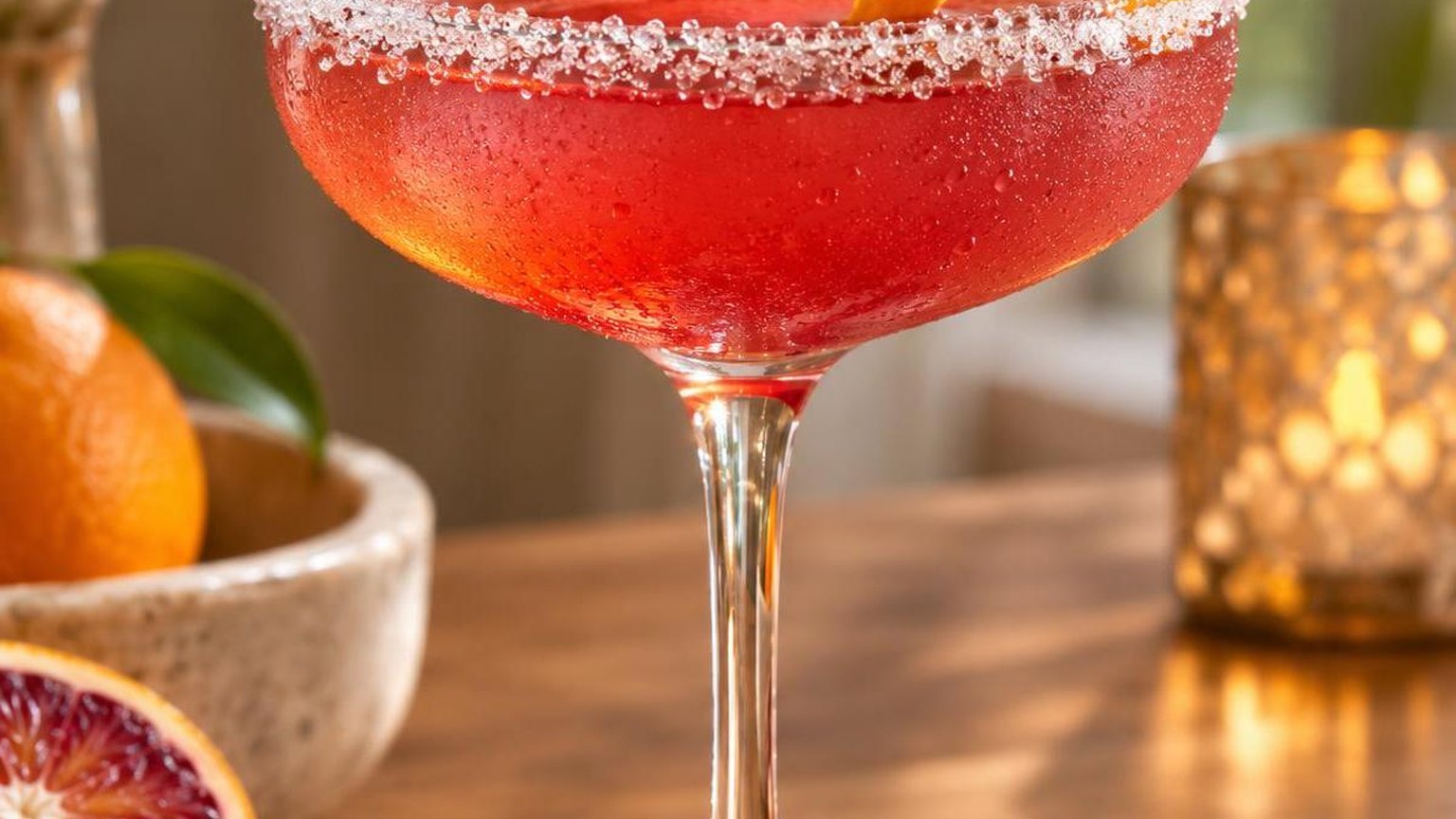
How to Sugar a Glass Rim
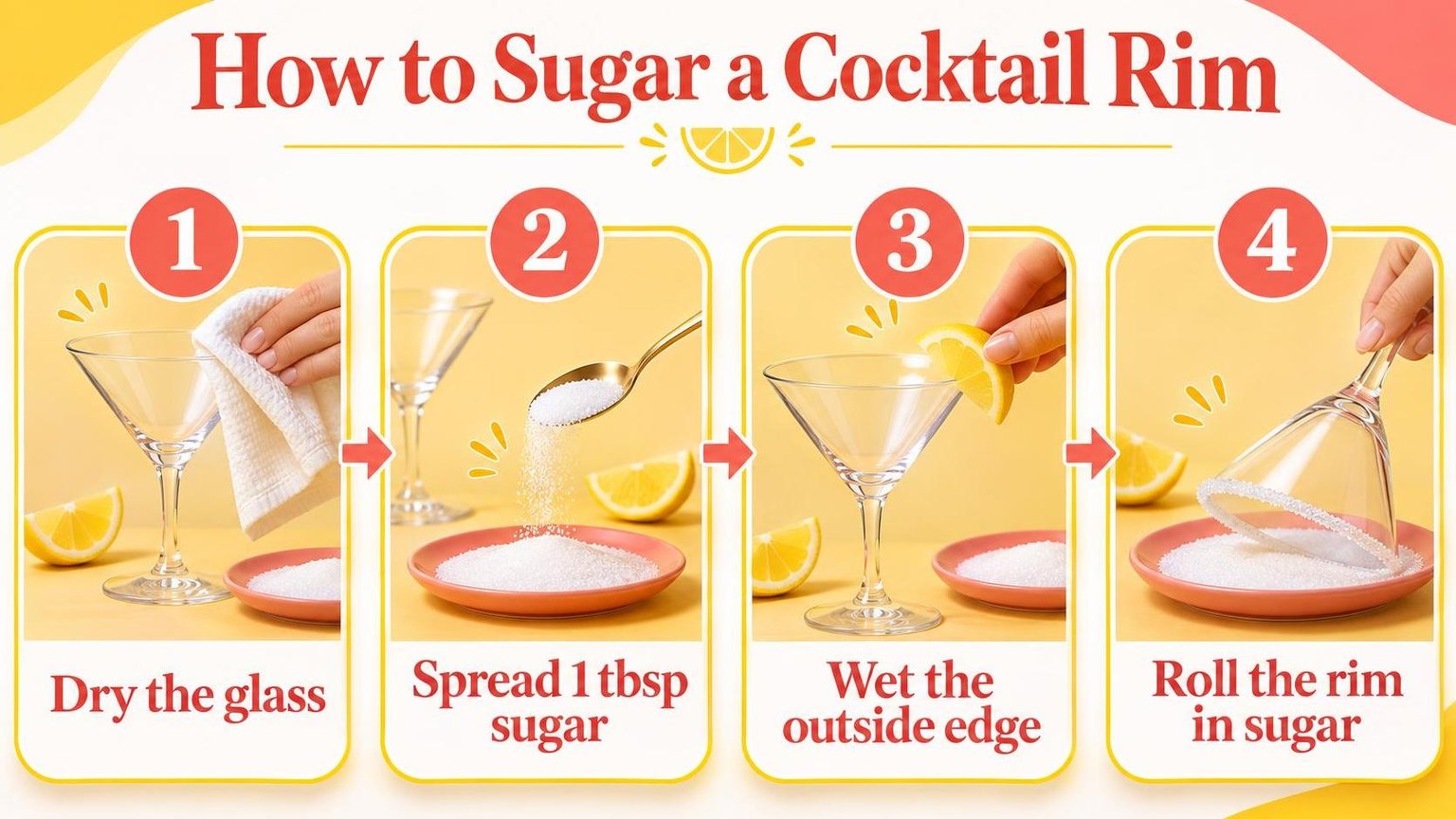
A sugar rim should cling to the outside edge of a glass, not fall into the drink. The reliable method is to moisten only the area you want coated, then apply sugar while that surface is still tacky.
Prepare the glass and sugar
Start with a clean, completely dry glass. Residual water can make sugar clump or slide down the bowl. Put about 1 tablespoon of granulated sugar on a small, flat plate and spread it into an even layer wide enough to accommodate the rim.
For a citrus drink, cut a fresh lemon or lime wedge and make a shallow slit in its flesh. Fit the slit over the rim and run the wedge around the glass, wetting the outside edge.
Difford’s Guide describes this citrus-wedge approach in its instructions for frosting a cocktail glass.
For a sweeter, less tart adhesive, use a small amount of simple syrup instead. Apply it with a clean fingertip or pastry brush; a thin film is sufficient.
Avoid coating the inside edge, where loose sugar is more likely to dissolve into the first sip and change the drink’s balance.
Apply the sugar
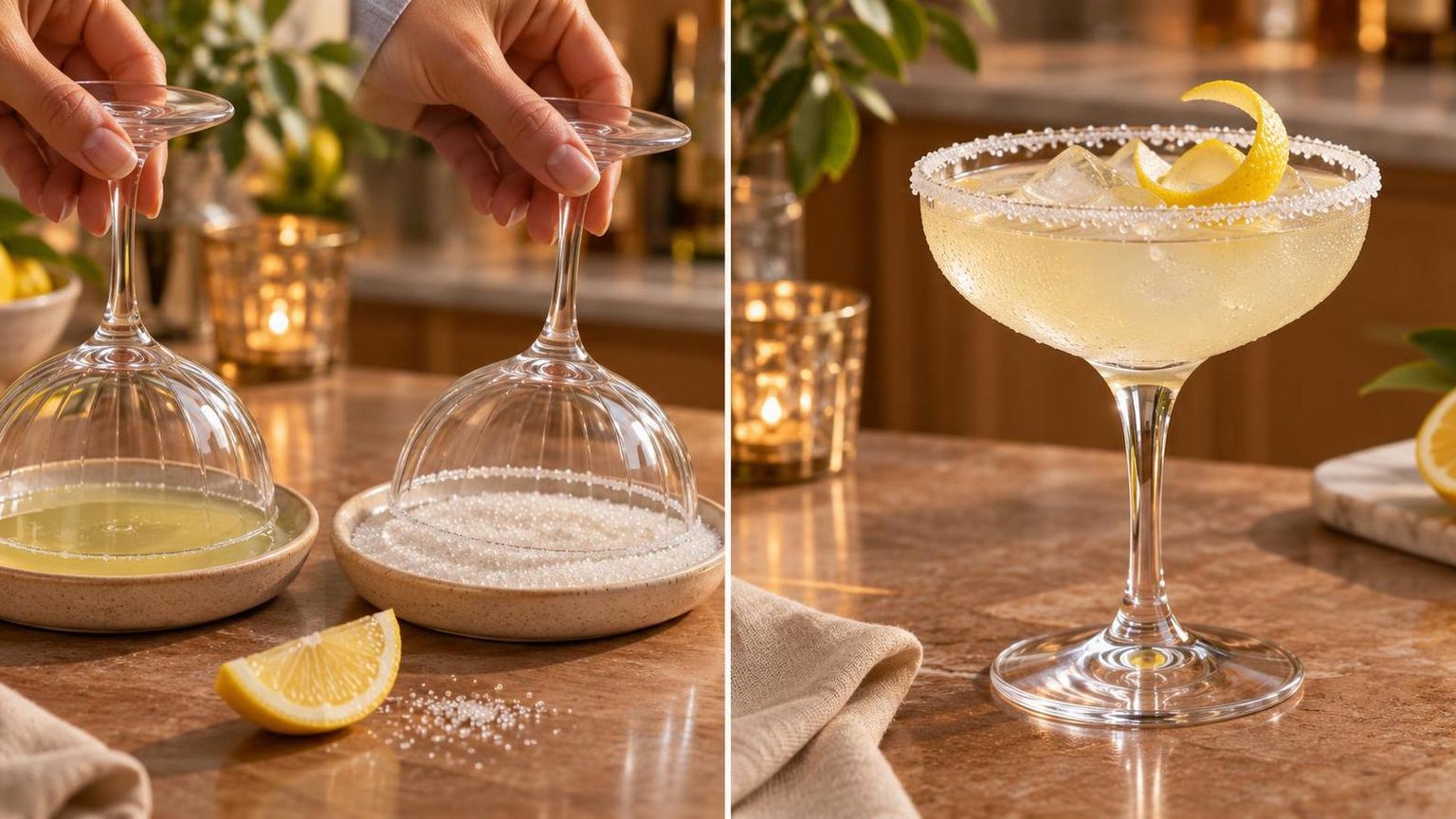
Hold the glass at an angle and gently roll the damp outside edge through the sugar. Rotate the glass until the coating is continuous.
Rolling gives you control over where the sugar lands; pushing the entire opening face-down into the plate can coat the inner lip as well.
Lift the glass and tap its base lightly to dislodge grains that have not adhered. Check for bare patches and touch them up with another pass of the wedge and sugar.
Let the rim stand for about 1 minute before adding ice or pouring the drink, and handle the glass below the rim.
Match the rim to the drink
Plain granulated sugar suits a Sidecar or a Lemon Drop. For a variation, mix finely grated citrus zest into the sugar immediately before rimming. Use only the colored outer peel: the white pith can taste bitter.
Colored or coarse decorative sugars also work, but their larger crystals create a more pronounced texture against the lips.
For a partial rim, moisten and sugar only one section of the glass. That leaves an unsugared place to sip, giving guests control over the sweetness.
Prepare the rim before making the cocktail so any excess sugar can be brushed away without disturbing a filled glass.
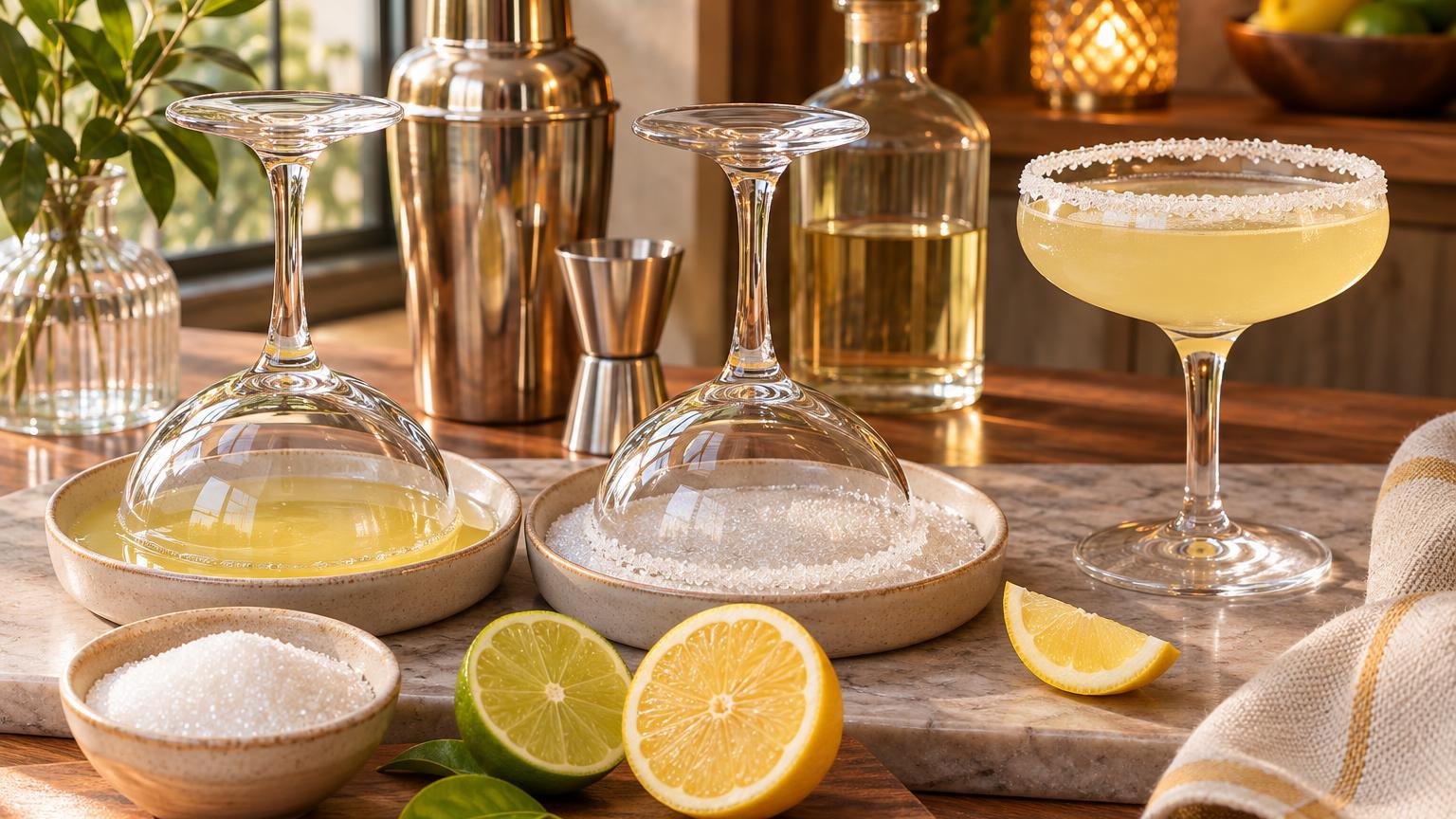
Choosing Sugar Granule Size
Granule size changes a sugar rim’s texture as much as its appearance. Fine sugar produces a smooth, light coating; larger crystals give the drink visible sparkle and a distinct crunch.
Choose the sugar for the way the cocktail will be sipped, not just how the glass will look.
| Sugar | Texture at the lip | Best use |
| Superfine sugar | Soft, even coating that dissolves quickly | Delicate citrus cocktails and narrow rims |
| Regular granulated sugar | Noticeable crystals without much crunch | Most sugar-rimmed cocktails |
| Sanding sugar | Coarse, crunchy crystals with strong sparkle | Decorative rims on glasses with a broad lip |
These are product categories, not guaranteed particle-size grades: crystal size can vary by brand.
The Sugar Association describes superfine sugar as more finely ground than regular granulated sugar and sanding sugar as large-crystal sugar used for decoration. Check the crystals themselves when consistency matters.
Regular granulated sugar is the practical starting point for a lemon drop or sidecar. It is easy to find and gives a recognizable sugar-rim texture.
Superfine sugar adheres more densely, so it works well when you want sweetness without a gritty first sip.
Reserve sanding sugar for drinks that can carry a crunchy garnish. Its larger crystals are more conspicuous, but fewer may stick to a thinly moistened rim.
If the cocktail already contains fruit pulp or another textured ingredient, that extra crunch may feel intentional; in a silky drink, it can distract.
For a controlled application, spread about 1 tablespoon of sugar on a small saucer. Lightly moisten only the outer edge of a chilled glass with citrus juice or simple syrup, then roll that edge through the crystals.
Coating the inside edge lets loose sugar fall into the drink and change its sweetness.
A narrow band, roughly 1/8 inch wide, usually gives enough contact without depositing sugar on every sip. For a sweet cocktail, rim only half the glass so guests can choose between sugared and unsugared sips.
Let the rim stand for a few minutes before pouring, and replace sugar that becomes wet or clumped between glasses.
Colored decorative sugars deserve a label check. Choose products sold as edible food decorations, not craft glitter, and consider whether their dye will bleed into a pale cocktail.
Whatever the crystal size, a clean, dry saucer and a lightly wetted glass produce a more even rim than pressing the glass into a deep pile of sugar.
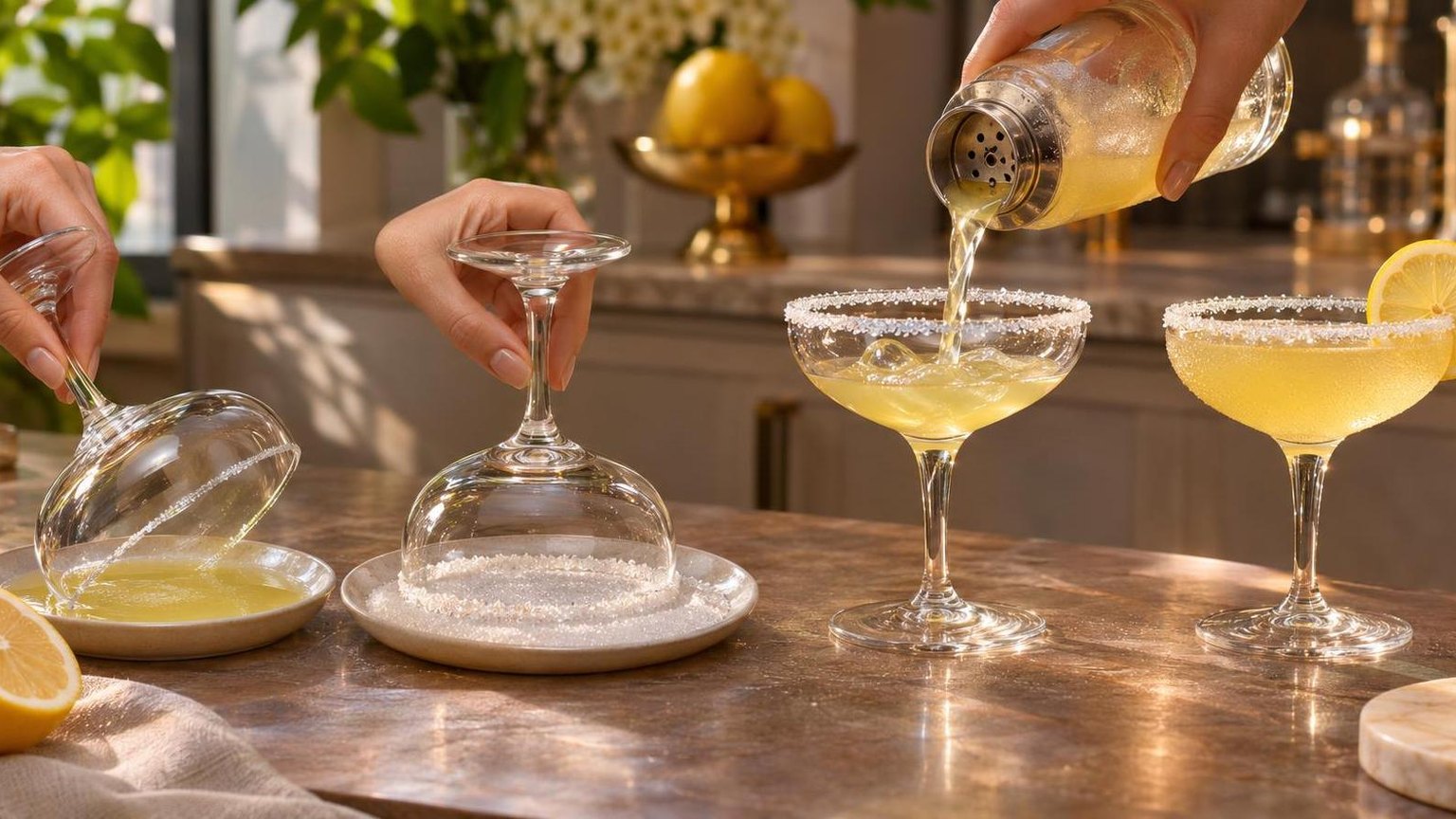
Making Sugar Stick Without Drips
A neat sugar rim depends on a thin, even film of moisture, not a heavily soaked glass. Wet only the outside edge, then press it into sugar before liquid has time to run down the bowl or into the drink.
Start with a clean, completely dry glass. Fingerprints and leftover condensation make moisture spread unpredictably, producing bare spots beside thick clumps.
If the glass has been chilled, wipe away condensation immediately before rimming it; a frosty glass may need a moment at room temperature to stop sweating.
Pour granulated sugar onto a small plate in a layer about ⅛ inch deep. This gives the rim enough sugar to contact without burying the glass.
For a narrow band, hold a citrus wedge against the outside of the rim and turn the glass once, keeping the cut fruit off the inner lip.
Set the moistened edge into the sugar and rotate gently, rather than grinding the glass into the plate. Lift it straight up, then tap the base lightly to release loose crystals.
Inspect the rim before pouring: any wet trail below the sugar can be removed with a clean, slightly damp cloth.
- Use a fresh citrus wedge when its flavor belongs in the drink. Squeeze it lightly before application so juice does not drip down the glass.
- Use a food-safe pastry brush for simple syrup when citrus would change the cocktail’s flavor. Brush on a thin film; visible droplets are too much.
- Use ordinary granulated sugar for an even coating. Powdered sugar tends to disappear when wet, while large decorative crystals need a tackier surface to stay attached.
Let the finished rim sit for about 30 seconds before adding liquid. Pour into the center of the glass, away from the sugared edge, and leave room below the rim so the drink does not wash crystals inward.
If a spot looks patchy, rewet and recoat that spot rather than soaking the entire rim.
Wash citrus under running water before cutting it, as the U.S. Food and Drug Administration advises for fresh produce.
In bar service, handle the sugared edge without touching the portion guests will drink from; the FDA Food Code’s ready-to-eat food handling provisions are a useful standard for that practice.
Flavored and Colored Rim Sugars
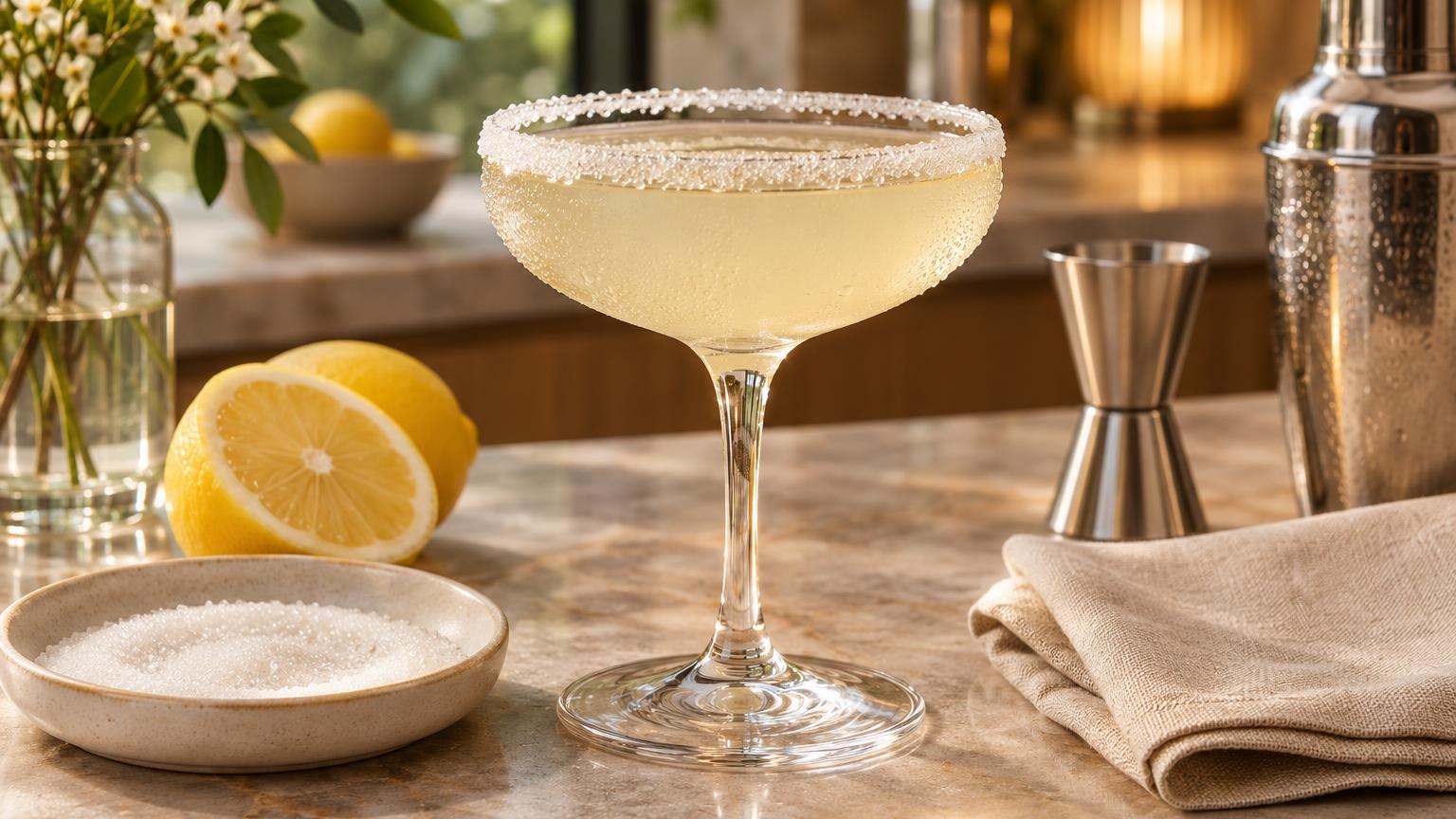
Flavored rim sugar should complement the drink, not overpower its first sip. Citrus zest suits a sour; freeze-dried fruit adds color and tartness without introducing the water that makes sugar clump.
Use ingredients sold for food, especially when choosing powdered colors or extracts.
Choose a Blend
Start with superfine sugar, which makes a finer, more even coating than coarse crystals. The following small batches are sized for several glasses.
Measurements describe the dry mixture; use fresh citrus only to moisten the glass, not as an ingredient stirred into the sugar.
| Rim style | Dry mixture | Good match |
| Lemon zest | 2 tablespoons superfine sugar plus 1/4 teaspoon finely grated lemon zest | Lemon drop or other citrus sour |
| Raspberry | 2 tablespoons superfine sugar plus 1 teaspoon finely crushed, freeze-dried raspberries | Berry-forward sour or lemonade cocktail |
| Cinnamon | 2 tablespoons superfine sugar plus 1/8 teaspoon ground cinnamon | Apple or aged-rum cocktail |
Mix each batch until its color and flavor are evenly distributed, then spread a thin layer on a shallow plate. Zest brings aromatic oils but also moisture, so make that blend shortly before serving.
Crush freeze-dried berries to a fine powder and discard large seeds or pieces that would make the rim uneven.
Color and Apply the Rim
For a brighter color, use a food-grade powdered color according to its label. The U.S.
Food and Drug Administration regulates color additives by their permitted uses; “natural” does not mean an unregulated color is suitable for drinks.
Fruit juice and beet juice are among color additives specifically listed for food use in federal regulations.
Moisten only the outside edge of the glass with a citrus wedge or a small amount of syrup. Dip that edge into the sugar and rotate gently.
Keeping the inner edge clean limits sugar falling into the drink, where it can change the balance the recipe intended.
Let the coated glass stand while you mix the drink so the rim can set. Keep unused dry sugar in a clean, airtight container, and discard any portion that contacted a wet glass.
Tell guests what is in a flavored rim: fruit, cinnamon, and other additions may matter to someone avoiding an ingredient.
Sugar Rim Calories and Serving Size
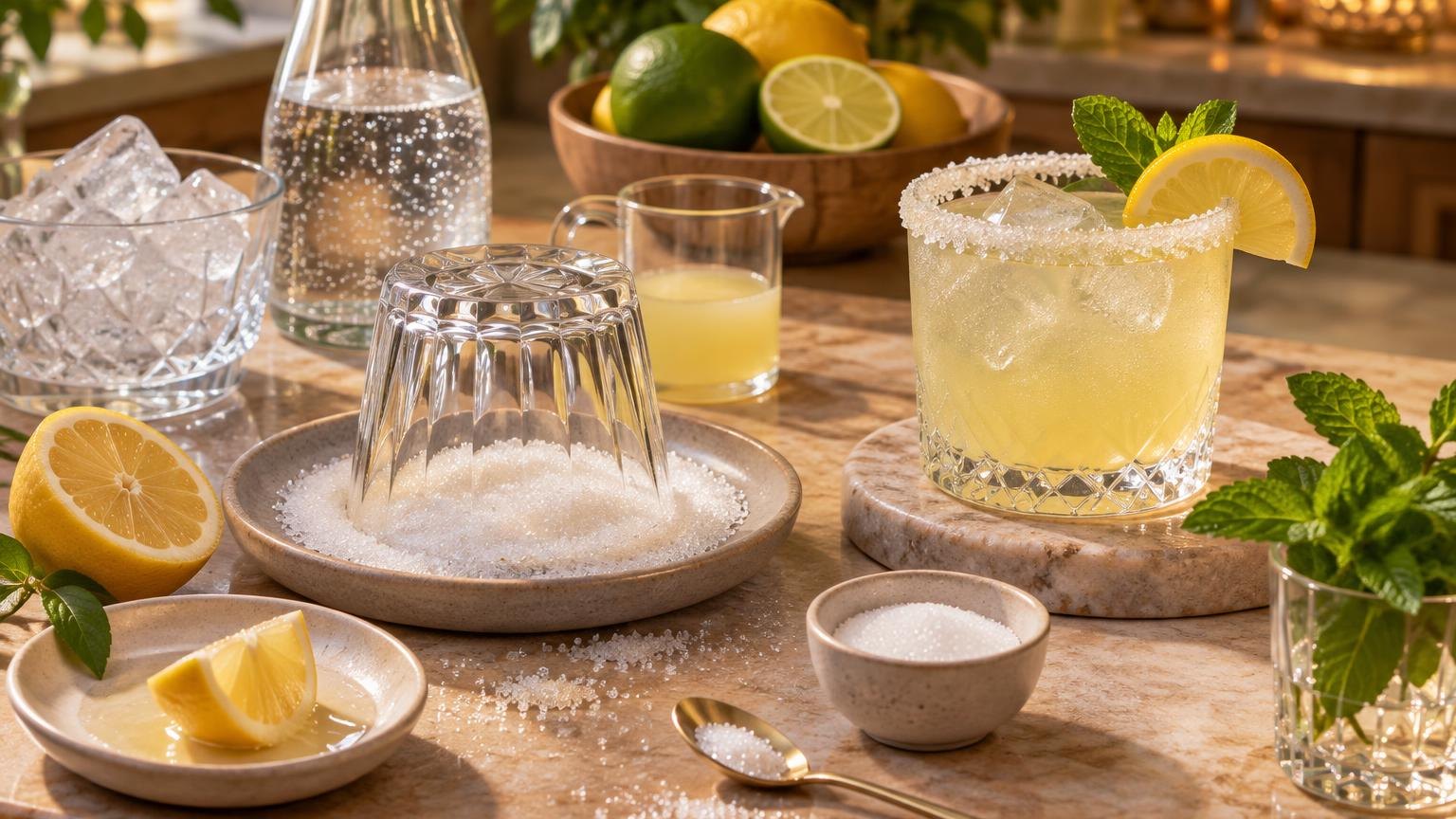
A sugar rim can add a few calories or several dozen, depending on how much sugar sticks to the glass and how much you consume. The useful serving size is the sugar on your glass—not the sugar poured onto the dipping plate.
Granulated sugar supplies about 4 calories per gram, consistent with the FDA’s calorie factor for carbohydrate. A level teaspoon weighs about 4 grams and contributes roughly 16 calories, according to USDA FoodData Central values.
Weighing the sugar that adheres gives a more useful estimate than measuring what went onto the plate.
The amounts below are examples for planning, not standard quantities for particular glass sizes. Rim width, moisture, sugar crystal size, and how firmly the glass is pressed into the sugar all affect the result.
| Illustrative rim | Sugar on glass | Calories from sugar |
| Light partial rim | 1 gram | About 4 |
| Moderate partial rim | 2 grams | About 8 |
| Full, light rim | 4 grams | About 16 |
| Full, thick rim | 8 grams | About 32 |
For a practical check, weigh a small dish of sugar before and after rimming a dry, clean glass whose edge has been moistened. Keep spilled sugar in the dish, and account for any sugar that falls elsewhere.
The difference estimates sugar transferred to the glass, not necessarily sugar swallowed.
Some crystals remain on the glass after the last sip. Others dissolve into the drink or come off on your lips, so treating all adhered sugar as consumed is a conservative estimate.
If you prepare several glasses from one dish, weigh each transfer separately rather than dividing the starting sugar equally.
Rim calories are only one part of a cocktail’s total. The National Institute on Alcohol Abuse and Alcoholism defines a U.S. standard drink as containing about 14 grams of pure alcohol; alcohol supplies about 7 calories per gram.
Juice, liqueur, syrup, and sweetened mixers add calories independently of the rim.
When tracking a drink, record the rim separately from its liquid ingredients. A half-rim is an easy way to control the portion while leaving part of the glass clear for drinking.
If you are making drinks for guests, offering a sugar-free edge also lets each person choose their serving.
Questions People Ask Most
What cocktail has sugar on the rim?
A lemon drop is a familiar example: its sugar rim balances the tart lemon juice in the drink. A Brandy Crusta also has a sugared rim; the International Bartenders Association lists it as part of the cocktail’s preparation.
Is a Sidecar supposed to have a sugar rim?
A sugar rim is common on Sidecars, but it is optional rather than universal. The International Bartenders Association’s Sidecar recipe does not specify one, so ask for a sugared rim if you want it.
How do you put sugar on a cocktail glass rim?
Moisten the outside edge of the glass with a lemon wedge, then gently roll that edge in a shallow plate of sugar. Keeping the sugar on the outside prevents loose crystals from falling into the drink.
What kind of sugar works best for a drink rim?
Fine granulated sugar makes an even rim and dissolves readily on the tongue. Coarse decorating sugar adds crunch, but its larger crystals adhere less evenly and can feel gritty.
How much sugar do you need for one glass?
About 1 teaspoon on a small plate is enough to rim one cocktail glass, though a wider plate may need more for easy rolling. Only the sugar that sticks to the moistened edge becomes part of the drink.
Can you sugar-rim glasses ahead of time?
Yes. Rim the glasses before mixing, then leave them upright for a few minutes so the sugar can set; avoid stacking them or touching the rims when serving.
Related Reading
- Are Sugar Free Red Bulls Bad for You?
- How Many Grams In 1 Ounce?
- What Is the Alcohol Content in Pimm's No. 1?
- How Many Ounces Is 2 Pints?
- What To Mix With Spiced Rum?
- Is Sprite Good For Upset Stomach? Find Out Now
- All Blog Guides
- National Institute on Alcohol Abuse and Alcoholism, What Is a Standard Drink? (n.d.)
- Centers for Disease Control and Prevention, About Alcohol Use (n.d.)
- Liquor.com, Lemon Drop Martini (n.d.)
- Liquor.com, Sidecar (n.d.)
- Liquor.com, Brandy Crusta (n.d.)
- Liquor.com, Margarita (n.d.)
- NIAAA – Alcohol's Effects on the Body