How Long Does Wine Take to Kick In? is typically 10–30 minutes after the first glass, with peak blood alcohol levels often reached around 30–90 minutes depending on food, body size, drinking pace, and alcohol by volume.
Wine absorbs through the stomach and small intestine, so an empty stomach can make effects arrive faster. A standard 5-ounce pour of 12% ABV wine contains about 14 grams of pure alcohol, the U.S. definition of one standard drink.
This guide explains the timing, why effects vary, how food changes absorption, and when to stop drinking before judgment, coordination, or reaction time becomes impaired.
When Wine Effects Usually Start
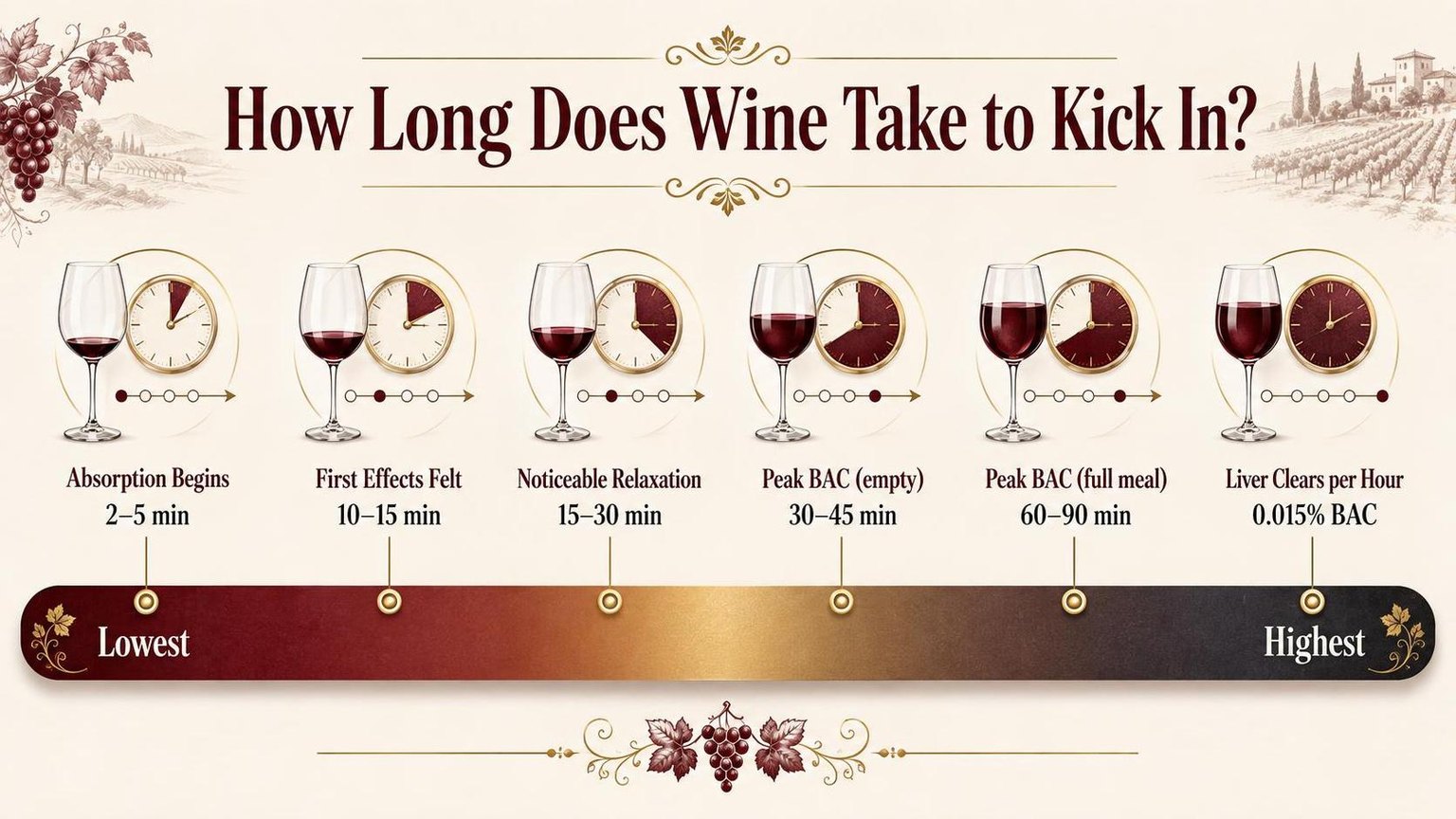
Alcohol from wine enters your bloodstream within minutes of your first sip. Most people notice initial effects—warmth, mild relaxation—within 10 to 30 minutes.
Peak blood alcohol concentration (BAC) typically arrives 30 to 90 minutes after finishing a glass.
The Absorption Timeline
Around 20% of alcohol is absorbed through your stomach lining almost immediately. The remaining 80% passes into the small intestine, where absorption accelerates due to its large surface area.
| Time After First Sip | What Typically Happens |
| 2–5 minutes | Alcohol begins entering the bloodstream via stomach lining |
| 10–15 minutes | Mild warmth, slight mood lift detectable |
| 15–30 minutes | Noticeable relaxation; BAC rising measurably |
| 30–90 minutes | Peak BAC reached for a single standard glass (5 oz / 148 ml) |
What Counts as One Glass
A standard pour is 5 oz (148 ml) of wine at roughly 12% ABV, delivering about 14 grams of pure ethanol. That’s equivalent to one 12 oz beer at 5% ABV or 1.5 oz of 40% spirits.
Why the Range Varies So Much
The 10-to-30-minute window isn’t uniform. Several physiological factors shift the timeline significantly from person to person—and even day to day for the same individual.
- Empty vs. full stomach: Food slows gastric emptying. Drinking on an empty stomach can produce peak BAC up to 3 times faster than drinking after a full meal, according to research published in the Journal of Forensic Sciences.
- Body weight and composition: A 130 lb person reaches a higher BAC from one glass than a 200 lb person, because alcohol distributes through body water—and smaller bodies contain less of it.
- Sex-based differences: Women generally have lower levels of alcohol dehydrogenase in the stomach and a higher body-fat-to-water ratio, leading to faster onset and higher peak BAC from the same amount.
- Wine ABV: A 15% Zinfandel delivers 25% more ethanol per glass than an 11.5% Moscato, accelerating the timeline proportionally.
Carbonation also matters. Sparkling wines like Champagne have shown faster absorption rates in controlled studies at the University of Surrey, with subjects reaching higher BAC earlier compared to still wine of identical alcohol content.
Peak Blood Alcohol After Wine
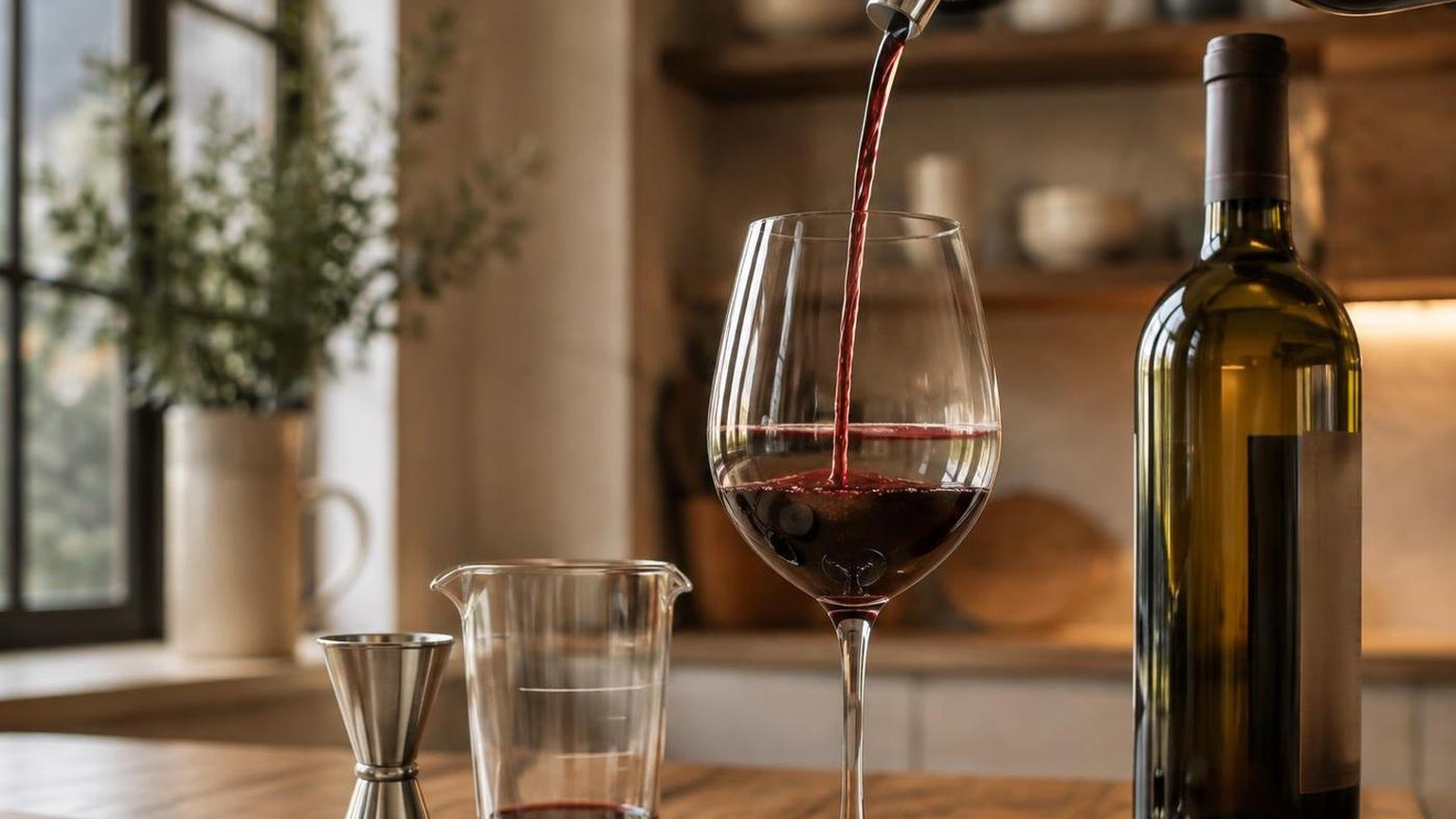
Blood alcohol concentration (BAC) after wine typically peaks between 30 and 90 minutes post-consumption. The exact timing depends on stomach contents, body weight, sex, and how quickly you drink. Fasting accelerates peak BAC significantly.
Typical Peak BAC Timelines
Research published in the Journal of Analytical Toxicology shows that drinking on an empty stomach produces peak BAC roughly 30–45 minutes after the last sip. A full meal delays peak BAC to 60–90 minutes.
| Condition | Time to Peak BAC | Estimated Peak BAC (1 glass, 5 oz / 13% ABV) |
| Empty stomach, 140 lb woman | 30–40 minutes | 0.04–0.05% |
| Empty stomach, 180 lb man | 30–45 minutes | 0.02–0.03% |
| After a full meal, 140 lb woman | 60–90 minutes | 0.02–0.03% |
| After a full meal, 180 lb man | 60–90 minutes | 0.01–0.02% |
Multiple Glasses Shift the Peak
Each additional 5-oz glass adds approximately 0.02–0.03% BAC for a 160 lb person. Three glasses consumed over an hour on an empty stomach can push BAC to 0.08%—the U.S. legal driving limit.
The liver metabolizes alcohol at a fixed rate of roughly 0.015–0.017% BAC per hour. Drinking faster than this rate causes BAC to climb continuously until you stop.
Why Wine May Peak Differently Than Spirits
- Moderate alcohol concentration (11–15% ABV) absorbs efficiently through the stomach lining and small intestine—faster than beer but slightly slower than distilled spirits at 40% ABV.
- Polyphenols and residual sugars in wine may marginally slow gastric emptying, delaying absorption by 5–10 minutes compared to an equivalent dose of vodka, per a 2007 study in Alcohol and Alcoholism.
- Carbonation in sparkling wine accelerates absorption. A University of Surrey study found Champagne produced a BAC of 0.054% at 20 minutes versus 0.039% for the same wine flattened.
These figures are population averages. Individual enzyme activity, medications, and genetics create wide variation in real-world peak BAC timing.
Why Wine Hits Faster Empty
An empty stomach eliminates the primary barrier between alcohol and your bloodstream. Without food to slow gastric emptying, wine passes directly into the small intestine where roughly 80% of alcohol absorption occurs.
The difference is measurable. Studies show peak blood alcohol concentration (BAC) arrives 2–3 times faster on an empty stomach compared to a full one.
| Condition | Time to Peak BAC | Peak BAC (5 oz glass, 13% ABV) |
| Empty stomach | 15–30 minutes | 0.04–0.05% |
| Light snack | 30–45 minutes | 0.03–0.04% |
| Full meal | 60–90 minutes | 0.02–0.03% |
Food reduces peak BAC by 20–50%, according to research published in the Journal of Forensic Sciences. That gap widens with larger pours or higher-ABV wines.
The Pyloric Valve Mechanism
Your pyloric sphincter controls flow from stomach to small intestine. Food triggers it to close partially, trapping stomach contents for digestion. Alcohol waits behind this gate.
On an empty stomach, the pyloric valve stays relaxed. Wine moves through in minutes rather than being held for 1–4 hours of digestive processing.
What Foods Slow Absorption Most
- Fat: Slows gastric emptying the most — cheese, nuts, and olive oil delay alcohol absorption by up to 45 minutes
- Protein: Meat, fish, and legumes activate digestive enzymes that partially metabolize alcohol in the stomach lining
- Complex carbohydrates: Bread and pasta create bulk that physically slows transit through the pyloric valve
Gastric alcohol dehydrogenase — an enzyme in the stomach lining — breaks down approximately 10–30% of alcohol before it reaches the bloodstream. Food extends stomach residence time, giving this enzyme longer to work.
A 2006 study in BMC Clinical Pharmacology found that a standardized meal reduced BAC area-under-the-curve by 36% compared to fasting conditions with identical alcohol doses.
Practical takeaway: eating a balanced meal 30–60 minutes before drinking wine delays peak effects and reduces maximum intoxication significantly.
Serving Size Changes Onset Time
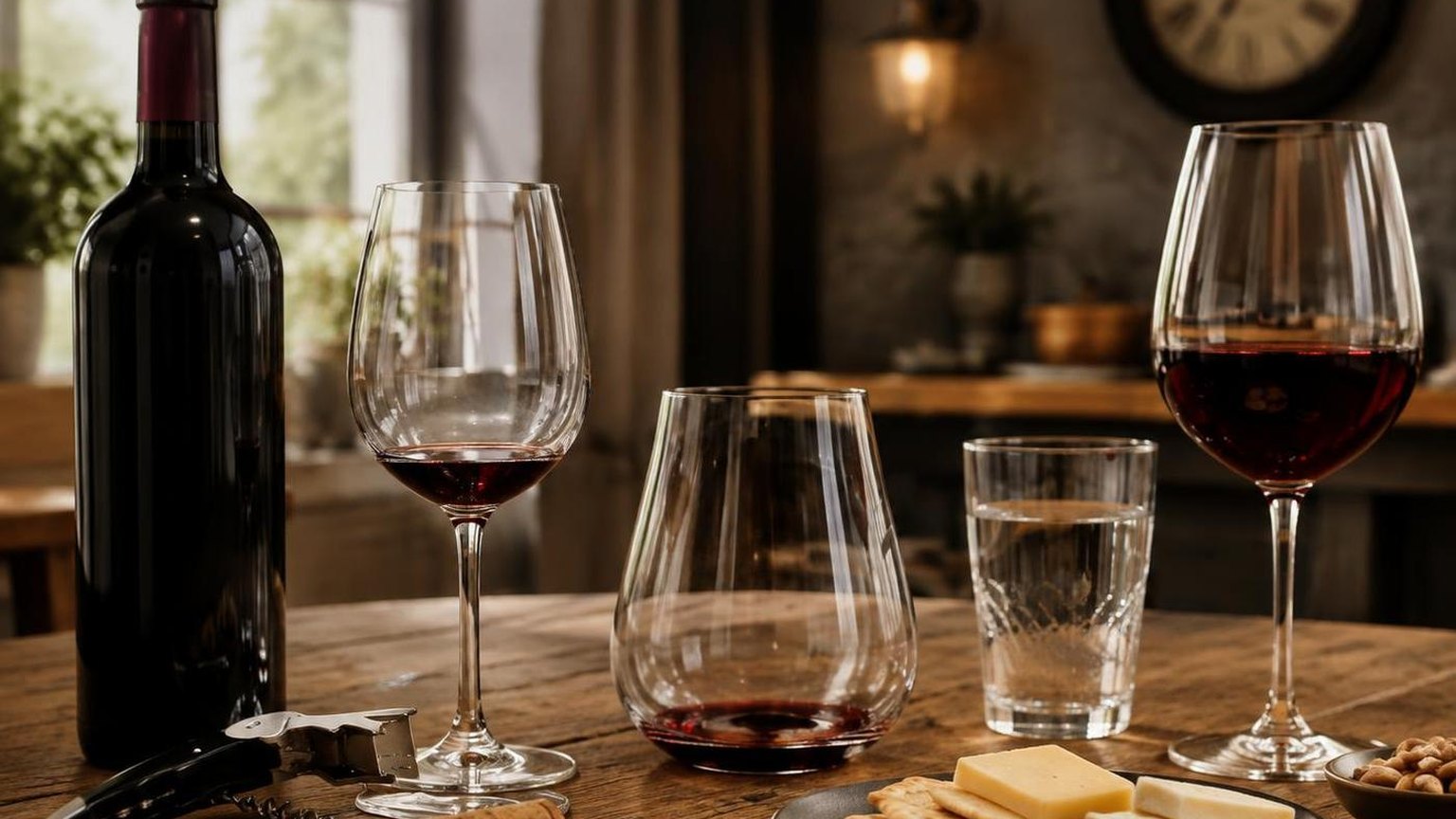
A standard drink contains roughly 14 grams of pure alcohol, but actual pours rarely match that textbook measure. Larger servings deliver more ethanol faster, compressing the time between first sip and noticeable effects.
What Counts as a Standard Drink
The NIAAA defines one U.S. standard drink as any beverage containing 14 grams (0.6 fluid ounces) of pure alcohol. Wine servings often exceed this benchmark in real-world settings.
| Beverage | Standard Pour | Alcohol by Volume | Pure Alcohol |
| Table wine (red/white) | 5 oz (148 mL) | 12% | 14 g |
| Fortified wine (port/sherry) | 3.5 oz (104 mL) | 17–20% | 14 g |
| Restaurant “generous” pour | 7–9 oz (207–266 mL) | 12–15% | 20–32 g |
| Home free-pour average | 6.2 oz (183 mL) | 12–14% | 17–20 g |
How Extra Ounces Accelerate Onset
Research published in Alcohol and Alcoholism shows blood alcohol concentration rises proportionally with dose within the first 30 minutes. A 9-oz glass delivers nearly twice the ethanol of a standard 5-oz pour.
At a 9-oz serving of 14% ABV wine, a 150-pound person can reach a BAC of approximately 0.06% within 20–25 minutes on an empty stomach. The same person drinking a 5-oz pour reaches roughly 0.03% in the same timeframe.
Higher BAC means subjective effects—warmth, relaxation, reduced inhibition—arrive sooner and feel more pronounced. The threshold for most people to notice impairment sits around 0.02–0.03% BAC.
Practical Takeaways
- Measure your pour at least once with a kitchen scale or measuring cup—most people over-pour by 20–40% according to Iowa State and Cornell University studies.
- A 5-oz glass of 12% wine produces noticeable effects in 15–25 minutes for most adults; a 9-oz glass of 14% wine can cut that window to under 15 minutes.
- Fortified wines like port require a smaller volume (3.5 oz) to equal one standard drink, yet are frequently served in larger quantities, accelerating onset significantly.
- Splitting a bottle equally between two people yields roughly 12.7 oz each—over 2.5 standard drinks—enough to produce effects within the first 10–15 minutes of drinking.
Body Size Sex and Tolerance
Body composition, biological sex, and drinking history directly determine how fast alcohol from wine enters your bloodstream and how quickly you feel its effects.
These factors can shift onset time by 10–20 minutes between individuals drinking the same glass.
Body Weight and Water Volume
Alcohol distributes through body water. A larger person has more water volume, diluting ethanol and producing a lower peak BAC. The table below shows estimated BAC after one 5-oz glass of 13.5% ABV wine consumed in 15 minutes.
| Body Weight | Estimated BAC (Male) | Estimated BAC (Female) |
| 120 lbs (54 kg) | 0.037% | 0.045% |
| 150 lbs (68 kg) | 0.030% | 0.036% |
| 180 lbs (82 kg) | 0.025% | 0.030% |
| 220 lbs (100 kg) | 0.020% | 0.025% |
A 120-lb person typically feels effects within 10–15 minutes. A 220-lb person drinking the same pour may not notice anything for 20–30 minutes.
Biological Sex Differences
Women generally reach higher BAC levels than men at equivalent doses. Two enzymes explain most of the gap:
- Body water percentage: Men average 60% body water; women average 52%. Less water means less dilution and higher BAC.
- Gastric alcohol dehydrogenase (ADH): Women produce roughly 40% less stomach ADH than men, so more ethanol passes intact into the small intestine for rapid absorption.
- Hormonal fluctuation: Estrogen levels during the luteal phase of the menstrual cycle can slow gastric emptying, occasionally delaying but then intensifying absorption.
Tolerance: Learned but Not Protective
Regular drinkers develop functional tolerance—neurons adapt to ethanol’s presence. A habitual drinker may need a BAC of 0.05% to feel what a non-drinker feels at 0.02%.
Tolerance masks impairment without reducing actual BAC. Liver metabolism holds steady at roughly 0.015–0.017% BAC per hour regardless of drinking history.
A tolerant person still faces identical organ exposure and legal liability per milligram of blood alcohol.
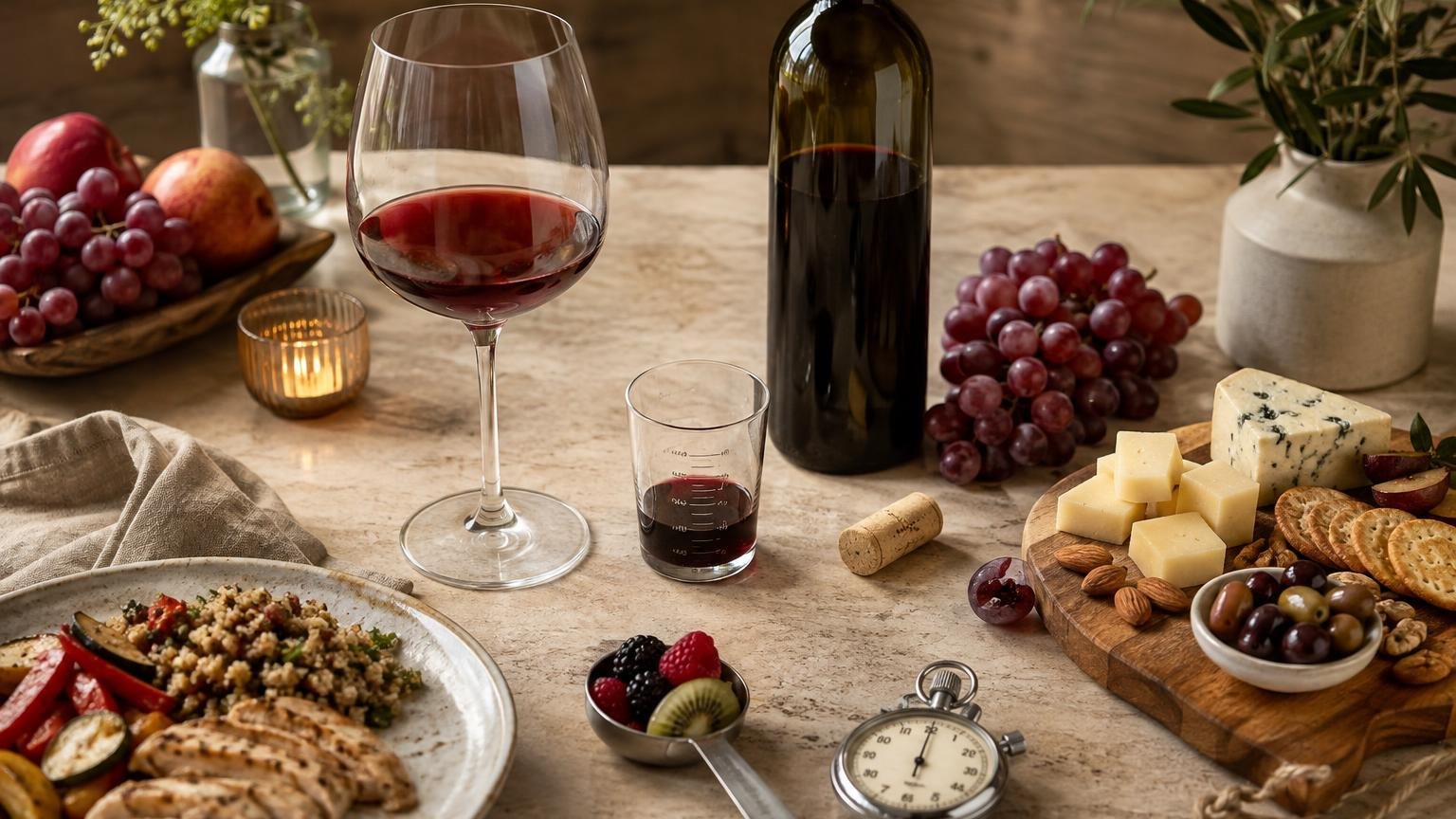
How Food Slows Wine Absorption
Food in the stomach acts as a physical barrier between wine and the intestinal lining where 75–80% of alcohol absorption occurs.
A full meal can reduce peak blood alcohol concentration (BAC) by approximately 20–57% compared to drinking on an empty stomach.
The pyloric sphincter controls how quickly stomach contents pass into the small intestine. Food triggers this valve to close partially, delaying gastric emptying by 1–4 hours depending on meal composition.
Impact of Meal Type on Peak BAC
| Condition | Time to Peak BAC | Peak BAC Reduction |
| Empty stomach | 20–30 minutes | Baseline |
| Light snack (200 kcal) | 45–60 minutes | ~20–25% |
| Moderate meal (400–500 kcal) | 60–90 minutes | ~30–40% |
| Full high-fat meal (600+ kcal) | 90–180 minutes | ~45–57% |
Research published in the Journal of Forensic Sciences confirmed that subjects who consumed a 550-calorie meal before drinking reached a peak BAC 47% lower than fasted subjects given identical alcohol doses.
Why Macronutrient Composition Matters
Not all foods slow absorption equally. Fat, protein, and fiber each affect gastric emptying through different mechanisms.
- Fat triggers release of cholecystokinin (CCK), a hormone that slows gastric emptying by up to 50%. Cheese, olive oil, and charcuterie are effective pre-wine choices.
- Protein stimulates pyloric contraction and keeps food in the stomach 30–60 minutes longer than carbohydrates alone.
- Fiber forms a gel-like matrix in the stomach that physically traps alcohol, reducing absorption rate by an estimated 15–20%.
- Simple carbohydrates (bread, crackers without toppings) leave the stomach within 1–2 hours and provide the least absorption delay.
The alcohol dehydrogenase enzyme in the stomach lining also plays a role.
When food extends gastric residence time, more alcohol is metabolized before reaching the bloodstream — roughly 10–15% of ingested alcohol can be broken down during this first-pass metabolism.
For practical purposes, eating a balanced meal containing fat and protein 30–60 minutes before drinking wine produces the most significant delay in alcohol absorption.
When Wine Impairment Wears Off
The liver metabolizes alcohol at a fixed average rate of approximately 0.015 g/dL per hour, regardless of body size or tolerance.
This means a single glass of wine takes roughly 1–2 hours to clear, while a full bottle requires significantly longer.
Estimated Clearance Times by Consumption
Blood alcohol concentration (BAC) determines how long impairment persists. The following estimates assume a 160-pound person with average liver function.
| Amount Consumed | Approximate Peak BAC | Time to Reach 0.00% BAC |
| 1 glass (5 oz, 13% ABV) | 0.02–0.03% | 1–2 hours |
| 2 glasses (10 oz) | 0.04–0.06% | 3–4 hours |
| 3 glasses (15 oz) | 0.06–0.09% | 4–6 hours |
| 1 bottle (25.4 oz) | 0.10–0.15% | 7–10 hours |
Factors That Slow Alcohol Elimination
The 0.015 g/dL per hour rate is an average. Several variables shift it lower, extending impairment duration.
- Liver health: Chronic liver conditions can reduce metabolism rates by 40–50%.
- Age: Adults over 65 typically process alcohol more slowly due to decreased liver enzyme activity and reduced body water.
- Biological sex: Women generally produce less alcohol dehydrogenase, the primary enzyme responsible for alcohol breakdown, resulting in slower clearance.
- Medications: Common drugs like acetaminophen, antihistamines, and certain antibiotics compete for liver enzymes, delaying alcohol processing.
What Does Not Speed Up Sobriety
Coffee, cold showers, and exercise do not accelerate alcohol metabolism. Only time allows the liver to complete its work at that fixed enzymatic rate.
Feeling sober is not the same as being sober. Cognitive and motor impairment can persist even after obvious intoxication symptoms fade. Studies published in Psychopharmacology show measurable reaction-time deficits at BAC levels as low as 0.02%.
For anyone driving, the National Highway Traffic Safety Administration data confirms crash risk doubles at 0.05% BAC and increases roughly 11-fold at 0.08%. Waiting the full clearance time listed above remains the only reliable strategy.
Common Questions
How long does it take to feel the effects of one glass of wine?
Most people begin feeling the effects of a standard 5 oz glass of wine within 15–25 minutes of the first sip.
Alcohol absorbs through the stomach lining (about 20%) and small intestine (about 80%), entering the bloodstream and reaching the brain rapidly.
Factors like body weight, food intake, and individual enzyme activity shift that window by several minutes in either direction.
Does drinking wine on an empty stomach make it kick in faster?
Yes — drinking wine without food can accelerate absorption by up to 3× compared to drinking after a full meal.
A closed pyloric valve slows gastric emptying when food is present, keeping alcohol in the stomach longer and reducing the rate it reaches the small intestine.
Studies show peak blood alcohol concentration (BAC) can be reached in as little as 30 minutes on an empty stomach versus 60–90 minutes on a full one.
Does the alcohol content of wine affect how quickly you feel it?
Higher-ABV wines deliver more ethanol per sip, raising BAC faster. A 15% ABV Zinfandel contains roughly 25% more alcohol per glass than an 11.5% Moscato d’Asti, meaning the same 5 oz pour produces noticeably different onset speeds.
Fortified wines like Port (19–22% ABV) push this even further, with effects often felt within 10–15 minutes.
How long does wine take to reach peak blood alcohol concentration?
Peak BAC from wine typically occurs 30–90 minutes after consumption, depending on dose, body composition, and stomach contents.
The National Institute on Alcohol Abuse and Alcoholism (NIAAA) notes that a 160 lb man reaches roughly 0.02% BAC after one standard drink, peaking closer to the 45-minute mark under average conditions.
Women generally peak faster due to lower average body water percentage (52% vs. 61% in men).
Does sparkling wine hit faster than still wine?
Research published in the British Medical Journal found that carbonated alcoholic drinks accelerate alcohol absorption, with subjects drinking Champagne reaching higher BAC levels faster than those drinking flat wine of identical alcohol content.
The CO₂ increases gastric emptying speed, pushing alcohol into the small intestine more quickly. This is why a glass of Prosecco or Cava can feel noticeably faster-acting than a comparable still white.
How does body weight influence how fast wine kicks in?
Body weight directly affects the volume of distribution for alcohol. A 120 lb person drinking one 5 oz glass of 13% ABV wine will reach an estimated BAC of approximately 0.03%, while a 200 lb person drinking the same glass reaches roughly 0.02%.
The lighter individual not only reaches a higher concentration but typically feels the effects several minutes sooner because there is less body water to dilute the ethanol.
How long do the effects of wine last after they kick in?
The liver metabolizes alcohol at a relatively fixed rate of about 0.015–0.017% BAC per hour, regardless of body size.
After two glasses of wine bringing a person to roughly 0.04–0.05% BAC, it takes approximately 3–3.5 hours for the body to fully process the alcohol.
Subjective effects like relaxation and lowered inhibition typically diminish within 1–2 hours of the last sip, but measurable impairment persists longer than most drinkers realize.
Further Reading
- Does Wine Make You Sleepy? The Most Accurate Answer
- How Many Calories In A Glass Of Merlot?
- What A Good Sweet Wine? – The Definitive Answer
- How To Tell If Wine Is Corked? Information From Experts
- How Many Calories In A Glass Of Chardonnay Wine?
- How Many Fluid Ounces In A Bottle Of Wine?
- What Is The Best Sweet Wine? – Find Out Now
- All Alcohol Guides
- National Institute on Alcohol Abuse and Alcoholism (2024)
- National Library of Medicine – Blood Alcohol Concentration (2023)
- Centers for Disease Control and Prevention – Alcohol Use (2024)
- Stanford University Office of Alcohol Policy – Absorption Rate Factors (2024)
- National Institute on Alcohol Abuse and Alcoholism – Alcohol Metabolism (2024)
- Brown University Health Promotion – Alcohol and Your Body (2024)
- American Addiction Centers – How Long Does It Take to Feel Effects of Alcohol (2024)
- Healthline – How Long Does It Take for Alcohol to Kick In (2023)