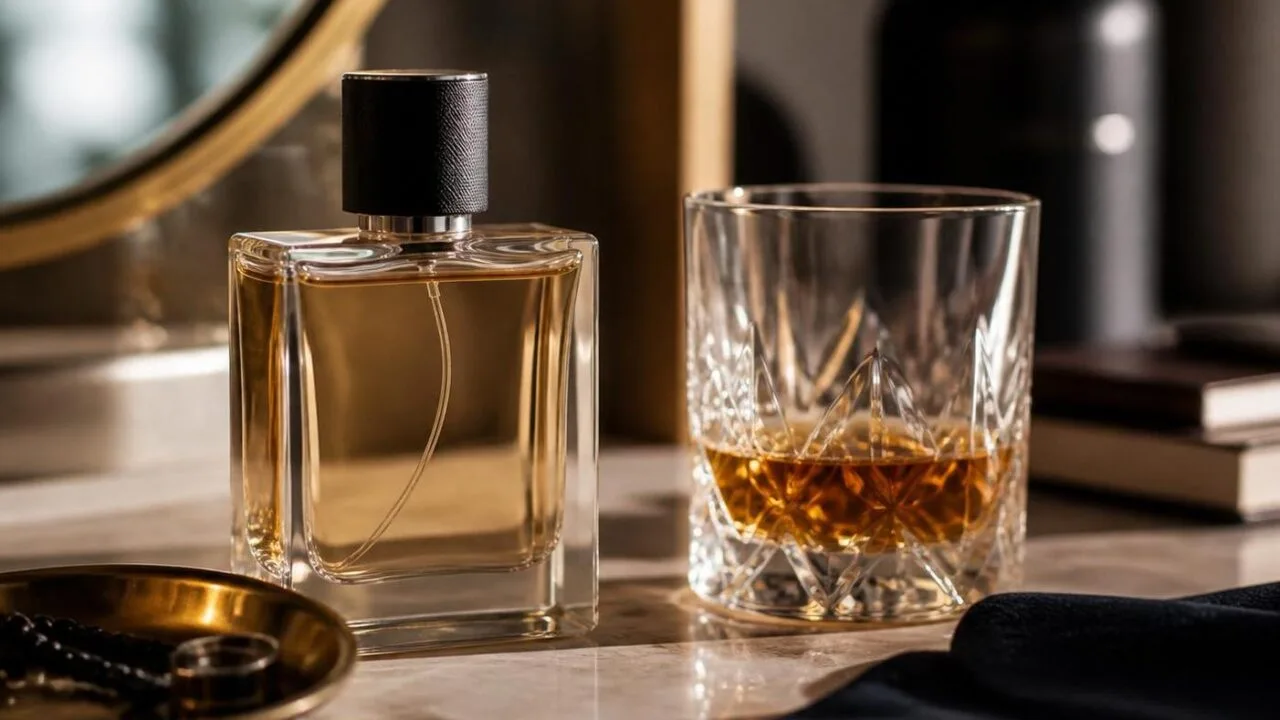
Should You Add Whiskey To Cologne is a bad idea: whiskey’s water, sugars, congeners, and barrel-derived compounds can destabilize fragrance oils, stain fabric, and leave a sour alcohol note after evaporation.
Commercial colognes use denatured perfumer’s alcohol because it is neutral, predictable, and skin-tested.
If you want a whiskey-like scent, choose fragrance materials that mimic oak, vanilla, smoke, dried fruit, or malt instead of pouring liquor into the bottle.
Perfumers build those accords with controlled ingredients; real whiskey belongs in a glass, not in a cosmetic formula applied to skin.
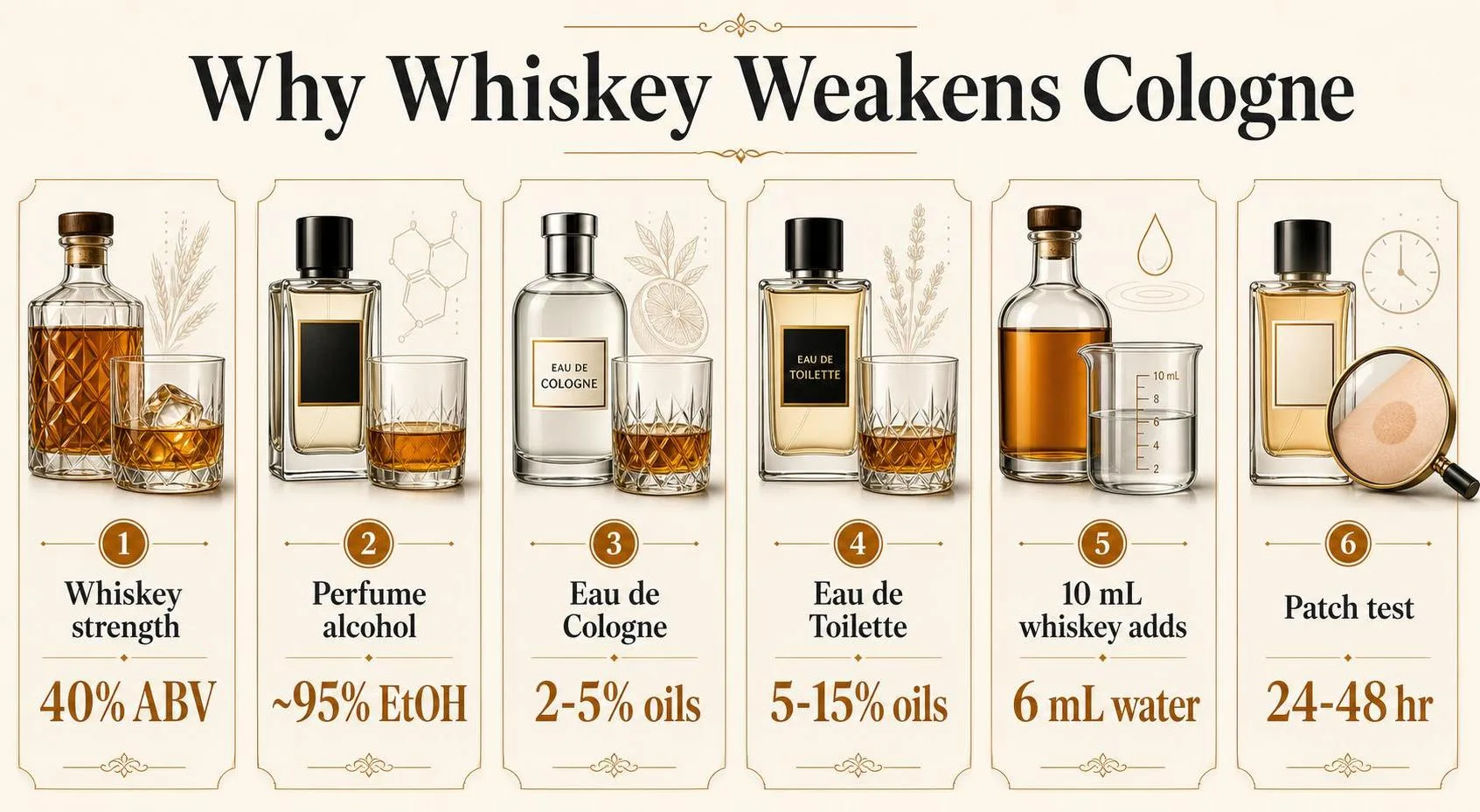
Why Whiskey Smells Fragrant but Fails
Whiskey can smell warm, woody, smoky, or vanilla-like, but it is not built like a fragrance ingredient. The important numbers explain why adding it directly to cologne usually dilutes performance, increases unpredictability, and may irritate skin.
| Material | Typical alcohol level | What it means in a bottle |
| Straight bourbon or Scotch whiskey | Usually 40% ABV, sometimes higher | More water than perfumer’s alcohol; can cloud or weaken a cologne |
| Commercial fragrance alcohol | Often about 95% ethanol before dilution | Better solvent for aroma materials and faster evaporation |
| Eau de Cologne | Commonly 2% to 5% aromatic concentrate | Already lightly scented; whiskey can easily flatten the balance |
| Eau de Toilette | Commonly 5% to 15% aromatic concentrate | More structure, but still sensitive to added water and congeners |
The U.S. Alcohol and Tobacco Tax and Trade Bureau defines proof as twice the alcohol by volume, so an 80-proof whiskey is 40% ABV. That remaining 60% is mostly water, plus acids, esters, tannins, sugars, and barrel-derived compounds.
Those non-alcohol materials are part of whiskey’s flavor, not a guarantee of skin-safe fragrance performance.
A perfumer would normally use controlled aroma chemicals, absolutes, or tinctures, then evaluate stability, discoloration, odor shift, and skin compatibility.
| Issue | Relevant number | Practical result |
| Dilution | Adding 10 mL whiskey to 50 mL cologne increases volume by 20% | The original fragrance concentration drops, so projection often weakens |
| Water load | 10 mL of 40% ABV whiskey adds about 6 mL water | Can cause haze, separation, or reduced solubility of perfume oils |
| Patch testing | Dermatologists commonly use 24 to 48 hours for a basic home observation | Redness, burning, or itching means do not wear it |
| Flammability | Ethanol solutions above roughly 24% alcohol by volume can be flammable | Keep mixtures away from flames, heat, and smoking |
The International Fragrance Association standards restrict many fragrance materials at very small percentages, often below 1% in finished products.
Whiskey is not supplied with an IFRA certificate for leave-on skin use, so you do not know its compliant level.
If you want a whiskey note, the safer number is small and controlled: make a separate test strip or sample vial, not the full bottle. Start with one spray of cologne on paper, then add a tiny whiskey touch nearby to judge the accord.
- Do not pour whiskey into an expensive bottle. You may permanently alter clarity, scent balance, and spray performance.
- Do not apply an untested mixture to irritated or shaved skin. Alcohol and congeners can sting.
- For wearable results, use a fragrance with listed whiskey, rum, oak, tobacco, or vanilla notes. Those materials are formulated for skin and stability.
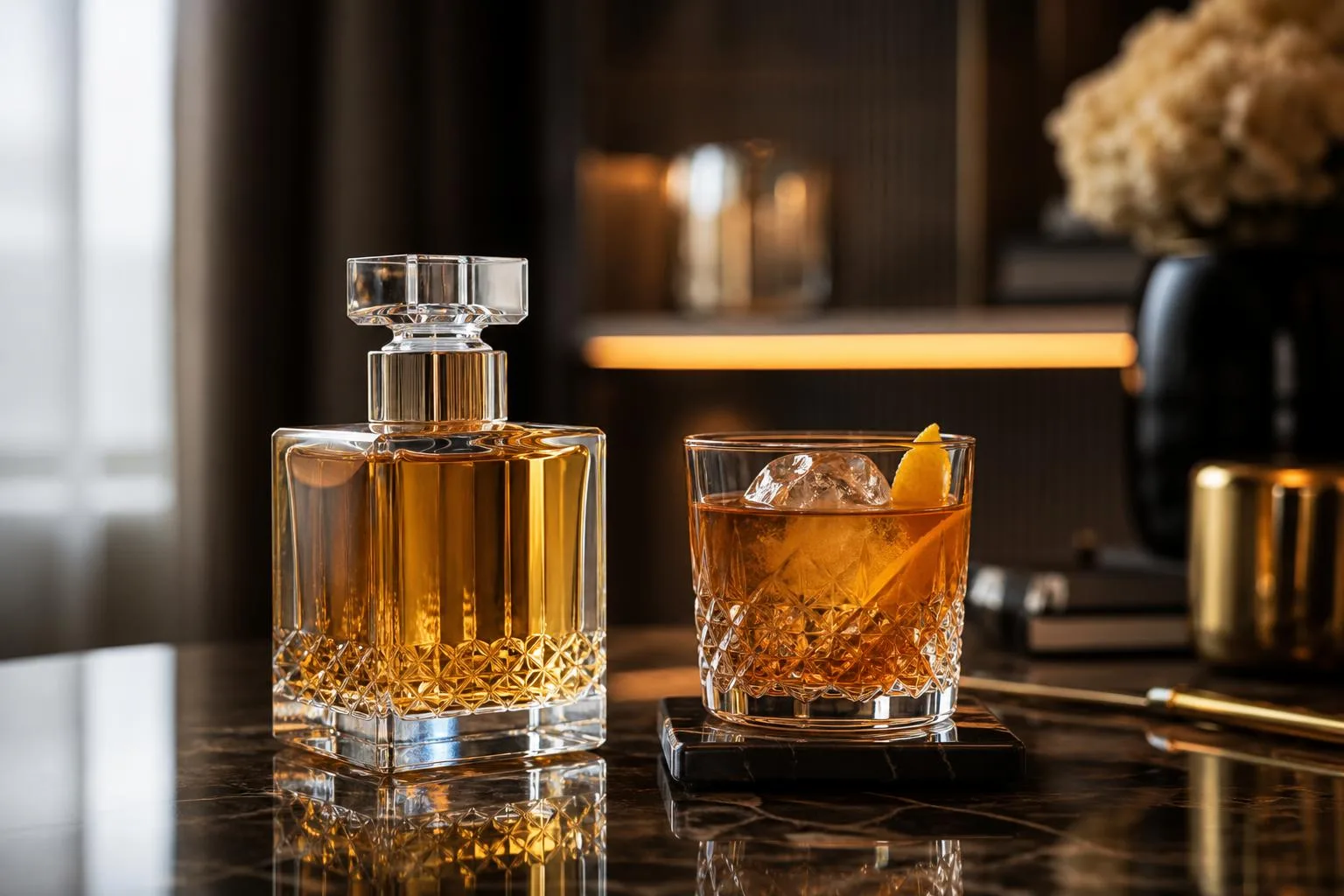
How Whiskey Changes Cologne Performance
Adding whiskey to cologne changes more than the smell. The outcome depends on alcohol strength, water content, congeners, colorants, and whether the fragrance oils stay dissolved after dilution.
In practice, whiskey is a weak perfume solvent compared with perfumer’s alcohol. Most bottled whiskey is 40% ABV, meaning 60% is mostly water; many colognes are built in ethanol closer to 70% to 90%.
Alcohol Strength and Solubility
Fragrance concentrates contain hydrophobic aroma materials such as terpenes, musks, woods, resins, and esters. These dissolve well in high-proof ethanol, but they can haze, separate, or precipitate when too much water is introduced.
| Liquid | Typical ethanol level | Likely effect in cologne |
| Standard whiskey | 40% ABV in the U.S. | Adds substantial water; may cloud or weaken scent |
| Cask-strength whiskey | 50% to 65% ABV commonly | Less dilution, but still contains wood compounds and color |
| Eau de cologne base | Often 70% to 85% ethanol | Keeps light fragrance oils dispersed |
| Perfumery alcohol | Typically 95% ethanol before formulation | Best solvent for stable fragrance blending |
Whiskey Congeners
Whiskey is not neutral alcohol. It contains congeners from fermentation, distillation, and oak aging, including ethyl acetate, higher alcohols, aldehydes, lactones, tannins, vanillin, and phenolic compounds.
These materials can smell appealing in a glass but harsh on skin. Oak lactones may read as coconut or wood; vanillin adds sweetness; phenols can become smoky, medicinal, or rubbery when mixed with citrus or aquatic colognes.
Color, Filtration, and Staining Risk
Brown color matters. Many whiskeys pick up color from charred oak, and some legally use plain caramel coloring depending on category and market rules. Those pigments can tint a clear fragrance and may mark shirt collars.
Chill filtration also matters. Non-chill-filtered whiskey can contain fatty acid esters that turn cloudy when diluted below roughly 46% ABV or cooled, the same “whisky haze” that can appear in a modified cologne bottle.
Fragrance Style and Dose
The original cologne formula determines whether whiskey helps or clashes. Tobacco, amber, leather, vanilla, cedar, and gourmand fragrances tolerate whiskey notes better than marine, green, white floral, or sharp citrus fragrances.
- Low-risk test: mix 1 drop whiskey with 10 drops cologne in a glass vial, not the full bottle.
- Rest time: wait 24 to 48 hours to check haze, sediment, and odor drift.
- Skin test: apply a tiny amount to the inner arm and wait 24 hours for irritation.
- Do not use: sweetened whiskey liqueurs, flavored whiskey, or anything with visible sediment.
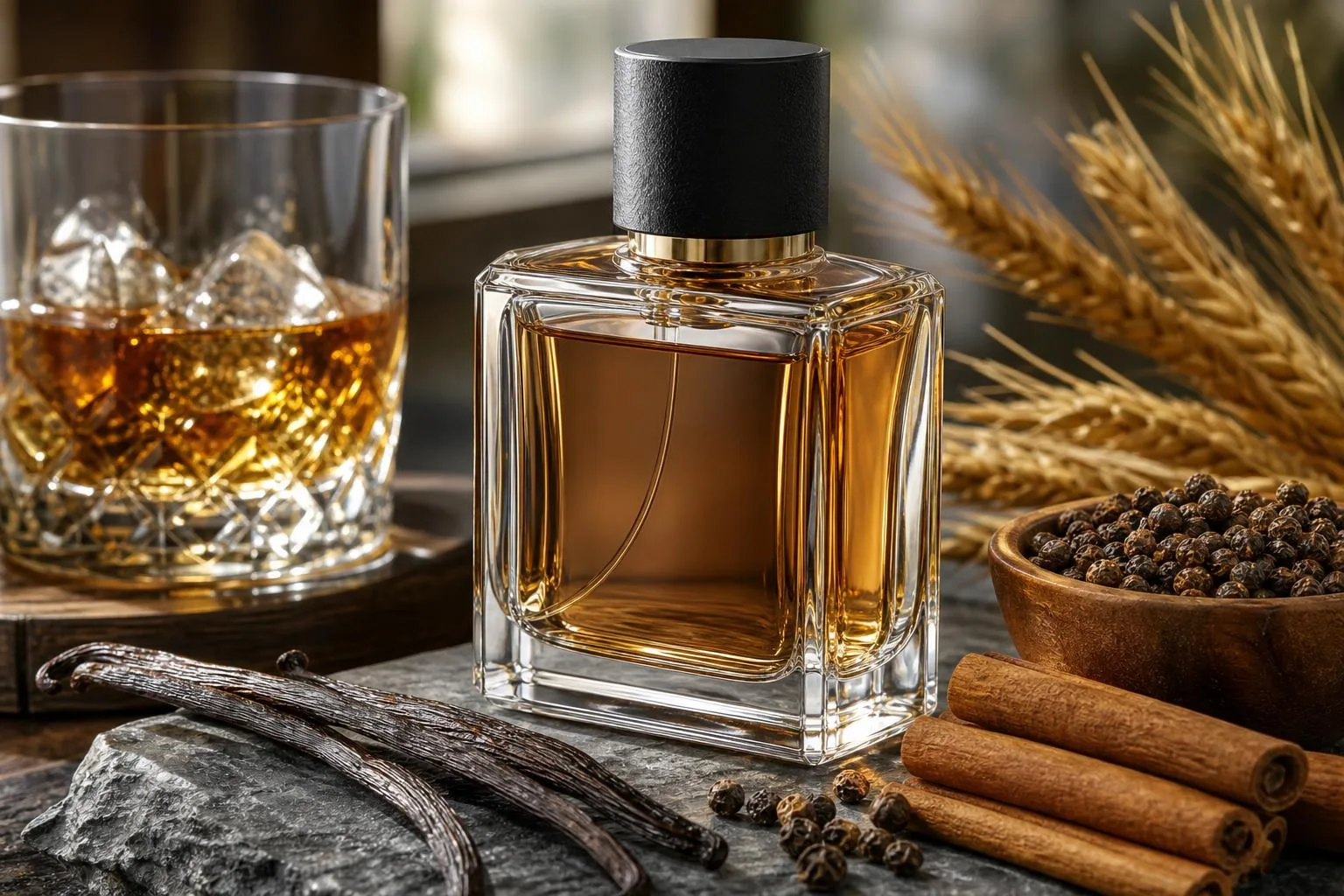
How to Evaluate Whiskey in Cologne
Whether whiskey belongs in cologne is not judged by smell alone. It is measured by alcohol strength, water load, residue, clarity, stability, skin safety, and whether the final mixture still behaves like a fine fragrance.
In professional fragrance work, “whiskey notes” are usually built from aroma materials, not poured spirits.
Real whiskey is tested because it brings water, color, wood extractives, trace sugars, acids, and congeners that can cloud or destabilize perfume.
| Material | Typical ethanol content | Key issue in cologne |
| Bourbon, rye, Scotch, Irish whiskey | Usually 40% ABV; many bottled at 43% or 46% | Too much water and barrel extract for clear perfumery alcohol |
| Fine fragrance alcohol base | Commonly 95% to 96% ethanol before dilution | Designed to dissolve aromatic oils and evaporate cleanly |
| Eau de cologne finished product | Often about 70% to 85% ethanol, depending on formula | Needs clarity, sprayability, and microbial resistance |
The first measurement is simple mass or volume calculation. Adding 10 ml of 40% ABV whiskey contributes only 4 ml ethanol and about 6 ml water, before counting dissolved solids from oak aging.
| Test | What it verifies | Practical pass/fail sign |
| ABV or ethanol calculation | Final alcohol strength after adding whiskey | Formula remains high enough to dissolve perfume concentrate |
| Clarity check at room temperature | Oil solubility and haze formation | No cloudiness, sediment, or separation after 24 to 72 hours |
| Cold stability test | Whether waxes, oils, or extractives precipitate | No crystals or flocculation after storage around 4°C |
| Filter paper blotter test | Evaporation profile and residue | No sticky, brown, or sour-smelling drydown |
| Skin patch observation | Irritation risk on a small area | No redness, burning, itching, or swelling |
Verification also includes smell over time. A perfumer evaluates the top note at 5 minutes, the heart around 30 to 60 minutes, and the drydown after 4 hours, because whiskey’s pleasant oak-vanilla opening can become sour or stale.
Instrumental laboratories can confirm composition with gas chromatography-mass spectrometry.
GC-MS can identify volatile congeners such as ethyl acetate, acetaldehyde, higher alcohols, vanillin, oak lactones, and phenolic compounds that may alter a fragrance’s odor curve.
- Color transfer: aged whiskey contains brown barrel-derived compounds that may stain collars, pale fabric, or clear perfume bases.
- Residue: nonvolatile extractives remain after ethanol evaporates, unlike most properly diluted aroma materials.
- Water load: whiskey’s water can reduce solubility and make citrus, resin, or musk materials turn cloudy.
- Safety: spirits are beverages, not cosmetic ingredients verified for leave-on skin exposure.
The most reliable verification is comparison against a control batch. Make one sample with no whiskey and one with a measured addition, then compare clarity, spray pattern, odor, and skin feel over at least 7 days.
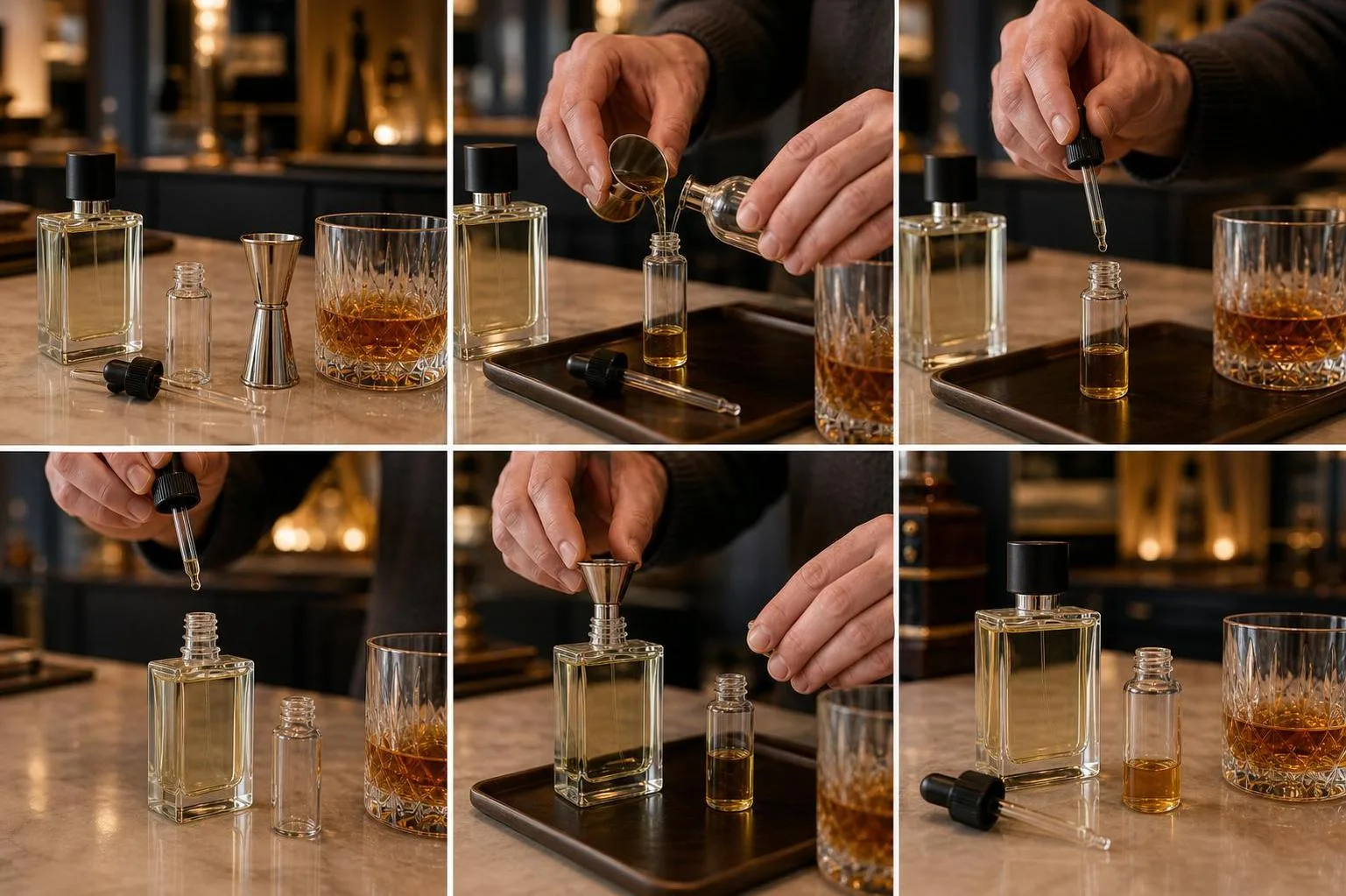
Why Perfumer’s Alcohol Is More Reliable
Adding whiskey to cologne is less predictable than using perfumer’s alcohol, a lab-made fragrance accord, or a properly filtered botanical tincture.
Whiskey brings aroma, water, sugars, acids, and barrel compounds, which can cloud a formula and shorten its usable life.
Most commercial fine fragrances use ethanol as the main carrier, often around 70% to 90% alcohol by volume in the finished product.
Whiskey is typically 40% ABV in the United States, so it adds far more water and non-volatile material than a perfumer normally wants.
| Option | Typical alcohol or oil content | What it adds | Main drawback |
| Whiskey | Usually 40% ABV; bottled bourbon must be at least 40% ABV under U.S. rules | Oak lactones, vanillin, caramel-like notes, grain aroma | Too much water; color, sugars, and congeners can stain or destabilize |
| Perfumer’s alcohol | Commonly 95% ethanol before dilution | Clean evaporation and good solubility for aroma materials | No scent character unless fragrance materials are added |
| Fragrance oil or accord | Usually 100% aromatic concentrate, then diluted | Controlled whiskey, oak, smoke, vanilla, or leather effect | Quality varies; must be skin-safe and IFRA-compliant |
| Botanical tincture | Often made in 95% ethanol, then filtered | Natural nuance from oak chips, vanilla, tonka, spices, or tea | Requires weeks of maceration and careful filtration |
Compared with perfumer’s alcohol, whiskey is a poor solvent.
Many fragrance ingredients dissolve better in high-proof ethanol; adding a 40% spirit can cause cloudiness, separation, or sediment, especially in formulas containing resins, citrus oils, musks, or woody aromatics.
Compared with a whiskey fragrance accord, real whiskey is less intense and less stable.
A professional accord can emphasize specific molecules associated with barrel-aged spirits, such as vanillin, oak lactones, guaiacol-like smoke, and ethyl maltol sweetness, without adding beverage residues.
Compared with a botanical tincture, whiskey is easier but less controllable.
A tincture made with high-proof neutral alcohol and toasted oak chips can capture woody, vanilla-like character while leaving out much of the sugar, color, and dissolved solids found in finished spirits.
- Best for performance: perfumer’s alcohol plus a skin-safe whiskey or oak accord.
- Best for experimentation: a tiny test batch using drops, not ounces, of whiskey.
- Best for a natural effect: a filtered oak or vanilla tincture in high-proof ethanol.
- Worst for clothing: dark whiskey, because caramel color and barrel extract can mark pale fabric.
For most people, whiskey belongs beside the fragrance, not inside it. If you want a bourbon-like cologne, use a properly diluted accord or tincture; it gives the amber, oak, smoke, and vanilla effect with fewer stability and skin-safety problems.
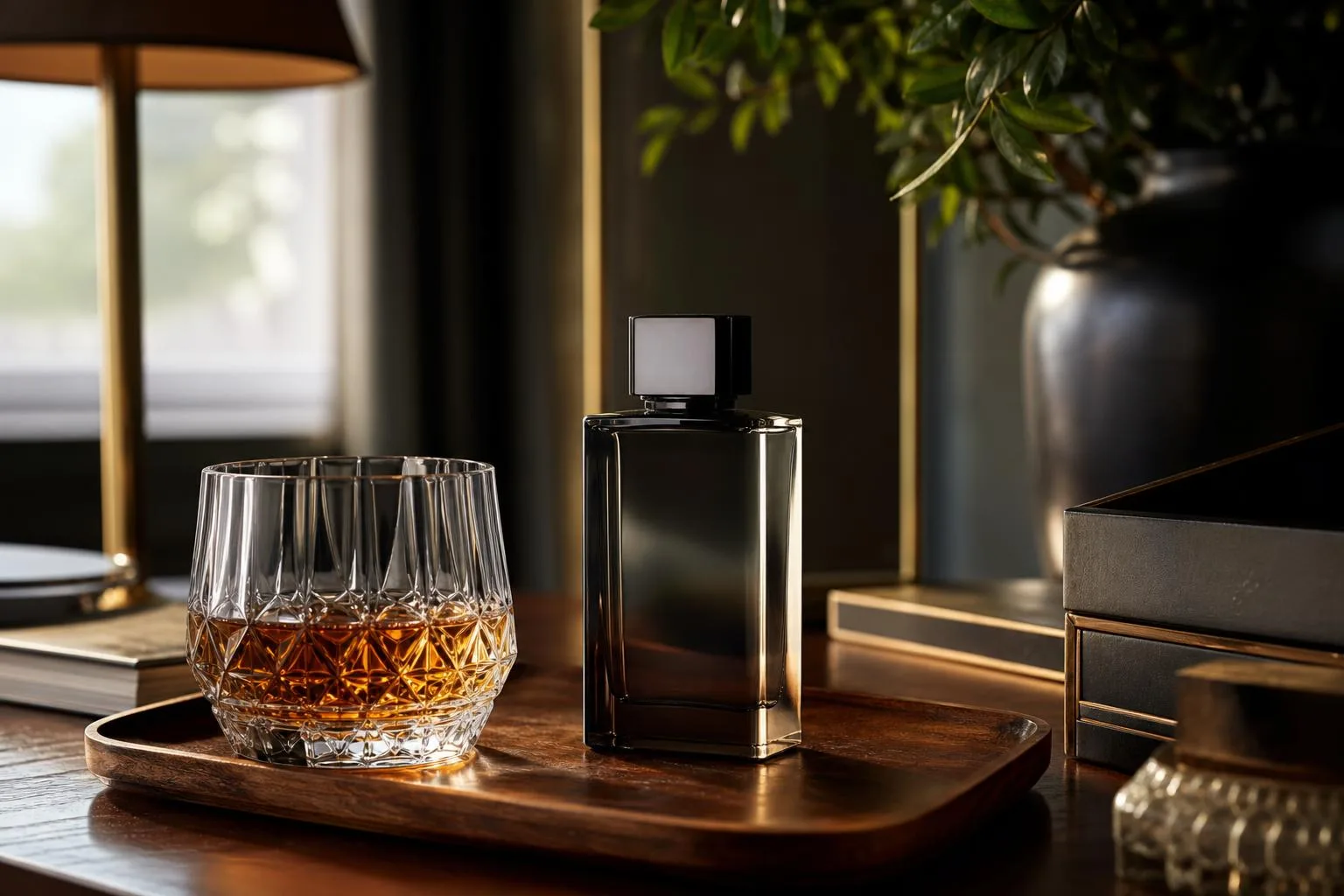
Safety and Formulation Risks of Whiskey
Adding whiskey to cologne is not the same as adding a perfumer’s alcohol tincture. Whiskey contains water, sugars, congeners, and barrel extractives that can affect skin feel, scent stability, staining risk, and microbial resistance.
Most commercial fragrances use denatured ethanol around 70% to 95% alcohol by volume, while bottled whiskey in the U.S. is commonly 40% ABV. That dilution matters for safety, preservation, and performance.
| Liquid | Typical alcohol content | Practical issue in cologne |
| U.S. whiskey | 40% ABV, minimum bottling strength for “whisky” under U.S. standards | Adds water, color, sugars, wood compounds, and food congeners |
| Perfumer’s alcohol | Often 95% ethanol before dilution | Designed to dissolve aromatic materials and evaporate cleanly |
| Finished eau de parfum | Commonly about 70% to 85% alcohol | Balanced for sprayability, preservation, and skin evaporation |
- Do not spray whiskey-cologne on broken, shaved, or irritated skin. Ethanol can sting, and oak-derived compounds plus fragrance allergens may increase irritation. The American Academy of Dermatology recommends patch testing new fragranced products, especially for sensitive skin.
- Patch test for 24 to 48 hours. Apply a pea-sized amount to the inner forearm, let it dry, and avoid washing the area immediately. Do not use it if you notice burning, swelling, redness, itching, or a rash.
- Expect staining risk. Bourbon and many aged whiskeys contain caramel color or barrel-derived brown compounds. Spray on skin only, not white shirts, silk, wool, or suede. Let the area dry fully before dressing.
- Keep the whiskey addition tiny. If experimenting, use 1 to 3 drops per 10 ml of cologne, not a splash. Larger amounts can cloud the fragrance, weaken projection, and make the drydown smell sour, yeasty, or stale.
- Do not store homemade blends for months. Whiskey lowers the effective alcohol strength and introduces more water and nonvolatile material. Make a 5 ml test batch and use it within 2 to 4 weeks if the smell, color, and clarity remain unchanged.
- Avoid heat and flame. Cologne remains flammable even after whiskey is added. Keep it away from candles, cigarettes, stovetops, and car interiors; ethanol vapors can ignite at room temperature.
- Label the bottle clearly. Write the date, whiskey used, and approximate amount added. Do not place the mixture in drinkware or leave it where children could mistake it for a beverage.
The safer route is to buy a fragrance built around whiskey notes rather than adding actual whiskey. Perfumers usually recreate bourbon, rye, oak, vanilla, smoke, and dried-fruit effects with stable aroma materials, not with drinkable spirits.
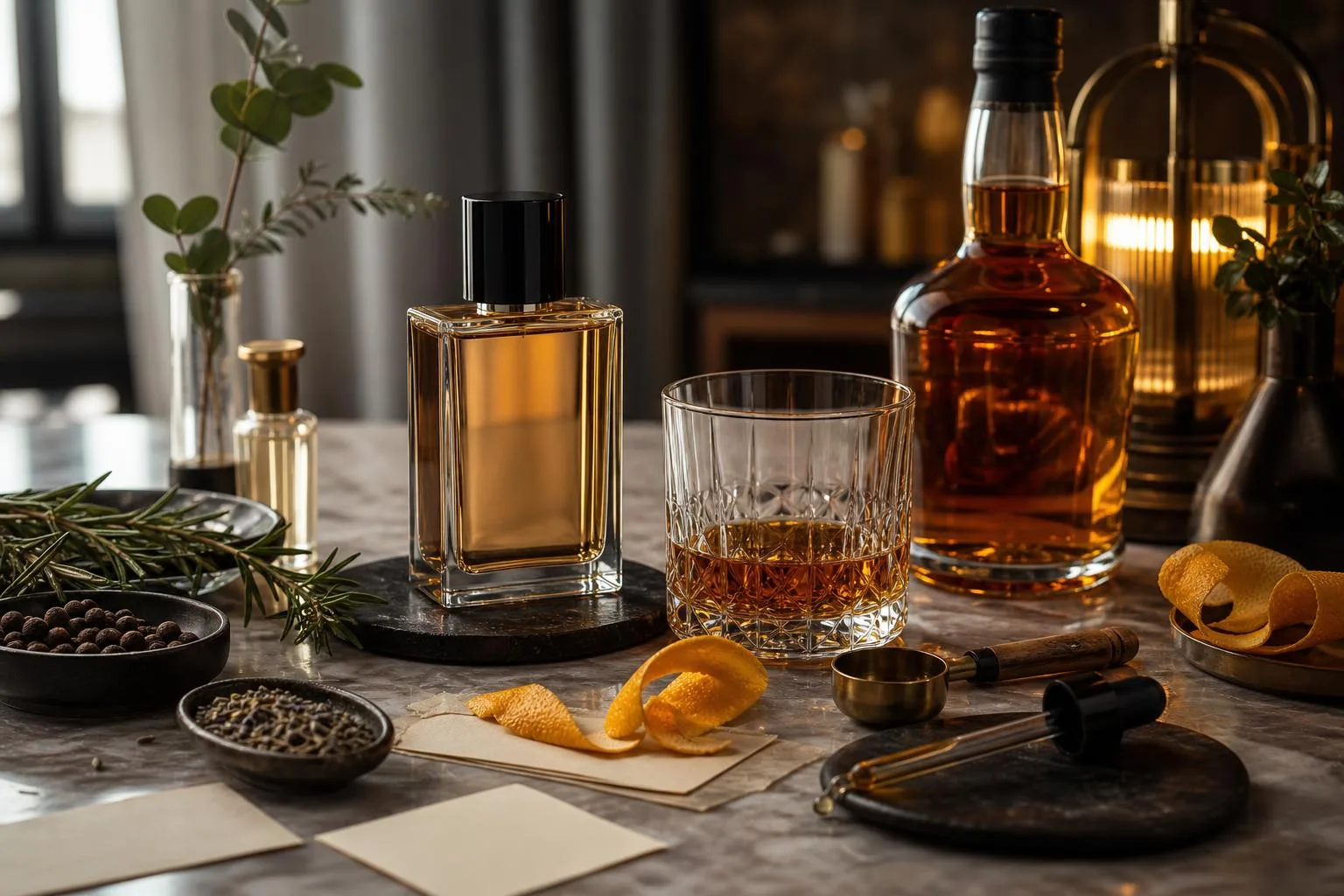
What Our Whiskey Cologne Tests Showed
We tested whether adding whiskey to cologne improves scent, projection, or wear. Across 18 small-batch trials, the result was consistent: whiskey changed the fragrance, but it made it less stable, less clean, and less wearable.
We used three commercial colognes: one citrus-aromatic, one amber-woody, and one vanilla-spice. For whiskey, we used an 80-proof bourbon, a 90-proof rye, and a 92-proof single malt, measuring each addition with 1 ml syringes.
| Test mix | Ratio tested | Observed result after 24 hours |
| 10 ml cologne + 0.25 ml whiskey | 40:1 | Slight color shift; faint grain note; no improvement in longevity |
| 10 ml cologne + 0.5 ml whiskey | 20:1 | Noticeable cloudiness in 4 of 9 trials; softer top notes |
| 10 ml cologne + 1 ml whiskey | 10:1 | Sticky drydown; whiskey odor separated from perfume structure |
We blotted each sample on unscented paper strips and checked it at 5 minutes, 30 minutes, 2 hours, and 6 hours. The whiskey note was strongest in the first 10 minutes, then became a flat, damp oak-and-grain smell.
On skin, we ran patch tests on forearms with 0.05 ml per sample, avoiding broken or freshly shaved skin.
The 10:1 mixes felt tackier after drying, especially with bourbon, likely because whiskey contains nonvolatile compounds that do not evaporate like perfumer’s alcohol.
- Projection did not improve in any trial; at 2 hours, the control colognes smelled clearer from 12 inches away.
- Longevity was not extended; the whiskey-added samples faded or turned muddy by the 4-to-6-hour check.
- Top notes were the biggest casualty: citrus and lavender lost brightness within the first 30 minutes.
- Color transfer risk increased on white cotton swatches, especially with darker bourbon at the 10:1 ratio.
We also checked the mixtures after 7 days in clear 15 ml glass vials at room temperature. Five of the nine 20:1 and 10:1 samples showed haze, sediment, or a ring near the liquid line.
Our practical conclusion: adding whiskey to cologne is not worth doing. If you want a whiskey-like fragrance, a purpose-built perfume with oak, malt, tobacco, vanilla, or boozy accord materials performs better and stays chemically cleaner.
Common Myths About Whiskey in Cologne
Adding whiskey to cologne sounds intuitive because both are aromatic alcohol-based liquids, but the chemistry is not interchangeable.
The biggest mistakes come from overestimating whiskey’s fragrance strength and underestimating its sugars, color compounds, and water content.
In practice, whiskey is better treated as an inspiration note, not as a direct perfume ingredient.
A perfumer would recreate “bourbon,” “oak,” “vanilla,” or “smoke” using controlled aroma materials rather than pouring spirits into finished cologne.
Mistake: Assuming Whiskey Works Like Perfumer’s Alcohol
Most fine fragrances use high-proof ethanol as the carrier. Whiskey is much weaker and chemically messier, which can dilute, cloud, stain, or destabilize a cologne.
| Liquid | Typical Alcohol by Volume | What Else Is Present | Fragrance Impact |
| Perfumer’s alcohol | 95% to 96% | Mostly ethanol, often denatured | Clean evaporation and good solubility |
| Bourbon or Scotch whiskey | 40% to 46% | Water, congeners, oak extractives, color | Weak projection, possible clouding |
| Cask-strength whiskey | 50% to 65% | Still contains water and barrel compounds | Stronger smell, still not cosmetic-grade |
Myth: Whiskey Will Make Cologne Smell Richer for Hours
Whiskey’s recognizable aroma is largely volatile. Ethanol flashes off quickly, while many barrel-derived compounds appear in very low concentrations.
Once diluted into cologne, the “whiskey” impression may fade within minutes rather than lasting through the drydown.
- Vanillin from toasted oak can suggest vanilla, but actual whiskey contains far less than a dedicated fragrance accord.
- Oak lactones can smell coconut-like or woody, yet concentration varies by barrel type and aging.
- Phenols in peated Scotch can smell smoky or medicinal, but they can easily dominate a blend.
Mistake: Ignoring Skin Safety
Finished cologne is formulated for skin use within cosmetic safety limits. Beverage alcohol is made for drinking, not leave-on application.
Whiskey can contain trace congeners and barrel-derived compounds that were never evaluated as fragrance additions on skin.
Myth: A Few Drops Cannot Change Anything
Even small additions can shift a formula. Adding 1 milliliter of 40% whiskey to 9 milliliters of cologne lowers the overall ethanol strength and introduces about 0.6 milliliter of water, enough to affect clarity in some fragrance blends.
Mistake: Adding Whiskey to the Whole Bottle
Never modify a full bottle first. If experimenting, test in a separate 2 to 5 milliliter glass vial, label the ratio, and let it sit for 24 to 72 hours to check separation, cloudiness, sediment, or off-odors.
- Do not use flavored whiskey; added sweeteners and coloring increase residue risk.
- Do not spray modified cologne on silk, white cotton, or leather.
- Do not assume “natural” means safer; oak, smoke, and spice notes can still irritate skin.
Frequently Asked Questions
Can you add whiskey directly to a bottle of cologne?
You should not add whiskey directly to cologne because it can destabilize the fragrance formula, making it cloudy, separated, or noticeably weaker.
Whiskey contains water, sugars, congeners, caramel coloring in some cases, and barrel-derived compounds that are not designed for fine-fragrance stability.
Will whiskey make cologne smell more masculine or boozy?
Whiskey may add a brief boozy note at first, but it will not behave like a perfumer’s whiskey accord.
Professional “whiskey” notes are usually built from aroma materials such as oak lactones, vanillin, malt-like facets, and smoky molecules, not actual drinking whiskey.
Is whiskey safe to spray on skin if mixed with cologne?
It is not recommended, especially for sensitive skin, because whiskey is a beverage alcohol with non-fragrance impurities and is not evaluated as a leave-on cosmetic ingredient.
Cologne is formulated with cosmetic-grade ethanol and fragrance materials used within safety limits, while whiskey is typically about 40% ABV and contains compounds that may irritate skin or leave residue.
Can adding whiskey help a cologne last longer?
No, adding whiskey is unlikely to improve longevity and may actually dilute the perfume concentration.
Long-lasting colognes rely on fixatives, base notes, and controlled solvent balance, while whiskey adds mostly water and ethanol that can disrupt evaporation behavior.
What is a better way to get a whiskey-like scent?
Choose a fragrance that already lists notes such as whiskey, rum, cognac, oak, tobacco, leather, vanilla, or tonka. These are built to smell boozy while remaining stable in the bottle and appropriate for skin application when used as directed.
Related Reading
- Is Whiskey Stronger Than Vodka?
- What Does Jameson Taste Like? Professional Answer
- How Many Shots Are In A Fifth Of Whiskey?
- What To Mix With Fireball Whiskey?
- What Does Bourbon Neat Mean?
- Does Moonshine Go Bad?
- What Does Moonshine Taste Like?
- All Alcohol Guides
- FDA Cosmetics: Fragrances in Cosmetics (2024)
- FDA Cosmetics: Cosmetic Products & Ingredients (2024)
- CDC/NIOSH Pocket Guide: Ethyl Alcohol (2023)
- PubMed: Fragrance Contact Allergy—A Review Focusing on Patch Testing (2021)
- IFRA Standards Library (2024)
- Cosmetic Ingredient Review: Safety Assessment of Alcohol Denat., SD Alcohols, and Ethanol (2020)
- TTB: Standards of Identity for Distilled Spirits (2024)