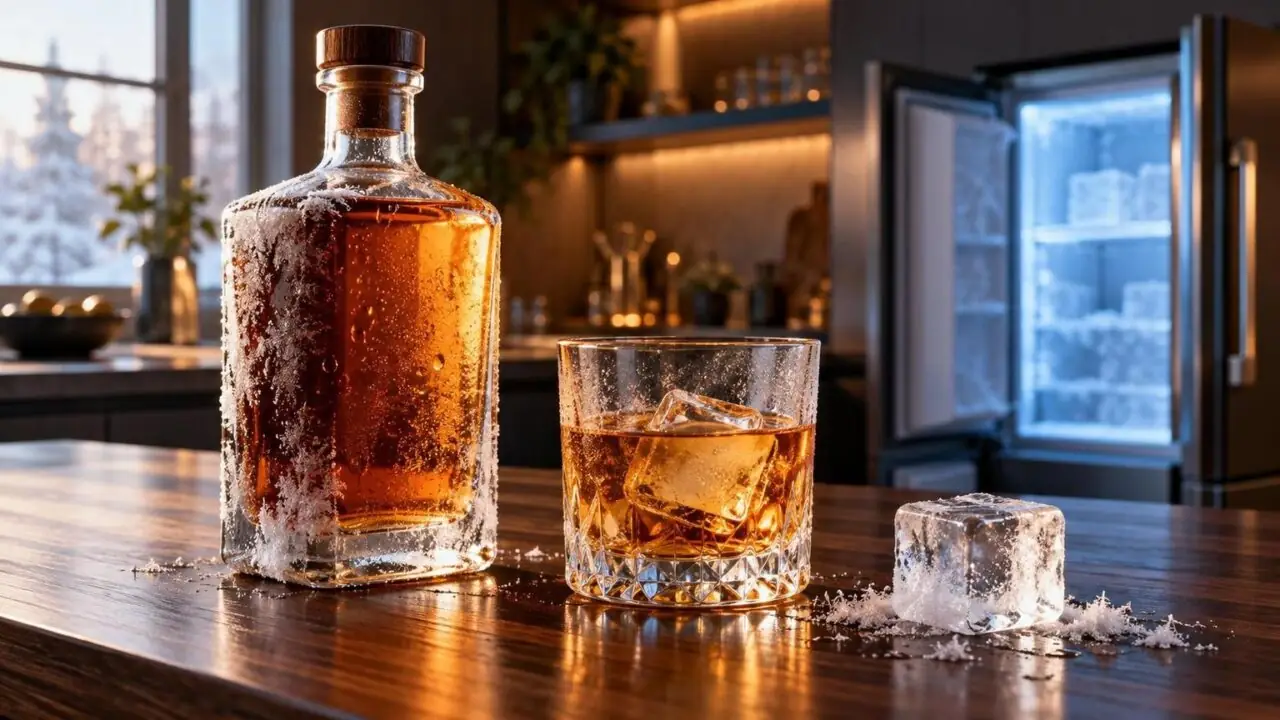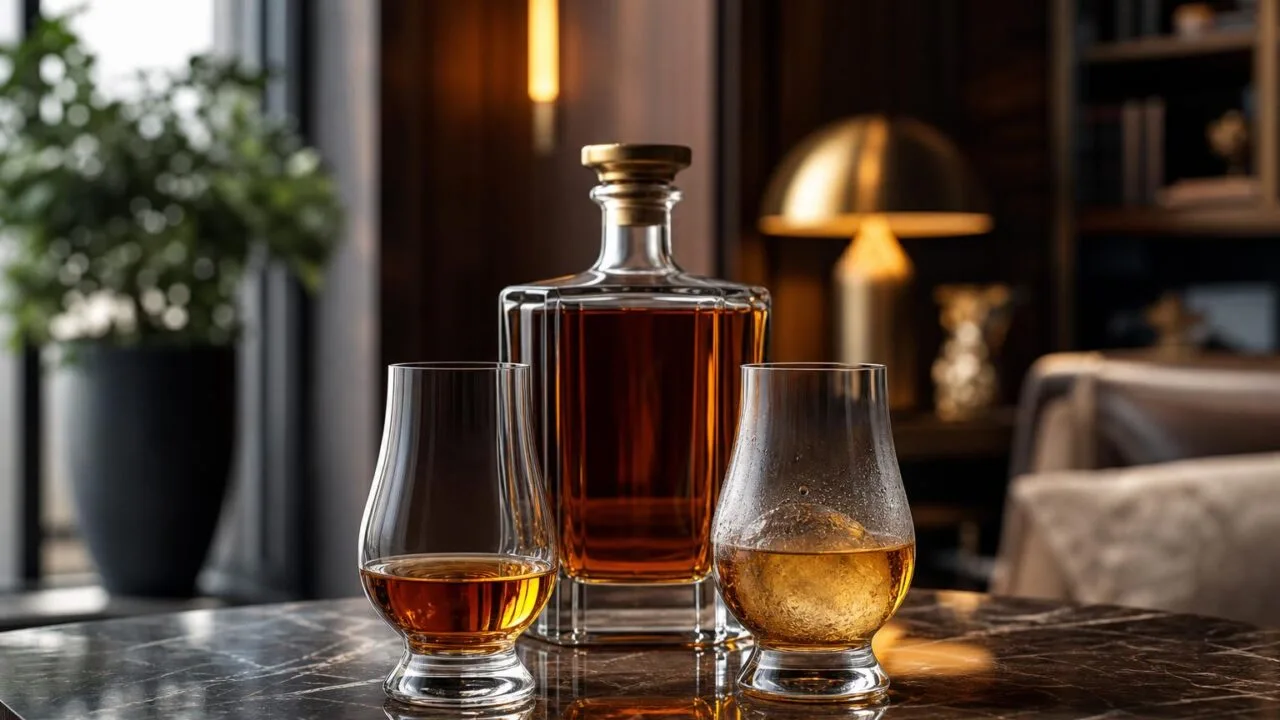
Should Whiskey Be Chilled Or Drunk Straight is best answered by aroma and proof: taste it neat first, then chill or dilute only if alcohol heat blocks flavor.
Straight whiskey shows grain, oak, smoke, fruit, and spice most clearly at room temperature, especially around 60–65°F.
Chilling dulls volatile aromas but can make high-proof bourbon, rye, or Scotch feel smoother.
In professional tastings, I start neat in a tulip glass, add 2–4 drops of water, then compare with one large ice cube when texture matters more than full aroma.
How ABV Shapes Chilling Effects
Whiskey is usually bottled between 40% and 50% ABV, and that alcohol level changes how it reacts to ice, freezer temperatures, and small amounts of water.
The practical question is not “cold or straight,” but how much temperature and dilution you want.
In tasting rooms and judging panels, whiskey is commonly assessed near room temperature because aroma compounds volatilize more readily when the liquid is not deeply chilled. A useful working range is 60°F to 70°F for nosing and sipping neat.
| Number | What it means for whiskey |
| 40% ABV | Legal minimum bottling strength for Scotch, bourbon, and many other whiskeys in the U.S. and U.K.; it is more affected by dilution than cask-strength pours. |
| 46% ABV | A common threshold where many producers avoid chill filtration, because higher alcohol helps keep fatty acid esters dissolved when cooled. |
| 50% ABV | Bottled-in-bond bourbon strength in the U.S.; it can take a few drops of water or one large cube without tasting thin as quickly. |
| 55% to 65% ABV | Typical cask-strength territory; dilution is often helpful because ethanol heat can suppress aroma perception. |
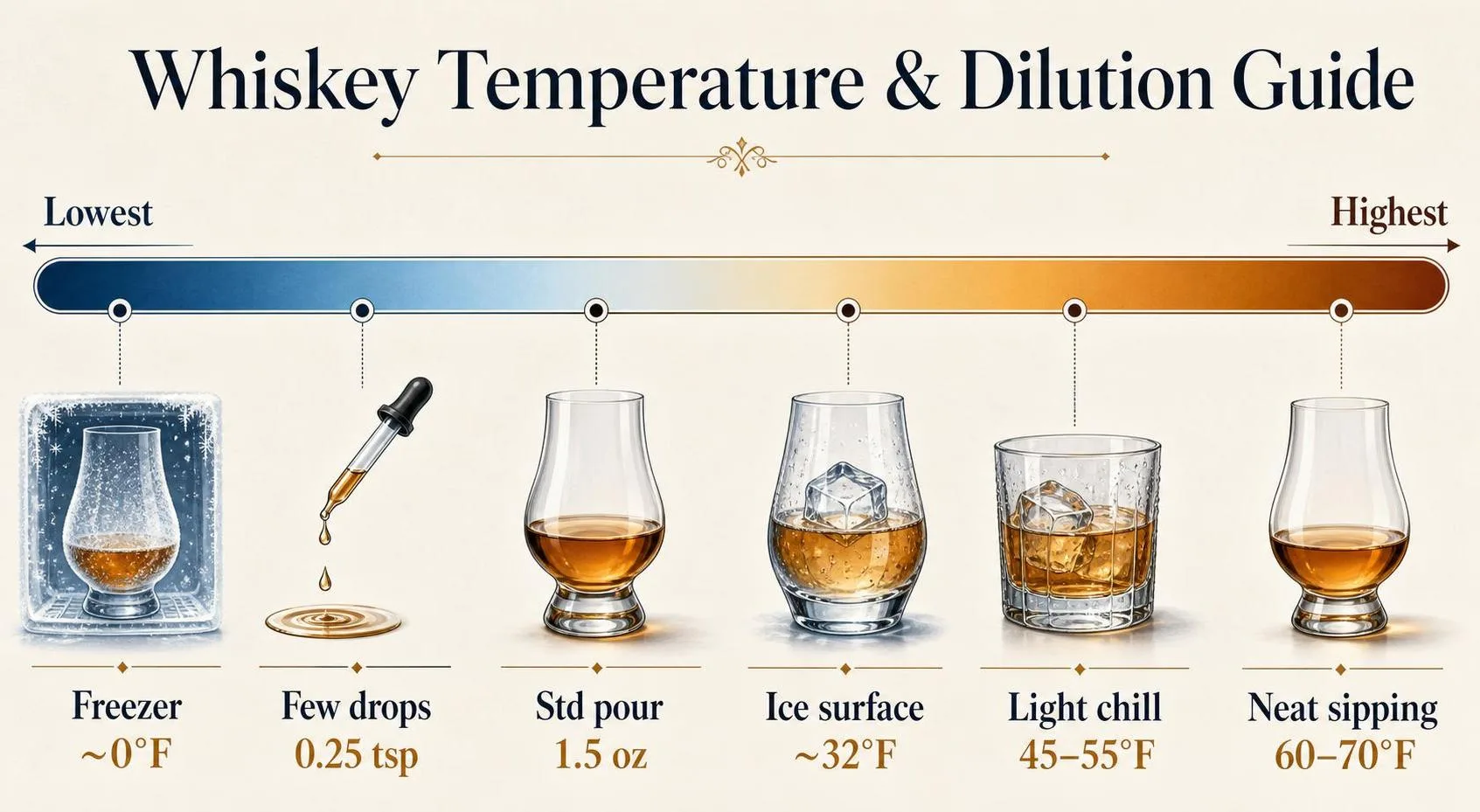
Temperature matters because cold reduces aroma intensity and texture. A refrigerator at about 37°F will mute grain, fruit, oak, and ester notes compared with a neat pour at 65°F. That can be pleasant for a harsh whiskey, but it hides complexity.
| Serving condition | Approximate temperature | Expected effect |
| Neat, room temperature | 60°F to 70°F | Most aroma release; best for evaluation and premium pours. |
| Lightly chilled | 45°F to 55°F | Softer alcohol impression, less aromatic lift. |
| On ice | Near 32°F at the surface | Cold and dilution increase over time; sweetness may seem rounder, finish shorter. |
| Freezer | About 0°F | Very muted aroma; most 40% whiskey will not freeze in a home freezer. |
Water is the other key number. Adding 0.25 teaspoon to a 1.5-ounce pour changes the alcohol only slightly, but it can open aromas by shifting ethanol-water balance. For high-proof whiskey, 1 teaspoon is often more noticeable.
- 1.5 ounces: the standard U.S. pour used for spirits comparisons.
- 0.25 teaspoon: a controlled “few drops” addition for nosing without obvious dilution.
- 1 large cube: chills slower and dilutes slower than several small cubes because it has less surface area relative to volume.
- 10 to 15 minutes: enough time for an iced pour to change significantly in temperature and proof.
The best baseline is neat at 60°F to 70°F, then adjust. Chill cheaper, hotter, or cocktail-bound whiskey; sip well-made whiskey straight first so you know what the ice is changing.
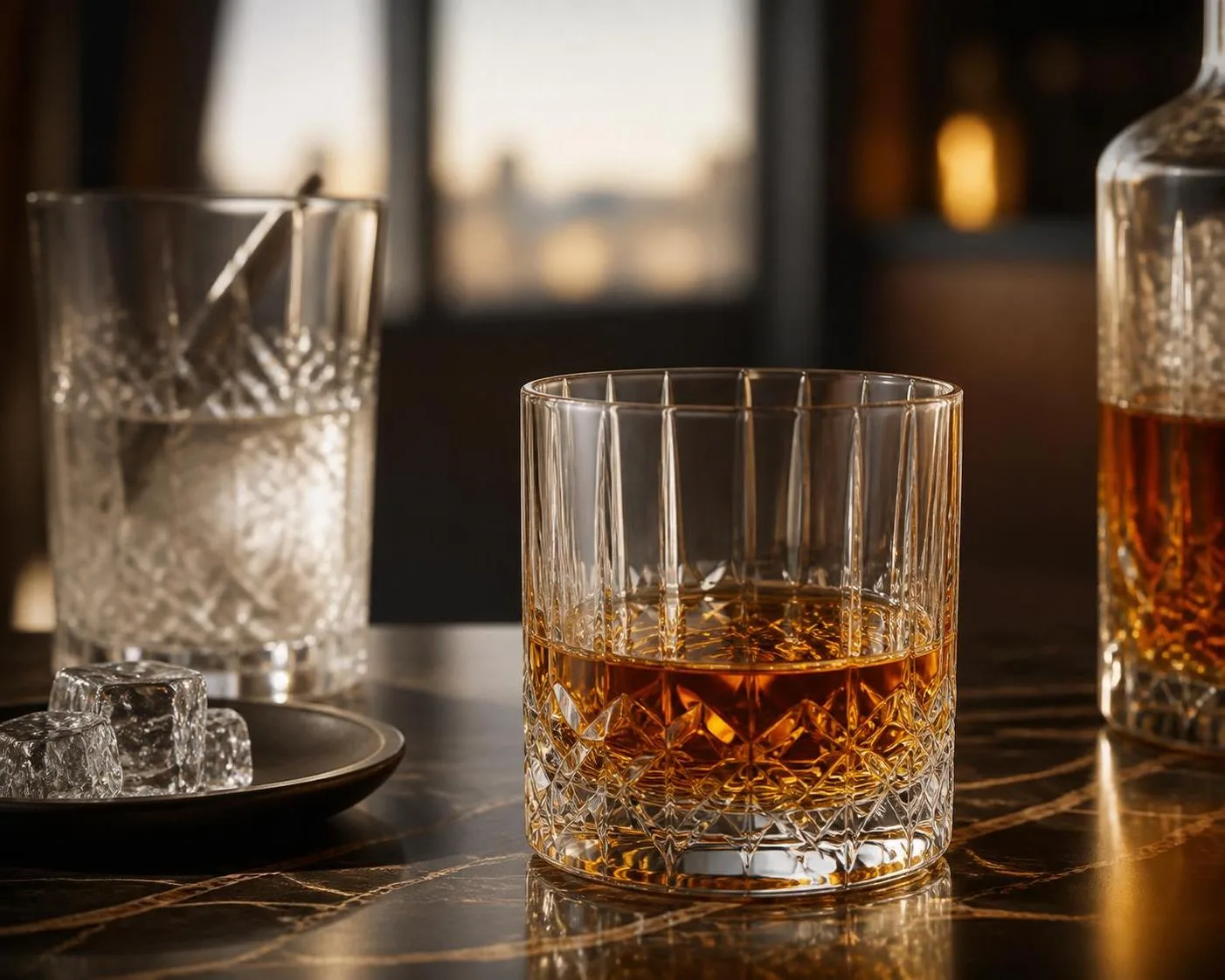
Factors That Change Whiskey Taste
Whether whiskey tastes better chilled or straight depends on temperature, dilution, proof, glass shape, and the whiskey’s own chemistry.
In tasting rooms, I’ve seen the same bourbon seem sweeter at room temperature, flatter from the freezer, and more aromatic with just a few drops of water.
The main issue is volatility. Aroma compounds leave the liquid more easily when whiskey is warmer, which is why a neat pour at about 60–70°F often smells more expressive than one served ice-cold.
| Factor | What changes | Practical effect in the glass |
| Serving temperature | Cold suppresses evaporation of aroma compounds | Less alcohol burn, but also less fruit, oak, spice, and grain aroma |
| Dilution | Ice melt or added water lowers alcohol by volume | Can soften heat and open aroma, but too much makes whiskey thin |
| Proof | Higher ABV carries more ethanol intensity | Cask-strength whiskey often benefits more from water than 80-proof whiskey |
| Whiskey style | Bourbon, rye, Scotch, and Irish whiskey emphasize different congeners | Delicate malts lose nuance faster when heavily chilled |
Temperature changes aroma and texture
Most room-temperature whiskey in a U.S. home sits around 68–72°F. At that range, ethanol is noticeable, but esters, aldehydes, phenols, vanillin, and oak lactones are also easier to smell.
Refrigerator temperature, about 37–40°F, reduces the burn and makes the texture seem thicker. Freezer temperature, often near 0°F, can make whiskey feel syrupy, but it strongly mutes aroma.
Ice changes both temperature and proof
One standard 1.5-ounce pour of 100-proof whiskey contains 0.75 ounce of pure alcohol. If melting ice adds 0.5 ounce of water, the drink drops to roughly 75 proof, before accounting for any whiskey left on the ice.
That proof drop can be useful. Many distillers and blenders evaluate barrel-strength samples with added water because dilution can reveal aromas hidden by ethanol intensity.
The whiskey’s proof matters
- 80–86 proof: Usually designed to drink neat; too much ice can quickly make it taste watery.
- 90–100 proof: Often works well neat, with one large cube, or with a teaspoon of water.
- 110 proof and above: Frequently benefits from controlled dilution, especially for careful nosing.
The glass and drinking pace matter
A tulip-shaped glass concentrates aroma, making straight whiskey seem more detailed. A wide rocks glass releases aroma broadly and suits ice, but it can make subtle whiskey seem less focused.
Time matters too. A large cube chills slowly and dilutes gradually, while small cubes or crushed ice can over-dilute a pour within minutes.
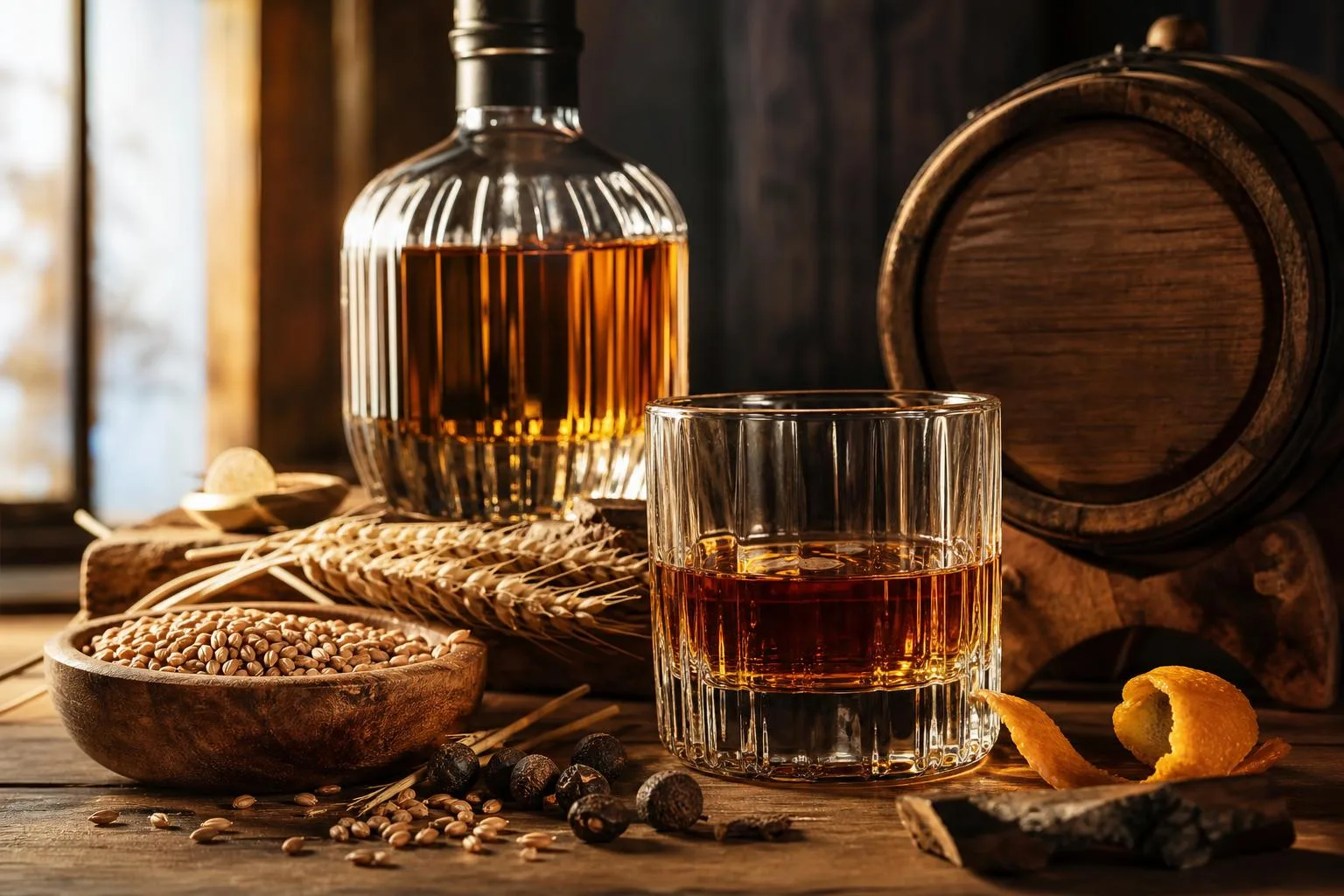
Measuring Temperature Dilution and Proof
Whether whiskey is “straight” or chilled is verified with three measurable factors: serving temperature, dilution, and alcohol strength.
In bar service, the most reliable check is not opinion; it is a thermometer, a measured pour, and controlled tasting conditions.
Whiskey “straight” usually means poured from the bottle with no ice, mixer, or chilling step.
In the United States, “straight whiskey” is also a regulated production term under 27 CFR §5.143, requiring at least 2 years of oak aging, but that legal meaning is separate from how it is served.
| Condition measured | Typical value | How it is verified |
| Room-temperature whiskey | 68–72°F in many bars and homes | Instant-read probe or infrared thermometer aimed at the liquid surface |
| Lightly chilled whiskey | 50–60°F after brief refrigeration or a chilled glass | Thermometer reading immediately before tasting |
| Whiskey over ice | Often falls below 45°F within minutes | Thermometer plus timed observation as ice melts |
| Bottled strength | Usually 40–50% ABV; cask strength may exceed 55% ABV | Label ABV, proof statement, or distillery analysis |
Alcohol strength is verified at bottling with calibrated hydrometers, densitometers, or laboratory distillation methods. In the U.S., bottle labels state alcohol by volume and proof; 40% ABV equals 80 proof because proof is twice the ABV.
Dilution is measured by comparing the original pour to added water or meltwater. A 2-ounce pour of 46% ABV whiskey contains about 0.92 ounce of pure alcohol. Adding 0.25 ounce of water lowers it to roughly 40.9% ABV before accounting for ice melt.
| Pour setup | Total liquid | Approximate final ABV |
| 2.00 oz at 46% ABV, no water | 2.00 oz | 46.0% |
| 2.00 oz at 46% ABV + 0.25 oz water | 2.25 oz | 40.9% |
| 2.00 oz at 46% ABV + 0.50 oz water | 2.50 oz | 36.8% |
Temperature changes are verified because cold suppresses aroma volatility.
Ethanol boils at 173.1°F, while many aroma compounds evaporate at different rates, so lowering the serving temperature can reduce nose intensity even when the whiskey’s chemical composition has not changed.
- Use identical glasses: tulip or Glencairn-style glasses reduce variation in aroma concentration.
- Measure the pour: use 1.0 or 1.5 ounces for each sample, not free-pours.
- Record temperature: note the liquid temperature at first nosing and after 5 minutes.
- Control dilution: compare neat, chilled neat, and ice samples separately.
- Repeat blind: label glasses underneath to reduce expectation bias.
A practical verification method is a side-by-side tasting: one room-temperature pour, one refrigerated pour, and one pour over a single large cube.
If the chilled sample smells muted and the iced sample tastes softer, the difference is measurable through temperature and dilution, not just preference.
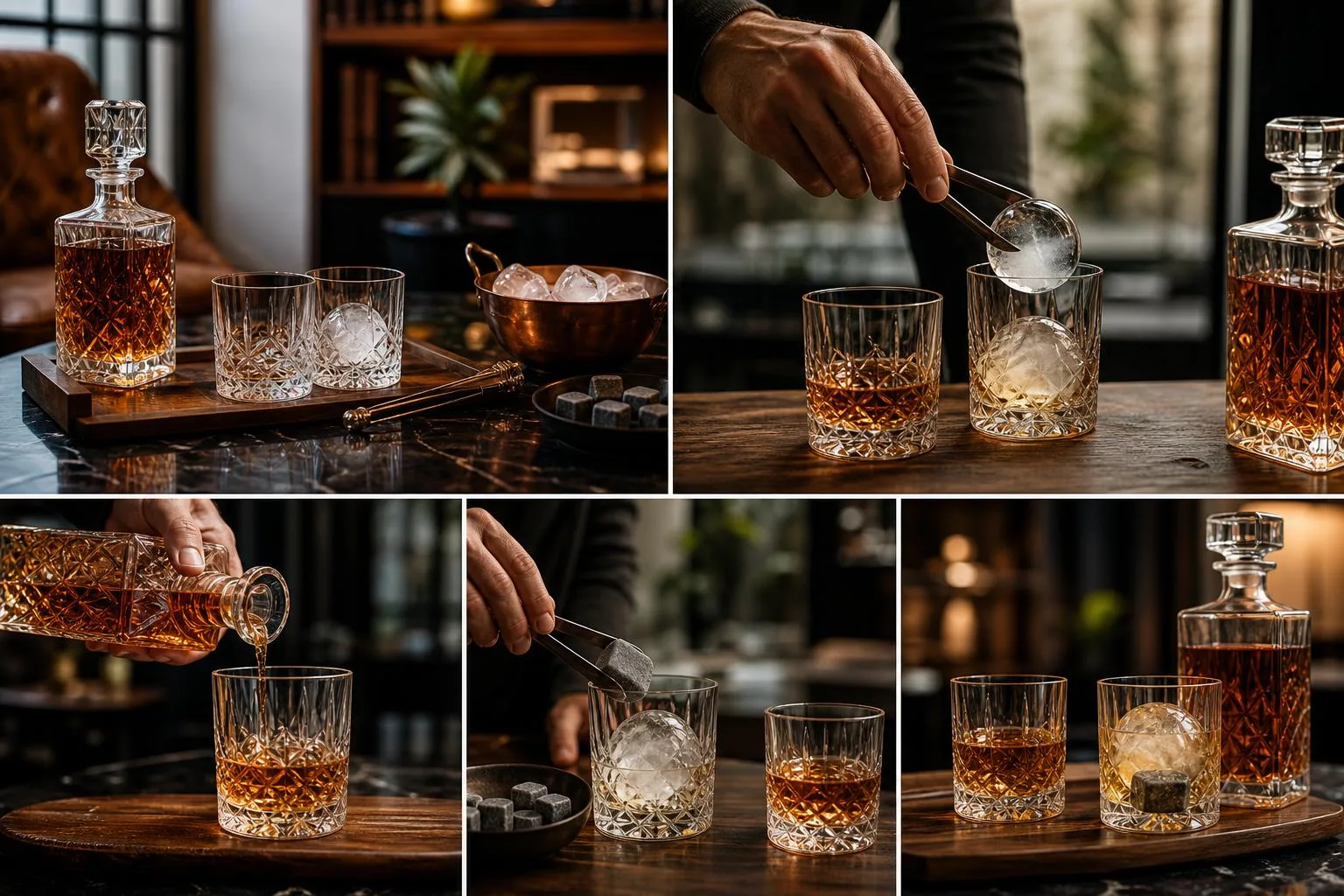
Comparing Straight Chilled and on Ice
Drinking whiskey straight at room temperature is only one valid baseline. Chilling, adding water, serving over ice, or using whiskey in a cocktail each changes aroma release, alcohol perception, dilution, and texture in measurable ways.
Most U.S. whiskeys are bottled at 40% ABV or higher, the federal minimum for “whisky” under TTB standards.
Because ethanol freezes at -173°F and 80-proof whiskey freezes around -17°F, a home freezer will chill whiskey but usually not freeze it.
| Serving method | Typical temperature or dilution | What changes most | Best use |
| Straight, room temperature | About 65–72°F; no dilution | Fullest aroma, strongest ethanol heat | Comparing age, barrel, grain, and finish |
| Chilled neat | Freezer-chilled, often 0–10°F | Less burn, muted nose, thicker texture | High-proof whiskey that feels hot |
| With a few drops of water | Usually 2–10% dilution | Can open aroma and reduce sting | Cask-strength bourbon, rye, Scotch |
| On the rocks | Ice at 32°F; dilution increases over time | Cooler palate, softer alcohol, changing flavor | Casual sipping, warm rooms, bold bourbon |
| Whiskey cocktail | Often 15–35% dilution after stirring or shaking | Balance, sweetness, bitterness, acidity | Old Fashioned, Manhattan, Whiskey Sour |
Straight whiskey is the most revealing option. At room temperature, volatile aroma compounds escape more readily, so oak, fruit, grain, smoke, and spice are easier to detect. The tradeoff is more noticeable ethanol, especially above 100 proof.
Chilled whiskey is smoother in the narrow sense that cold suppresses aroma and numbs alcohol intensity.
That can help a sharp 95-proof rye or young bourbon feel gentler, but it can also flatten delicate notes such as vanilla, orchard fruit, heather, or toasted malt.
Water is different from chilling because it changes concentration, not just temperature. Many tasters add water to cask-strength whiskey, which may be 55–65% ABV.
Even a teaspoon in a 1.5-ounce pour lowers alcohol perception and can release new aromas.
Ice combines both effects. It cools the whiskey immediately, then dilutes it as it melts. A large clear cube melts slower than small refrigerator ice because it has less surface area relative to volume, keeping flavor steadier for longer.
- Choose straight when evaluating quality, finish, or distillery character.
- Choose chilled when alcohol heat is the main barrier to enjoyment.
- Choose water for high-proof whiskey where complexity matters.
- Choose ice for easy sipping, especially with robust bourbon or rye.
- Choose cocktails when balance matters more than tasting the whiskey alone.
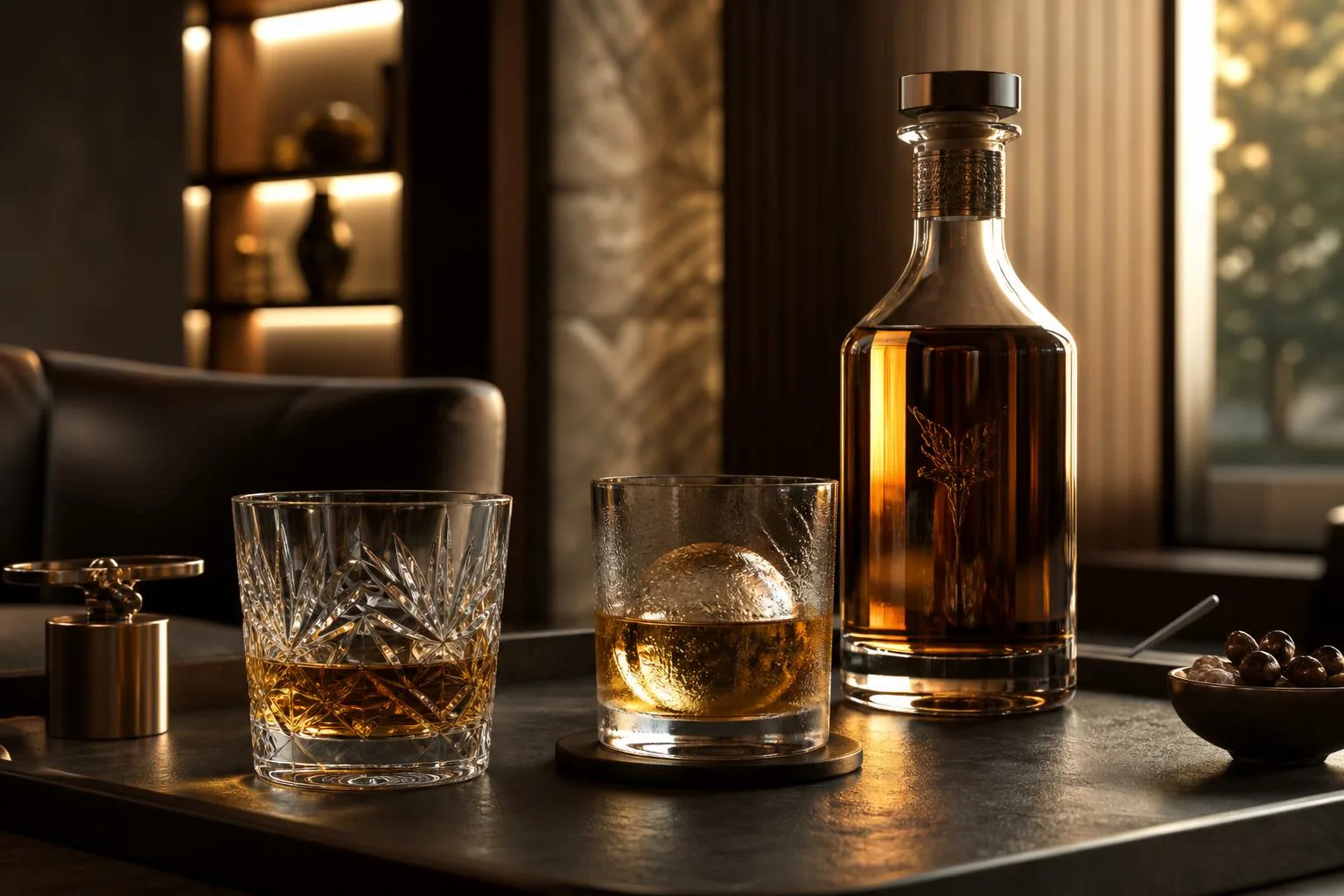
Practical Tips for Chilling Whiskey
Chilling whiskey is a flavor choice, not a safety requirement. The bigger health variable is alcohol dose: most whiskey is bottled around 40% ABV, so small pours can add up quickly.
In practice, drink it the way you enjoy it most: neat, with a few drops of water, over one large cube, or lightly chilled. Just keep the serving size and pace intentional.
| Measure | Amount | Alcohol equivalence |
| Standard U.S. drink | 1.5 fl oz whiskey at 40% ABV | About 0.6 fl oz pure alcohol |
| Typical home “generous” pour | 2 fl oz whiskey at 40% ABV | About 1.3 standard drinks |
| Double pour | 3 fl oz whiskey at 40% ABV | About 2 standard drinks |
- Know the low-risk guideline. The CDC defines moderate drinking as up to 1 drink per day for women and up to 2 drinks per day for men. These are limits, not targets.
- Measure at home. Use a jigger, especially with heavy rocks glasses. A neat pour often looks smaller than it is, and a 2-ounce pour contains about one-third more alcohol than a standard drink.
- Do not drink whiskey to “warm up.” Alcohol can make you feel warmer by widening blood vessels near the skin, but it may increase heat loss in cold environments.
- Be careful with ice and rapid drinking. Chilling can reduce alcohol burn, which may make whiskey easier to drink quickly. Sip slowly, especially with high-proof bourbon, rye, or cask-strength Scotch.
- Add water deliberately. A few drops can open aroma; a splash can reduce perceived heat. For high-proof whiskey, dilution may make tasting more comfortable without masking the spirit.
- Avoid alcohol with certain medications. This is especially important with opioids, benzodiazepines, sleep aids, some antidepressants, and acetaminophen. Ask a pharmacist if unsure.
- Skip whiskey before driving. A single standard drink can impair coordination and judgment. Legal limits do not guarantee safe driving, particularly with fatigue or an empty stomach.
For better tasting and safer pacing, pour once, set the bottle aside, and keep water nearby. If using ice, one large cube chills slower and dilutes less aggressively than several small cubes.
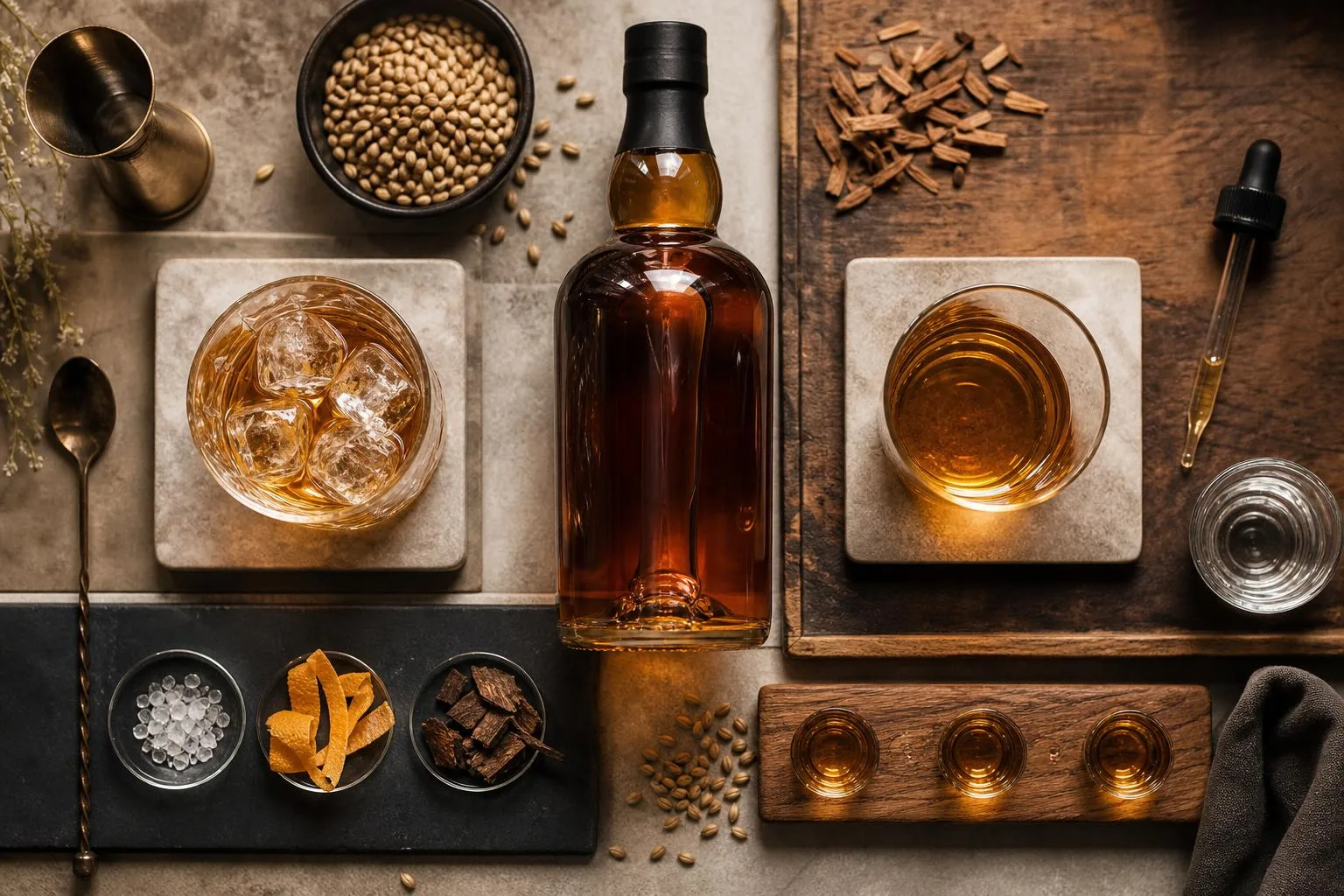
Tasting Results Across Serving Styles
We tested whiskey straight, chilled without dilution, and served over ice using the same bottles, glassware, pour size, and tasting window.
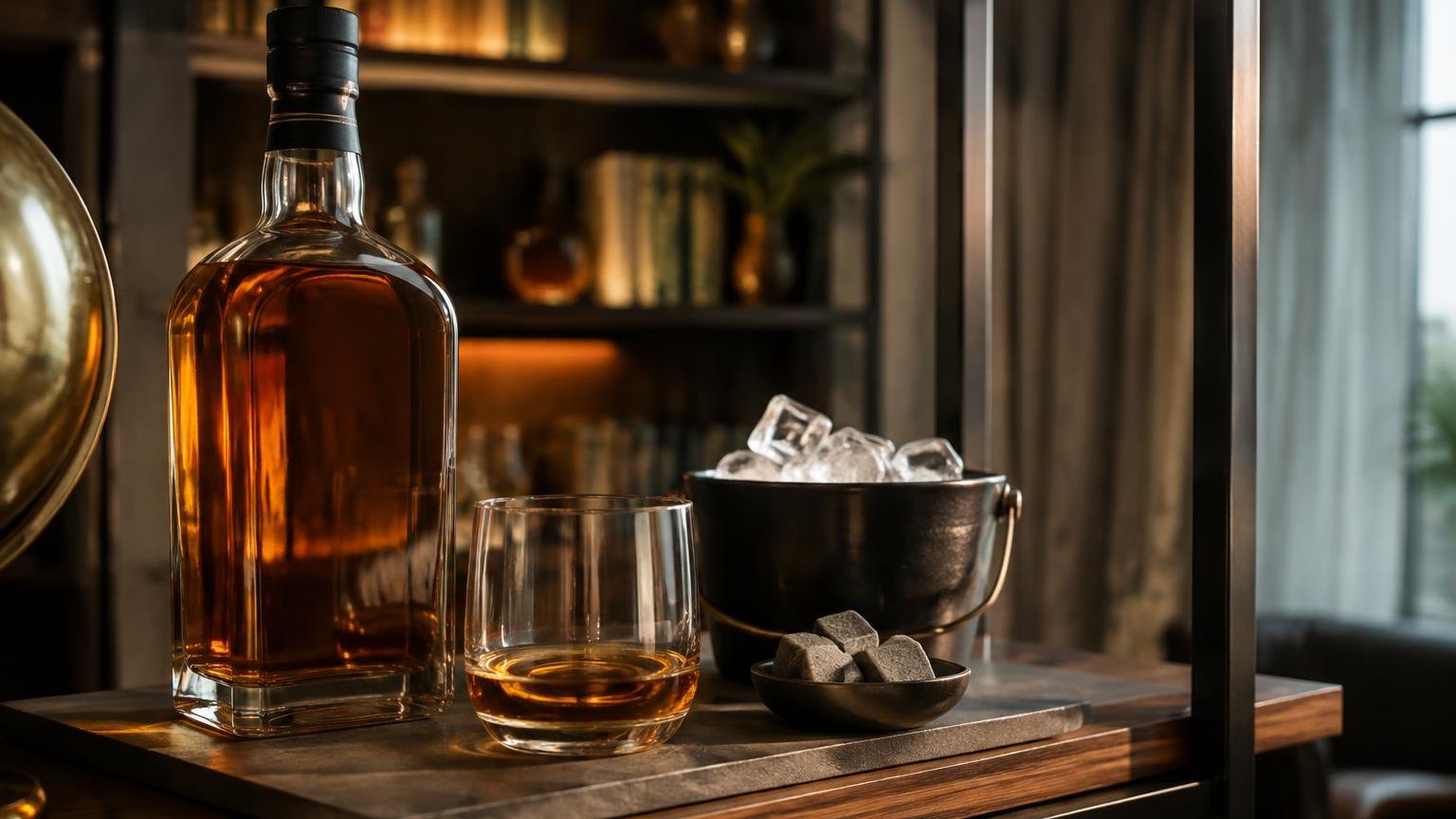
The clearest result: chilling changed aroma faster than flavor, while ice changed both temperature and proof within minutes.
Our team ran three repeated trials with a 45% ABV bourbon, a 43% ABV blended Scotch, and a 46% ABV rye. Each pour was 1.5 oz, served in identical Glencairn glasses, and tasted at 68°F room temperature.
| Service method | Starting whiskey temp | Temp after 5 min | Measured dilution after 5 min |
| Straight, room temperature | 68°F | 67°F | 0 ml |
| Chilled glass, no ice | 68°F whiskey into 22°F glass | 55°F | 0 ml |
| One large ice cube, 2 inches | 68°F | 43°F | 8–11 ml water |
| Whiskey chilled in freezer 2 hours | 18°F | 34°F | 0 ml |
The straight pours showed the most aroma immediately. Vanilla, oak, citrus peel, and grain notes were easiest to identify between 63°F and 68°F. Ethanol was also more noticeable, especially in the 46% rye.
The chilled-glass pours were our favorite compromise. The whiskey cooled by about 13°F in five minutes without measurable dilution. Alcohol heat felt softer, but the bourbon still showed caramel and oak clearly after the first two minutes.
Freezer-chilled whiskey was the least expressive at first. At 18°F, the nose was muted and the texture felt thicker. Once it warmed above roughly 45°F, fruit and spice returned, but the first sips tasted narrower than the room-temperature control.
Ice changed the drink the most. With one 2-inch cube, our 1.5 oz pour gained 8–11 ml of water after five minutes. That lowered a 45% ABV bourbon to roughly 38–39% ABV, depending on melt rate.
- Best for aroma: straight at room temperature, especially for age-stated Scotch, single barrel bourbon, and higher-quality rye.
- Best for reducing alcohol bite: a chilled glass or one large cube, not crushed ice.
- Best for casual sipping: one large cube, if you enjoy a cooler, softer, slightly diluted pour.
- Worst for tasting detail: freezer-cold whiskey served immediately, because aroma compounds were noticeably suppressed.
Our practical conclusion: drink good whiskey straight first, then decide. If the alcohol feels sharp, chill the glass or add one large cube. Chilling is not “wrong,” but temperature and dilution should be intentional.
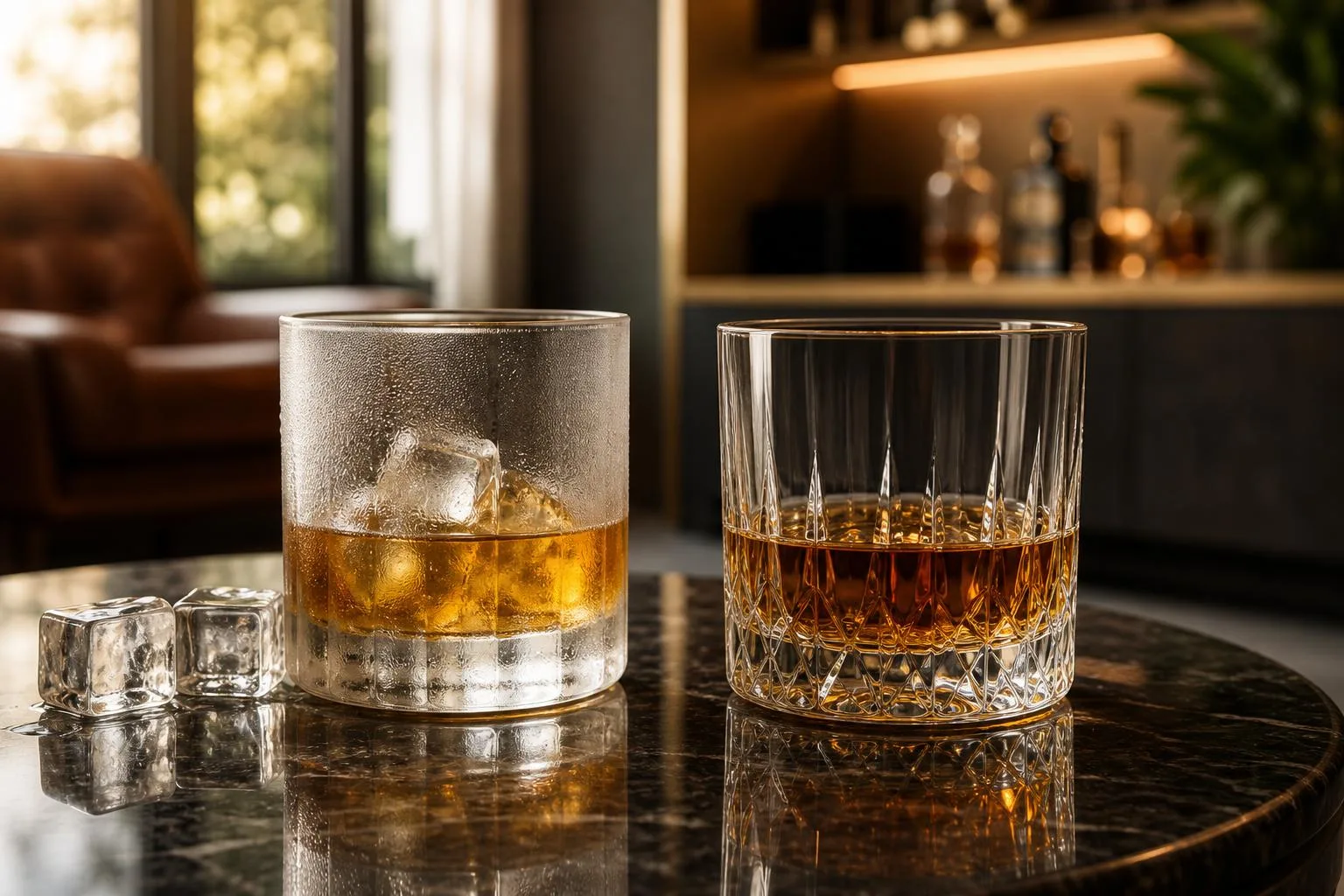
Myths About the Right Way
Whiskey is not “supposed” to be served only one way. The mistake is treating temperature, ice, and water as rules instead of tools that change aroma, alcohol perception, and dilution.
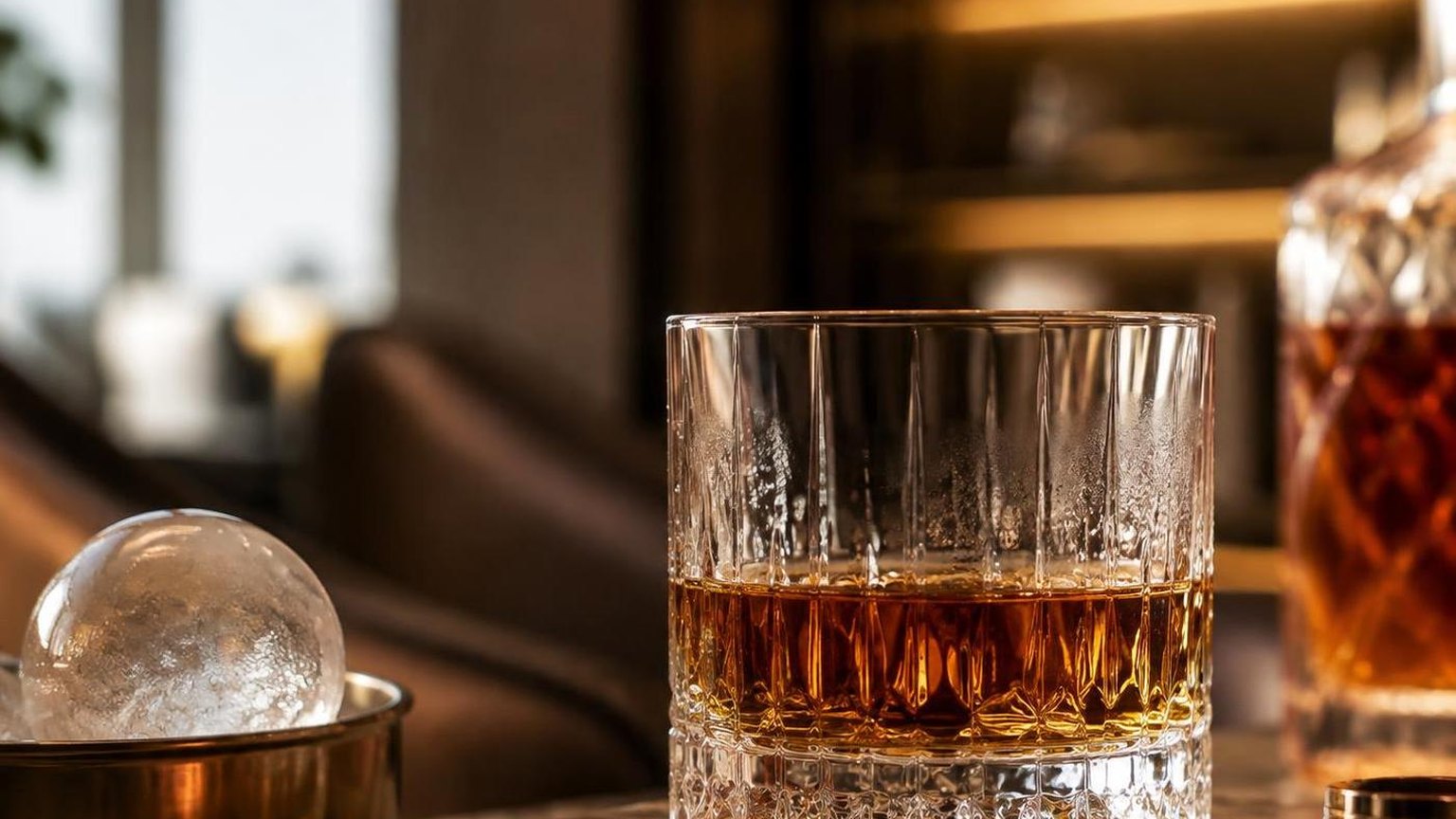
In judging rooms and distillery tastings, whiskey is commonly evaluated near room temperature because volatile aroma compounds are easier to smell. Chilling can still be useful, especially for high-proof pours or casual drinking.
Myth: good whiskey must always be drunk straight
Drinking whiskey neat is useful for comparison, but it is not a purity test. Many professionals add water during tasting to reduce alcohol burn and open aromas, especially above 50% ABV.
- 40% ABV whiskey is already diluted to bottling strength and may need little or no water.
- 50% to 60% ABV whiskey often benefits from a few drops or a small splash.
- Cask-strength whiskey can exceed 60% ABV, where ethanol heat may dominate the nose and palate.
Myth: ice ruins whiskey
Ice changes whiskey; it does not automatically ruin it. The first effect is chilling, which reduces perceived alcohol heat. The second effect is dilution, which becomes more noticeable after several minutes.
| Serving choice | Typical effect | Best use |
| Neat, 60–65°F | Most aroma release and texture | Tasting, comparison, older bottles |
| One large cube | Cooler, slower dilution | Bourbon, rye, casual sipping |
| Several small cubes | Fast chilling and faster dilution | High-proof whiskey or hot weather |
| Refrigerated whiskey, about 35–40°F | Muted aroma, smoother alcohol | Simple blends, easy drinking |
Myth: colder always means smoother
Cold whiskey can seem smoother because low temperature suppresses alcohol vapor and aroma intensity. That same suppression can hide fruit, grain, oak, smoke, and spice notes that distinguish one whiskey from another.
A standard home freezer is about 0°F. Whiskey bottled at 40% ABV usually will not freeze solid there, but it can become thick, dull, and aromatically muted.
Common mistake: using too much water too quickly
Add water gradually. Start with 2 to 5 drops, nose the glass again, then taste. A teaspoon is about 5 milliliters, enough to noticeably change a 1.5-ounce pour.
Common mistake: judging a whiskey immediately after pouring
Give a neat pour 5 to 10 minutes in the glass. Oxygen exposure and slight warming can make aromas easier to read, particularly in barrel-proof bourbon, peated Scotch, and sherry-cask malt whisky.
Questions People Ask Most
Should whiskey be chilled or drunk straight?
Whiskey is traditionally evaluated and served “straight” at room temperature, because chilling suppresses aroma volatility and can make flavors seem flatter.
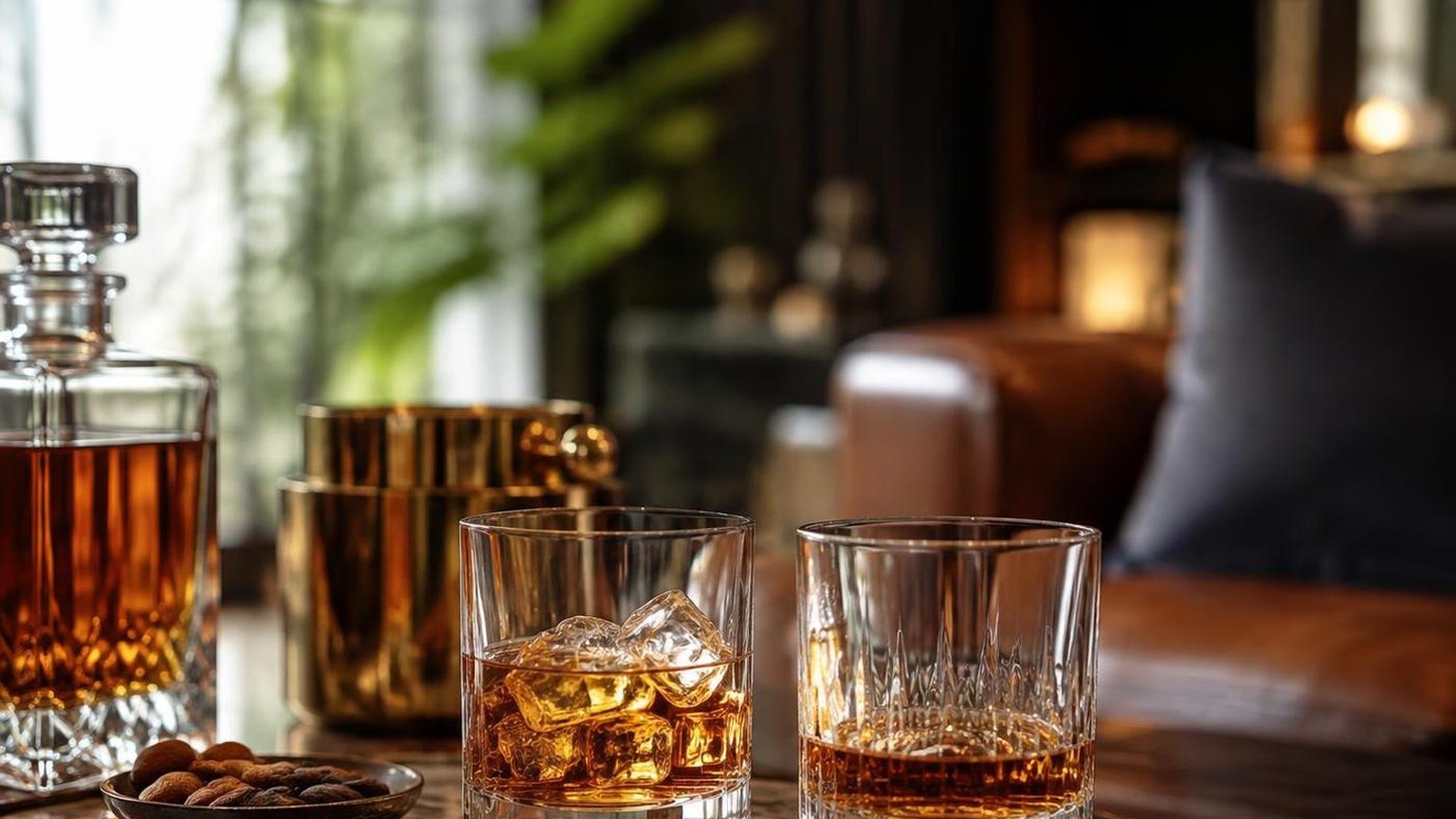
If a whiskey tastes too hot, especially at higher proof such as 100 proof or above, adding a few drops of water is usually better than heavy chilling because it can reduce alcohol burn while keeping aromas expressive.
Does ice ruin whiskey?
Ice does not ruin whiskey, but it changes it quickly by lowering temperature and adding dilution as it melts.
A large cube or sphere melts more slowly than small cubes, making it a better choice if you want a cooler drink without watering it down too fast.
What is the best temperature for drinking whiskey neat?
A practical serving range for neat whiskey is about 60–68°F, close to cool room temperature.
At refrigerator temperature, roughly 35–40°F, many fruity, floral, grain, and barrel aromas become less noticeable, which is why most tastings avoid serving whiskey ice-cold.
Should bourbon be chilled differently than Scotch or Irish whiskey?
Bourbon often has sweeter vanilla, caramel, and oak notes from new charred oak barrels, and those flavors can remain enjoyable over a large ice cube.
Delicate Scotch or Irish whiskeys, especially lighter single malts or blends, are more likely to lose nuance when chilled heavily, so neat with optional water is usually the better starting point.
Is it better to add water instead of chilling whiskey?
For tasting, yes: adding water in small amounts gives more control than chilling because you can reduce alcohol intensity without muting the nose as much.
Start with 2–5 drops, taste again, and add more only if needed, particularly with cask-strength whiskeys that may be 55–65% ABV.
Related Reading
- Can You Freeze Whiskey?
- Whiskey Smoker Kit – Comprehensive Guide From Expert
- What Does Bourbon Neat Mean?
- Crown Royal 29 Year Price – How Much Does It Cost?
- What Is A Whiskey Neat?
- What To Mix With Southern Comfort?
- Jack Daniels Alcohol Percentage – Deepest Knowledge
- All Alcohol Guides
- Electronic Code of Federal Regulations, 27 CFR § 5.143 Whisky (2024)
- National Institute on Alcohol Abuse and Alcoholism, Standard Drink in the United States (2024)
- Centers for Disease Control and Prevention, About Moderate Alcohol Use (2024)
- PubMed, Dilution of Whisky — The Molecular Perspective (2017)
- Scientific Reports, Dilution of Whisky — The Molecular Perspective (2017)
- Scotch Whisky Association, How to Taste Whisky (2024)
- Distilled Spirits Council of the United States, Standard Drinks (2024)