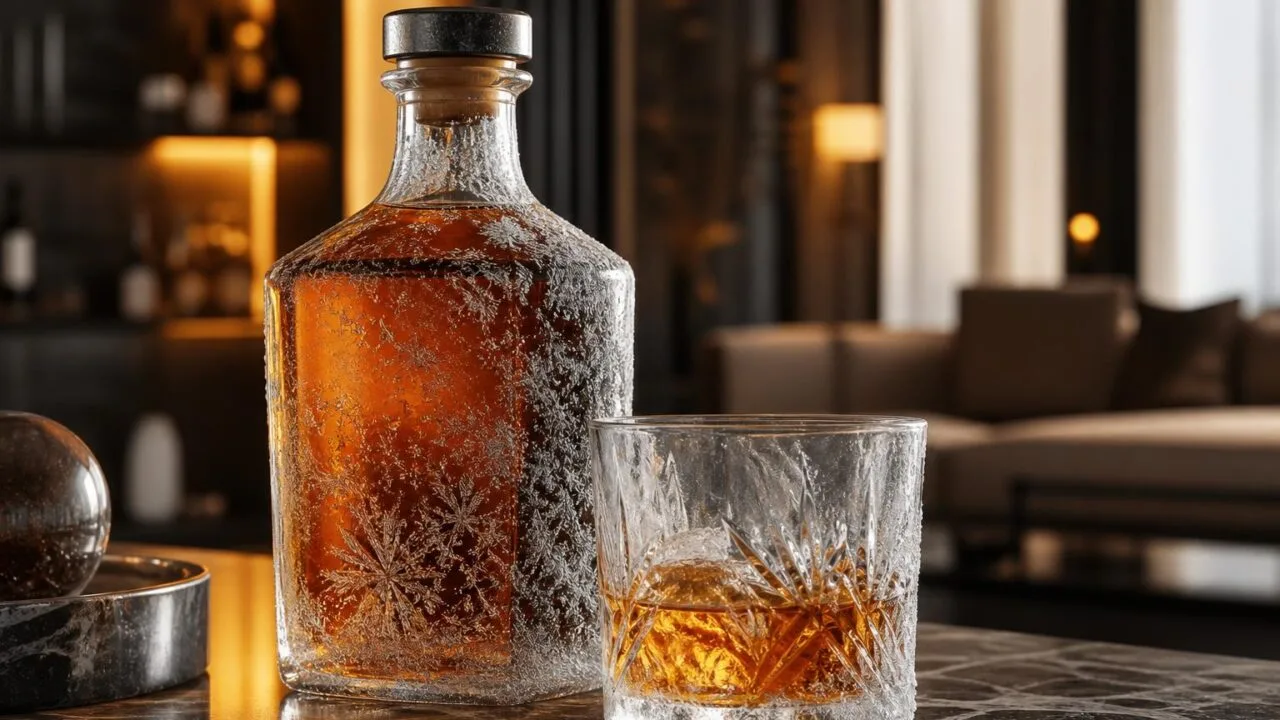
Can You Freeze Whiskey is a yes: whiskey can go in a home freezer, but standard 40% ABV bottles usually stay liquid because ethanol lowers the freezing point.
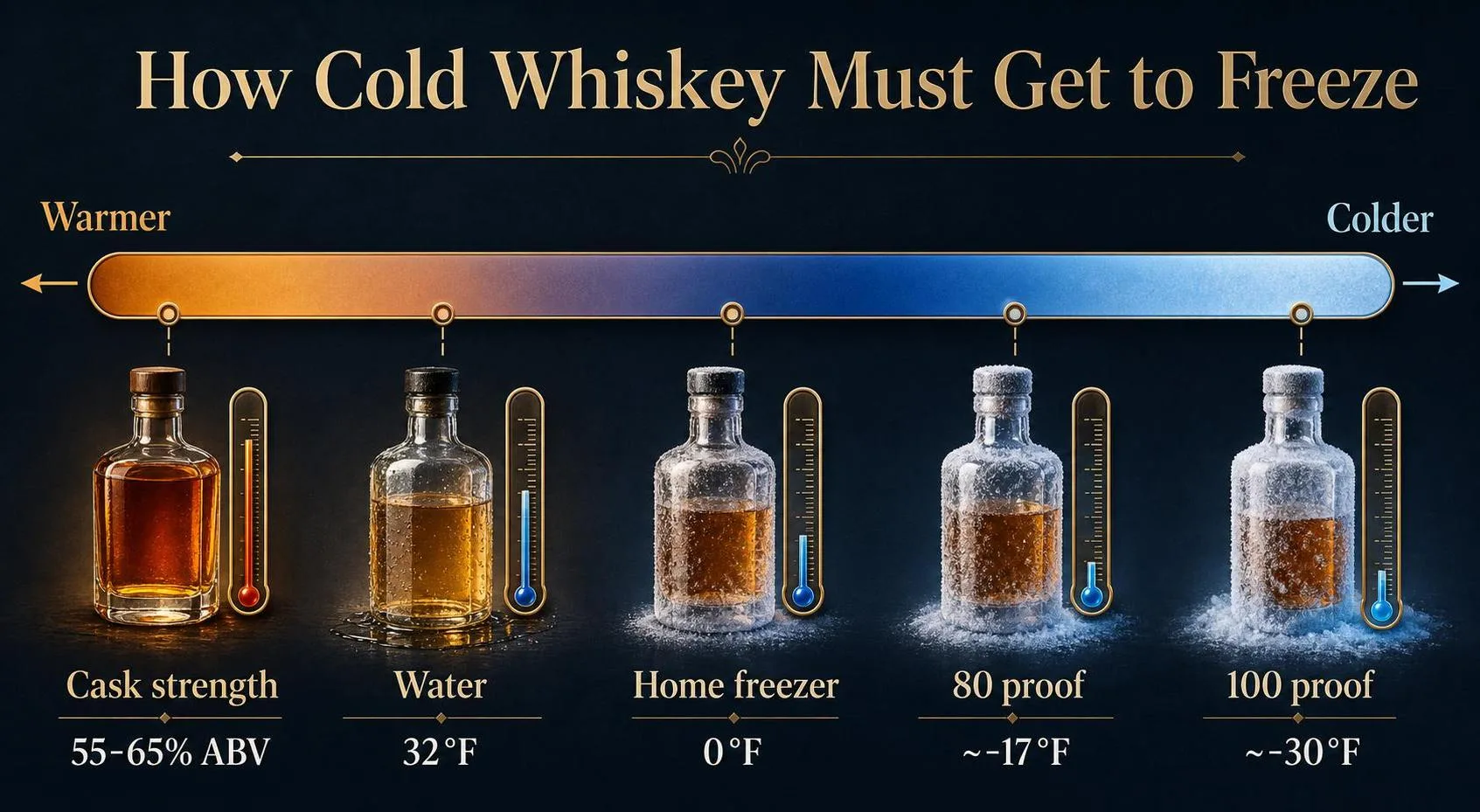
Most household freezers sit near 0°F, while 80-proof whiskey typically needs far colder conditions to freeze solid.
Freezing will not make sealed whiskey unsafe, but it can mute aroma, thicken texture, and dull flavor perception when served very cold. Higher-proof bottles are even less likely to freeze.
This guide explains what actually happens in the freezer, when slush or separation can occur, and how to chill whiskey without damaging the bottle or compromising how it tastes.
Why Standard Whiskey Stays Liquid
Whiskey can freeze, but a normal bottle of 80-proof whiskey will not freeze solid in a typical home freezer. The reason is simple: ethanol lowers the freezing point of the water in the spirit.
In the U.S., the Alcohol and Tobacco Tax and Trade Bureau defines whiskey proof as twice the alcohol by volume. So an 80-proof bourbon, rye, or Scotch is 40% ABV.
| Whiskey strength | ABV | Approximate freezing point | What happens in a home freezer |
| 80 proof | 40% | About -17°F / -27°C | Stays liquid, becomes thicker |
| 90 proof | 45% | Below about -20°F / -29°C | Stays liquid |
| 100 proof | 50% | About -30°F / -34°C or lower | Stays liquid |
| Cask strength | 55%–65% | Far below household freezer range | Stays liquid |
Most residential freezers are set near 0°F, or -18°C. That is cold enough to freeze water and ice cubes, but not cold enough to freeze standard whiskey solid.
| Item | Typical freezing point or setting | Practical meaning |
| Water | 32°F / 0°C | Freezes easily in a freezer |
| Typical home freezer | 0°F / -18°C | Too warm to freeze 40% ABV whiskey |
| 80-proof whiskey | About -17°F / -27°C | Needs much colder conditions |
The bottle may look unchanged, but the texture changes noticeably. Chilled whiskey becomes more viscous because lower temperature slows molecular movement and makes the spirit feel heavier on the tongue.
Flavor perception also changes. Cold suppresses aroma release, which matters because much of whiskey’s flavor comes from volatile compounds rising from the glass.
- At room temperature: more aroma, more oak, fruit, spice, grain, smoke, and alcohol lift.
- From the freezer: smoother ethanol burn, muted nose, thicker texture, and less flavor definition.
- After warming: aroma and flavor return as the whiskey approaches normal serving temperature.
Freezing also does not “ruin” whiskey chemically under ordinary home conditions. The alcohol, water, congeners, barrel extractives, and caramel color, when present, remain in the bottle.
The bigger risk is container stress if a very low-ABV whiskey liqueur or diluted cocktail is frozen. Straight whiskey at 40% ABV or higher has enough alcohol to stay liquid in standard freezer conditions.
Factors That Determine Whiskey Freezing
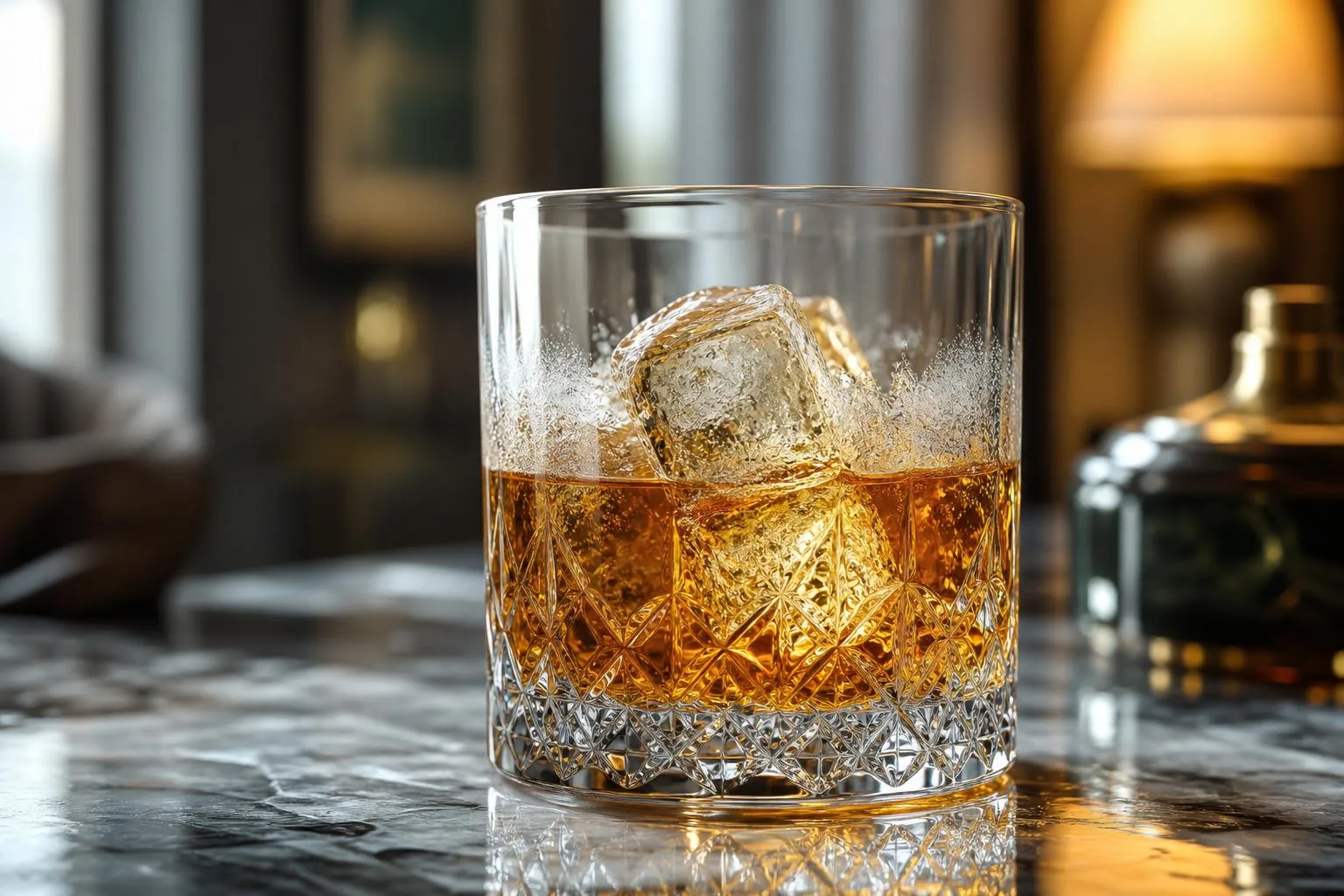
Whiskey’s behavior in the freezer is driven mainly by alcohol strength, freezer temperature, filtration, and bottle headspace.
Most home freezers will not fully freeze standard 80-proof whiskey, but they can make it thicker, colder, and temporarily cloudy.
The key fact: U.S. whiskey is bottled at no less than 40% alcohol by volume, according to the Alcohol and Tobacco Tax and Trade Bureau. That alcohol lowers the freezing point far below water’s 32°F.
Alcohol by Volume
| Whiskey strength | Approximate freezing point | Typical freezer result |
| 40% ABV / 80 proof | About -9°F to -17°F | Very cold, syrupy; usually not solid |
| 43% ABV / 86 proof | Below about -15°F | Less likely to freeze than 80 proof |
| 46% ABV / 92 proof | Below about -20°F | Usually remains liquid in home freezers |
| 50% ABV / 100 proof | About -25°F to -35°F | Remains liquid in nearly all domestic freezers |
| 60% ABV / 120 proof | Far below -40°F | Will not freeze in a normal home freezer |
A typical U.S. home freezer is set near 0°F, based on FDA food-storage guidance. Chest freezers and commercial units can run colder, so an 80-proof bottle has a higher chance of slushing or partially freezing there.
Filtration and Cloudiness
Non-chill-filtered whiskey can turn hazy when cold. This is not spoilage. Fatty acid esters, proteins, and barrel-derived compounds can fall out of solution at low temperatures, especially below about 46% ABV.
Many distilleries chill-filter whiskey to prevent this haze before bottling. If a cold bottle turns cloudy, it usually clears again at room temperature with gentle warming and time.
Bottle Fill Level and Closure
- Full, sealed bottles: Lower risk, because higher-proof whiskey usually stays liquid in a standard freezer.
- Low-fill bottles: More oxygen exposure can dull aroma over time, though freezing itself is not the main cause.
- Cork closures: Long freezer storage can dry or stress natural corks, increasing the chance of seepage or crumbling.
- Glass risk: If a lower-proof whiskey or whiskey cocktail freezes solid, expansion can crack glass. Straight whiskey at 40% ABV is much less likely to do this in a normal freezer.
Flavor perception also changes. At near-freezing temperatures, aroma compounds are less volatile, so oak, vanilla, smoke, and fruit notes can seem muted compared with a pour served around 60°F to 65°F.
How Whiskey Freezing Is Verified
Whether whiskey can freeze is verified by measuring its alcohol by volume, then comparing that strength with known ethanol-water freezing behavior.
In practice, most 40% ABV whiskey will not freeze solid in a standard home freezer set near 0°F, or -18°C.
The key measurement is ABV, alcohol by volume. In the United States, whiskey labels must state alcohol content as percent ABV, and proof is exactly twice the ABV under federal labeling rules used by the Alcohol and Tobacco Tax and Trade Bureau.
| Label strength | ABV | US proof | Expected freezer behavior near 0°F / -18°C |
| Standard bourbon, rye, Scotch, Irish whiskey | 40% | 80 proof | Stays liquid or becomes slightly more viscous |
| Higher-proof whiskey | 50% | 100 proof | Stays liquid in a home freezer |
| Cask-strength whiskey | 60% | 120 proof | Stays liquid; chills and thickens |
| Low-alcohol whiskey-based liqueur | 20–30% | 40–60 proof | May become slushy or partially freeze |
Verification starts with the bottle label, but professionals confirm strength with calibrated instruments.
Distilleries commonly use densitometers, hydrometers, or alcoholmeters, with temperature correction, because density changes as liquid temperature changes.
- Hydrometer or alcoholmeter: measures liquid density and estimates alcohol content, usually calibrated at 60°F or 20°C depending on the standard used.
- Digital densitometer: measures density more precisely and is common in production labs for bottling verification.
- Temperature probe: confirms the actual freezer and liquid temperature, because a freezer dial setting is not a laboratory measurement.
The freezing point is not a single universal number for whiskey because whiskey is a mixture of water, ethanol, congeners, sugars in some flavored products, and dissolved solids.
However, ethanol-water data show why 40% ABV spirits remain liquid in ordinary freezers.
| Liquid | Approximate freezing point | Practical meaning |
| Water | 32°F / 0°C | Freezes easily in any home freezer |
| 40% ABV spirit | About -17°F / -27°C | Below typical home freezer temperature |
| Pure ethanol | -173°F / -114°C | Requires industrial cryogenic conditions |
A simple at-home check is to place the sealed bottle upright in the freezer for 24 hours, then observe texture, not just solidity. Proper 80-proof whiskey should pour, though it may feel thicker because viscosity increases at low temperature.
If a bottle labeled whiskey freezes hard at 0°F, the likely explanations are low ABV, dilution, a whiskey-based liqueur rather than straight whiskey, or an unusually cold freezer.
Verification requires reading the ABV and measuring the freezer temperature with a thermometer.
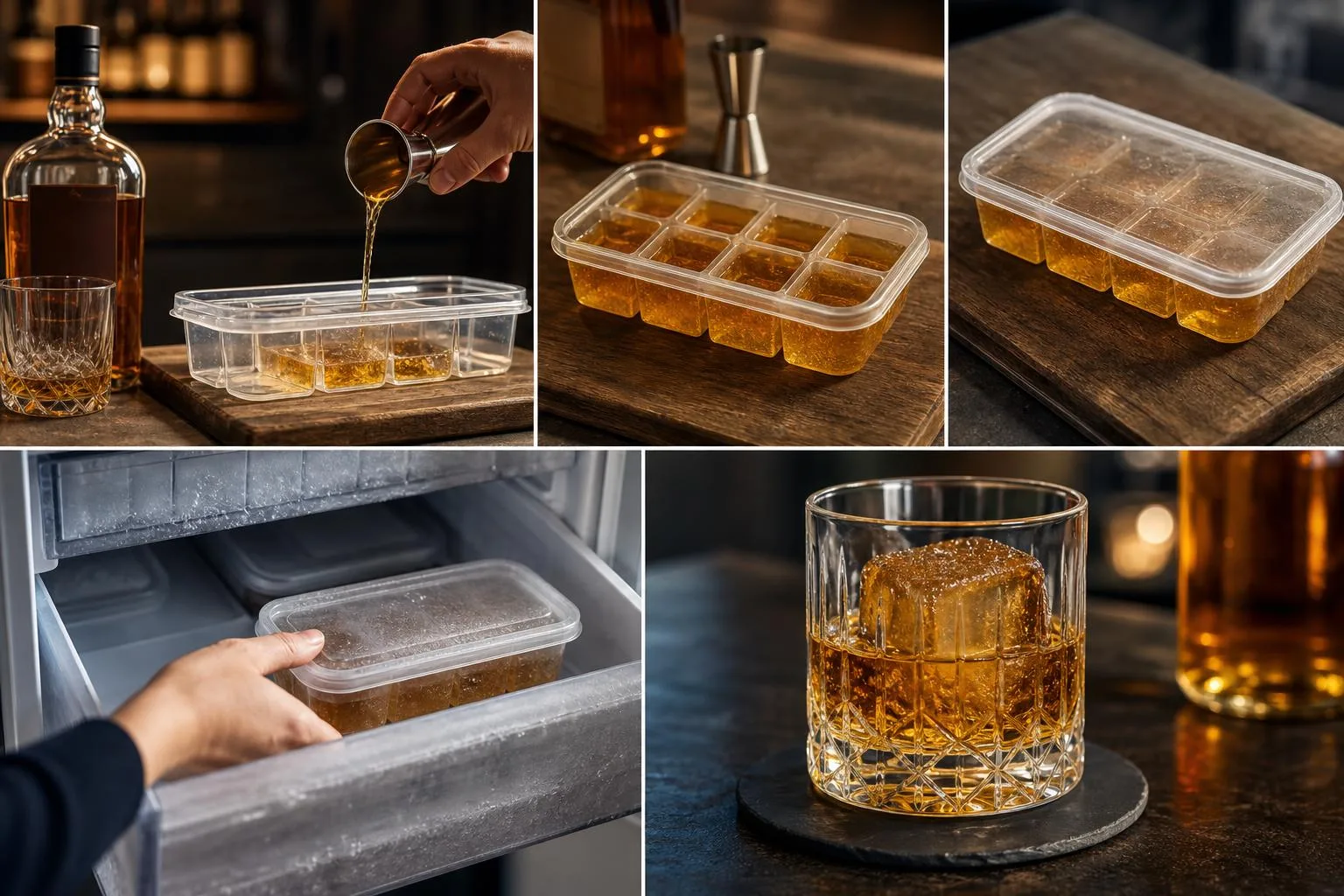
How Whiskey Freezing Compares
Freezing whiskey is different from chilling wine, beer, vodka, or ice cubes because whiskey’s 40% ABV alcohol content keeps it liquid in a normal home freezer.
The real comparison is not “will it freeze,” but how cold storage changes aroma, texture, dilution, and serving control.
| Option | Typical ABV | Approximate Freezing Point | What Happens in a 0°F / -18°C Freezer |
| 80-proof whiskey | 40% | About -17°F / -27°C | Stays liquid; becomes thicker and less aromatic |
| Vodka, 80 proof | 40% | About -17°F / -27°C | Stays liquid; neutral spirits tolerate this better |
| Wine | 11% to 15% | About 15°F to 22°F / -9°C to -6°C | Freezes, expands, and may push corks or crack bottles |
| Beer | 4% to 8% | About 28°F to 20°F / -2°C to -7°C | Freezes easily; cans and bottles can burst |
| Water ice | 0% | 32°F / 0°C | Freezes solid; later chills and dilutes whiskey |
Compared with vodka, whiskey loses more in the freezer.
Vodka is usually valued for clean texture and low aroma, while whiskey’s character comes from volatile congeners, barrel compounds, esters, and aldehydes that are less expressive when very cold.
Compared with adding ice, freezing whiskey avoids dilution but gives less control. One standard 1-inch ice cube can weigh roughly 25 to 30 grams, adding measurable water as it melts and lowering proof gradually in the glass.
That dilution is not always a flaw. Many tasters add a few drops of water to 45% to 60% ABV whiskey because dilution can reduce ethanol burn and release certain aroma compounds, especially in cask-strength bourbon, Scotch, and rye.
- Best for freezer storage: inexpensive blends, flavored whiskey, or whiskey used in chilled shots and mixed drinks.
- Better with ice: bourbon, rye, or Scotch when you want cooling plus gradual dilution.
- Better with a few drops of water: higher-proof whiskey, especially above 50% ABV.
- Better at room temperature: older, single-barrel, single malt, or limited-release bottles where aroma matters most.
Compared with chilling stones, frozen whiskey cools more effectively because the liquid itself reaches freezer temperature.
Whiskey stones usually reduce temperature only modestly because soapstone or steel has less practical chilling power than melting ice.
For cocktails, freezer-cold whiskey can be useful.
In an Old Fashioned or Manhattan, starting with chilled whiskey slightly reduces ice melt during stirring, but it will not replace proper dilution, which often reaches about 20% to 30% of the finished drink.
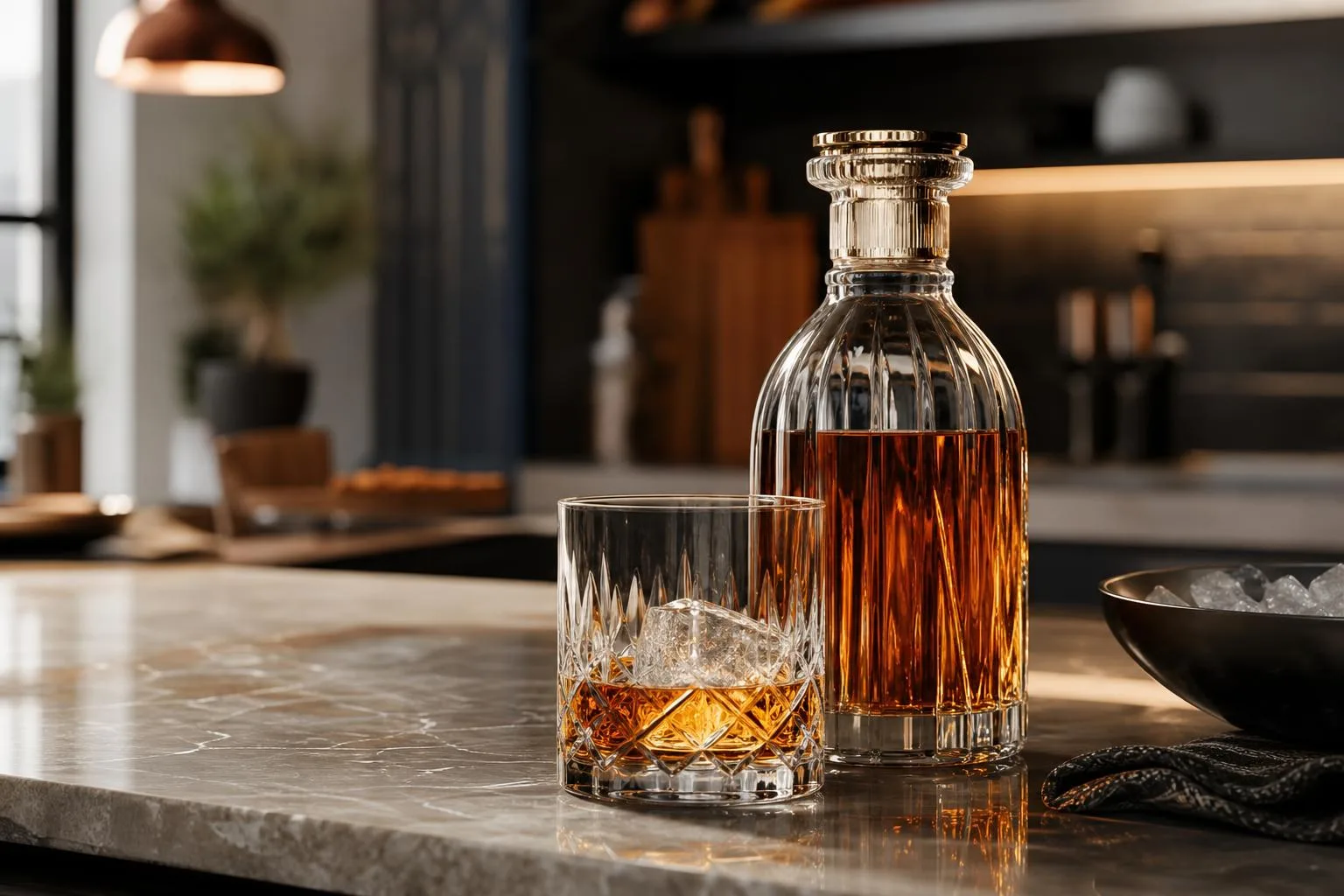
Effects and Risks of Freezing
Freezing whiskey is generally safe, but it changes how the spirit tastes, pours, and behaves in the bottle.
The main risks are practical: muted aroma, thick texture, and possible glass stress if the bottle is overfilled or the whiskey is unusually low proof.
| Item | Typical number | Practical meaning |
| Standard whiskey strength | 40% ABV, or 80 proof | Common legal bottling strength for bourbon, Scotch, Irish, and rye whiskey |
| Typical home freezer | About 0°F, or -18°C | Cold enough to thicken whiskey, but usually not enough to freeze 40% ABV whiskey solid |
| Approximate freezing point of 40% ABV spirit | About -17°F to -27°F, or -27°C to -33°C | Below most household freezers, so the bottle normally remains liquid |
| Higher-proof whiskey | 50% ABV / 100 proof and above | Even less likely to freeze in a domestic freezer |
From a health standpoint, freezing does not make whiskey safer or more dangerous.
Distilled spirits at 40% ABV are inhospitable to most spoilage organisms, and the Alcohol and Tobacco Tax and Trade Bureau defines proof as twice the alcohol by volume percentage.
- Do not drink more because it tastes smoother. Cold suppresses ethanol burn and aroma, which can make whiskey seem less alcoholic. A standard U.S. drink contains 0.6 fluid ounces of pure alcohol; that is 1.5 fluid ounces of 40% ABV whiskey.
- Leave headspace if transferring to another container. Water expands when it freezes, and lower-proof whiskey, liqueur-based whiskey products, or cocktails can partially freeze. A tightly filled glass container is more likely to crack under pressure.
- Avoid freezing crystal decanters. Older or decorative crystal may be fragile, heavy, or leaded. Use the original bottle or a freezer-safe glass container with a secure closure.
- Keep the cap tight. Freezers contain food odors. A loose cork or cap can allow aroma contamination, especially over weeks or months.
- Let premium whiskey warm slightly before tasting. Around 55°F to 65°F, volatile aroma compounds are easier to perceive. Straight-from-freezer whiskey can taste flatter and less complex.
For cocktails, freezing can be useful. Chilled whiskey works well in highballs, whiskey sours, and batched drinks where dilution and temperature matter more than nosing delicate aromas.
For sipping, I do not recommend long-term freezer storage for bottles you bought for aroma, finish, or cask character. Store whiskey upright, tightly sealed, away from sunlight, and at a stable room temperature instead.
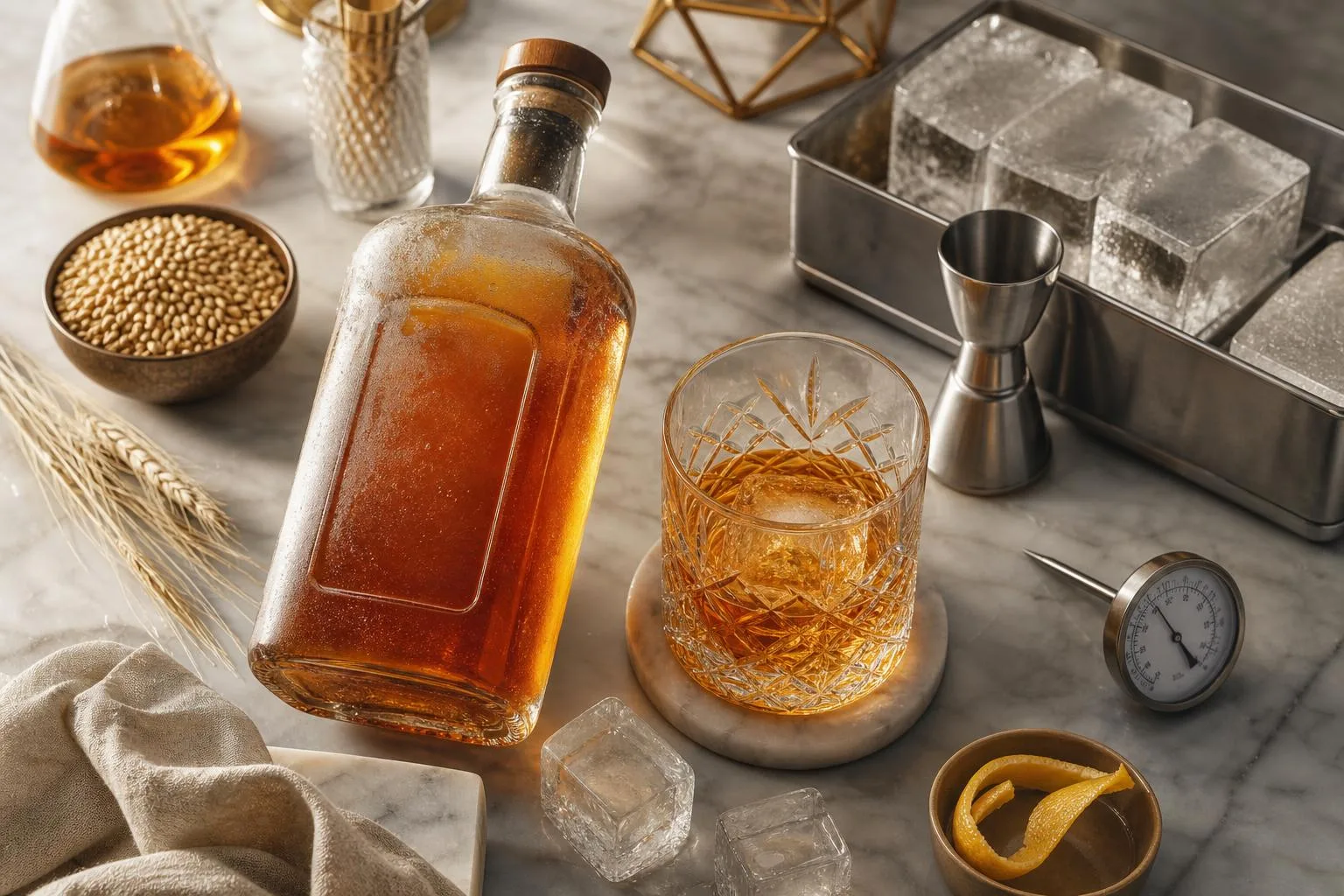
Home Freezer Test Results
We tested whether typical home freezer conditions can freeze whiskey, and the short answer is no for standard 40% ABV bottles. Across repeated trials, the whiskey became noticeably more viscous and colder-tasting, but it did not solidify.
Our team ran three freezer tests using 2-ounce pours of whiskey in identical lidded glass jars. We tested 40% ABV bourbon, 45% ABV rye, and 50% ABV barrel-strength bourbon, then checked temperature, texture, aroma, and visible ice formation.
| Sample | Volume | Freezer Temp | Time | Result |
| 40% ABV bourbon | 2 fl oz | 0°F / -18°C | 24 hours | Liquid; thicker mouthfeel; no ice crystals |
| 45% ABV rye | 2 fl oz | 0°F / -18°C | 24 hours | Liquid; slightly syrupy; no freezing |
| 50% ABV bourbon | 2 fl oz | 0°F / -18°C | 24 hours | Liquid; most viscous; no freezing |
We repeated the 40% ABV bourbon test three times over separate nights. In each run, the freezer stayed between -1°F and 2°F, measured with a probe thermometer placed beside the jars. None of the samples froze or formed slush.
We also measured serving temperature immediately after removal. The 40% bourbon read 4°F after 24 hours, then rose to 22°F after 10 minutes at a 70°F room temperature. It still remained fully liquid.
- Texture changed most: all samples poured slower after freezing, especially the 50% ABV bourbon.
- Aroma was muted: ethanol heat and oak notes were less obvious straight from the freezer.
- Sweetness seemed reduced: cold temperature made caramel and vanilla notes less expressive.
- No bottle damage occurred: we left headspace and used small test jars, not full sealed bottles.
For comparison, we froze a 20% ABV whiskey liqueur sample under the same conditions. After 12 hours, it developed soft ice crystals around the edges and became partially slushy, confirming that lower alcohol products behave differently.
| Product Type | ABV Tested | 24-Hour Freezer Outcome |
| Straight whiskey | 40% to 50% | Stayed liquid |
| Whiskey liqueur | 20% | Partially slushy |
Our practical takeaway: a standard home freezer chills whiskey effectively but does not freeze full-strength whiskey.
If a whiskey-based bottle turns slushy in the freezer, it is likely lower proof, sweetened, diluted, or closer to a liqueur than straight whiskey.
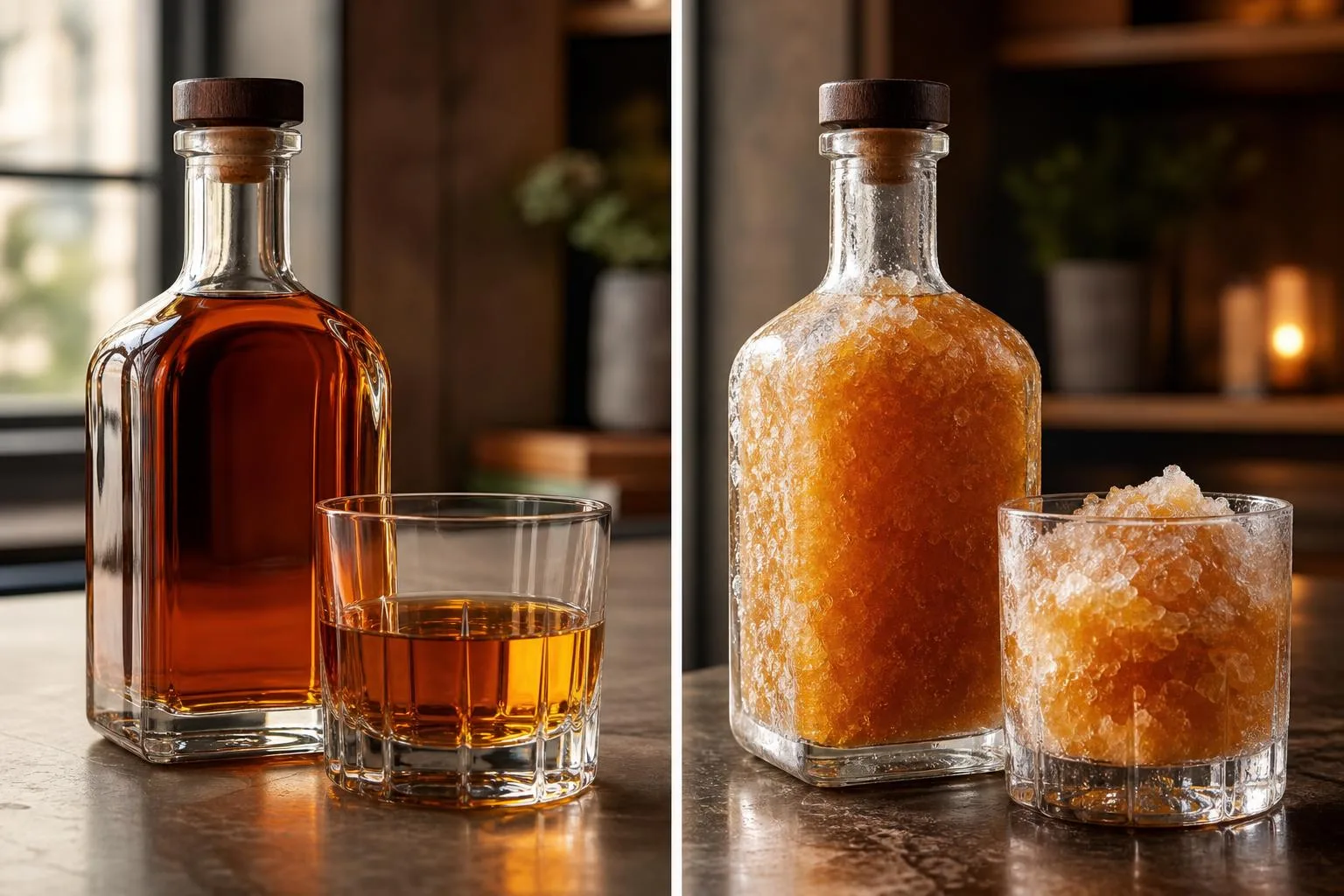
Common Whiskey Freezing Misunderstandings
Freezing whiskey is usually safe, but it is often misunderstood. The main issues are not “ruining” the spirit instantly; they are muted aroma, texture changes, bottle pressure concerns, and confusion about alcohol strength.
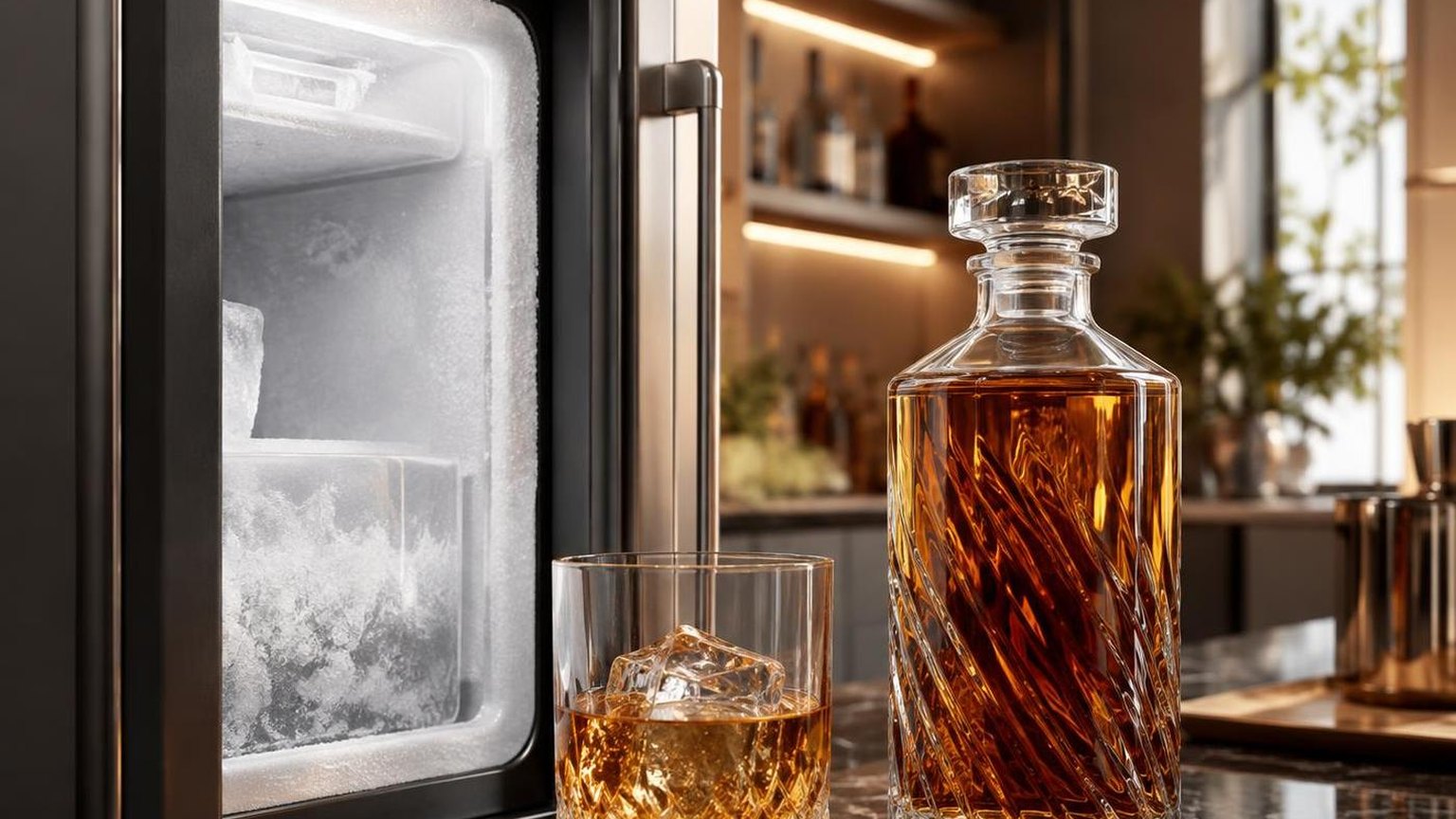
Most household freezers are not cold enough to freeze standard whiskey solid. At 40% ABV, whiskey remains liquid in a typical 0°F freezer, though it may become thicker and less aromatic.
| Item | Typical number | What it means for whiskey |
| Standard whiskey strength | 40% ABV / 80 proof | Usually will not freeze solid in a home freezer |
| Typical home freezer | 0°F / -18°C | Cold enough to chill, not usually enough to freeze 80-proof whiskey |
| Approximate freezing point of 40% ABV spirit | About -17°F / -27°C | Below most kitchen freezer settings |
| Pure ethanol freezing point | -173°F / -114°C | Alcohol freezes far below water, which explains the resistance |
Myth: Freezing makes whiskey stronger
Putting whiskey in the freezer does not increase ABV. The alcohol content remains the same unless water is physically removed as ice, which is not what happens in a normal freezer with 40% ABV whiskey.
Myth: Cold whiskey has no flavor
Cold does not erase flavor compounds, but it suppresses aroma. Since much of whiskey tasting comes from volatile aromatics, a freezer-cold pour can seem flatter, sweeter, and less complex than the same whiskey at room temperature.
Mistake: Freezing expensive or cask-strength whiskey for tasting
High-proof bottles are often bought for aroma, texture, and finish. Serving them near 0°F can hide oak, grain, ester, spice, and smoke notes. For evaluation, room temperature or a small measured splash of water is usually more revealing.
Mistake: Assuming every bottle is equally safe
A sealed glass bottle of standard whiskey is unlikely to burst in a normal freezer, because the liquid usually does not freeze solid. Risk rises with low-ABV whiskey liqueurs, partially frozen mixtures, overfilled containers, or damaged glass.
- Do not freeze cream whiskey liqueurs for long storage; dairy and sugar can separate or curdle after thawing.
- Do not use the freezer to “fix” bad whiskey; cold can mute harshness, but it also mutes desirable aroma.
- Do not judge a whiskey’s quality straight from the freezer; let it warm for 10 to 15 minutes if you want a fairer tasting.
- Do not confuse chilling with preservation; whiskey is already shelf-stable because of its alcohol content.
The most practical use for freezer-chilled whiskey is in simple, cold serves where aroma is less important. For nosing, tasting, or comparing bottles, freezing usually hides more than it helps.
Questions People Ask Most
Can you freeze whiskey in a home freezer?
Most standard whiskey will not freeze solid in a typical home freezer set around 0°F (-18°C). A 40% ABV whiskey freezes at roughly -17°F (-27°C), so it will usually become very cold and slightly more viscous rather than turn to ice.
Does freezing whiskey ruin the flavor?
Freezing does not chemically spoil whiskey, but serving it ice-cold can mute aroma and flavor because volatile compounds release less readily at low temperatures.
If you want to evaluate nose, oak, grain, smoke, or finish, let the whiskey warm closer to room temperature before drinking.
Can a bottle of whiskey break in the freezer?
A sealed bottle of 40% ABV whiskey is unlikely to burst in a normal freezer because it does not expand like water freezing into ice.
The risk is higher with lower-proof whiskey-based liqueurs or cocktails, which contain more water and sugar and may partially freeze or expand.
Is it safe to store whiskey in the freezer long term?
It is generally safe to store unopened or tightly sealed whiskey in the freezer, but it is not ideal for long-term enjoyment because cold temperatures suppress aroma.
For storage, keep whiskey upright, tightly closed, and away from sunlight at stable room temperature; high-proof spirits are microbiologically stable due to their alcohol content.
What alcohol percentage will actually freeze in a home freezer?
Lower-ABV whiskey products are more likely to freeze or become slushy: a 20% ABV spirit freezes around 15°F (-9°C), within the range of many freezers.
Standard 80-proof whiskey at 40% ABV needs temperatures around -17°F (-27°C), while cask-strength whiskey freezes at even lower temperatures.
Related Reading
- Is Whiskey Stronger Than Vodka?
- What To Mix With Irish Cream?
- How Whiskey Is Made? 9 Types of Whiskey
- How Many Shots Are In A Fifth Of Whiskey?
- Is Hennessy Whiskey?
- Basil Hayden Toast Review – What You Need to Know
- How Many Gallons Are in a Barrel of Whiskey? Full Expert Guide to Whiskey Barrel Sizes, History & Measurements
- All Alcohol Guides
- NIST Chemistry WebBook: Ethanol (2023)
- PubChem: Ethanol (2024)
- eCFR 27 CFR § 5.143: Whisky (2024)
- Alcohol and Tobacco Tax and Trade Bureau: Distilled Spirits Beverage Alcohol Manual, Chapter 4 (2022)
- FDA: Refrigerator Thermometers — Cold Facts about Food Safety (2024)
- USDA FSIS: Freezing and Food Safety (2024)
- CDC NIOSH Pocket Guide to Chemical Hazards: Ethyl Alcohol (2024)