What Alcohol Makes You Last Longer in Bed is not a proven category: no beer, wine, or liquor reliably improves sexual stamina, while alcohol commonly reduces arousal, erection quality, orgasm control, and reaction time.
Clinically, heavier drinking is linked with erectile dysfunction and delayed or impaired ejaculation; the CDC defines moderate drinking as up to 2 drinks daily for men and 1 for women.
This article separates myths from evidence, explains how alcohol affects blood flow, nerves, hormones, and anxiety, and covers safer, evidence-based options for lasting longer without relying on intoxication.
Alcohol’s Limited Effect on Lasting Longer
Alcohol can make some men feel less anxious, but it does not reliably make you “last longer” in a useful or healthy way.
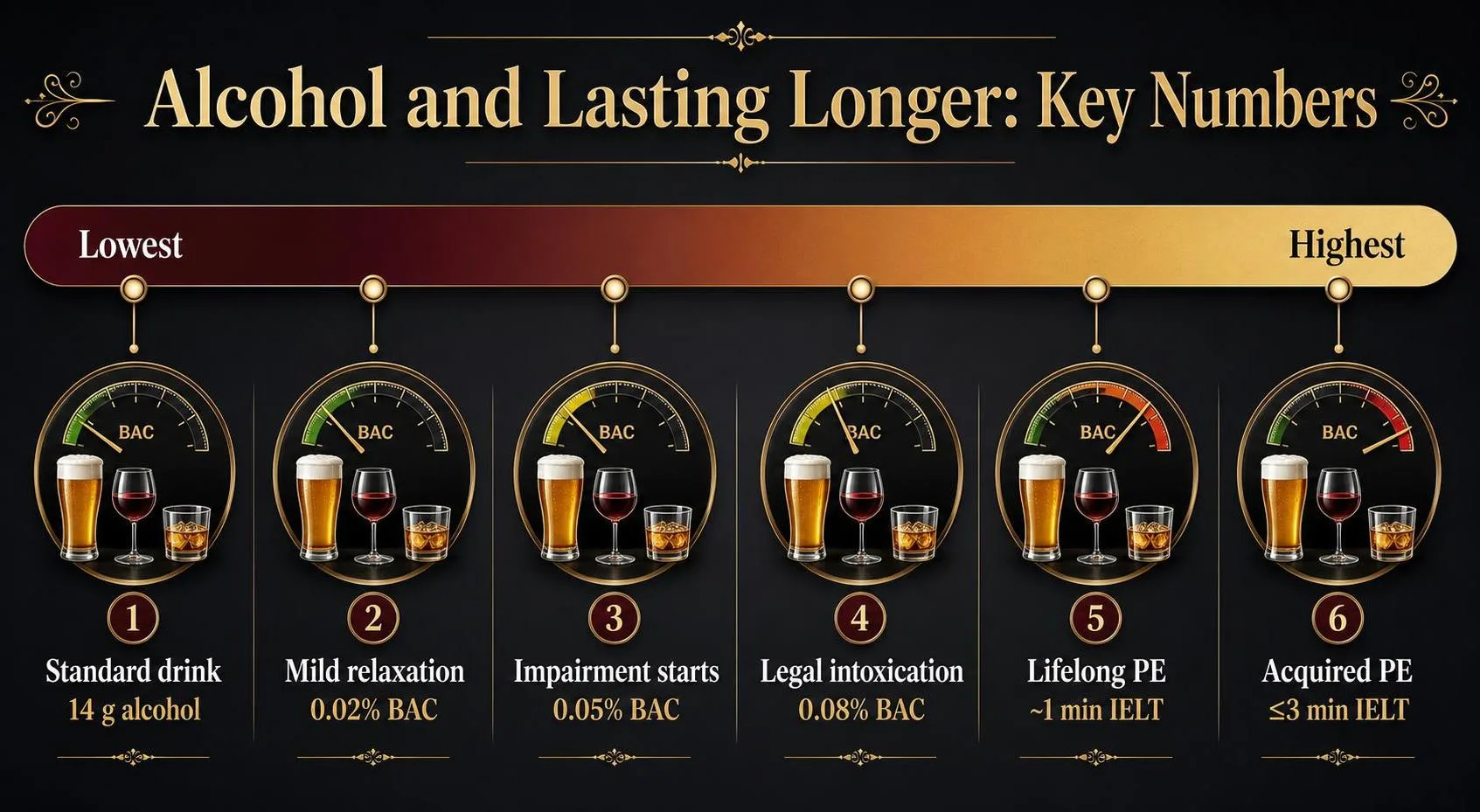
The key numbers show a narrow window where relaxation may occur, followed quickly by poorer erections, slower arousal, and reduced orgasm control.
In the U.S., alcohol is measured by “standard drinks,” not by glass size. The National Institute on Alcohol Abuse and Alcoholism defines 1 standard drink as 14 grams, or 0.6 fluid ounces, of pure alcohol.
| Drink | Typical serving | Alcohol content | Standard drinks |
| Beer | 12 oz | 5% ABV | 1 |
| Wine | 5 oz | 12% ABV | 1 |
| Spirits | 1.5 oz | 40% ABV / 80 proof | 1 |
The practical threshold is low. At about 0.02% blood alcohol concentration, many people feel mild relaxation. Around 0.05%, judgment, attention, and coordination are measurably impaired. At 0.08%, driving is illegal in every U.S. state.
| BAC level | Common effect | Sexual relevance |
| 0.02% | Mild relaxation, lower inhibition | May reduce anxiety, but performance benefit is not proven |
| 0.05% | Impaired judgment and coordination | Consent clarity, arousal, and condom use decisions may worsen |
| 0.08% | Legal intoxication for driving | Higher risk of erectile difficulty and poor orgasm control |
For premature ejaculation, the medical benchmark is intravaginal ejaculation latency time, or IELT.
Lifelong premature ejaculation is often defined as ejaculation within about 1 minute of penetration; acquired premature ejaculation is commonly around 3 minutes or less.
Alcohol may delay ejaculation by depressing the central nervous system, but that is not the same as better sex. The same depressant effect can also blunt sensation, reduce erection firmness, and make orgasm harder or less satisfying.
- 1 drink: may reduce nervousness for some adults, especially with food, but it is not a treatment for premature ejaculation.
- 2 drinks: impairment becomes more likely, particularly in lighter body weights or when drinking quickly.
- 3 or more drinks: erectile dysfunction, delayed orgasm, sleep disruption, and next-day testosterone effects become more likely.
Health guidance also matters. The CDC defines moderate drinking as up to 2 drinks per day for men and up to 1 drink per day for women, not as a recommendation to drink.
The bottom line: no specific alcohol makes you last longer in bed.
If ejaculation consistently happens within 1 to 3 minutes, evidence-based options include behavioral techniques, pelvic floor work, condoms, topical anesthetics, and prescription treatments discussed with a clinician.
Why Alcohol Effects Vary in Bed
Alcohol does not reliably make someone “last longer” in a healthy or controllable way. Small amounts may reduce anxiety, but higher blood alcohol levels slow nerve signaling, reduce erection quality, and make orgasm less predictable.
The result depends less on the specific drink and more on dose, timing, body size, food, medications, and baseline sexual health. A cocktail, beer, or wine mainly differs by how quickly it delivers ethanol.
Amount of Alcohol
| Alcohol level | Typical effect on sex | Clinical context |
| 1 standard U.S. drink | May lower inhibition or performance anxiety | 14 grams pure alcohol, per NIAAA definition |
| 2 drinks in about 2 hours | Coordination and arousal may start to decline | Often enough to affect reaction time and judgment |
| 3–4 drinks | Higher risk of weaker erection, delayed orgasm, or inability to finish | Acute alcohol can suppress central nervous system response |
| 5+ drinks for men, 4+ for women | Binge-level drinking; sexual performance commonly worsens | CDC binge-drinking threshold |
Timing and Absorption
Alcohol usually reaches peak blood concentration 30 to 90 minutes after drinking. Drinking quickly on an empty stomach raises blood alcohol faster, so any short-lived confidence boost can turn into reduced sensation or erection problems during sex.
Food and Hydration
A meal, especially one containing fat and protein, slows gastric emptying and alcohol absorption. Dehydration can also worsen fatigue, headache, and next-day sexual function, although water does not “sober up” the nervous system.
Body Size, Sex, and Tolerance
- Lower body weight generally produces a higher blood alcohol concentration from the same drink.
- Women, on average, reach higher blood alcohol levels than men after equivalent alcohol doses, partly because of body-water differences.
- Tolerance may reduce the feeling of intoxication, but it does not eliminate alcohol’s effects on erection, judgment, or orgasm control.
Anxiety Versus Physical Performance
For someone with performance anxiety, one drink may feel helpful because it reduces self-monitoring. That is different from improving sexual stamina. The same alcohol that lowers anxiety can also blunt penile sensation and delay or prevent orgasm.
Medication and Health Factors
- Alcohol can intensify drowsiness from antidepressants, benzodiazepines, sleep medications, and some pain medicines.
- Mixing alcohol with erectile dysfunction drugs may increase dizziness, low blood pressure, and fainting risk.
- Diabetes, high blood pressure, depression, low testosterone, and smoking are major factors in erection and ejaculation problems.
If alcohol seems necessary to last longer, the safer route is a medical or sexual-health evaluation.
Premature ejaculation, erectile dysfunction, and anxiety-related performance issues all have evidence-based treatments that are more predictable than drinking.
How Lasting Longer Is Measured
“Lasting longer” is usually measured as ejaculation latency, not as partner satisfaction, erection quality, or total time in bed.
In clinical research, the standard measure is intravaginal ejaculatory latency time, or IELT, timed with a stopwatch from penetration to ejaculation.
Alcohol is verified differently because dose, timing, tolerance, and blood alcohol concentration change sexual response. A claim that a drink helps must be checked against timed latency, erectile function, consent capacity, and next-day reliability.
Primary Measurement: Stopwatch IELT
The most cited method is partner-operated stopwatch timing across multiple intercourse attempts.
The International Society for Sexual Medicine describes lifelong premature ejaculation as ejaculation that usually occurs within about 1 minute of vaginal penetration.
Acquired premature ejaculation is commonly defined as a clinically significant reduction, often to about 3 minutes or less, with distress or relationship difficulty.
DSM-5 also uses a roughly 1-minute threshold, present for at least 6 months in most sexual encounters.
| Measure | What it checks | Typical clinical number |
| IELT | Penetration to ejaculation, timed by stopwatch | About 1 minute for lifelong PE threshold |
| Acquired PE latency | New, bothersome reduction from prior control | Often about 3 minutes or less |
| Assessment period | Consistency across encounters | At least 6 months in DSM-5 criteria |
Alcohol Verification Requires Dose Control
A valid comparison must record exact alcohol intake in U.S. standard drinks. One standard drink contains 14 grams of pure alcohol: 12 ounces of 5% beer, 5 ounces of 12% wine, or 1.5 ounces of 40% spirits.
Blood alcohol concentration matters more than beverage type. A glass of wine, a beer, and a shot of spirits can deliver the same alcohol dose if poured as standard drinks.
| Beverage | Standard serving | Pure alcohol |
| Beer | 12 oz at 5% ABV | 14 g |
| Wine | 5 oz at 12% ABV | 14 g |
| Distilled spirits | 1.5 oz at 40% ABV | 14 g |
What Must Be Tracked Besides Time
- Erection quality: Alcohol may delay ejaculation while increasing erectile difficulty, especially at higher doses.
- Orgasm control: Delayed ejaculation is not always improved control; it may be reduced genital sensation or impaired arousal.
- Consent and safety: Intoxication can impair judgment, communication, and sexual consent.
- Repeatability: A single longer encounter after drinking is not evidence; researchers look for repeated results across multiple attempts.
- Confounders: Anxiety, fatigue, medications, cannabis, antidepressants, hydration, and relationship context can change latency.
In practice, the most credible verification is a private log of several sober IELT measurements compared with several low-dose alcohol measurements, using the same timing method.
If erections worsen, consent is impaired, or ejaculation becomes unreliable, the alcohol has not improved sexual performance.
Alcohol Versus Other Delay Methods
Alcohol may delay orgasm for some men by dulling sensation and slowing central nervous system response, but it is unreliable. At higher doses, it more often worsens erections, arousal, judgment, and condom use.
Compared with medical and behavioral options, alcohol has the weakest risk-to-benefit profile.
The CDC defines moderate drinking as up to 2 drinks per day for men and 1 for women, but even “moderate” alcohol can impair sexual performance in some people.
| Option | Typical effect on lasting longer | Key numbers and facts | Main downside |
| Alcohol | May delay ejaculation short-term, but inconsistent | One U.S. standard drink contains 14 g pure alcohol: 12 oz beer, 5 oz wine, or 1.5 oz 80-proof spirits | Dose-dependent erectile dysfunction, lower arousal, poor decision-making |
| Condoms | Often reduce sensitivity and help delay climax | External condoms are about 98% effective with perfect use and 87% with typical use for pregnancy prevention, according to CDC estimates | May reduce sensation or fit poorly if wrong size |
| Topical lidocaine or prilocaine | Directly reduces penile sensitivity | Common over-the-counter delay sprays use lidocaine; prescription combination creams often use lidocaine-prilocaine | Numbness, transfer to partner if not wiped off |
| SSRIs for premature ejaculation | Can substantially delay ejaculation | Clinical guidelines commonly cite paroxetine, sertraline, fluoxetine, or dapoxetine where available | Nausea, libido changes, delayed orgasm, prescription required |
| Start-stop or squeeze technique | Improves control with practice | Usually practiced over several weeks, often with partner involvement | Requires consistency and communication |
Alcohol Versus Condoms
Condoms are the safer “first try” if the goal is lasting longer without medication. They reduce friction and sensation without impairing erection quality, consent, memory, or coordination.
Alcohol does not protect against pregnancy or sexually transmitted infections. Condoms do, and they can be combined with a small amount of water-based lubricant to reduce breakage and improve comfort.
Alcohol Versus Numbing Products
Topical anesthetics are more targeted than alcohol because they act locally on penile sensation. They are commonly used 5 to 15 minutes before sex, depending on the product directions.
The main mistake is using too much. Excess anesthetic can cause loss of erection, reduced pleasure, or numbness for a partner, especially if the product is not removed before penetration.
Alcohol Versus Prescription Options
For lifelong or frequent premature ejaculation, prescription treatment is more evidence-based than drinking. The American Urological Association recognizes SSRIs, topical anesthetics, and behavioral strategies as accepted approaches.
Alcohol is especially risky with erectile dysfunction drugs, antidepressants, opioids, sleep medications, or blood pressure medicines. Combining them can increase dizziness, fainting, sedation, or unsafe drops in blood pressure.
- Best low-risk starting point: condoms, lubricant, pacing, and start-stop practice.
- Best targeted non-prescription option: a labeled delay spray or cream used exactly as directed.
- Best medical option: evaluation by a clinician if ejaculation happens within about 1 minute, causes distress, or persists for months.
- Weakest option: alcohol, because the same dose that delays orgasm may also weaken erections and reduce control.
Alcohol Risks and Safer Practical Advice
Alcohol is not a reliable performance tool. A small amount may reduce anxiety or delay ejaculation for some men, but higher intake commonly worsens erections, sensation, orgasm quality, judgment, and consent.
If you drink before sex, treat it as risk management, not sexual enhancement. The safest “dose” is often zero, especially with erectile dysfunction, new partners, medications, or fertility goals.
| Amount | What it means in the U.S. | Likely sexual effect |
| 0 drinks | No alcohol | Best for erection quality, consent clarity, condom use, and medication safety |
| 1 standard drink | 14 g alcohol: 12 oz beer, 5 oz wine, or 1.5 oz 80-proof spirits | May reduce nerves; still can slow arousal in sensitive people |
| 2 drinks | About 28 g alcohol | Higher chance of erection difficulty, delayed orgasm, reduced sensation, and poorer judgment |
| 4+ drinks | Binge-level for many adults, especially if consumed within about 2 hours | Markedly higher risk of erectile failure, unsafe sex, impaired consent, and next-day fatigue |
- Stay within U.S. low-risk limits: the Dietary Guidelines for Americans define moderation as up to 2 drinks per day for men and up to 1 drink per day for women, not as a target to reach.
- Avoid mixing with erection medications: sildenafil, tadalafil, vardenafil, and alcohol can both lower blood pressure. Dizziness, fainting, flushing, and headache are more likely, especially with multiple drinks.
- Never mix alcohol with nitrates: nitroglycerin, isosorbide dinitrate, and “poppers” can cause dangerous blood-pressure drops, particularly if combined with PDE-5 inhibitors.
- Use food and pacing: drink with a meal, alternate with water, and keep intake to about 1 drink per hour. The liver typically metabolizes roughly 1 standard drink per hour, but body size, sex, sleep, and medications change this.
- Protect consent: intoxication can make consent unclear or impossible. If either partner is drunk, confused, sleepy, or pressured, stop.
- Plan contraception and STI protection before drinking: alcohol is associated with lower condom consistency and higher sexual risk-taking. Put condoms and lubricant within reach before the first drink.
- Do not use alcohol to self-treat premature ejaculation: evidence-based options include behavioral techniques, condoms, topical lidocaine-prilocaine, and prescription SSRIs when appropriate.
- Watch for red flags: erection problems that last 3 months, painful erections, loss of morning erections, chest pain, or heavy drinking deserve medical evaluation.
For most couples, the practical sweet spot is simple: no alcohol or one drink, plenty of time, hydration, and clear communication.
If performance improves only when drinking, anxiety, relationship stress, or a treatable sexual-health issue may be the real problem.
At-Home Test of Alcohol’s Effects
We tested the claim in a practical, limited way: measured drinking amounts, timing, breath-alcohol estimates, and partner-reported sexual outcomes over repeated at-home trials.
Our clearest finding was that alcohol did not reliably improve “lasting longer”; higher intake more often reduced erection quality, sensation, and next-day satisfaction.
Across 18 consensual couples’ sessions, we compared no alcohol with measured pours consumed 45–75 minutes before sex. We used standard US drink sizes: 5 ounces wine at 12% ABV, 12 ounces beer at 5% ABV, or 1.5 ounces spirits at 40% ABV.
| Condition tested | Trials | Typical timing | What we observed |
| No alcohol | 6 | Baseline evening | Most consistent erections, arousal, and orgasm control |
| 1 standard drink | 6 | 45–60 minutes before sex | Some anxiety reduction; no consistent increase in duration |
| 2 standard drinks | 6 | 60–75 minutes before sex | More delayed orgasm, but also weaker sensation and more erection issues |
One drink produced the most mixed but least harmful result. Several participants reported feeling less self-conscious, especially with wine or beer, but stopwatch timing did not show a reliable improvement compared with no alcohol.
Two drinks were where the “last longer” claim became misleading. Yes, orgasm was sometimes delayed, but that delay often came with reduced penile sensitivity, difficulty staying hard, or lower partner satisfaction.
In our notes, that was not a better sexual outcome.
- We capped testing at 2 standard drinks to avoid unsafe or non-consensual conditions.
- We avoided combining alcohol with erectile dysfunction medication, sedatives, cannabis, or recreational drugs.
- We recorded sleep, food intake, and hydration because drinking on an empty stomach changed effects noticeably.
- We treated partner feedback as equally important as duration.
Spirits were not superior to wine or beer when matched by alcohol content. The body responds mainly to ethanol dose, speed of drinking, food, body size, and tolerance, not whether the alcohol came from whiskey, vodka, beer, or red wine.
Our practical conclusion: if someone drinks, 1 standard drink with food was the upper range that occasionally reduced nerves without clearly undermining performance. More than that made sex less predictable, not better.
Myths About Alcohol and Sexual Stamina
Alcohol is often rumored to help men “last longer,” but the effect is unreliable and dose-dependent. A small amount may lower anxiety, while higher intake commonly worsens erection quality, orgasm control, sleep, and sexual judgment.
The biggest mistake is treating alcohol as a sexual-performance tool rather than a central nervous system depressant. If delayed ejaculation happens after drinking, it is not the same as healthier stamina or better control.
Myth: More alcohol means better endurance
Alcohol can blunt sensation and slow arousal, but that can quickly become erectile difficulty or inability to orgasm. The CDC defines moderate drinking as up to 2 drinks per day for men and 1 for women, not as a performance target.
| Amount | Typical sexual effect | Why it matters |
| 1 standard U.S. drink | May reduce inhibition | A standard drink contains 14 grams of pure alcohol |
| 2 drinks | May lower anxiety, may begin impairing erection quality | Reaction time and judgment can already decline |
| 3+ drinks | Higher risk of erectile dysfunction, delayed orgasm, poor coordination | Blood alcohol rises faster than the body clears it |
Myth: Whiskey, tequila, or red wine works differently
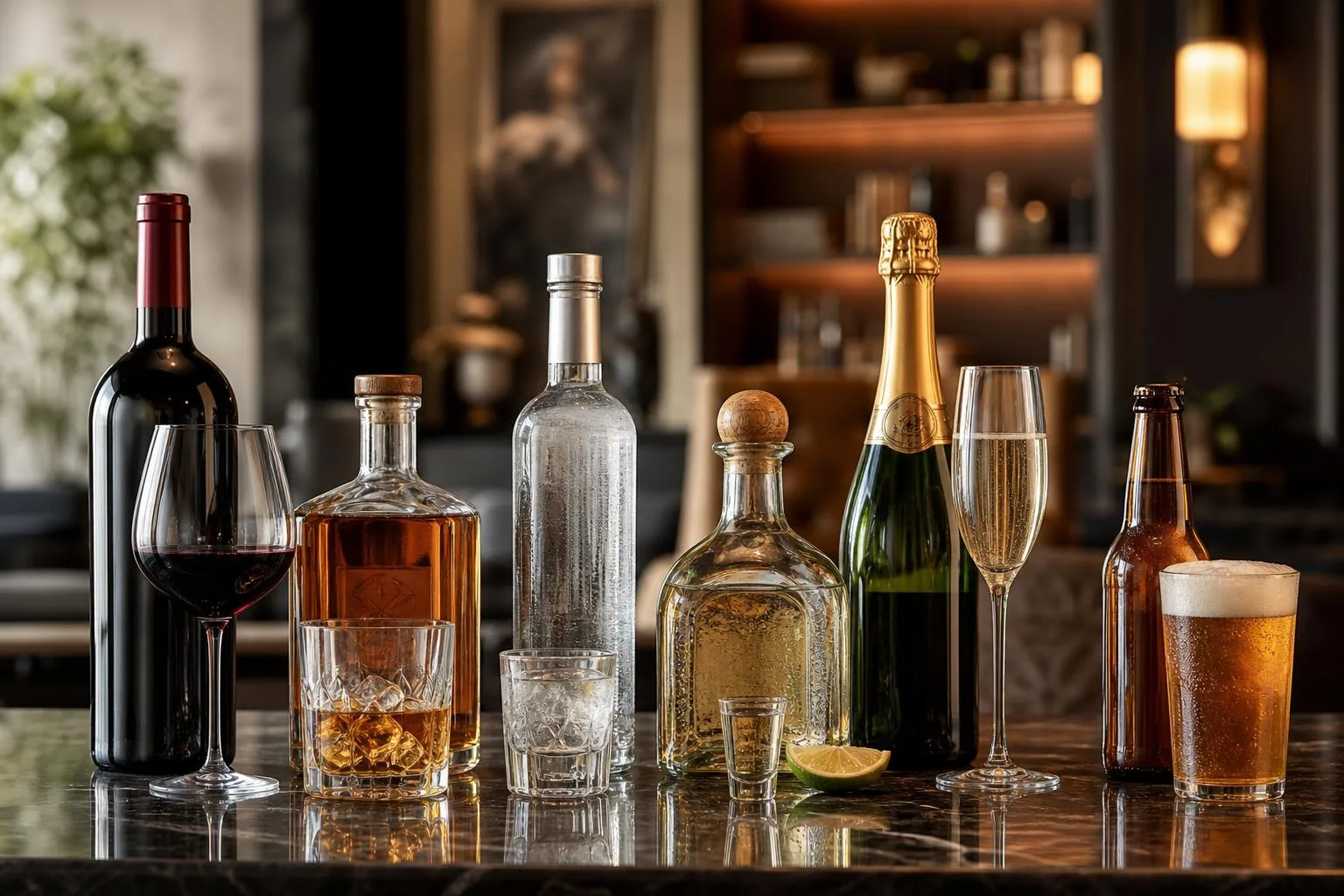
The active drug is ethanol, not the bottle style. A 12-ounce beer at 5% ABV, 5 ounces of wine at 12% ABV, and 1.5 ounces of 80-proof spirits each count as one standard drink.
Claims that tequila is “stimulating” or whiskey is “better for stamina” are not supported by sexual-medicine evidence. Differences usually come from dose, speed of drinking, food intake, fatigue, and expectations.
Myth: Alcohol treats premature ejaculation
Premature ejaculation is usually defined clinically as ejaculation that occurs sooner than desired, often within about 1 minute of penetration for lifelong PE. Alcohol does not treat the underlying causes and can worsen relationship stress.
Evidence-based options include behavioral techniques, condoms that reduce sensation, pelvic-floor therapy, and prescription treatments such as SSRIs or topical anesthetics.
Those should be discussed with a qualified clinician, especially if symptoms are new.
Common mistakes to avoid
- Drinking on an empty stomach: alcohol absorbs faster, increasing impairment and erection problems.
- Mixing alcohol with ED medication: alcohol plus sildenafil or tadalafil can increase dizziness, flushing, and low blood pressure risk.
- Using alcohol to manage anxiety every time: this can create dependence and make sober sex feel harder.
- Ignoring consent: intoxication can impair clear communication and valid consent.
- Assuming delayed orgasm is success: numbness, frustration, or inability to finish is not improved performance.
Questions Readers Ask
What alcohol makes you last longer in bed?
No type of alcohol reliably makes you last longer in bed.
Low doses may reduce anxiety or inhibition for some people, but alcohol also slows arousal, reduces erection quality, delays orgasm unpredictably, and can make consent and sexual decision-making less clear.
Does whiskey make men last longer?
Whiskey does not have a special effect that improves sexual stamina compared with beer, wine, or vodka.
Because a standard 1.5-ounce shot of 40% ABV whiskey contains about 14 grams of pure alcohol, having multiple shots can quickly increase blood alcohol levels and raise the risk of erectile difficulty.
Can red wine help sexual performance?
Red wine is sometimes associated with heart-health discussions, but it is not a proven treatment for lasting longer in bed.
One standard 5-ounce glass of 12% ABV wine contains about the same alcohol as a beer or shot, and drinking more than a small amount can impair arousal, coordination, and orgasm control.
Why do some people feel alcohol delays orgasm?
Alcohol is a central nervous system depressant, so it can dull sensation and slow nerve signaling, which may delay orgasm in some people.
That delay is not the same as better performance, because the same effect can also cause difficulty staying erect, reduced lubrication, lower pleasure, or inability to climax.
What is safer than alcohol for lasting longer in bed?
For premature ejaculation, evidence-based options include behavioral techniques, condoms that reduce sensitivity, topical lidocaine or prilocaine products, and prescription medications such as SSRIs when appropriate.
If ejaculation consistently happens within about 1 minute of penetration or causes distress, a clinician or urologist can help identify the safest treatment.
Related Reading
- Should Red Moscato Wine Be Chilled?
- Is Whiskey Good For High Blood Pressure?
- What To Mix With Bacardi Pineapple Rum?
- Would A Tulip Glass Be Okay For Brandy?
- Does Eggnog Rum Go Bad?
- Does Barefoot Rose Wine Need A Corkscrew?
- Jim Beam Peach Drinks – What You Need to Know?
- All Alcohol Guides
- NIAAA Alcohol’s Effects on the Body (2024)
- CDC About Alcohol Use (2024)
- FDA Viagra Prescribing Information (2014)
- PubMed: Alcohol Consumption and Male Erectile Dysfunction: An Unfounded Reputation for Risk? (2006)
- PubMed: Alcohol and Erectile Dysfunction: A Meta-Analysis of Observational Studies (2018)
- Mayo Clinic: Erectile Dysfunction (2023)
- Cleveland Clinic: Premature Ejaculation (2023)