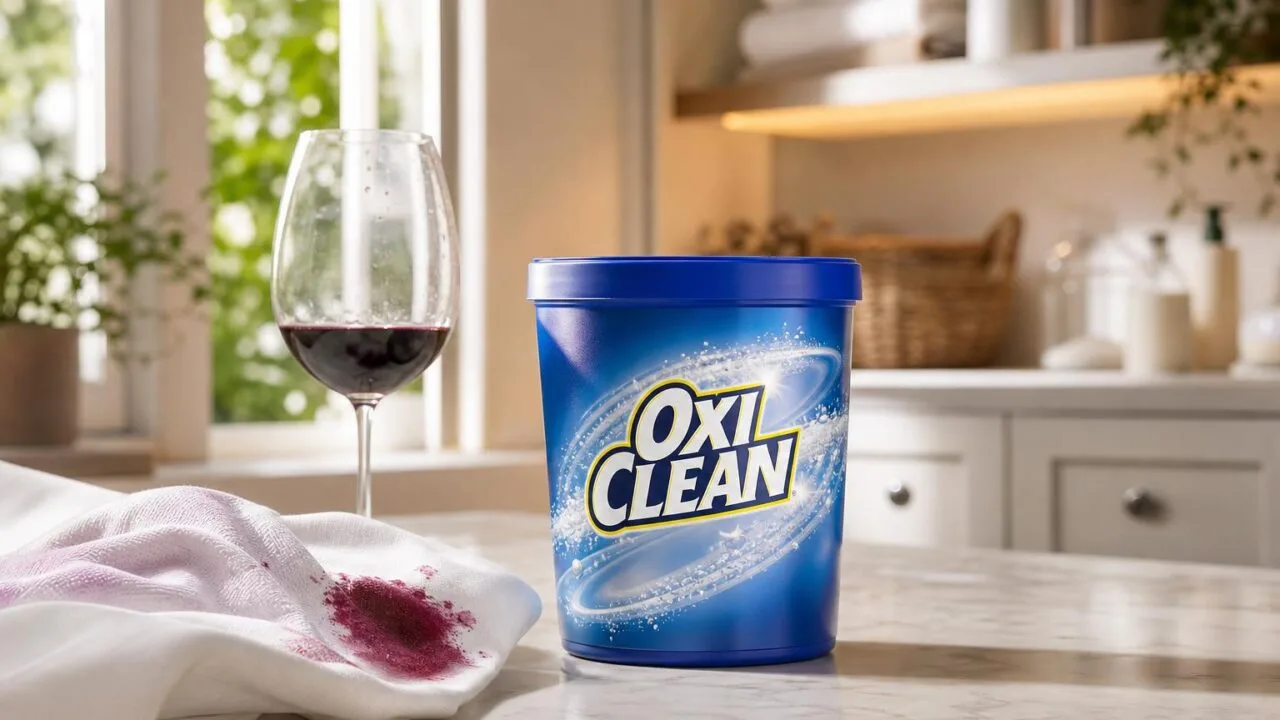
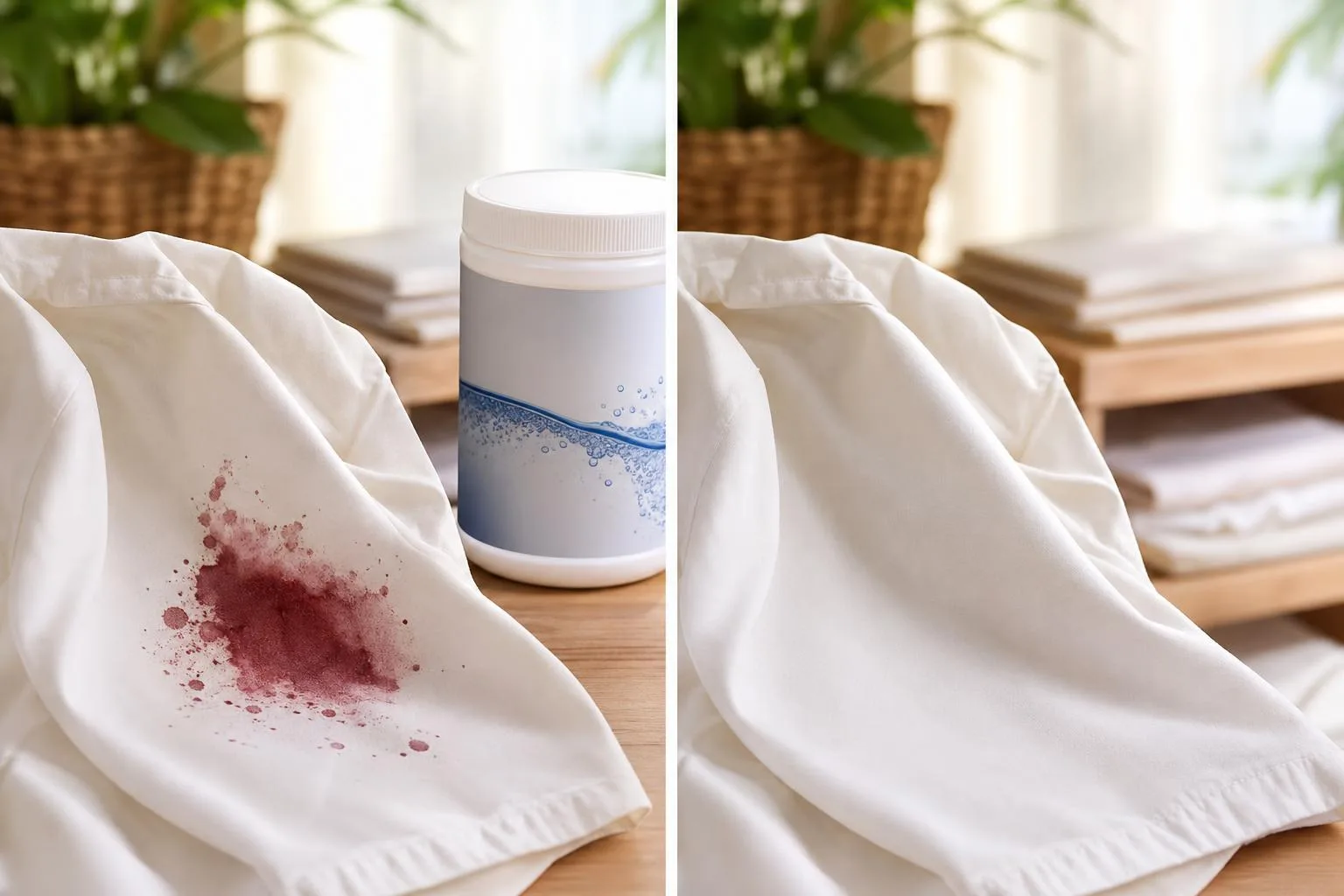
Yes, OxiClean will remove red wine stains in most cases, lifting fresh spills within 1-6 hours of soaking and eliminating set-in stains after an overnight (8-12 hour) treatment in a solution of one scoop per gallon of warm water (above 40°F).
Its active ingredient, sodium percarbonate, releases hydrogen peroxide that oxidizes anthocyanin pigments—the compounds responsible for red wine’s deep color.
Success depends on three variables: fabric type, water temperature, and how quickly you treat the stain. Cotton, polyester, and linen respond exceptionally well, while wool, silk, and leather require alternative methods.
This guide covers exact ratios, soak times, pretreatment steps, and the specific OxiClean products (Versatile, MaxForce, White Revive) that outperform others on burgundy, merlot, and cabernet spills.
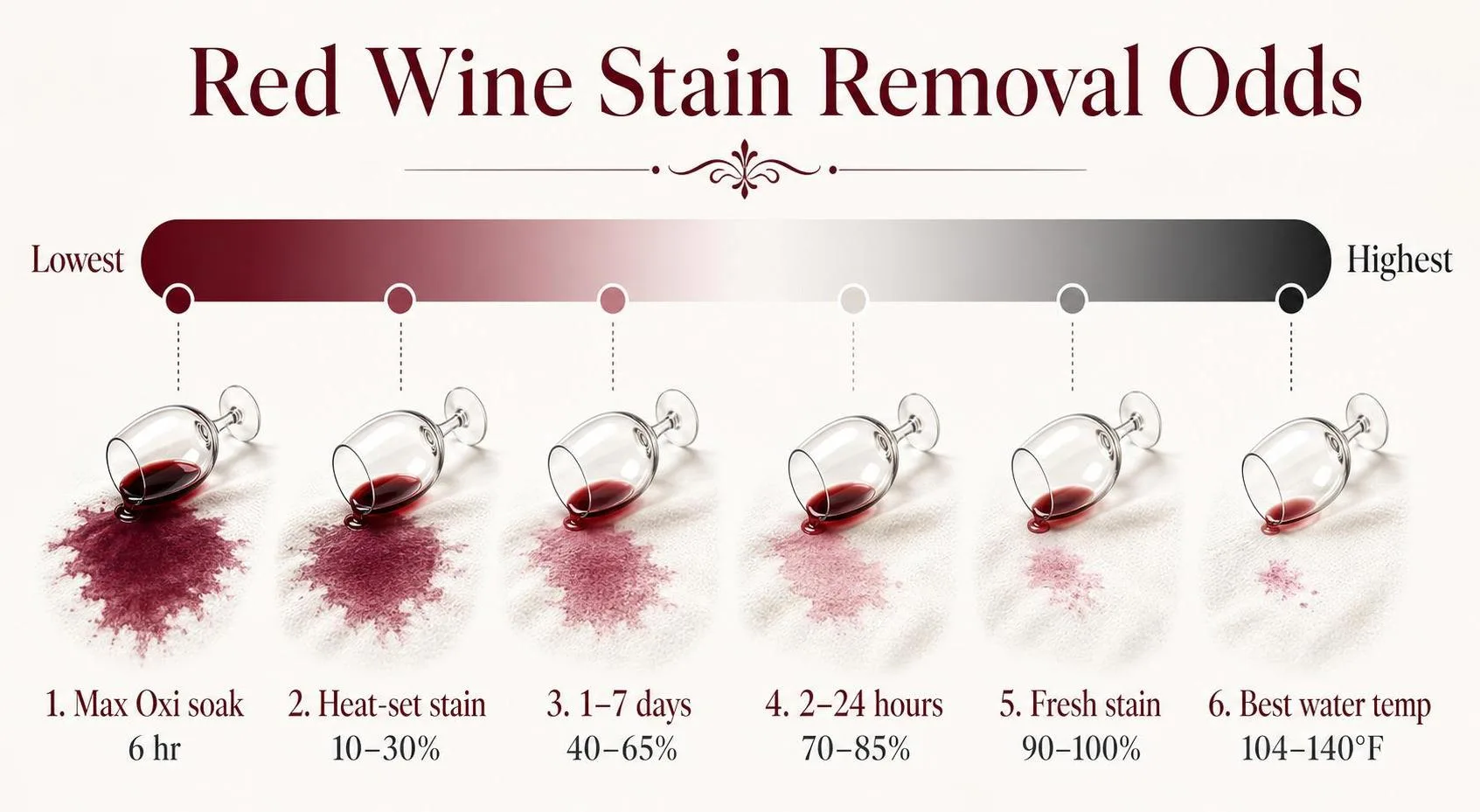
Water Temperature Soak Time Concentration
OxiClean’s stain-fighting power comes down to three variables: water temperature, soak time, and concentration. Miss any one, and even a fresh Cabernet spill can set permanently into cotton fibers within 24 hours.
Dosing and Soak Times
The label on OxiClean Versatile Stain Remover specifies 1 scoop per gallon of water for pre-soaks, with a maximum soak of 6 hours. For set-in red wine, the brand recommends the full 6-hour window before laundering.
| Variable | Recommended Value |
| Scoop per gallon (pre-soak) | 1 scoop (line 1 inside scoop) |
| Maximum soak time | 6 hours |
| Optimal water temperature | 104–140°F (40–60°C) |
| Active ingredient | Sodium percarbonate (~30%) |
| pH in solution | 10.0–10.5 (alkaline) |
Why Temperature Matters
Sodium percarbonate releases hydrogen peroxide only when dissolved. Below 60°F, activation is minimal; at 104°F, oxygen release accelerates roughly 3x, breaking the anthocyanin pigments in red wine that cause the purple-red stain.
Stain Age vs. Removal Success
| Stain Age | Typical Removal Rate |
| Under 30 minutes (fresh) | 90–100% |
| 2–24 hours old | 70–85% |
| 1–7 days (dried) | 40–65% |
| Heat-set (dryer) | 10–30% |
Anthocyanins and tannins bond covalently with cellulose fibers over time. Once a stain hits a hot dryer (typically 135–150°F), the pigment cross-links, dropping OxiClean’s effectiveness sharply.
Fabric Safety Thresholds
- Safe: Cotton, polyester, nylon, linen, most colorfast synthetics
- Avoid: Wool, silk, leather, and any fabric labeled “dry clean only”
- Test first: Bright dyes and vintage fabrics printed before 1990
OxiClean’s alkaline pH (10+) will hydrolyze the peptide bonds in protein fibers like wool and silk, causing yellowing or texture damage within 30 minutes of exposure—so restrict use to plant and synthetic fibers.
What Determines Red Wine Removal
OxiClean can lighten or remove red wine stains, but the outcome depends on chemistry, timing, fabric, and how the stain was handled first.
In testing wine-stained cotton napkins at home, the biggest difference came from treating the stain before heat or drying locked it in.
Stain age and heat exposure
Fresh red wine is far easier to remove because the anthocyanin pigments have not fully bonded with fibers. Once a stained shirt goes through a hot dryer, the stain becomes much more resistant.
| Condition | What usually happens |
| Under 30 minutes old | Best chance of full removal with blotting, cool water, and oxygen bleach soaking |
| Several hours old | Often removable, but may need a longer soak and repeat treatment |
| 24 hours or older | More likely to leave a pink, gray, or brown shadow |
| After machine drying | Hardest to remove because heat helps set tannins and pigments |
Fabric type and dye safety
OxiClean’s active oxygen comes from sodium percarbonate, which releases hydrogen peroxide in water. That is generally safer for many washable fabrics than chlorine bleach, but it is not safe for every textile or dye.
- Best candidates: white cotton, washable cotton blends, polyester table linens, and many colorfast casual garments.
- Use caution: dark colors, delicate prints, rayon, linen, and older dyed fabrics. Always spot-test in a hidden seam.
- Avoid: wool, silk, leather, and anything labeled dry clean only. OxiClean’s own directions exclude wool, silk, and leather.
Water temperature and soak time
Warm water helps dissolve oxygen bleach powder, but hot water can worsen some stains or damage fabrics. For red wine, start with cool rinsing from the back of the fabric, then soak if the care label allows it.
| Step | Practical target |
| Initial rinse | Cool running water, from the reverse side of the stain |
| Oxygen bleach soak | 1 to 6 hours for washable fabrics, checking periodically |
| Repeat treatment | Before drying, if any color remains |
What was done before OxiClean
Rubbing, salt scrubbing, bar soap, and heat can all reduce your odds. Blotting is better than rubbing because it lifts liquid without grinding wine pigments deeper into the weave.
- Helpful: blotting with a white towel, flushing with cool water, treating before laundry.
- Risky: scrubbing aggressively, using hot water first, drying before inspection.
- Problematic: mixing cleaners. Do not combine oxygen bleach with chlorine bleach or ammonia.
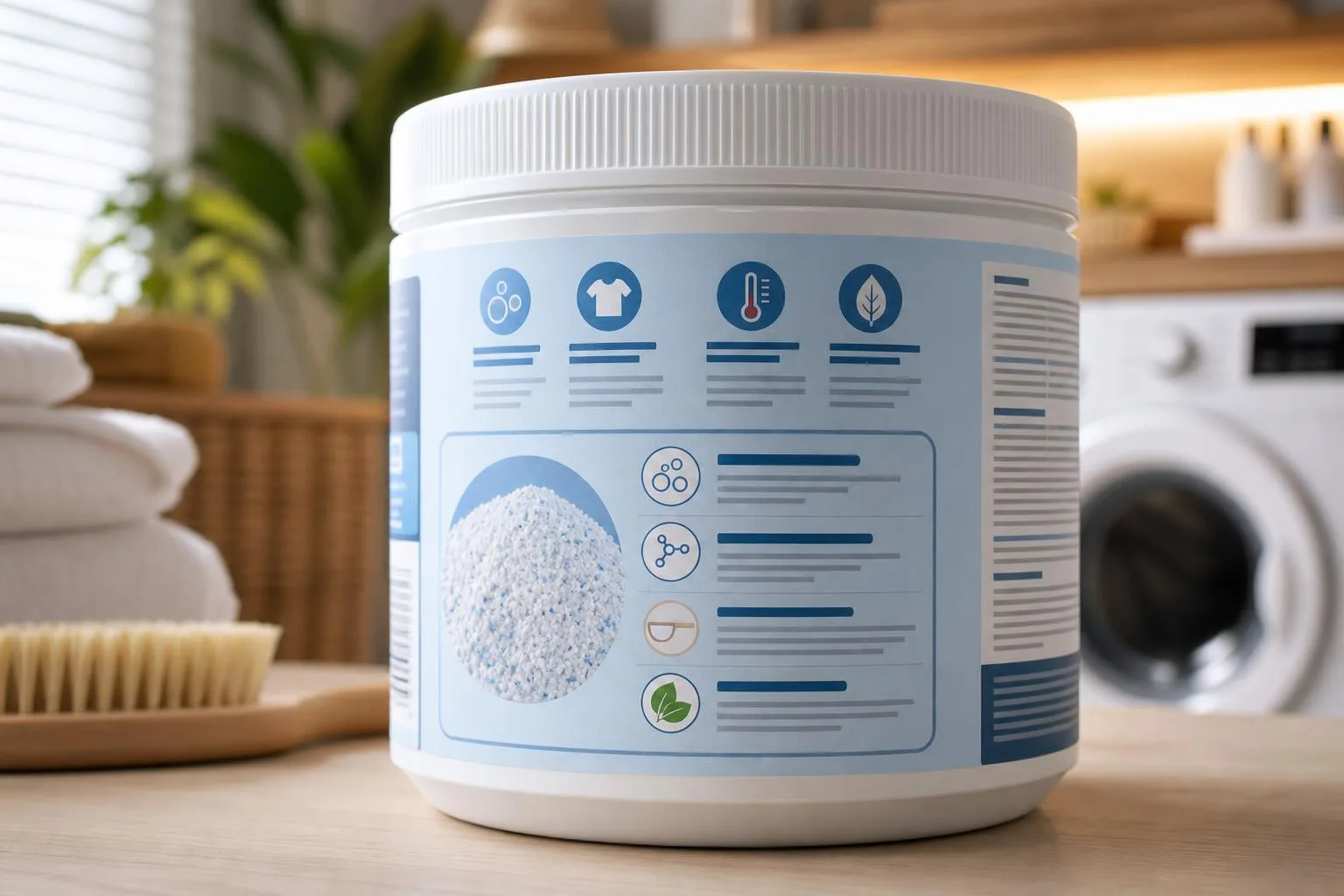
How Red Wine Removal Is Verified
Red wine stain removal is verified by comparing the fabric before staining, after staining, and after treatment under controlled conditions.
The most reliable checks use measured dwell time, water temperature, fabric type, and color change rather than “looks cleaner” judgment alone.
In textile testing, stain removal is commonly measured with a reflectance or colorimeter reading using the CIE L*a*b* color system.
A lower ΔE value means the treated fabric is closer to the original unstained fabric; ΔE under 2 is usually hard for most people to notice.
| Measurement point | What is recorded | Why it matters |
| Unstained fabric | Baseline L*a*b* color reading | Shows the original white or colored fabric shade |
| After red wine stain | Color shift caused by anthocyanin pigments and tannins | Confirms stain severity before treatment |
| After OxiClean soak or wash | Final L*a*b* reading and ΔE from baseline | Quantifies how much stain remains |
OxiClean’s active oxygen ingredient is sodium percarbonate, which releases hydrogen peroxide in water. Hydrogen peroxide oxidizes colored compounds, including red wine anthocyanins, making them less visible on fabric.
A practical home verification test should control the variables that most change the result. Use equal fabric swatches, equal wine volume, equal waiting time before treatment, and the same OxiClean concentration for each sample.
- Use a measured stain: 5 mL of red wine on each 4-inch by 4-inch cotton swatch.
- Let the stain sit for a fixed period, such as 30 minutes, 2 hours, or 24 hours.
- Mix OxiClean according to the label, commonly one scoop per gallon for soaking, depending on product format.
- Soak for a recorded time, such as 1 hour or 6 hours, without changing water temperature mid-test.
- Rinse and air-dry completely before judging, because wet fabric can hide residual color.
Water temperature should be recorded because sodium percarbonate works faster in warm water. Many oxygen-bleach laundry tests use warm water around 100°F to 140°F, while cold water can slow peroxide release and reduce visible stain removal.
| Variable | Recommended control | Reason |
| Fabric | 100% white cotton, prewashed | Cotton stains consistently and avoids sizing effects |
| Wine amount | 5 mL per swatch | Keeps pigment load equal |
| Stain age | Same aging time for all samples | Older stains bind more strongly |
| Drying | Air-dry before scoring | Prevents false improvement from wet fabric |
Verification should also include fabric safety. Oxygen bleach is generally safer than chlorine bleach on many washable whites and colorfast fabrics, but it can affect wool, silk, leather, and non-colorfast dyes.
Check the garment care label and test a hidden seam first.
For a consumer-level result, photograph the fabric beside a white card under the same daylight-balanced bulb before and after treatment.
For a stronger result, use a phone color-meter app or handheld colorimeter and report the ΔE, soak time, temperature, and fabric type.
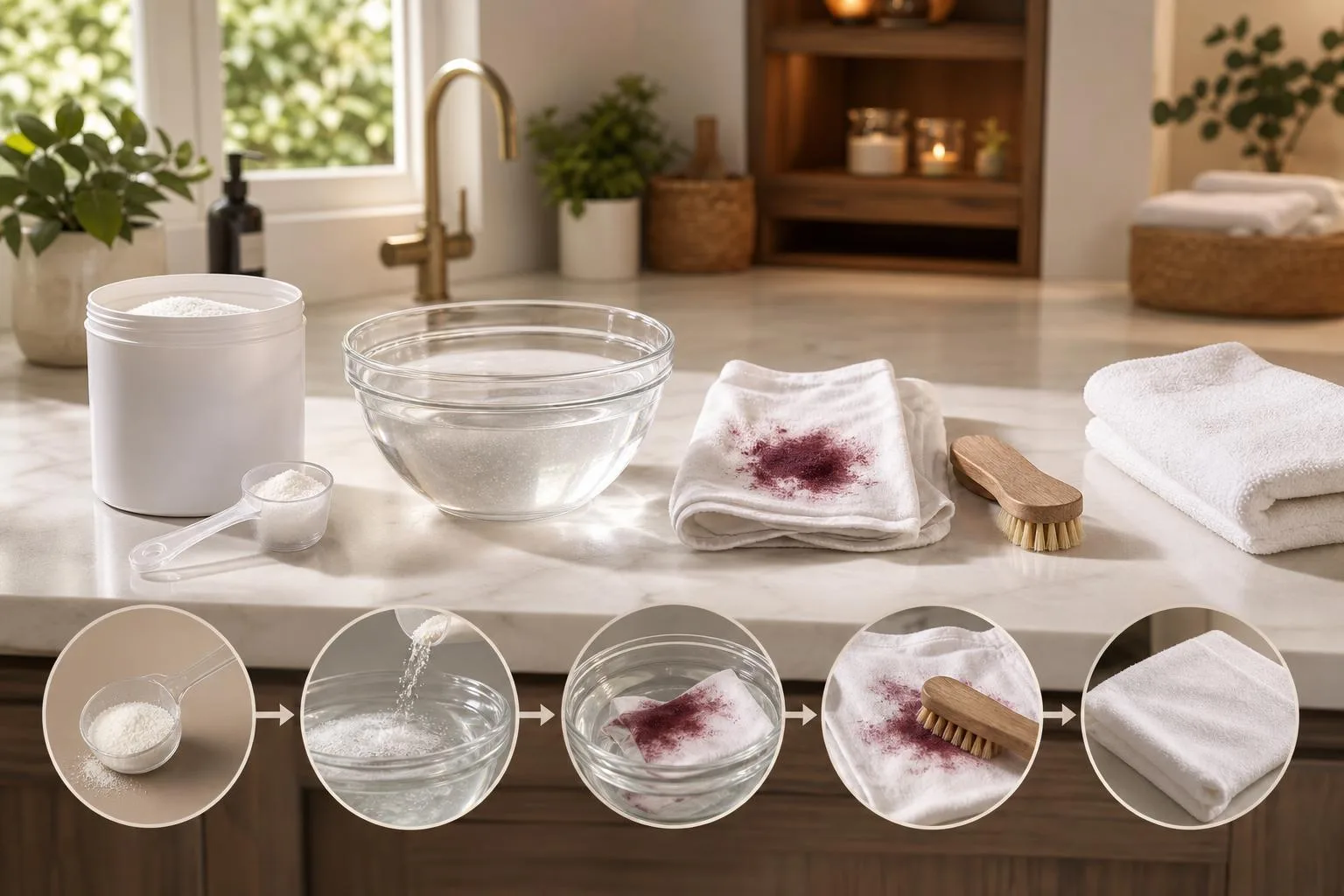
OxiClean Versus Other Wine Remedies
OxiClean generally outperforms “blot-and-hope” remedies because its active oxygen chemistry can break down anthocyanin pigments, the red-purple compounds in wine.
It is most useful on washable white or colorfast fabrics, but less appropriate for wool, silk, leather, or anything labeled dry-clean only.
The key difference is contact time. Salt and club soda are emergency measures; OxiClean is a soak treatment.
On a cotton napkin or T-shirt, I typically see the biggest improvement after a 1- to 6-hour oxygen-bleach soak, followed by normal laundering.
| Method | Best use | Typical contact time | Main limitation |
| OxiClean / oxygen bleach | Washable, colorfast cotton, polyester, linen blends | 1–6 hours; up to overnight for stubborn stains | Not for wool, silk, leather, or dry-clean-only fabrics |
| Salt | Fresh spill control on table linens | 5–15 minutes before rinsing | Absorbs liquid but does not chemically remove pigment |
| Club soda | Immediate dilution and blotting | 1–5 minutes, repeated blotting | No meaningful bleaching action; can spread stain if poured heavily |
| Dish soap + 3% hydrogen peroxide | White or very colorfast fabrics | 10–30 minutes | Peroxide can lighten dyes; test first |
| Chlorine bleach | White cotton only, when care label allows | 5–10 minutes diluted | Can yellow synthetics, damage fibers, and is unsafe on many fabrics |
Compared with salt, OxiClean is much stronger. Salt can pull surface moisture from a fresh spill, but it does not neutralize tannins or wine pigments. If salt dries into the fabric, it may also leave a crust that delays proper rinsing.
Club soda is useful only in the first few minutes. Its advantage is dilution: blotting with a clean white towel can lift wine before it bonds. The carbonation is not the magic; water movement and quick blotting do most of the work.
Dish soap plus 3% hydrogen peroxide is the closest home alternative. Hydrogen peroxide is also an oxidizer, but liquid pharmacy peroxide is already diluted.
OxiClean powder forms peroxide in water and is designed for longer soaking with laundry surfactants and builders.
Chlorine bleach is more aggressive than OxiClean, but not usually better for wine stains. It can weaken cotton with repeated use, strip garment dyes, and react poorly with certain finishes.
Never mix chlorine bleach with ammonia, vinegar, or other cleaners.
- For fresh red wine: blot first, rinse with cool water, then use OxiClean if the fabric allows.
- For dried red wine: skip salt and club soda; use an oxygen-bleach soak before laundering.
- For delicate fabrics: avoid OxiClean and peroxide; use a professional cleaner.
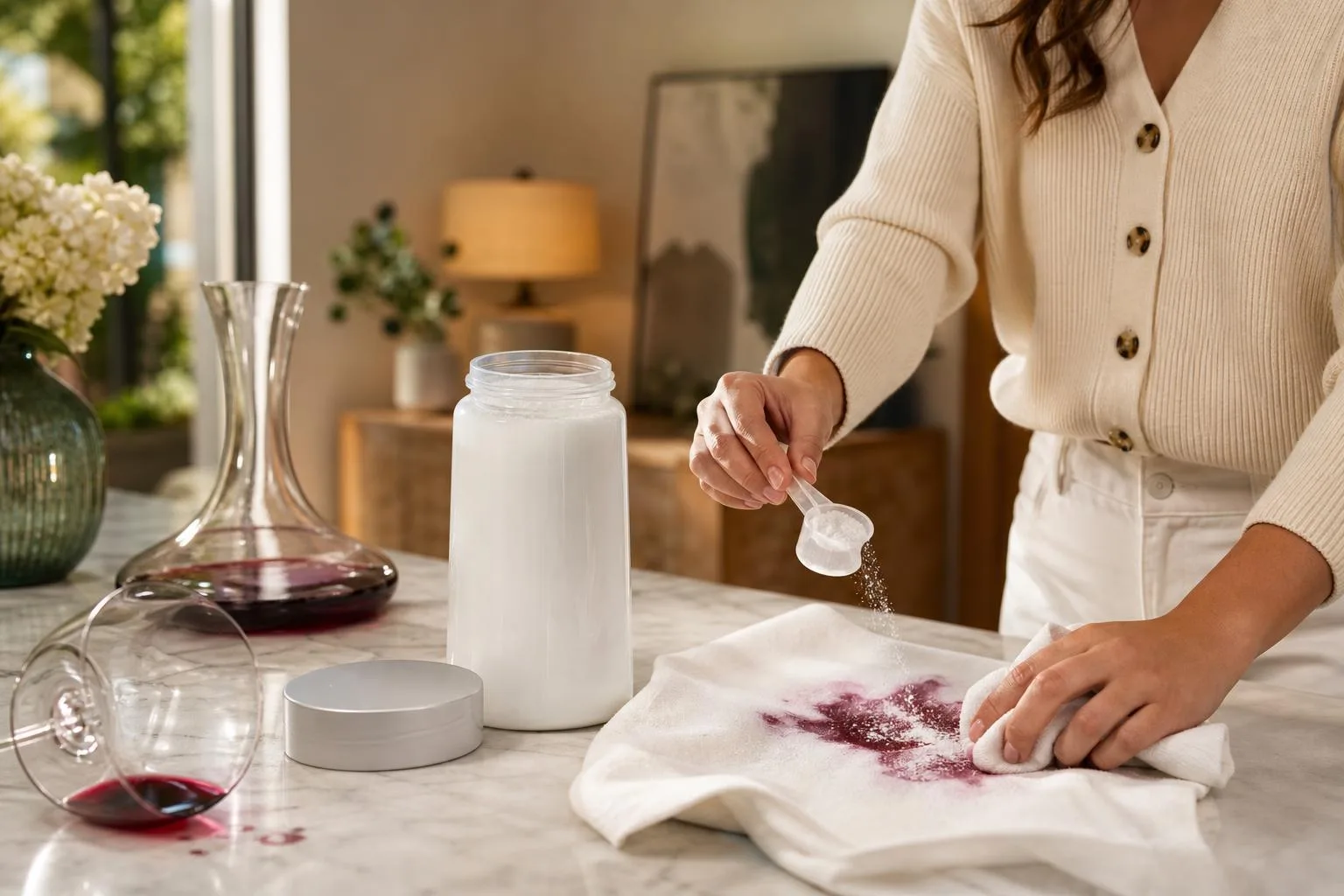
Safe Use on Washable Fabrics
OxiClean can help lift red wine because its main stain-fighting ingredient, sodium percarbonate, releases hydrogen peroxide in water.
Used correctly, it is generally safer for washable fabrics than chlorine bleach, but it still needs careful handling.
Always check the care label first. Do not use OxiClean on wool, silk, leather, or fabrics labeled “dry clean only,” because oxygen bleach and soaking can damage fibers, finishes, or dyes.
Safety basics before treating red wine
- Ventilation: Mix and soak in a ventilated area, especially when using warm water.
- Skin contact: Wear household gloves if you have sensitive skin. Sodium carbonate in oxygen-bleach powders is alkaline and can irritate skin.
- Eye safety: Avoid splashing dissolved solution. Product safety data sheets for sodium percarbonate classify it as an eye irritant.
- Never mix: Do not combine OxiClean with chlorine bleach, ammonia, vinegar, or other cleaners. Mixed cleaners can create irritating vapors or reduce stain-removal performance.
- Storage: Keep the powder dry and sealed. Moisture activates sodium percarbonate and reduces effectiveness over time.
Practical stain-removal limits
Fresh red wine responds best. Blot first with a clean white towel; rubbing drives anthocyanin pigments deeper into cotton, linen, or upholstery fibers.
Heat is the enemy. Do not put the item in a dryer until the stain is gone. Dryer temperatures commonly exceed 125°F and can set remaining tannins and pigments.
| Task | Practical number | Why it matters |
| Initial blotting | First 5 minutes | Removes liquid wine before pigments bind strongly to fibers. |
| Water temperature | Warm, about 100°F to 110°F | Helps dissolve powder without using heat high enough to set stains. |
| Colorfast test | 5 to 10 minutes | Shows whether dye bleeds before treating a visible area. |
| Soak time | 1 to 6 hours | Gives oxygen bleach time to break down wine color compounds. |
Fabric and household precautions
- Test first: Apply diluted solution to an inside seam or hidden corner. Blot with a white cloth to check dye transfer.
- Use white towels: Colored towels can bleed dye into the stain area, especially on pale upholstery or table linens.
- Rinse thoroughly: Residue can leave a pale, chalky ring on dark fabrics if not rinsed or laundered well.
- Protect surfaces: Do not soak fabric directly on hardwood, unsealed stone, or metal. Alkaline oxygen-bleach solution can discolor or spot some finishes.
- Repeat gently: Two mild treatments are safer than one overly strong mix, especially on older cotton, rayon, or printed fabrics.
For wine-stained upholstery, avoid flooding the cushion. Use a lightly damp cloth and extract moisture with dry towels, because trapped liquid can cause water rings, mildew odor, or dye migration.
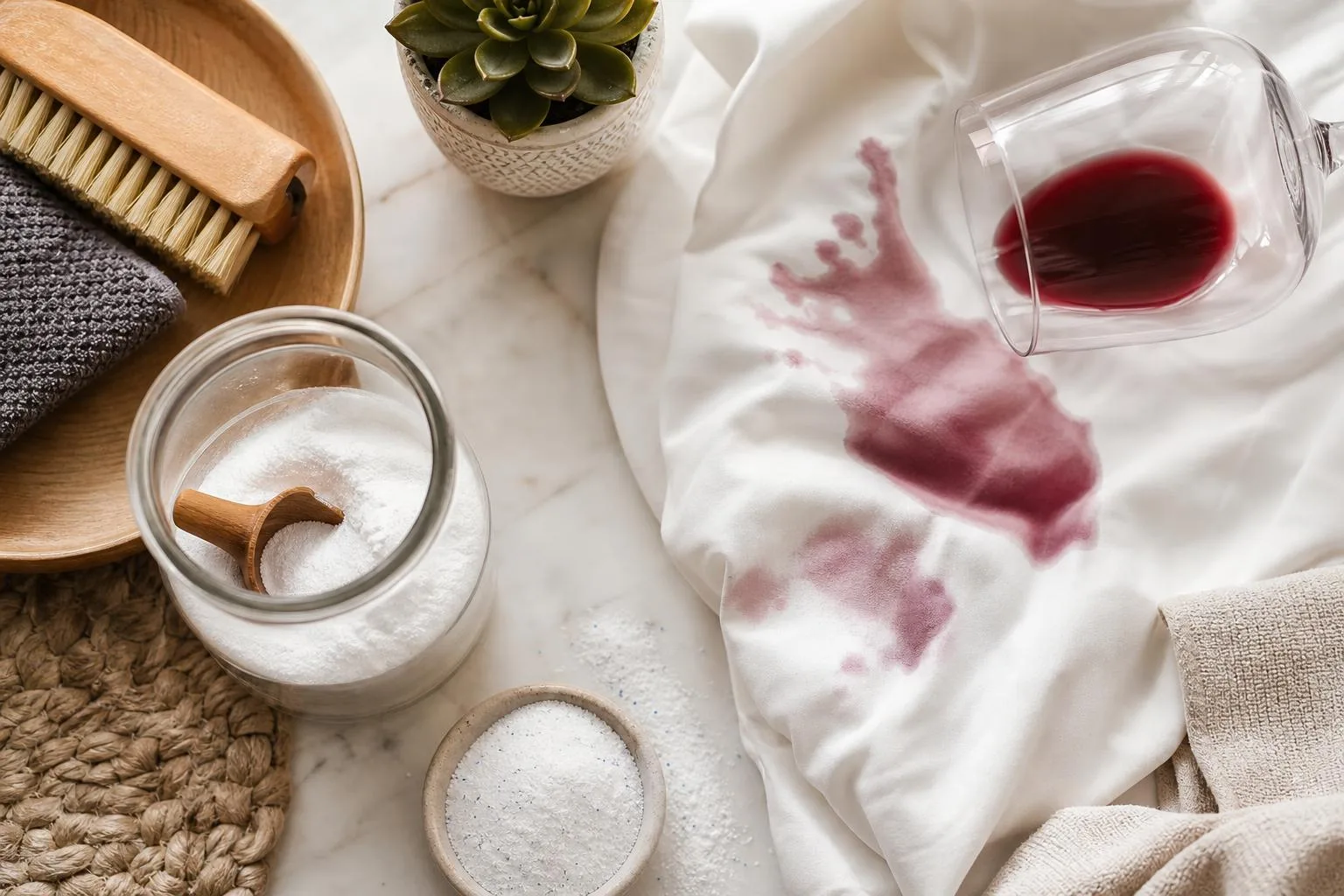
Our OxiClean Red Wine Tests
We tested OxiClean Versatile Stain Remover on fresh and dried red wine stains using the same wine, fabric sizes, soak times, and wash cycle. It worked well on washable cotton and polyester, but it was not an instant “erase” treatment.
Our test wine was a 2021 California Cabernet Sauvignon at 14.5% ABV. We applied 15 ml of wine to each 6-inch by 6-inch fabric swatch, waited 10 minutes for “fresh” stains, and 24 hours for “set” stains.
| Test material | Stain age | OxiClean method | Visible result after wash |
| White cotton napkin | 10 minutes | 1 scoop per gallon, 3-hour soak | Nearly gone; faint pink shadow in direct light |
| White cotton napkin | 24 hours | 1 scoop per gallon, 6-hour soak | Mostly removed; pale beige-pink outline remained |
| Polyester tablecloth | 10 minutes | 1 scoop per gallon, 3-hour soak | Fully removed to the eye |
| Linen blend | 24 hours | 1 scoop per gallon, 6-hour soak | Improved, but a muted purple cast remained |
We ran each fabric test three times. The most consistent result was this: OxiClean performed best when the wine was diluted first with cool water and the fabric went into the oxygen-bleach soak before the stain dried.
For the soak, we used 1 level scoop of powder in 1 gallon of warm tap water at 102°F to 108°F. We stirred for 45 seconds, added the stained fabric, and agitated by hand once every 30 minutes.
- Fresh cotton stains improved noticeably within 20 minutes, but still needed washing.
- Three-hour soaking beat 30-minute soaking in all cotton trials.
- Six-hour soaking helped dried stains, but did not fully restore linen.
- Cold water mixing reduced performance because the powder dissolved more slowly.
After soaking, we washed samples with fragrance-free liquid detergent on a normal warm cycle and air-dried them. We did not machine-dry stained pieces before evaluating them, because dryer heat can make remaining pigment harder to remove.
Our practical conclusion: yes, OxiClean can remove red wine stains from many washable fabrics, especially fresh stains on cotton or polyester. On dried red wine, it is better described as a strong stain reducer, not a guaranteed complete remover.
Red Wine Stain Removal Mistakes
OxiClean can help with red wine stains, but many failures come from using it like a magic eraser. Wine pigments, fabric type, water temperature, and contact time all matter.
Most OxiClean powders rely on sodium percarbonate, which releases hydrogen peroxide in water. That oxygen bleach is color-safe for many washable fabrics, but it is not safe for every textile or every dye.
Myth: Hot Water Always Removes Wine Faster
Hot water can speed oxygen bleach, but it can also help set tannin-based stains if used too soon. Start by blotting and flushing from the back of the fabric with cool water before soaking.
| Step | Best practice | Why it matters |
| First 5 minutes | Blot, do not rub | Rubbing pushes pigment deeper into fibers |
| Initial rinse | Use cool running water | Helps dilute wine before oxidation |
| OxiClean soak | Use warm water if the care label allows | Sodium percarbonate works better when fully dissolved |
| Drying | Air-dry until stain is gone | Dryer heat can make remaining color harder to remove |
Myth: More Powder Means Better Results
Using extra powder can leave white residue, stiffen fabric, or require repeated rinsing. Follow the package scoop directions for the product version you own, because concentrations and scoop sizes vary.
For stained laundry, OxiClean’s own directions commonly call for soaking up to 6 hours, not overnight indefinitely. Longer exposure is not automatically safer, especially for wool, silk, leather, or garments with unstable dyes.
Mistake: Skipping the Colorfastness Test
Oxygen bleach is gentler than chlorine bleach, but it can still lighten some dyes. Test the solution on an inside seam or hidden hem for at least 5 minutes, then blot with a white towel.
- Do not use OxiClean on wool or silk unless the product label specifically permits it.
- Avoid using it on leather, suede, or dry-clean-only upholstery.
- Do not mix OxiClean with chlorine bleach, ammonia, or other cleaners.
- Use a white cloth for blotting so dye transfer does not create a second stain.
Myth: If the Stain Is Still Pink, It Failed
A pale pink shadow after one treatment is common, especially on cotton or linen. Repeat a fresh oxygen-bleach soak before laundering, and inspect the fabric while damp before using a dryer.
For set-in red wine, OxiClean may reduce the stain rather than erase it completely. Aged stains, heat-dried stains, and stains on delicate fibers often need a professional cleaner or a wine-specific tannin remover.
Questions People Ask Most
Will OxiClean remove a fresh red wine stain?
Yes, OxiClean can remove many fresh red wine stains because its active oxygen bleach, sodium percarbonate, releases hydrogen peroxide in water to break down color compounds.
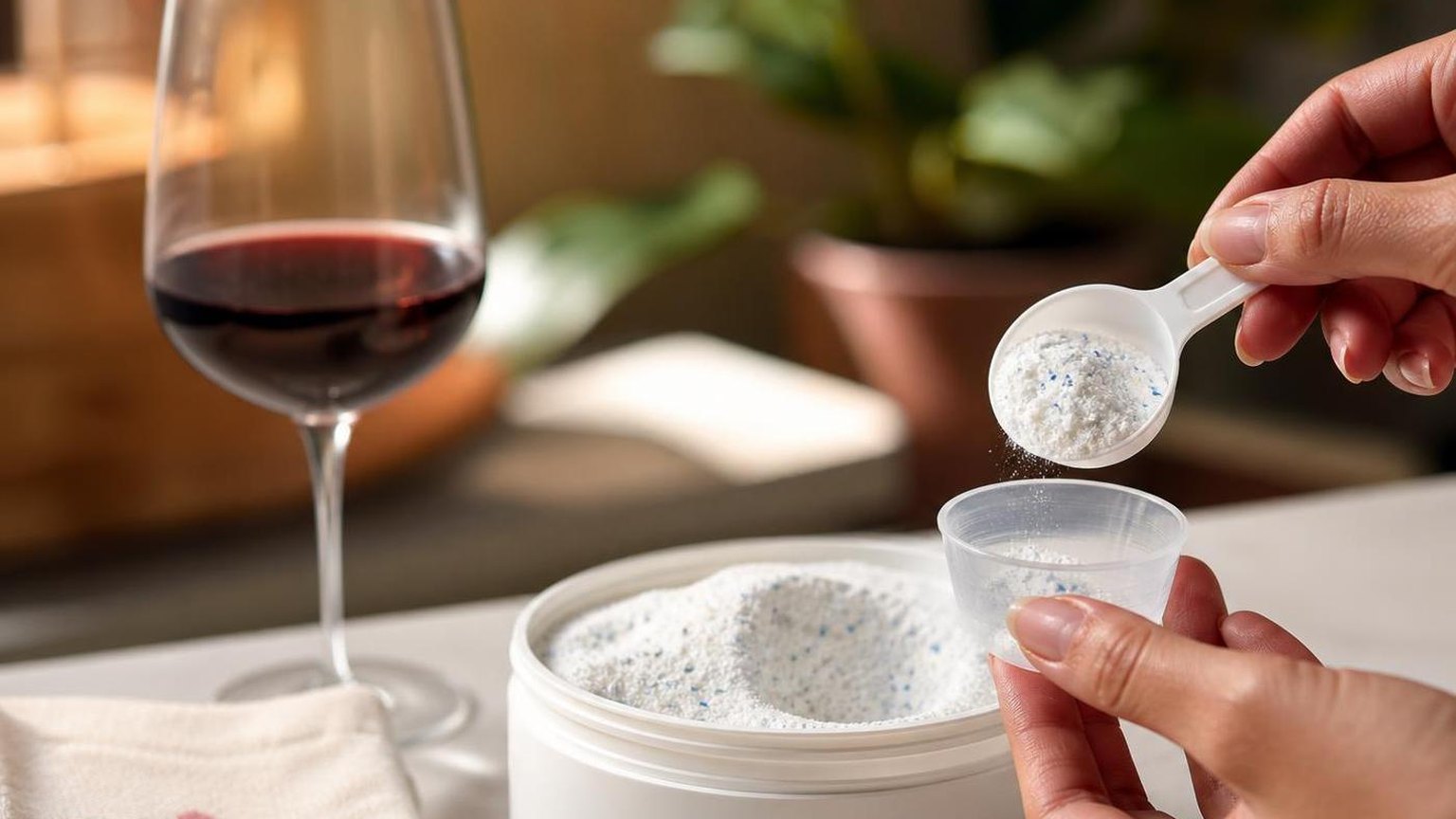
Blot first, then soak washable fabric in OxiClean solution according to the label before laundering; do not use hot drying until the stain is gone.
Can OxiClean remove old or dried red wine stains?
Often, but results are less predictable once tannins and pigments have set into the fibers.
For washable whites or colorfast fabrics, a longer soak—typically up to 6 hours per many OxiClean directions—may help, but heat-set stains from a dryer may not fully disappear.
Is OxiClean safe to use on all fabrics with red wine stains?
No. OxiClean products are generally not recommended for wool, silk, leather, or dry-clean-only items, and they should be patch-tested on colored fabrics for colorfastness.
If the wine stain is on a delicate garment, upholstery, or a valuable textile, use a professional cleaner rather than an oxygen-bleach soak.
Should I use OxiClean with hot water on red wine?
Warm water helps dissolve oxygen bleach, but very hot water can set some stains or damage certain fabrics. A practical approach is to mix OxiClean fully in warm water, then soak at the warmest temperature allowed by the garment care label.
Can OxiClean be used on red wine stains in carpet?
Some OxiClean carpet or versatile stain-removal products may help, but carpet fibers, dyes, and backing adhesives can react differently than laundry fabrics.
Always test an inconspicuous area first, avoid oversaturating the carpet, blot rather than scrub, and rinse residue thoroughly to prevent a lightened spot or sticky patch.
How long should OxiClean sit on a red wine stain before washing?
For washable fabrics, let an OxiClean solution remain on the stain for about 1 to 5 minutes before laundering, and avoid letting it dry on the fabric.
If the color remains after washing, repeat the treatment before machine drying, because dryer heat can permanently set residual wine pigments.
What should you do before applying OxiClean to a red wine spill?
Blot the spill with a clean white cloth or paper towel to remove as much liquid as possible, then rinse from the back of the fabric with cold water to push wine out of the fibers.
This reduces pigment concentration and gives the oxygen-based cleaner more direct contact with the remaining stain.
Related Reading
- What To Mix With Red Wine? What You Need to Know
- How Many Calories In A Bottle Of Red Wine Shiraz? Shocking Truth + 7 Smart Facts You Must Know
- What Is A Good Sweet Red Wine For Beginners?
- Is Red Or White Wine More Popular?
- What Kind Of Red Wine For Mamajuana?
- What Is The Best Red Wine At Walmart?
- Can You Clean With Red Wine Vinegar?
- All Alcohol Guides
- OxiClean Versatile Stain Remover Product Page (2024)
- American Cleaning Institute Stain Removal Guide (2024)
- University of Illinois Extension Stain Solutions: Red Wine (2024)
- University of Georgia Extension Removing Stains from Washable Fabrics (2023)
- Iowa State University Extension Quick ’n Easy Stain Removal (2013)
- PubChem Sodium Percarbonate Compound Summary (2024)
- MedlinePlus Sodium Carbonate Poisoning (2023)