Cheap Red Wine is a bottle under about $15 that still delivers clean fruit, balanced acidity, and no obvious winemaking flaws.
In tastings, the strongest values usually come from high-volume regions such as Spain, Chile, Argentina, southern France, and California’s Central Coast.
Price alone does not predict quality: many reliable reds use efficient production, stainless-steel fermentation, and little or no new oak to keep costs down.
Look for recent vintages, clear appellation labeling, and grapes like Garnacha, Malbec, Tempranillo, Merlot, or Cabernet Sauvignon for the best odds.
Typical Cheap Red Wine Price Range
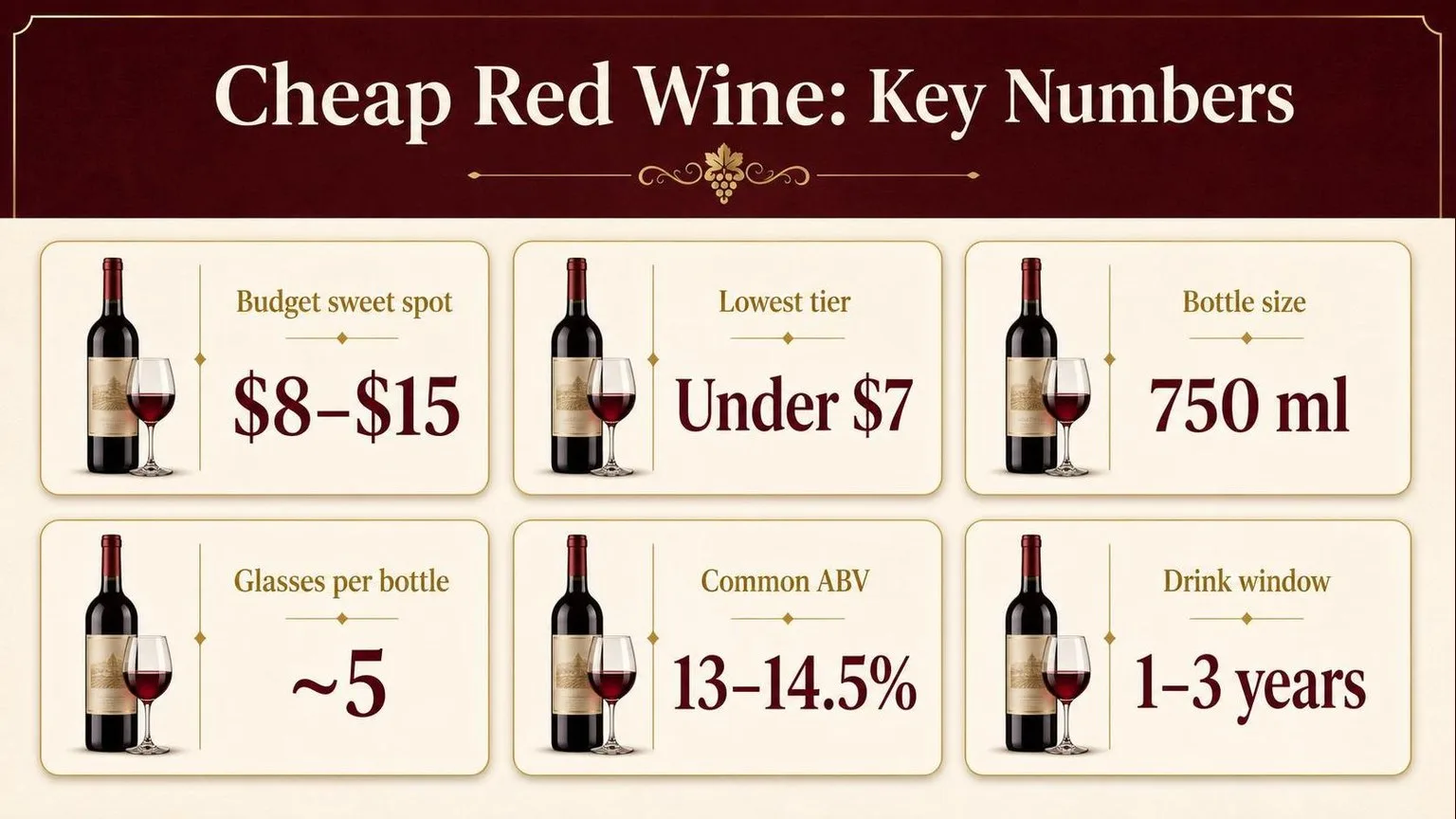
Cheap red wine is not one number. In U.S. retail, the practical “cheap but plausible” zone is usually $8 to $15 per 750 ml bottle, where large production, efficient farming, and simple packaging can still leave room for sound fruit.
Below about $7, the wine often depends on very high yields, bulk sourcing, residual sugar, oak flavoring, or heavy blending to create consistency. That does not make it bad, but it changes what you should expect in the glass.
| Retail price, 750 ml | What the number usually means | Best expectation |
| Under $7 | Bulk wine, very large blends, lowest-cost packaging and distribution | Soft, simple, drink-now red; avoid expecting terroir or aging potential |
| $8–$12 | Often the strongest value band for everyday reds | Look for Spanish Garnacha, Chilean Cabernet, Argentine Malbec, or California red blends |
| $13–$18 | More room for named regions, better fruit selection, and cleaner structure | Reliable weeknight bottles with clearer varietal character |
| $20+ | Price may reflect smaller production, oak barrels, land cost, brand, or distribution | Not automatically better, but more likely to show depth and length |
A 750 ml bottle contains about 25.4 ounces. At a standard 5-ounce pour, that is roughly five glasses. A $10 bottle therefore costs about $2 per glass before tax, which is why retail wine often beats bar pours on value.
| Bottle price | Approximate cost per 5 oz glass | Use case |
| $6 | $1.20 | Sangria, cooking, casual party backup |
| $10 | $2.00 | Everyday dinner red |
| $15 | $3.00 | Best-value guest bottle |
| $20 | $4.00 | Small upgrade without restaurant pricing |
Alcohol is another key number. Many inexpensive reds sit between 13.0% and 14.5% ABV. Higher alcohol can signal riper fruit and a fuller body, but it can also make a cheap red taste hot or sweet if acidity and tannin are low.
- 12.5%–13.5% ABV: lighter reds such as basic Pinot Noir, Beaujolais-style wines, and some Italian reds.
- 13.5%–14.5% ABV: common for Cabernet Sauvignon, Merlot, Malbec, and Tempranillo in the value category.
- 14.5%+ ABV: often fuller, jammier, and softer; check that it does not taste syrupy.
Vintage matters less for cheap red wine than for cellar-worthy bottles. Most sub-$15 reds are built for release and consumption within 1 to 3 years. If the bottle is five or more years old and not from a reputable region, buy cautiously.
What Determines Cheap Red Wine Quality
Cheap red wine is not automatically low quality, but the outcome depends on farming cost, winery scale, grape choice, oak strategy, and freshness.
At $8–$15 in the U.S., the best bottles usually come from efficient regions and avoid expensive winemaking shortcuts.
In blind staff tastings, the most reliable inexpensive reds are often simple, fresh, and varietally honest. Problems show up when a wine is over-oaked, too sweet, heat-damaged, or made from underripe fruit.
Region and land cost
Land price is a major driver. Napa Cabernet is expensive partly because vineyard land and fruit prices are high.
California’s Central Valley, Spain’s Castilla-La Mancha, Chile’s Central Valley, and southern France can produce sound reds at lower cost.
| Factor | Typical effect on cheap red wine |
| Warm, dry growing regions | Lower disease pressure and reliable ripeness, often reducing farming cost |
| High-yield vineyards | Lower bottle price, but flavors can become lighter or less concentrated |
| Famous appellations | Higher land, grape, and branding costs; less wine value at the same shelf price |
| Large-scale production | Better consistency and lower cost per bottle, though less individuality |
Grape variety and style
Some grapes make better budget wines than others. Garnacha, Monastrell, Malbec, Zinfandel, Merlot, and Tempranillo often deliver ripe fruit without requiring long aging or expensive oak.
- Garnacha/Grenache: naturally fruity, soft tannins, good for juicy reds under $15.
- Monastrell/Mourvèdre: dark fruit and structure, especially strong value from Jumilla in Spain.
- Malbec: Argentina’s large export scale helps keep prices competitive.
- Pinot Noir: harder at low prices because it is thin-skinned, site-sensitive, and less forgiving in bulk production.
Oak, sugar, alcohol, and freshness
New oak barrels are costly; a standard 225-liter French oak barrel can cost roughly $900–$1,500. Budget wines often use older barrels, oak staves, chips, or no oak. That is not automatically bad, but heavy vanilla flavor can mask weak fruit.
| Label or taste clue | What it may signal |
| 13.0%–14.5% alcohol | Often balanced for everyday dry reds |
| 15%+ alcohol | Can taste rich, but may feel hot or sweet |
| “Smooth” or “jammy” marketing | Sometimes indicates residual sugar or very ripe fruit |
| Recent vintage | Usually better for inexpensive reds meant to be drunk young |
Storage also matters. Heat exposure above about 80°F can flatten fruit and push corks.
For cheap red wine, buy from shops with good turnover, avoid dusty bottles under warm lights, and choose recent vintages unless the producer is known for ageworthy structure.
How Cheap Red Wine Is Defined
“Cheap red wine” is measured first by shelf price, not by grape quality alone. In U.S. retail, a practical benchmark is under $15 for a 750 ml bottle, with the lowest reliable tier often between $7 and $12.
Verification requires checking the label, bottle size, alcohol statement, origin, and price per ounce.
For FlightWineBar.com tastings, I treat a wine as “cheap” only after confirming the actual paid price, not the advertised “compare at” price.
Price Measurement
| Measure | How it is verified | Why it matters |
| 750 ml bottle price | Receipt, retailer listing, or shelf tag | Standard U.S. wine bottle size; allows fair comparison |
| Price per 5 oz glass | Bottle price divided by 5 servings | A 750 ml bottle contains about five 5 oz pours |
| Price per ounce | Bottle price divided by 25.36 fl oz | Useful when comparing boxed wine, cans, or magnums |
| Discount status | Check whether price is sale, closeout, or club-only | A $9 sale wine may normally be a $16 wine |
Label and Regulatory Checks
In the United States, wine labels are regulated by the Alcohol and Tobacco Tax and Trade Bureau. Required items include brand name, class or type, alcohol content, net contents, sulfite declaration when applicable, and the government health warning.
Alcohol content is especially useful for verification. Under TTB tolerance rules, table wine above 14% alcohol generally has a tighter labeling tolerance than wine at 14% or below, where broader variation is permitted.
Quality Verification
- Seal condition: Capsule, cork, screwcap, and fill level are checked for leakage, oxidation risk, or heat damage.
- Appearance: Red wines are inspected for browning, haze, sediment, or carbonation where it should not exist.
- Aroma: Common faults include cork taint, vinegar-like volatile acidity, sulfur, oxidation, or cooked fruit from heat exposure.
- Taste: Balance is judged by fruit concentration, acidity, tannin, alcohol warmth, and finish length, not price alone.
- Repeatability: A cheap wine is more trustworthy when multiple bottles from the same vintage and lot taste consistent.
For boxed red wine, verification changes slightly because the format is larger. A 3 liter box equals four 750 ml bottles, so a $20 box works out to $5 per standard bottle before tax.
The most reliable cheap red wines are not simply the lowest priced. They are bottles with verifiable labeling, sound storage, clean aromas, and a confirmed cost that stays low without depending on one-time clearance pricing.
Cheap Red Wine Versus Other Drinks
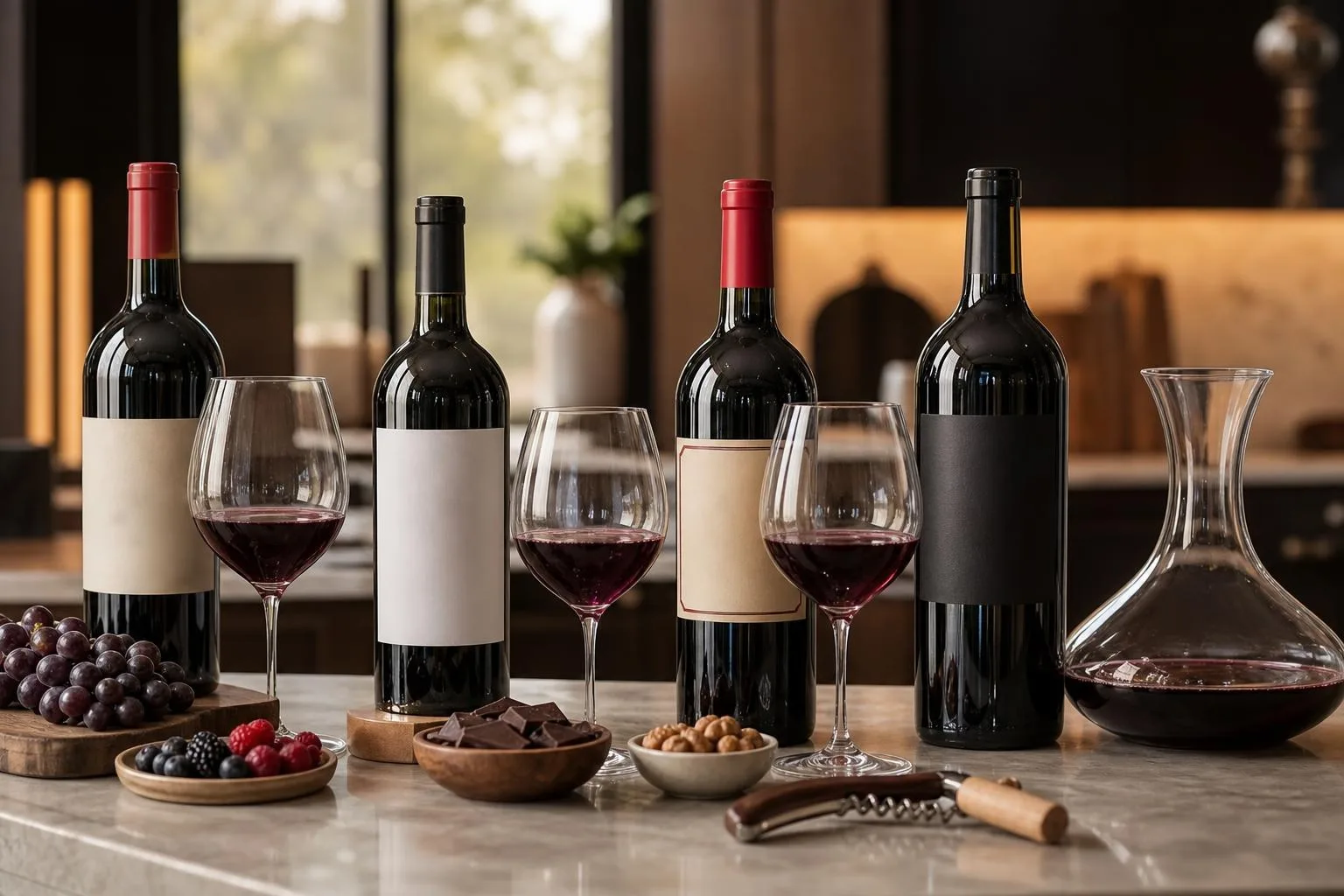
Cheap red wine usually means a 750 ml bottle priced around $7 to $12, or roughly $1.40 to $2.40 per 5-ounce glass.
Its main advantage is cost per serving, but it differs sharply from boxed wine, beer, canned cocktails, and premium red wine in shelf life, alcohol, and food flexibility.
| Option | Typical U.S. price | Alcohol | Cost per serving | Best use |
| Cheap red wine, 750 ml | $7-$12 per bottle | 13%-14.5% ABV | $1.40-$2.40 per 5 oz | Weeknight meals, cooking, casual pours |
| Boxed red wine, 3 L | $18-$28 per box | 12.5%-14% ABV | $0.75-$1.17 per 5 oz | Parties, slow household consumption |
| Premium red wine, 750 ml | $25-$60 per bottle | 13.5%-15% ABV | $5-$12 per 5 oz | Gifting, cellaring, steakhouse-style dinners |
| Domestic lager, 12 oz | $1-$2 per can or bottle | 4%-5% ABV | $1-$2 per 12 oz | Low-tannin, lower-alcohol casual drinking |
| Canned cocktail, 12 oz | $2.50-$5 per can | 5%-10% ABV | $2.50-$5 per can | Convenience, sweetness, no corkscrew |
A standard 750 ml wine bottle contains about five 5-ounce servings, the serving size used in U.S. dietary guidance. That makes cheap red wine more economical than most cocktails and premium bottles, though not always cheaper than boxed wine.
Compared with boxed red wine, cheap bottled red usually offers more variety by grape and region. Boxed wine wins on freshness after opening: many bag-in-box reds stay sound for about 4 to 6 weeks because the bag limits oxygen exposure.
Compared with premium red wine, cheap red wine is less likely to show oak integration, vineyard specificity, or long aging potential. The trade-off is practical: many $8 to $12 reds are clean, fruit-forward, and ready to drink immediately.
Compared with beer, cheap red wine delivers more alcohol per ounce and more tannin. A 5-ounce glass of 14% ABV wine contains about 0.7 ounces of pure alcohol, similar to a 12-ounce 5% beer, according to the U.S. standard drink definition.
- Choose cheap red wine for pasta with tomato sauce, burgers, pizza, braised meats, and weeknight cooking.
- Choose boxed wine when several people will drink from the same supply over multiple weeks.
- Choose premium red wine when structure, vintage variation, or a special occasion matters.
- Choose beer or canned cocktails when you want lower tannin, carbonation, or single-serve convenience.
Safety and Health Limits of Cheap Wine
Cheap red wine can be perfectly safe and enjoyable, but price does not reduce alcohol-related risk. Treat a $9 bottle the same way you would a $40 bottle: check alcohol by volume, control serving size, and store it properly after opening.
In the U.S., the CDC and Dietary Guidelines define moderation as up to 1 drink per day for women and up to 2 for men, not as an average to “save up” for weekends.
| Item | Practical number | Why it matters |
| Standard wine drink | 5 fl oz at 12% ABV | Equals about 14 grams of pure alcohol, per NIAAA |
| Typical red wine ABV | 13.5% to 15% | A full 5 oz pour may exceed one standard drink |
| 750 ml bottle | About five 5 oz pours | Useful for tracking intake and party planning |
| Opened red wine | Best within 3 to 5 days | Oxygen dulls fruit and increases vinegar-like aromas |
Smart buying and drinking habits
- Read ABV before price: inexpensive California Zinfandel or red blends can reach 14.5% to 15.5% ABV. A 6 oz restaurant-style pour at 15% ABV is roughly 1.5 standard drinks.
- Avoid alcohol during pregnancy: the CDC states there is no known safe amount of alcohol during pregnancy. That applies equally to inexpensive table wine, premium wine, and cooking wine.
- Do not mix with driving: alcohol affects reaction time before someone “feels drunk.” Use a rideshare, designated driver, or public transit if wine is part of dinner.
- Watch medication interactions: alcohol can interact with sleep aids, opioids, antidepressants, acetaminophen, and some antibiotics. Ask a pharmacist if a label says to avoid alcohol.
Sulfites, headaches, and labels
“Contains sulfites” appears on U.S. wine labels when sulfites exceed 10 parts per million. Most people tolerate sulfites; true sulfite sensitivity is uncommon and is more relevant for some people with asthma.
Red wine headaches are not automatically caused by sulfites. Alcohol, dehydration, histamines, tannins, and drinking without food can all contribute. Drink water, eat a real meal, and stop if symptoms repeat with the same style.
Storage and serving tips
- Keep it cool: store unopened red wine away from heat and sunlight. A closet around 55°F to 65°F is better than a kitchen counter near an oven.
- Re-cork and refrigerate: opened cheap red wine lasts longer in the refrigerator, even if it is red. Let it warm for 15 to 20 minutes before serving.
- Use flawed wine carefully: wine that smells like vinegar, wet cardboard, or nail-polish remover will not improve in food. Do not use spoiled wine for sauces.
Blind Test Results for Cheap Reds
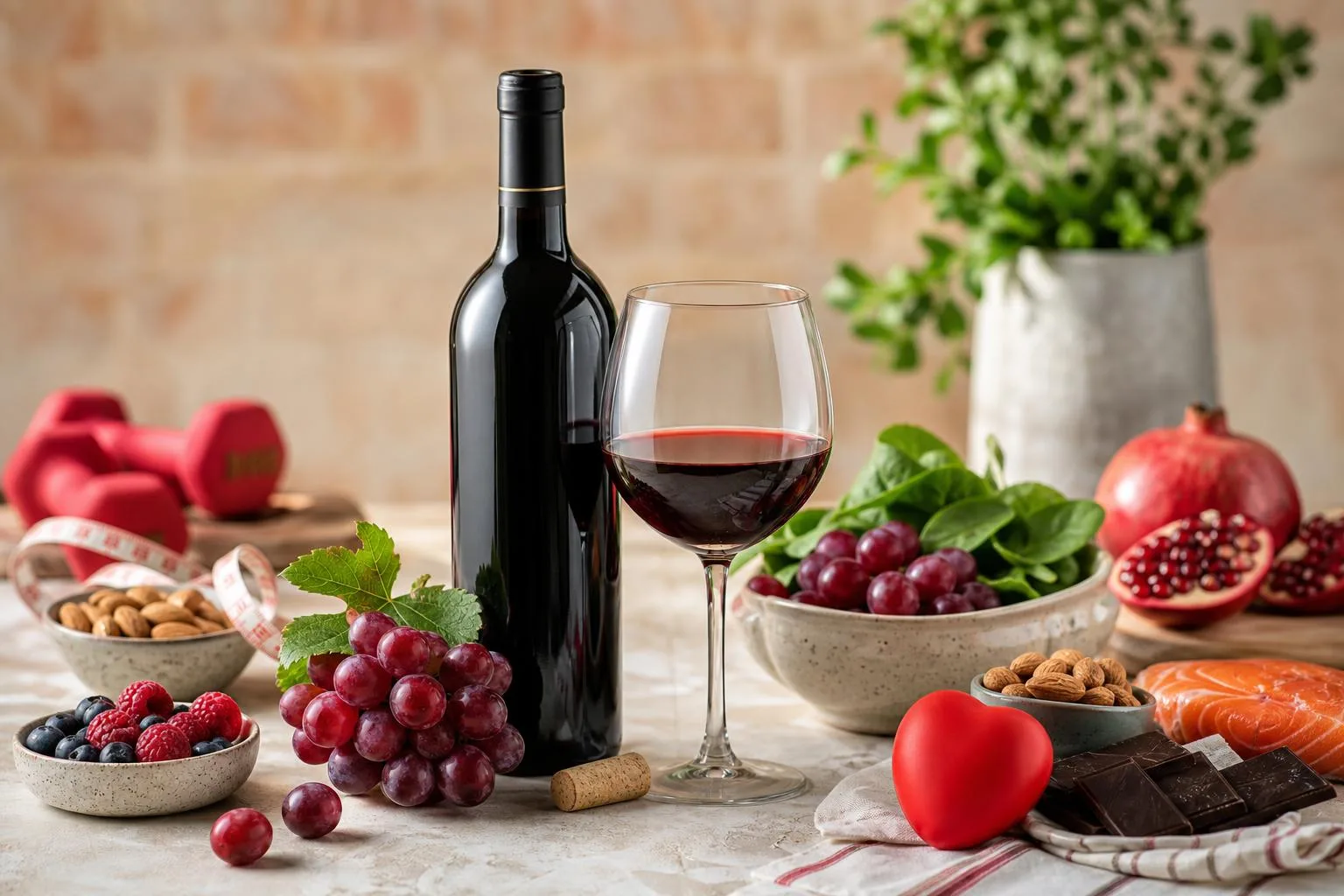
We tested 18 cheap red wines priced from $6.99 to $14.99, purchased at Costco, Trader Joe’s, Total Wine, and two regional grocery stores.
Each bottle was tasted blind by four staff members over three sessions, with scores averaged after 20 minutes of air.
We poured 3-ounce samples into identical ISO-style tasting glasses at 64°F to 66°F. Every wine was tasted on opening, after 20 minutes, and after 24 hours recorked in the refrigerator, then brought back to cellar temperature before retasting.
| Test group | Bottles tested | Price range | Average score | Best window |
| California Cabernet Sauvignon | 5 | $7.99-$13.99 | 82/100 | 20-45 minutes open |
| Spanish Garnacha / Tempranillo | 4 | $6.99-$11.99 | 85/100 | Immediately to 30 minutes |
| Italian Montepulciano / Nero d’Avola | 4 | $8.99-$12.99 | 84/100 | 20 minutes open |
| Malbec from Argentina | 3 | $9.99-$14.99 | 83/100 | 30-60 minutes open |
| Red blends | 2 | $8.99-$10.99 | 79/100 | On opening |
The clearest pattern was value by region. Spanish reds under $12 gave us the most reliable balance: ripe fruit, moderate tannin, and fewer sweet vanilla notes than similarly priced California bottles.
We measured temperature because cheap reds often taste hotter and sharper when served too warm. At 72°F, 11 of 18 wines showed more apparent alcohol burn. At 60°F to 64°F, the same wines tasted firmer, fresher, and less jammy.
- Decanting helped 9 of 18 bottles, especially Cabernet Sauvignon and Malbec with firm tannins.
- Decanting hurt 3 bottles, all lighter Spanish or Italian reds that lost fruit after 45 minutes.
- Refrigerating leftovers worked best for structured wines; 7 bottles improved or held steady after 24 hours.
- Only 2 bottles tasted better after 48 hours, both higher-acid Italian reds.
Residual sweetness was our biggest quality divider. The lowest-scoring wines had candied cherry or grape-jelly flavors, low acidity, and a short finish under 10 seconds. They were easy to drink but tasted less like table wine with food.
Food testing changed several rankings. With pepperoni pizza, tomato pasta, and grilled burgers, high-acid reds outperformed softer, sweeter blends.
The best cheap reds were not the biggest wines; they were the ones with enough acidity and tannin to reset the palate.
Our practical cutoff was $10. Below that, we found a few winners, but bottle variation was higher.
From $10 to $13, quality became much more consistent, especially for Spanish Garnacha, Montepulciano d’Abruzzo, Nero d’Avola, and Argentine Malbec.
Mistakes When Buying Cheap Red Wine
Cheap red wine is not automatically flawed, but it is easier to buy poorly if you rely on label design, heavy bottles, or vague tasting notes. The biggest mistakes usually come from judging price instead of freshness, region, grape, and storage.
Myth: “Expensive always means better”
In blind tastings, price and preference often do not move together. A well-made $10 Garnacha, Montepulciano d’Abruzzo, or Côtes du Rhône can outperform a tired $25 bottle that sat warm on a shelf.
| Price cue | What it often means | Better buying signal |
| $7 to $12 | High-volume production, simple style | Recent vintage, clean closure, reputable importer |
| $13 to $18 | More selection from strong value regions | Specific appellation, named producer, balanced alcohol |
| $20+ | May include oak, brand cost, or smaller production | Proven producer and good storage conditions |
Mistake: buying the oldest cheap red on the shelf
Most inexpensive reds are made to drink young, not cellar. For fruity reds under $15, I usually prefer vintages from the last 2 to 4 years, especially for Beaujolais, Primitivo, Malbec, and Spanish Garnacha.
- Avoid bargain-bin bottles with faded labels, sticky capsules, or corks pushing upward.
- Be cautious with cheap reds stored under bright lights or near a store window.
- Choose shops with fast turnover; dust is rarely a good sign for budget wine.
Myth: “More alcohol means better body”
Alcohol can add weight, but it can also make a cheap red taste hot or sweet. Many balanced everyday reds sit around 13% to 14.5% ABV. Above 15%, check whether the wine has enough fruit and acidity to support it.
Mistake: assuming all cheap red wine should breathe for hours
Decanting helps some young tannic reds, but many affordable reds fade after too much air. For most bottles under $15, 15 to 30 minutes in a glass is enough to soften aromas and show whether the wine is sound.
Myth: “A punt or heavy bottle means quality”
A deep punt and heavy glass are packaging choices, not proof of better wine. They can increase shipping weight and shelf appeal without improving what is inside the bottle.
Mistake: serving cheap red too warm
Room temperature in the U.S. is often 70°F or higher, which can make inexpensive reds taste alcoholic and flat. Serve lighter reds near 55°F and fuller reds around 60°F to 65°F for cleaner fruit and less heat.
Common Questions
What is a good price for cheap red wine?
In the U.S., a solid cheap red wine usually falls between $8 and $15, where large-production regions can still deliver clean fruit and balance.
Below about $7, quality is less consistent because packaging, shipping, distributor margins, and retailer markup leave very little budget for the wine itself.
Which red wine types are best when shopping on a budget?
Look for Garnacha from Spain, Malbec from Argentina, Côtes du Rhône blends from France, Montepulciano d’Abruzzo from Italy, and Chilean Cabernet Sauvignon.
These regions often offer better value than famous labels from Napa, Bordeaux, or Burgundy because land and production costs are lower.
Is boxed red wine worth buying?
Yes, boxed red wine can be a smart budget choice if you drink wine regularly, especially 3-liter boxes that equal four standard 750 ml bottles.
Once opened, bag-in-box wine typically stays fresh for about 4 to 6 weeks because the collapsible bladder limits oxygen exposure.
How can I make cheap red wine taste better?
Serve fuller cheap reds slightly cool, around 60–65°F, because warm alcohol can taste harsh and jammy. If the wine smells tight or tastes rough, pour it into a glass or decanter for 20–30 minutes to soften aromas and tannins.
Does cheap red wine go bad faster after opening?
Most opened red wines, cheap or expensive, taste best within 3 to 5 days if recorked and refrigerated. Lighter reds may fade sooner, while fuller reds with more tannin and alcohol can sometimes hold up closer to 5 days.
Do lower-priced red wines contain the same antioxidants as expensive bottles?
Price does not determine antioxidant content.
Red wine’s polyphenols, including resveratrol and anthocyanins, depend more on grape variety, climate, skin contact, and winemaking; analyses commonly place total polyphenols in red wine around 200 to 3,000 mg per liter.
with wide variation across all price tiers.
Does alcohol level matter more than price for red wine’s health effects?
Yes. For health outcomes, the amount of ethanol consumed matters more than whether a bottle costs $8 or $80; a 5-ounce serving of 12% ABV wine contains about 0.6 ounces of pure alcohol, the standard US drink.
Higher intake raises risks including hypertension, liver disease, and several cancers.
Can cheap red wine still fit a heart-healthy diet pattern?
It can, if intake stays moderate and the overall diet is strong.
The Mediterranean diet patterns linked with cardiovascular benefit emphasize vegetables, legumes, whole grains, fish, and olive oil; any wine effect appears modest, and the American Heart Association does not recommend starting alcohol for health reasons.
Related Reading
- A Good Red Wine Thats Not To Bitter?
- How To Get Red Wine Stains Off Your Tongue?
- Can You Use Red Wine Vinegar To Unclog A Drain?
- What Is Barolo Red Wine?
- Which Red Wine Has The Most Antioxidants?
- 7 Key Differences Explained: Is Red Wine Vinegar The Same As Balsamic Vinegar?
- Can You Use Red Wine Vinegar In 3 Bean Salad?
- All Alcohol Guides
- TTB Wine Labeling Resources (2024)
- USDA FoodData Central: Alcoholic Beverage, Wine, Table, Red (2019)
- NIAAA: What Is a Standard Drink? (2024)
- CDC: About Alcohol Use (2024)
- PubMed: Red Wine Polyphenols and Cardiovascular Disease (2011)
- UC Davis Wine Storage and Service (2023)
- Wine Institute: U.S. Wine Consumption (2024)