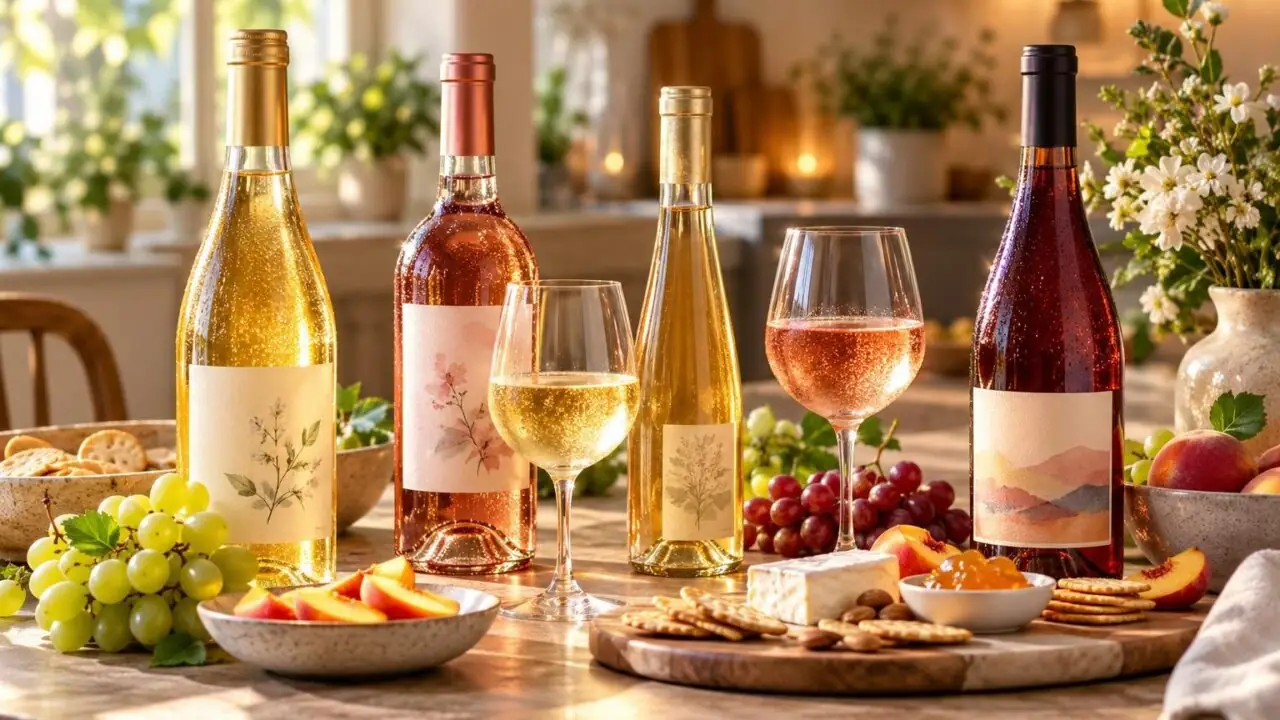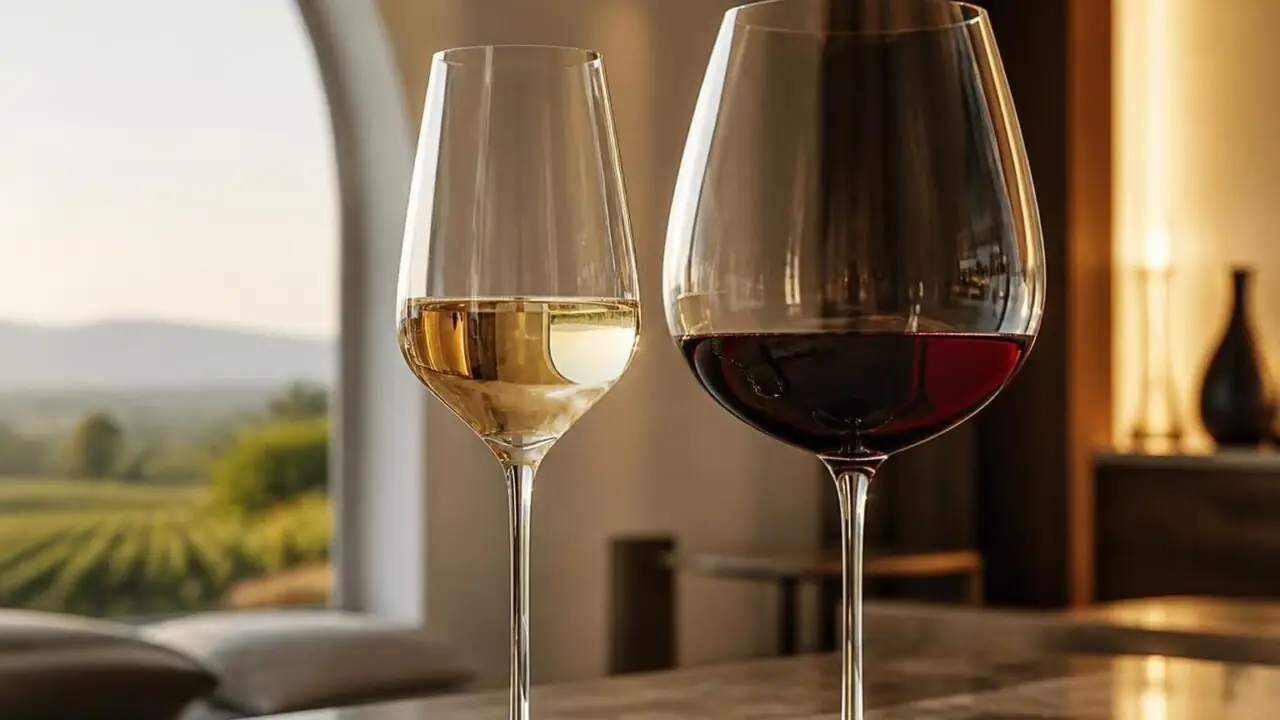
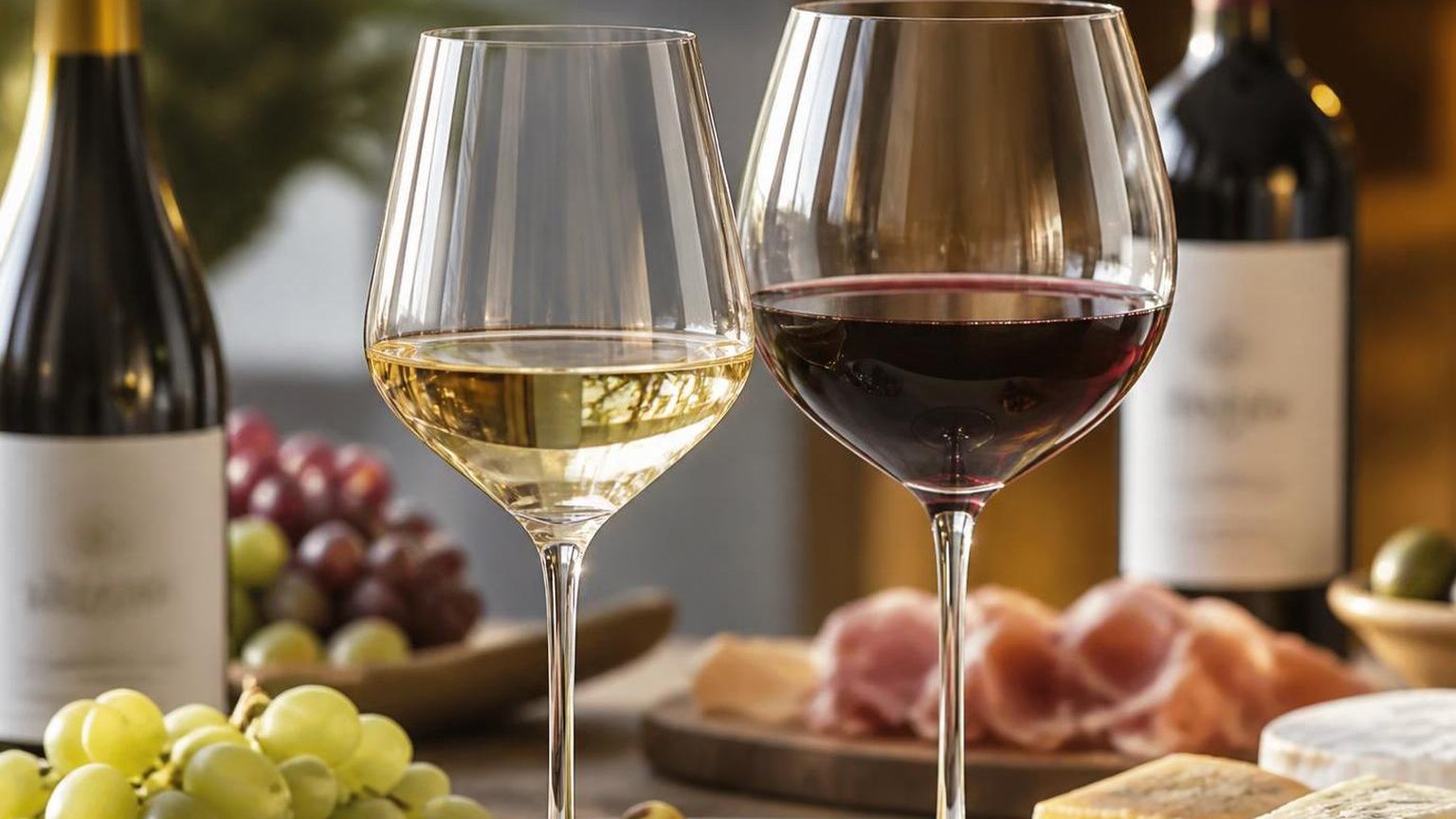
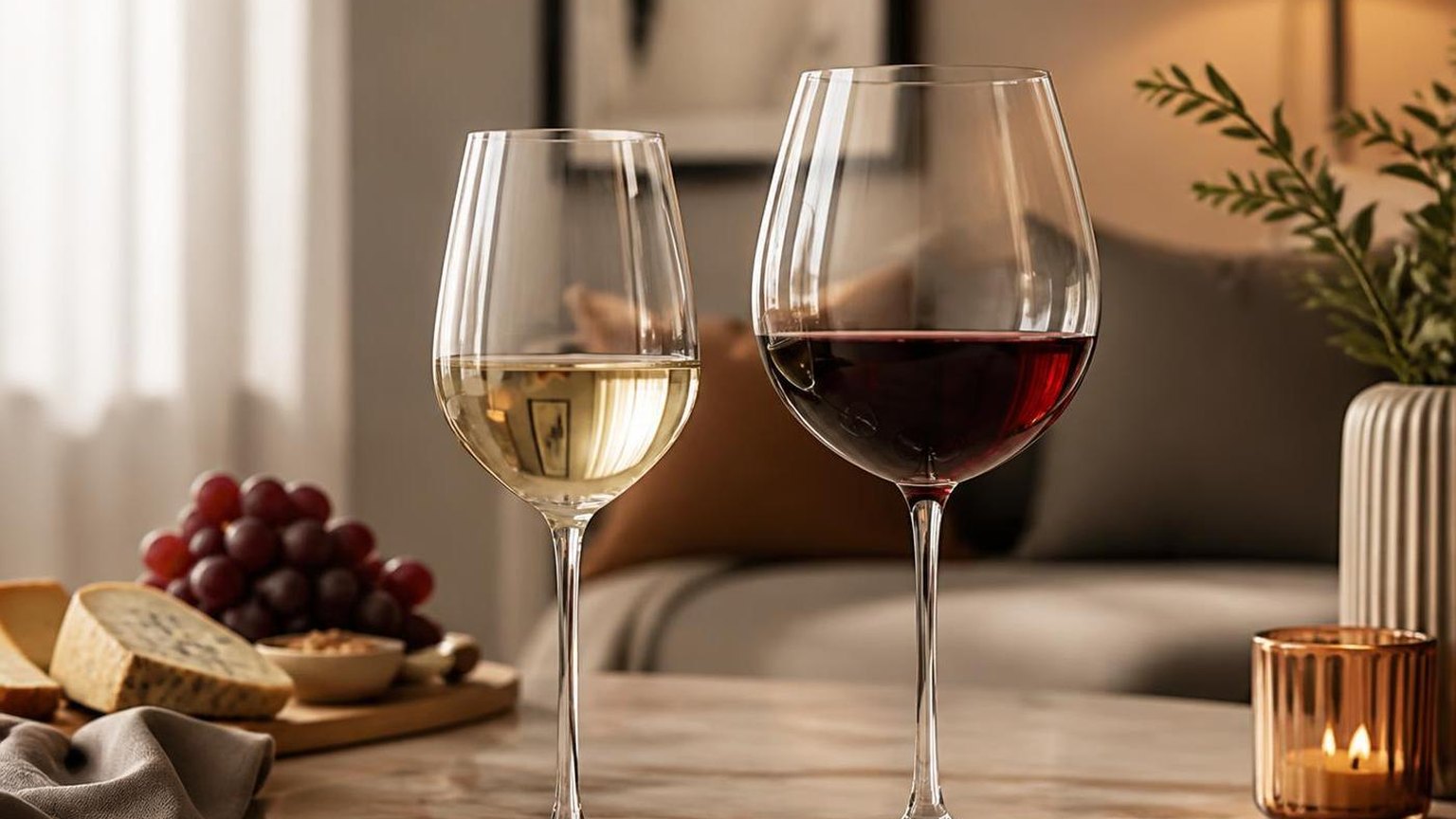
The difference between white and red wine glasses is that white-wine glasses usually have smaller, narrower bowls, while red-wine glasses have larger, wider bowls to expose more wine surface to air.
That shape changes aroma concentration, temperature control, and how the wine lands on your palate.
In service, I use narrower bowls for Sauvignon Blanc or Riesling to preserve chill and focus acidity, and broader bowls for Cabernet Sauvignon or Pinot Noir to open aromatics and soften tannins.
Glass shape will not fix a flawed bottle, but it can make a noticeable difference with well-made wine. Understanding the design helps you choose the right stemware without overbuying specialized glasses.
Why Glass Shape Changes Wine
A standard restaurant pour is 5 ounces, but the glass around that pour changes how fast aromas collect, how quickly wine warms, and how much oxygen reaches the surface.
The practical difference is not color alone; it is bowl volume, opening size, and serving temperature.
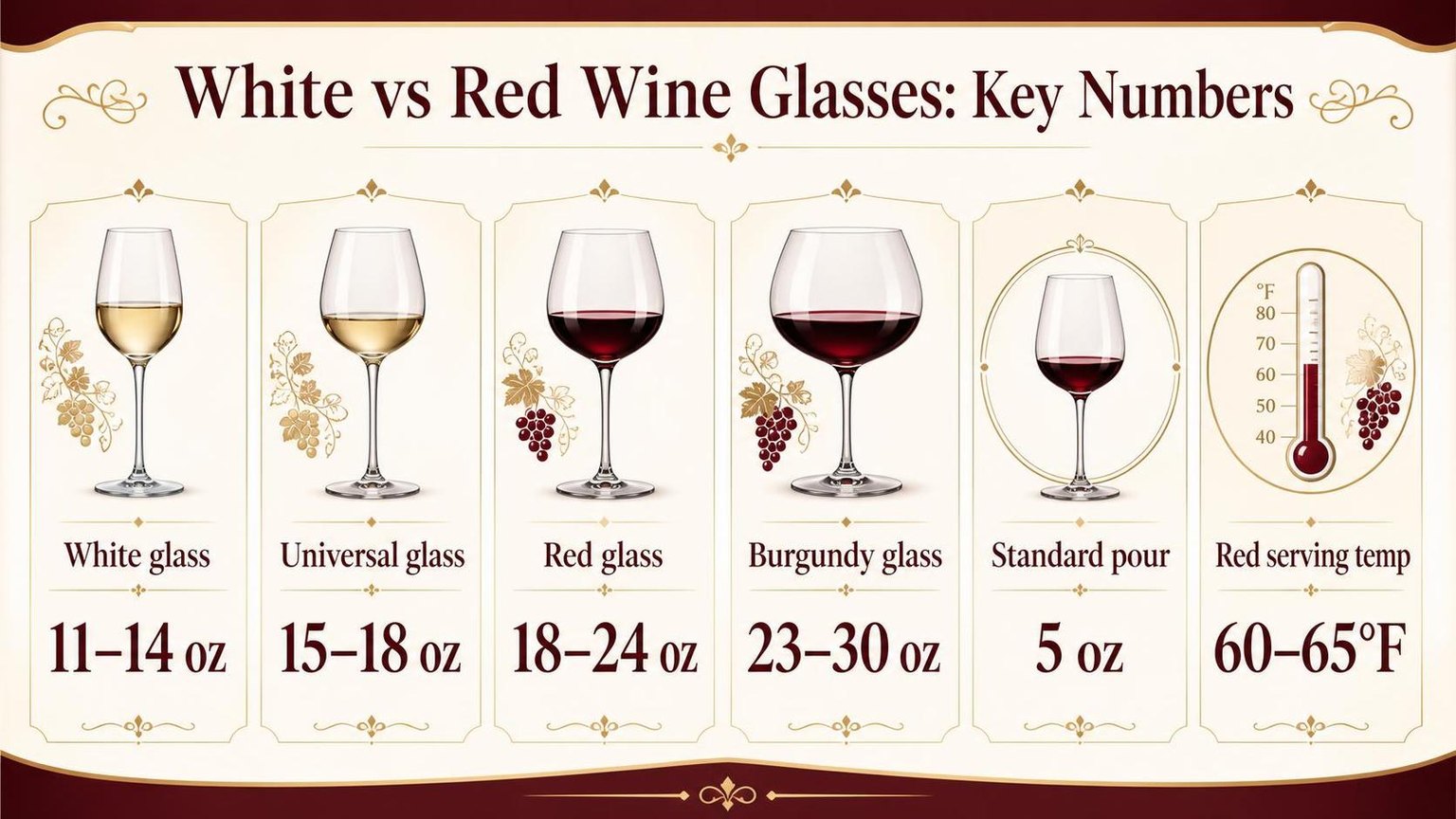
| Glass type | Typical capacity | Best working pour | Why it matters |
| White wine glass | 11–14 ounces | 4–5 ounces | Smaller bowl preserves chill and concentrates delicate fruit, floral, and mineral aromas. |
| Universal wine glass | 15–18 ounces | 5 ounces | Works for most whites, rosés, lighter reds, and sparkling wines when storage space is limited. |
| Red wine glass | 18–24 ounces | 5–6 ounces | Larger bowl increases air contact, helping tannins soften and aromatic compounds open up. |
| Burgundy-style red glass | 23–30 ounces | 5–6 ounces | Very wide bowl supports aromatic reds such as Pinot Noir and Nebbiolo, where perfume matters most. |
The 5-ounce pour is the key reference point in the United States. The National Institute on Alcohol Abuse and Alcoholism defines one standard drink of table wine as 5 ounces at about 12% alcohol by volume.
In a 12-ounce white wine glass, a 5-ounce pour fills about 42% of the glass. In a 22-ounce red wine glass, the same pour fills about 23%. That extra empty space is intentional: it gives room to swirl without flooding the rim.
| Wine style | Common serving temperature | Glass effect |
| Sparkling wine | 40–50°F | Narrower glasses help retain bubbles and emphasize acidity. |
| Light white wine | 45–50°F | Smaller bowls slow warming in the hand and room. |
| Full-bodied white wine | 50–55°F | Slightly wider bowls suit Chardonnay, Viognier, and white Rhône blends. |
| Light red wine | 55–60°F | Moderate bowl size highlights fruit without exaggerating alcohol. |
| Full-bodied red wine | 60–65°F | Larger bowls help Cabernet Sauvignon, Syrah, and Merlot release darker fruit and savory aromas. |
Rim diameter also matters. Many white wine glasses open around 2.25–2.75 inches, while red wine glasses often open around 2.75–3.5 inches. A narrower rim focuses aromas; a wider rim spreads them and exposes more surface area to oxygen.
- Choose smaller for crisp whites: Sauvignon Blanc, Pinot Grigio, Albariño, and dry Riesling benefit from colder service and tighter aroma focus.
- Choose larger for structured reds: Cabernet Sauvignon, Bordeaux blends, Syrah, and Barolo need bowl space for swirling and aeration.
- Do not overfill: filling any still-wine glass above one-third full reduces swirl space and makes aroma assessment harder.
When Glass Differences Matter Most
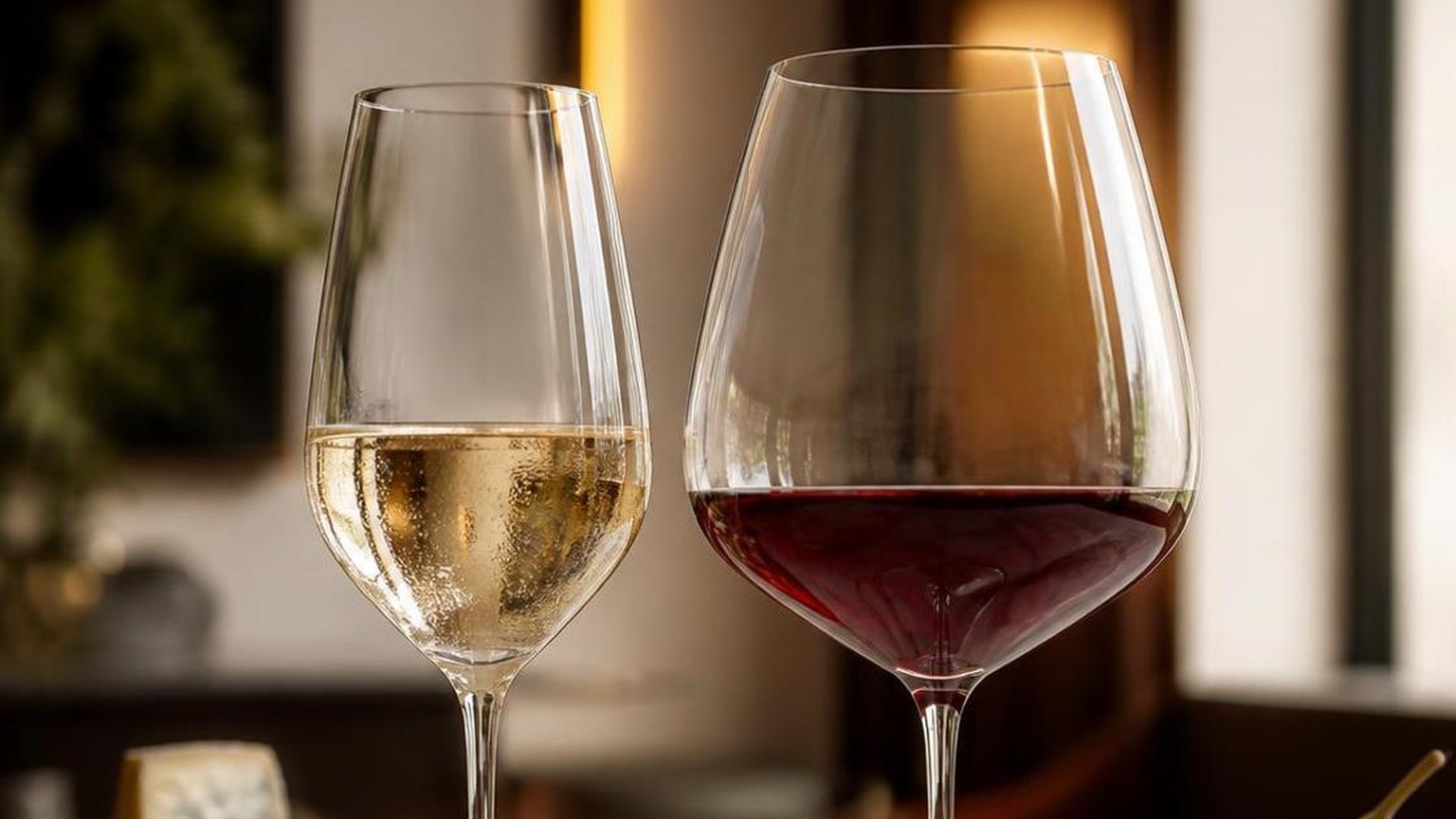
The difference between white and red wine glasses matters most when it changes temperature, aroma concentration, and oxygen exposure.
In practical tasting, bowl volume, rim diameter, and pour size often influence what you smell before they change what you taste.
Red wines usually benefit from a larger bowl because tannins, oak-derived aromas, and fermentation esters open up with air. White wines are often served colder, so a smaller bowl and narrower opening help preserve chill and focus delicate aromas.
Bowl Size and Oxygen Exposure
A larger red wine glass increases the wine’s surface area, which speeds aroma release and softens the perception of tannin. This is why Cabernet Sauvignon, Syrah, and Nebbiolo are commonly served in glasses around 18 to 28 ounces.
White wine glasses are typically smaller, often 10 to 16 ounces, because less headspace is needed. For Sauvignon Blanc, Riesling, Pinot Grigio, and unoaked Chardonnay, too much air can make fresh citrus, floral, and mineral notes seem flatter.
| Glass Type | Typical Capacity | Common Pour | Main Effect |
| White wine glass | 10–16 oz | 5 oz | Preserves cooler temperature and concentrates lighter aromas |
| Red wine glass | 18–28 oz | 5 oz | Provides more headspace and oxygen contact |
| Universal glass | 13–18 oz | 5 oz | Balanced option for mixed wine service |
Rim Diameter and Aroma Focus
A narrower rim traps volatile aromas near the nose. That helps with high-acid whites and sparkling wines, where citrus, green apple, stone fruit, and floral notes are easy to lose in an oversized bowl.
A wider rim lets more alcohol and aroma compounds escape at once. That can benefit full-bodied reds, but it can make high-alcohol wines feel hotter, especially when the wine is served above cellar temperature.
Serving Temperature
Temperature is one of the biggest reasons glass shape matters. The Court of Master Sommeliers and major wine service texts commonly place most whites around 45–55°F and most reds around 55–65°F.
| Wine Style | Useful Serving Range | Glass Implication |
| Light white | 45–50°F | Smaller bowl slows warming |
| Full-bodied white | 50–55°F | Moderate bowl supports texture and aroma |
| Light red | 55–60°F | Medium bowl prevents alcohol from dominating |
| Full-bodied red | 60–65°F | Larger bowl helps tannin and bouquet open |
Wine Style Matters More Than Color Alone
- Oaked Chardonnay: Often performs better in a larger white or smaller red glass because lees, butter, vanilla, and toast aromas need room.
- Pinot Noir: Benefits from a broad bowl, even though it is lighter-bodied, because its red-fruit and earthy aromas are highly aromatic.
- Aromatic whites: Riesling, Gewürztraminer, and Muscat usually show best in narrower glasses that preserve perfume.
- Young tannic reds: Cabernet Sauvignon and Barolo need more air, but a proper decant can matter more than the glass.
How Wine Glass Differences Are Verified
The difference between white and red wine glasses is verified by measuring geometry, capacity, and rim behavior, not by color or marketing name.
In practice, the most useful checks are bowl volume, bowl width, rim diameter, and the ratio between the widest point and the opening.
Manufacturers usually publish capacity in ounces or milliliters, but the glass is not meant to be filled to the top.
For tasting, ISO 3591:1977 specifies a 215 ml tasting glass, typically filled with 50 ml of wine, which shows why service volume and total capacity must be recorded separately.
| Measurement | Typical white wine glass | Typical red wine glass | How to verify |
| Total capacity | 350–450 ml, about 12–15 oz | 500–700 ml, about 17–24 oz | Fill with water to the rim using a graduated cylinder |
| Usual serving volume | 120–150 ml, about 4–5 oz | 150 ml, about 5 oz | Measure pour volume before evaluating aroma space |
| Bowl width at widest point | 70–80 mm | 85–105 mm | Use digital calipers across the widest outside diameter |
| Rim diameter | 50–60 mm | 60–75 mm | Measure the opening across the top edge |
| Rim-to-bowl ratio | Often 0.70–0.80 | Often 0.65–0.75 | Divide rim diameter by widest bowl diameter |
A white wine glass is verified by its smaller bowl and narrower vapor space, which help preserve chilled temperature and concentrate delicate aromas.
A red wine glass is verified by a larger bowl, allowing more headspace and surface area for oxygen exposure.
- Use water for capacity: Place the empty glass on a level surface, fill to the absolute rim, then record the milliliters used. One US fluid ounce equals 29.57 ml.
- Use calipers for shape: Measure the widest bowl point, then the rim. A visibly flared or oversized bowl usually indicates a red wine style.
- Weigh for glass mass: A kitchen scale can confirm practical handling weight. Many machine-made wine glasses fall around 120–220 g, while heavier casual stems may exceed 250 g.
- Check the pour line: A proper 150 ml pour should sit below the widest part of most red glasses and near the lower bowl of many white glasses.
Verification is strongest when capacity and diameter are measured together.
A 600 ml glass with a 95 mm bowl and 70 mm rim functions as a red wine glass, even if sold as “universal.” A 400 ml glass with a 55 mm rim is better suited to white wine service.
Red and White Versus Other Glasses
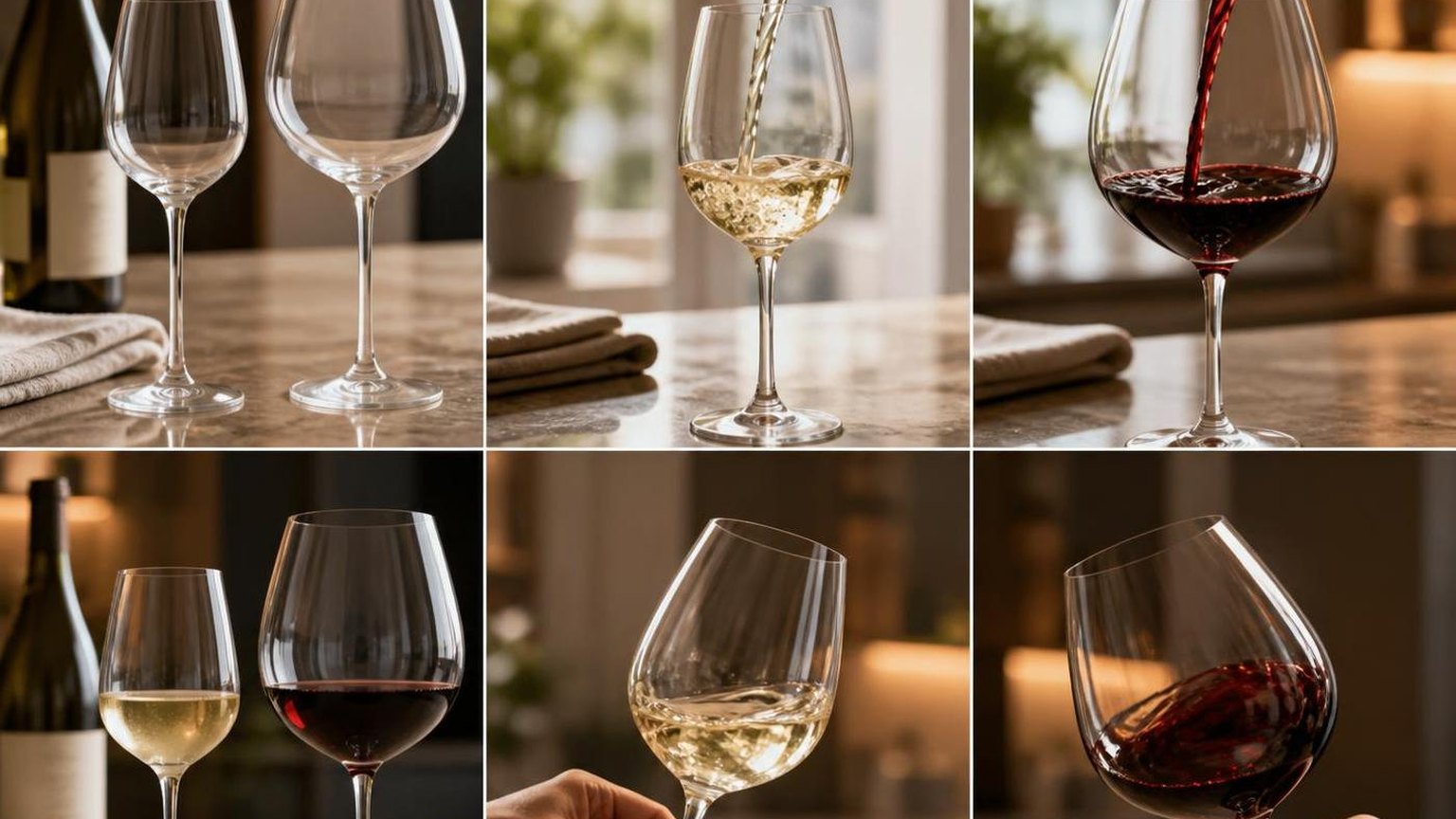
Red and white wine glasses differ mainly in bowl volume, rim diameter, and how much oxygen reaches the wine.
Compared with universal, stemless, sparkling, or dessert glasses, those design choices change aroma intensity, serving temperature, and perceived tannin.
| Glass type | Typical capacity | Best use | Main tradeoff |
| Red wine glass | 18–30 oz | Cabernet Sauvignon, Merlot, Syrah, Pinot Noir | Large bowl improves aeration but warms wine faster |
| White wine glass | 10–16 oz | Sauvignon Blanc, Chardonnay, Riesling, Pinot Grigio | Smaller bowl preserves chill but gives less aeration |
| Universal wine glass | 14–20 oz | Mixed red, white, and rosé service | Convenient, but less optimized for bold reds or aromatic whites |
| Stemless glass | 12–20 oz | Casual red, white, or rosé | Hand contact raises temperature more quickly |
| Sparkling wine flute | 6–10 oz | Champagne, Cava, Prosecco | Preserves bubbles but limits aroma compared with tulip shapes |
| Dessert wine glass | 3–6 oz | Port, Sauternes, Tokaji, ice wine | Correct for small pours, too concentrated for table wines |
Universal glasses
A universal glass is the strongest alternative if you want one shape for everything. A good version usually holds about 16 ounces, with enough bowl width for lighter reds and enough taper to concentrate white wine aromatics.
The compromise is precision. A structured Cabernet benefits from the extra surface area of a 22-ounce red glass, while a high-acid Sauvignon Blanc often smells sharper and stays cooler in a narrower 12-ounce white glass.
Stemless glasses
Stemless glasses are durable and easy to store, but they remove the thermal buffer of the stem. For whites served around 45–50°F, direct hand contact can noticeably shorten the ideal drinking window.
They work best for informal pours, outdoor settings, or wines where exact temperature is less critical. For aromatic whites or tannic reds, a stemmed glass gives better control and clearer aroma separation.
Sparkling and dessert glasses
Sparkling wine is the major exception to the red-versus-white comparison. Traditional flutes reduce surface area, helping retain carbonation, while tulip-shaped sparkling glasses offer more aroma without flattening bubbles too quickly.
Dessert wine glasses are intentionally small because pours are often 2–3 ounces, not the 5-ounce standard table-wine pour used by U.S. dietary and restaurant references.
Their narrow bowls concentrate sweetness, alcohol, and botrytized or fortified aromas.
Bottom line
- Choose red glasses for tannic, full-bodied, or aroma-rich reds that need oxygen.
- Choose white glasses for chilled, crisp, or delicate wines where temperature control matters.
- Choose universal glasses if space, budget, or entertaining flexibility matters more than varietal-specific performance.
Practical Tips for Choosing Wine Glasses
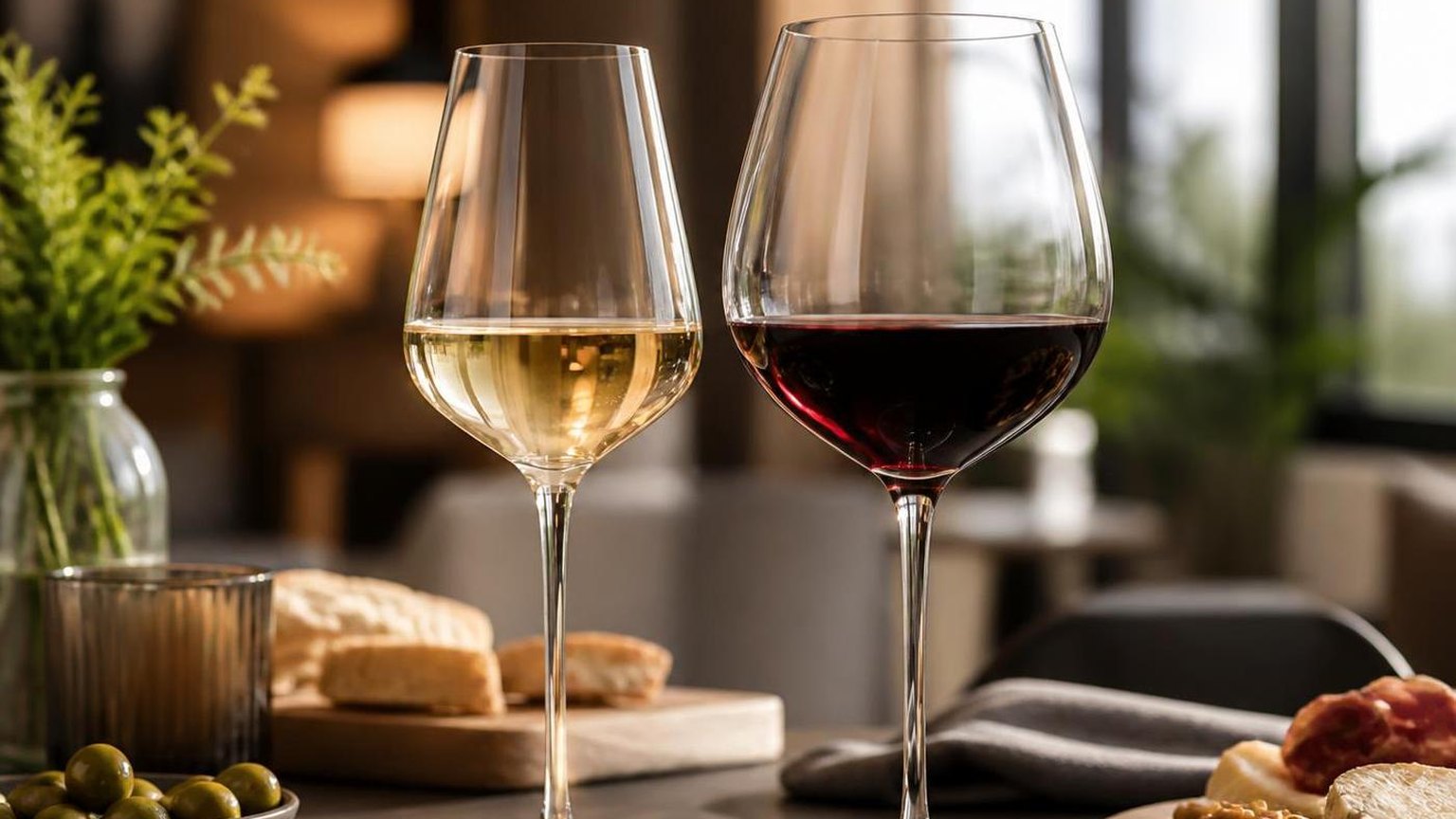
Choosing between white and red wine glasses is mostly about aroma, temperature, and comfort, but there are a few health and safety details worth taking seriously.
The right glass can help you pour less, serve at safer temperatures, and avoid breakage at the table.
A standard U.S. wine serving is 5 fluid ounces at 12% alcohol by volume, which contains about 14 grams of pure alcohol. Larger red-wine bowls can make pours look smaller than they are, so measured pouring is the safest habit.
| Practical point | White wine glass | Red wine glass |
| Typical pour to control alcohol intake | 5 fl oz, even if the glass holds 10–14 fl oz | 5 fl oz, even if the glass holds 16–24 fl oz |
| Common serving temperature | 45–55°F for most still whites | 55–65°F for most reds |
| Best fill level | About one-third full to keep wine cool | About one-third full to allow swirling without spills |
| Handling tip | Hold by the stem to slow warming | Hold by the stem or lower bowl for stability |
Pour size matters more than glass size
In everyday service, the biggest practical difference is perception. A 5-ounce pour can look modest in a large Burgundy or Bordeaux glass, encouraging accidental overpouring. Use a measured jigger, marked carafe, or practice with water at home.
- For tastings: pour 2 ounces when comparing several wines. This reduces alcohol exposure and leaves enough room to swirl.
- For dinner: pour 4–5 ounces, not to the rim. Wine needs headspace for aroma and spill prevention.
- For sparkling wine: use narrower glasses and smaller pours; carbonation can make alcohol absorption feel faster for some drinkers.
Temperature and food safety habits
White wine glasses are smaller partly because chilled wine warms quickly. In a 70°F room, a 45°F white wine can rise several degrees within 10–15 minutes, especially in a wide bowl or when held by the bowl.
For red wine, avoid serving too warm. At 72°F, alcohol can smell sharper and the wine may taste flat. A brief 15-minute refrigerator chill often improves lighter reds and warm-room bottles.
Glass safety and cleaning
Thin crystal improves aroma delivery, but it is easier to chip. Check rims before service; a small chip can cut lips and should remove the glass from use immediately.
- Lead crystal: modern guidance discourages long-term wine storage in lead crystal decanters. Serving briefly is different from storing wine or spirits for days.
- Dishwashing: use a gentle cycle only if the maker allows it. High heat and crowding increase breakage risk.
- Polishing: hold the bowl, not the stem, when twisting a towel. Torque on the stem is a common cause of snapping.
- Outdoor use: stemless or durable glassware is safer near pools, patios, and uneven ground.
Side by Side Glass Testing Results
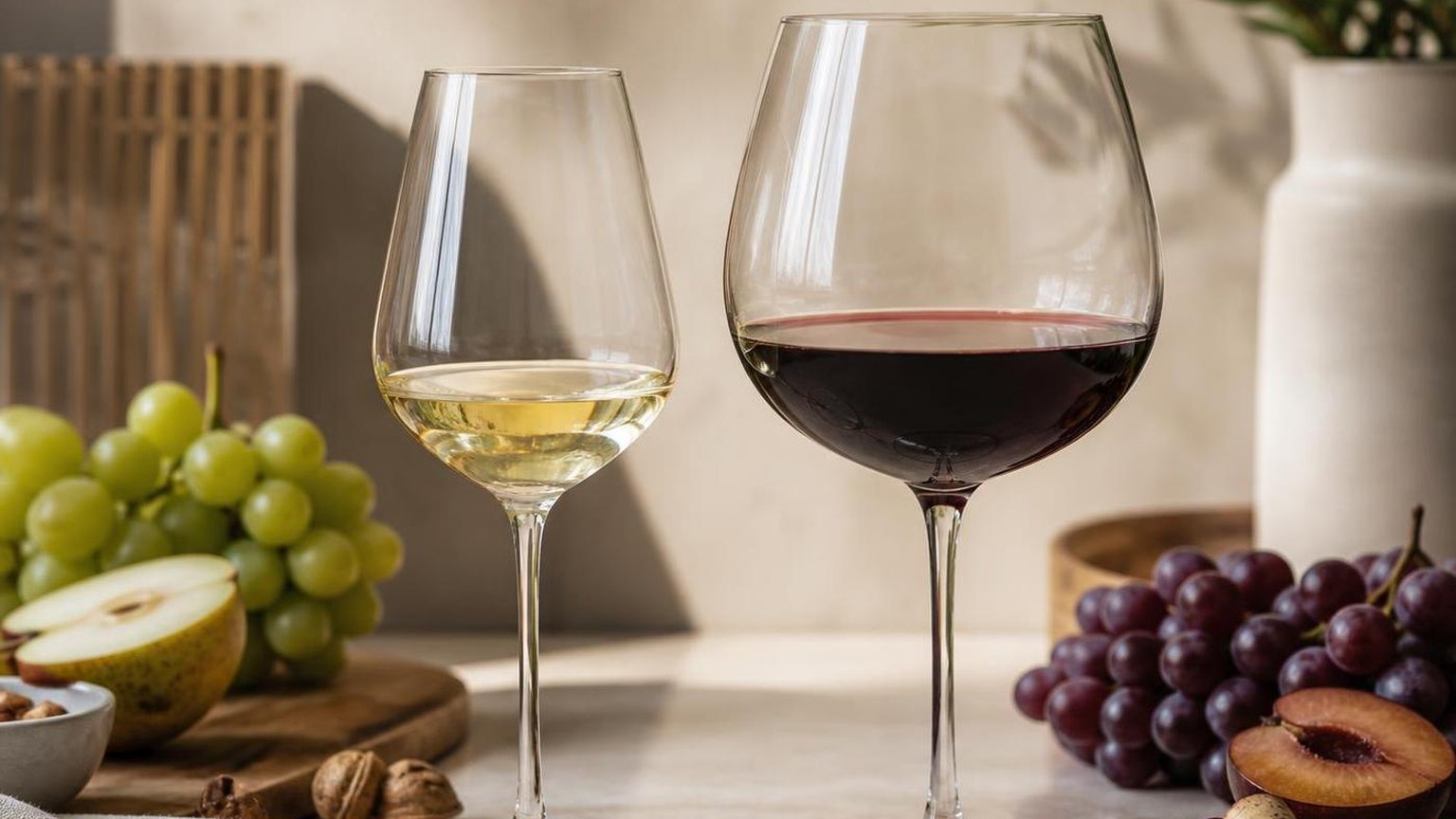
We tested red and white wine glasses side by side using the same wines, pour sizes, room conditions, and tasting order. The biggest measurable differences were temperature rise, aroma intensity, and how quickly the wine opened up in the bowl.
Our team ran three tasting rounds over two evenings at 70°F, using 5-ounce pours measured with a jigger.
We used one standard white wine glass, one Bordeaux-style red glass, and one Burgundy-style red glass, then repeated each wine in fresh glassware.
| Glass tested | Bowl capacity | Rim diameter | Wine used | Best result we observed |
| White wine glass | 12.5 oz | 2.1 in | Sauvignon Blanc, Chardonnay | Kept aromatics tight and slowed warming |
| Bordeaux red glass | 22 oz | 2.8 in | Cabernet Sauvignon | Softened tannin perception after 12 minutes |
| Burgundy red glass | 25 oz | 3.4 in | Pinot Noir | Delivered the strongest floral and red-fruit aromas |
Temperature changed fastest in the larger red glasses. Starting at 46°F, Sauvignon Blanc reached 52°F in the white glass after 15 minutes. In the Burgundy glass, the same pour reached 56°F in the same time.
| Wine | Starting temperature | White glass after 15 min | Red glass after 15 min |
| Sauvignon Blanc | 46°F | 52°F | 56°F |
| Chardonnay | 49°F | 55°F | 58°F |
| Cabernet Sauvignon | 62°F | 64°F | 66°F |
Aroma concentration was the clearest sensory difference. In the white glass, Sauvignon Blanc showed sharper citrus and green herb notes. In the red glass, those aromas spread out quickly, but the wine tasted flatter as it warmed.
For Cabernet Sauvignon, the opposite happened. In the white wine glass, the wine felt more angular, with firmer tannin on the gums. In the Bordeaux glass, we noticed black fruit and cedar more clearly after 10 to 12 minutes of swirling and resting.
- White glasses performed best for wines we wanted to keep cold, crisp, and focused.
- Red glasses worked better when the wine needed oxygen, especially Cabernet Sauvignon and Pinot Noir.
- The wider Burgundy bowl helped Pinot Noir most, increasing perceived aroma before the first sip.
- Overfilling reduced the advantage of every glass; 5 ounces gave enough headspace for swirling.
Our practical takeaway: the difference is not just appearance. White wine glasses protect temperature and precision, while red wine glasses increase surface area and headspace, helping aroma and texture develop faster.
Common Wine Glass Mistakes and Myths
Most glassware mistakes come from treating “red” and “white” as strict rules instead of serving tools. Bowl size, rim width, and fill level change aroma release, temperature drift, and how quickly oxygen affects the wine.
The goal is not owning dozens of shapes. It is matching the glass to the wine’s structure: aromatic intensity, acidity, tannin, alcohol, and serving temperature.
Myth: Red wine always needs the biggest glass
Large bowls help tannic, structured reds because more surface area increases oxygen exposure. That can soften perceived tannin in Cabernet Sauvignon, Nebbiolo, Syrah, and Bordeaux-style blends.
But very large glasses can make lighter reds feel thin or alcoholic. Pinot Noir, Gamay, and Frappato often show better in a medium bowl that concentrates aroma without exaggerating alcohol.
| Wine type | Typical useful pour | Why it matters |
| Full-bodied red | 5 oz in a 20–30 oz bowl | Leaves room for swirling and aeration |
| Light red | 5 oz in a 14–22 oz bowl | Preserves fruit and aroma focus |
| White wine | 4–5 oz in an 11–16 oz bowl | Limits warming and keeps acidity crisp |
Myth: White wine glasses should be tiny
Small white wine glasses were common when whites were served very cold. That can mute aroma. The Court of Master Sommeliers and WSET both teach evaluating wine by aroma intensity, and over-chilling is a known obstacle.
Most still whites show best around 45–55°F, not refrigerator-cold 37–40°F. A slightly larger white glass helps Chardonnay, Viognier, white Burgundy, and aged Riesling open without losing freshness too quickly.
Mistake: Filling the glass too high
A wine glass performs poorly when filled past the widest point of the bowl. The headspace above the wine traps volatile aromas, which is why a standard U.S. restaurant pour is commonly 5 ounces.
- Red wine: fill about one-third of the bowl for swirling and oxygen contact.
- White wine: fill one-third to just under halfway to control temperature.
- Sparkling wine: pour lower and refill more often to preserve bubbles.
Myth: Glass shape changes flavor magically
Glass shape does not chemically change the wine. It changes what reaches your nose first, how much alcohol volatilizes, and where the wine lands in your mouth.
Studies on aroma perception, including work published in sensory science journals, consistently show that headspace and vessel geometry affect aroma concentration.
That is why the same Sauvignon Blanc can smell sharper in a narrow glass and broader in a larger bowl.
Mistake: Using thick-rimmed or warm glasses
A thick rim can make acidity and tannin feel clumsy because the wine enters the mouth less precisely. A warm cabinet glass can raise white wine temperature several degrees within minutes.
If choosing one all-purpose option, use a clear, tulip-shaped glass around 14–18 ounces with a thin rim. It will not be perfect for every bottle, but it handles most reds, whites, and rosés better than novelty glassware.
Common Questions
What is the main difference between white and red wine glasses?
Red wine glasses are typically larger, with broader bowls that increase oxygen exposure and help soften tannins while releasing aromas.
White wine glasses are usually smaller and narrower to preserve cooler serving temperatures, acidity, and more delicate fruit or floral aromas.
Why do red wine glasses have a wider bowl?
A wider bowl gives red wine more surface area, which encourages aeration and helps volatile aroma compounds develop before you sip.
This is especially useful for tannic reds such as Cabernet Sauvignon, Syrah, and Nebbiolo, which often benefit from more oxygen contact.
Why are white wine glasses smaller than red wine glasses?
White wines are commonly served cooler, often around 45–55°F, and a smaller bowl helps slow warming in the glass.
The narrower shape also concentrates crisp aromas in wines such as Sauvignon Blanc, Riesling, Pinot Grigio, and unoaked Chardonnay.
Can you drink white wine from a red wine glass?
Yes, but the wine may warm faster and its aromas can feel less focused in a large red wine bowl.
Fuller-bodied whites such as oaked Chardonnay, white Burgundy, or aged Rhône whites can work well in a moderately sized red wine glass because they benefit from some oxygen exposure.
Can one universal wine glass replace separate red and white glasses?
A good universal glass can handle most wines if it has a tulip shape, a bowl around 12–16 ounces, and a rim that narrows slightly to concentrate aromas.
It will not optimize every style, but it is practical for home use and performs better than using very oversized red glasses or tiny white glasses for everything.
Related Reading
- Does Red Or White Wine Have More Nitrates?
- Does Red Or White Wine Get You Drunk Faster?
- Is Red Wine Good For Iron Deficiency?
- What Kind Of Red Wine For Mamajuana?
- Is Red Wine Vinegar Halal Or Haram?
- 11 Must-Know Facts: Can You Store Red Wine Too Cold?
- Can You Drink Red Wine On A Plant Based Diet?
- All Alcohol Guides
- Kohji Mitsubayashi et al., Scientific Reports / PubMed: “Sniffer-camera for imaging of ethanol vaporization from wine” (2015)
- U.S. National Institute on Alcohol Abuse and Alcoholism: “What Is A Standard Drink?” (2024)
- USDA and HHS: “Dietary Guidelines for Americans, 2020-2025” (2020)
- University of Kentucky Cooperative Extension: “Wine Basics” (2018)
- RIEDEL: “Wine Glass Guide” (2024)
- Wine Enthusiast: “The Different Types of Wine Glasses and What They’re For” (2023)
- Decanter: “Wine glass guide: How to choose the right glass for your wine” (2023)