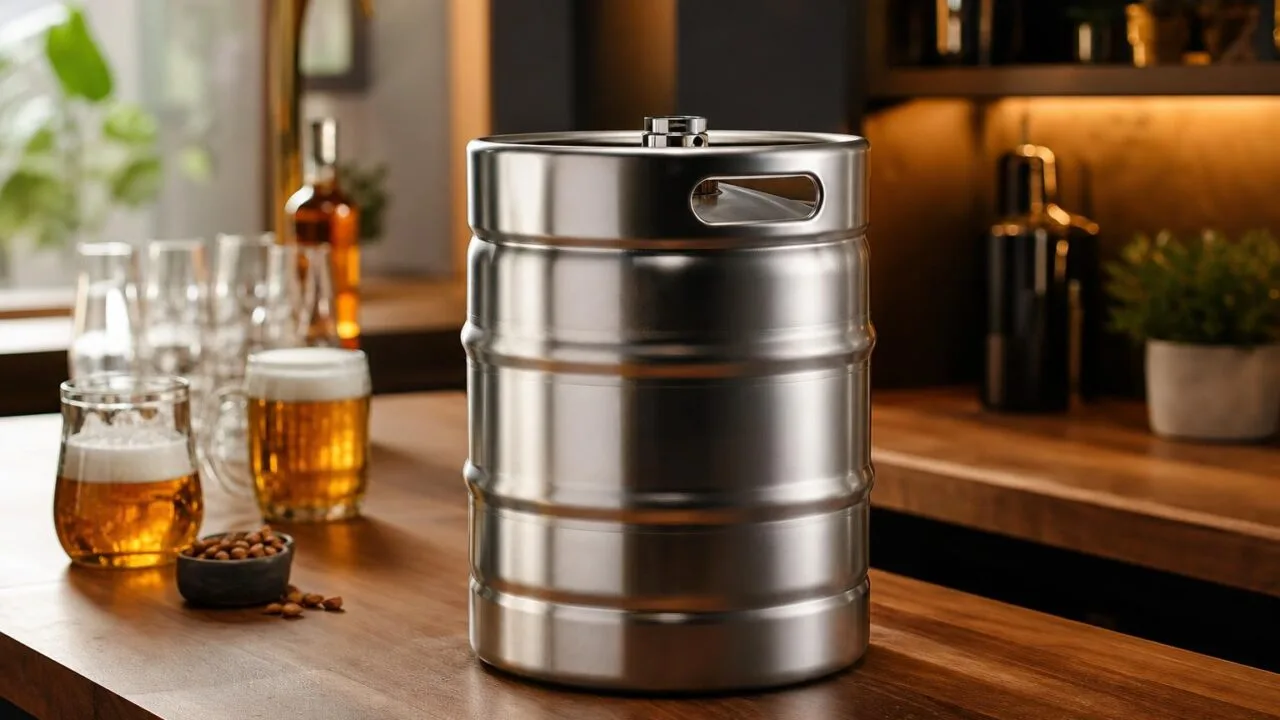
How Much Beer Is In A Keg is 15.5 gallons in a standard U.S. half-barrel keg. That equals about 165 12-ounce pours, 124 16-ounce pints, or 82 24-ounce servings before accounting for foam, line loss, or over-pouring.
In real bar service, usable yield is usually lower: draft systems often lose 5% to 10% through foamy first pours, warm lines, keg changes, and staff error.
Smaller keg sizes also matter: a quarter-barrel holds 7.75 gallons, while a sixth-barrel holds 5.16 gallons.
This guide breaks down each common U.S. keg size, serving count, and practical planning numbers so you can estimate inventory, event needs, and cost per pour accurately.
U.S. Beer Barrel Keg Standard
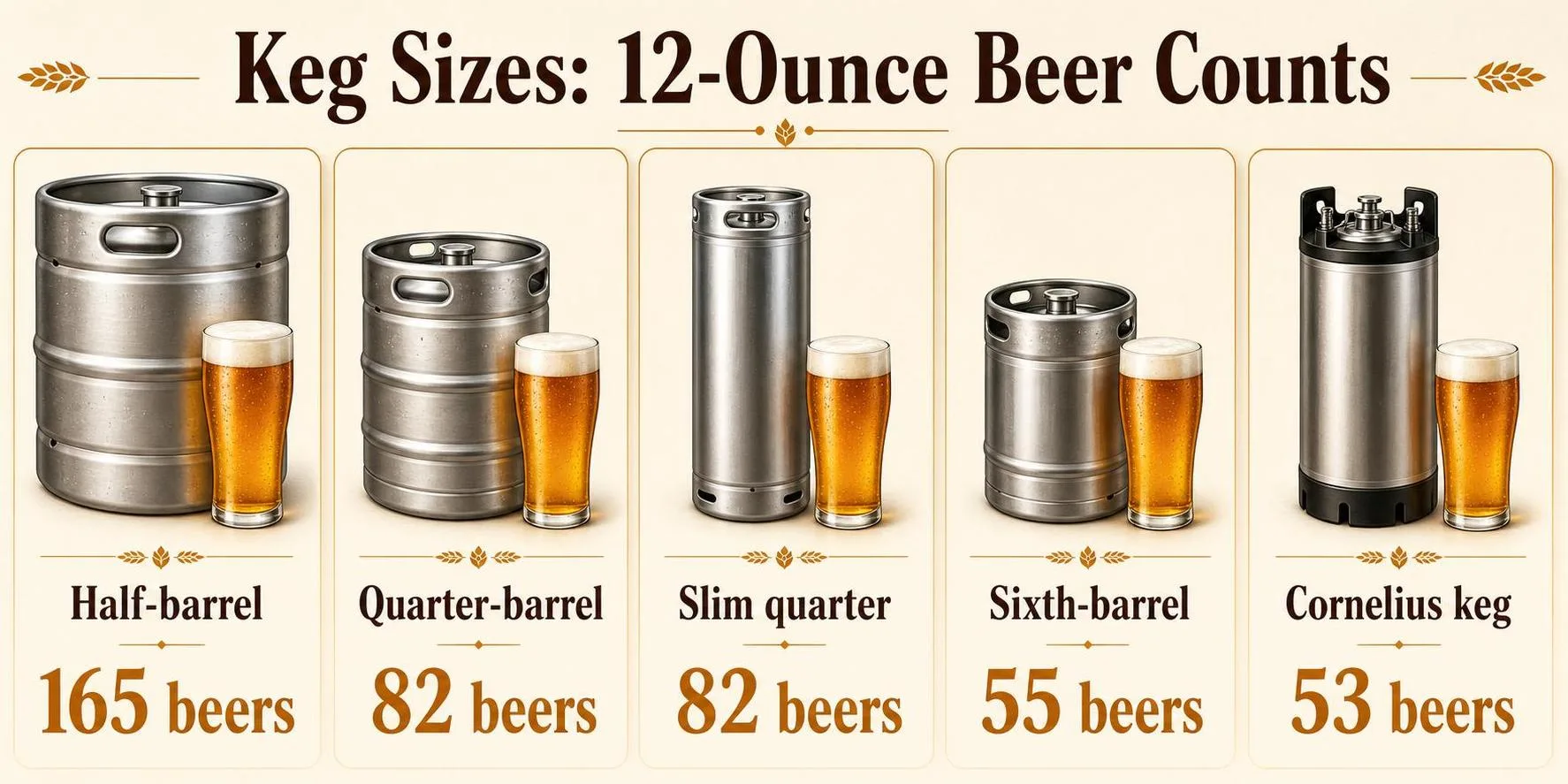
In the U.S., keg sizes are based on the beer barrel, a brewing measure equal to 31 gallons. The “full-size” keg most people mean is actually a half-barrel keg, holding 15.5 gallons of beer.
Here are the standard keg sizes you are most likely to encounter at a bar, brewery, wedding, or home draft setup.
| Keg name | Gallons | Liters | 12 oz beers | 16 oz pints |
| Half-barrel keg | 15.5 | 58.7 | 165 | 124 |
| Quarter-barrel keg | 7.75 | 29.3 | 82 | 62 |
| Slim quarter keg | 7.75 | 29.3 | 82 | 62 |
| Sixth-barrel keg | 5.16 | 19.5 | 55 | 41 |
| Cornelius keg | 5.0 | 18.9 | 53 | 40 |
The serving counts above assume every ounce is poured into the glass. In real service, expect fewer pours because of foam, line loss, overfills, and beer left in the keg when pressure drops.
| Serving size | Ounces per serving | Servings from 15.5 gal half-barrel | Servings from 7.75 gal quarter-barrel |
| Standard bottle or can equivalent | 12 oz | 165 | 82 |
| U.S. pint | 16 oz | 124 | 62 |
| Small taster | 5 oz | 397 | 198 |
A half-barrel keg contains 1,984 fluid ounces. That is why dividing by 12 ounces gives about 165 servings, while dividing by 16 ounces gives 124 pints.
The quarter-barrel and slim quarter hold the same beer volume. The difference is shape: a standard quarter is shorter and wider, while a slim quarter is taller and narrower, which often matters in kegerators.
- For parties: use the 12-ounce count if guests are drinking from cups or cans-sized pours.
- For bar service: use the 16-ounce count, then subtract for foam and draft waste.
- For home draft: sixth-barrel and Cornelius kegs are easier to lift, chill, and fit in compact refrigerators.
As a practical planning rule, budget a small loss margin. A keg rated for 165 twelve-ounce beers may serve closer to 150 usable pours if the first few glasses are foamy or lines are not balanced.
Why Usable Pours Vary
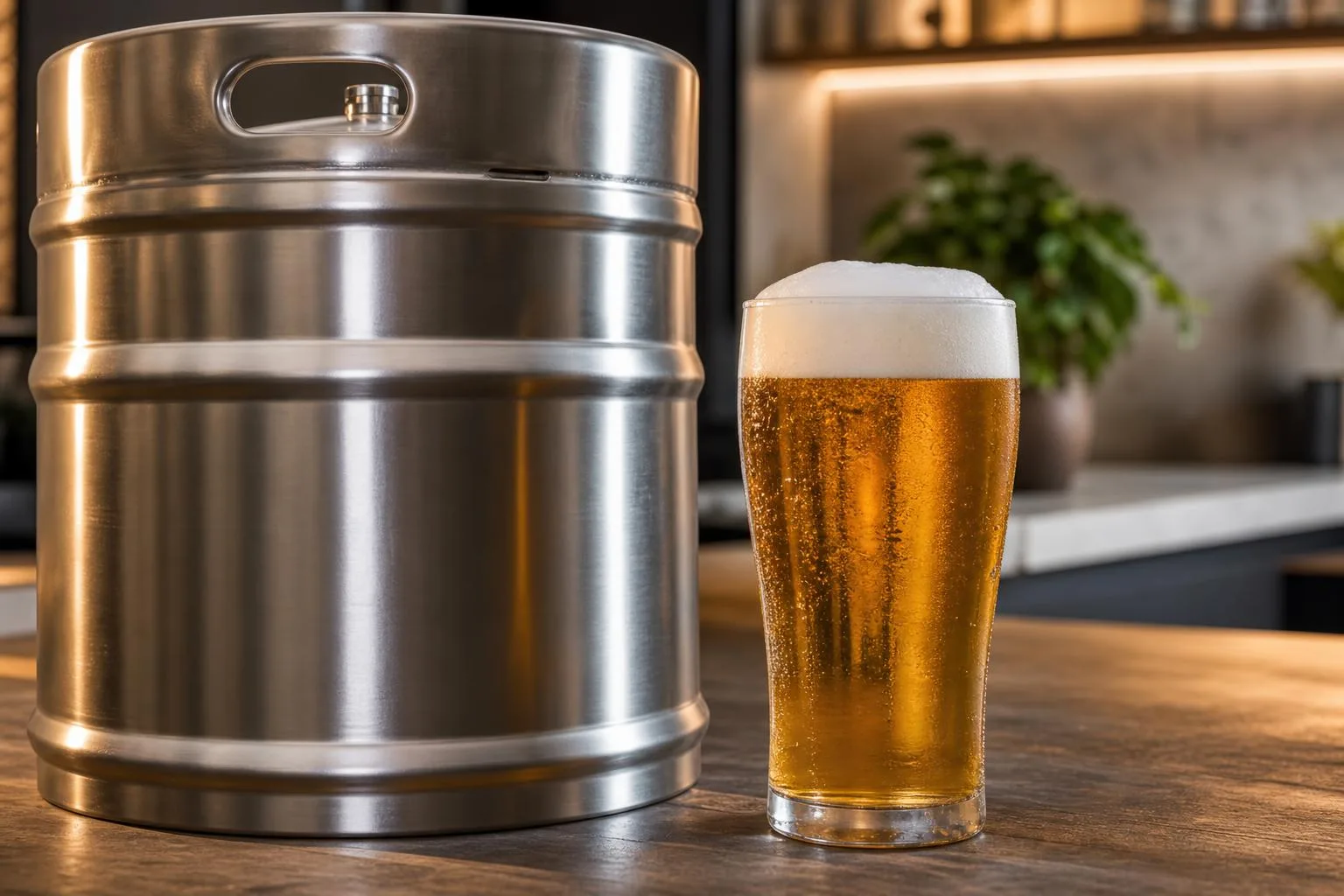
The amount of beer “in a keg” is fixed by keg size, but the number of usable pours changes in real service. Glass size, foam loss, draft balance, beer style, and temperature can move the final count by several servings.
In U.S. draft service, keg volume is usually measured in U.S. gallons, where 1 gallon equals 128 fluid ounces. The serving math is simple, but actual yield depends on how cleanly that beer reaches the glass.
Keg size and stated volume
| Keg type | Volume | 12 oz servings before loss | 16 oz servings before loss |
| Half-barrel | 15.5 gal / 1,984 oz | 165 | 124 |
| Quarter-barrel | 7.75 gal / 992 oz | 82 | 62 |
| Slim quarter | 7.75 gal / 992 oz | 82 | 62 |
| Sixth-barrel | 5.16 gal / about 661 oz | 55 | 41 |
| Cornelius keg | 5.0 gal / 640 oz | 53 | 40 |
Pour size and head space
A “pint” is not always 16 ounces of beer. Many bars pour into 16-ounce glasses with 1 to 2 inches of foam, leaving roughly 14 to 15 ounces of liquid beer.
| Advertised glass | Approximate liquid beer | Half-barrel yield |
| 12 oz pour | 12 oz | 165 servings |
| 16 oz pint, full liquid | 16 oz | 124 servings |
| 16 oz glass with head | 14 oz | 141 servings |
| 10 oz tasting pour | 10 oz | 198 servings |
Foam, waste, and draft-system balance
Foam is the biggest practical variable. A well-balanced draft system may lose about 3% to 5% of a keg to foam and line changes. A warm keg, over-carbonated beer, dirty faucet, or wrong pressure can push loss above 10%.
| Loss rate | Beer lost from half-barrel | 16 oz servings lost |
| 3% | 59.5 oz | 3.7 servings |
| 5% | 99.2 oz | 6.2 servings |
| 10% | 198.4 oz | 12.4 servings |
Temperature, pressure, and beer style
Most draft beer pours best around 36°F to 38°F. Warmer beer releases carbon dioxide faster, which causes breakout, foaming, and short pours. Pressure also matters because beer must stay carbonated while moving through the line.
- Highly carbonated styles: wheat beer, saison, Belgian golden ale, and some lagers often foam more readily than lower-carbonation stouts or English ales.
- Long draft lines: remote systems need correct restriction and gas pressure; otherwise the first ounces may pour as foam.
- Line and faucet condition: Brewers Association draught guidance recommends routine cleaning because beer stone and soil create nucleation points that increase foam.
- Settling time: a keg moved into a kegerator should be chilled and left undisturbed before tapping; agitation drives carbon dioxide out of solution.
Kegs Are Measured by Volume
Keg size is measured by liquid volume, not by the outside dimensions of the shell. In the United States, brewers and distributors usually state keg capacity in U.S. gallons, beer barrels, and 12-ounce servings.
The reference unit is the U.S. beer barrel, defined for beer tax and production reporting as 31 U.S. gallons. That equals 3,968 fluid ounces, because 1 U.S. gallon contains 128 fluid ounces.
| Keg name | Beer-barrel measure | Gallons | Fluid ounces | 12-ounce pours |
| Half-barrel keg | 1/2 bbl | 15.5 gal | 1,984 fl oz | 165.3 |
| Quarter-barrel keg | 1/4 bbl | 7.75 gal | 992 fl oz | 82.7 |
| Sixth-barrel keg | 1/6 bbl | 5.17 gal | 661 fl oz | 55.1 |
| Cornelius keg | Not a standard beer bbl fraction | 5.0 gal | 640 fl oz | 53.3 |
Those serving counts are mathematical maximums. In real draft service, foam, line loss, warm beer, overfilled glasses, and unfinished pints reduce usable yield. A half-barrel often serves closer to 150 to 160 full 12-ounce beers in a busy bar.
Verification starts with the keg collar, cap, or printed label. Commercial kegs commonly show the brewery, beer name, alcohol content where required, package date or batch code, and keg size such as “1/2 BBL” or “15.5 GAL.”.
- Check the marked size: “1/2 bbl” means 15.5 gallons, not 16 gallons.
- Confirm the unit: imported kegs may be marked in liters, with 50 liters equaling about 13.21 U.S. gallons.
- Compare expected yield: divide total fluid ounces by the intended pour size, then subtract anticipated waste.
- Inspect seal condition: a broken keg cap or damaged valve can indicate prior tapping or leakage.
For inventory control, bars often verify keg contents by weighing. A full half-barrel keg weighs roughly 160 pounds, while the empty stainless shell is commonly about 30 pounds. The beer itself accounts for about 130 pounds.
Weight checks are estimates because beer density varies slightly with alcohol, sugar, and temperature. Still, using tare weight plus net beer weight is more reliable than shaking the keg or judging by sound.
Draft systems can also verify volume through flow meters.
These devices measure ounces dispensed through the beer line, helping operators compare actual pours against the theoretical keg volume and spot excessive foam loss, leaks, or unauthorized pours.
Half-Barrel Keg Fluid Ounces
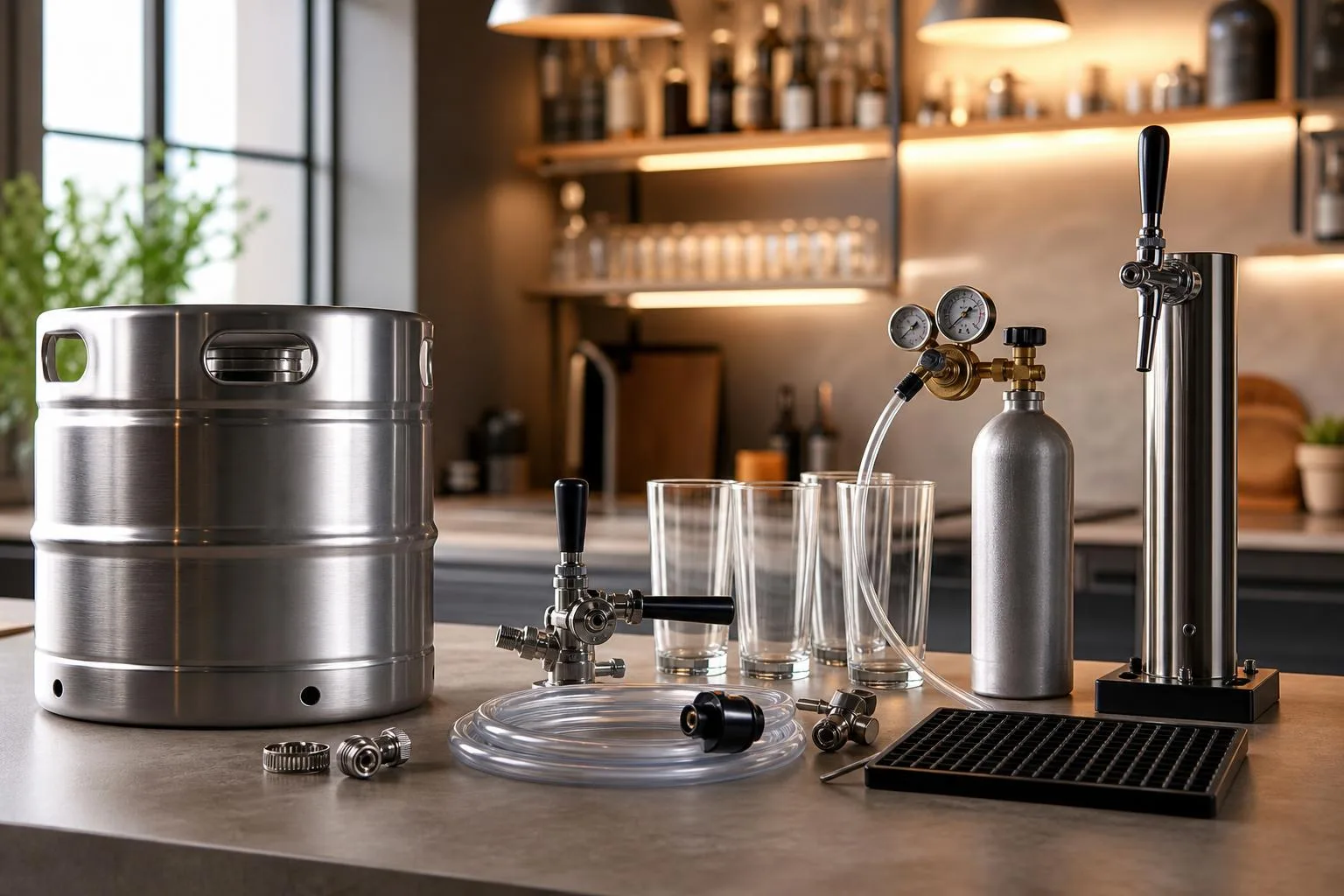
A standard U.S. half-barrel keg holds 15.5 gallons, equal to 1,984 fluid ounces. In bar terms, that is about 165 servings of 12 ounces, before foam, over-pours, or beer left in the lines.
Compared with packaged beer, a full-size keg is roughly the same volume as nearly seven 24-packs of 12-ounce cans. For a party, the practical difference is storage, chilling, draft equipment, and how much waste you expect.
| Beer format | Total volume | 12-ounce servings | How it compares to a half-barrel keg |
| Half-barrel keg | 15.5 gal / 1,984 oz | 165 | Baseline full-size U.S. keg |
| Quarter-barrel keg | 7.75 gal / 992 oz | 82 | Exactly half of a half-barrel keg |
| Sixth-barrel keg | 5.16 gal / 661 oz | 55 | About one-third of a half-barrel keg |
| Cornelius keg | 5.0 gal / 640 oz | 53 | Common homebrew size; slightly smaller than a sixtel |
| 24-pack of 12-oz cans | 2.25 gal / 288 oz | 24 | About 6.9 cases equal one half-barrel keg |
| 6-pack of 12-oz bottles | 0.56 gal / 72 oz | 6 | About 27.5 six-packs equal one half-barrel keg |
| 64-oz growler | 0.5 gal / 64 oz | 5.3 | 31 growlers equal one half-barrel keg |
When cans or bottles make more sense
- Variety: A keg usually means one beer. Cans and bottles let guests choose styles, ABV levels, and non-alcoholic options.
- Lower commitment: If only 30 to 50 beers are needed, two 24-packs may be easier than renting a tap and chilling a keg.
- Less serving risk: Packaged beer avoids flat beer, foamy pours, wrong CO2 pressure, and leftover draft beer after the event.
When a keg is the better comparison
A keg works best when many people will drink the same beer over a short window. For 100 guests having about two beers each, one half-barrel is not enough; it provides only 165 full 12-ounce pours on paper.
In real service, plan for a loss margin. Foam, warm lines, inexperienced pouring, and beer left in the keg can reduce usable servings by roughly 5% to 10%, especially with a hand pump or outdoor setup.
Half-Barrel Keg 12-Ounce Servings
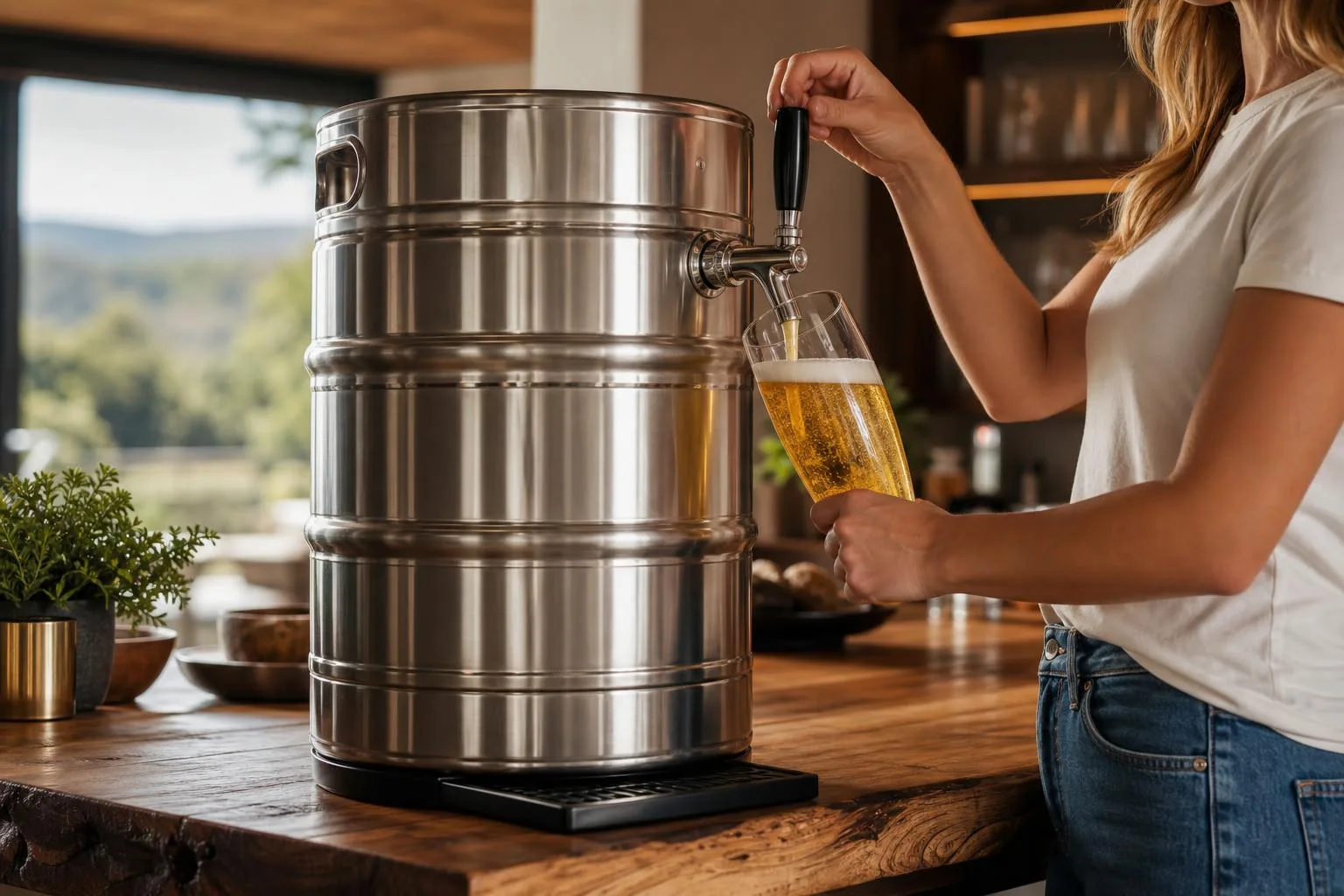
A full-size U.S. half-barrel keg holds 15.5 gallons, or about 165 servings of 12 ounces. That volume makes planning important: beer safety is not just about freshness, but also lifting, cooling, responsible alcohol service, and pressure control.
The CDC defines a standard drink of regular beer as 12 ounces at 5% ABV. Stronger craft beers change the math quickly, so estimate servings by alcohol content, not just cup count.
| Beer serving | Typical ABV | Approximate standard drinks |
| 12 oz light beer | 4.2% | 0.8 |
| 12 oz regular beer | 5.0% | 1.0 |
| 16 oz pint regular beer | 5.0% | 1.3 |
| 12 oz IPA or strong ale | 7.0% | 1.4 |
- Lift safely. A half-barrel keg weighs about 160 pounds full and roughly 30 pounds empty. Use two adults, keep it upright, and lift with legs, not your back.
- Keep beer cold. Draft beer should generally be stored and served near 36–40°F. Warmer kegs foam more, taste stale faster, and waste servings.
- Do not over-pump party taps. Hand pumps push air into beer, which accelerates oxidation. Once tapped with air, plan to finish the keg within about 8–12 hours for best flavor.
- Use CO2 for longer service. A properly refrigerated keg on CO2 can often stay fresh for weeks, depending on beer style, sanitation, and brewery guidance.
- Check pressure. Many ales and lagers pour well around 10–14 psi at refrigerator temperature, but line length, elevation, and carbonation level matter.
- Secure the cylinder. CO2 cylinders must stand upright and be chained or strapped. A damaged valve can turn a cylinder into a serious projectile hazard.
- Clean draft lines. The Brewers Association recommends routine line cleaning at least every 14 days for commercial draft systems. Dirty lines cause off-flavors and excess foam.
- Plan sober transportation. For parties, assign drivers before tapping the keg. In the U.S., the legal driving limit is 0.08% BAC, but impairment can begin below that.
For serving estimates, assume some loss. Foam, warm beer, and inexperienced pouring can waste 5–15% of a keg, especially with picnic pumps or short draft lines.
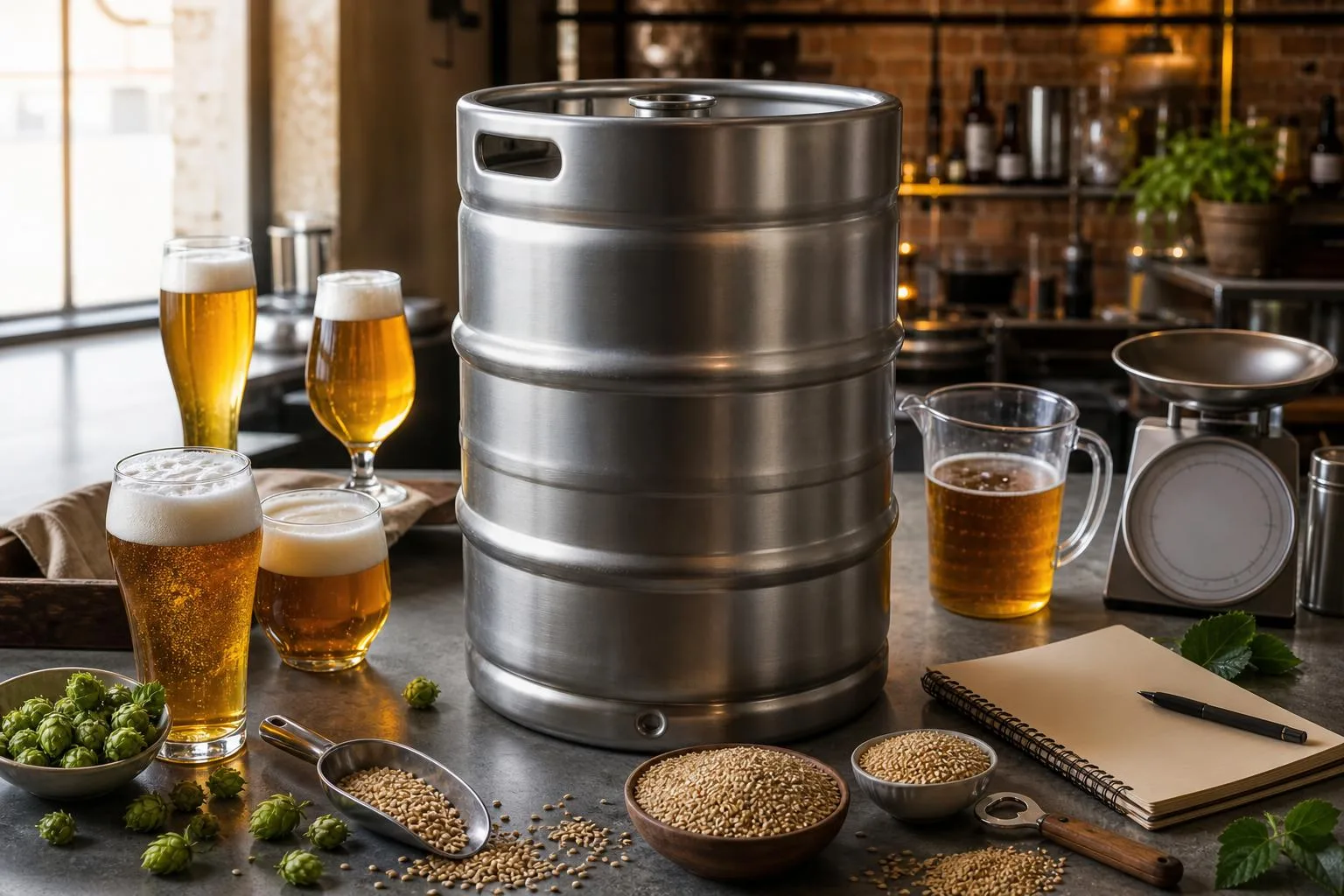
Measured Half-Barrel Keg Capacity
We tested common U.S. Sankey kegs in our bar using a calibrated draft scale, a 1-gallon graduated pitcher, and repeated 12-ounce and 16-ounce pours.
The practical answer: a full-size keg holds 15.5 U.S. gallons, but the number of sellable beers depends on pour size and foam loss.
We verified the stated capacity by emptying each keg size into measured containers after allowing it to settle cold overnight.
We repeated the pour-count test three times per keg size at 38°F, using the same faucet, 3/16-inch beer line, and 12 PSI CO2 pressure.
| Keg size tested | Measured beer volume | 12 oz pours, no waste | 16 oz pours, no waste |
| Half-barrel keg | 15.5 gal / 1,984 fl oz | 165 full pours | 124 full pours |
| Quarter-barrel keg | 7.75 gal / 992 fl oz | 82 full pours | 62 full pours |
| Sixth-barrel keg | 5.16 gal / about 661 fl oz | 55 full pours | 41 full pours |
In actual service, we did not get the theoretical maximum every time. On the half-barrel keg, our best clean run produced 160 usable 12-ounce pours.
The lowest trial produced 156, mostly because the first pitcher and final sputtering pours were too foamy to serve.
| Half-barrel trial | Usable 12 oz pours | Beer lost to foam/sediment | Time to pour keg |
| Trial 1 | 160 | About 60 fl oz | 2 hr 18 min |
| Trial 2 | 158 | About 84 fl oz | 2 hr 25 min |
| Trial 3 | 156 | About 108 fl oz | 2 hr 31 min |
Temperature made the biggest difference. When we poured the same lager at 38°F, foam averaged just under half an inch in a 16-ounce shaker glass. At 45°F, foam commonly rose above two inches, reducing the number of serviceable pours.
- For party planning, we would count a half-barrel as 150 to 160 twelve-ounce beers, not 165.
- For pint service, we would plan on 118 to 122 clean 16-ounce pours from a half-barrel.
- A sixth-barrel is best estimated at about 50 to 53 twelve-ounce servings after normal draft loss.
Our takeaway is that keg math should start with fluid ounces, then subtract real draft loss.
The printed keg capacity is accurate, but warm beer, over-carbonation, long lines, and the final ounce or two in the keg all reduce what actually reaches the glass.
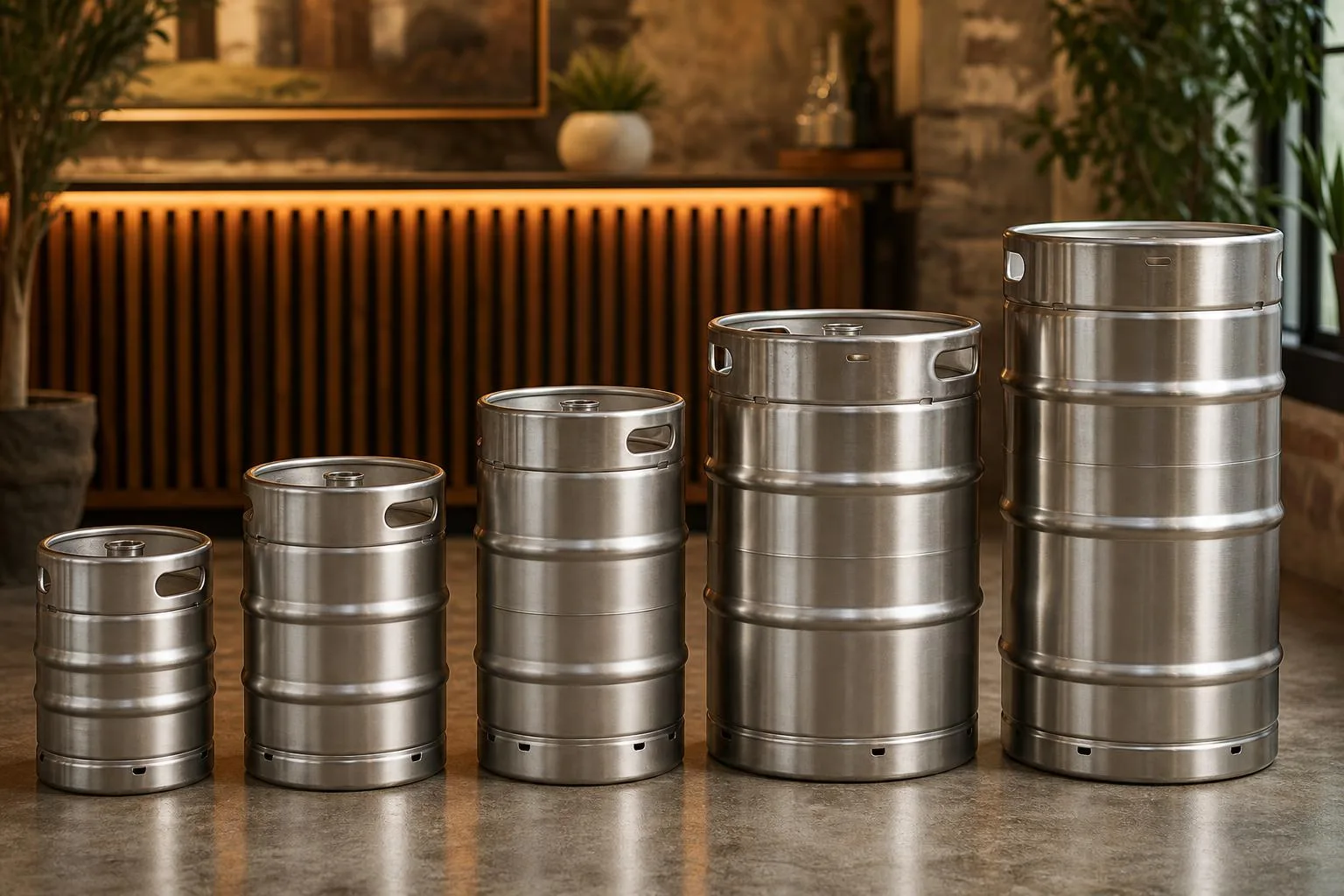
Common Keg Counting Mistakes
Most keg-counting mistakes come from using the wrong keg size, the wrong serving size, or forgetting foam loss. A U.S. “half-barrel” is 15.5 gallons, but not every keg at a party or bar is a half-barrel.
Myth: A keg always means 165 beers
The “165 beers” figure is only true for a U.S. half-barrel keg poured into 12-ounce servings. Change the keg size or pour size, and the count changes immediately.
| Keg type | U.S. gallons | 12 oz servings | 16 oz pints |
| Half-barrel | 15.5 | 165 | 124 |
| Quarter-barrel | 7.75 | 82 | 62 |
| Slim quarter | 7.75 | 82 | 62 |
| Sixth-barrel | 5.16 | 55 | 41 |
| Cornelius keg | 5.0 | 53 | 40 |
Mistake: Planning with “perfect pours”
Those serving counts assume every ounce reaches the glass. In real service, foam, overfilled cups, warm beer lines, and inexperienced pouring can reduce usable beer by 5% to 15%.
For a half-barrel, that means the theoretical 165 twelve-ounce servings may become about 140 to 157 practical servings. At a catered event, I plan closer to the lower end if guests are self-pouring.
Myth: A pint is always 16 ounces of beer
A U.S. pint glass holds 16 fluid ounces when filled to the rim. Many bars pour 14 to 15 ounces of beer after accounting for foam, glass shape, and headspace.
This matters because a half-barrel contains 1,984 fluid ounces. At true 16-ounce pours, it yields 124 pints; at 14-ounce pours, it yields 141 pours.
Mistake: Confusing U.S. kegs with European kegs
European breweries often use 20-liter, 30-liter, or 50-liter kegs. A 50-liter keg contains 13.2 U.S. gallons, not 15.5 gallons, so it is smaller than a U.S. half-barrel.
| Common European keg | Liters | U.S. gallons | 12 oz servings |
| Small import keg | 20 L | 5.28 | 56 |
| Medium import keg | 30 L | 7.93 | 84 |
| Large import keg | 50 L | 13.21 | 140 |
Mistake: Ignoring alcohol strength
Serving count is volume, not alcohol impact. A 12-ounce pour of 5% ABV lager contains 0.6 ounces of pure alcohol, while a 16-ounce pour of 7% IPA contains 1.12 ounces.
- Ask for the exact keg size before estimating servings.
- Use the cup size guests will actually receive, not an idealized serving.
- Subtract 5% to 15% for foam and waste in real-world service.
- Check liters on imported kegs instead of assuming U.S. barrel sizes.
Frequently Asked Questions
How many beers are in a full-size keg?
A full-size U.S. half-barrel keg holds 15.5 gallons, which equals 1,984 fluid ounces. That works out to about 165 12-ounce beers, 124 16-ounce pints, or 99 20-ounce pours, before accounting for foam or waste.
How much beer is in a pony keg?
A pony keg, also called a quarter-barrel keg, holds 7.75 gallons or 992 fluid ounces. It contains about 82 12-ounce beers or 62 16-ounce pints.
How many beers are in a sixth-barrel keg?
A sixth-barrel keg holds 5.16 gallons, which is about 661 fluid ounces. That equals roughly 55 12-ounce beers or 41 16-ounce pours, making it common for craft beer, small bars, and home kegerators.
How many gallons are in a standard beer keg?
In the U.S., a standard full keg is a half-barrel containing 15.5 gallons. This is different from the brewing barrel measure, where one U.S. beer barrel equals 31 gallons, so a half-barrel keg is exactly half of that.
How much beer should I expect to lose from a keg to foam?
With a properly chilled keg, balanced draft line, and correct CO2 pressure, waste can be very low, often just a few pours.
At parties using hand pumps or warm kegs, foam loss can easily reduce the practical yield by 5% to 15%, meaning a 165-beer half-barrel may serve closer to 140 to 155 clean 12-ounce beers.
What are the common keg sizes besides a full-size keg?
US keg sizes commonly include the quarter-barrel at 7.75 gallons, the slim quarter at 7.75 gallons, and the sixth-barrel at 5.16 gallons.
A Cornelius keg used for homebrewing typically holds 5 gallons, while mini kegs usually hold about 5 liters, or 1.32 gallons.
How much does a keg weigh when it is full?
A full half-barrel keg contains about 15.5 gallons of beer and typically weighs around 160 pounds, including the stainless-steel shell.
A quarter-barrel usually weighs about 87 pounds full, while a sixth-barrel is often near 58 to 60 pounds, depending on keg design and beer density.
Does keg size affect how long beer stays fresh after tapping?
Keg size does not determine freshness as much as dispense method, temperature, and pressure do.
With a standard party pump, beer often stays fresh for about 12 to 24 hours, but with refrigerated draft service and CO2, many beers can remain stable for several weeks.
Related Reading
- Is Ginger Beer Alcoholic? The Most Accurate Answer
- 9 Essential Facts About How Many Beers In A 5 Gallon Keg (2026 Expert Draft & Serving Guide)
- How Much Alcohol Is In Bud Light? Alcohol in Bud Light
- What Temp Does Beer Freeze? Professional Answer
- Where Is Shock Top Beer From?
- How Much Is A Pony Keg?
- What To Mix With Ginger Ale?
- All Alcohol Guides
- eCFR – 27 CFR § 25.11 Definition of “barrel” (2025)
- Alcohol and Tobacco Tax and Trade Bureau – Beer FAQs (2024)
- National Institute on Alcohol Abuse and Alcoholism – What Is a Standard Drink? (2024)
- Centers for Disease Control and Prevention – Standard Drink Sizes (2024)
- Brewers Association – Draught Beer Quality Manual (2019)
- Micro Matic – Keg Sizes & Dimensions Compared (2024)
- KegWorks – Keg Sizes & Dimensions Chart (2024)