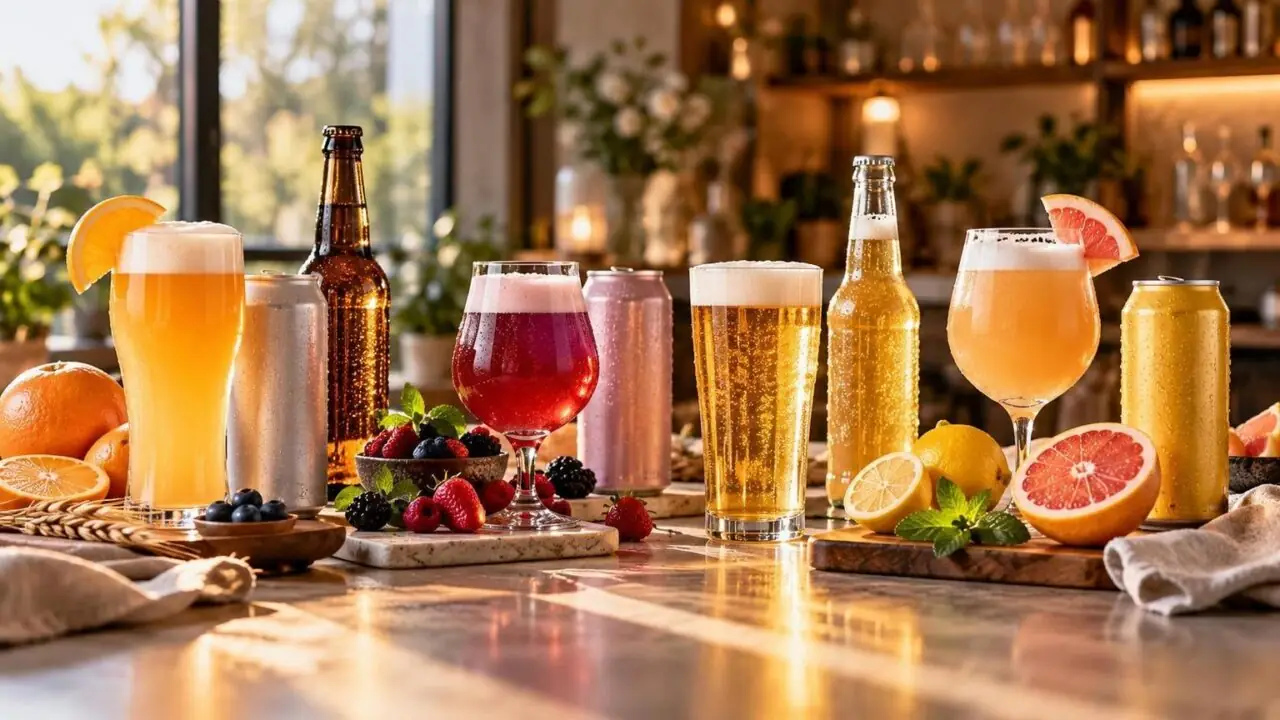
beer that doesn’t taste like beer is typically fruit-forward, tart, or gently sweet, with hop bitterness taking a back seat.
Fruited sours, Belgian lambics, and wheat beers can emphasize raspberry, cherry, citrus, or banana notes instead of the bitter finish you might associate with beer.
The best starting point depends on what puts you off: bitterness, malt flavor, or a lingering aftertaste. This guide compares approachable styles and explains what to look for on labels.
Fruit does not always mean sweet, and low bitterness does not guarantee a mild flavor.
Why Some Beers Taste Less Beery
That classic “beer taste” comes from hops, roasted malt, and fermentation byproducts like esters and phenols. Brewers manipulate these three variables to produce beers that barely register as beer on the palate.
The science is straightforward once you understand what creates bitterness.
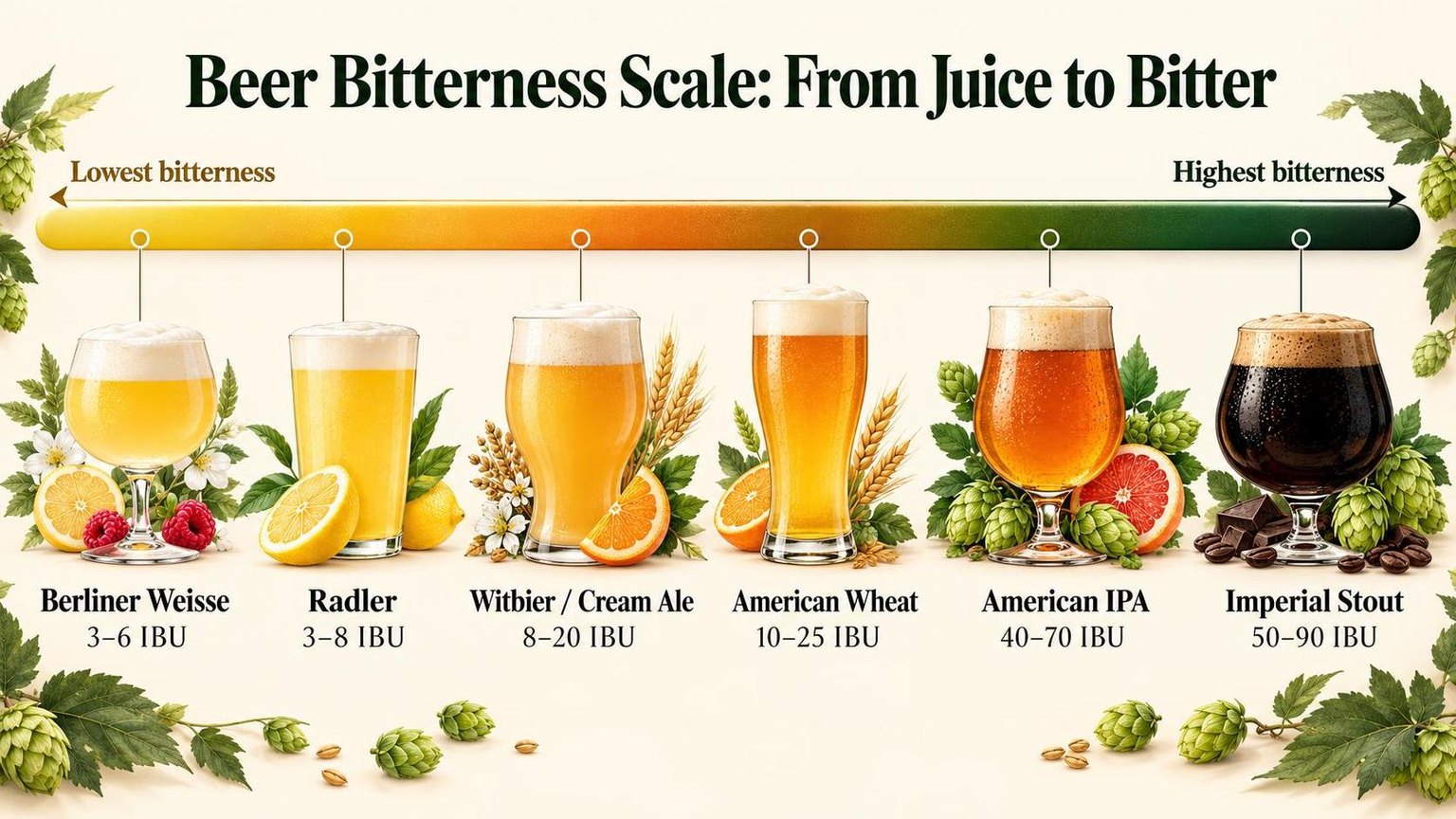
Bitterness in beer is measured in International Bitterness Units (IBUs). Most people perceive bitterness starting around 8–12 IBUs. A standard American lager sits at 8–18 IBUs, while an IPA reaches 40–70 IBUs.
| Style | IBU Range | Perceived Bitterness |
| Fruit Radler | 3–8 | Near zero |
| Berliner Weisse | 3–6 | Tart, not bitter |
| Belgian Witbier | 8–20 | Very low |
| American Wheat | 10–25 | Low |
| Cream Ale | 8–20 | Low |
| American IPA | 40–70 | High |
| Imperial Stout | 50–90 | Very high |
Hop usage is the primary lever. Alpha acids in hops isomerize during boiling, producing iso-alpha acids responsible for bitterness. Less boiling time or fewer hops means fewer IBUs.
Malt selection matters equally. Pale, lightly kilned malts (heated to around 80–85°C) contribute minimal roasted or toasty character.
Darker malts kilned above 175°C produce the heavy caramel and coffee notes people associate with “beer flavor.”.
The Role of Adjuncts and Additives
Brewers reduce beer-forward flavor by substituting grain with adjuncts. Rice and corn lighten body and taste — Budweiser uses up to 30% rice in its grain bill. Fruit purées, lactose, and vanilla further mask hop and malt character.
Lactose, a non-fermentable sugar, adds residual sweetness. A typical milkshake IPA contains 0.5–1 pound of lactose per 5-gallon batch, creating a dessert-like quality that overwhelms traditional beer flavors.
Fermentation and Yeast Choices
Clean-fermenting yeast strains (like American ale yeast Safale US-05) produce minimal esters and phenols.
Fermenting at lower temperatures — around 15–18°C for ales instead of 20–22°C — further suppresses fruity or spicy byproducts.
Kettle-soured beers use Lactobacillus bacteria to drop pH to 3.2–3.5 before fermentation even begins. This acidity creates a sharp tartness that replaces bitterness as the dominant flavor, making the beer taste more like lemonade than lager.
- Low IBUs — below 15 — reduce perceived bitterness dramatically
- Light malt bills with pilsner or wheat malt eliminate roasted grain flavor
- High adjunct ratios (fruit, lactose, vanilla) mask residual beer character
- Clean yeast and cool fermentation suppress ester and phenol production
Fruit Beers That Taste Like Juice
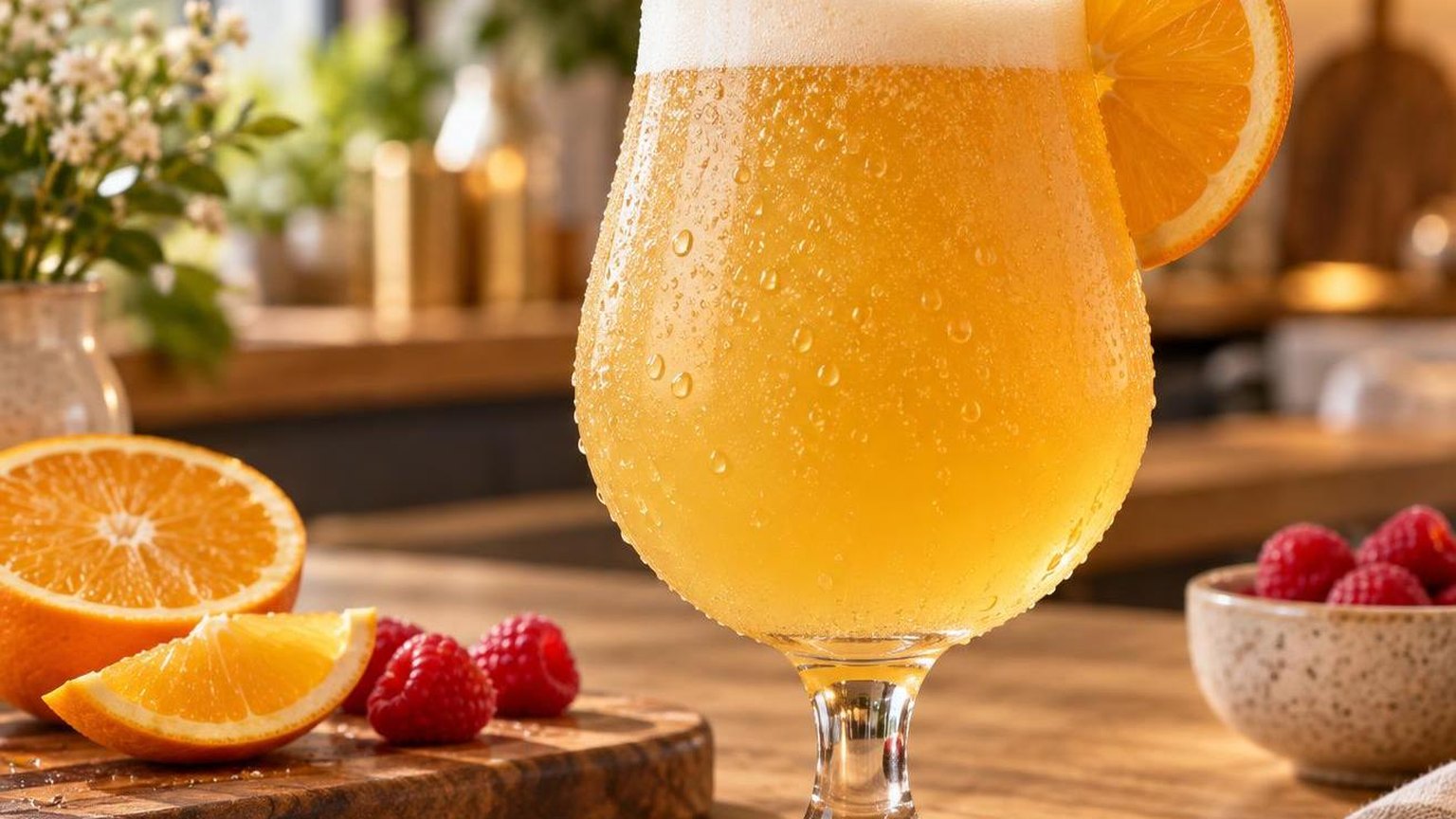
Fruit beers use real fruit, puree, or natural extracts added during or after fermentation, producing flavors that genuinely rival juice. Many clock in at 4–5% ABV with bitterness levels under 10 IBU—virtually undetectable hop presence.
The style has exploded commercially. Founders Rübaeus, a raspberry ale at 5.7% ABV, delivers 0 IBU bitterness. Lindemans Framboise, a Belgian lambic, uses 300 grams of raspberries per liter, producing an intensely fruity 2.5% ABV beer.
| Beer | Fruit | ABV | IBU | Style |
| Lindemans Framboise | Raspberry | 2.5% | ~0 | Fruit Lambic |
| Founders Rübaeus | Raspberry | 5.7% | 0 | Fruit Ale |
| Sea Dog Wild Blueberry | Blueberry | 4.7% | 8 | Wheat Ale |
| UFO Big Squeeze Shandy | Grapefruit | 4.4% | 8 | Shandy |
| Schöfferhofer Grapefruit | Grapefruit | 2.5% | ~5 | Hefeweizen Radler |
| Stiegl Radler Grapefruit | Grapefruit | 2.0% | ~3 | Radler |
Radlers and Shandies
Radlers blend beer with fruit juice or soda, typically at a 50/50 ratio. This cuts ABV to 2.0–2.5% and nearly eliminates any grain or hop character. Stiegl Radler uses actual grapefruit juice, not artificial flavoring.
Shandies follow the same principle. Leinenkugel’s Summer Shandy mixes wheat beer with natural lemonade flavoring at 4.2% ABV. It ranks among the top-selling seasonal craft beers in the U.S. annually.
Berliner Weisse and Fruited Sours
Berliner Weisse, a traditional German wheat beer, runs 3–5% ABV with a tart, lactic acid base.
Modern American craft breweries add massive fruit additions—sometimes 1–2 pounds of fruit per gallon—creating beers that taste like smoothies.
Breweries like The Veil, Equilibrium, and Prairie Artisan Ales produce fruited sours with mango, guava, passionfruit, and dragonfruit. These beers often pour opaque, resembling actual juice visually.
What to Look for on Labels
- IBU under 10 — confirms minimal hop bitterness
- “Brewed with real fruit” or “fruit puree” — indicates genuine fruit additions, not just extract
- ABV between 2.0–5.0% — lower alcohol correlates with lighter, juicier profiles
- Styles labeled Radler, Shandy, or Fruited Sour — most reliably juice-like categories
Start with a Schöfferhofer Grapefruit or Lindemans Framboise. Both are widely distributed across the U.S. and represent the most accessible entry points into fruit-forward beer.
Pastry Stouts With Chocolate Dessert Flavors
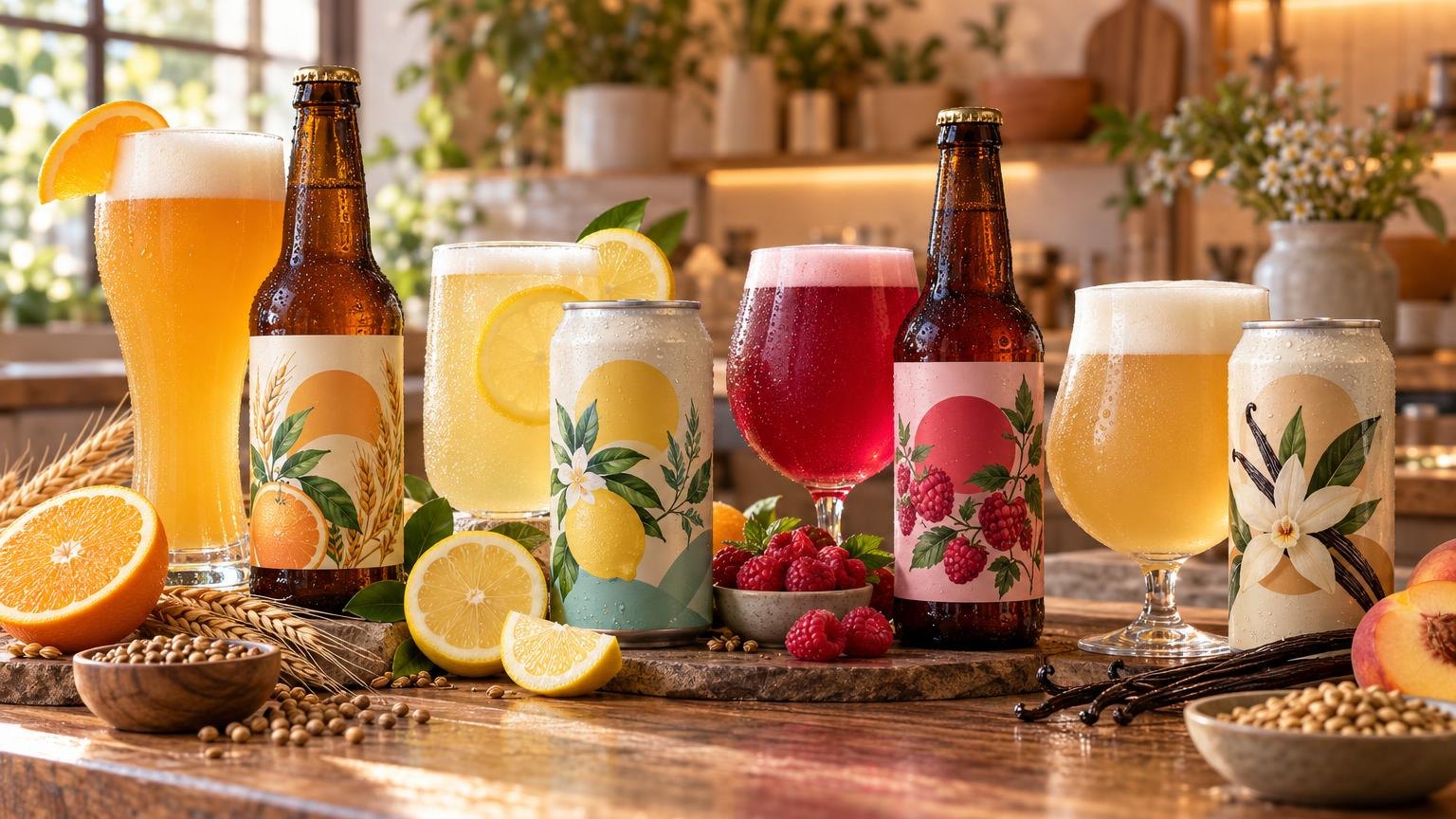
Pastry stouts emerged in the mid-2010s as brewers began adding lactose, cacao nibs, vanilla beans, and marshmallow to imperial stouts.
These beers taste more like liquid desserts than traditional beer, with residual sweetness often exceeding 60 IBU-equivalent sugar levels.
The style typically ranges from 8% to 16% ABV, with thick, viscous mouthfeels created by lactose sugar additions of 0.5 to 1.5 pounds per gallon during brewing.
Key Pastry Stouts Worth Trying
| Beer | Brewery | ABV | Flavor Profile |
| Fundamental Observation | Bottle Logic (CA) | 14.1% | Chocolate, vanilla, hazelnut |
| Decadence | Southern Tier (NY) | 10% | Chocolate fudge, espresso |
| Big Bad Baptist | Epic Brewing (UT) | 11.6% | Cocoa, coffee, whiskey barrel |
| Mocha Wednesday | Toppling Goliath (IA) | 13.2% | Dark chocolate, caramel, mocha |
| Mexican Cake | Westbrook (SC) | 10.5% | Chocolate, cinnamon, habanero, vanilla |
Cacao nib additions during conditioning provide genuine chocolate flavor without the bitterness associated with roasted barley. Brewers typically add 2 to 4 ounces of cacao nibs per gallon for 5 to 14 days.
What Makes Them Taste Unlike Beer
- Lactose is unfermentable by standard brewer’s yeast, leaving permanent sweetness that masks hop bitterness
- Vanilla bean additions (typically 1–2 beans per gallon) create a dessert-forward aroma profile
- Adjuncts like marshmallow cream, coconut, and peanut butter overwhelm traditional malt and hop character
- High finishing gravities (1.030–1.060 FG) produce syrupy body far removed from standard beer texture
Southern Tier’s Choklat, released in 2009, was an early commercial example that paved the way for the pastry stout movement. It uses Belgian dark chocolate at a rate of over one pound per barrel.
For newcomers, start with lower-ABV options around 8–10%. Founders Breakfast Stout at 8.3% ABV offers chocolate and coffee notes with a more approachable body than full imperial pastry stouts.
Serving temperature matters significantly. Pour pastry stouts at 50–55°F rather than refrigerator-cold 38°F. Warmer temperatures release volatile chocolate and vanilla aromatics that define the style’s appeal.
Pair these stouts with actual desserts—flourless chocolate cake, tiramisu, or crème brûlée. The shared flavor compounds create complementary rather than competing sensory experiences on the palate.
Wheat Beers With Soft Citrus Notes
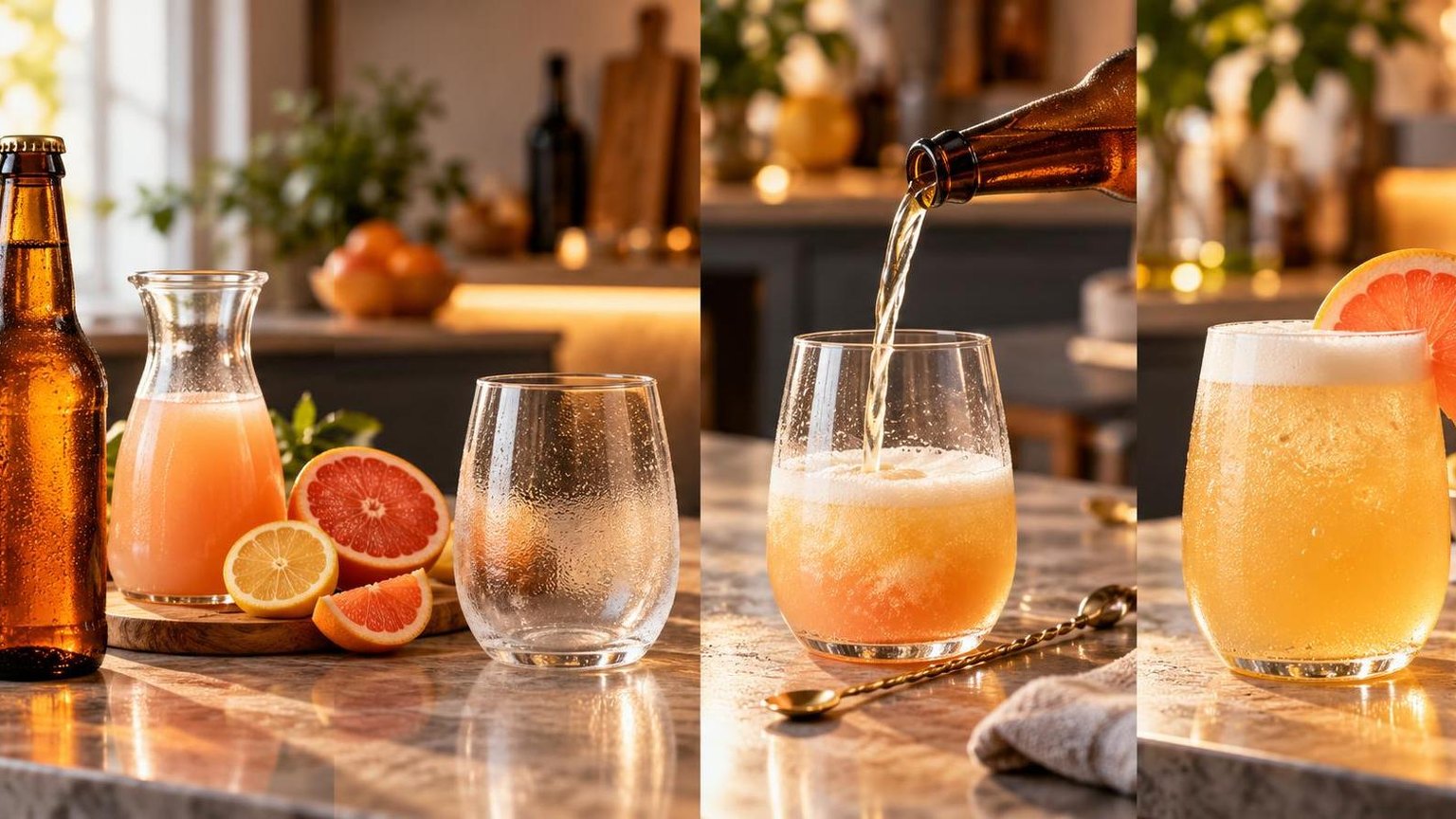
Wheat beers replace barley’s grainy bite with a pillowy, bread-dough body that carries fruit-forward flavors naturally.
The 50–70% wheat malt bill creates proteins that yield a hazy, creamy texture fundamentally different from conventional lagers.
Two dominant styles anchor this category: German Hefeweizen and Belgian Witbier. Both deliver banana, clove, and citrus esters produced during fermentation—not from added fruit.
Key Wheat Beers for Non-Beer Drinkers
| Beer | Style | ABV | IBU | Tasting Profile |
| Blue Moon Belgian White | Witbier | 5.4% | 9 | Valencia orange peel, coriander, light honey |
| Weihenstephaner Hefeweissbier | Hefeweizen | 5.4% | 14 | Banana, clove, soft bready finish |
| Allagash White | Witbier | 5.2% | 13 | Curaçao orange peel, coriander, peppery spice |
| Hoegaarden | Witbier | 4.9% | 12 | Lemon zest, chamomile, wheat cracker |
| Paulaner Hefe-Weißbier | Hefeweizen | 5.5% | 12 | Ripe banana, vanilla, clove spice |
Notice the IBU column. Every beer listed falls between 9 and 14 IBUs—far below the 30–50 IBU range typical of pale ales. Low bitterness is the single biggest reason wheat beers appeal to hop-averse drinkers.
Why Wheat Beers Taste Fruity Without Fruit
Hefeweizen yeast strains (particularly Saccharomyces cerevisiae var. diastaticus) produce isoamyl acetate, the compound responsible for banana flavor.
Fermentation temperature directly controls intensity: brewing at 62–64°F emphasizes clove; pushing to 68–72°F amplifies banana esters.
Witbiers take a different approach. Brewers add dried Curaçao orange peel and crushed coriander seed to the boil. Hoegaarden’s original 1445 recipe from the Belgian town of the same name established this tradition.
Serving Tips That Maximize Approachability
- Serve Hefeweizens at 45–50°F—colder temperatures mute banana esters and make the beer taste thin
- Pour Witbiers into wide-mouth glasses to release citrus aromatics before the first sip
- Add an orange wheel to Blue Moon or Hoegaarden; the oils reinforce existing citrus notes without altering flavor balance
- Swirl the bottle’s final two ounces to resuspend yeast sediment, which adds body and a creamy wheat character
Wheat beers consistently rank as the top gateway style in craft beer surveys. Their combination of sub-15 IBU bitterness, natural fruit esters, and creamy mouthfeel makes them the closest thing to a beer that genuinely doesn’t taste like one.
Radlers That Taste More Like Lemonade
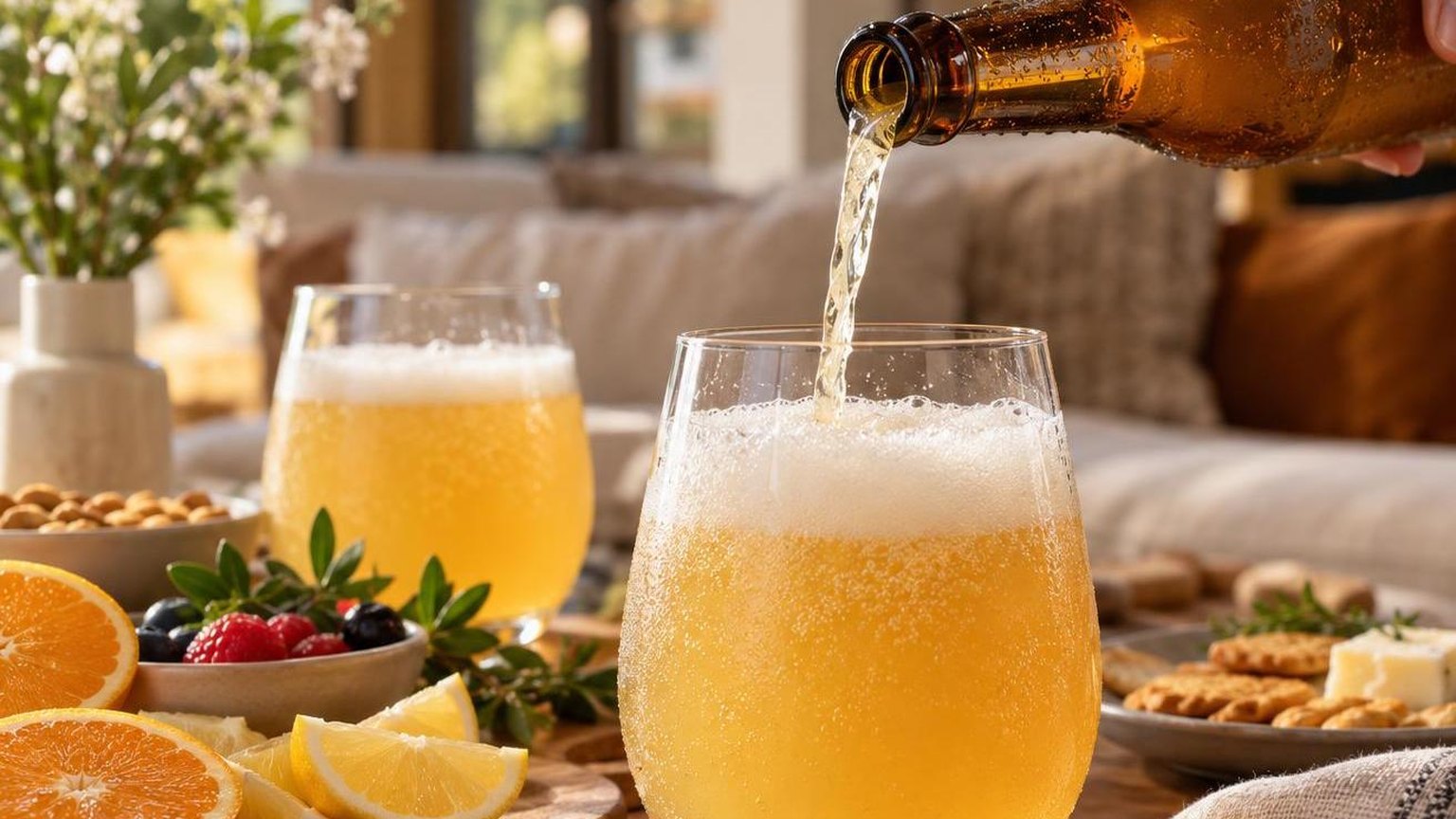
Radlers blend beer with fruit juice or lemonade, typically at a 50:50 ratio, producing drinks between 2.0% and 2.5% ABV.
The style originated in 1920s Bavaria when innkeeper Franz Xaver Kugler allegedly diluted his beer to stretch supplies for arriving cyclists.
The German word “Radler” translates to “cyclist,” reflecting that origin story. Modern commercial radlers use lager or wheat beer as their base, combined with citrus sodas or natural fruit juices.
Top Radlers Ranked by Juice-to-Beer Character
| Brand | ABV | Base Beer | Flavor Profile | IBU |
| Stiegl Grapefruit Radler | 2.0% | Goldbräu lager | Tart grapefruit, minimal malt | ~5 |
| Schöfferhofer Grapefruit | 2.5% | Hefeweizen | Sweet grapefruit soda, wheat softness | ~3 |
| Leinenkugel’s Grapefruit Shandy | 4.2% | Wheat ale | Citrus-forward, light grain finish | ~11 |
| UFO Big Squeeze Shandy | 5.3% | Wheat beer | Balanced lemon-orange, noticeable beer | ~10 |
| Curious Traveler Shandy | 4.4% | Wheat ale | Lemon peel, subtle honey notes | ~8 |
Stiegl Grapefruit Radler stands out because it contains 40% real grapefruit juice. At only 2.0% ABV and roughly 5 IBUs, hop bitterness is virtually undetectable.
Schöfferhofer uses a hefeweizen base, which adds banana and clove esters that complement the grapefruit rather than tasting traditionally “beer-like.” It contains approximately 50% fruit juice blend.
What Separates Radlers from Shandies
- Radler — German tradition, uses carbonated lemonade or fruit soda, typically 2.0–2.5% ABV
- Shandy — British tradition, originally mixed with ginger beer or lemon-lime soda, ABV varies more widely from 2.0% to 5.5%
- In the U.S., breweries use both terms interchangeably with no legal distinction
Radlers work well served at 38–42°F, slightly colder than typical lagers. The extra chill suppresses any residual malt sweetness and amplifies the citrus character.
Buying Tips
Check the ingredient list for “natural fruit juice” versus “natural flavors.” Stiegl and Schöfferhofer use real juice. Many American shandies rely on flavoring extracts, which can taste more artificial.
Canned radlers hold freshness better than bottled versions because UV light degrades the citrus oils. Consume within three to four months of the packaging date for optimal flavor.
How to Choose Beer Without Bitterness
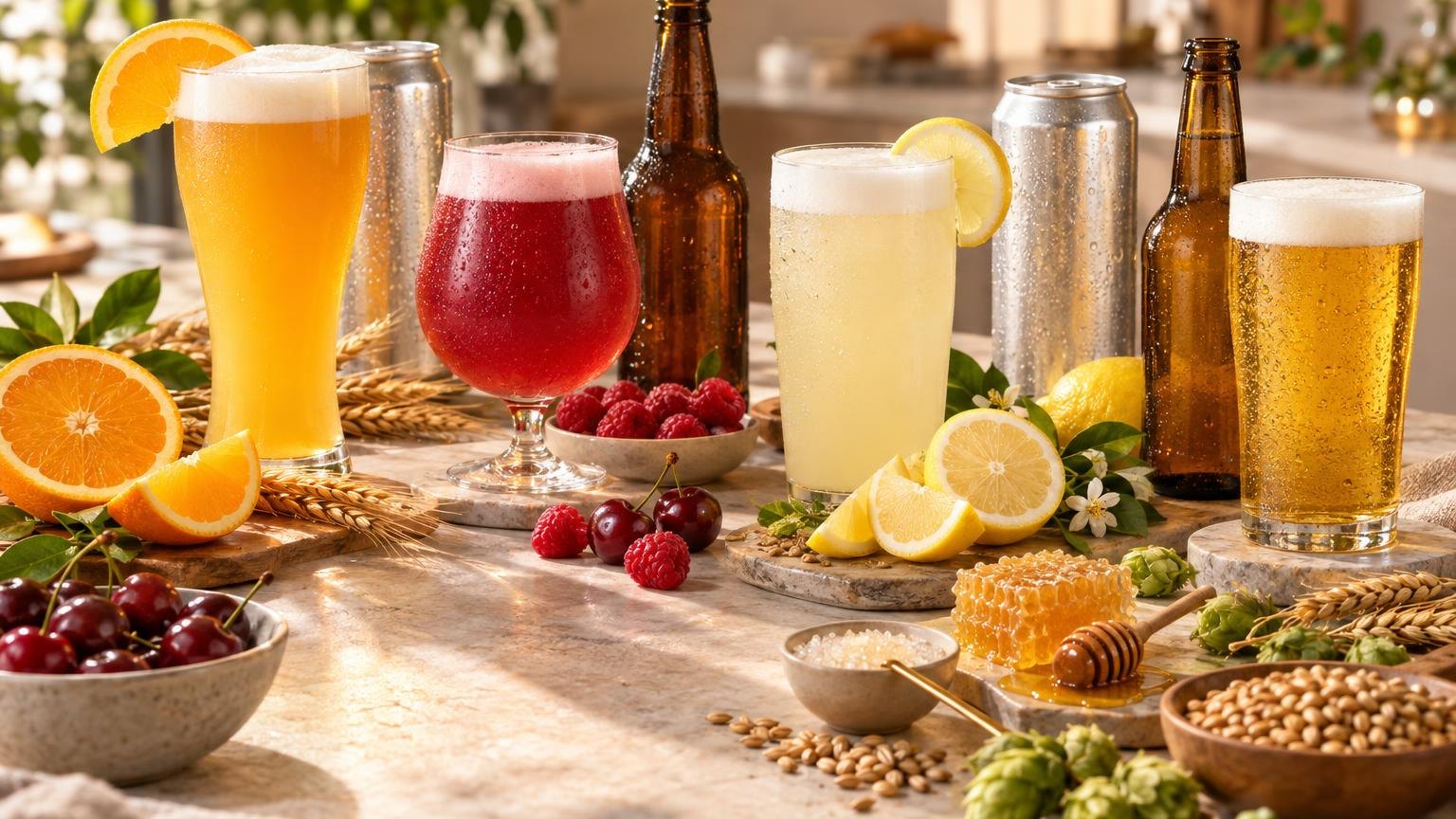
Bitterness in beer is measured in International Bitterness Units (IBUs). Most mainstream lagers fall between 8–25 IBU, while IPAs can exceed 60–100 IBU.
Targeting styles under 20 IBU is the single most reliable strategy for avoiding bitter flavors.
IBU Ranges by Beer Style
| Style | Typical IBU Range | Bitterness Perception |
| Fruit Lambic | 0–10 | Virtually none |
| Berliner Weisse | 3–8 | Barely detectable |
| American Wheat | 10–20 | Very low |
| Hefeweizen | 8–15 | Low |
| Belgian Witbier | 10–17 | Low |
| Cream Ale | 8–20 | Low |
| Amber Lager | 18–30 | Moderate |
| American IPA | 40–70 | High |
| Double IPA | 60–100+ | Very high |
IBU alone doesn’t tell the full story. Residual sugar, malt sweetness, and fruit additions all mask perceived bitterness even at moderate IBU levels.
What to Look for on the Label
- IBU number below 20: Many craft breweries now print IBU on cans and bottles. Anything under 20 is a safe starting point.
- Style descriptors: Words like “wheat,” “fruit,” “sour,” “cream,” or “session” generally signal lower bitterness profiles.
- ABV under 5%: Lower-alcohol beers tend to have lighter, less aggressive flavor profiles overall.
- Ingredient callouts: Mango, raspberry, vanilla, or coffee additions typically indicate a flavor-forward beer that downplays hop bitterness.
Red Flags That Signal Bitterness
Avoid any label featuring “IPA,” “Imperial,” “double-hopped,” or “West Coast.” These styles prioritize hop-driven bitterness as a defining characteristic.
Beers listing Centennial, Columbus, or Simcoe hops lean heavily bitter. Citra and Mosaic hops contribute more aroma than bitterness but still register 11–13 alpha acid percentage points.
The BU:GU Ratio Shortcut
Dividing IBU by original gravity units gives the BU:GU ratio. A ratio below 0.5 means malt sweetness dominates over bitterness. Most fruit ales and wheat beers fall between 0.2–0.4.
A Belgian Tripel at 35 IBU and 1.080 OG yields a 0.44 ratio — perceived as balanced, not bitter. An American IPA at 65 IBU and 1.065 OG yields 1.0 — intensely bitter by comparison.
Ask your bartender or bottle shop staff for beers under 15 IBU with fruit or wheat bases. This single request eliminates roughly 70% of bitter options from consideration immediately.
Common Questions
What types of beer don’t taste like traditional beer?
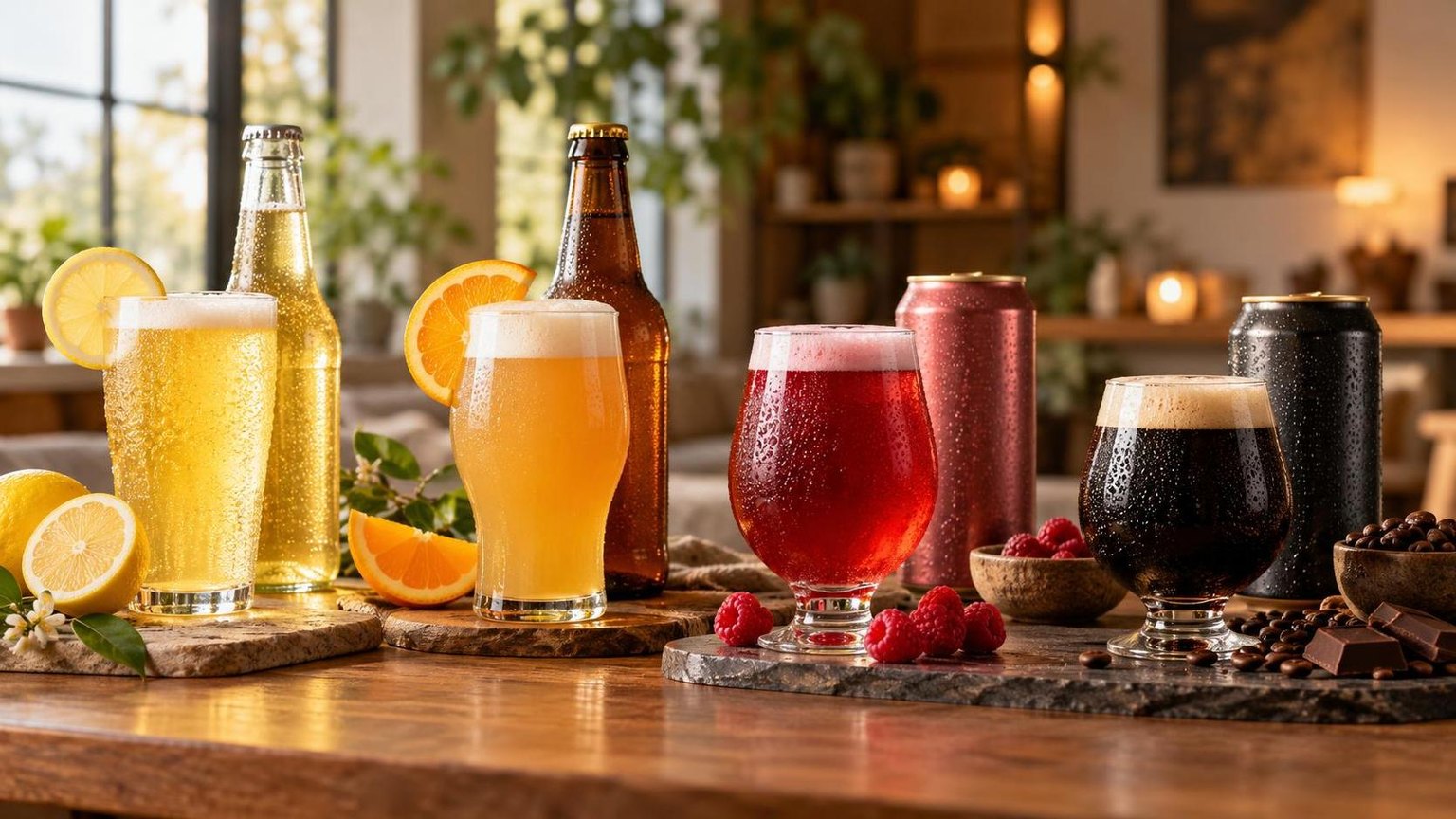
Fruit-flavored wheat beers, radlers, shandies, and flavored sours mask the classic bitter, hoppy profile most people associate with beer.
Belgian witbiers like Hoegaarden use coriander and orange peel to produce a spicy-citrus character with almost no perceptible bitterness (typically 10–15 IBU).
Hard seltzers technically aren’t beer, but malt-based options like Truly and White Claw occupy the same legal category and deliver virtually zero beer flavor.
Why do some beers taste less “beer-like” than others?
Bitterness in beer comes primarily from alpha acids in hops; beers brewed with minimal late-addition hops or low-alpha varieties register under 15 IBU, well below the 35–70 IBU range of a typical IPA.
Lactose additions (as in milk stouts and milkshake IPAs) add residual sweetness that counteracts perceived bitterness. Fruit purées, vanilla, chocolate, and coffee further shift the flavor profile away from the grain-and-hop baseline.
Which specific beers should a non-beer drinker try first?
Lindemans Framboise (raspberry lambic, ~3.5% ABV) tastes closer to sparkling juice than beer and scores consistently above 4.0 on Untappd among self-described non-beer drinkers.
Leinenkugel’s Summer Shandy blends wheat beer with lemonade at 4.2% ABV, producing a tart, candy-sweet finish. Founders Rübæus is a nitro raspberry ale at 5.7% ABV that delivers intense berry flavor with negligible hop bitterness.
Do non-beer-tasting beers have lower alcohol content?
Many do, but not all.
Radlers and shandies typically fall between 2.0–4.5% ABV because they’re diluted with juice or soda, while pastry stouts and dessert-style ales can reach 10–14% ABV despite tasting like chocolate cake or peanut butter.
Southern Tier Crème Brûlée Imperial Stout hits 9.6% ABV yet its dominant flavors are vanilla custard and caramelized sugar, not hops or roasted malt.
Can homebrewers make beer that doesn’t taste like beer?
Yes—using a neutral ale yeast (such as Safale US-05), under 5 IBU of hops added only at 60 minutes for stability.
And 1–3 lb of fruit purée per gallon in secondary fermentation produces a fruit-forward beer with minimal traditional beer character.
Adding 0.5–1.0 lb of lactose at flameout contributes body and sweetness without fermentability. Kettle-souring the wort to a pH of 3.2–3.5 before the boil creates a tart base that mimics sour candy more than beer.
- Does Walgreens Sell Liquor Like Beer? Get the Answer
- How Many Beers In a Case? In-depth Answer
- What Is Craft Cider? Basic Information You Must Know
- Dos Equis Alcohol Content – Find Out Now
- How Many Beers In A Keg?
- All Alcohol Guides
- Alcohol and Tobacco Tax and Trade Bureau – Beer Regulations (2024)
- FDA – Beverages: Labeling of Certain Beers Subject to the Labeling Jurisdiction of the Food and Drug Administration (2023)
- National Institute on Alcohol Abuse and Alcoholism – What Is a Standard Drink? (2023)
- University of California, Davis – Department of Food Science and Technology: Brewing Science (2024)
- Brewers Association – Beer Style Guidelines (2024)
- Bamforth, C.W. "Flavor of Beer" in Beer: A Quality Perspective – PubMed (2009)
- USDA FoodData Central – Beer, Light (2024)
- The Oxford Companion to Beer – Fruit Beer & Flavored Beer Entries, Oxford University Press (2012)