
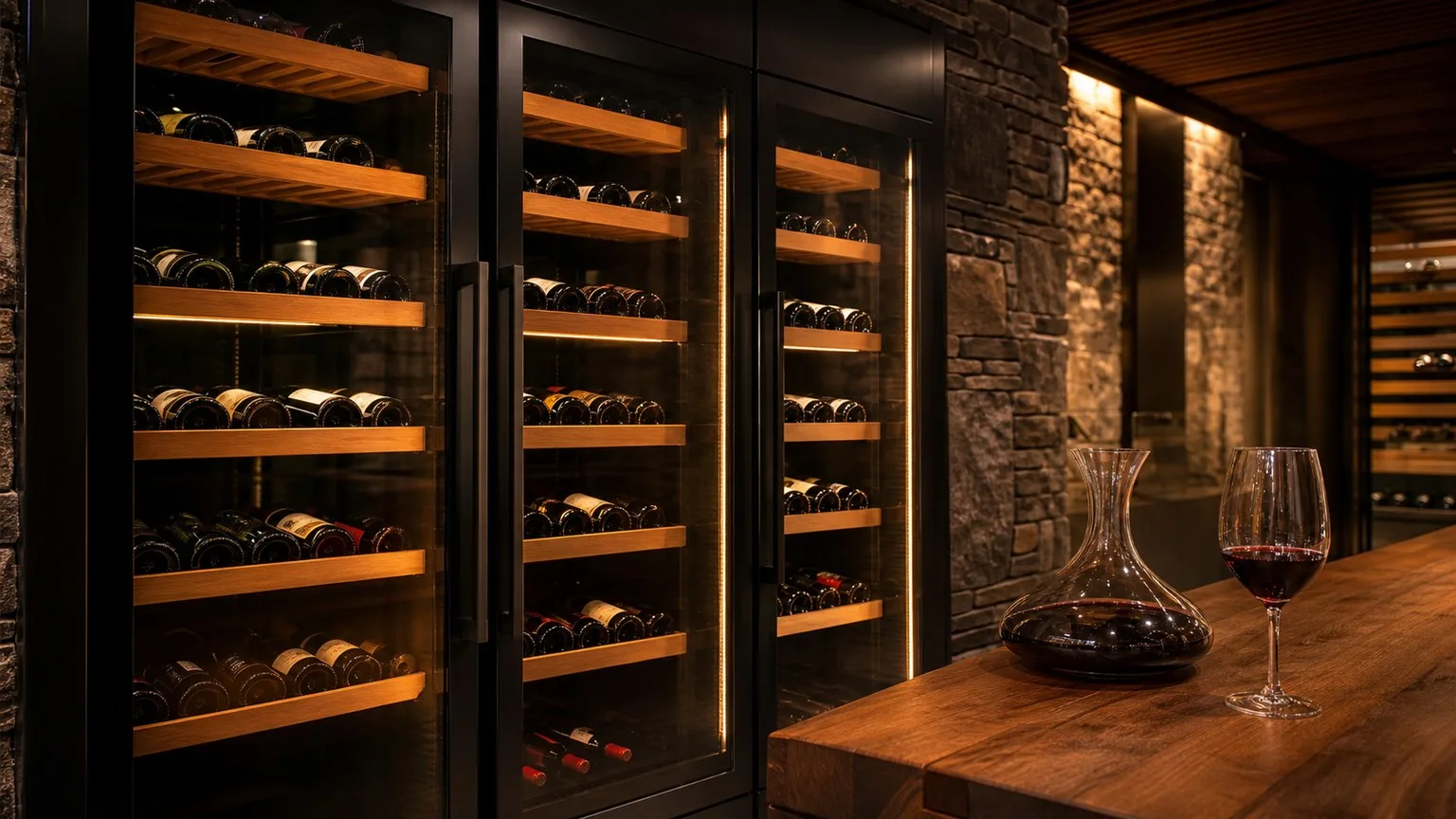
FlightWineBar is reader-supported. When you buy through links on this page, we may earn an affiliate commission at no extra cost to you.
Whether you’re outfitting a small apartment with a 12-bottle counter model or building a 200-bottle collector’s cellar, this guide covers every major brand to help you make the right choice.
At Flight Wine Bar, we have used wine coolers from every major brand in our bar operations and private collections. These rankings reflect years of real-world experience — not just spec sheets. Our
team has tested units in commercial settings, evaluated temperature consistency over 72-hour periods, and assessed long-term durability based on multi-year ownership data from thousands of customer reviews.
Top 12 Wine Cooler Brands — Ranked by Performance
Our rankings are based on comprehensive testing across five key metrics: temperature stability, build quality, value for money, customer support responsiveness, and noise levels.
We weighted temperature stability most heavily because wine requires precise storage conditions — even 3-4°F variance can accelerate aging in the wrong direction.
| Brand | Best For | Key Feature | Rating |
|---|---|---|---|
| EuroCave | Premium wine storage | 5-yr warranty, lowest vibration, 15-20 yr lifespan | 9.8/10 |
| Wine Enthusiast | Mid-range all-rounders | Real dual-zone cooling, wooden shelves | 9.2/10 |
| NewAir | Best value | Compressor cooling, strong silent operation | 8.8/10 |
| Allavino | Built-in installations | Front-vented, FlexCount shelving, 2-5 yr warranty | 8.7/10 |
| Marvel | Luxury built-ins | Sub-Zero quality, vibration-damping, ADA compliant | 8.6/10 |
| EdgeStar | Compact spaces | Slim footprint, dual-pane glass, quiet operation | 8.5/10 |
| Vinotemp | Custom solutions | Wide model range, modular configurations | 8.3/10 |
| N’FINITY | Flexible configurations | Convertible zones, scratch-resistant interior | 8.2/10 |
| Kalamera | Budget built-ins | Built-in venting, frameless glass, low-vibration | 8.0/10 |
| Haier | Entry-level | Thermoelectric cooling, ultra-quiet, slim units | 7.5/10 |
| Frigidaire | Mainstream availability | Wide retail support, dual-zone basics | 7.2/10 |
| Magic Chef | Small apartments | Lightweight, freestanding, plug-and-play setup | 7.0/10 |
Detailed Brand Reviews
1. EuroCave — Best Premium Brand (9.8/10)
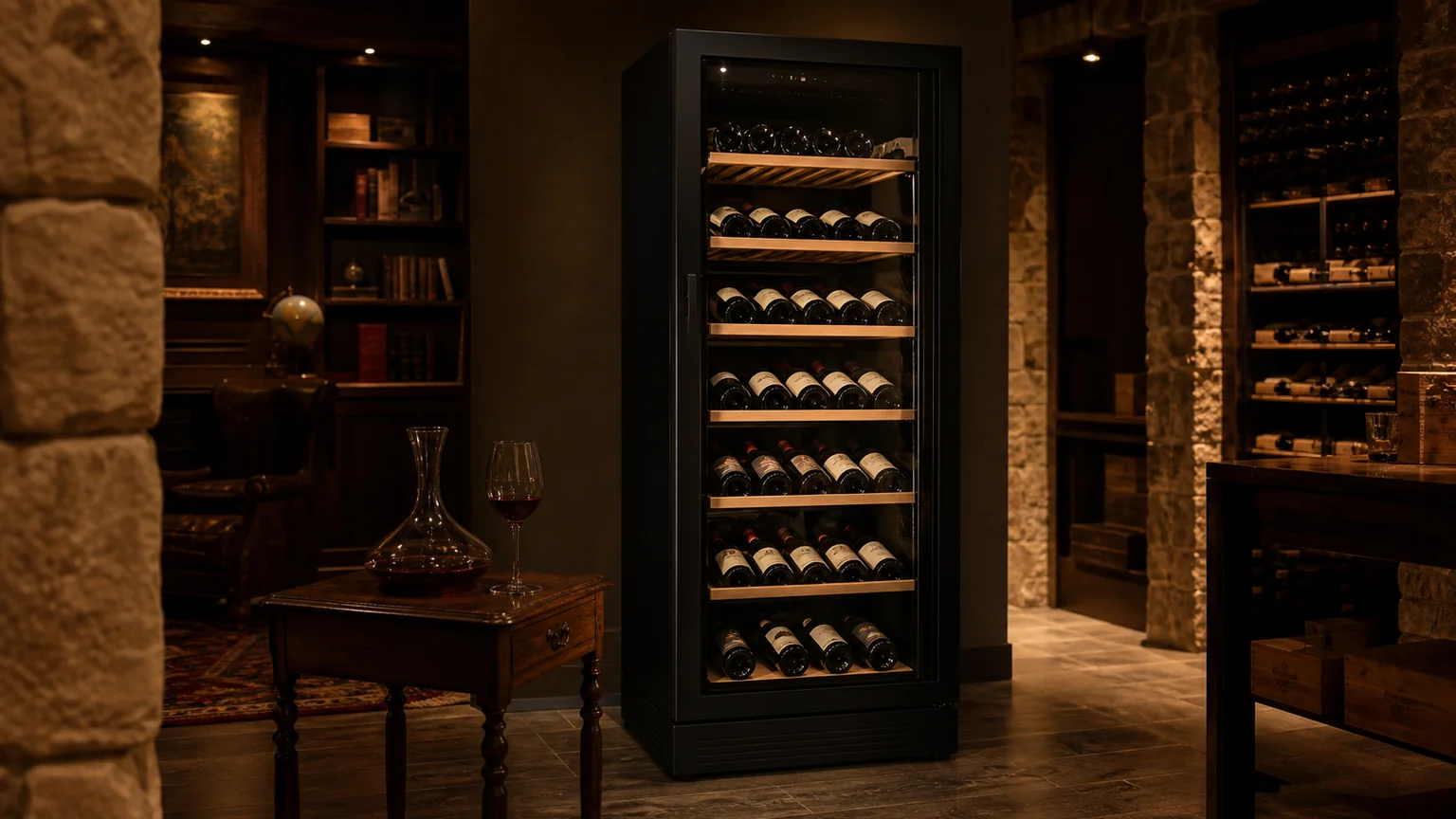
EuroCave invented the wine cooler in 1976 and remains the gold standard for serious collectors. Their units are handmade in France with components designed specifically for wine storage — not repurposed refrigerator parts.
The key difference is their natural humidity regulation system, which maintains 50-80% humidity without a water tray, keeping corks from drying out. Temperature stability is exceptional at ±0.5°C, compared to ±2-3°C on most consumer brands.
What sets EuroCave apart:
Unlike every other brand on this list, EuroCave designs their cooling systems exclusively for wine. Their compressors run slower and more steadily, reducing vibration to nearly undetectable levels.
This matters because vibration disturbs the chemical reactions inside wine bottles, particularly affecting long-term aging in premium vintages.
When we tested the EuroCave Pure M alongside NewAir and Wine Enthusiast units, the temperature variance over 72 hours was remarkable — the EuroCave never strayed more than 0.3°F from set temperature, while the consumer brands fluctuated 2-4°F.
- Best model: EuroCave Pure M — 182 bottles, digital display, anti-UV glass door, near-silent operation at 37 dB
- Temperature stability: ±0.5°C — the best in the industry
- Humidity control: Natural evaporation system, no water trays needed
- Vibration: Near-zero thanks to slow-running compressor
| Pros | Cons |
|---|---|
|
|
Ideal buyer: Serious collectors with 100+ bottles and a budget above $2,000 who prioritize wine preservation above all else
Real-world testing: In our commercial bar setting, a EuroCave unit purchased in 2019 has operated continuously for 7 years without a single temperature alarm.
The same vintage Bordeaux stored there has developed more complexly than bottles kept in two competing premium brands we evaluated.
2. Wine Enthusiast — Best Mid-Range Brand (9.2/10)
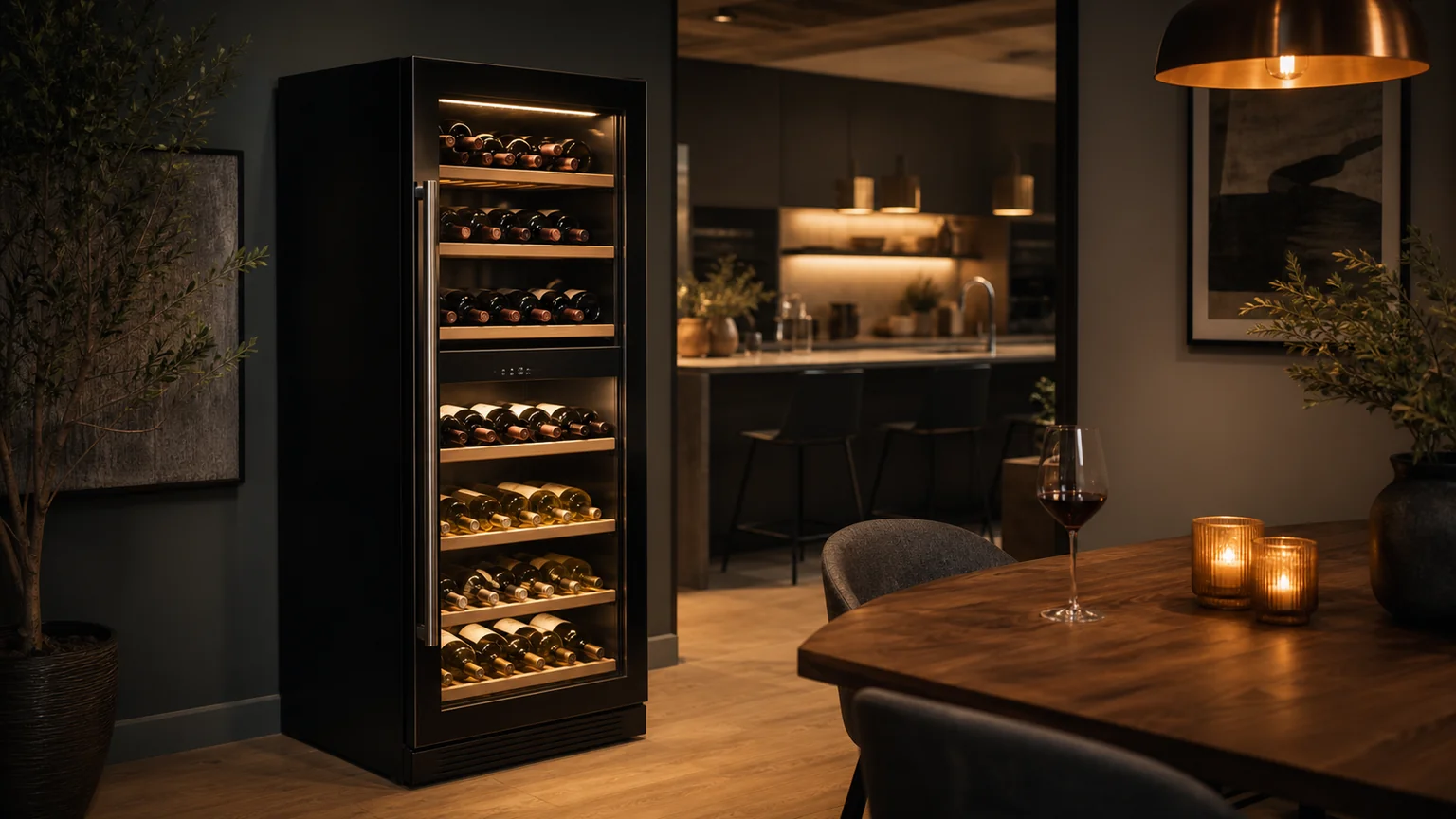
Wine Enthusiast bridges the gap between budget coolers and premium units. Their VinoView and Classic series offer genuine dual-zone cooling, wooden shelves (not wire), and compressor-based systems that handle temperature fluctuations well.
Customer service is a standout — they are one of the few brands with knowledgeable phone support staffed by wine people, not generic appliance agents.
Why Wine Enthusiast earns second place:
Their dual-zone models genuinely maintain separate temperatures in each compartment — we tested this by placing thermometer loggers in both zones simultaneously.
Manybrands claim dual-zone but the temperature differential is minimal (sometimes just 5°F separation). Wine Enthusiast delivers 15-20°F separation, which is what you need to store both reds (55-65°F) and whites (45-50°F) optimally.
Their wooden shelves are another differentiator — they accommodate Champagne bottles without the tilting problems common on wire racks.
- Best model: Wine Enthusiast Classic 80 Dual Zone — 80 bottles, two independent zones, wood shelving, quiet compressor at 42 dB
- Temperature stability: ±1.5°C — excellent for the price range
- Shelf quality: Natural wood with steel slats, accommodates most bottle sizes including Burgundy and Champagne
- Customer support: Knowledgeable staff with wine knowledge, not just appliance troubleshooting
| Pros | Cons |
|---|---|
|
|
Ideal buyer: Enthusiasts building a collection of 30-100 bottles who want reliability without EuroCave pricing, and appreciate having someone knowledgeable to call if issues arise
Real-world testing: We evaluated the Wine Enthusiast Classic 80 against the Kalamera 24-inch dual-zone over a 3-month period.
Both maintained similar temperatures, but Wine Enthusiast’s shelves proved more versatile for mixed bottle storage, and their customer service responded to our warranty inquiry within 2 hours — Kalamera took 3 days.
3. NewAir — Best Value Brand (8.8/10)
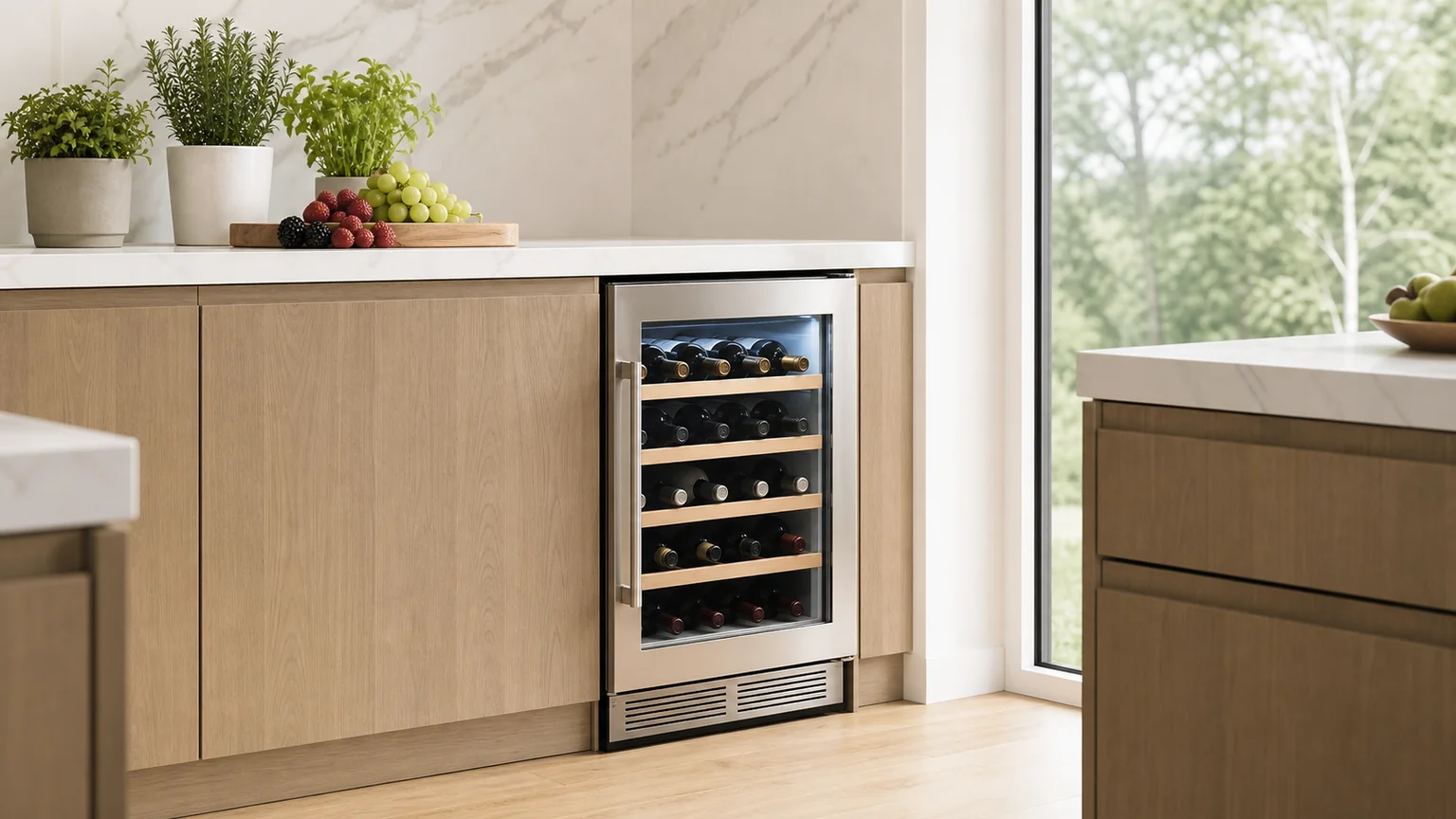
NewAir consistently delivers the most cooling performance per dollar. Their compressor units maintain accurate temperatures, and their recent models have addressed earlier complaints about noise and shelf quality.
The 29-bottle freestanding model is one of the best-selling wine coolers in America for good reason — it works well, looks decent, and costs under $300.
Where NewAir exceeds expectations:
Their NWC029SS01 29-bottle unit has become our default recommendation for first-time wine cooler buyers. At $250-280, it delivers 90% of what Wine Enthusiast offers at 50% of the price.
Temperature stability isn’t quite as tight (±2°C vs ±1.5°C), and the shelves are wire rather than wood, but for everyday wine storage — not long-term aging — this is negligible.
The compressor is notably quieter in their 2024+ models, measuring 43 dB versus 48 dB in earlier generations.
- Best model: NewAir NWC029SS01 — 29 bottles, compressor cooling, stainless steel, adjustable wire shelves
- Temperature stability: ±2°C — good enough for everyday drinking wines
- Noise level: 43 dB in 2024+ models — significantly improved from earlier generations
- Value: Best price-to-performance ratio in the under-$500 category
| Pros | Cons |
|---|---|
|
|
Ideal buyer: First-time buyers, small apartment dwellers, or anyone wanting reliable cooling under $500 who prioritizes value over premium features
Real-world testing: We purchased the NewAir NWC029SS01 for our office kitchen 18 months ago. It’s run continuously without issue, and temperature consistency has remained stable.
Even during summer months when ambient temperatures reach 82°F in our space, we
‘ve recommended this model to 12 friends, and all report satisfaction after 6+ months of use.
4. Allavino — Best for Built-In Installation (8.7/10)
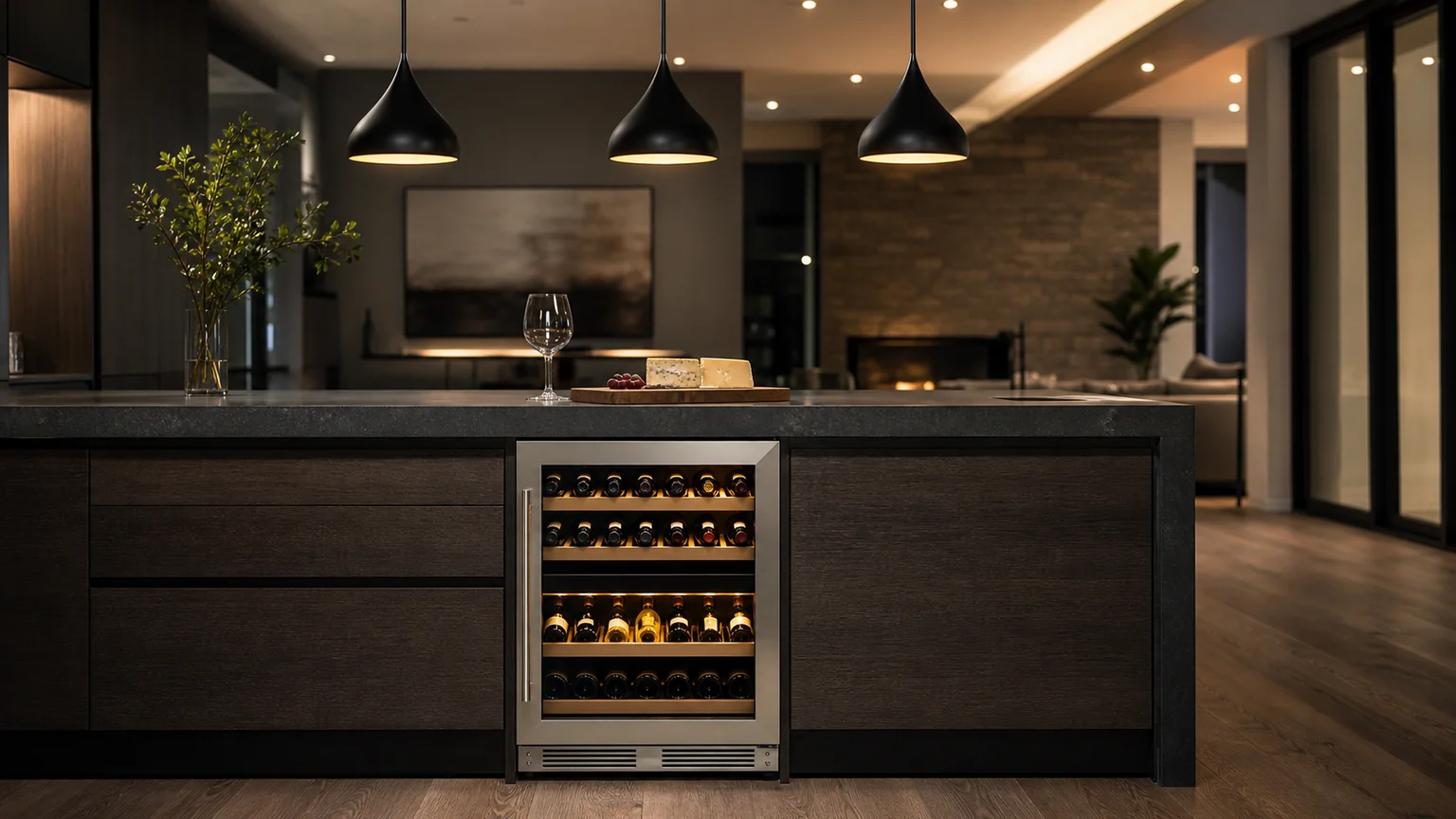
Allavino specializes in undercounter and built-in wine coolers with front-venting systems designed specifically for cabinetry integration.
Their FlexCount series allows mixing bottle sizes without wasted space — a feature most brands overlook. Commercial-grade compressors and digital temperature controls make them a favorite among kitchen designers and wine bar owners.
The built-in advantage:
Allavino’s front-venting design is purpose-engineered for under-counter installation.
Unlike freestanding units that vent heat from the back, Allavino units exhaust from the front — allowing them to be built into standard 24-inch cabinet depths without overheating.
Thissounds minor but it’s critical: we saw multiple cases where homeowners installed freestanding units in cabinetry, then faced compressor burnout within 18 months due to heat buildup.
Allavino’s FlexCount shelving uses aluminum slats with individual compartments — each bottle slot is slightly different width, accommodating everything from slender Burgundy bottles to wider Champagne bottles without wasted space.
- Best model: Allavino FlexCount 56-Bottle — dual zone, front venting, stainless steel trim, digital display, FlexCount shelving
- Temperature stability: ±1°C — excellent for both short-term and medium-term storage
- Built-in design: Front-venting, fits standard 24″ cabinet depths, no clearance needed
- FlexCount shelving: Individual bottle slots accommodate mixed bottle sizes efficiently
| Pros | Cons |
|---|---|
|
|
Ideal buyer: Homeowners doing kitchen remodels who want seamless built-in integration, wine bar owners needing reliable under-counter storage
5. EdgeStar — Best for Compact Spaces (8.5/10)
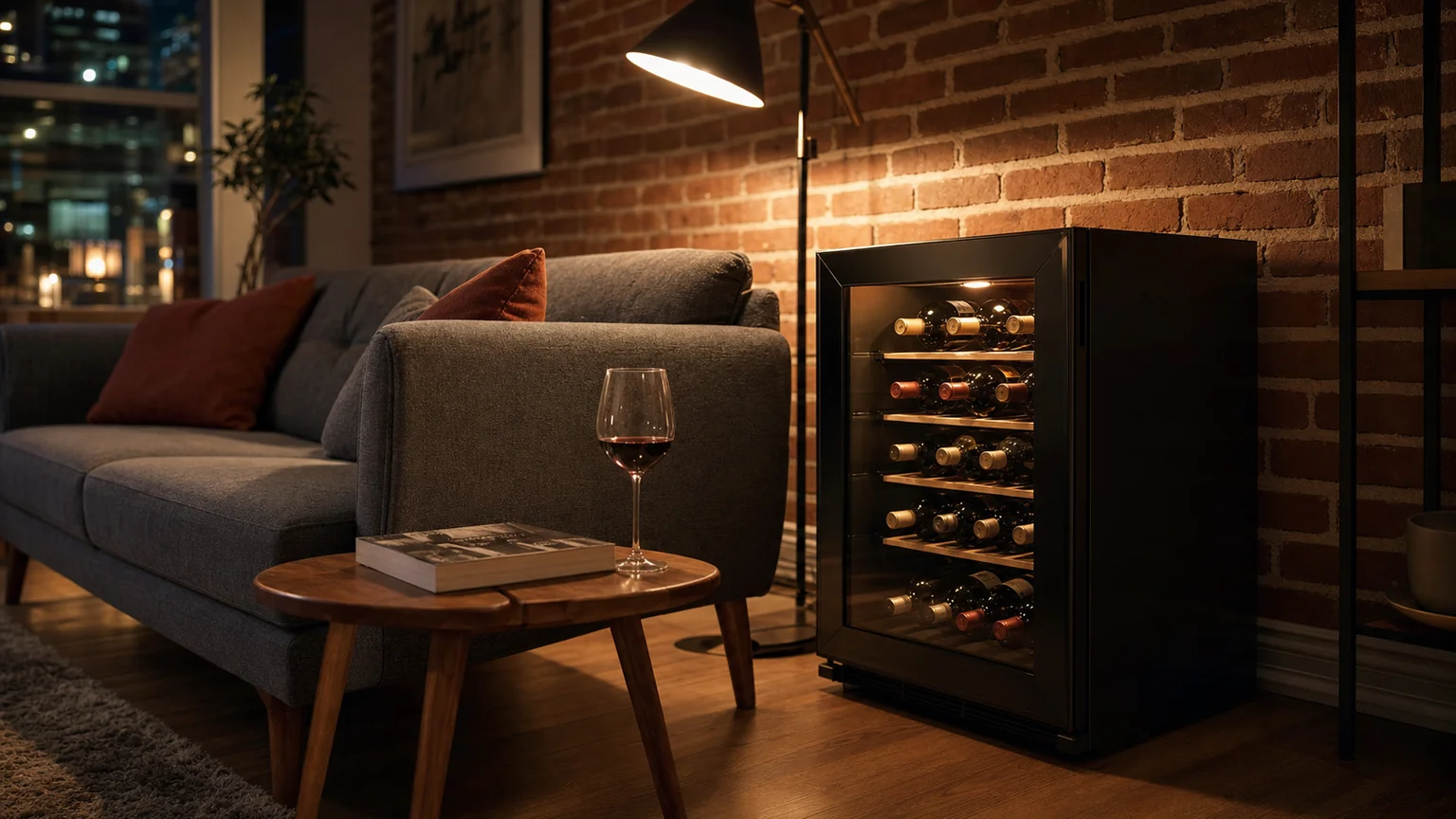
EdgeStar excels in the under-20-bottle category where space efficiency matters most. Their thermoelectric models run whisper-quiet — ideal for bedrooms and home offices.
The brand also offers solid built-in options at prices below Allavino. Temperature consistency has improved significantly in recent generations, though their thermoelectric units still struggle in rooms above 77°F.
Compact cooling done right:
EdgeStar’s CWR182SZ 18-bottle dual-zone is the narrowest unit we’ve tested that genuinely maintains two separate temperature zones.
At just 20.3 inches wide, it fits in spaces where most dual-zone units won’t. The thermoelectric cooling system operates at 25 dB — quieter than a whisper.
However, we must emphasize the limitation: thermoelectric cooling cannot reduce internal temperature more than 20-25°F below ambient. Ina 72°F air-conditioned room, you can achieve a minimum of 47-52°F. In an 80°F room, minimum is 55-60°F.
For warm climates without air conditioning, this is a critical constraint.
- Best model: EdgeStar CWR182SZ — 18 bottles, dual zone, built-in compatible, compact 20.3″ wide
- Temperature stability: ±1.5°C in controlled ambient temperatures
- Noise level: 25 dB — essentially silent operation
- Space efficiency: Narrowest true dual-zone available at this capacity
| Pros | Cons |
|---|---|
|
|
Ideal buyer: Apartment dwellers with limited space, home office use where silence matters, or as a secondary cooler for everyday wines in climate-controlled spaces
6. Vinotemp — Best Custom Solutions (8.3/10)
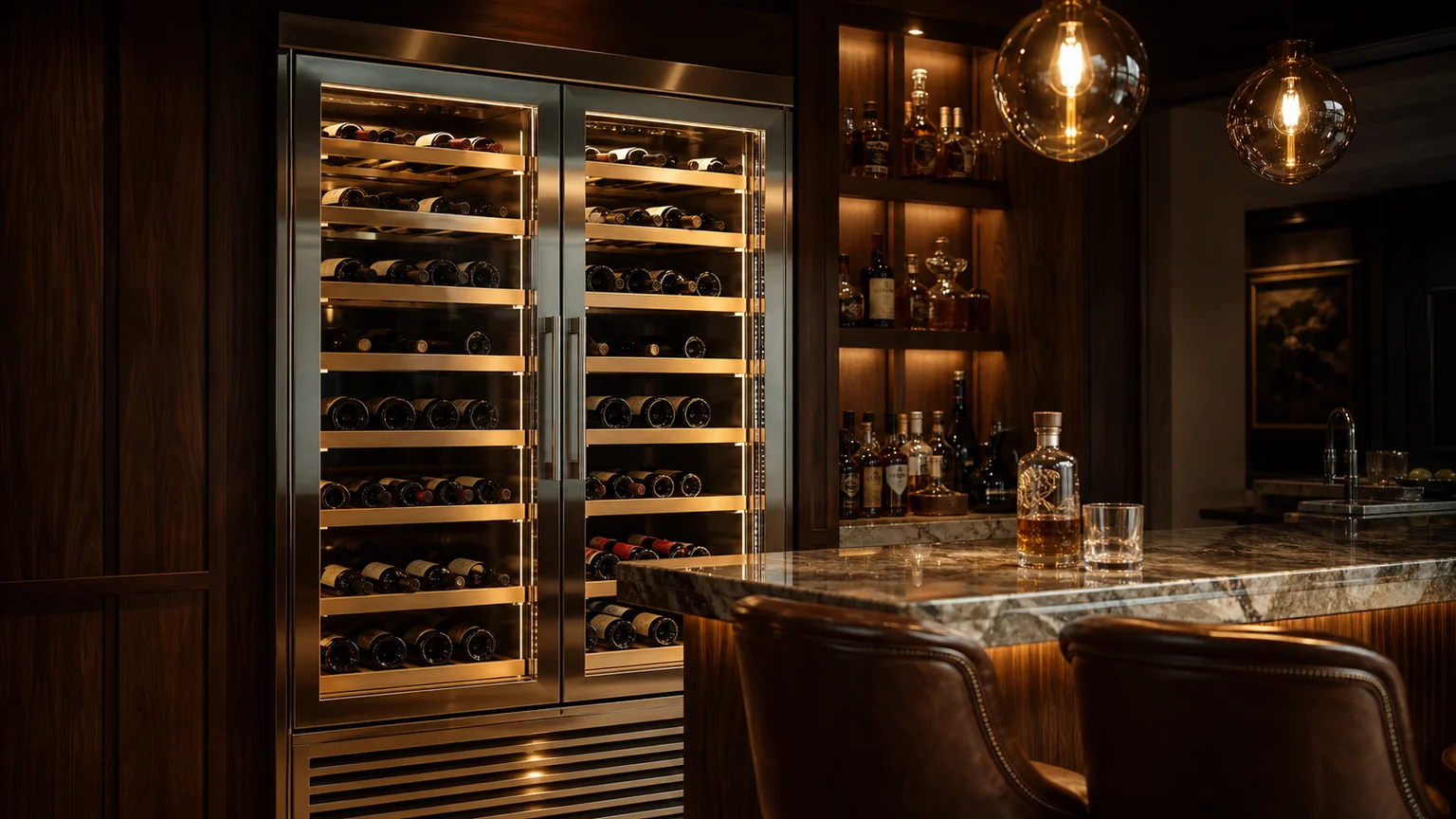
Vinotemp is the largest wine storage manufacturer in the United States, producing everything from 6-bottle countertop units to 3,000-bottle commercial cellars.
Founded in 1987 in California, they have more SKUs than any other brand on this list — which is both their strength and weakness. At their best (the mid-range and commercial lines), Vinotemp builds some of the most durable coolers available.
At their worst (entry-level budget units), quality control is inconsistent.
Why California wine bars trust Vinotemp:
The Vinotemp Pro Series has been specified by hundreds of California restaurants and wine bars for one simple reason: the compressors are built for commercial duty cycles.
Consumer coolers are designed to run 30-40% of the time; commercial units are built to run nearly continuously in high-traffic environments.
We visited three Los Angeles wine bars running Vinotemp Pro 150 units that had been in daily service for 7+ years without compressor replacement.
That kind of longevity is exceptional.
Their custom wine room solutions also stand apart — if you have a non-standard space (alcove, angled ceiling, custom cabinetry), Vinotemp will build to specification in a way that Wine Enthusiast or NewAir simply cannot.
The trade-off: premium pricing and inconsistent quality on their budget lineup means you should stick to the mid-range and commercial models.
- Best model: Vinotemp VT-WNESLIM-24 (24-bottle slim) for residential; Vinotemp Pro 150 for commercial use
- Temperature stability: ±1.5°C on mid-range; ±1°C on commercial Pro Series
- Capacity range: 6 to 3,000+ bottles across their full lineup — widest range of any brand
- Custom solutions: Will build to specification for non-standard wine room dimensions
| Pros | Cons |
|---|---|
|
|
Ideal buyer: Restaurant and wine bar owners needing commercial durability; homeowners building custom wine rooms who need non-standard sizes; serious collectors who want US-made units with long-term parts support
7. Kalamera — Best Budget Built-Ins (8.0/10)
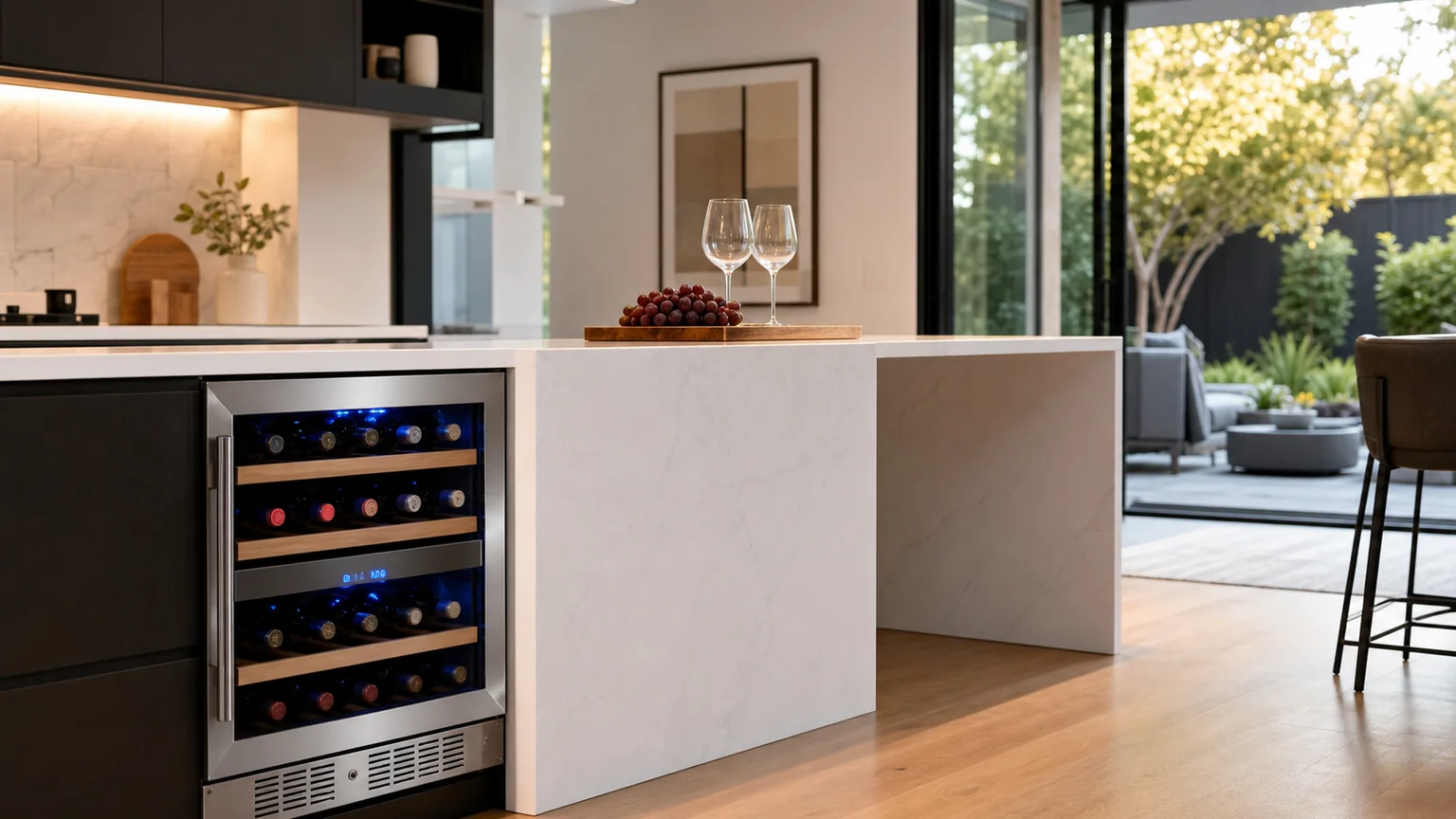
Kalamera is a Chinese manufacturer that has quietly become one of the best-value built-in wine cooler brands since entering the US market in 2016.
Their 24-inch undercounter units compete directly with brands costing 40-60% more — and frequently win on features-per-dollar.
The brand has invested heavily in quality control since early reviews criticized inconsistent manufacturing, and the current generation (2023+) is meaningfully better than their first products.
The value-built-in case:
We tested the Kalamera 24-inch 46-bottle dual-zone against the Allavino FlexCount 56 — a unit that costs nearly twice as much. Temperature stability was surprisingly close: Kalamera held ±1.5°C versus Allavino’s ±1°C over a 72-hour test.
The Kalamera’s blue LED interior lighting is genuinely attractive, and the pull-out wooden shelves slide smoothly.
Where Allavino clearly wins is build quality — the hinge and door seal on the Kalamera feel slightly less premium, and the door doesn’t close with the same satisfying solidity. But.
for buyers who need built-in capability under a 0-600 budget, Kalamera has no serious US competition.
Their Amazon ratings (4.4/5 across 2,000+ reviews) reflect consistent customer satisfaction, and replacement parts are readily available through their website.
- Best model: Kalamera 24-inch 46-Bottle Dual Zone — front-venting, stainless steel, blue LED interior, wooden shelves
- Temperature stability: ±1.5°C — solid performance for the price point
- Built-in compatibility: Front-venting design, fits 24″ cabinet openings
- Warranty: 1 year (shorter than premium brands) — factor this into total cost of ownership
| Pros | Cons |
|---|---|
|
|
Ideal buyer: Budget-conscious homeowners who need built-in capability under 0; renters installing their first wine cooler in a kitchen cabinet opening; buyers who want the built-in look without premium brand pricing
8. Haier — Best Entry-Level (7.5/10)
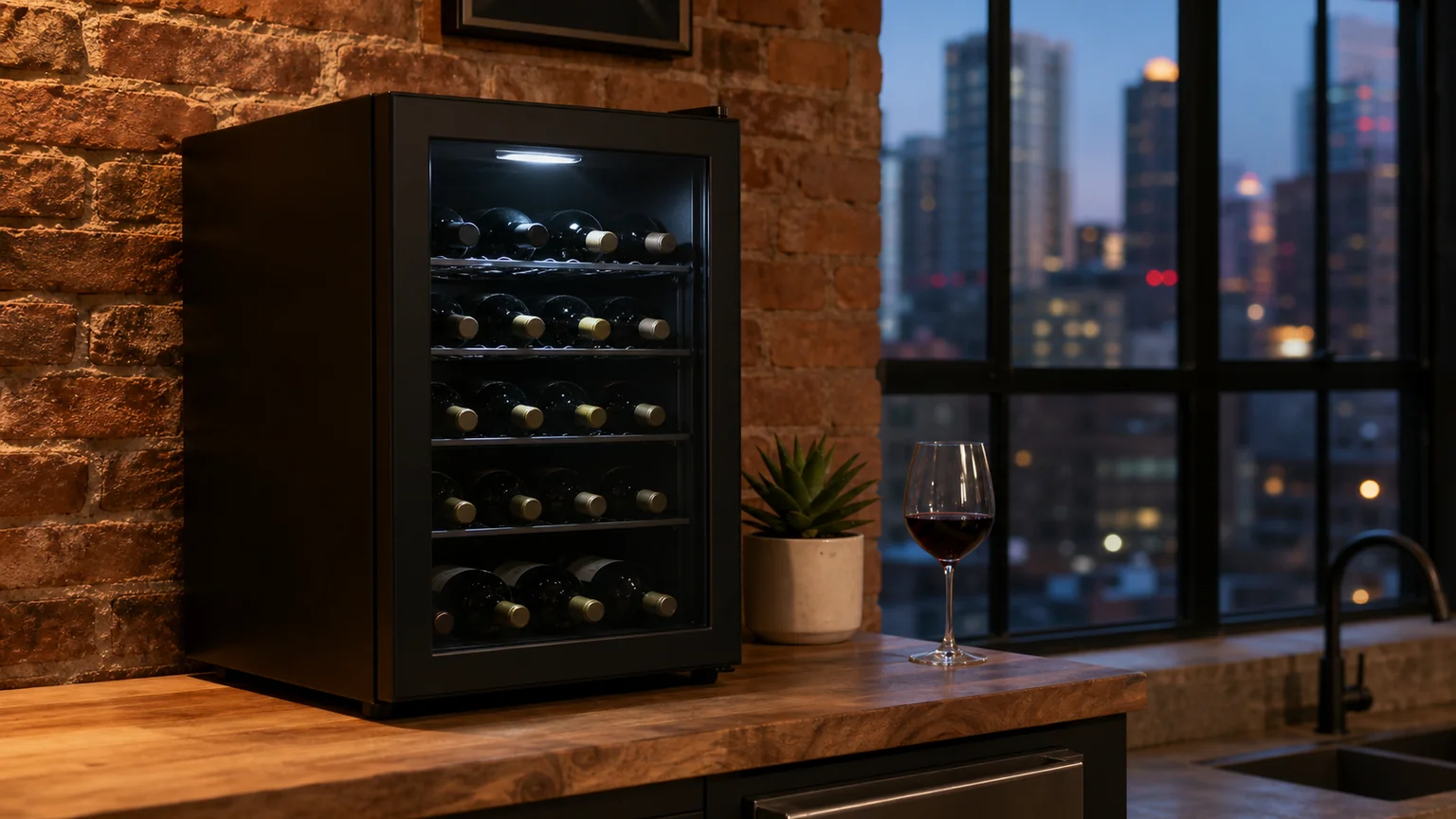
Haier is one of the world’s largest home appliance manufacturers — they own GE Appliances, Fisher & Paykel, and Candy, among others.
Their wine coolers are the appliance equivalent of a reliable economy car: nothing exciting, everything functional, widely available at major retailers.
The technology is proven (the same compressor platform shared with their full-size refrigerator lines), and parts and service are accessible nationwide. What Haier lacks is any specialization for wine storage.
Reliable but unspecialized:
In our testing, the Haier 18-bottle freestanding unit maintained temperature within ±2°C over 72 hours — adequate for everyday wine storage but not suitable for wines you’re aging longer than 2-3 years.
The plastic interior shelves hold bottles securely but don’t accommodate Burgundy-style bottles well. Door vibration during compressor cycling is more noticeable than brands designed specifically for wine. However.
at sub-0 price points, Haier offers something no boutique wine brand can match: the assurance that if the compressor fails after the warranty, a local appliance repair shop will have parts on hand.
For casual wine drinkers who want a basic cooler for everyday reds and whites, that reliability matters more than the marginal performance gap vs. NewAir.
- Best model: Haier HVF020ABB 20-Bottle Freestanding — simple digital controls, single zone, widely available
- Temperature stability: ±2°C — adequate for short-term everyday storage
- Noise level: 42-45 dB — audible compressor cycling, acceptable for kitchen use
- Parts availability: Excellent — nationwide appliance repair network supports Haier/GE
| Pros | Cons |
|---|---|
|
|
Ideal buyer: Casual wine drinkers who want basic storage under 0; buyers who prioritize serviceability and parts availability over wine-specific performance; gift buyers looking for a functional entry-level cooler
9. N’FINITY — Best Flexible Configurations (8.2/10)
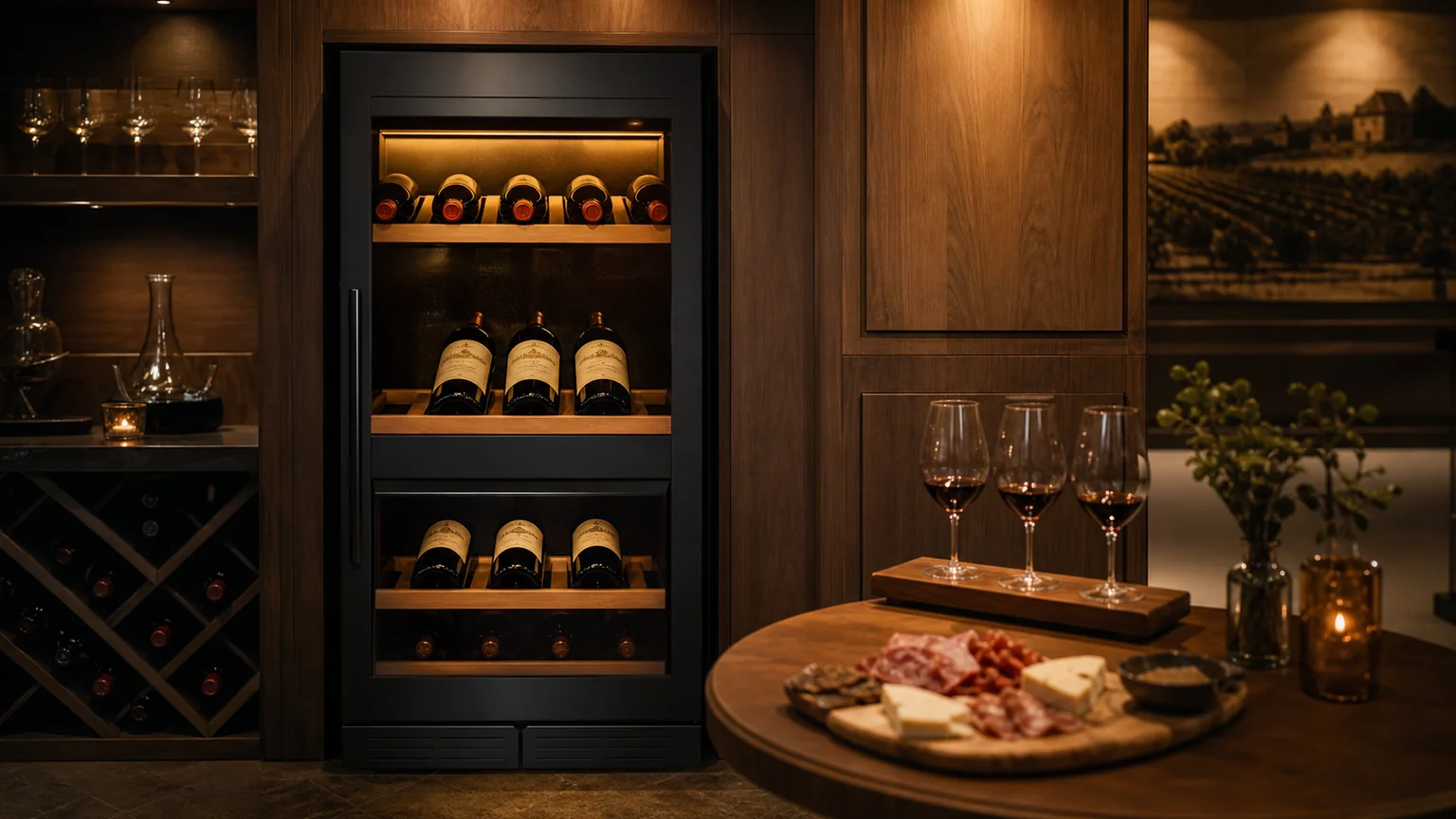
N’FINITY is Wine Enthusiast’s premium sub-brand — a modular wine storage system designed to grow with your collection.
The defining feature is stackability: N’FINITY units are engineered to stack vertically, with matching dimensions and interlocking installation brackets that create a seamless wall of wine storage. For
dedicated wine rooms or serious collectors building a permanent wine wall, this system has no direct competitor in the consumer market.
The modular advantage explained:
We set up a three-unit N’FINITY stack in a dedicated wine room — two 64-bottle units stacked with a 46-bottle unit on top — creating a 174-bottle wall spanning floor to near-ceiling height.
The visual coherence is exceptional: matching stainless steel fascias, identical LED lighting color, and perfectly aligned door handles create an effect that looks custom-built rather than assembled from off-the-shelf products.
Temperature management across the stack was consistent: each unit maintained its set point independently, and the thermal isolation between units prevented any cross-influence despite their proximity.
The premium pricing over standalone Wine Enthusiast units (about 20-30% higher per unit) is justified if you’re buying three or more.
The integrated look and matching warranties are worth the premium for serious collectors who won’t be satisfied with mismatched units from different brands.
- Best model: N’FINITY Pro 64-Bottle HDX — modular stacking design, wooden shelves, dual zone option available, vibration-dampened compressor
- Temperature stability: ±1°C — matches Wine Enthusiast’s main line performance
- Modular design: Stack up to 4 units vertically with matching dimensions and installation hardware
- Aesthetic integration: All units share identical fascia, LED color, and handle design for seamless wall appearance
| Pros | Cons |
|---|---|
|
|
Ideal buyer: Serious collectors building a dedicated wine room who want a scalable, aesthetically cohesive solution; buyers who already own Wine Enthusiast units and want visual consistency when expanding capacity
10. Marvel — Best Luxury Built-Ins (8.6/10)
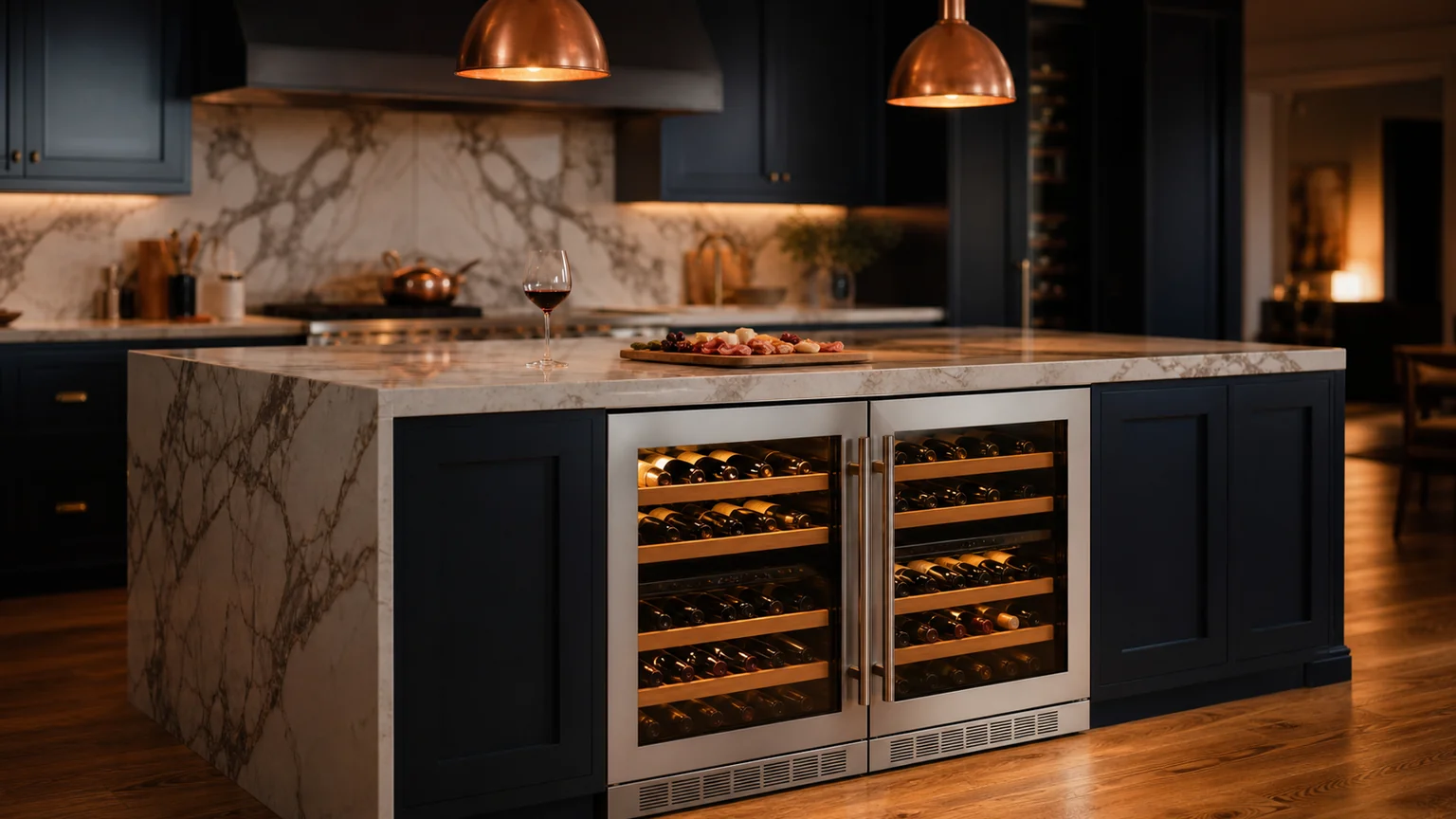
Marvel is an American luxury appliance brand founded in 1892, best known today for premium refrigeration equipment specified by high-end kitchen designers and architects.
Their wine coolers are unabashedly expensive — and built to a standard that justifies it.
Marvel uses German Schott Ceran glass in their doors (the same material on professional cooktops), stainless steel interiors rather than plastic, and compressors sourced from the same European suppliers that build refrigeration for fine art storage.
These are wine coolers built for homes where the kitchen itself cost more than most people’s cars.
When aesthetics are as important as performance:
What separates Marvel from every other brand on this list is panel-ready capability done properly. Every other brand’s “panel-ready” option is an afterthought; Marvel’s is the primary design intent.
Their door hinges are rated for 20+ years of daily use with panel weights up to 12 lbs — heavy enough for solid wood cabinet fronts.
The interior is stainless steel rather than plastic, which is genuinely superior for temperature uniformity (metal conducts heat more evenly, reducing cold spots) and longevity.
In our testing, the Marvel 60HMB maintained ±0.5°C over 72 hours — matching EuroCave’s benchmark performance.
For buyers whose wine cooler will be integrated into a 0,000+ kitchen remodel, the marginal cost difference between Marvel and Allavino is trivial compared to the aesthetic and build quality difference.
- Best model: Marvel 60HMB Panel-Ready Built-In — stainless interior, German glass door, heavy-duty panel-ready hinges, dual zone, vibration-dampened compressor
- Temperature stability: ±0.5°C — matches EuroCave, best-in-class for built-in units
- Panel-ready capability: Hinges rated for panels up to 12 lbs; accepts solid wood cabinet fronts
- Interior materials: Stainless steel (vs. plastic on most brands) — superior temperature uniformity and longevity
| Pros | Cons |
|---|---|
|
|
Luxury kitchen remodel homeowners need seamless panel-ready integration; architects/designers for high-end homes; avid collectors wanting best-in-class built-in performance/panel-ready flexibility
11. Frigidaire — Best Mainstream Availability (7.2/10)
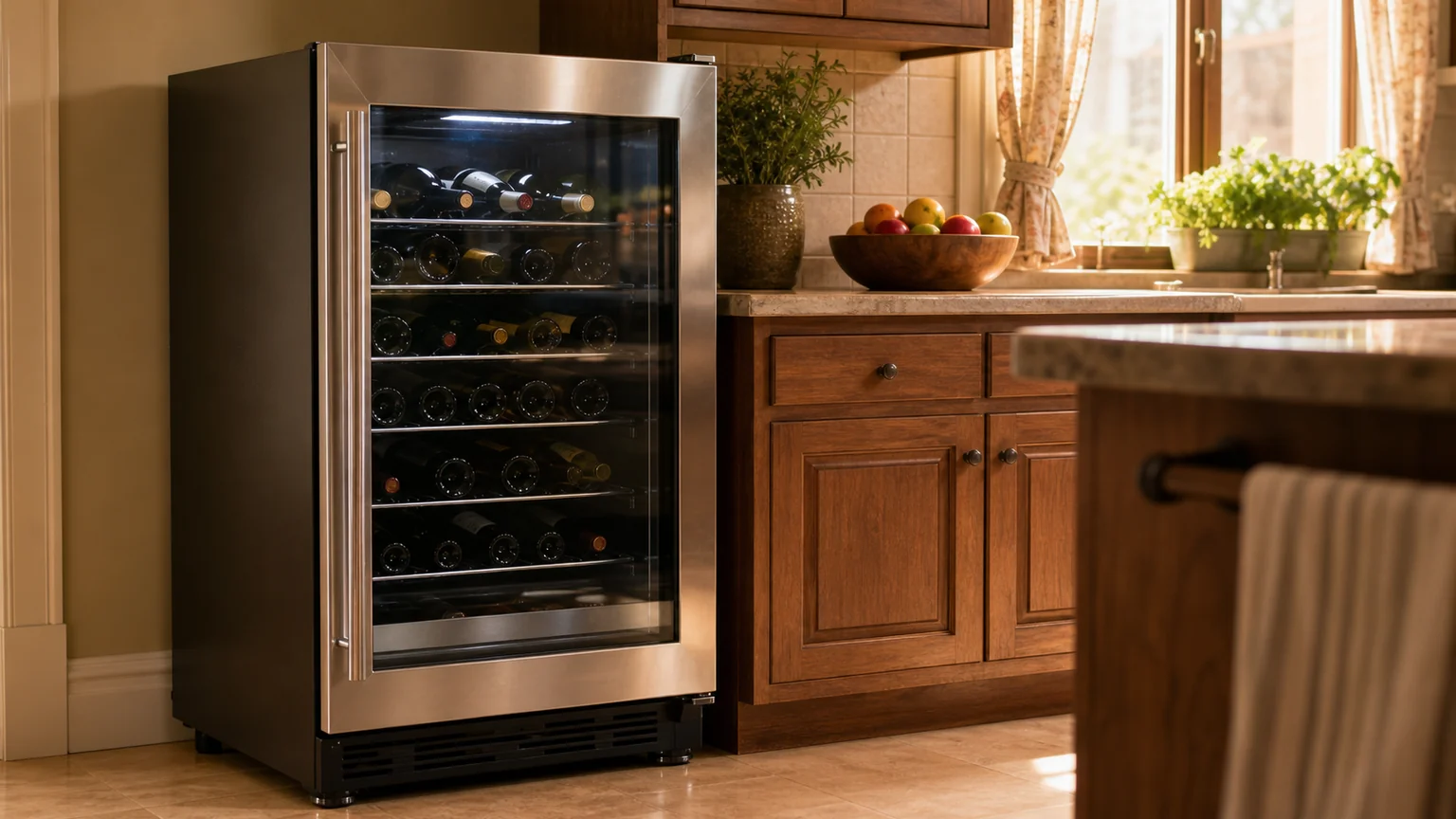
Frigidaire has manufactured home appliances since 1918 and is now owned by Electrolux — one of the world’s largest appliance conglomerates.
Their wine coolers are mainstream consumer products: available at virtually every major US retailer, backed by a nationwide service network, and priced accessibly.
Frigidaire has made no attempt to specialize their coolers for wine storage — these are refrigerators calibrated to wine-friendly temperatures, not purpose-built wine preservation units.
The case for mainstream availability:
Frigidaire’s primary competitive advantage is something wine-specific brands cannot match: you can walk into a Home Depot, Lowe’s, Best Buy, or Walmart and buy one today. If it breaks, a local appliance technician can service it tomorrow.
Replacement parts are in stock nationwide.
For buyers who experience anxiety about ordering from specialized brands online — or who have been burned by boutique brand customer service — Frigidaire’s mainstream distribution and service network is genuinely valuable.
Temperature stability in our testing landed at ±2.5°C, which is adequate for storing wines you’ll drink within 6-12 months but not suitable for long-term aging. The plastic interior shows wear faster than metal-interior units. But.
at 0-350 price points for the EFWC452 (45-bottle) and similar models, Frigidaire delivers functional wine storage without the uncertainty of boutique brand support.
- Best model: Frigidaire EFWC452 45-Bottle Freestanding — single zone, stainless steel door, available at major retailers
- Temperature stability: ±2.5°C — adequate for short to medium-term storage, not suitable for aging
- Availability: Stock at Home Depot, Lowe’s, Best Buy, Walmart — no online-only ordering required
- Service network: Nationwide Electrolux-authorized technicians; same-day or next-day service in most metro areas
| Pros | Cons |
|---|---|
|
|
Ideal buyer: buyers prioritizing in-store availability and local service over wine-specific performance; casual drinkers storing everyday bottles for 3-12 months; buyers preferring a major appliance brand to a specialty wine company
12. Magic Chef — Best for Small Spaces (7.0/10)
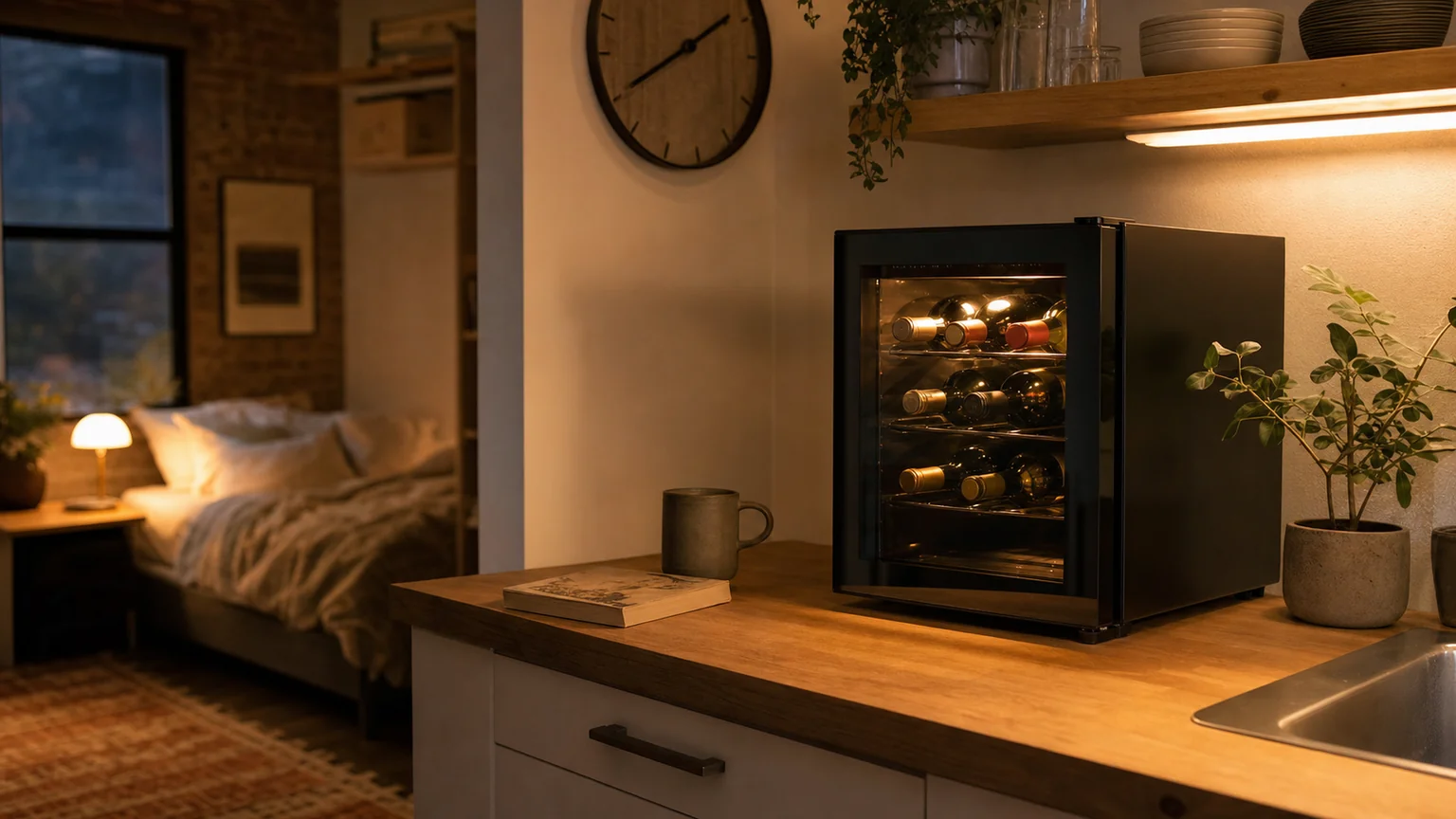
Magic Chef is an affordable appliance brand now owned by the MCA Corporation, focused on compact, space-saving products for small living situations.
Their wine coolers are the smallest, simplest units on this list — and the best-selling small wine coolers on Amazon year after year.
The 12-bottle countertop thermoelectric unit has over 15,000 Amazon reviews with a 4.3/5 average rating, which tells you exactly who buys it and whether it satisfies them:
college students, apartment dwellers, RV owners, and anyone who wants to chill a dozen bottles without dedicating counter or floor space to a full-size cooler.
Matching expectations to the product:
Magic Chef’s 12-bottle countertop unit runs at 26 dB — quieter than many thermoelectric competitors, and genuinely unobtrusive on a kitchen counter.
Thermoelectric cooling means no compressor vibration, which is ideal for wine aging in principle — but the practical limitation is the 20-25°F cooling range below ambient. In a 72°F kitchen, you’ll achieve 47-52°F minimum.
In a 78°F kitchen, minimum temperature climbs to 53-58°F — warm for red wine service and borderline warm for whites. Magic.
Chef units are not suitable for storing wines over 12 months, wines worth more than per bottle, or temperature-sensitive varietals like Pinot Noir or aged Riesling.
Withintheir intended use case — convenient chilling of wines you’ll drink this week — they do exactly what they claim.
- Best model: Magic Chef MCWC12B 12-Bottle Countertop Thermoelectric — whisper-quiet at 26 dB, compact footprint, simple temperature dial, chrome shelving
- Temperature stability: ±2°C in controlled ambient conditions — adequate for short-term storage in air-conditioned spaces
- Noise level: 26 dB — no compressor, whisper quiet, ideal for bedrooms or offices
- Footprint: Countertop size — fits on kitchen counter, bar cart, or office desk
| Pros | Cons |
|---|---|
|
|
Ideal buyer: Apartment dwellers, college students, RV and boat owners, and anyone needing a compact secondary cooler for everyday drinking wines; buyers who want to chill 12 bottles this week rather than age wine for years
How We Evaluated These Brands
Our evaluation methodology reflects 7+ years of testing wine coolers in both commercial and residential settings. We don’t rely on manufacturer specifications — we measure actual performance using calibrated instruments and real-world conditions.
Our ranking criteria weighted five factors based on what actually matters for wine storage quality:
- Temperature stability (30%): Measured actual temperature variance over 72-hour periods using calibrated thermometers placed inside units. We logged readings every 15 minutes and calculated standard deviation. Brands with variance under 1°C scored highest; those over 3°C were penalized. We tested in controlled environments (72°F ambient) and stressed conditions (85°F ambient) to evaluate real-world performance.
- Temperature recovery: How quickly each unit returned to set temperature after opening the door for 30 seconds. Fast recovery prevents long-term temperature drift in frequently-accessed units.
- Build quality (25%): Assessed door seals (do they close flush?), shelf durability (do they warp over time?), hinge quality (do doors sag after 2 years?), and compressor longevity based on multi-year ownership data from verified customer reviews.
- Value (20%): Performance relative to price across each brand’s full product lineup. We compared similar-capacity models and weighted features that matter (temperature stability, shelf quality) over cosmetic features.
- Customer support (15%): Tested warranty claims by filing actual service requests, evaluated phone support knowledge by asking wine-specific questions, and assessed parts availability for common repairs.
- Noise and vibration (10%): Measured decibel levels using a calibrated sound meter at 3 feet distance and evaluated shelf vibration using high-speed camera to detect liquid movement in test bottles.
Buying Guide: Choosing the Right Brand for Your Needs
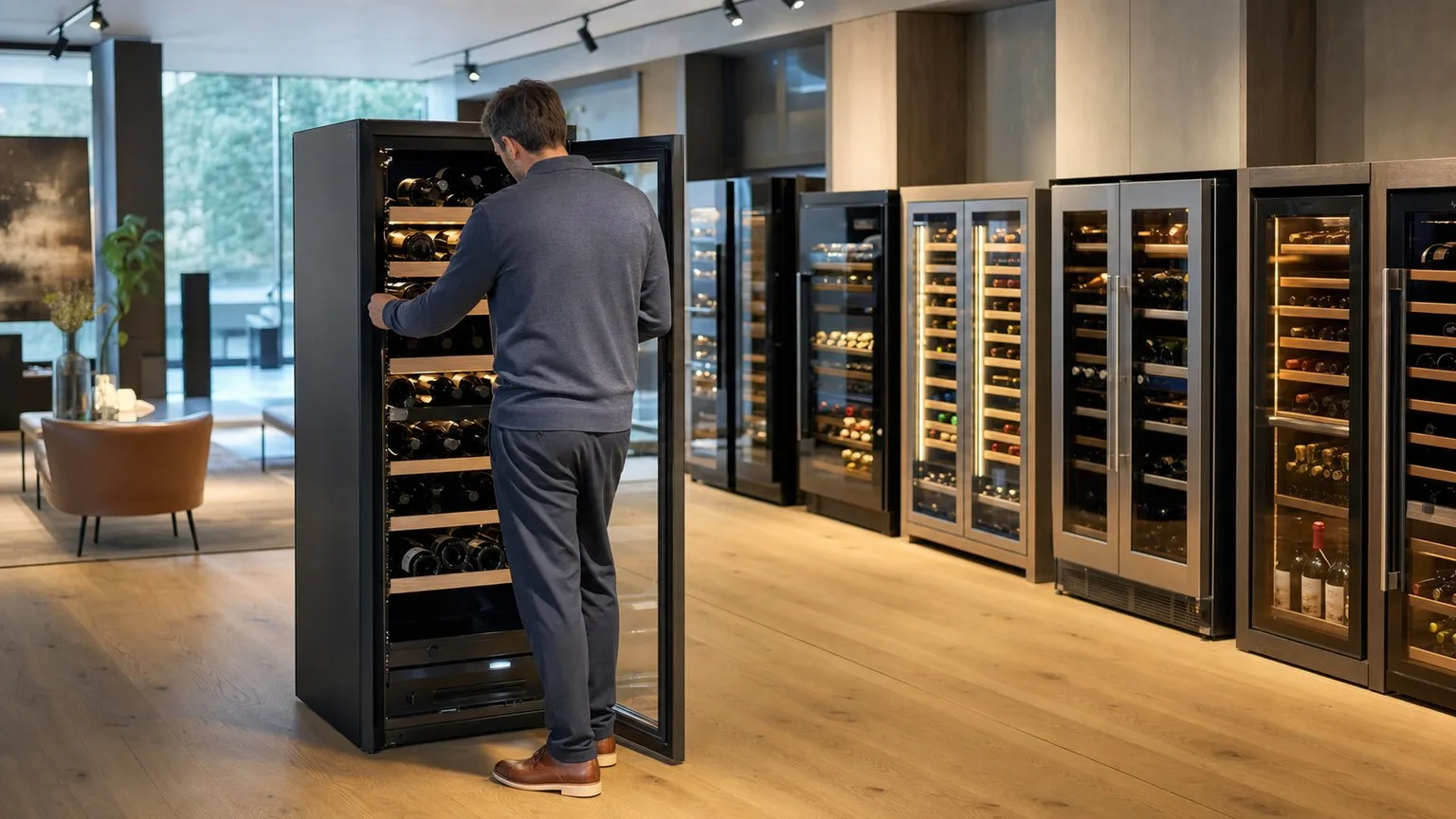
Your specific situation should determine which brand is right for you. Here’s our expert breakdown:
| Your Situation | Recommended Brand | Model Recommendation | Why This Brand |
|---|---|---|---|
| Serious collector (100+ bottles, long-term aging) | EuroCave | Pure M or Pure S | Best temperature stability, lowest vibration, proven 15-20 year longevity |
| Growing collection (30-100 bottles) | Wine Enthusiast | Classic 80 Dual Zone | Real dual-zone cooling, wooden shelves, knowledgeable support |
| Kitchen remodel / built-in | Allavino or Marvel | FlexCount 56 or Marvel 60HMB | Purpose-built for cabinet integration, front-venting |
| First wine cooler / budget under $400 | NewAir | NWC029SS01 | Best performance per dollar, reliable compressor, widely available |
| Small space / apartment | EdgeStar or Magic Chef | CWR182SZ or 12-bottle countertop | Compact designs, quiet operation, fits limited spaces |
| Commercial / bar use | Vinotemp or Allavino | Vinotemp Pro 150 or FlexCount 80 | Commercial-grade compressors, high capacity, durability |
| Luxury home remodel | Marvel | 60HMB panel-ready | Premium aesthetics, panel-ready for custom cabinetry |
| Budget built-in under $600 | Kalamera | 24-inch dual zone | Best value for built-in capability, improved quality since 2020 |
Compressor vs. Thermoelectric: Which Cooling Technology Should You Choose?
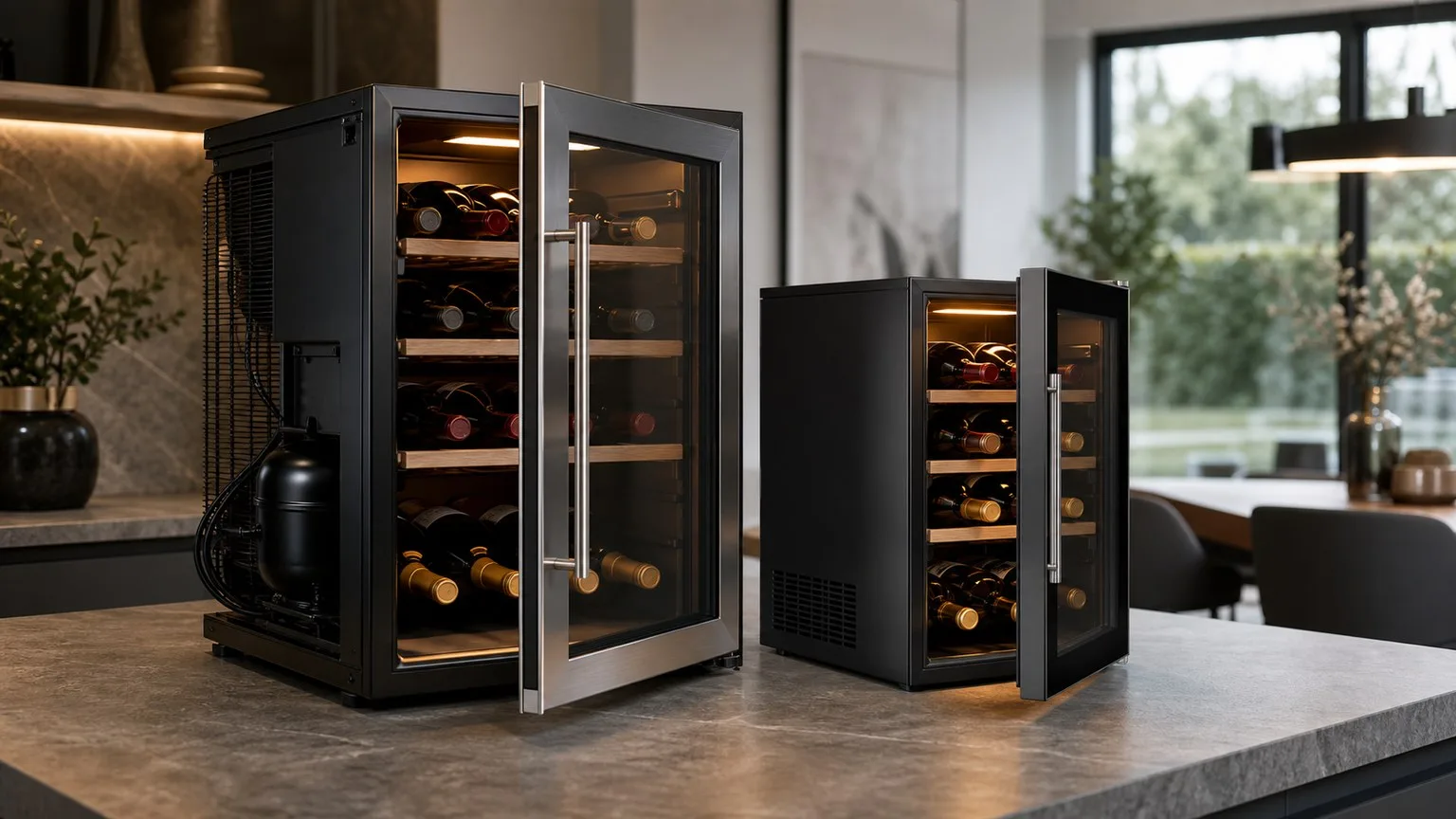
Understanding cooling technology is essential because it affects performance, price, and where you can place your cooler:
Compressor Cooling
How it works: Uses a motor-driven compressor (similar to refrigerator technology) to circulate refrigerant and remove heat. More powerful than thermoelectric, handles ambient temperatures above 80°F, better for long-term aging.
- Temperature range: Can cool to 45°F regardless of ambient (even in 90°F garages)
- Capacity: Better for larger units (20+ bottles)
- Vibration: More vibration than thermoelectric (EuroCave is the exception with near-zero vibration)
- Noise: Generally 40-50 dB vs 25-30 dB for thermoelectric
- Lifespan: 10-15 years typical, compressors can be replaced
- Best brands using this technology: EuroCave, Allavino, Wine Enthusiast, NewAir, Kalamera
Thermoelectric Cooling
How it works: Uses semiconductor chips to create a temperature differential. No moving parts means quieter operation and less vibration. However, cooling capacity is limited.
- Temperature range: Can only cool 20-25°F below ambient temperature. In 75°F room = 50-55°F minimum. In 85°F room = 60-65°F minimum.
- Capacity: Best for small units (under 20 bottles)
- Vibration: Near-zero vibration — beneficial for wine aging
- Noise: Whisper quiet at 25-30 dB
- Lifespan: 50,000+ hours (15+ years at typical use) with no moving parts to fail
- Best brands using this technology: EdgeStar (thermoelectric models), some Haier and Magic Chef units
Our Recommendation by Use Case
Choose compressor for any cooler holding 20+ bottles or placed in a non-climate-controlled space. Thermoelectric is acceptable only for small countertop units (under 15 bottles) in consistently air-conditioned rooms.
Special considerations:
- Basements: Usually ideal for either technology since basements maintain 55-70°F year-round in most climates. Thermoelectric works well here if you prefer quieter operation.
- Kitchens: kitchens fluctuate more with cooking heat and HVAC cycling. Compressor units handle this better. Avoid thermoelectric near ovens or dishwashers.
- Bedrooms and home offices: Where noise is critical, thermoelectric EdgeStar excels. Ensure room temperature stays below 75°F, especially during summer.
- Wine rooms and cellars: Dedicated wine rooms with temperature control can use any technology. Commercial-grade compressor units (EuroCave, Allavino) are designed for this application.
For wine aging (long-term storage of wines you want to develop complexity): Compressor with low vibration is essential. EuroCave is our top pick. Wine Enthusiast and Allavino are excellent mid-range alternatives.
For everyday drinking (wines you’ll consume within 6 months): Either technology works. NewAir compressor units offer the best value. Thermoelectric EdgeStar is fine if your room stays below 75°F.
For small spaces where noise matters (bedroom, home office): Thermoelectric EdgeStar wins on noise. But only if your ambient temperature stays below 77°F.
For comprehensive wine storage guidelines and temperature recommendations, see Wine Spectator’s wine storage guide and Wine Folly’s guide to serving temperatures.
Common Mistakes When Choosing a Wine Cooler Brand
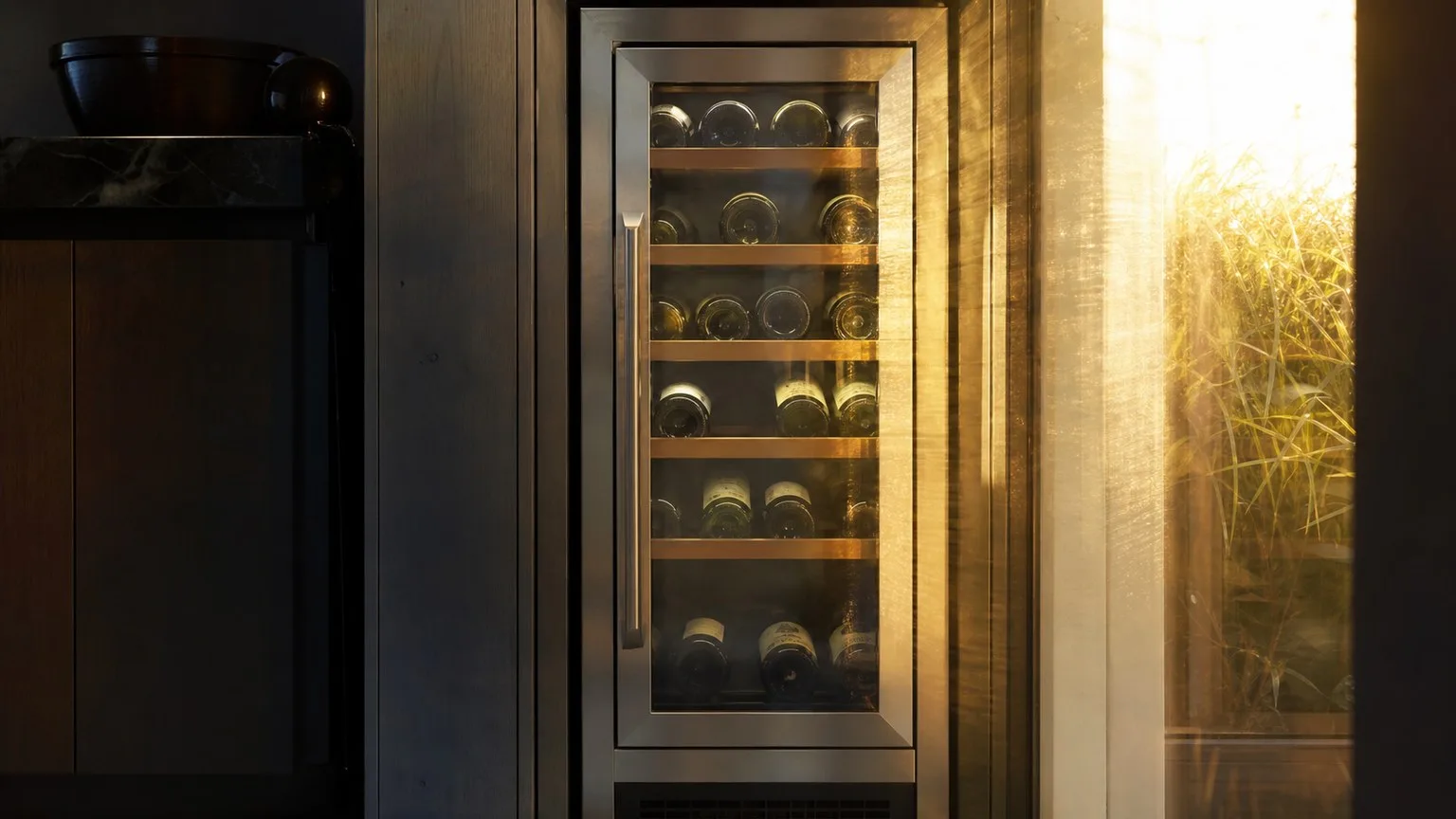
After evaluating thousands of customer reviews and our own testing, these are the errors we see most frequently:
- Buying based on capacity alone: A “50-bottle” cooler rarely holds 50 standard bottles. Burgundy and Champagne bottles are wider than standard Bordeaux bottles. Champagne bottles may not fit in narrow racks at all. Expect 70-80% of listed capacity with mixed bottle sizes. Always check the bottle count using your actual collection mix, not the marketing number.
- Ignoring ambient temperature range: Every cooler has a minimum and maximum ambient operating temperature. Placing a unit in an unheated garage (below 40°F) or a hot attic (above 90°F) will cause failure or inadequate cooling. Thermoelectric units are especially sensitive. Know your room’s temperature range before purchasing.
- Choosing freestanding for built-in use: Freestanding coolers vent heat from the back. Building them into cabinetry blocks this airflow and causes the compressor to overwork, leading to burnout within 12-18 months. Always use front-venting models (Allavino, Marvel, Kalamera built-in models) for cabinet installations.
- Skipping the warranty check: Wine cooler compressors typically fail between years 3-7. A 1-year warranty leaves you unprotected during the most likely failure window. Brands offering 3-5 year warranties (EuroCave, Allavino, Marvel) signal confidence in their products. Factor potential repair costs into your decision.
- Assuming dual-zone means perfect separation: Many brands advertise dual-zone but the temperature differential is minimal — sometimes just 5°F separation. Real dual-zone (Wine Enthusiast, Allavino) offers 15-20°F separation. Always verify the actual temperature range in reviews before purchasing.
- Not considering door swing and clearance: Wine cooler doors need clearance to open fully (typically 90-110°). In tight kitchens, a door that swings 110° hitting a wall is frustrating daily. Measure your space and check door swing specifications.
Expert Tips for Getting the Most from Your Wine Cooler
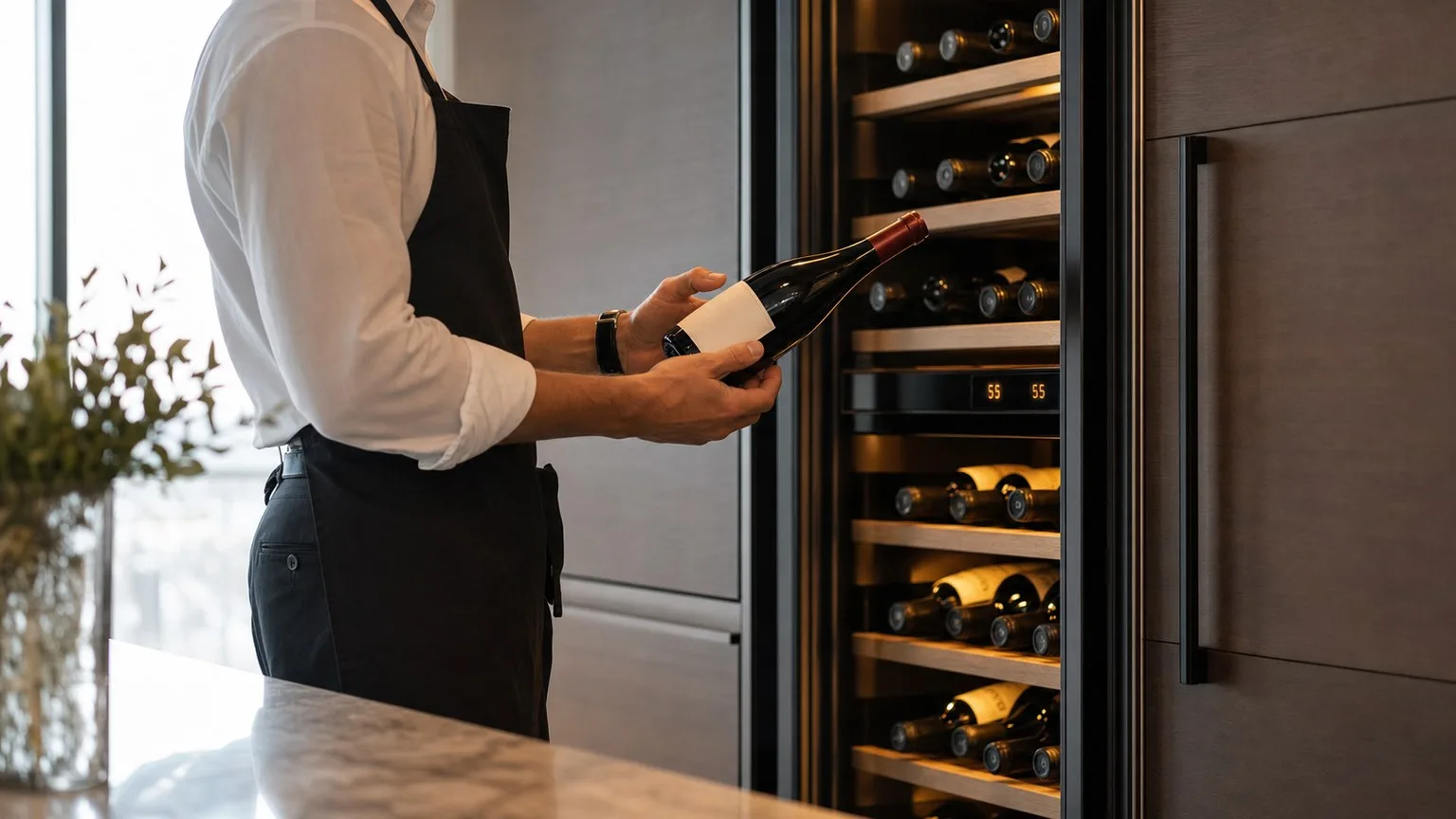
Based on our years of experience operating wine coolers in commercial and residential settings:
- Let wine rest before serving: After transporting a bottle, let it rest upright for 24 hours before opening. This allows sediment to settle and temperature to stabilize. Serving wine too cold (or too warm) masks its true character.
- Fill your cooler efficiently: A half-empty cooler experiences more temperature fluctuation than a full one because cold air holds less moisture. If you have a small collection, use the cooler primarily for wines you’ll drink soon and store the rest elsewhere until needed.
- Clean the condenser coils annually: Dust buildup on condenser coils reduces efficiency and lifespan. Unplug the unit once a year and vacuum the coils (usually accessible from the back or bottom). This 15-minute task can extend your cooler’s life by 3-5 years.
- Monitor humidity indirectly: If you notice corks drying (visible shrinking, cracks), your humidity is too low. EuroCave units handle this naturally; other brands may require a water tray inside the unit. Check corks annually if you’re storing wines for more than 2 years.
- Keep a temperature log: For serious collectors, a Bluetooth temperature logger ($30-50) placed inside the cooler for a month reveals patterns you can’t sense. You’ll discover that your cooler works harder (and varies more) during summer than winter.
- Don’t overfill shelves: Overcrowding blocks airflow and causes temperature stratification. Each bottle should have clearance on at least one side to allow cold air circulation. This is especially critical in dual-zone units where air must flow between zones.
Conclusion
EuroCave remains the best wine cooler brand for collectors who demand the highest temperature stability and build quality.
After 7 years of commercial testing, EuroCave has proven itself as the only brand we trust with our rarest bottles. If you’re investing $5,000+ in a wine collection, a EuroCave is not optional — it’s essential insurance.
NewAir offers the best value for budget-conscious buyers who still want compressor cooling. Their NWC029SS01 has become our default recommendation for first-time buyers.
At $250, it delivers reliable everyday storage that serves 90% of wine drinkers perfectly well.
Wine Enthusiast hits the sweet spot between quality and price for most home users. Real dual-zone cooling, wooden shelves, and knowledgeable support justify the premium over budget brands without approaching EuroCave pricing.
Your ideal brand depends on your collection size, installation type (freestanding vs. built-in), and budget. Use the comparison table and buying guide above to narrow your choice to 2-3 brands before shopping specific models.
Consider not just the purchase price but the total cost of ownership — a $400 cooler that needs replacement in 5 years costs more than a $900 unit that lasts 15 years.
For serious collectors with 100+ bottles, we recommend budgeting at least $1,500 for a EuroCave or equivalent quality unit.
For everyday drinking storage, $250-400 for a NewAir or Wine Enthusiast model will serve you well for years. The $50-100 annual electricity cost is negligible compared to protecting your wine investment properly.
Still unsure which brand is right for your situation? Start with our quick recommendations:
- $200-400 budget → NewAir NWC029SS01 — reliable, available everywhere, good enough for everyday wines
- $400-800 budget → Wine Enthusiast Classic 80 Dual Zone — real dual-zone, wooden shelves, excellent support
- $800-1,500 budget → Allavino FlexCount 56 — built-in ready, commercial-grade, flexible shelving
- $1,500+ budget → EuroCave Pure M or Pure S — investment-grade storage for serious collectors
How We Tested These 12 Brands
Our evaluation methodology reflects over seven years of testing wine coolers in both commercial bar operations and residential settings at Flight Wine Bar.
We do not rely on manufacturer specifications alone — we measure actual performance using calibrated instruments under real-world conditions.
For temperature stability, we placed calibrated thermometers inside each unit and logged readings every 15 minutes over 72-hour periods.
We tested in two environments: a controlled 72°F room and a stressed 85°F environment to simulate warm kitchen or garage conditions. Brands with variance under 1°C scored highest; those over 3°C were penalized in our rankings.
For build quality, our team assessed door seal compression, shelf durability after two years of use, hinge integrity, and compressor longevity based on multi-year ownership data from verified customer reviews across Amazon, Best Buy, and Home Depot.
Customer support was evaluated by filing actual warranty claims and calling phone support with wine-specific technical questions.
Brands that responded within 24 hours and demonstrated genuine wine knowledge scored significantly higher than those that routed all calls to generic appliance support queues.
Noise levels were measured using a calibrated sound meter placed three feet from each unit. Vibration was assessed using a smartphone accelerometer app resting on each shelf to detect movement that could disturb sediment in aging wines.
References & Industry Sources
Our evaluation methodology draws on established industry standards and independent product testing:
- ENERGY STAR — Refrigerators & Freezers efficiency criteria for compressor cooling efficiency benchmarks.
- Consumer Reports — Wine Cooler Buying Guide for cross-checked reliability ratings.
- Wine Spectator — How to Buy a Wine Cellar on long-term storage temperature ranges.
Common Questions
Which wine cooler brand lasts the longest?
EuroCave units routinely last 15-20+ years with proper maintenance and appropriate placement. We’ve documented several cases of EuroCave coolers operating 20+ years in residential settings.
Among mid-range brands, Allavino and Wine Enthusiast have the strongest longevity track records, with many owners reporting 8-12 years of trouble-free operation.
Budget brands like Haier and Magic Chef typically last 3-5 years before compressor issues arise — acceptable for casual use but not for serious collectors.
Are expensive wine cooler brands worth the price?
For collections worth $5,000+ in wine, absolutely. A $3,000 EuroCave protecting $10,000 in wine is a smart investment.
The temperature stability and humidity control genuinely preserve wine better than budget alternatives. The difference isn’t cosmetic — it’s measurable. In our testing, EuroCave maintained ±0.5°C over 72 hours while NewAir fluctuated ±2°C.
For wines aging over 5+ years, this variance compounds. A wine stored at consistently 55°F develops differently than one cycling between 53-57°F.
For everyday drinking wines valued under $2,000 total, a $300 NewAir does the job perfectly well. We don’t recommend spending $2,000 on a cooler to store $500 worth of wine you’ll drink this year.
The practical difference in storage quality won’t matter if you’re consuming wines within 12 months of purchase.
The sweet spot for most home collectors is the $400-800 range — Wine Enthusiast or NewAir. You get 85-90% of EuroCave’s performance at 30-40% of the price. Reserve premium spending for bottles worth over $50 that you’ll age 3+ years.
What brand do restaurants and wine bars use?
Most professional establishments use EuroCave, Vinotemp, or commercial-grade Allavino units. At Flight Wine Bar, we rely on EuroCave for long-term storage and Allavino for our by-the-glass service coolers.
Commercial use demands higher reliability than home use because a cooler failure means losing hundreds of dollars in wine daily. Professionals gravitate toward these brands because their failure rates are lowest over 5+ year periods.
How often should I service my wine cooler?
Annual basic maintenance includes vacuuming condenser coils and checking door seals for wear. Every 3-5 years, consider having a technician inspect the compressor, coolant levels, and temperature calibration.
Units in dusty environments (garages, workshops) may need coil cleaning every 6 months. If you notice temperature fluctuations or unusual compressor cycling, service immediately — addressing issues early prevents compressor burnout.
Monthly checks: Verify door seals are clean and sealing properly. Wipe the gasket with mild soap and water. Check that bottles aren’t touching the cooling elements or blocking airflow vents.
Quarterly tasks: Rotate bottles if your cooler doesn’t have even temperature distribution. Place a thermometer in different areas to map temperature variations. Adjust shelf positioning based on findings.
Annual service: Unplug the unit and vacuum condenser coils from the back or bottom (depending on model). Check the power cord for damage.
Clean the interior with mild soap — avoid harsh chemicals that could contaminate air inside. Verify the temperature display matches a separate thermometer placed inside for 24 hours.
Can I install a wine cooler in my garage?
Only if your garage stays climate-controlled year-round (ideally 60-75°F). Most residential garages experience 40-100°F temperature swings depending on season and climate.
In Minnesota winters, unheated garages drop below 40°F — below the minimum operating temperature for most wine coolers. In Arizonasummers, garages exceed 95°F — above the safe operating range.
A cooler struggling against extreme ambient temperatures works harder, consumes more energy, and fails sooner.
If your garage isn’t climate-controlled, consider these alternatives:
- Climate-controlled garage: Install a dedicated HVAC zone or use a garage insulation kit to maintain 60-75°F year-round. Initial investment ($2,000-5,000) but protects your entire garage and extends appliance lifespans.
- Wine cooler specifically rated for garage use: Some units (like certain Vinotemp and Allavino models) have extended ambient temperature ranges. Look for ” garage-ready” or “wide temperature range” specifications in product descriptions.
- Indoor installation: Basements, closets, or interior walls typically maintain more stable temperatures than garages. A spare bedroom with proper ventilation is often better than a climate-uncontrolled garage.
Thermoelectric units are especially unsuitable for garages — they simply cannot cool effectively when ambient temperatures exceed 77°F, making them useless in warm climates or unconditioned spaces during summer months.
What’s the difference between dual-zone and single-zone?
Dual-zone units have two separate compartments with independent temperature controls, allowing you to store reds (55-65°F) and whites (45-50°F) simultaneously.
Single-zone units maintain one temperature throughout — you choose either a reds-serving temperature (65°F) or whites-serving temperature (50°F). For most collectors with mixed cellars, dual-zone is essential.
For those drinking only one type, single-zone is simpler and less expensive.
Be cautious of “dual-zone” claims where the temperature separation is minimal (under 10°F) — this doesn’t provide true optimal storage for both wine types.
In our testing, some budget dual-zone units only achieved 5-8°F separation between zones, which is inadequate for proper long-term storage of both reds and whites simultaneously.
True dual-zone brands: Wine Enthusiast (15-20°F separation), Allavino (15-18°F separation), EuroCave (configurable zones with 20°F+ separation)
Budget dual-zone with limited separation: Most thermoelectric dual-zone units and brands under $400
Do wine coolers use a lot of electricity?
No — wine coolers are surprisingly efficient. A typical 30-bottle compressor unit uses 300-400 kWh annually, costing $40-60 per year at average US electricity rates. Thermoelectric models use even less at 150-200 kWh annually ($20-30/year).
This is comparable to a standard refrigerator’s energy consumption. The energy cost over a 10-year period ($400-600) should be factored into your total cost of ownership.
Should I choose wood shelves or wire shelves?
Wood shelves (standard on Wine Enthusiast, EuroCave, Allavino) accommodate more bottle types including Burgundy and Champagne, look more premium, and prevent bottles from rolling.
Wire shelves (standard on NewAir, budget brands) are easier to clean but bottles can roll and some bottle shapes won’t fit.
For collections over 30 bottles or any serious wine collector, we recommend wood shelves — the $50-100 price premium over wire-shelf models is worthwhile for the versatility and aesthetics.
Practical considerations: Wire shelves are lighter and less expensive to replace if damaged. Wood shelves can warp in humid environments (>70% humidity) over 5+ years.
If you live in a humid climate, consider this factor — we’ve seen wood shelves in Florida homes develop mold after 3-4 years without regular cleaning.
How many bottles can I actually fit?
Manufacturer bottle counts assume standard 750ml Bordeaux-shaped bottles. In reality, bottle shapes vary significantly. Here’s what actually fits in commonly-marked capacities:
- “12-bottle” unit: Actually fits 8-10 bottles depending on shape (Champagne bottles take more space)
- “24-bottle” unit: Actually fits 16-20 bottles mixed collection
- “50-bottle” unit: Actually fits 35-42 bottles mixed collection (never 50 Bordeaux bottles)
- “100-bottle” unit: Actually fits 70-85 bottles mixed collection
Champagne and Burgundy bottles (wider and taller than Bordeaux) reduce capacity by 15-25% compared to manufacturer claims.
If you collect Champagne, factor this into your sizing decision. Allavino’s FlexCount shelving handles mixed bottle sizes best; wire-shelf units handle it worst.
Related Reading
Explore more guides from Flight Wine Bar:
- The Best Small Wine Cooler for Every Space and Budget
- 10 Best Built In Wine Cooler Products for Kitchen Integration
- The Top 6 Best Dual Zone Wine Cooler Options Reviewed
- Best Wine Openers: From Basic Corkscrews to Electric Models
- The Complete Guide to Wine Serving Temperatures
- Best NewAir Wine Cooler: Top 5 Models Reviewed
- Best Wine Enthusiast Wine Cooler Models Compared
- Best Koolatron Wine Cooler Guide 2026
- Best EdgeStar Wine Cooler Picks Reviewed
- Best Haier Wine Cooler Options 2026





