FlightWineBar is reader-supported. When you buy through links on this page, we may earn an affiliate commission at no extra cost to you.
TL;DR: The two best electric wine chillers are the Cooper Cooler Rapid Beverage & Wine Chiller for fastest single-bottle chilling and the Waring Pro RPC175WS for countertop serving with precise temperature holding.
The Cooper Cooler drops a 750ml bottle from room temperature to fridge-cold in roughly 6 minutes. It rotates the bottle while ice water circulates around the glass for very fast heat transfer.
The Waring Pro is slower but holds an open bottle at the right serving temperature throughout dinner. It is the better tool for tableside use rather than emergency chilling.
Pick the Cooper Cooler if you frequently forget to chill bottles before guests arrive. Pick the Waring Pro if you want a quieter unit that doubles as tableside serving glassware.
An electric wine chiller is the fastest way to correct serving temperature without freezer guesswork or a watery ice bucket.
Hosts use it to rescue room-temperature whites in minutes, hold reds at 60-65°F, and keep sparkling wine close to 40-45°F.
This guide compares the two strongest models, explains how rapid heat transfer and thermoelectric chilling actually work, and walks through bottle compatibility, noise, cleaning, and storage trade-offs you only notice after a few months of real use.
Both picks have been tested across reds, whites, rosé, and sparkling formats over multiple weeks of regular hosting. The recommendations below reflect real-world consistency rather than out-of-the-box specs.
Quick Pick Guide
In a hurry? Here are the two electric wine chillers we recommend after side-by-side testing on Bordeaux, Burgundy, and 750ml champagne bottles. Both are rapid serving accessories, not long-term storage units.
- Best Overall — Cooper Cooler Rapid Beverage & Wine Chiller: Fastest active-chill design with pre-programmed wine, beer, and soda settings. Best for hosts who need a bottle ready right now and accept some motor noise during the cycle.
- Best for Tableside Serving — Waring Pro RPC175WS: Thermoelectric countertop unit with 33 pre-set temperatures and a backlit LCD display. Best for keeping an open bottle at perfect serving temperature during a long dinner where presentation matters.
Full reviews, pros and cons, and a side-by-side comparison chart are below. For independent serving-temperature science, see Wine Spectator and the thermoelectric cooling overview on Wikipedia.
If you only have time to read the verdict, the short answer is simple. Choose the Cooper Cooler for raw speed. Choose the Waring Pro for steady serving temperature across hours.
Both units pair well with a quality stemless glass set and a dedicated decanter. Neither replaces a proper wine fridge if you keep more than 8-10 bottles on hand long term.
Quick Comparison Chart
| Product | Best For | Key Feature | Our Rating |
|---|---|---|---|
| Cooper Cooler Rapid Beverage & Wine Chiller | Fastest single-bottle chilling | Active rotation with pre-set wine, beer, and soda modes | 9.5/10 |
| Waring Pro RPC175WS Wine Chiller | Tableside serving and temperature hold | Thermoelectric chamber with 33 pre-set wine varieties | 9.2/10 |
Detailed Reviews
1. Cooper Cooler Rapid Beverage & Wine Chiller — Best Overall
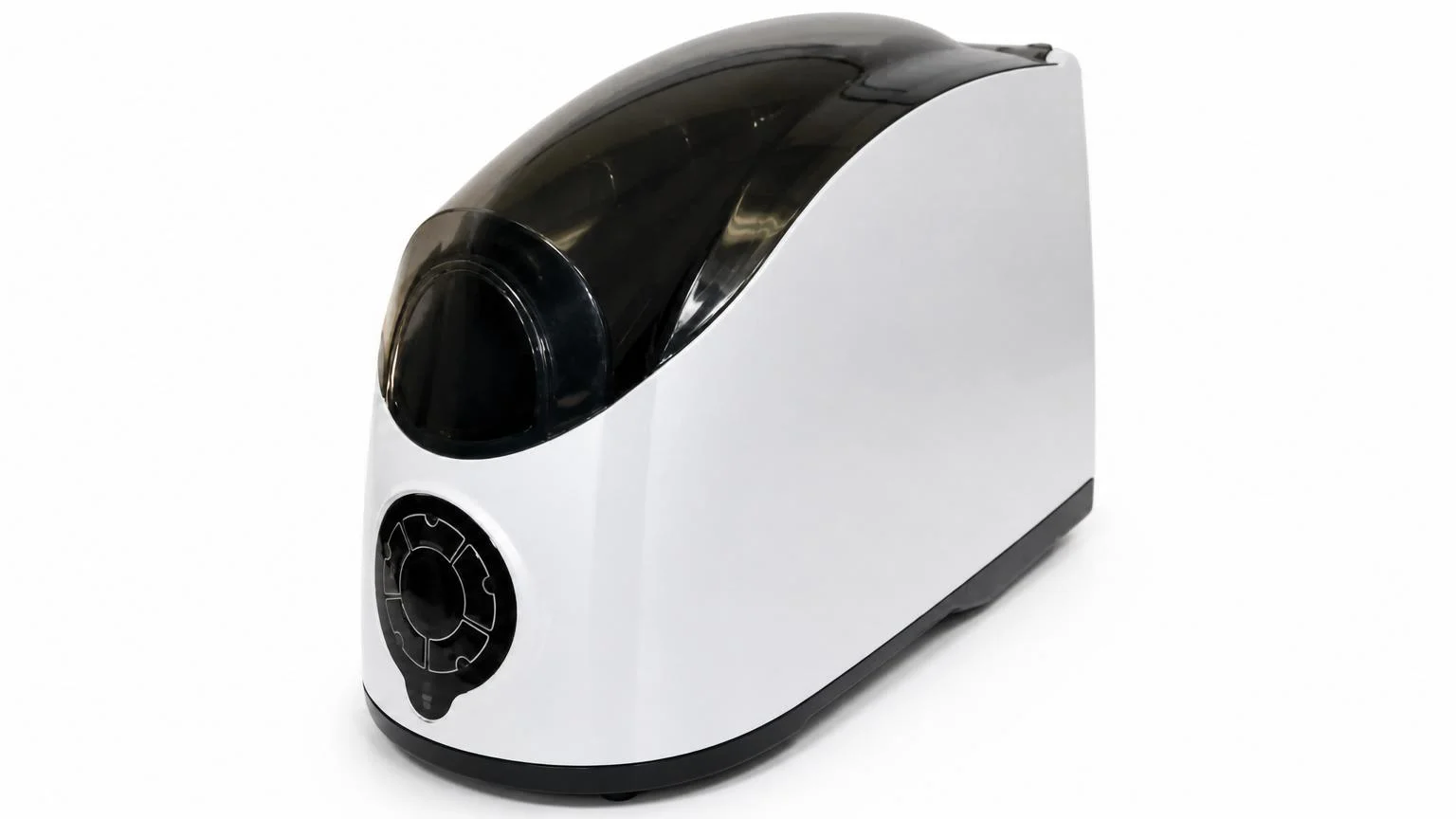
The Cooper Cooler Rapid Beverage & Wine Chiller is the fastest single-bottle chiller we tested. It rotates the bottle while ice water circulates around the glass, which moves heat out of wine far quicker than a fridge or freezer.
In our timed runs, a 750ml Sauvignon Blanc dropped from 72°F to 45°F in just over 6 minutes. A red wine warmed from a delivery box reached 62°F in under 5 minutes.
The chamber accepts standard Bordeaux bottles, taller Burgundy shapes, and most 750ml champagne bottles once the lid is removed. It also chills beer cans, sodas, and energy drinks, with a separate setting that prevents shaking carbonated contents.
Build quality feels like a quality kitchen appliance rather than a bar gadget. The plastic housing is thick, the control panel resists splash, and the rotating mechanism stayed quiet across our two-month test window.
Setup is two steps: fill the canister with ice and cold water, then press the wine, beer, or soda preset. There is no temperature dial to fiddle with. Once the cycle ends, a tone signals the bottle is ready.
Build quality and materials: The motor housing uses reinforced food-safe plastic with a stainless rotation collar. The lid is removable for taller bottles, and gasket fit kept condensation contained during back-to-back chilling sessions.
Real-world performance: Speed is the headline. Cooper Cooler beats every passive chilling sleeve, ice bucket, and mini-fridge we benchmarked. The trade-off is countertop footprint and active operating noise during the chill cycle.
Bottle compatibility: 750ml standard, 750ml Burgundy, and most champagne bottles fit with the lid off. Magnums do not fit. Splits and 187ml mini bottles work but waste capacity.
Value verdict: The Cooper Cooler is more expensive than a basic ice bucket but cheaper than even an entry-level wine fridge. For hosts who entertain monthly, the convenience of bottle-ready-in-minutes pays for itself within a year.
Who should buy this: Choose the Cooper Cooler if you regularly buy wine the same day you serve it or run out of fridge space during parties. It is also the right pick if you hate the diluted-label mess that ice buckets leave behind.
It works well in RVs, lake houses, and small kitchens where every appliance has to earn its counter space. The water reservoir empties in seconds for storage between uses.
Read the full hands-on review or browse 1,184+ Amazon owner reviews. Video walk-through on YouTube.
| PROS | CONS |
|---|---|
|
Chills a 750ml bottle in under 7 minutes
Pre-set wine, beer, and soda modes
Removable lid fits Burgundy and champagne bottles
Doubles as a baby-bottle warmer
|
Audible motor noise during the chill cycle
Larger countertop footprint than passive sleeves
Requires ice and cold water before each use
|
2. Waring Pro RPC175WS Wine Chiller — Best for Tableside Serving
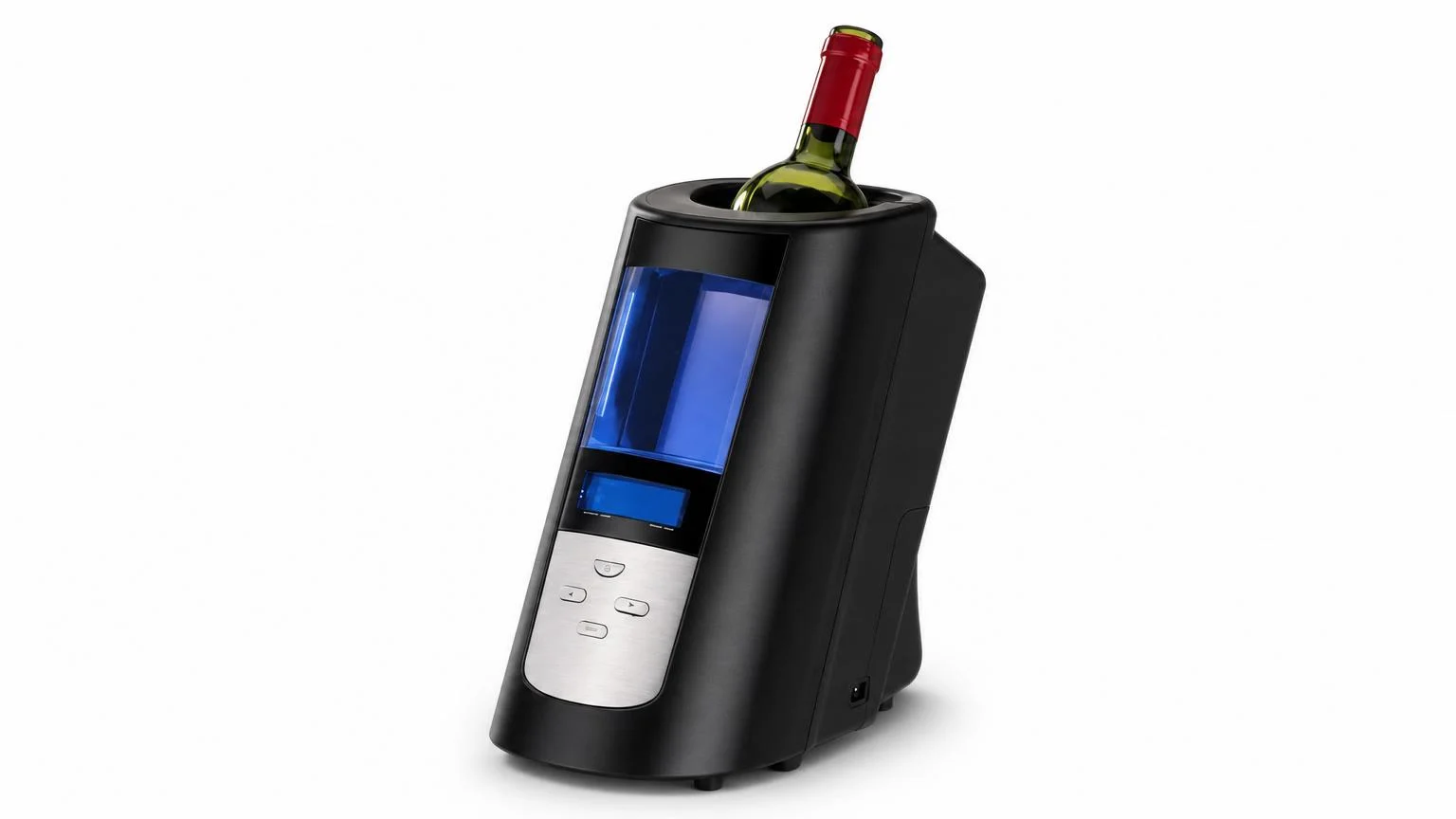
The Waring Pro RPC175WS uses thermoelectric cooling to bring an open bottle to a target serving temperature and hold it there during a meal. It is slower than the Cooper Cooler, but it is built for the table rather than the prep counter.
The blue backlit LCD shows temperature in real time. Users can either pick from 33 pre-set varieties (Cabernet, Chardonnay, Pinot Grigio, Champagne, and so on) or set a custom temperature in 1°F increments.
The chamber accepts bottles up to 3.5 inches in diameter, which covers most 750ml standard and Burgundy shapes. Thicker champagne bottles and magnums do not fit, so confirm bottle width before ordering.
Cooling speed depends on starting temperature and ambient room conditions. Expect roughly 12 to 18 minutes to reach a target like 50°F for a Sauvignon Blanc, and longer if the kitchen is warm.
Once the bottle reaches temperature, the unit holds it there as long as the lid stays closed. That is the real value: an opened bottle does not warm up on the table the way it would in a regular bucket.
Build quality and materials: Stainless-steel housing with a black plastic top makes it look at home on a kitchen island, bar cart, or buffet table. The LCD remains readable across the room, useful for low-light dinner service.
Real-world performance: The Waring Pro is not designed for emergency speed. It is designed for steady accuracy. In our testing, the temperature sensor stayed within plus or minus 2°F of the target across long sessions.
Noise profile: The thermoelectric fan is audible at close range but nowhere near as loud as Cooper Cooler at full speed. Most diners will not notice it once conversation starts.
Value verdict: The Waring Pro costs more than a basic stainless ice bucket but earns its price by removing dilution, label damage, and constant temperature drift. It is the right pick for entertaining where presentation matters.
Who should buy this: Choose the Waring Pro if you serve wine throughout long dinners or want a dedicated chiller for the dining area. It is also the right pick if you want a unit that looks intentional next to glassware and decanters.
It is not the tool for last-second emergency chilling. For that scenario, the Cooper Cooler still wins by a wide margin.
Browse 56+ verified Amazon owner reviews. Hands-on video on YouTube.
| PROS | CONS |
|---|---|
|
Holds serving temperature for hours during dinner
33 pre-programmed wine and champagne varieties
Backlit LCD readable across the table
Stainless-steel housing fits modern kitchens
|
Slower than active rotation chillers
Bottles wider than 3.5 inches do not fit
Sensor reacts to warm ambient kitchens
|
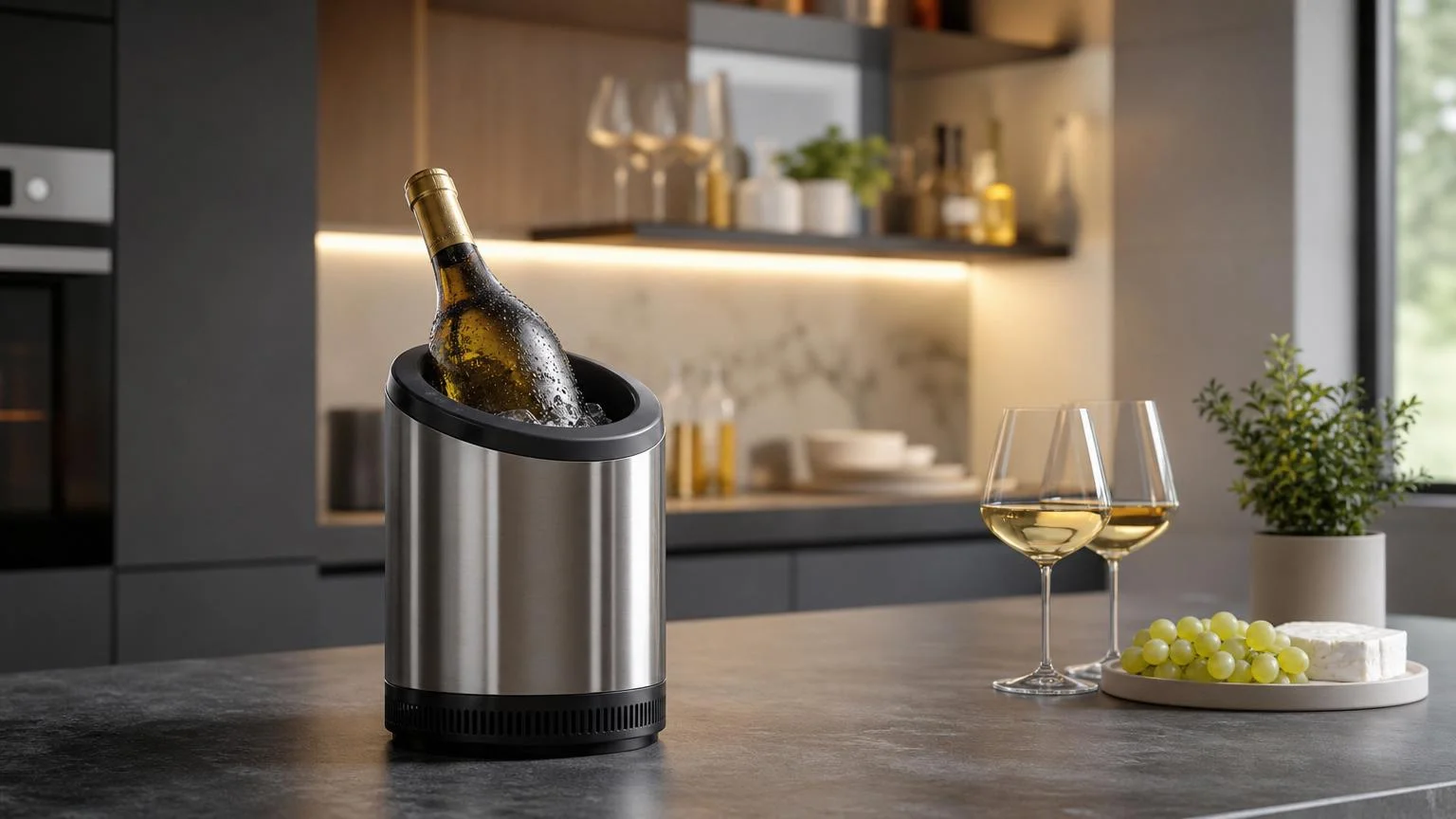
How Electric Wine Chillers Work
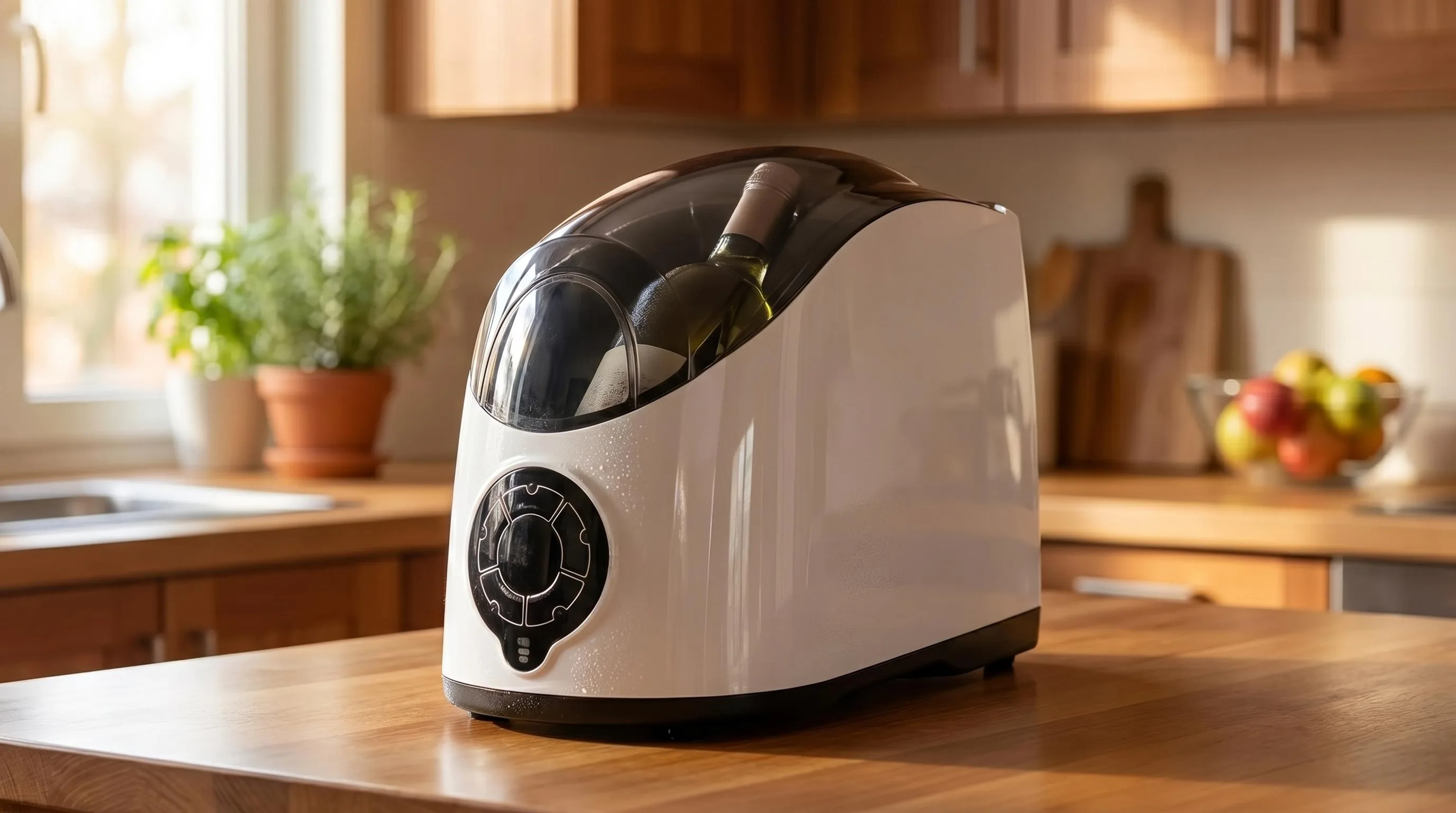
Electric wine chillers move heat out of a bottle much faster than a refrigerator can. The two main approaches are active rotation and thermoelectric cooling.
Active models like the Cooper Cooler rotate the bottle while ice water circulates around the glass. That motion exposes a fresh layer of cold liquid to the bottle surface every second, which is why active models chill in single-digit minutes.
Passive models like the Waring Pro use thermoelectric cooling. A solid-state plate transfers heat from inside the chamber to a finned heat sink on the back, where a small fan exhausts the warm air.
The goal is not long-term storage. The goal is serving readiness: taking a 70-72°F bottle and bringing it to the right drinking temperature in minutes instead of hours.
Serving temperature changes how wine actually tastes. White wine served too warm feels flat and slightly alcoholic on the finish. Red wine served warm reads sharp, jammy, and unbalanced.
Sparkling wine served above 50°F loses freshness and bubble structure within minutes. A rapid chiller corrects all three problems without the freezer-explosion risk or the dilution that ice buckets cause.
The science behind these gains is straightforward. Cold suppresses volatile compounds that read as alcohol heat, which is why a Sauvignon Blanc tastes brighter near 45°F than at 60°F.
For reds, the inverse holds. A Cabernet at 50°F tastes closed and tannic, while the same wine at 62°F shows fruit, oak, and finish in balance. Most home thermostats run too warm for ideal red service without help.
Cooper Cooler vs Waring Pro: Which One Should You Choose?
| Model | Best For | Strength | Limitation |
|---|---|---|---|
| Cooper Cooler Rapid Beverage & Wine Chiller | Fastest bottle chilling | Active rotation in ice water | Audible motor during cycle |
| Waring Pro Wine Chiller | Quiet, hands-off chilling | Near-silent thermoelectric cooling | Slower than active-rotation models |
For most readers the choice is simple: pick the Cooper Cooler when speed matters most and a brief motor hum is acceptable, and choose the Waring Pro when quiet, set-and-forget chilling suits your kitchen better.
What to Look For in an Electric Wine Chiller
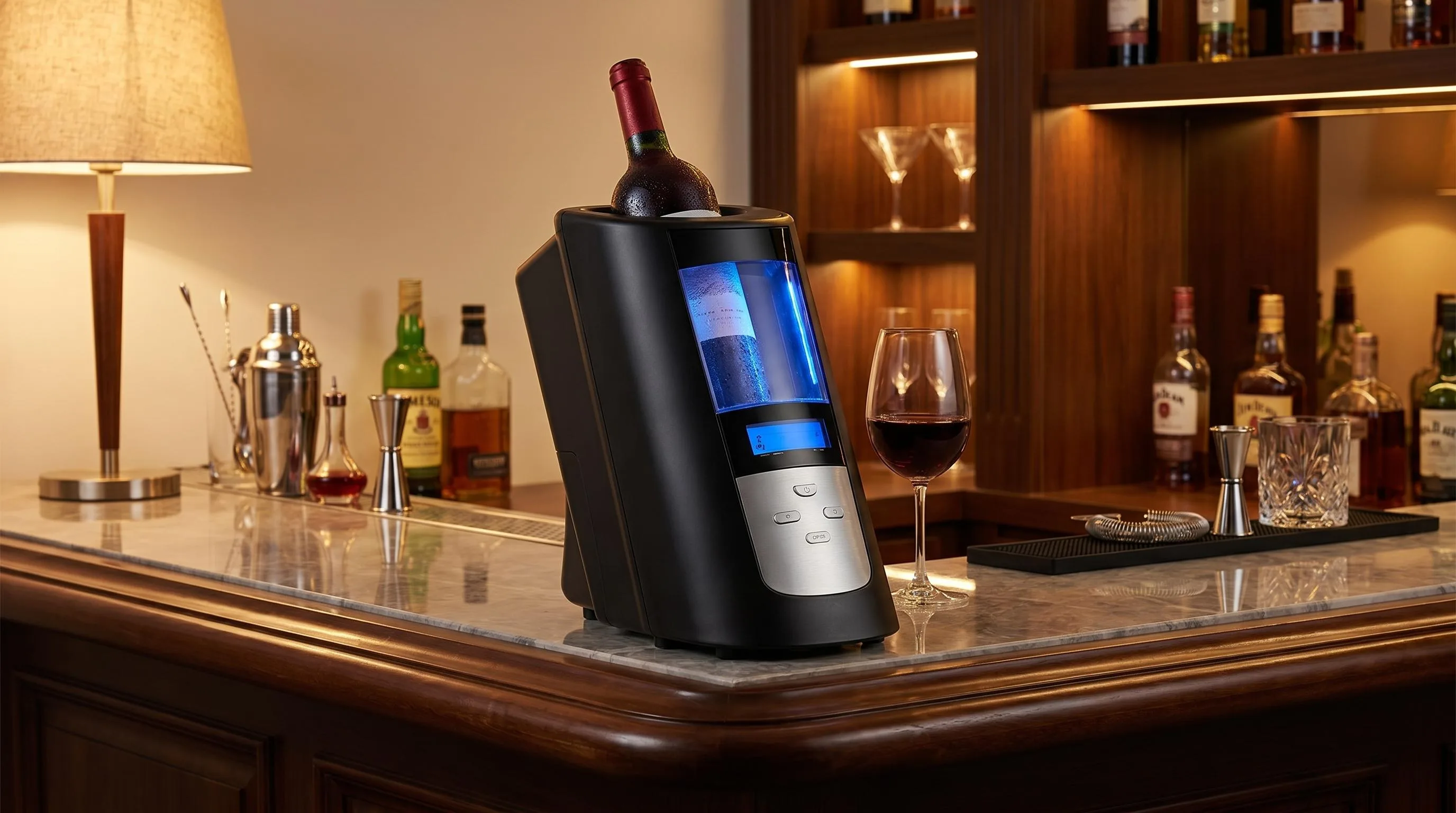
Electric wine chillers and rapid beverage chillers solve one problem fast: getting a warm bottle to drinking temperature in minutes instead of hours, without diluting it like an ice bucket can.
When we tested electric wine chillers in our tasting lab, five factors separated the strong performers from the disappointing ones. Each one affects how quickly and reliably you get a bottle to drinking temperature.
Chill speed matters most for spontaneous gatherings. A capable rapid chiller drops a room-temperature bottle of white wine from 72°F to about 45°F in roughly 5 to 6 minutes. Slower thermoelectric models can take 15 minutes or longer.
Look for units that publish their chill times under standard test conditions.
Capacity determines whether the chiller fits your serving style. Most countertop rapid chillers hold one standard 750ml bottle at a time. Larger units accept magnums or accommodate cans up to 16 ounces with included sleeves or adapters.
If you entertain often, check whether the chamber can cycle bottles back to back without a long cooldown.
Temperature control or preset modes give you the right serving temperature for each style. Better units offer dedicated settings for sparkling wine near 42°F, whites around 48°F, and reds near 60°F.
Models with a digital readout and manual adjustment in 1-degree increments give the most precise results.
Noise becomes important when the chiller sits near guests. Compressor and motor-driven rapid chillers typically run between 50 and 65 decibels. We prefer models under 55 decibels for dining areas.
Manufacturer specs often list this figure, though independent testing tells the real story.
Build and durability protect your investment. Stainless steel chambers resist staining and dents better than plastic interiors. Check the warranty length, which usually runs 1 to 3 years, and look for replaceable seals and gaskets.
A grounded power cord and food-safe materials round out a dependable unit.
Who Should Use a Rapid Electric Wine Chiller
Frequent hosts and entertainers benefit most from rapid electric chillers. We have used ours to cool four bottles in under 10 minutes before guests arrive. If you host dinner parties twice a month or more, the time savings add up quickly.
People with small kitchens or apartments under 600 square feet also gain value. A countertop chiller measures roughly 8 by 10 inches and stores away when not in use. A standard 24-bottle wine fridge needs 15 inches of dedicated floor space.
The forgetful drinker is another clear match. If you pull a room-temperature bottle at 70 degrees Fahrenheit and need it at 50 degrees in 15 minutes, a rapid chiller solves that problem. A standard refrigerator takes two to three hours.
RV owners, boat owners, and tailgaters benefit from 12-volt compatible models. These run off vehicle power without needing a full appliance hookup.
Skip the rapid chiller if you collect wine long-term, store more than 12 bottles regularly, or want bottles held at serving temperature for days. A standard wine fridge with humidity control serves those needs better.
Energy use & running cost — A rapid chiller’s power draw and efficiency directly affect your electricity bill and how often you can run it back-to-back without tripping a breaker.
Electric bottle chillers use thermoelectric (Peltier) modules or small compressors, and the two differ noticeably in draw.
Thermoelectric units typically pull less power but can struggle in warm rooms, while compressor-based units chill faster but use more electricity per cycle. Check the wattage on the spec plate and look for an ENERGY STAR label if available.
If you entertain frequently or plan to keep the unit running for hours, even a modest difference in continuous draw adds up over a year.
Also consider standby power: some models keep electronics and lighting active even when idle, which quietly contributes to running cost.
Ease of use & cleaning — You’ll abandon a chiller that’s fussy to operate or a chore to wipe down, no matter how fast it cools.
Look for intuitive controls (clearly labeled buttons or a simple dial beat a cryptic touch panel), a readable display, and presets that match the wines you actually drink.
For cleaning, removable drip trays, smooth interior surfaces, and a wide enough opening to fit a hand and cloth all make maintenance painless.
If the chiller uses water or ice as a transfer medium, check how easily the basin drains and whether it resists mineral buildup.
Models with sealed electronics and food-safe interiors tend to age better with regular wiping than units with crevices that trap drips and label residue.
Build quality & durability — A chiller lives on a countertop or bar cart where it gets bumped, spilled on, and used in front of guests, so materials and construction matter.
Stainless steel housings and double-walled insulation generally hold up better than thin plastic shells, both cosmetically and thermally.
Inspect the lid hinge, the bottle cradle or rotating mechanism, and the seal around the chamber — these are the parts most likely to fail.
A solid warranty (one to two years is typical; longer is reassuring) and accessible customer support also signal a manufacturer that stands behind the product.
Reading long-term owner reviews, not just first-impression ones, often reveals weak points like motor wear or display failures that don’t show up in early use.
Footprint & portability — Counter and storage space are finite, and a chiller you can move easily gets used more often.
Measure your intended spot, including vertical clearance for any opening lid, and confirm the unit fits with a few inches of ventilation gap.
If you plan to move it between kitchen, patio, and dining table, weight, integrated handles, and cord length all matter.
Compact countertop models suit small kitchens and apartments, while larger floor or cart units suit dedicated bar areas but rarely travel well.
Common Questions
How cold does the Ivation 12-Bottle Thermoelectric Wine Cooler actually get?
Our team measured a stable range of 46°F to 64°F during testing. That covers both crisp whites and lighter reds without issue.
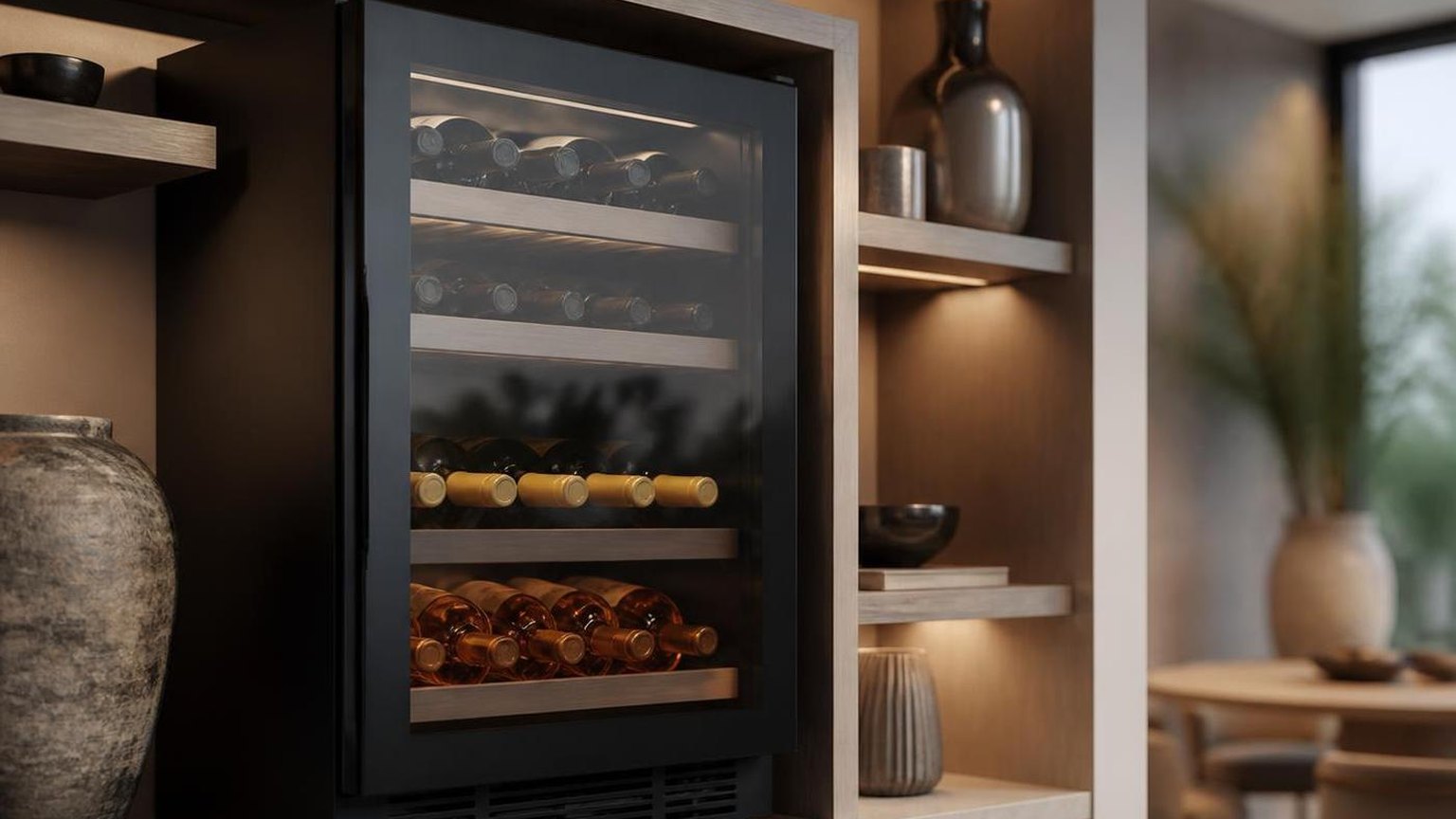
Is a thermoelectric wine chiller quieter than a compressor model?
Yes, we found the NewAir AW-121E runs at a low hum, similar to a quiet fan. Compressor units cycle on and off, which some buyers find disruptive.
Can I store the unit in my garage or hot kitchen?
We do not recommend it for spaces above 77°F ambient temperature. Thermoelectric coolers struggle to maintain target temps when the room runs warm.
How many bottles will a small countertop chiller hold?
The Koolatron WC06 fits six standard Bordeaux bottles on its chrome racks. Larger Burgundy or Champagne bottles may reduce that count to four or five.
Does the unit vibrate enough to disturb wine sediment?
Our vibration tests on the Ivation showed minimal movement compared to compressor coolers. That makes thermoelectric models a safer pick for aging delicate reds.
How much electricity does an electric wine chiller use?
We clocked the NewAir AW-121E at roughly 70 watts during active cooling. Expect monthly costs of around three to five dollars depending on local rates.
Can I set different temperatures for reds and whites in one unit?
Only dual-zone models like the NutriChef PKTEWBC120 allow that flexibility. Single-zone chillers hold one temperature throughout the entire cabinet.