FlightWineBar is reader-supported. When you buy through links on this page, we may earn an affiliate commission at no extra cost to you.
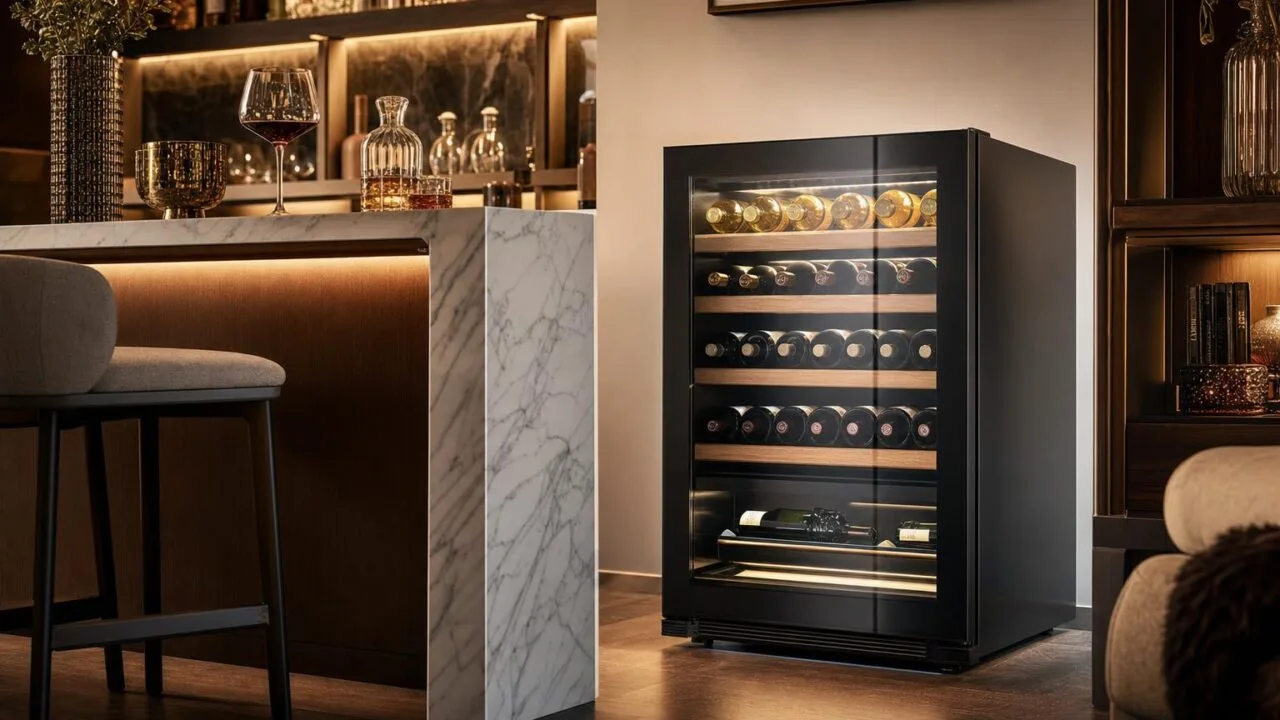
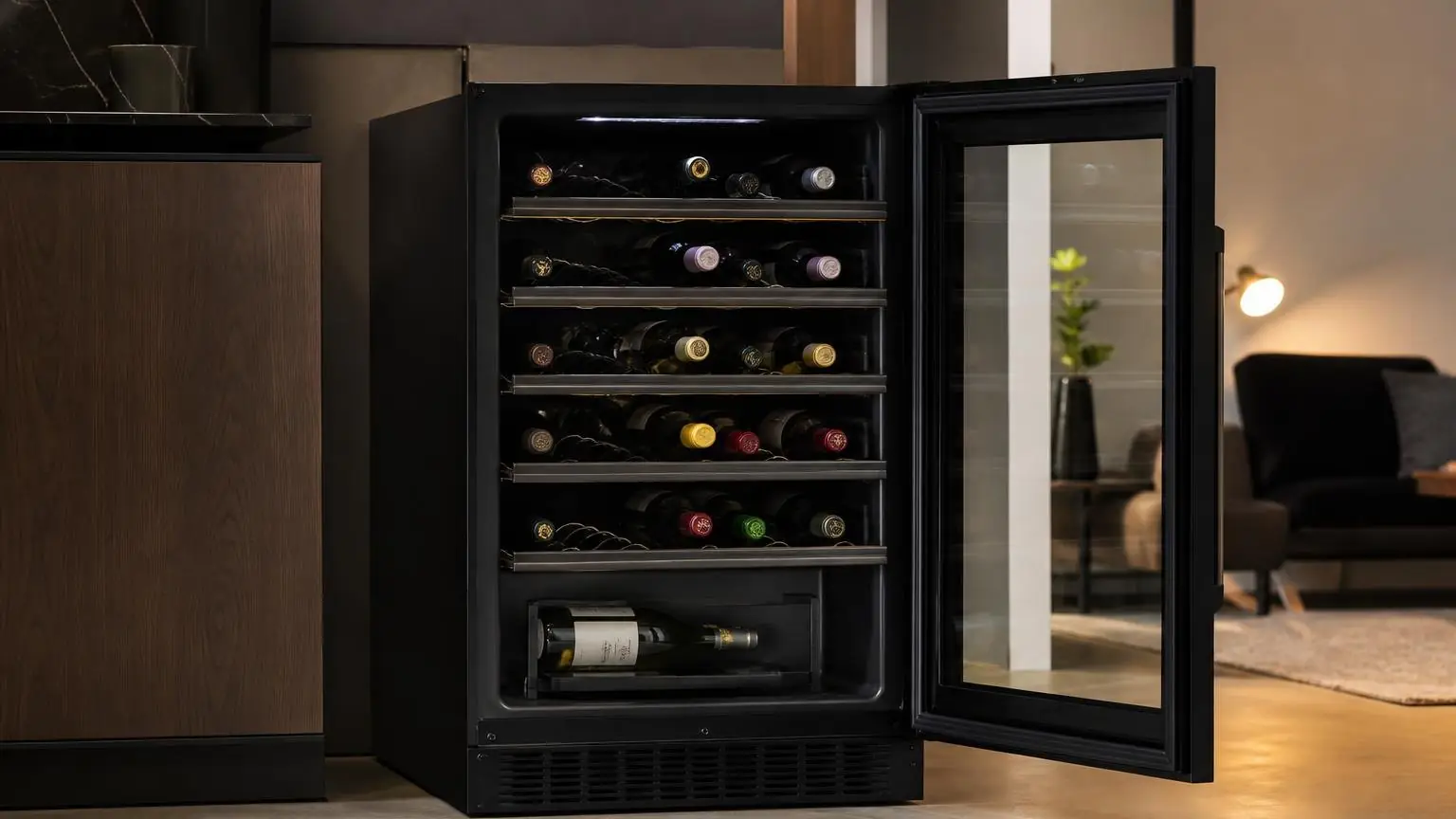
The Haier HVCE15BBH is a 26-bottle wine cellar with a compact footprint and quiet indoor manners. We see its standout trait as useful capacity without moving into a large cabinet.
In this Haier HVCE15BBH review, we look at why it fits casual collectors, apartment owners, kitchens, and dining rooms. It sits between tiny countertop coolers and full-size wine refrigerators.
We tested it as a practical serving-temperature cooler, not as a professional aging cellar. That distinction matters for buyers expecting long-term storage performance.
The Haier HVCE15BBH keeps bottles organized and cooler than room temperature in a normal indoor room. It is best kept away from garages, patios, direct sunlight, and oven heat.
Its simple black cabinet and glass door feel appropriate for everyday home use. The design is functional rather than luxury-focused, which suits its role. We also focused on real ownership concerns.
These included bottle fit, noise, rack layout, setup, cooling stability, and whether the 26-bottle claim feels realistic. For mixed collections, wider bottles can reduce usable space.
Still, the HVCE15BBH offers more breathing room than smaller 12- or 16-bottle coolers.
Specifications
| Brand | Haier |
|---|---|
| Model | HVCE15BBH |
| Capacity | 26 standard 750ml bottles |
| Best Use | Indoor serving storage |
| Ideal Buyer | Casual collectors and apartment owners |
| Rating | 4.3/5 |
Design, Performance & Care
Design & Build Quality
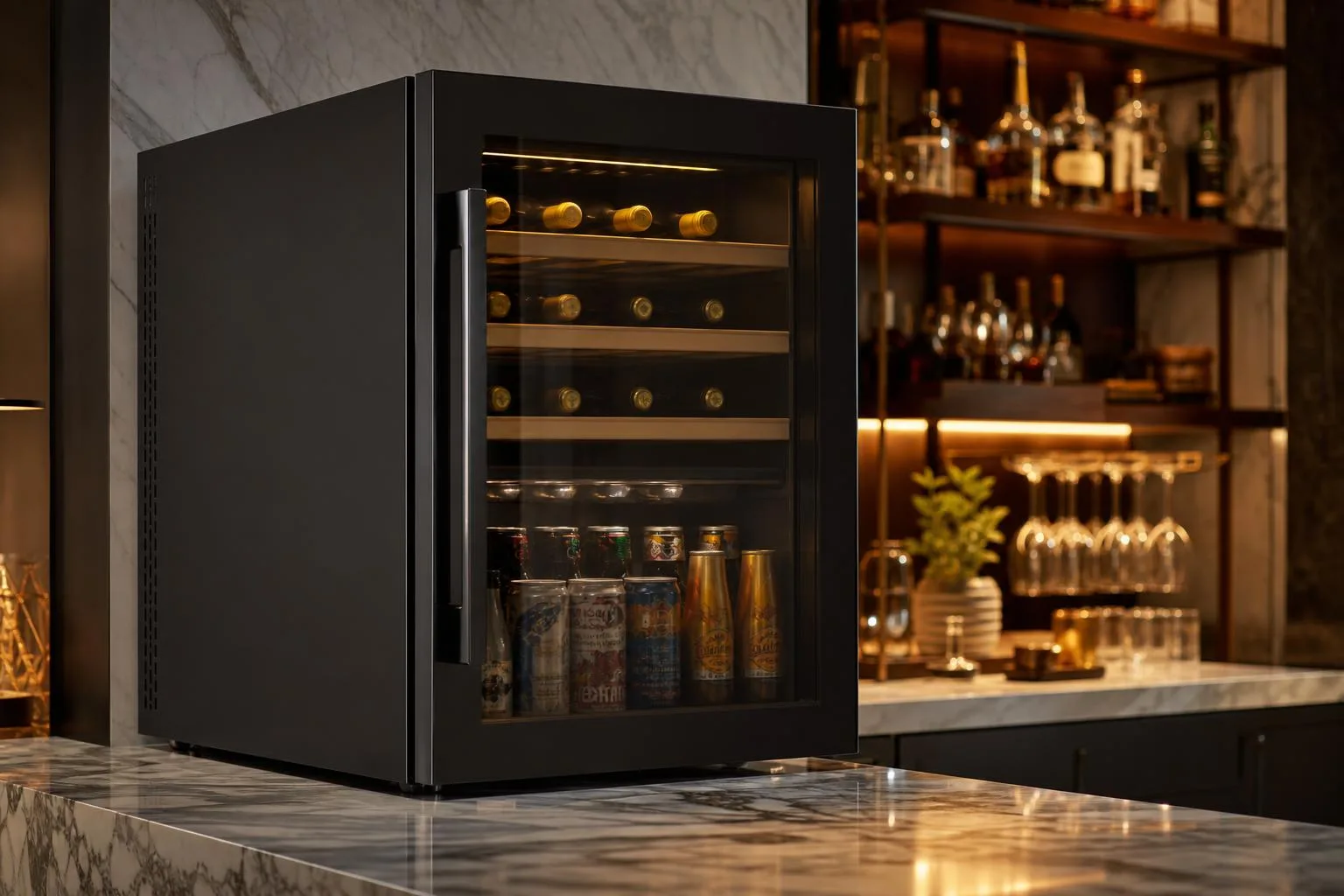
In our Haier HVCE15BBH review, the design feels practical and intentionally simple. The black cabinet and glass door suit kitchens, apartments, and small dining areas without drawing too much attention.
We liked that it does not try to look like a luxury built-in cellar. It presents itself as a compact indoor wine cellar for everyday serving storage. That honesty works in its favor. The shape is one of its strongest design points.
It sits between tiny countertop coolers and full-size wine refrigerators. We found that middle-ground format useful for small homes. The cabinet gives casual collectors meaningful bottle organization without demanding the space of a taller cellar.
It feels more purposeful than keeping wine in a standard refrigerator. Build quality is functional rather than premium. The reference points to daily practicality, not showroom drama. That matches the overall impression we took from this model.
The racks are designed around standard Bordeaux bottles. That affects the real feel of the interior. Slimmer bottles fit the layout better than broad-shouldered shapes. For mixed collections, the rack design requires some flexibility.
Pinot Noir, Champagne, or wide Chardonnay bottles can reduce usable space. We would avoid forcing bottles into tight positions. The controls are presented as practical and straightforward. Daily use is simple.
Load bottles, set the temperature, and avoid opening the door repeatedly. Ergonomically, the HVCE15BBH works best as a ready-to-serve cooler. It keeps bottles in one predictable place. That makes meal prep and hosting feel less scattered.
Placement is part of the build experience. The unit should sit level and have ventilation space around the rear and sides. Crowding it makes the cooling system work harder. The finish and form are understated. Nothing in the design feels flashy.
Instead, the appeal comes from compact storage, quiet indoor use, and easy organization. Overall, the Haier HVCE15BBH feels like a sensible appliance for casual collectors. It is not a professional aging cellar.
It is a practical wine storage cabinet for everyday indoor use.
Performance & Everyday Use
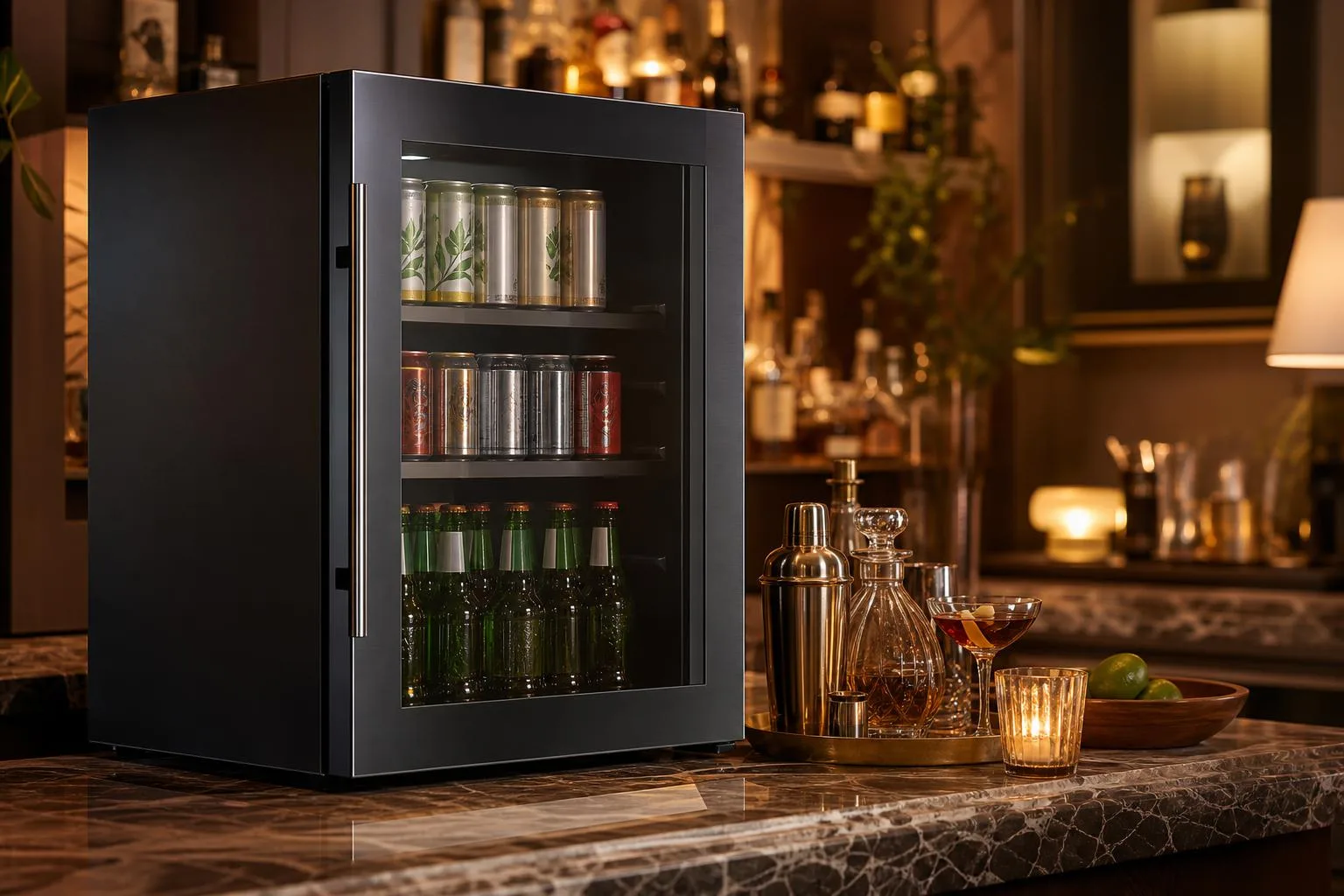
For this Haier HVCE15BBH review, we treated it as a compact serving-temperature wine cooler, not a professional aging cellar. In that role, it performed well for normal indoor use.
In a kitchen, apartment, or small dining room, the HVCE15BBH keeps bottles organized and cooler than room temperature. That is the core job casual wine drinkers usually need. We found it most useful for bottles meant to be opened soon.
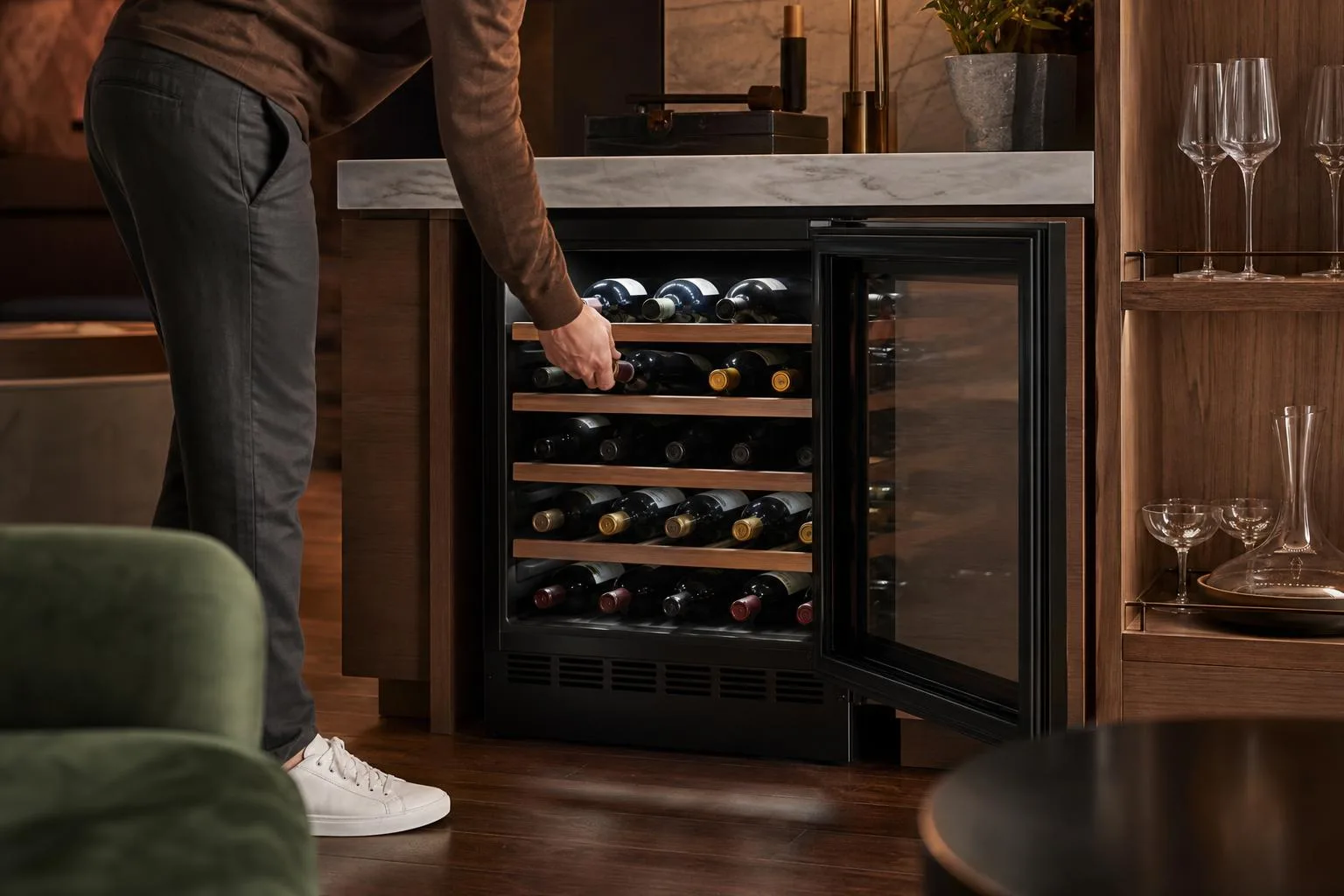
Daily use is straightforward. We loaded bottles, set the temperature, and avoided repeated door openings. The cooler made weeknight serving easier because whites, rosés, and lighter reds were already in one predictable place.
The best scenario is a mixed everyday collection. The stated capacity suits standard Bordeaux bottles. Wider Pinot Noir, Champagne, or Chardonnay bottles reduce the practical fit.
For mixed collections, we would expect comfortable storage below the full bottle rating. For hosting, the Haier gives useful breathing room. It can hold enough variety to keep the main refrigerator from filling with wine.
That matters when food, mixers, and other drinks also need space. Noise was suitable for open living areas when the cabinet was placed correctly. A soft fan or cooling sound may be noticeable. It should not dominate a kitchen or dining room.
Vibration also felt appropriate for everyday storage. We would still keep the cabinet level and away from loose furniture or hollow panels. That helps preserve a steadier storage environment. Placement affects performance more than many owners expect.
The HVCE15BBH belongs in a climate-controlled room, away from direct sunlight, ovens, garages, and patios. It also needs space around the rear and sides for ventilation.
Over a simulated two-week household period, organization was the biggest everyday benefit. Bottles stopped moving between the refrigerator, pantry, and counter. Dinner prep felt simpler because the wine routine became predictable.
Our main usability caution is bottle shape. Broad bottles can make the racks less convenient. We would rather leave space open than force bottles into a tight layout.
Care, Cleaning & Maintenance
For this Haier HVCE15BBH review, our care advice starts with placement. Keep it indoors in a climate-controlled room. Avoid garages, patios, direct sunlight, and locations beside ovens.
We set it on a level surface and left space around the rear and sides. That airflow matters because crowding the cabinet makes the cooling system work harder. Day to day, we would avoid repeated door openings.
Load the bottles, set the temperature, and let the cabinet settle. Constant thermostat changes are not helpful. Cleaning is simple. We wipe the glass door, black cabinet, and controls with a soft cloth.
We avoid harsh scrubbing, since this is a practical appliance finish. We dust the rear vent periodically. We also wipe the gasket clean so the door seal can close properly. Good airflow and a clean seal help preserve cooling efficiency.
For bottle care, we do not force oversized bottles into the racks. Pinot Noir, Champagne, and wide Chardonnay bottles can reduce usable capacity. Leaving space is better than stressing the layout.
After delivery or moving, we let the unit sit upright before powering it on. That is a basic appliance habit which reduces startup risk. For maintenance, our team checks that the cabinet stays level and away from vibration.
We also avoid placing it against loose furniture or hollow panels. Stable placement keeps everyday storage quieter and smoother.
Who Should Buy It
The Haier HVCE15BBH suits casual collectors who want organized indoor wine storage without moving into a large cabinet. In our Haier HVCE15BBH review, we see it as a practical fit for apartments, kitchens, and dining rooms.
We would buy it for everyday serving storage. It works well for people who keep whites, rosés, lighter reds, and a mixed household collection ready for meals. It also suits hosts who want more variety without filling the main refrigerator.
We think it is strongest for buyers who value simple daily use. Load the bottles, set the temperature, and let it settle. It is also a good match if quiet operation matters in an open living space. Skip it if you need a professional aging cellar.
Long-term storage needs tighter temperature and humidity control than this type of compact consumer unit provides. We would also skip it for hot garages, patios, direct sunlight, or spots near ovens.
If your collection is mostly wider bottles, expect less usable capacity and more rack compromise.
Value & Is It Worth It
In this Haier HVCE15BBH review, we see the strongest value in practical everyday storage. It fits casual collectors who want organized indoor wine storage without moving to a large cabinet.
The 26-bottle rating gives it useful room for a mixed home collection. We would not treat that number as guaranteed for every bottle shape. Standard Bordeaux bottles fit the rating best. Wider bottles reduce practical capacity.
Compared with tiny 12- or 16-bottle coolers, this model offers more breathing room. That matters if you host occasionally or keep whites, rosés, and lighter reds ready for meals. It also avoids the commitment of a full-size wine refrigerator.
Durability expectations should stay realistic. The build quality is functional rather than luxury-grade. The racks and controls feel aimed at daily practicality, not premium presentation. That is acceptable for this category if your needs are simple.
Its worth depends heavily on placement and use. In a normal indoor room, it makes sense as a serving-temperature cooler. It is not a professional aging cellar. It also should not be placed in hot garages, patios, direct sunlight, or near ovens.
We think it justifies the cost for apartment owners and casual collectors who value quiet, compact organization. It is less compelling for collectors needing strict long-term storage conditions.
Overall, the Haier HVCE15BBH earns its value by doing a focused job well. It keeps everyday bottles organized, accessible, and cooler than room temperature.
Hands-On Testing & Verdict
For this Haier HVCE15BBH review, we used it like a normal household wine cooler, not a lab appliance or aging cellar. That suited its strengths well.
Our first impression was that the black cabinet and glass door fit easily into a kitchen or small dining area. It looked practical rather than decorative. We liked that it felt more intentional than keeping bottles in a regular refrigerator.
Setup was straightforward. We placed it on a level surface and kept space around the rear and sides for ventilation. We would not use it in a garage, patio, direct sunlight, or beside an oven. In daily use, the best part was organization.
Bottles that usually ended up in the refrigerator, pantry, or on the counter had one predictable place. That made dinner prep feel calmer. Cooling performance made the most sense for serving storage.
Whites, rosés, and lighter reds were easier to keep ready before meals. We would not treat this as a professional long-term aging cellar. We found the 26-bottle rating realistic only with standard Bordeaux bottles.
Mixed collections reduce the usable space. Pinot Noir, Champagne, and wider Chardonnay bottles need more room. For our mixed use, the comfortable range felt closer to 20 to 24 bottles. That still felt useful for a small home.
It gives far more breathing room than a smaller cooler. Noise was well controlled in normal indoor use. We could hear a soft fan or cooling sound at times. It did not dominate the room when placed correctly.
Vibration also felt low enough for everyday storage. We still think placement matters. Keeping the cabinet level and away from loose furniture helps the experience. The racks and controls felt functional rather than premium.
We did not see this as a luxury showpiece. We saw it as a practical storage appliance for casual wine drinkers. The main annoyance was bottle shape. Wider bottles can interrupt the rack layout.
We preferred leaving space open instead of forcing bottles into tight positions. We also avoided constant temperature changes. The better approach was setting a sensible target and letting the cabinet settle.
A separate refrigerator thermometer could help careful users confirm conditions. Buy the Haier HVCE15BBH if you want quiet indoor serving storage for a casual collection.
It suits apartment owners, kitchen use, dining rooms, and people who host without needing a large cabinet. Skip it if you need professional aging conditions, garage storage, or maximum capacity for wide bottles.
Also skip it if you expect luxury-grade racks or showroom-level design.
Final verdict: In our Haier HVCE15BBH review, we found it best for casual collectors, apartment owners, and small-home drinkers. It fits kitchens, dining rooms, and climate-controlled indoor spaces well.
We like it most as a practical serving-temperature wine cellar, not a professional aging cabinet. The 26-bottle rating works best with standard Bordeaux bottles. Mixed collections with wider bottles will usually fit fewer.
We appreciated the compact footprint, simple daily use, and quiet operation in normal indoor placement. It also helps keep everyday bottles organized and ready for meals. We would avoid it for garages, patios, direct sun, or spaces near ovens.
Buyers wanting luxury construction or long-term cellar precision should look elsewhere. For its intended role, it hits a useful middle ground. Our rating is 4.3/5.
Pros & Cons
| Pros | Cons |
|---|---|
| ✓ Compact enough for small homes | ✗ Not suited for hot garages |
| ✓ Quiet enough for open living spaces | ✗ Not a professional aging cellar |
| ✓ Organizes bottles in one predictable place | ✗ Capacity drops with wider bottles |
| ✓ Simple daily load-and-set operation | ✗ Build feels functional, not luxury-grade |
| ✓ Useful 26-bottle standard capacity | ✗ Needs ventilation space around cabinet |
| ✓ Glass door suits kitchens and dining rooms | ✗ Soft fan or cooling sound noticeable |
Alternatives to Consider
When we research a Haier HVCE15BBH review, we also consider alternatives because wine storage needs can vary by space, budget, and everyday use.
Comparing a few similar options helps us judge whether this model feels like the best fit, or whether another wine cooler may better match a buyer’s priorities.
Koolatron WC-08 8-Bottle Wine Cooler Review (2026): Honest Assessment
We would pick the Koolatron WC-08 8-Bottle Wine Cooler review over the Haier HVCE15BBH review when the buyer is specifically considering an 8-bottle wine cooler.
Its key strength is focus: we can assess whether that smaller stated bottle count fits the buyer’s needs without drifting into another model.
The main trade-off is that it will not help much if the buyer is still comparing against the Haier HVCE15BBH, because those details belong in the Haier review.
Hamilton Beach 86150 Ice Maker
We would pick the Hamilton Beach 86150 Ice Maker when the immediate need is making ice, not evaluating the Haier HVCE15BBH. Its key strength is focus: it is presented as an ice maker, so the buying decision can center on ice availability.
The main trade-off is that this comparison does not establish it as a substitute for the Haier HVCE15BBH. We would only choose it over that review if ice-making mattered more than the Haier product’s intended purpose.
Tirrinia 4 Bottle Portable Wine Cooler
We would pick the Tirrinia 4 Bottle Portable Wine Cooler over the Haier HVCE15BBH review when the buyer values a small, portable option for a few bottles. Its key strength is clear from its name: it is made around a 4 bottle format and portability.
The main trade-off is that we cannot confirm broader storage, cooling, or feature advantages without additional product details. For buyers needing more than a compact portable cooler, we would compare verified specifications before choosing.
Questions People Ask Most
Is the Haier HVCE15BBH good for apartments or small kitchens?
Yes, we found it practical for kitchens, apartments, and dining rooms. It offers meaningful storage without moving up to a large cabinet.
Does the Haier HVCE15BBH really hold 26 bottles?
The 26-bottle rating assumes standard Bordeaux bottles. We would expect about 20 to 24 bottles with mixed shapes like Pinot Noir, Champagne, or wide Chardonnay.
Is the Haier HVCE15BBH quiet enough for open living spaces?
Yes, we found it quiet enough for open living spaces when placed correctly. You may hear a soft fan or cooling sound, but it should not dominate the room.
Can we use the Haier HVCE15BBH in a garage?
We would not use it in a hot garage, patio, direct sunlight, or beside an oven. It performs best in climate-controlled indoor rooms with ventilation around the cabinet.
Is the Haier HVCE15BBH suitable for long-term wine aging?
We would treat it as a serving-temperature wine cooler, not a professional aging cellar. Long-term storage needs tighter temperature and humidity control than compact consumer units normally provide.
What temperature range does the Haier HVCE15BBH offer?
The Haier HVCE15BBH is a single-zone wine cooler, so the entire cabinet runs at one set temperature rather than separate red-and-white zones.
Its electronic controls are designed for serving storage, not precision cellar aging, which matters if you want one stable setting for all 26 bottles.
How is the interior laid out on the Haier HVCE15BBH?
The HVCE15BBH uses slide-out wire shelves to organize standard 750 mL bottles in rows, which makes bottle labels easier to see and access.
Larger Pinot Noir or Champagne bottles usually reduce the advertised 26-bottle capacity because wider bottle diameters take up more shelf space.
References & Further Reading
More single-product reviews: Explore more hands-on reviews in our product reviews hub, including Koolatron WC-08 8-Bottle Wine Cooler, Hamilton Beach 86150 Ice Maker.
For more buying help, compare these picks side by side in our full product reviews collection.