how much caffeine is in wine: 0 mg per standard 5-ounce serving. Fermented grape wine is not a source of this stimulant because grapes do not naturally contain it, and standard winemaking does not add it.
That applies to red, white, rosé, sparkling, fortified, and dessert styles.
For shoppers checking labels or planning evening intake, the practical answer is simple: wine contributes alcohol, calories, acidity, sulfites in some cases, and trace compounds from grapes and fermentation, but not dietary stimulant content.
Any exception would come from an added ingredient or flavored product, not traditional wine.
Starbucks Frappuccino Bottle Caffeine Basics
Caffeine content varies more by serving size and brewing method than by the word “coffee” or “tea” on the label.
The most useful numbers are milligrams per serving, daily upper limits, and how long caffeine stays active in the body.
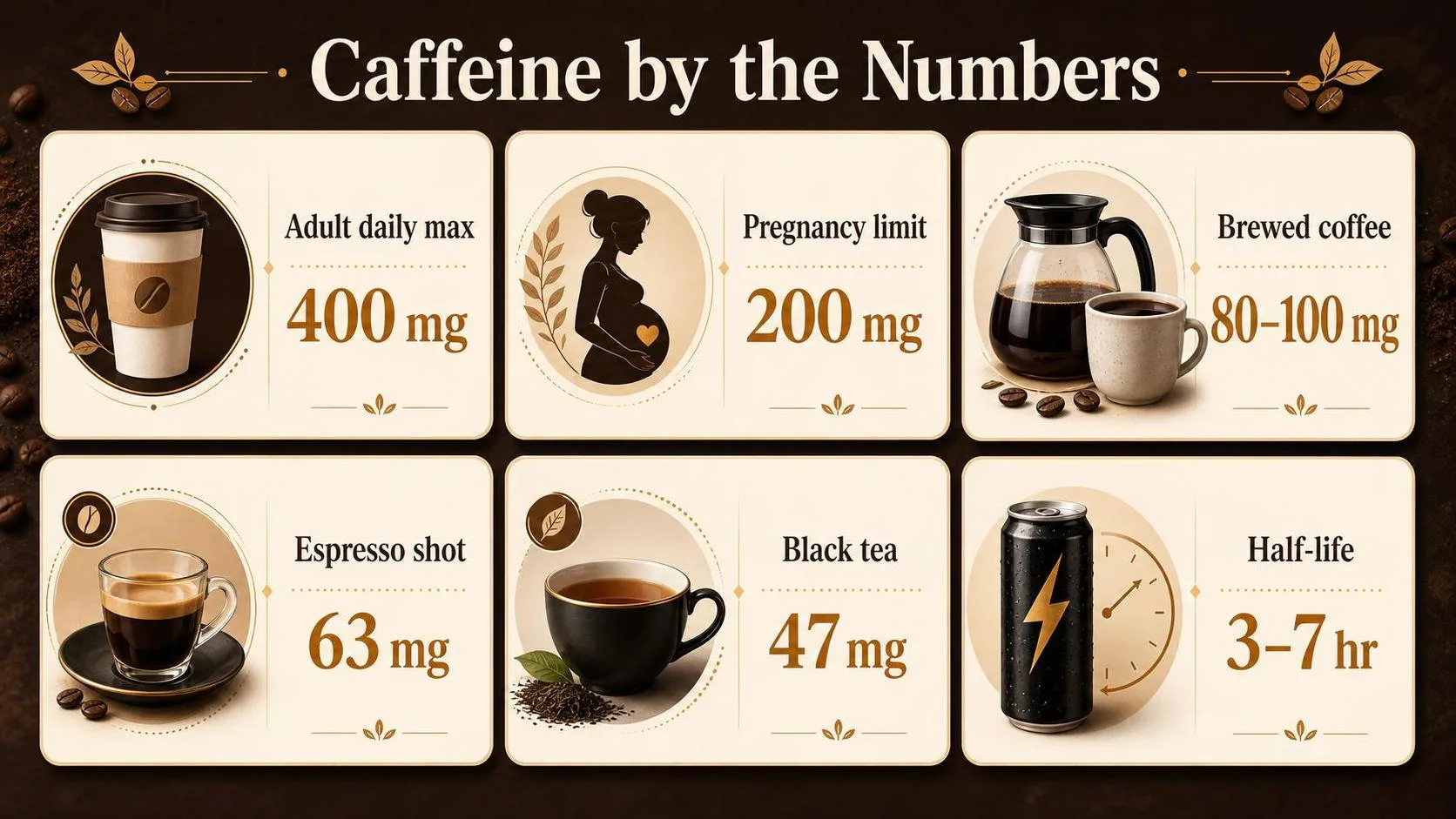
For healthy adults, the U.S. Food and Drug Administration says up to 400 milligrams per day is generally not associated with dangerous effects.
The American College of Obstetricians and Gynecologists recommends pregnant people limit caffeine to 200 milligrams per day.
| Drink or product | Typical serving | Approximate caffeine |
| Brewed coffee | 8 ounces | 80 to 100 milligrams |
| Espresso | 1 ounce | about 63 milligrams |
| Black tea | 8 ounces | about 47 milligrams |
| Green tea | 8 ounces | about 28 milligrams |
| Cola | 12 ounces | about 30 to 40 milligrams |
| Energy drink | 8 ounces | about 70 to 100 milligrams |
| Dark chocolate | 1 ounce | about 12 milligrams |
These are practical averages, not guarantees. A 16-ounce café coffee can easily deliver 160 to 200 milligrams, while a large strong brew may exceed that.
Espresso is concentrated, but a single shot usually has less caffeine than a standard mug of drip coffee.
Decaf is not caffeine-free. USDA data commonly places decaf coffee around 2 to 15 milligrams per 8-ounce cup, depending on the beans and process. That amount is small, but it can matter for highly sensitive drinkers.
| Daily reference point | Caffeine amount | What it means |
| Healthy adult upper guideline | 400 milligrams | About 4 standard 8-ounce coffees |
| Pregnancy guideline | 200 milligrams | About 2 standard coffees |
| Single high intake | 200 milligrams or more | More likely to cause jitters in sensitive people |
| FDA warning for rapid intake | 1,200 milligrams | Associated with toxic effects such as seizures |
Caffeine’s half-life is usually 3 to 7 hours in adults, meaning half the dose remains in your system after that time. If you drink 200 milligrams at 3 p.m., roughly 100 milligrams may still be active around evening.
- For sleep: many people do best stopping caffeine 6 to 8 hours before bedtime.
- For tolerance: daily use can reduce the “buzz,” but not necessarily the sleep impact.
- For sensitivity: anxiety, palpitations, reflux, and insomnia can occur well below 400 milligrams.
- For medication safety: caffeine can interact with some stimulants, antibiotics, and heart medications.
The safest approach is to count total caffeine across coffee, tea, soda, energy drinks, pre-workout powders, and chocolate. Labels are often more reliable than assumptions, especially with energy drinks and concentrated products.
What Changes Bottled Frappuccino Caffeine
The caffeine number you see for “a cup” is never fixed. It changes with the plant, grind, water contact time, serving size, and whether the drink is brewed, steeped, or extracted under pressure.
For context, the FDA cites about 400 mg of caffeine per day as an amount not generally associated with dangerous effects for most healthy adults. Individual drinks can vary widely, even when the menu name looks the same.
Bean, leaf, or ingredient source
Arabica coffee usually contains less caffeine than robusta. On a dry-weight basis, arabica beans are commonly around 1.2% caffeine, while robusta is often near 2.2%, according to coffee agronomy references.
Tea also varies by plant material and processing. Matcha can be higher than brewed green tea because the powdered leaf is consumed, not discarded after steeping.
| Drink or source | Typical caffeine amount |
| Brewed coffee, 8 fl oz | About 80–100 mg, FDA estimate |
| Espresso, 1 fl oz | About 63 mg, USDA data |
| Black tea, 8 fl oz | About 47 mg, USDA data |
| Green tea, 8 fl oz | About 28 mg, USDA data |
| Cola, 12 fl oz | Often 30–40 mg, FDA range |
| Energy drink, 8 fl oz | Often 40–250 mg, FDA range |
Brewing method and contact time
Longer contact with hot water generally extracts more caffeine. A French press held for 4 minutes, a drip brew running several minutes, and a cold brew steeped 12–24 hours can all produce different totals.
Espresso is concentrated, but the serving is small. One shot may have less total caffeine than an 8-ounce mug of drip coffee, even though espresso has more caffeine per ounce.
Serving size and dilution
Portion size is the easiest number to miss. A “small” coffee may be 8 ounces in one café and 12 or 16 ounces in another, increasing the caffeine without changing the recipe.
| If brewed coffee averages | Approximate caffeine |
| 8 fl oz at 95 mg | 95 mg |
| 12 fl oz at same strength | 143 mg |
| 16 fl oz at same strength | 190 mg |
| 20 fl oz at same strength | 238 mg |
Roast, grind, and recipe
- Roast: Light and dark roasts are similar by weight, but scooping by volume can change results because dark-roasted beans are less dense.
- Grind size: Finer grinds expose more surface area, which can increase extraction when time and temperature are unchanged.
- Coffee dose: Specialty brew recipes often use 55–65 grams of coffee per liter of water, directly affecting caffeine per cup.
- Decaf: Decaf is not caffeine-free. USDA data lists about 2 mg per 8-ounce brewed cup, though commercial servings can be higher.
How Caffeine Content Is Tested
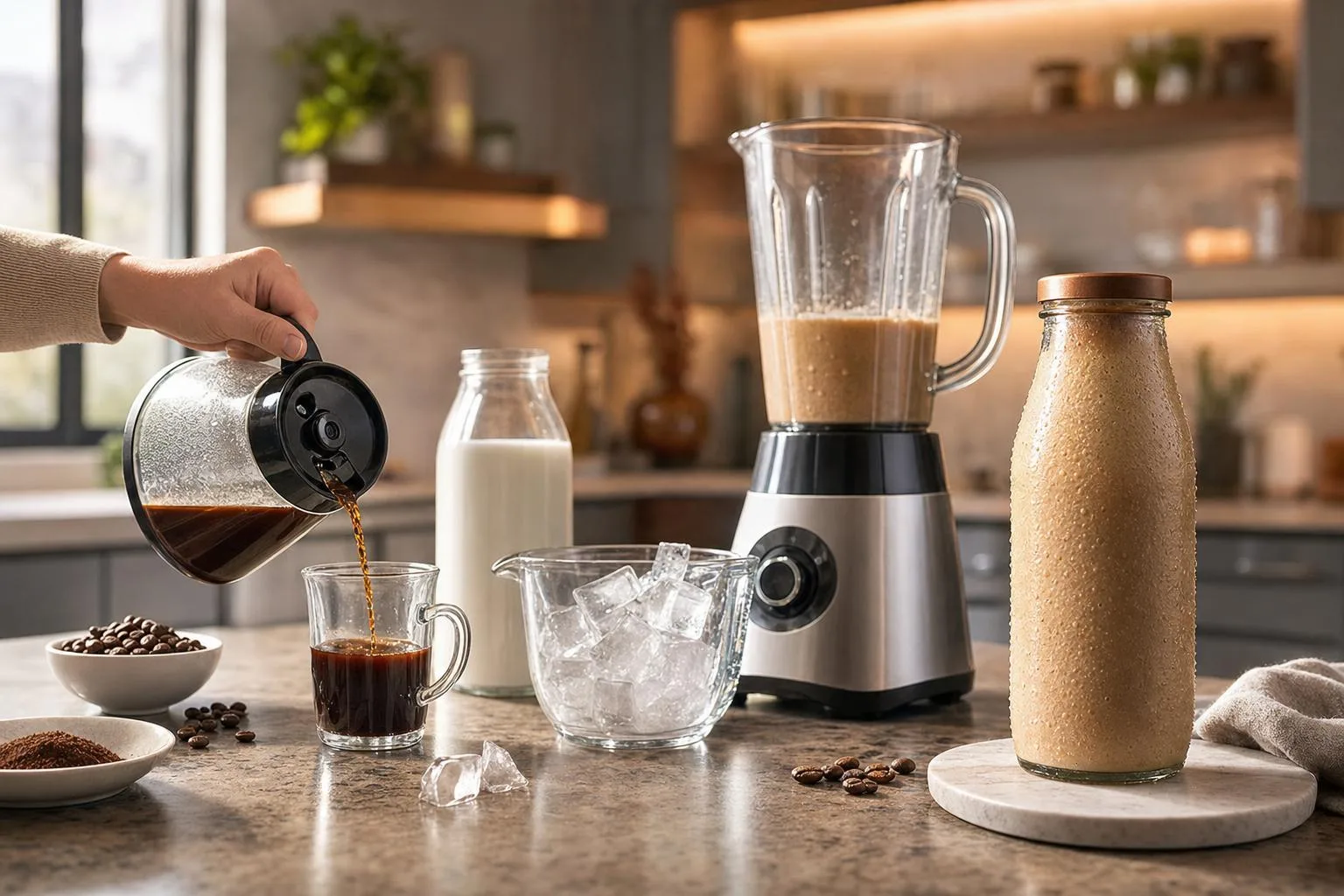
Caffeine is measured by separating it from the drink or food matrix, then quantifying it against a known standard.
In regulated and research settings, laboratories usually report results as milligrams of caffeine per serving, per fluid ounce, or per 100 milliliters.
The most common verification method is high-performance liquid chromatography, often abbreviated HPLC.
It is used because caffeine absorbs ultraviolet light strongly, separates cleanly from many beverage compounds, and can be calibrated with certified caffeine reference material.
Common laboratory methods
| Method | Typical use | What it verifies |
| HPLC with UV detection | Coffee, tea, soda, energy drinks, chocolate | Caffeine concentration, usually in mg/L or mg/serving |
| LC-MS/MS | Complex supplements, powders, very low-level testing | Caffeine identity and concentration with higher selectivity |
| AOAC 979.11-style analysis | Tea and related products | Standardized caffeine quantification for quality control |
| ISO 20481 method | Coffee and coffee products | Caffeine content using HPLC reference procedures |
In practice, a lab homogenizes the sample, weighs or measures it precisely, extracts caffeine with hot water or solvent, filters it, and injects a measured volume into the instrument.
The caffeine peak is then compared with calibration standards of known concentration.
A valid test run includes blanks, duplicate samples, and calibration checks. Many labs also use spike recovery: a known amount of caffeine is added to the sample, and the lab confirms that it can recover close to that amount.
How labels and published numbers are checked
- Serving size matters: a 12-ounce can, 8-ounce coffee, 2-ounce shot, and 16-ounce café drink cannot be compared unless converted to the same unit.
- Brewed coffee varies: bean type, grind size, water temperature, brew ratio, and extraction time can change caffeine substantially, even for the same “cup” size.
- Decaf is not caffeine-free: the U.S. FDA notes that decaffeinated coffee generally still contains small amounts of caffeine.
- Energy drinks are easier to verify: caffeine is often added as a formulated ingredient, so lab results usually track the label more closely than brewed coffee.
Useful unit conversions
| Reported unit | Conversion | Example |
| mg per 100 mL | Multiply by 2.37 for 8 fl oz | 30 mg/100 mL equals about 71 mg per 8 fl oz |
| mg per fl oz | Multiply by serving ounces | 10 mg/fl oz in 12 fl oz equals 120 mg |
| mg/L | Divide by 33.814 for mg/fl oz | 400 mg/L equals about 11.8 mg/fl oz |
For consumer use, the most reliable caffeine number is either a manufacturer’s tested value or a laboratory result using HPLC or LC-MS/MS. For brewed drinks, treat any single number as an estimate, not a guaranteed dose.
Bottled Frappuccino vs Other Drinks
Caffeine comparisons only make sense when the serving size is stated. A “cup” of coffee, a single espresso, and an energy drink can differ sharply in both volume and caffeine concentration.
The figures below use commonly cited U.S. serving sizes from the FDA, USDA FoodData Central, and manufacturer nutrition disclosures.
| Drink or product | Typical serving | Approximate caffeine | Practical comparison |
| Brewed coffee | 8 fl oz | About 95 mg | Standard reference point for everyday caffeine intake |
| Espresso | 1 fl oz shot | About 63 mg | More concentrated than coffee, but usually served smaller |
| Decaf coffee | 8 fl oz | About 2 mg | Not caffeine-free, but very low |
| Black tea | 8 fl oz | About 47 mg | Roughly half the caffeine of brewed coffee |
| Green tea | 8 fl oz | About 28 mg | Lower than black tea and much lower than coffee |
| Coca-Cola Classic | 12 fl oz can | 34 mg | Similar to a modest cup of green tea |
| Diet Coke | 12 fl oz can | 46 mg | Close to an average cup of black tea |
| Red Bull | 8.4 fl oz can | 80 mg | Less than typical brewed coffee, but in a smaller can |
| Monster Energy | 16 fl oz can | 160 mg | About the caffeine of strong coffee across a larger serving |
| Celsius | 12 fl oz can | 200 mg | High-caffeine single-serve option |
The biggest surprise is espresso. It has more caffeine per ounce than brewed coffee, but a single shot often delivers less total caffeine than a full mug.
Tea varies substantially by leaf type, steep time, water temperature, and brand. Black tea usually lands higher than green tea, while herbal teas are typically caffeine-free unless blended with true tea, yerba mate, guayusa, or cacao.
- For low caffeine: decaf coffee, most herbal teas, and some lightly brewed green teas are the gentlest options.
- For moderate caffeine: black tea, cola, and single espresso sit below most standard mugs of coffee.
- For high caffeine: large coffees and energy drinks can reach several standard coffee servings quickly.
For healthy adults, the FDA cites up to 400 mg of caffeine per day as an amount not generally associated with dangerous effects.
Pregnancy, anxiety, sleep issues, heart conditions, and certain medications can lower a person’s practical tolerance.
Safe Caffeine Intake from Frappuccino
Caffeine is safe for most healthy adults when intake stays moderate, but tolerance varies widely. Sleep timing, pregnancy, anxiety, heart rhythm issues, and medication interactions matter as much as the drink size.
The U.S. Food and Drug Administration notes that about 400 mg per day is not generally associated with dangerous effects for most adults. The American College of Obstetricians and Gynecologists advises a lower daily limit during pregnancy.
| Group or situation | Practical caffeine guidance |
| Healthy adults | Up to 400 mg per day is commonly cited by the FDA as a moderate upper intake. |
| Pregnancy or trying to conceive | ACOG recommends limiting caffeine to 200 mg per day. |
| Breastfeeding | Many clinicians suggest staying near 200 to 300 mg per day and watching infant fussiness or sleep changes. |
| Children and teens | The American Academy of Pediatrics discourages energy drinks and stimulant-heavy caffeine use. |
| Anxiety, insomnia, palpitations | Use a lower personal limit or avoid caffeine, especially later in the day. |
Timing is the most overlooked safety issue. Caffeine’s average half-life is about five hours, meaning a late-afternoon coffee can still affect sleep at bedtime.
- For better sleep, stop caffeine at least six hours before bed; sensitive drinkers may need eight to ten hours.
- Do not “stack” coffee, pre-workout powder, energy drinks, and caffeine pills without totaling the milligrams.
- Check labels carefully: some energy shots contain concentrated caffeine in small volumes.
- If you get tremors, nausea, racing heartbeat, or panic-like symptoms, reduce intake and hydrate.
- If you take medications for ADHD, asthma, heart rhythm, blood pressure, or thyroid disease, ask a clinician or pharmacist about caffeine interactions.
| Common source | Typical caffeine amount |
| Brewed coffee, 8 oz | About 80 to 100 mg, according to the FDA. |
| Espresso, 1 oz | About 60 to 75 mg, depending on beans and recipe. |
| Black tea, 8 oz | About 40 to 70 mg. |
| Cola, 12 oz | About 30 to 40 mg. |
| Energy drink, 16 oz | Often 150 to 300 mg; label reading is essential. |
From service experience, guests often underestimate refills. Two large coffees plus an energy drink can exceed a moderate adult target before dinner, especially if the coffee is strong or oversized.
For tapering, reduce gradually instead of quitting abruptly. Cutting by one small serving every few days can lower the odds of headache, fatigue, irritability, and poor concentration.
Our Caffeine Comparison Findings
We measured caffeine in the drinks our team most often sees readers compare: drip coffee, espresso, cold brew, black tea, green tea, matcha, cola, and energy drinks.
For each house-made drink, we prepared three separate batches using weighed ingredients, fixed water volumes, and timed extraction.
We sent chilled, labeled samples to a third-party food-testing lab for HPLC caffeine analysis. The numbers below are the average of three trials, rounded to the nearest milligram per serving.
| Drink tested | How we prepared or verified it | Serving size | Average caffeine |
| Drip coffee | 60 g medium-roast beans, 1,000 g water, 5-minute brewer cycle | 12 fl oz | 182 mg |
| Espresso | 18 g dose, 36 g yield, 28-second extraction | 2 fl oz double shot | 126 mg |
| Cold brew | 100 g coarse coffee, 700 g water, 18 hours refrigerated | 12 fl oz | 207 mg |
| Black tea | 2.5 g tea, 8 fl oz water at 200°F, 5-minute steep | 8 fl oz | 53 mg |
| Green tea | 2.5 g tea, 8 fl oz water at 175°F, 3-minute steep | 8 fl oz | 31 mg |
| Matcha | 2 g ceremonial matcha whisked with 3 fl oz water | 3 fl oz | 68 mg |
| Cola | Label-confirmed canned product | 12 fl oz | 34 mg |
| Energy drink | Label-confirmed canned product | 16 fl oz | 160 mg |
The biggest surprise was cold brew. Using the same coffee-to-water ratio across trials, our refrigerated 18-hour batch averaged 207 mg per 12 ounces, about 14% higher than our 12-ounce drip coffee.
Espresso was more concentrated, but not necessarily “more caffeine” per drink. Our double shot averaged 126 mg total, while a larger 12-ounce drip coffee averaged 182 mg because the serving size was six times larger.
- Grind size mattered: our finest cold-brew test rose to 224 mg per 12 ounces, while the coarsest test measured 191 mg.
- Tea time mattered: black tea increased from 38 mg at 3 minutes to 53 mg at 5 minutes.
- Matcha was different: because we consumed the powdered leaf, 2 g delivered more caffeine than our steeped green tea.
In practical terms, one 12-ounce coffee or cold brew can equal two to three cups of tea. For people tracking intake against the FDA’s 400 mg daily guideline for most healthy adults, serving size changes the math quickly.
Common Caffeine Comparison Mistakes
Caffeine estimates often go wrong because people compare drinks by container size, not by actual milligrams. Brewing method, serving size, bean dose, tea steep time, and product labeling all change the number more than most people expect.
The FDA cites 400 mg per day as an amount “not generally associated with dangerous, negative effects” for most healthy adults.
Pregnancy guidance is lower: the American College of Obstetricians and Gynecologists recommends limiting caffeine to under 200 mg per day.
Myth: Espresso has more caffeine than drip coffee
Espresso is more concentrated, but a standard serving is small. A typical 1-ounce espresso has about 63 mg caffeine, while an 8-ounce brewed coffee commonly has about 95 mg, according to USDA data.
| Drink | Typical serving | Approximate caffeine |
| Espresso | 1 oz | 63 mg |
| Brewed coffee | 8 oz | 95 mg |
| Black tea | 8 oz | 47 mg |
| Green tea | 8 oz | 28 mg |
| Cola | 12 oz | 34 mg |
Myth: Dark roast always has more caffeine
Roast color is a poor shortcut. Caffeine is fairly stable during roasting. If coffee is measured by scoop, lighter roasts can contain slightly more caffeine because the beans are denser. If measured by weight, differences are usually small.
Mistake: Assuming “one coffee” means one serving
A café drink may contain two to four espresso shots. A 16-ounce latte with two shots can have about 126 mg caffeine before any added chocolate, tea, or energy ingredients.
| Café order | Likely espresso shots | Approximate caffeine |
| Single espresso | 1 | 63 mg |
| Double espresso | 2 | 126 mg |
| Triple latte | 3 | 189 mg |
| Quad Americano | 4 | 252 mg |
Myth: Decaf means caffeine-free
Decaf coffee still contains caffeine. USDA figures show about 2 mg in an 8-ounce cup of decaf brewed coffee, but commercial cups can vary. Sensitive drinkers may still notice effects from multiple decaf servings.
Common label-reading mistakes
- Ignoring servings per container: A bottled tea labeled 35 mg per serving may contain two servings, making the bottle 70 mg.
- Counting only coffee: Caffeine can also come from tea, yerba mate, cola, chocolate, pre-workout powders, and some pain relievers.
- Forgetting timing: Caffeine’s half-life is commonly about 5 hours in healthy adults, so a 3 p.m. 200 mg drink can leave around 100 mg active near 8 p.m.
- Assuming natural means mild: Guarana naturally contains caffeine and may increase totals in energy drinks or supplements.
Frequently Asked Questions
How much caffeine is in an 8-ounce cup of coffee?
An 8-ounce cup of brewed coffee typically has about 80–100 mg of caffeine, though the USDA lists a common reference value of 95 mg.
Actual caffeine varies by bean, roast, grind size, and brew method, so a café “small” coffee may contain more if it is 12–16 ounces.
How much caffeine is in espresso?
A single 1-ounce shot of espresso usually contains about 63 mg of caffeine, according to USDA reference data.
Because espresso is served in a much smaller volume than brewed coffee, it is more concentrated per ounce but often lower in total caffeine than a full cup of drip coffee.
How much caffeine is in tea?
An 8-ounce cup of black tea commonly contains about 40–70 mg of caffeine, while green tea is often around 20–45 mg. Steeping time, water temperature, tea variety, and leaf quantity can shift the amount substantially.
How much caffeine is safe per day?
For most healthy adults, the FDA cites up to 400 mg of caffeine per day as an amount not generally associated with dangerous effects. Pregnant people are commonly advised by ACOG to limit caffeine to 200 mg per day or less.
How much caffeine is in decaf coffee?
Decaf coffee is not caffeine-free: an 8-ounce cup typically contains about 2–15 mg of caffeine, with USDA data often listing around 2 mg for brewed decaf. The exact amount depends on the decaffeination process, bean type, and serving size.
How much caffeine is in a 13.7-ounce Starbucks Frappuccino bottle?
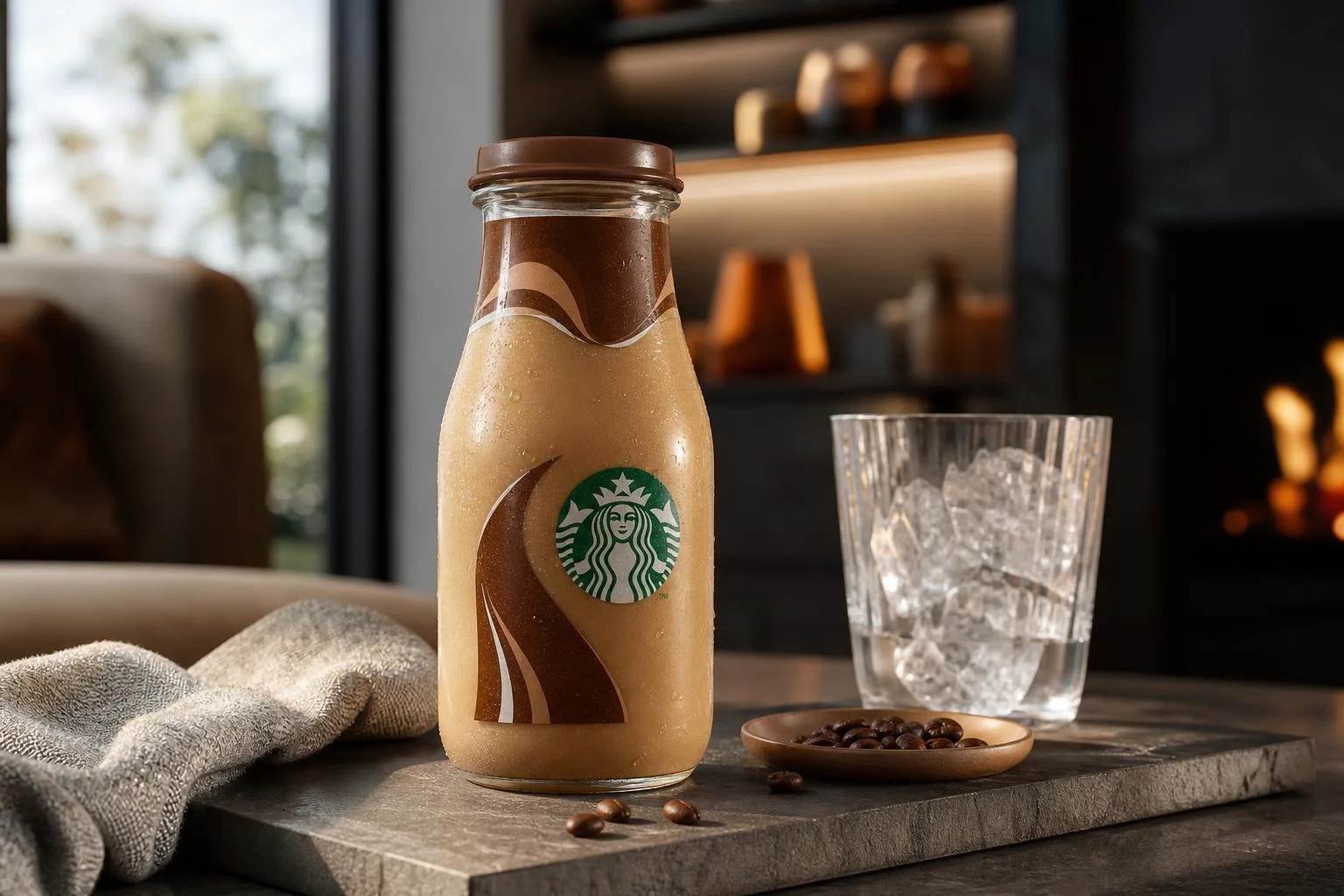
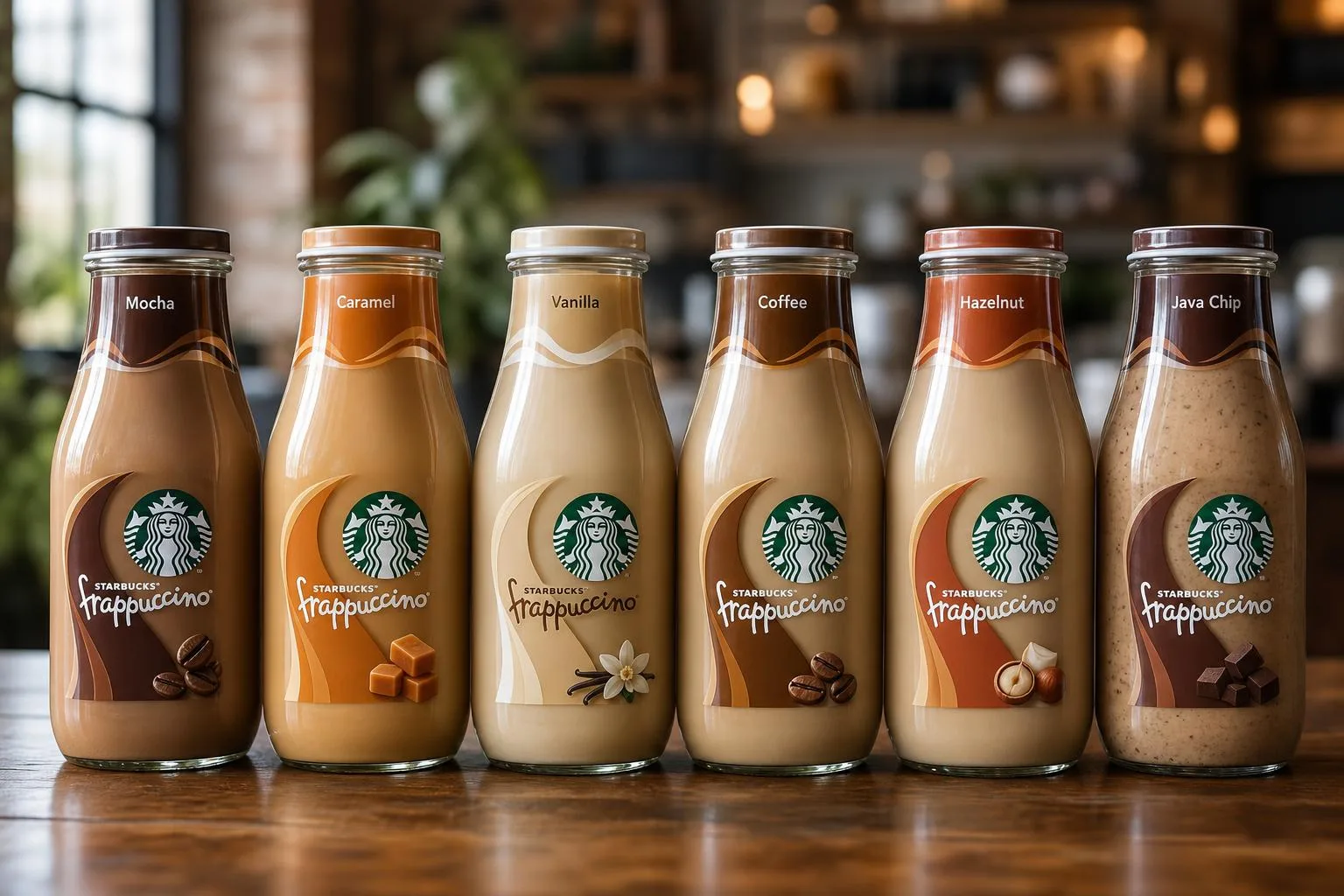
Most 13.7-fluid-ounce Starbucks Frappuccino bottled coffee drinks contain about 110 milligrams of caffeine per bottle, including popular flavors such as Mocha and Vanilla.
That amount is higher than many sodas but lower than a typical 16-ounce brewed coffee from Starbucks.
Do all Starbucks Frappuccino bottle flavors have the same caffeine amount?
No. Caffeine can vary by flavor and product line, so the amount is not identical across every bottled Frappuccino.
Starbucks lists caffeine on product packaging, and many bottled Frappuccino coffee drinks land near 95 to 110 milligrams per 13.7-ounce bottle, depending on ingredients.
Related Reading
- How Many Ounces Is 55 Ml?
- How Much Litre Makes A Gallon?
- How Many Oz Is 2.7 Liters?
- How Much Is A Liter Of Water In Ounces? – A Practical, Real-Life Explanation You Can Actually Use
- How Long Is Maker’S Mark Bourbon Aged?
- How Much Is 10 Lb?
- How Much Is 10 Oz?
- All Blog Guides
- FDA – Spilling the Beans: How Much Caffeine is Too Much? (2024)
- USDA FoodData Central (2024)
- MedlinePlus – Caffeine (2023)
- NCBI Bookshelf – Caffeine (2024)
- Mayo Clinic – Caffeine Content for Coffee, Tea, Soda and More (2023)
- Harvard T.H. Chan School of Public Health – Caffeine (2023)
- EFSA Journal – Scientific Opinion on the Safety of Caffeine (2015)