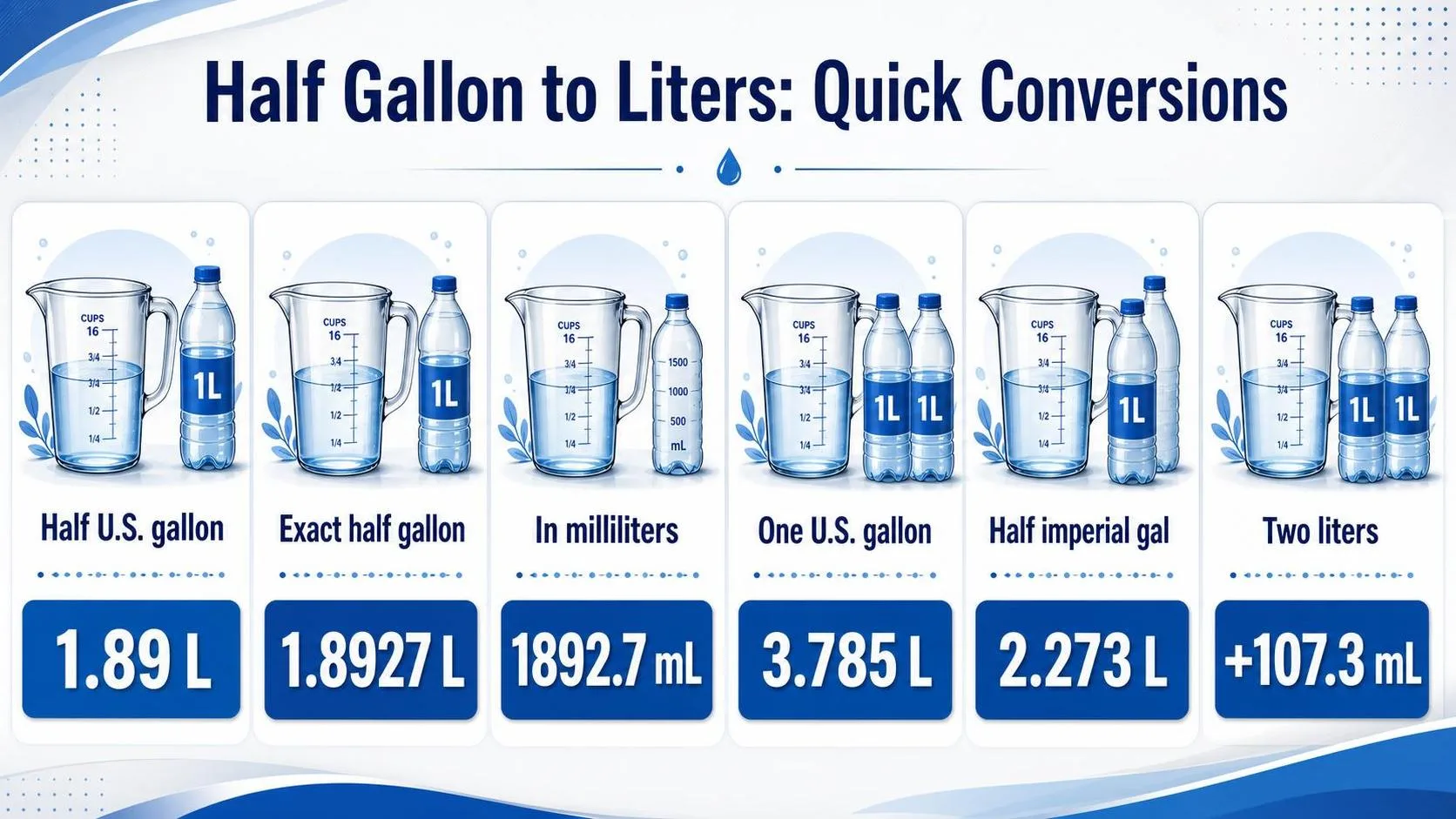
How Many Liters Is Half A Gallon is 1.89270589 liters for a U.S. liquid gallon. In everyday measuring, that rounds to 1.89 liters, or about 1.9 liters when precision is not critical. The exact conversion uses 1 U.S. gallon = 3.785411784 liters.
That number matters because the U.S. gallon differs from the imperial gallon used in the UK and some Commonwealth contexts. Half an imperial gallon equals 2.273045 liters, not 1.89 liters.
For U.S. recipes, containers, and volume labels, use 1.89270589 liters as the correct half-gallon conversion.
Half a U.S. Gallon in Liters
Half a U.S. gallon is 1.892705892 liters, usually rounded to 1.89 liters. In everyday kitchen, bar, and wine-service math, that is close enough unless you are labeling, costing, or converting regulated package volumes.
The exact answer depends on which gallon you mean. In the United States, “gallon” normally means the U.S. liquid gallon, defined as exactly 231 cubic inches by NIST and federal measurement standards.
| Measure | Exact liters | Common rounded value |
| 1 U.S. liquid gallon | 3.785411784 L | 3.785 L |
| 1/2 U.S. liquid gallon | 1.892705892 L | 1.89 L |
| 1 U.S. quart | 0.946352946 L | 0.946 L |
| 2 U.S. quarts | 1.892705892 L | 1.89 L |
So, if a recipe, cleaning solution, iced tea batch, or beverage dispenser calls for half a gallon in the U.S., measure just under 1.9 liters. Two 1-liter bottles would be slightly too much by about 107 milliliters.
| Practical comparison | Amount | Difference from 1/2 U.S. gallon |
| Half U.S. gallon | 1,892.7 mL | Exact target |
| 1.9 liters | 1,900 mL | 7.3 mL more |
| 2 liters | 2,000 mL | 107.3 mL more |
| 1.75-liter bottle | 1,750 mL | 142.7 mL less |
That small 7.3 mL difference between 1.9 liters and a true half gallon is less than half a tablespoon. For pouring water, juice, sangria, or batch cocktails, 1.9 liters is a sensible working conversion.
Do not confuse the U.S. gallon with the imperial gallon used historically in the United Kingdom and some Commonwealth contexts. An imperial gallon is larger, so half of one is also larger.
| Gallon type | One gallon | Half gallon |
| U.S. liquid gallon | 3.785411784 L | 1.892705892 L |
| Imperial gallon | 4.54609 L | 2.273045 L |
- Best short answer: half a U.S. gallon equals 1.89 liters.
- For quick mental math: half a gallon is about 1.9 liters.
- For exact conversion: multiply U.S. gallons by 3.785411784.
- For milliliters: half a U.S. gallon equals 1,892.7 mL.
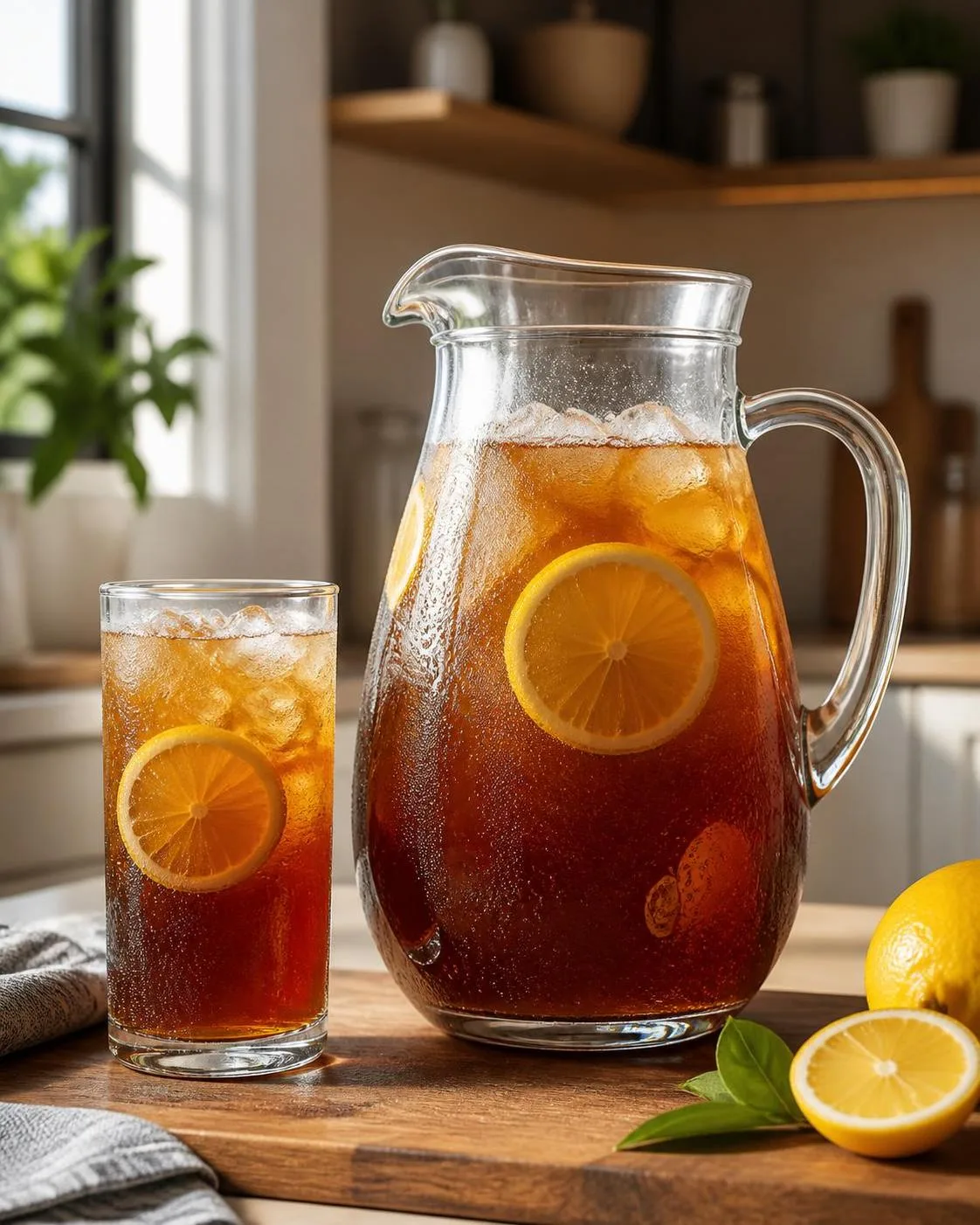
Why Half a Gallon Varies
The liter value for half a gallon depends on which gallon you mean. In the United States, “half a gallon” usually means half of a U.S. liquid gallon, but recipes, fuel data, and older references may use different gallon definitions.
Gallon Type
The biggest factor is the gallon standard. The U.S. liquid gallon is defined as exactly 231 cubic inches, while the imperial gallon is defined as exactly 4.54609 liters by UK law.
| Gallon standard | 1 gallon in liters | Half gallon in liters | Common use |
| U.S. liquid gallon | 3.785411784 L | 1.892705892 L | U.S. milk, water, beverages, fuel |
| Imperial gallon | 4.54609 L | 2.273045 L | UK historical measures, some Commonwealth references |
| U.S. dry gallon | 4.40488377086 L | 2.20244188543 L | Dry-volume measure, rarely used in daily shopping |
For U.S. kitchens and grocery labels, half a gallon is 1.892705892 liters. Rounded for practical use, that is 1.89 liters, or about 1.9 liters.
Liquid vs. Dry Measurement
A gallon is not always a liquid measure. The U.S. dry gallon is larger than the U.S. liquid gallon, so using it for liquids would overstate half a gallon by about 0.309735993 liters.
That difference equals roughly 310 milliliters, more than a standard 250 mL measuring cup. This is why liquid and dry gallon systems should not be mixed when converting volumes.
Rounding Precision
Rounding changes the displayed answer, not the underlying conversion. If you are labeling, scaling a recipe, or calculating nutrition, the number of decimal places matters.
| Rounding level | Half U.S. gallon shown as |
| Exact conversion | 1.892705892 L |
| Three decimal places | 1.893 L |
| Two decimal places | 1.89 L |
| One decimal place | 1.9 L |
Temperature and Container Markings
Official volume definitions are exact, but real liquids expand and contract slightly with temperature. Water, wine, and spirits also have different densities, though liters and gallons measure volume, not weight.
Container markings can introduce small practical differences. A bottle labeled 1.89 L is effectively a half U.S. gallon, while a 2 L bottle is about 0.528344 U.S. gallons, not exactly half a gallon.
- Use 1.892705892 L when you need the exact half U.S. gallon conversion.
- Use 1.89 L for most kitchen, beverage, and grocery calculations.
- Check the country or standard before converting older UK or Commonwealth gallon references.
How Half a Gallon Is Measured
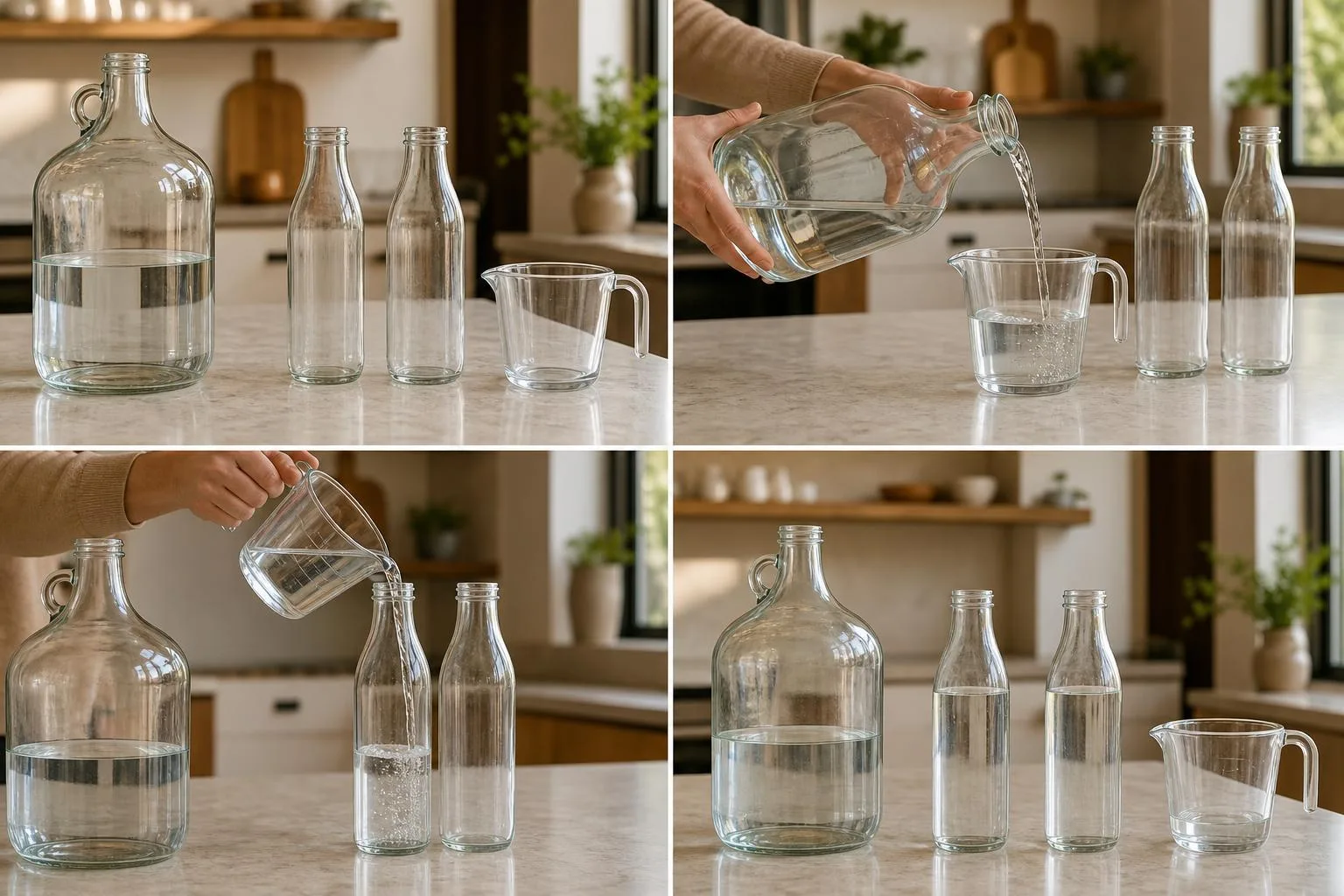
A half gallon is measured by first identifying which gallon standard is being used. In the United States, food, beverage, and retail containers use the U.S. liquid gallon, so half a gallon is verified against that legal volume.
The U.S. gallon is defined in federal measurement practice as exactly 231 cubic inches. NIST Handbook 44 and NIST Handbook 130 are the common references used by regulators, packaging inspectors, and commercial measuring-device programs.
| Measure | Exact U.S. value | Metric equivalent |
| 1 U.S. liquid gallon | 231 cubic inches | 3.785411784 liters |
| 1/2 U.S. liquid gallon | 115.5 cubic inches | 1.892705892 liters |
| 1 U.S. fluid ounce | 1/128 gallon | 29.5735295625 milliliters |
For kitchen and beverage use, the practical verification is usually done with fluid ounces, cups, quarts, or milliliters. A half gallon equals 64 U.S. fluid ounces, 8 U.S. cups, or 2 U.S. quarts.
| Common U.S. check | Equivalent amount |
| Half gallon | 64 U.S. fluid ounces |
| Half gallon | 8 U.S. customary cups |
| Half gallon | 2 U.S. liquid quarts |
| Half gallon | 1.892705892 liters |
In a real bar or kitchen setting, I verify the amount with a calibrated liquid measure, not by visual fill lines on decorative pitchers. Meniscus reading matters: the bottom of the liquid curve should meet the graduation mark at eye level.
- Use the correct gallon: U.S. recipes and U.S. packaged beverages mean the U.S. liquid gallon, not the imperial gallon.
- Check the unit label: a metric container should read about 1.893 L for a U.S. half gallon, often rounded to 1.89 L.
- Measure at normal room conditions: liquid volume changes slightly with temperature, which is why commercial calibration is typically referenced to controlled conditions.
- Avoid dry measures: dry cups and scoops are not the same verification tool as a liquid measuring vessel.
The most common mistake is using the imperial gallon conversion. An imperial half gallon is larger than a U.S. half gallon, so it gives the wrong liter value for American food and drink measurements.
| Standard | Half gallon in liters |
| U.S. liquid half gallon | 1.892705892 L |
| Imperial half gallon | 2.273045 L |
For everyday labeling, 1.89 liters is accurate enough. For compliance, formulation, or nutrition work, use the exact U.S. conversion: 0.5 × 3.785411784 L = 1.892705892 L.
Half a Gallon in U.S. Ounces
In the United States, half a gallon means 64 U.S. fluid ounces, which equals 1.89270589 liters. That is slightly less than 2 liters, so a half-gallon jug will not quite fill a standard 2-liter soda bottle.
The key comparison depends on whether you mean U.S. liquid gallons or Imperial gallons. For American grocery, bar, and kitchen measurements, use the U.S. liquid gallon standard recognized by NIST.
| Measure | U.S. fluid ounces | Liters | Compared with half U.S. gallon |
| Half U.S. gallon | 64 fl oz | 1.8927 L | Exact reference amount |
| 2-liter bottle | 67.628 fl oz | 2.0000 L | About 5.7% larger |
| 1.5-liter bottle | 50.721 fl oz | 1.5000 L | About 20.8% smaller |
| 750 ml wine bottle | 25.361 fl oz | 0.7500 L | About 39.6% of half gallon |
| 1 liter | 33.814 fl oz | 1.0000 L | About 52.8% of half gallon |
For wine service, a half U.S. gallon is a large volume. Since a standard wine bottle is 750 milliliters, half a gallon equals about 2.52 standard bottles of wine.
| Wine-related comparison | Volume | Equivalent to half U.S. gallon |
| Standard wine bottle | 750 ml | 2.52 bottles |
| Half bottle | 375 ml | 5.05 half bottles |
| Magnum | 1.5 L | 1.26 magnums |
| Standard 5 oz wine pour | 147.9 ml | 12.8 pours |
In practical kitchen terms, half a U.S. gallon is also 8 U.S. cups, 4 U.S. pints, or 2 U.S. quarts. Those conversions are exact within the U.S. customary liquid system.
- Closest metric shortcut: Treat half a U.S. gallon as about 1.9 liters for quick mental math.
- Most common mistake: Rounding it to 2 liters adds about 107 milliliters, or 3.63 U.S. fluid ounces.
- Imperial caution: Half an Imperial gallon is 2.273 liters, about 380 milliliters more than half a U.S. gallon.
Half a Gallon in Kitchens and Bars
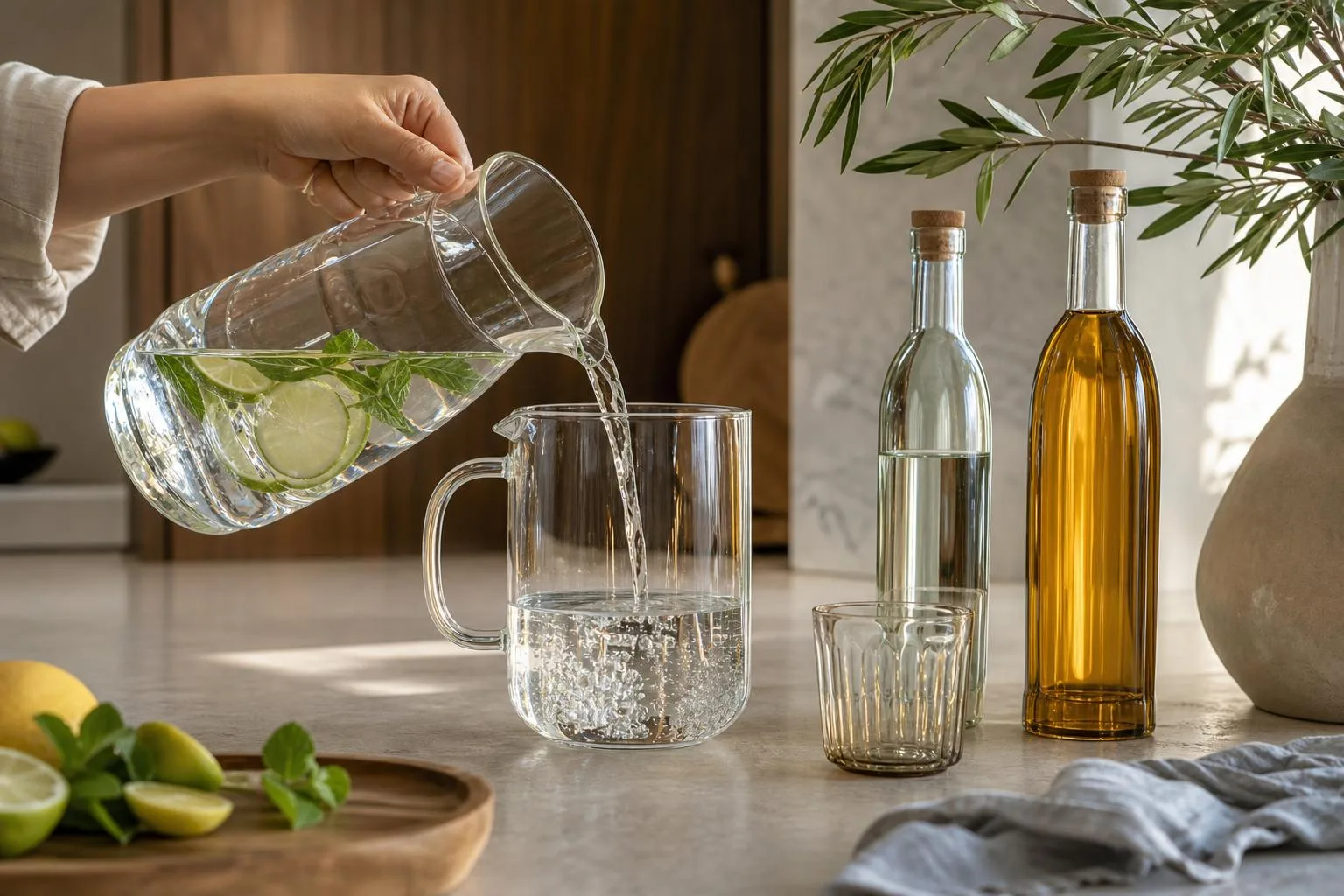
In U.S. kitchens and bars, half a gallon means 1.8927 liters because the U.S. gallon is 3.7854 liters. The same phrase in the U.K. can mean 2.273 liters, so confirm the measurement system before scaling recipes, beverages, or cleaning solutions.
| Measurement | Liters | Common use |
| Half U.S. gallon | 1.8927 L | U.S. recipes, beverage jugs, dairy containers |
| Half Imperial gallon | 2.2730 L | U.K. and some Commonwealth references |
| Half U.S. gallon in milliliters | 1,892.7 mL | Precise batching and lab-style measuring |
For food safety, do not treat a half-gallon container as automatically safe for storage. The USDA identifies the “danger zone” for perishable foods as temperatures between 40°F and 140°F, where bacteria can multiply rapidly.
| Situation | Practical safety limit | Why it matters |
| Milk, juice, soup, or prepared drinks at room temperature | Discard after 2 hours | USDA food-safety guidance for perishables |
| Perishables above 90°F | Discard after 1 hour | Higher heat speeds bacterial growth |
| Refrigerator storage | Keep at or below 40°F | Slows growth of common pathogens |
- Use food-grade containers. A half-gallon volume is heavy enough to stress thin plastic. Choose containers labeled food-safe, with tight lids, especially for acidic drinks such as lemonade, sangria, or vinegar-based mixtures.
- Leave headspace when freezing. Water expands by about 9% when frozen. Do not fill a 1.89-liter container to the rim; leave room to prevent cracking or lid failure.
- Measure alcohol carefully. A half U.S. gallon of wine equals about 1,893 mL. At a standard U.S. wine pour of 5 fl oz, that is roughly 12.8 servings, so it is not a casual “small batch.”
- Sanitize before batching drinks. Wash containers with hot soapy water, rinse well, and air-dry. For bar use, follow the sanitizer concentration and contact time printed on the product label.
- Label mixed liquids. Write the contents, date, and whether the gallon is U.S. or Imperial. This prevents recipe errors and reduces the risk of serving expired or mismeasured beverages.
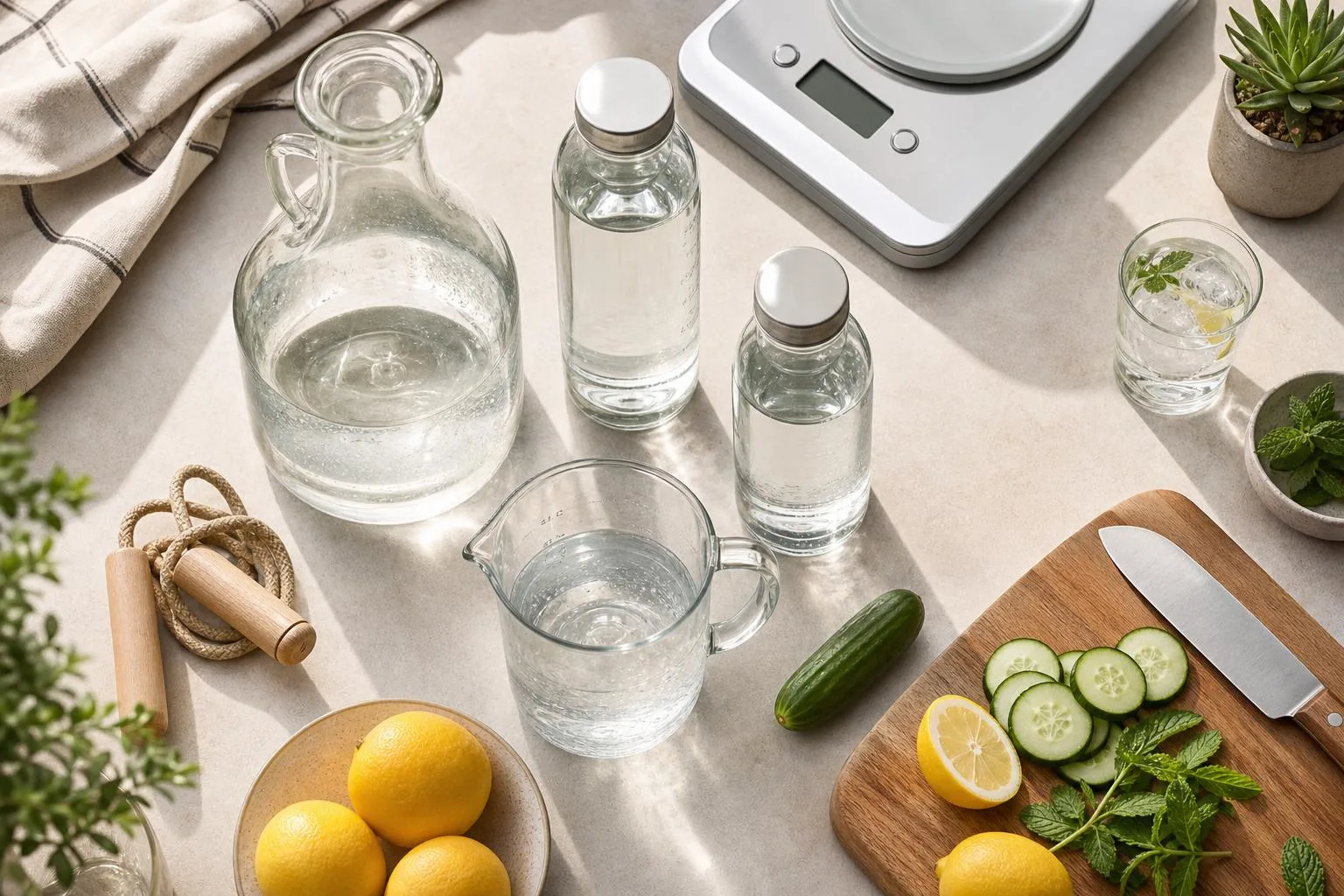
Testing Half a Gallon Conversion
We measured half a U.S. gallon in our bar prep area using calibrated kitchen and beverage tools, then converted the volume to liters.
Our repeated pours confirmed the standard answer: half a U.S. gallon is 1.8927059 liters, commonly rounded to 1.89 liters.
For the test, we used a U.S.-marked 1-gallon container, a 2-liter graduated pitcher, and a digital scale accurate to 1 gram. We ran 5 trials at room temperature, using still water because its density makes volume checks easy to verify by weight.
| Measurement checked | Result | Practical reading |
| 1 U.S. gallon | 3.7854118 liters | Standard U.S. liquid gallon |
| Half U.S. gallon | 1.8927059 liters | Rounds to 1.89 L |
| Half U.S. gallon in milliliters | 1,892.7059 mL | About 1,893 mL |
| Half U.S. gallon in U.S. fluid ounces | 64 fl oz | Exactly half of 128 fl oz |
In each trial, we filled the gallon container to its halfway mark, then transferred the liquid into the graduated pitcher. The meniscus landed just below 1.9 liters every time, which matched the expected 1.8927-liter conversion.
| Trial | Pitcher reading | Difference from 1.8927 L |
| 1 | 1.89 L | Within visual mark tolerance |
| 2 | 1.90 L | About +7 mL by pitcher marks |
| 3 | 1.89 L | Within visual mark tolerance |
| 4 | 1.89 L | Within visual mark tolerance |
| 5 | 1.90 L | About +7 mL by pitcher marks |
We also weighed the water to cross-check the volume. At roughly 20°C, water is close to 0.998 grams per milliliter, so 1,892.7 mL should weigh about 1,889 grams, before subtracting the container weight.
- Our filled half-gallon pours weighed between 1,887 and 1,892 grams of water after tare.
- The spread was 5 grams, equal to about 5 mL, or roughly 0.17 U.S. fluid ounce.
- The average measured weight was 1,890 grams, consistent with 1.8927 liters at room temperature.
For real kitchen or bar use, we would call half a gallon 1.9 liters when mixing batches, sangria, lemonade, or water service. For labeling, nutrition, or recipe scaling, we would use 1.893 liters or 1,893 mL.
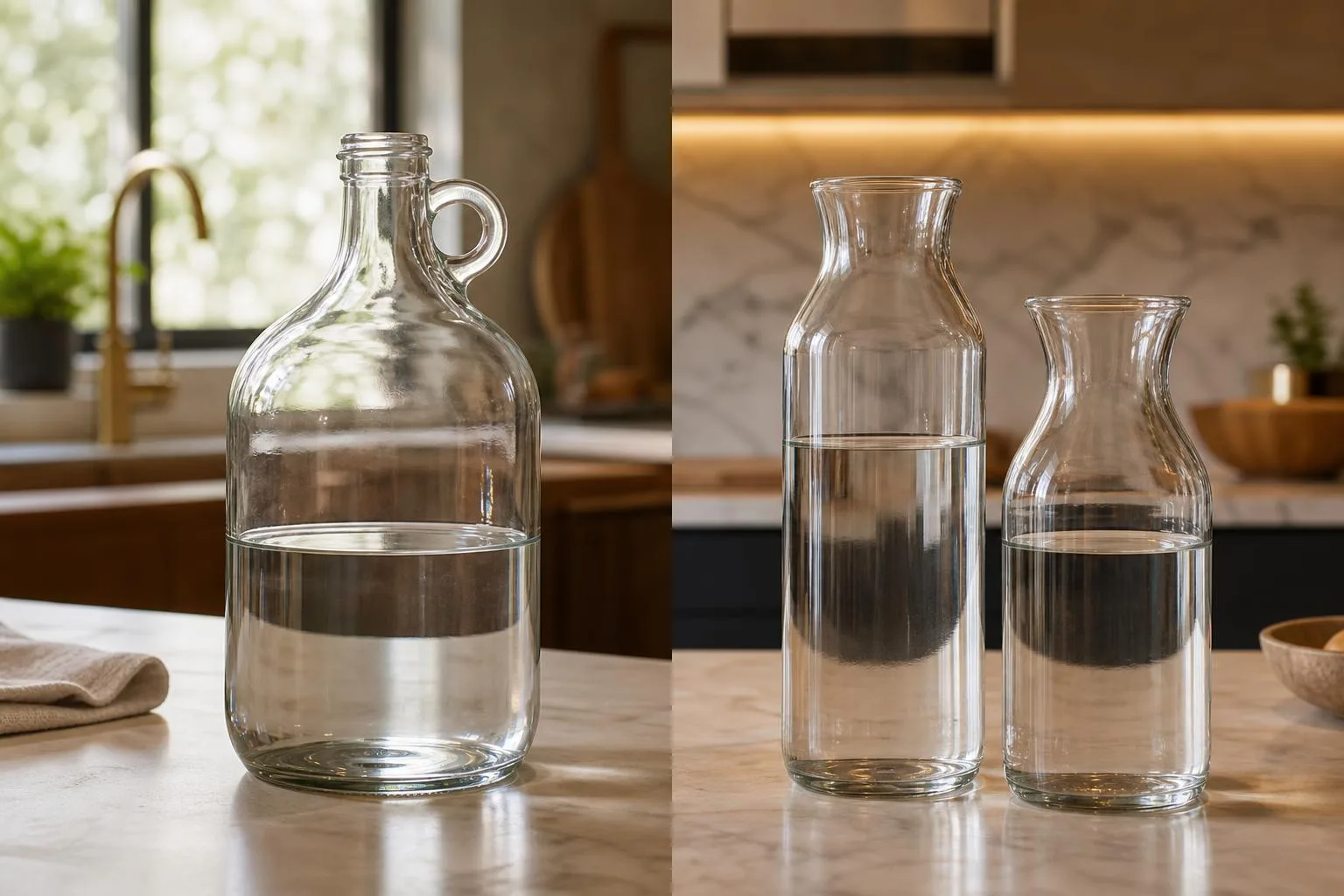
Common Half Gallon Conversion Mistakes
Half a gallon sounds simple, but the answer changes depending on which gallon you mean. In the United States, half a liquid gallon is 1.8927059 liters, not 2 liters.
The biggest mistake is rounding too early. For kitchen use, 1.89 liters is fine; for brewing, batching cocktails, or inventory costing, use the more precise value.
Myth: Half a gallon is exactly 2 liters
This is a convenient estimate, not a conversion. A U.S. liquid gallon is legally defined as 231 cubic inches, which equals 3.785411784 liters. Half of that is 1.892705892 liters.
| Measure | Liters | Difference from 2 L |
| Half U.S. liquid gallon | 1.8927059 L | 0.1072941 L less |
| 2 liters | 2.0000000 L | About 3.63 fl oz more |
That 0.107-liter gap is about 107 milliliters. In beverage terms, it is roughly one small wine pour in some tasting rooms, so the difference is not trivial.
Myth: All gallons are the same
The U.S. liquid gallon and the Imperial gallon are different units. This matters when reading older recipes, Canadian or U.K. references, or imported beverage production notes.
| Gallon type | One gallon | Half gallon |
| U.S. liquid gallon | 3.785411784 L | 1.892705892 L |
| Imperial gallon | 4.54609 L | 2.273045 L |
Using the Imperial value by mistake makes half a gallon appear about 0.380 liters larger than the U.S. value. That is more than a standard 355 mL can.
Myth: A half-gallon bottle always holds exactly half a gallon
Packaging labels can involve nominal capacity, fill tolerances, or rounded metric equivalents. A container sold as “half gallon” in the U.S. is usually based on 64 U.S. fluid ounces.
| U.S. measure | Equivalent |
| Half gallon | 64 U.S. fl oz |
| 64 U.S. fl oz | 1.8927059 L |
| Rounded label | Often shown as 1.89 L |
- Do not use dry gallons for liquids; they are a different U.S. unit and are rarely relevant for beverages.
- Do not assume “quart” means liter; 2 U.S. quarts equal half a gallon, or 1.8927059 liters.
- Do not convert by memory alone when scaling recipes; small rounding errors multiply quickly across batches.
Questions People Ask Most
How many liters is half a gallon?
Half a U.S. liquid gallon is 1.89270589 liters, usually rounded to 1.89 liters. This is the standard conversion used for beverages and liquid measurements in the United States.
Is half a gallon exactly 2 liters?
No, half a U.S. gallon is slightly less than 2 liters. The difference is about 0.107 liters, or roughly 107 milliliters.
How many milliliters are in half a gallon?
Half a U.S. liquid gallon equals 1,892.70589 milliliters. For kitchen or bar use, it is commonly rounded to 1,893 milliliters.
How many 750 ml wine bottles equal half a gallon?
Half a U.S. gallon is about 1.893 liters, so it equals approximately 2.52 standard 750 ml wine bottles. Two bottles are 1.5 liters, while three bottles are 2.25 liters.
Is a half gallon the same in the U.S. and the U.K.?
No, the U.S. liquid gallon and the U.K. imperial gallon are different. Half a U.S. gallon is 1.893 liters, while half an imperial gallon is about 2.273 liters.
How many cups are in a U.S. half gallon?
A U.S. half gallon equals 8 U.S. cups because 1 U.S. gallon equals 16 cups. In volume terms, that same half gallon is 64 U.S. fluid ounces, which helps when converting beverage recipes, batch cocktails, or large-format drink service.
How much does a half gallon of water weigh?
A U.S. half gallon of water weighs about 4.17 pounds, or roughly 1.89 kilograms, at room temperature. The estimate comes from water’s density and the U.S. half-gallon volume of 1.8927 liters, so actual weight can shift slightly with temperature.
Related Reading
- How Long Does Tequila Stay In Your System?
- How Many Ounces Is 1 Kg?
- How Many Gallons Is 1000 Liters?
- How Many Cups Is 12 Tbsp? A Simple Answer Backed by Real Kitchen Experience
- How Many 16 Oz Bottles of Water is a Liter?
- How Many Cups Per Pound?
- How Many Cups Is 5 Oz? A Practical, Real-World Guide You’ll Actually Use
- All Blog Guides
- NIST Special Publication 811, Appendix B.8 (2008)
- NIST Handbook 44, Appendix C: General Tables of Units of Measurement (2024)
- U.S. Government Publishing Office, 15 CFR Part 1010: Units of Measurement (2024)
- Britannica, Gallon Unit of Measurement (2024)
- Encyclopaedia Britannica, Litre Unit of Measurement (2024)
- The Engineering ToolBox, Volume Units Converter (2024)
- Metric Conversions, US Gallons to Liters (2024)