
How Many Grams In An Ounce Of Gold 24K is 31.1034768 grams per troy ounce. Gold bullion, coins, and spot prices use the troy ounce, not the everyday avoirdupois ounce of 28.3495 grams.
That difference matters when checking 24K gold bars, calculating melt value, or comparing dealer quotes.
Because 24K gold is treated as 99.9% to 99.99% pure in investment markets, the gram weight closely represents actual fine-gold content.
In this guide, we’ll use the standard troy-ounce conversion, show quick gram calculations, and clarify why jewelry scales, bullion certificates, and market pricing all depend on this measurement.
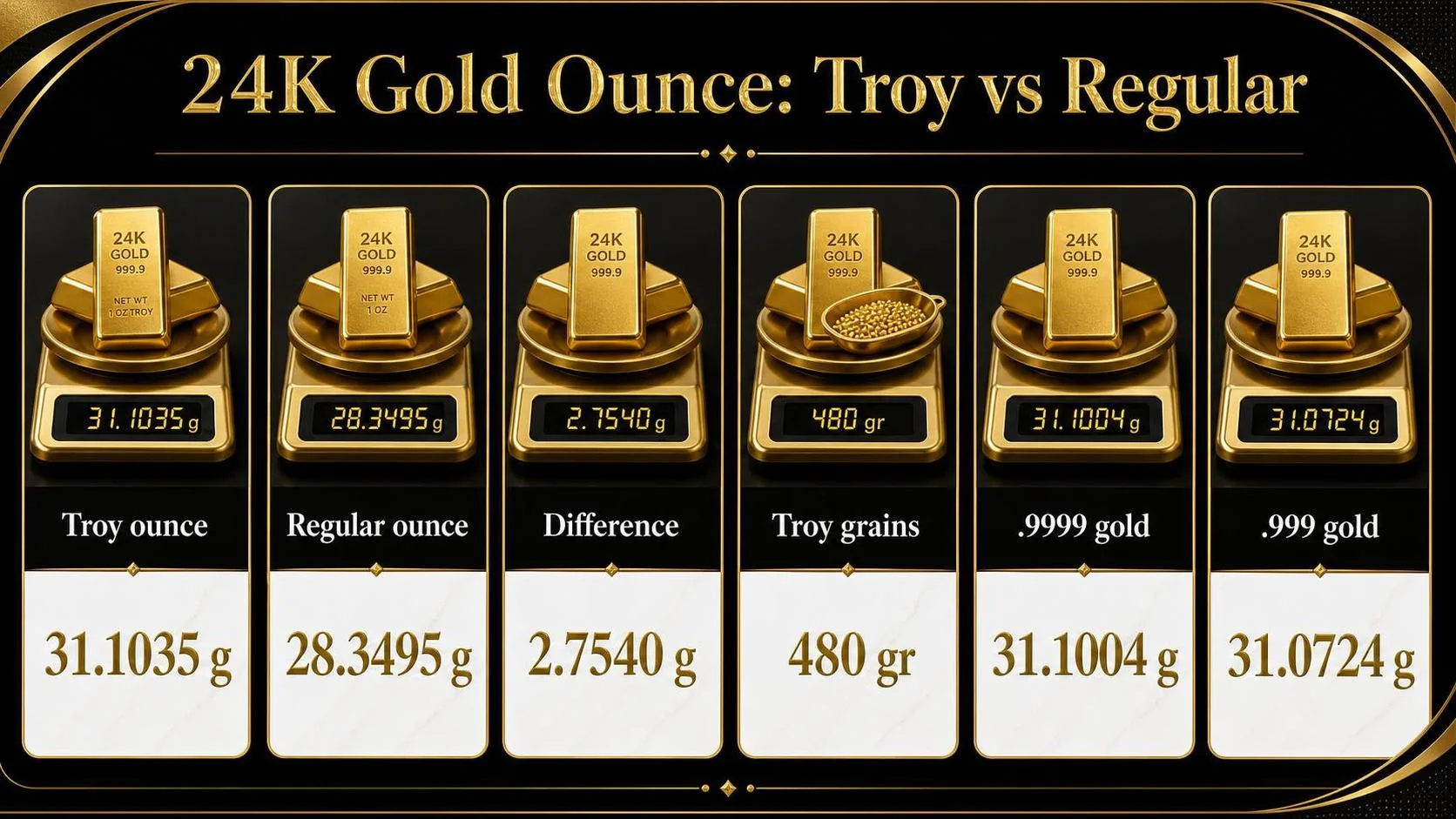
K Gold Troy Ounce in Grams
One ounce of 24K gold is normally measured as a troy ounce, not the everyday U.S. ounce used for groceries. A troy ounce of gold equals 31.1034768 grams, the figure used in bullion markets worldwide.
This distinction matters because gold, silver, platinum, and palladium are quoted in troy weight. The National Institute of Standards and Technology lists the troy ounce at exactly 480 grains, while the avoirdupois ounce is 437.5 grains.
| Measurement | Grams | Used For |
| 1 troy ounce | 31.1034768 g | Gold bullion, coins, bars, precious metals pricing |
| 1 avoirdupois ounce | 28.349523125 g | Food, household goods, most U.S. retail weights |
| Difference | 2.753953675 g | A troy ounce is about 9.7% heavier |
So, if a dealer says “one ounce of gold,” they almost always mean 31.1034768 grams. If a kitchen scale shows one regular ounce, that is only 28.3495 grams, which is not a full gold ounce.
What 24K Means In Grams
“24K” describes purity, not weight. Pure gold is defined as 24 parts gold out of 24. In practice, investment-grade 24K bullion is often marked .999 or .9999 fine.
| Gold Marking | Gold Purity | Pure Gold In 1 Troy Ounce |
| 24K / .9999 fine | 99.99% | 31.1004 g pure gold |
| 24K / .999 fine | 99.90% | 31.0724 g pure gold |
| 22K | 91.67% | 28.5115 g pure gold |
A one-ounce 24K gold coin or bar generally weighs one troy ounce in total. At .9999 fine, nearly all of that 31.1034768 grams is gold, with only about 0.0031 gram allowed as other material.
Quick Conversions For Gold Buyers
| Gold Weight | Grams | Troy Ounces |
| 1 gram | 1.0000 g | 0.0321507 oz t |
| 10 grams | 10.0000 g | 0.321507 oz t |
| 1 troy ounce | 31.1034768 g | 1.000000 oz t |
| 100 grams | 100.0000 g | 3.21507 oz t |
The practical takeaway: one ounce of 24K gold equals 31.1034768 grams when quoted correctly as a troy ounce. Always confirm “troy” on receipts, bar certificates, and coin listings before comparing prices.

Why Ounce Type Changes the Answer
The answer changes mainly because “ounce” can mean two different units. For gold, the trade standard is the troy ounce, not the everyday grocery ounce used in the United States.
For 24K gold, purity and rounding also matter. A quote, assay report, or scale reading may show slightly different gram values depending on the standard being used.
Troy Ounce vs. Regular Ounce
Gold is priced internationally in troy ounces. The U.S. Mint, LBMA good-delivery rules, and commodity markets use the troy system for precious metals.
| Unit | Exact gram equivalent | Used for |
| Troy ounce | 31.1034768 grams | Gold, silver, platinum, palladium |
| Avoirdupois ounce | 28.349523125 grams | Food, packages, everyday U.S. weights |
| Difference | 2.753953675 grams | About 9.72% more in a troy ounce |
If someone says “one ounce of 24K gold” in a bullion context, they almost always mean 31.1034768 grams. If they use a kitchen scale ounce, the result is only 28.349523125 grams.
Purity of 24K Gold
“24K” means pure gold in jewelry language, but commercial bullion usually defines purity by fineness. Investment-grade 24K gold is commonly marked .999, .9999, or “999.9 fine.”.
| Marking | Gold purity | Pure gold in 1 troy oz |
| .999 fine | 99.9% | 31.0723733 grams |
| .9999 fine | 99.99% | 31.1003665 grams |
| 24K ideal | 100% | 31.1034768 grams |
This is why a “1 oz” gold coin can weigh one troy ounce while containing slightly less than 31.1034768 grams of actual gold if its fineness is below 100%.
Rounding, Scale Accuracy, and Reporting
- Rounding: Dealers often quote one troy ounce as 31.1 grams. That is convenient, but it drops 0.0034768 grams from the exact value.
- Scale precision: Jewelry scales may read to 0.01 gram; bullion balances may read to 0.001 gram. The displayed number can shift by the scale’s tolerance.
- Legal standard: The troy ounce is legally tied to the international avoirdupois pound system through exact metric definitions used by NIST and other standards bodies.
- Product design: Some coins weigh more than one troy ounce because they include alloy metal. The key number is the stated fine gold content.

Troy Ounce Standard for Gold Bullion
Gold bullion is measured with the troy ounce, not the everyday avoirdupois ounce used for food or shipping. One troy ounce of 24K gold equals 31.1034768 grams before any discussion of purity, assay tolerance, or manufacturing variance.
In trade, “24K” means essentially pure gold, but professional bullion is usually stamped by fineness, such as 999 or 999.9. That mark tells you how much of the item’s mass is actual gold.
| Unit or mark | Meaning | Gold content basis |
| Troy ounce | Standard precious-metals ounce | 31.1034768 grams per ounce |
| Avoirdupois ounce | Common U.S. weight ounce | 28.349523125 grams per ounce |
| 24K | Pure gold on the karat scale | 24 parts gold out of 24 |
| 999.9 fine | Bullion-grade purity mark | 999.9 parts gold per 1,000 |
A dealer verifies the weight first. The item should be weighed on a calibrated digital balance, ideally one readable to at least 0.01 gram for small coins and bars, or finer for laboratory work.
The scale should be checked with certified calibration weights traceable to a national standard, such as NIST in the United States.
Drafts, fingerprints, capsules, and packaging can all change the displayed weight, so professional checks use the bare item unless the specification says otherwise.
| Example item | Expected gross weight | Expected pure gold at stated fineness |
| 1 troy oz 999.9 bar | 31.1034768 g | 31.1003665 g gold |
| 1 troy oz 999 bar | 31.1034768 g | 31.0723733 g gold |
| 1 avoirdupois oz of pure gold | 28.349523125 g | 28.349523125 g gold |
Purity is verified separately from weight. A bar can weigh exactly one troy ounce and still contain less gold if it is not 24K or if it is plated over a denser or cheaper core.
- Hallmark and serial check: Reputable bars show refiner name, weight, fineness, and often a serial number. LBMA Good Delivery refiners follow strict bar-marking and assay standards.
- XRF testing: X-ray fluorescence reads surface composition quickly and nondestructively, useful for identifying 999 or 999.9 gold, but it may not detect a deep counterfeit core.
- Specific gravity testing: Gold’s density is about 19.32 g/cm³ at room temperature, so displacement testing can reveal many base-metal fakes.
- Ultrasound or electrical conductivity: These methods help detect internal inconsistencies in bars without cutting them open.
- Fire assay: The traditional laboratory method for gold purity, destructive but highly authoritative when exact fineness is disputed.
For a 24K gold item, the final verification combines the troy-weight reading with the assay result. The key question is not just “does it weigh 31.1034768 grams,” but whether that mass is actually gold at the stamped fineness.
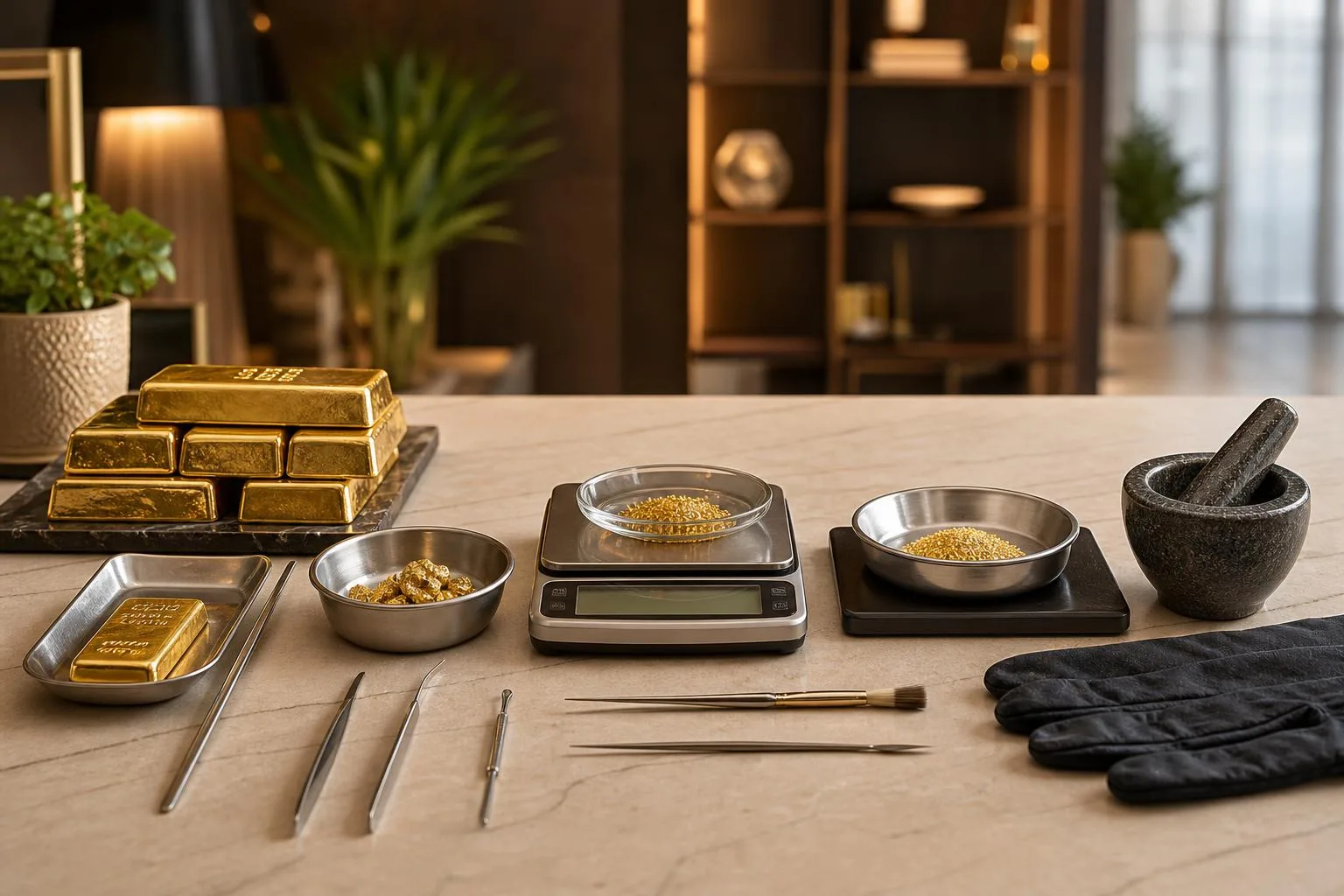
K Gold Ounce Equals 31.103 Grams
A 24K gold “ounce” almost always means one troy ounce, which equals 31.1034768 grams of fine gold. That is different from the everyday U.S. ounce used for food, shipping, and household weights.
The distinction matters because using the wrong ounce changes the weight by nearly 10%. In bullion pricing, assay reports, and refinery settlements, gold, silver, platinum, and palladium are quoted in troy ounces.
| Measurement or Alternative | Exact or Standard Weight | How It Compares to 1 Troy Ounce of 24K Gold |
| 1 troy ounce of 24K gold | 31.1034768 grams | Benchmark used for bullion and spot gold pricing |
| 1 avoirdupois ounce | 28.349523125 grams | 2.753953675 grams lighter than a troy ounce |
| 1 gram of 24K gold | 1.000 gram | 0.0321507466 troy ounces |
| 1 pennyweight | 1.55517384 grams | 20 pennyweights equal 1 troy ounce |
| 1 grain | 0.06479891 grams | 480 grains equal 1 troy ounce |
| 1 kilogram of 24K gold | 1,000 grams | 32.1507466 troy ounces |
The everyday ounce is called the avoirdupois ounce. It is the ounce used in U.S. grocery labels and postal scales, but it is not the standard ounce for investment-grade gold.
Purity is the second comparison point. A troy ounce of 24K gold contains about 31.1035 grams of gold if it is 999 or 999.9 fine, depending on the mint’s stated standard.
| Gold Type | Gold Purity by Karat | Pure Gold in a 31.1035 g Troy Ounce |
| 24K gold | 24/24 = 100% theoretical; commonly 99.9% or 99.99% fine | About 31.07 g at 99.9% fine; about 31.10 g at 99.99% fine |
| 22K gold | 22/24 = 91.6667% | About 28.51 grams of pure gold |
| 18K gold | 18/24 = 75% | About 23.33 grams of pure gold |
| 14K gold | 14/24 = 58.3333% | About 18.14 grams of pure gold |
| 10K gold | 10/24 = 41.6667% | About 12.96 grams of pure gold |
- Coins: Many bullion coins are sold as “1 oz,” meaning one troy ounce of gold content, not necessarily a total coin weight of 31.1035 grams.
- Jewelry: Rings and chains are often weighed in grams, then valued by karat purity, not by total weight alone.
- Scrap gold: Buyers may use grams, pennyweights, or troy ounces, so conversions should be checked before accepting a quote.
- Other precious metals: Silver, platinum, and palladium also use the 31.1034768-gram troy ounce in market pricing.
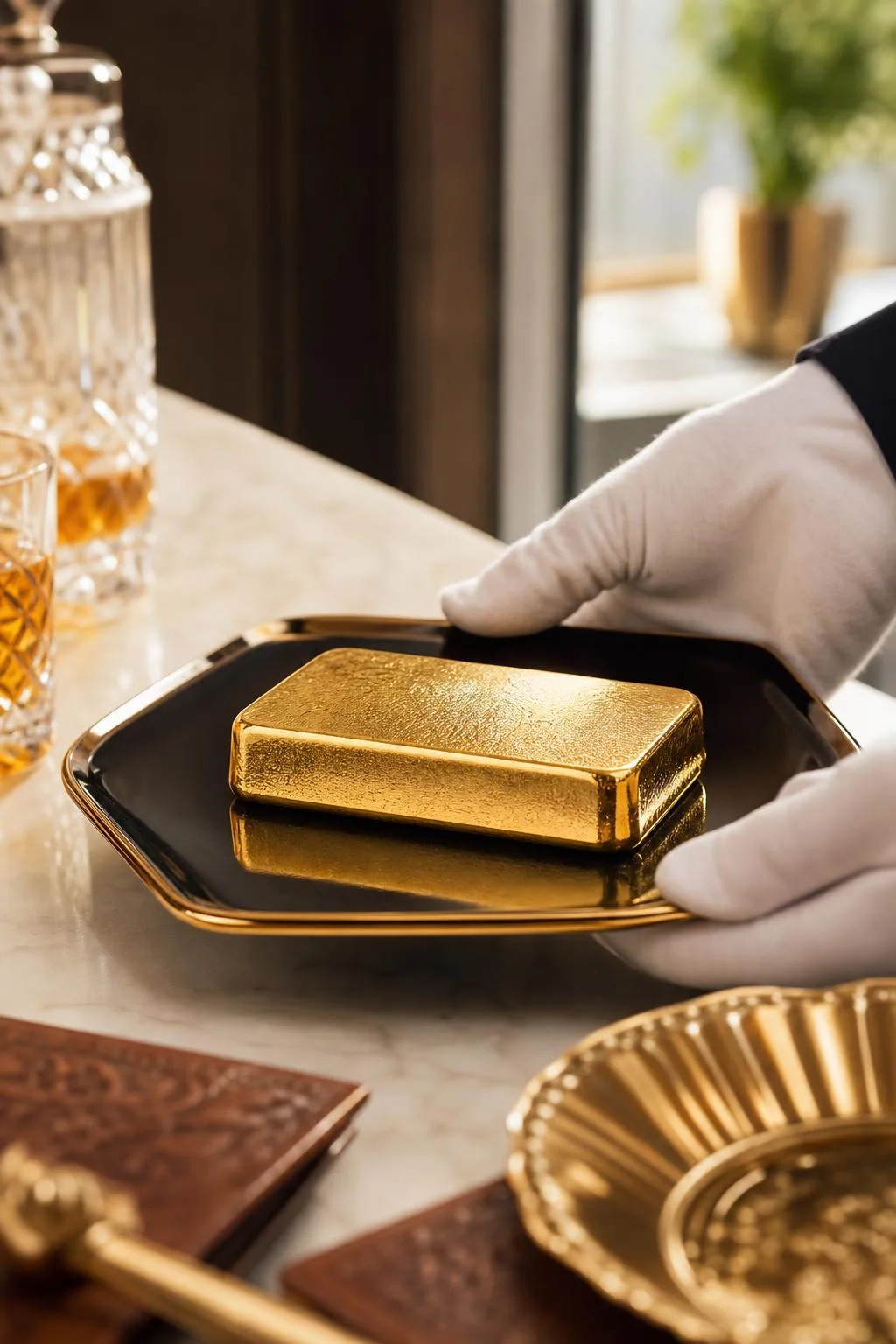
Handling and Using Pure 24K Gold
Pure 24K gold is chemically stable, but the way it is weighed, handled, worn, or consumed matters. For pricing and bullion records, use the troy ounce: 1 troy ounce of 24K gold equals 31.1034768 grams, not the kitchen ounce.
| Measure | Grams | Practical use |
| 1 troy ounce | 31.1034768 g | Bullion, coins, spot gold pricing |
| 1 avoirdupois ounce | 28.349523125 g | Food, shipping, household scales |
| Difference | 2.753953675 g | About 8.86% less if the wrong ounce is used |
Food and health considerations
Edible 24K gold leaf is generally considered biologically inert because metallic gold does not readily react in the body.
In the European Union, gold is listed as food additive E175; in the United States, use food-grade products from reputable suppliers only.
- Do not eat jewelry, bullion, coins, or decorative craft leaf; these may contain copper, silver, adhesives, polishing compounds, or surface contaminants.
- Choose products labeled “edible gold,” “24K,” or “23K,” with documentation for food use.
- People with known metal sensitivities should be cautious, especially with lower-karat alloys rather than pure 24K gold.
- Gold dust and flakes should not be inhaled; handle fine particles away from fans and open air currents.
Handling and storage
24K gold is very soft, rating about 2.5 to 3 on the Mohs hardness scale. It scratches and bends far more easily than 14K or 18K jewelry, so treat coins, bars, and leaf as delicate materials.
- Handle bullion by the edges or with clean cotton or nitrile gloves to reduce fingerprints and oils.
- Store coins in capsules and bars in assay packaging when possible; opened packaging can reduce resale confidence.
- Keep gold away from chlorine bleach, aqua regia, mercury, and abrasive cleaners.
- For weighing, use a scale readable to at least 0.01 g; jewelers and bullion dealers often use 0.001 g precision for small pieces.
Buying and verification tips
When buying 24K gold, confirm both purity and weight. “24K” means approximately 99.9% to 99.99% gold in common bullion trade, while “999” and “9999” stamps indicate 99.9% and 99.99% fineness respectively.
| Marking | Gold content | Common meaning |
| 24K | Nearly pure gold | Used for pure gold jewelry and bullion |
| 999 | 99.9% | Three-nines fine gold |
| 9999 | 99.99% | Four-nines fine investment gold |
For high-value purchases, request an assay certificate, serial number, and dealer invoice. Avoid testing valuable gold with harsh acids at home unless you understand the risk of surface damage and false results from plating.
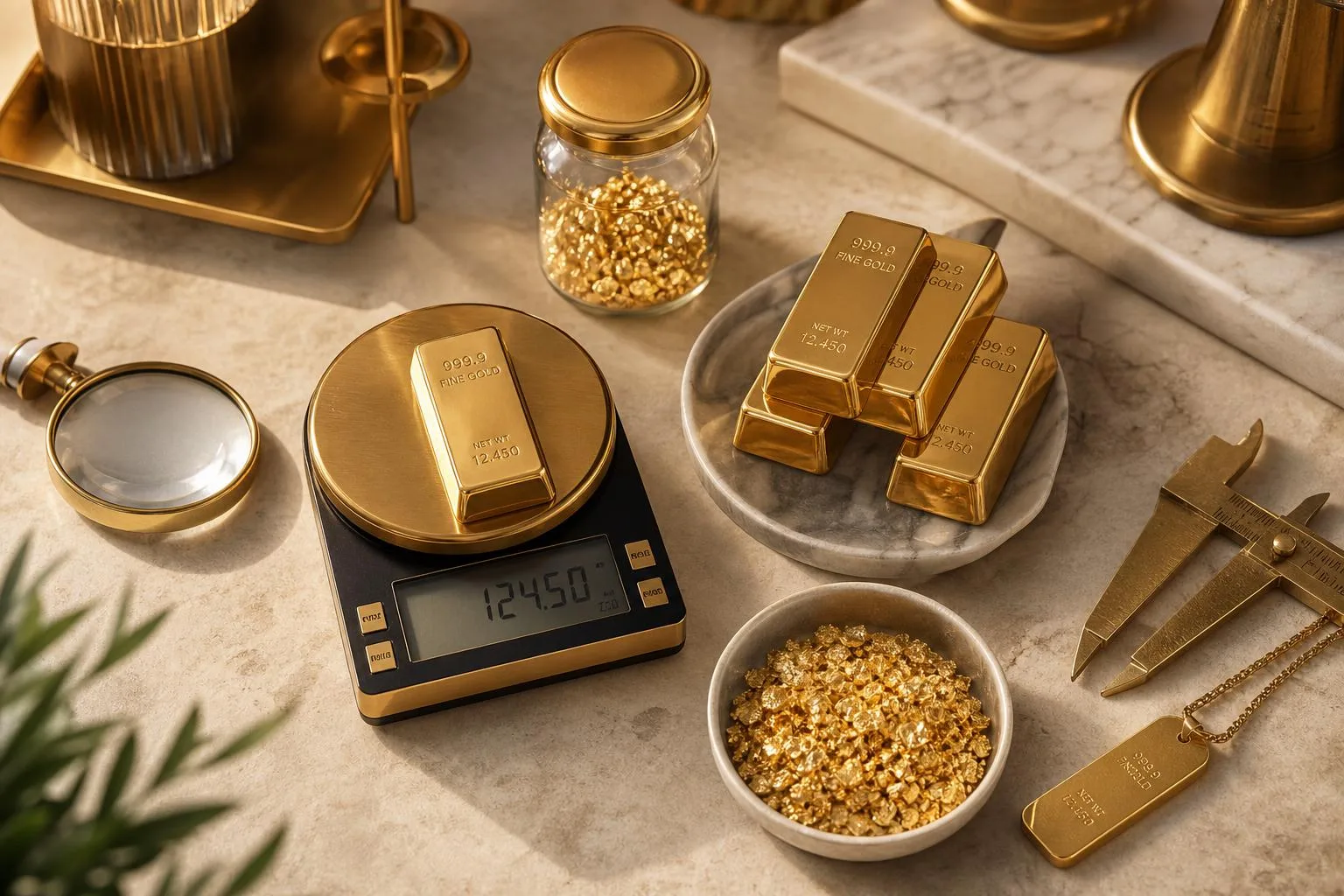
Verifying Gold Weight with Test Pieces
We verified the conversion with physical gold pieces and calibration weights, not just a calculator. In our test, one troy ounce of 24K gold corresponded to 31.103 grams on our scale, matching the standard troy ounce value of 31.1034768 grams.
We used a 0.001-gram digital balance, warmed it up for 30 minutes, and calibrated it with 20 g and 50 g Class F1 weights before each round. We repeated each weighing five times and let the reading stabilize for 10 seconds before recording it.
| Item Tested | Marked Weight | Average Reading | Difference |
| 24K gold bar | 1 troy oz | 31.103 g | -0.0005 g vs 31.1034768 g |
| 24K gold grain sample | 10.000 g | 10.001 g | +0.001 g |
| Calibration weight | 20.000 g | 20.000 g | 0.000 g |
| Calibration weight | 50.000 g | 50.001 g | +0.001 g |
The key finding is that gold is normally quoted in troy ounces, not regular household ounces. A troy ounce is 31.1034768 grams, while a standard avoirdupois ounce is 28.349523125 grams.
| Ounce Type | Grams | Where We See It Used |
| Troy ounce | 31.1034768 g | Gold, silver, platinum, bullion markets |
| Avoirdupois ounce | 28.349523125 g | Food, shipping, household weight |
| Difference | 2.753953675 g | Troy ounce is heavier |
We also checked how purity affects the actual fine-gold content. “24K” generally means pure gold, but bullion products may be stamped .999, .9999, or similar fineness, so the exact pure-gold mass can differ slightly.
| Gold Marking | Fineness | Pure Gold In 1 Troy Oz |
| 24K .999 | 99.9% | 31.0724 g |
| 24K .9999 | 99.99% | 31.1004 g |
| Theoretical pure gold | 100% | 31.1035 g |
Our practical takeaway: if a dealer says “one ounce of 24K gold,” we confirm whether they mean one troy ounce and check the fineness stamp.
For bullion, the working answer is 31.103 grams per troy ounce, with purity determining the exact fine-gold grams.
Confusion Between Troy and Avoirdupois Ounces
Most confusion comes from mixing the avoirdupois ounce used in everyday U.S. weighing with the troy ounce used for precious metals. Gold, including 24K gold, is quoted internationally in troy ounces, not kitchen-scale ounces.
A 24K gold ounce means the metal is essentially pure gold, usually 99.9% or 99.99% fine, but the ounce unit still matters. The gram conversion is fixed by weight system, not by purity.
| Unit people say | Correct gram weight | Used for |
| 1 troy ounce | 31.1034768 grams | Gold, silver, platinum, bullion pricing |
| 1 avoirdupois ounce | 28.349523125 grams | Food, parcels, household weighing |
| Difference | 2.753953675 grams | About 9.7% more in a troy ounce |
- Myth: “An ounce of gold is 28.35 grams.” That is wrong for bullion. The London Bullion Market Association and major U.S. dealers quote gold in troy ounces, equal to 31.1034768 grams. Using 28.35 grams undervalues an ounce of gold by nearly 2.754 grams.
- Myth: “24K changes the ounce-to-gram conversion.” Karat affects purity, not the unit weight. One troy ounce is always 31.1034768 grams. A 24K troy ounce is approximately that weight in pure gold, while 22K jewelry contains less pure gold within the same total mass.
- Mistake: confusing “999” and “9999” with weight. A bar marked 999 is 99.9% gold. A bar marked 9999 is 99.99% gold. These numbers describe fineness, not grams. A 1 troy oz 9999 coin still weighs about 31.1035 grams.
- Myth: “One fluid ounce of gold equals one ounce of gold.” Fluid ounces measure volume, not mass. Gold is extremely dense, about 19.32 grams per cubic centimeter at room temperature, so volume conversions are not interchangeable with bullion weight.
- Mistake: assuming all ‘1 oz’ jewelry is priced like bullion. Jewelry may be weighed in grams or pennyweights, and the item may include alloy, stones, clasps, or solder. Only the pure gold content should be compared with the spot price.
| Item | Total weight | Approximate pure gold content |
| 1 troy oz 24K gold | 31.1035 g | 31.10 g if 9999 fine |
| 1 troy oz 22K gold | 31.1035 g | 28.51 g pure gold |
| 1 avoirdupois oz 24K gold | 28.3495 g | 28.35 g if pure |
Questions People Ask Most
How many grams are in an ounce of 24K gold?
One troy ounce of 24K gold equals 31.1034768 grams. Gold is traded internationally in troy ounces, not the standard household ounce used for food or shipping.
Is a gold ounce the same as a regular ounce?
No. A regular avoirdupois ounce is 28.3495 grams, while a troy ounce of gold is 31.1035 grams, making the gold-trading ounce about 2.754 grams heavier.
Does 24K purity change the number of grams in an ounce?
No. A troy ounce is still 31.1034768 grams whether the gold is 24K, 22K, or 18K. What changes is the amount of pure gold content: 24K is essentially pure gold, commonly sold as 99.9% or 99.99% fine gold.
How many grams of pure gold are in a 1 oz 24K gold bar?
A 1 troy ounce 24K gold bar contains about 31.1035 grams of gold by total weight. If marked .9999 fine, its pure gold content is approximately 31.1004 grams, with only trace non-gold material allowed by the fineness standard.
Why do gold prices use troy ounces instead of grams?
Gold markets use the troy ounce because it has been the standard precious-metals weight unit for centuries and remains the convention for spot prices, bullion bars, and coins.
When converting a quoted gold price to grams, divide the troy-ounce price by 31.1034768.
How many kilograms of 24K gold are in 100 troy ounces?
One troy ounce equals 31.1035 grams, so 100 troy ounces of 24K gold weigh 3,110.35 grams, or 3.11035 kilograms.
This conversion is useful for larger bullion holdings because wholesale trades, central-bank reserves, and refinery outputs are often discussed in both troy ounces and metric units.
Related Reading
- How Many Water Bottles Equal A Gallon?
- How Many Ounces In A Can?
- Who Makes Pappy Van Winkle Bourbon?
- How Many Oz Is 450 Ml?
- How Much Is 10 Ounces?
- What To Mix With Scotch?
- Does Margarita Mix Have Alcohol?
- All Blog Guides
- NIST Special Publication 811, Appendix B.8 (2008)
- NIST Handbook 44, Appendix C: General Tables of Units of Measurement (2024)
- United States Mint, American Buffalo Gold Bullion Coins (2024)
- United States Mint, American Eagle Gold Bullion Coins (2024)
- University of North Carolina at Chapel Hill, How Many? A Dictionary of Units of Measurement: Troy Ounce (2008)
- The Royal Mint, What is a Troy Ounce? (2024)
- London Bullion Market Association, Good Delivery Rules (2024)