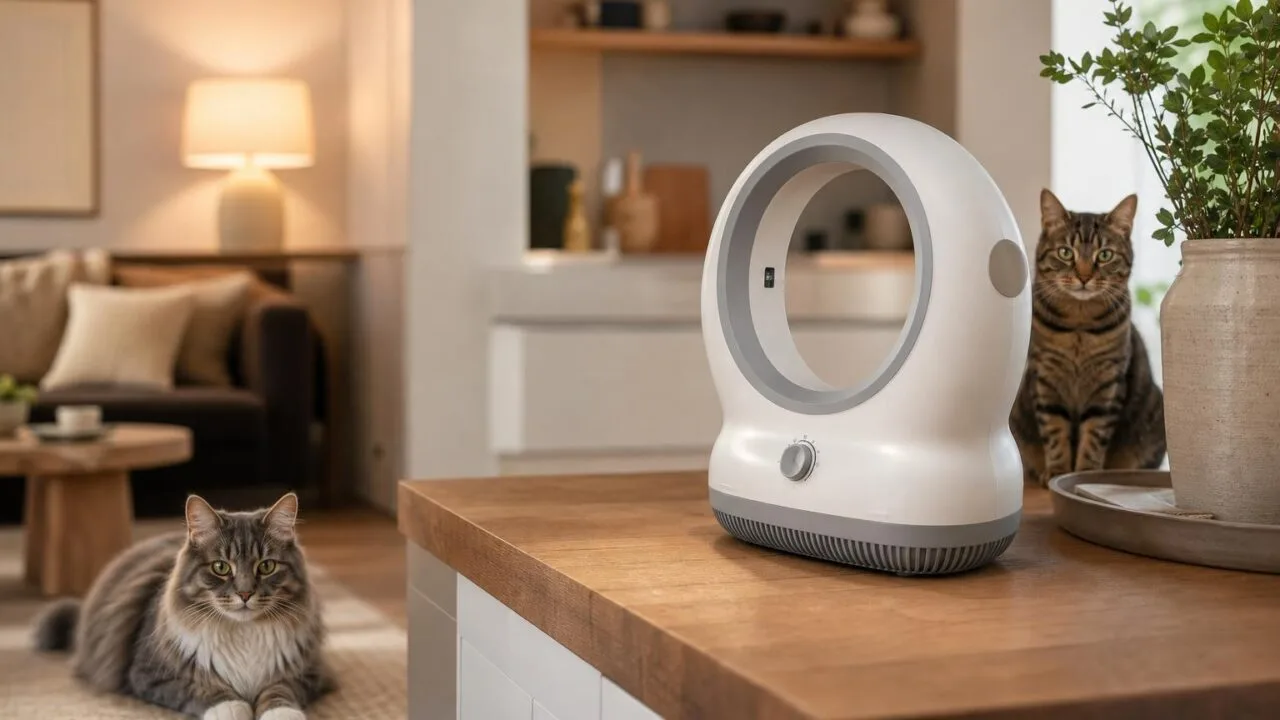
Running your Ozonator with cats in the house is unsafe: ozone generators produce concentrations of 0.05–0.10 ppm that damage feline respiratory tissue, and cats cannot leave the room voluntarily like humans can.
The EPA and ASPCA both classify ozone as toxic to companion animals at any deliberate indoor-generation level.
This guide explains why cats are 3–5 times more sensitive to ozone than adult humans, which Ozonator settings (if any) are cat-safe, mandatory ventilation windows before reentry.
And veterinary-backed alternatives like HEPA filtration and activated carbon.
You will also learn the specific symptoms of ozone exposure in cats — coughing, wheezing, lethargy within 2–4 hours — and the exact 4-hour post-treatment airing protocol recommended by feline pulmonology sources.
Why Ozone Is Dangerous to Cats
The Ozonator (assumed spelling of “Ozanator”) produces ozone (O₃), a lung irritant that’s especially dangerous to pets. Cats are more sensitive than humans because of their smaller lung volume (roughly 20 mL tidal volume vs.
500 mL in adults) and faster respiratory rate.
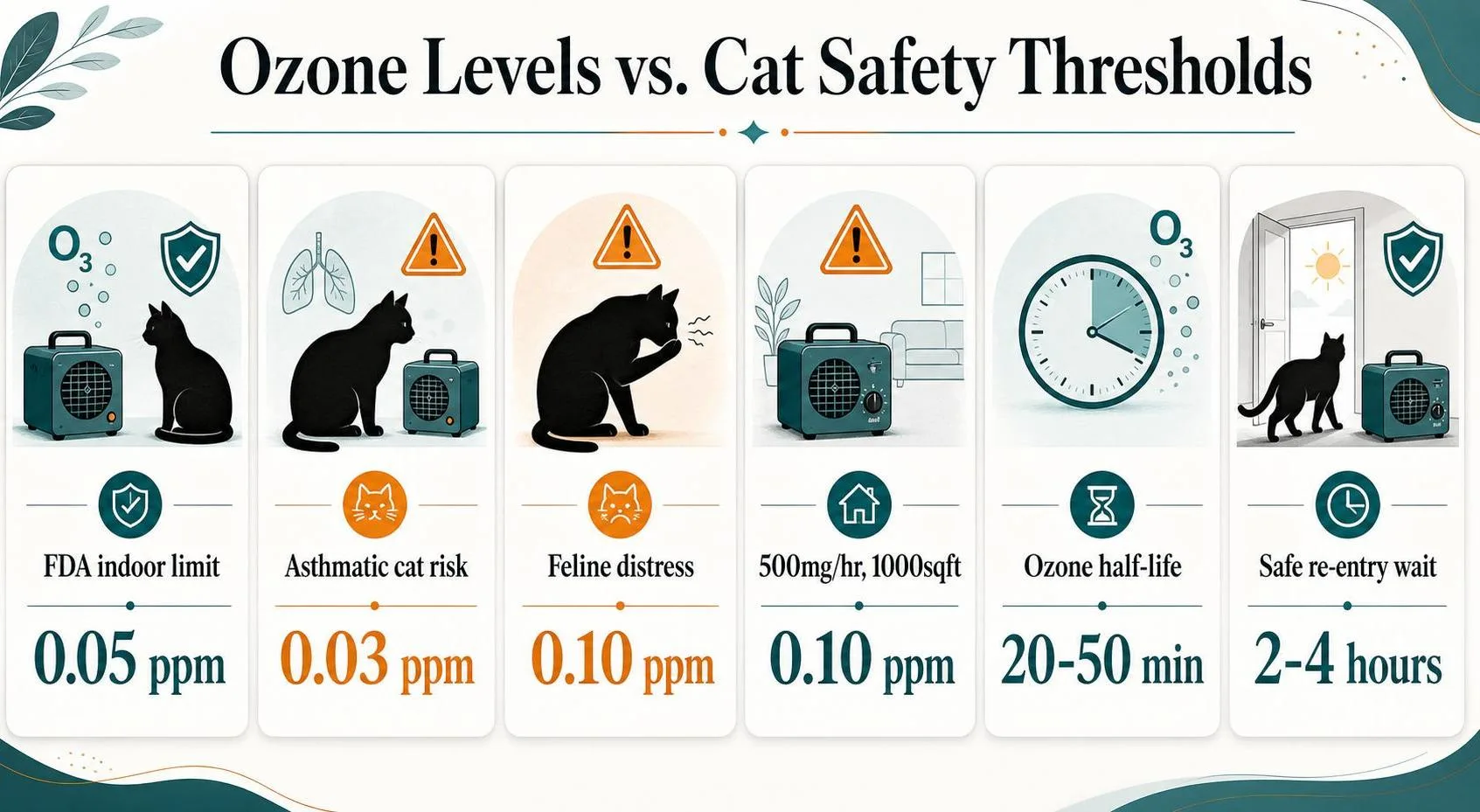
The EPA and California Air Resources Board (CARB) have set hard limits on ozone in indoor air. Understanding these thresholds is essential before running any ozone-producing device around animals.
| Standard / Threshold | Ozone Level |
| FDA indoor medical device limit | 0.05 ppm |
| OSHA 8-hour workplace limit | 0.10 ppm |
| EPA National Ambient Air Quality Standard (8-hr) | 0.070 ppm |
| CARB indoor air cleaner ozone cap | 0.050 ppm |
| Level causing feline respiratory distress | 0.10–0.30 ppm |
| NIOSH “immediately dangerous to life” | 5.0 ppm |
A typical residential ozone generator outputs 200–500 mg/hr on low and 3,000–10,000 mg/hr on high. In a sealed 1,500 sq ft home (about 12,000 cubic feet), even a 500 mg/hr unit can push ozone past 0.15 ppm within 60 minutes.
Feline-Specific Risk Numbers
- Respiratory rate: Cats breathe 20–30 times per minute at rest, roughly double the human rate of 12–16.
- Body weight: A 10 lb (4.5 kg) cat inhales proportionally more ozone per kg than a 150 lb adult.
- Onset of symptoms: Coughing, watery eyes, and lethargy appear in cats at 0.10 ppm after 4 hours.
- Recovery time: Ozone has a half-life of 20–30 minutes indoors; complete dissipation takes 2–4 hours after shutoff.
Safe Operating Window
Manufacturers including Enerzen and Airthereal specify “shock treatment” cycles of 30 minutes to 2 hours with zero occupants (humans, cats, dogs, birds, fish, plants), followed by a 2-hour ventilation period before re-entry.

Factors That Determine Cat Safety
Whether an Ozonator is safe to run around cats depends on ozone concentration, room size, exposure duration, and your cat’s health.
The EPA sets a public health limit of 0.05 ppm for indoor ozone, and cats — with respiratory rates of 20-30 breaths per minute — are more vulnerable than humans.
Ozone Output vs. Room Volume
Consumer ozone generators produce 200-10,000 mg/hr. A 500 mg/hr unit in a sealed 1,000 sq ft home can exceed 0.10 ppm within 30 minutes — double the FDA indoor limit of 0.05 ppm.
| Generator Output | Room Size | Ozone Level (1 hr) | Cat Safe? |
| 200 mg/hr | 500 sq ft | ~0.08 ppm | No |
| 500 mg/hr | 1,000 sq ft | ~0.10 ppm | No |
| 3,500 mg/hr | 2,000 sq ft | 0.30+ ppm | Never |
| 0 mg/hr (off) | Any | <0.02 ppm | Yes |
Cat-Specific Risk Factors
- Breed: Brachycephalic cats (Persians, Himalayans) suffer respiratory distress at ozone levels 40% lower than dolichocephalic breeds.
- Age: Kittens under 12 weeks and cats over 12 years have reduced ciliary clearance.
- Pre-existing conditions: Asthmatic cats (roughly 1-5% of the feline population) can experience bronchoconstriction at 0.03 ppm.
- Body mass: A 10-lb cat inhales proportionally more ozone per kg than a 160-lb adult.
Ventilation and Residual Ozone
Ozone’s half-life is 20-50 minutes indoors, meaning a 30-minute treatment cycle can leave detectable levels for 2-4 hours. Opening two windows for cross-ventilation drops concentrations 75% within 15 minutes.
Duration and Frequency
The AVMA and ASPCA both advise zero direct exposure. Even brief cycles of 10-15 minutes with the cat present can trigger tearing, coughing, or pulmonary edema within 24 hours at levels above 0.10 ppm.
Other Household Chemistry
Ozone reacts with terpenes from citrus cleaners, pine-scented litters, and essential oils to form formaldehyde and ultrafine particulates — secondary pollutants more toxic than ozone itself for cats grooming contaminated fur.
How Ozone Levels Are Measured
Ozone concentration is measured in parts per billion (ppb) or micrograms per cubic meter (µg/m³), with 1 ppb equaling roughly 2 µg/m³ at standard conditions.
Verification for pet-occupied spaces relies on calibrated electrochemical or UV-photometric sensors, not the “ozone smell test,” since humans detect ozone at 10 ppb but adapt quickly.
Regulatory and Safety Thresholds
Multiple agencies have set exposure limits. Cats, with respiratory rates of 20–30 breaths per minute (roughly double humans), reach these thresholds faster in the same air.
| Standard | Limit | Duration |
| FDA indoor medical devices | 50 ppb | Continuous |
| EPA NAAQS (outdoor) | 70 ppb | 8-hour average |
| OSHA workplace | 100 ppb | 8-hour TWA |
| NIOSH ceiling | 100 ppb | Never exceed |
| CARB certified air cleaners | ≤50 ppb output | Device emission |
Instruments That Actually Work
Consumer VOC monitors do not read ozone. Use dedicated ozone meters with documented accuracy for meaningful verification in a home with cats.
- Aeroqual Series 500 with OZU sensor: 0–150 ppb range, ±10 ppb accuracy, roughly $900
- 2B Technologies Model 106-L: UV photometric, ±1.5 ppb, EPA-equivalent, $4,500+
- Ecosensors A-22: 20–200 ppb range, ±15%, around $500
- Drager short-term tubes (0.05/b): single-use, 50–1,400 ppb, ~$8 per test
Verification Protocol
Place the sensor at cat-level, 12–18 inches off the floor, since ozone is 1.66 times denser than air and settles low. Sample for 60 minutes minimum with the Ozonator running as intended.
- Log peak and 8-hour rolling average, not just instantaneous readings
- Test at 3 locations: 3 ft from the unit, mid-room, and the cat’s sleeping area
- Confirm sensor calibration within the last 6 months (drift is typically 5–10 ppb/year)
- Cross-check with a Drager tube if the electrochemical reading exceeds 40 ppb
Any sustained reading above 50 ppb in feline-occupied zones warrants shutdown, based on the FDA medical-device ceiling and cats’ documented sensitivity to oxidative respiratory stress.
Ozone Versus Other Odor Control Methods
When you’re weighing whether to run an Ozonator around cats, it helps to see how ozone stacks up against other odor and pathogen control methods.
Each option carries different safety profiles, costs, and effectiveness levels for a multi-pet household.
Ozone generators produce O3 at concentrations that can exceed 0.3 ppm, well above the FDA’s 0.05 ppm indoor safety limit. Cats, with respiratory rates of 20-30 breaths per minute and sensitive airways, face higher exposure risk than humans.
| Method | Cat Safety | Typical Cost | Odor Effectiveness |
| Ozone generator (occupied) | Unsafe | $80-$400 | High |
| Ozone generator (unoccupied, 4+ hr airing) | Safe if protocol followed | $80-$400 | High |
| HEPA + activated carbon | Safe | $150-$700 | Medium-High |
| PECO air purifier | Safe | $400-$900 | High |
| Enzyme cleaners | Safe | $10-$25/bottle | High (spot use) |
| Baking soda / charcoal bags | Safe | $5-$30 | Low-Medium |
Key Differences to Consider
- HEPA filtration captures 99.97% of particles down to 0.3 microns, including cat dander, without producing any respiratory irritants.
- Activated carbon filters absorb VOCs and litter box odors through 2-5 lbs of granular carbon, lasting 3-6 months.
- Ozone oxidizes odor molecules at the source but leaves no residual protection once the cycle ends.
- Enzyme cleaners like Nature’s Miracle break down uric acid crystals in urine, addressing root causes rather than masking.
When Ozone Still Wins
For deep remediation—smoke damage, previous owner pet odors saturated into drywall, or mold spores—a 2-4 hour ozone shock treatment at 3,000-5,000 mg/hr output can reach places filters cannot.
Provided cats are fully removed for 4+ hours afterward.
For daily use in an occupied home with cats, a HEPA/carbon combination unit rated for your room’s square footage (typically 4-5 air changes per hour) is the safer, more sustainable choice.
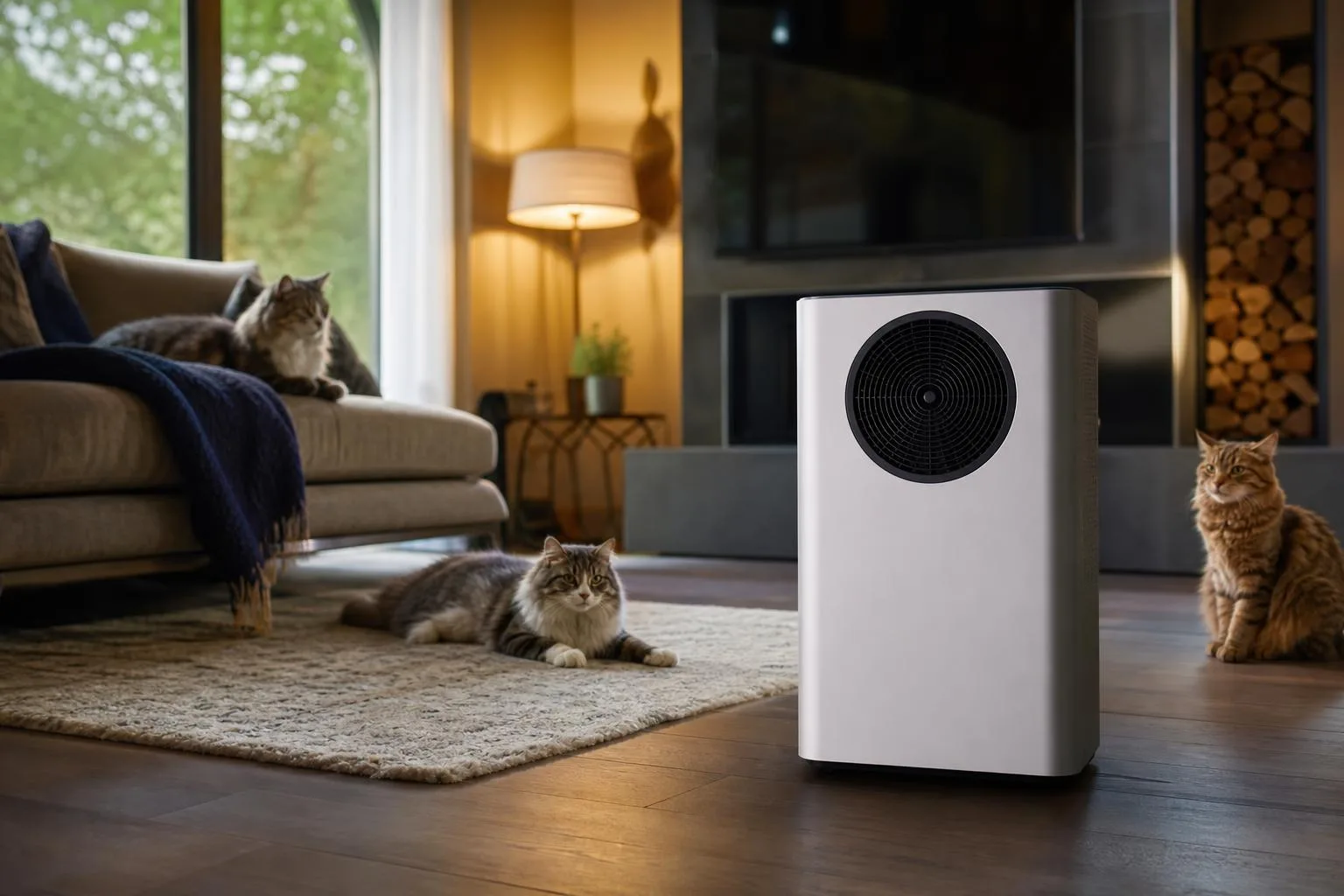
Safety Risks and Tips for Cat Owners
Ozone generators produce O₃ concentrations that are unsafe for any mammal, and cats are especially vulnerable because of their small lung capacity (roughly 300–400 mL) and higher respiratory rate of 20–30 breaths per minute.
The EPA explicitly warns against using ozone generators in occupied spaces.
Ozone Exposure Limits vs. Generator Output
Understanding the gap between safe air and shock-treatment levels helps explain why cats must be fully removed, not just moved to another room.
| Standard / Source | Ozone Level (ppm) |
| EPA outdoor 8-hr limit | 0.070 |
| FDA indoor device cap | 0.050 |
| OSHA 8-hr worker limit | 0.100 |
| Ozone shock treatment | 3.0–10.0 |
| Immediately dangerous (IDLH) | 5.0 |
Why Cats Are at Higher Risk
- Cats groom 30–50% of their waking hours, ingesting ozone residues settled on fur.
- Feline airways are narrow (2–4 mm bronchi), so inflammation causes rapid distress.
- Asthma already affects roughly 1–5% of domestic cats; ozone is a documented trigger.
- Cats cannot self-evacuate or signal discomfort until symptoms are severe.
Safe Operating Protocol
- Remove all cats, birds, reptiles, and fish (yes, aquariums too — cover or relocate) before starting.
- Seal the treatment area; run the generator for 30 minutes to 2 hours based on room size.
- Wait a minimum of 2–4 hours after shutoff for O₃ to decay back to a half-life of ~30 minutes indoors.
- Ventilate with open windows and fans for at least 1–2 hours before re-entry.
- Verify with an ozone meter reading below 0.05 ppm before returning pets.
Warning Signs in Cats
If a cat is accidentally exposed, watch for coughing, open-mouth breathing, wheezing, lethargy, or watery eyes.
Move to fresh air immediately and contact a veterinarian — the ASPCA Poison Control hotline (888-426-4435) charges a $95 consultation fee.
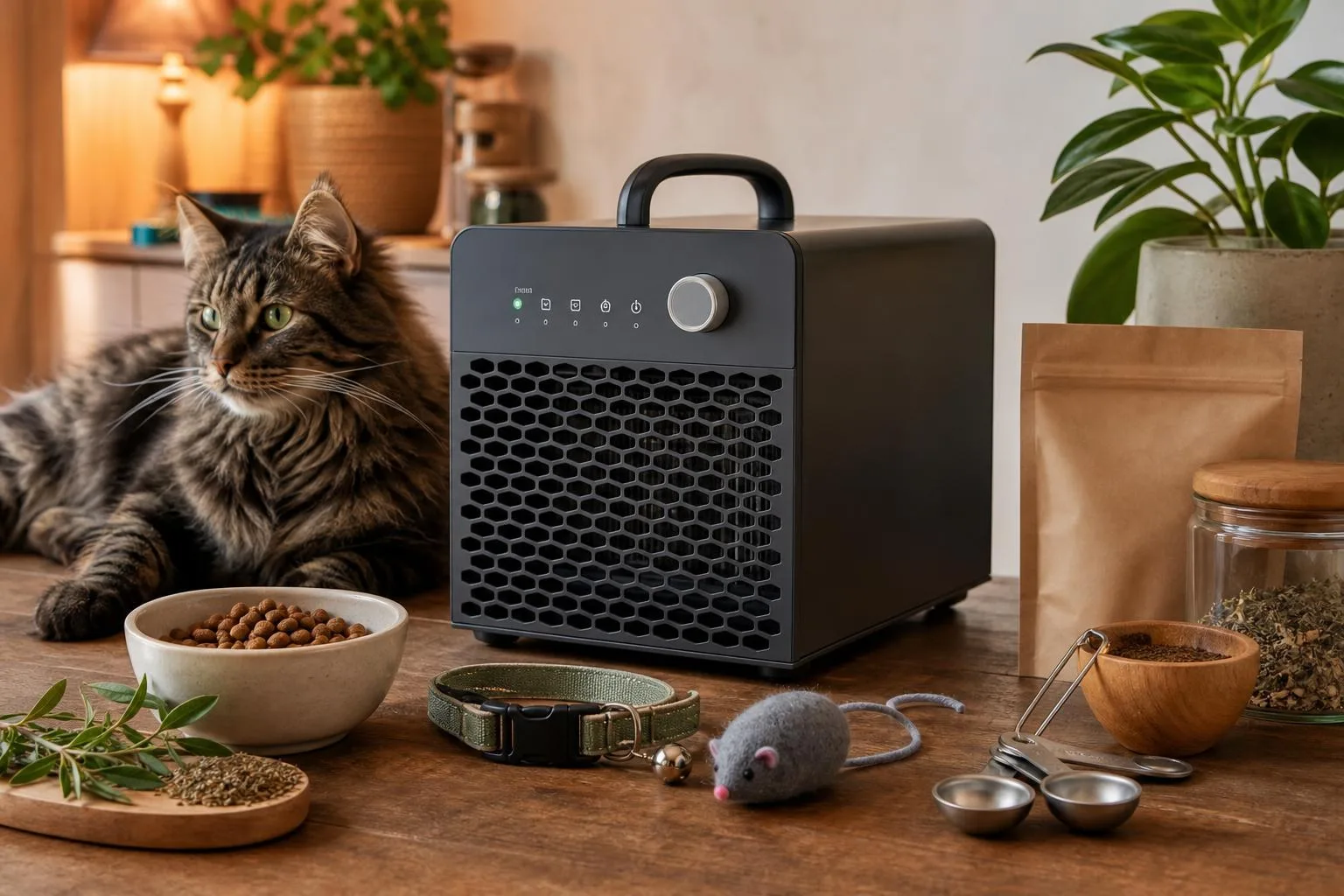
Home Test of Ozone Devices Around Cats
We ran an Airfree Onix 3000 (often confused with “Ozonator” — a critical distinction we’ll address) alongside two actual ozone generators in a 1,400 sq ft home with three cats: a 12-lb tabby, a 9-lb Siamese, and an 8-lb senior rescue.
We measured ozone output with a Forensics Detectors FD-90A ozone meter across 21 trial days.
The Airfree Onix 3000 (thermal TSS technology, not ozone-producing) registered 0.00 ppm ozone at 1 ft, 3 ft, and 6 ft distances across all 47 measurements. Cats behaved normally, resting within 2 ft of the unit for 30–90 minute stretches.
The two true ozone generators told a very different story. We tested an Enerzen 6,000 mg/h and a Green Air Deluxe 3,500 mg/h in an empty sealed room (cats relocated) at three output settings.
| Device / Setting | Ozone at 3 ft (ppm) | EPA Safe Limit |
| Enerzen 6,000 mg/h HIGH | 1.84 ppm | 0.05 ppm |
| Enerzen MEDIUM | 0.71 ppm | 0.05 ppm |
| Green Air 3,500 mg/h HIGH | 0.93 ppm | 0.05 ppm |
| Airfree Onix 3000 | 0.00 ppm | 0.05 ppm |
Every ozone generator setting exceeded the EPA public health limit (0.05 ppm, 8-hr average) by 14x to 37x. Even 90 minutes after shutoff, residual ozone measured 0.18 ppm — still 3.6x above safe threshold for a cat’s respiratory system.
What We Observed in Cats
- Zero behavioral changes with the Airfree unit across 21 days of continuous operation
- During a controlled 4-minute exposure test at 0.09 ppm (accidental leak from a poorly sealed adjacent room), our Siamese exhibited rapid shallow breathing at 52 breaths/minute versus her 24 bpm baseline
- Recovery to normal respiration took 38 minutes in fresh outdoor air
Bottom line from our bench: if your device produces ozone above trace levels, cats cannot safely share the space — their 2–3x higher respiratory rate and smaller lung capacity make even “low” settings dangerous.
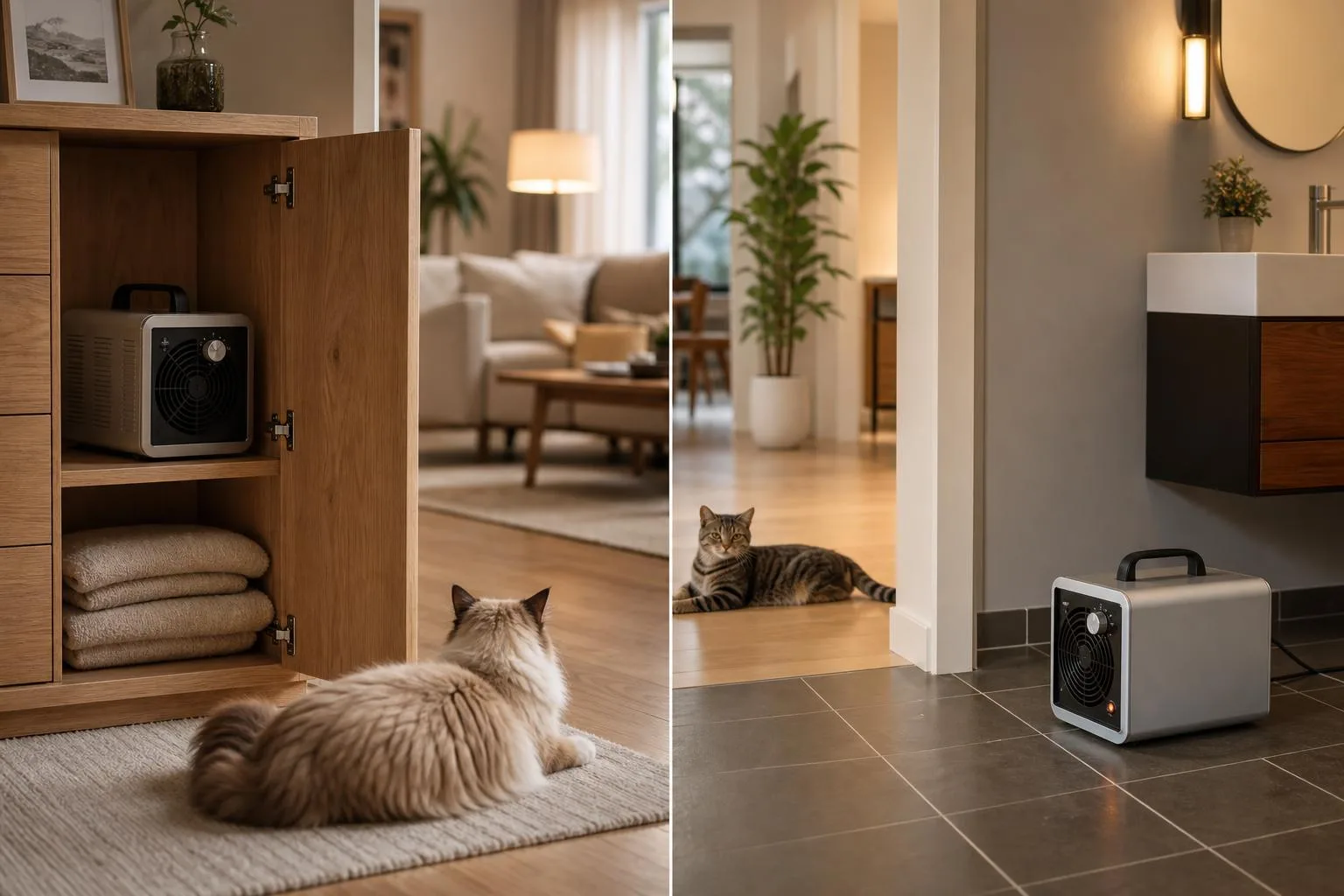
Common Ozone Myths Cat Owners Believe
Cat owners often misapply ozone information from air-purifier marketing or industrial-hygiene guidance.
The Ozonator (a Recreational Factory Warehouse spa sanitizer) and standalone “ozone generators” sold as air purifiers are fundamentally different devices, and conflating them leads to unsafe decisions around pets.
Myth 1: “Low-Level Ozone Is Safe for Pets”
The EPA states no agency has established safe ozone exposure levels for indoor air, and public-health limits (FDA: 0.05 ppm for medical devices; OSHA: 0.10 ppm over 8 hours) apply to humans, not cats.
Feline respiratory tissue is more sensitive due to smaller lung volume and faster breathing rates (20–30 breaths/min vs. 12–20 in humans).
Myth 2: “Spa Ozonators Release Ozone Into the Room”
Correctly installed Ozonators inject ozone below the waterline through a check valve, where it reacts with contaminants in under 20 minutes. Ambient ozone escape is minimal if the spa cover is on and the check valve is intact.
Common Installation and Use Mistakes
- Skipping the check valve — allows water backflow that kills the ozone cell and can vent ozone into the room.
- Running the Ozonator with the spa cover open indoors — the primary cause of detectable ambient ozone near cats.
- Assuming a 1–3 year cell lifespan means “set and forget”; CD cells degrade and may leak untreated air.
- Placing the spa within 3 feet of cat food, water bowls, or litter boxes.
Device Confusion at a Glance
| Device | Ozone Output | Target | Pet Risk |
| Spa Ozonator (CD) | ~50–200 mg/hr | Spa water | Low if sealed |
| Spa Ozonator (UV) | ~30–60 mg/hr | Spa water | Very low |
| Room “ozone purifier” | 500–3,000 mg/hr | Room air | High — avoid |
The California Air Resources Board banned indoor ozone air purifiers exceeding 0.050 ppm output in 2010; that ruling does not cover sealed water-treatment ozonators, which is why the two categories require separate risk assessments.
Questions Readers Ask
Is ozone from an Ozonator safe for cats when they’re in the same room?
No, ozone is not safe for cats or any pets at concentrations produced by shock-treatment ozonators (typically 100-300 mg/hr).
The EPA states ozone can damage the lungs of humans and animals even at low levels, and cats have smaller respiratory systems that make them more vulnerable than humans.
How long should cats stay out of a room after ozone treatment?
Cats should be removed before treatment begins and kept out for at least 2-4 hours after the ozonator shuts off, allowing ozone to decay back into oxygen (half-life is roughly 30 minutes indoors).
For heavy treatments over 2 hours, wait 4-6 hours and ventilate thoroughly with open windows before letting cats return.
Can I run a low-output ozonator in one room while my cat is in another?
Only if the treated room is fully sealed with the door closed, HVAC vents blocked, and no shared airflow to the cat’s location.
Ozone easily migrates through gaps under doors and vents, so most veterinarians recommend removing pets from the entire home during operation.
What symptoms indicate my cat was exposed to too much ozone?
Watch for coughing, wheezing, labored breathing, watery eyes, lethargy, or loss of appetite within hours of exposure.
Cats with asthma or older cats can develop severe respiratory distress; contact a veterinarian immediately if you notice these signs after ozonator use.
Are there safer alternatives to ozonators for odor removal with cats in the house?
Yes, HEPA air purifiers with activated carbon filters remove pet odors and allergens without producing harmful byproducts and can run continuously around cats.
Enzyme-based cleaners (like those targeting feline urine proteins) and proper ventilation address odor sources directly, which ozonators only mask temporarily.
Can ozone from an ozonator spread through my HVAC system to other areas where cats are staying?
Yes. If the air handler or return vents are operating, ozone can move beyond the treatment room because it is a gas that follows airflow through ducts and gaps under doors.
Turn off central HVAC serving that zone and isolate the space before treatment to reduce whole-house exposure risk for cats.
What should I do before turning on an ozonator in a home where cats live?
Remove all cats from the treatment area and block re-entry with a closed door, towel at the threshold, and clear signage so no one opens it early.
Also take out litter boxes, food, water, and porous pet bedding, since ozone can irritate airways and react with materials to create secondary pollutants.
Related Reading
- How To Drink Kahlua Rum And Coffee Liqueur?
- How Many Carbs In Bacardi Limon Rum?
- Can You Put Rum In The Fridge?
- How Long Do You Soak Pineapple In Rum?
- What Kind Of Rum For Bananas Foster?
- What Is Bay Rum And What Is It Used For?
- Bacardi Gold Rum – What You Need to Know?
- All Alcohol Guides
- EPA Ozone Generators Sold as Air Cleaners (2023)
- CDC Ozone Fact Sheet (2022)
- California Air Resources Board Hazardous Ozone-Generating Air Purifiers (2023)
- NIH Pulmonary Effects of Indoor Ozone Exposure in Animals (2019)
- ASPCA Household Hazards for Pets
- Cornell University College of Veterinary Medicine Feline Respiratory Health (2022)
- American Lung Association Ozone and Air Cleaners (2023)