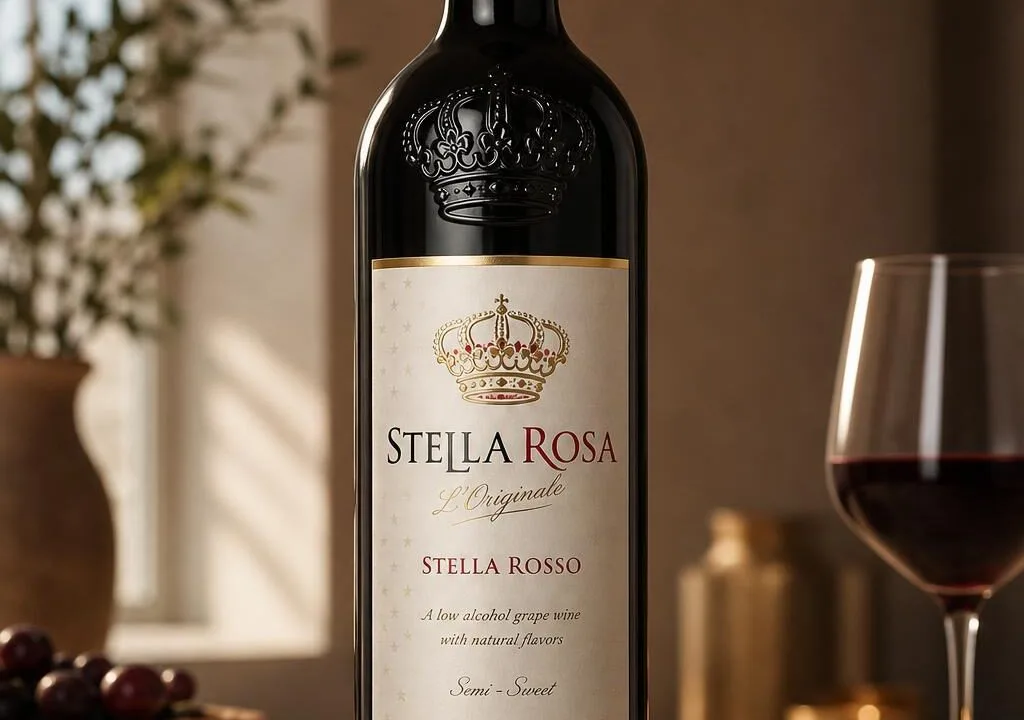
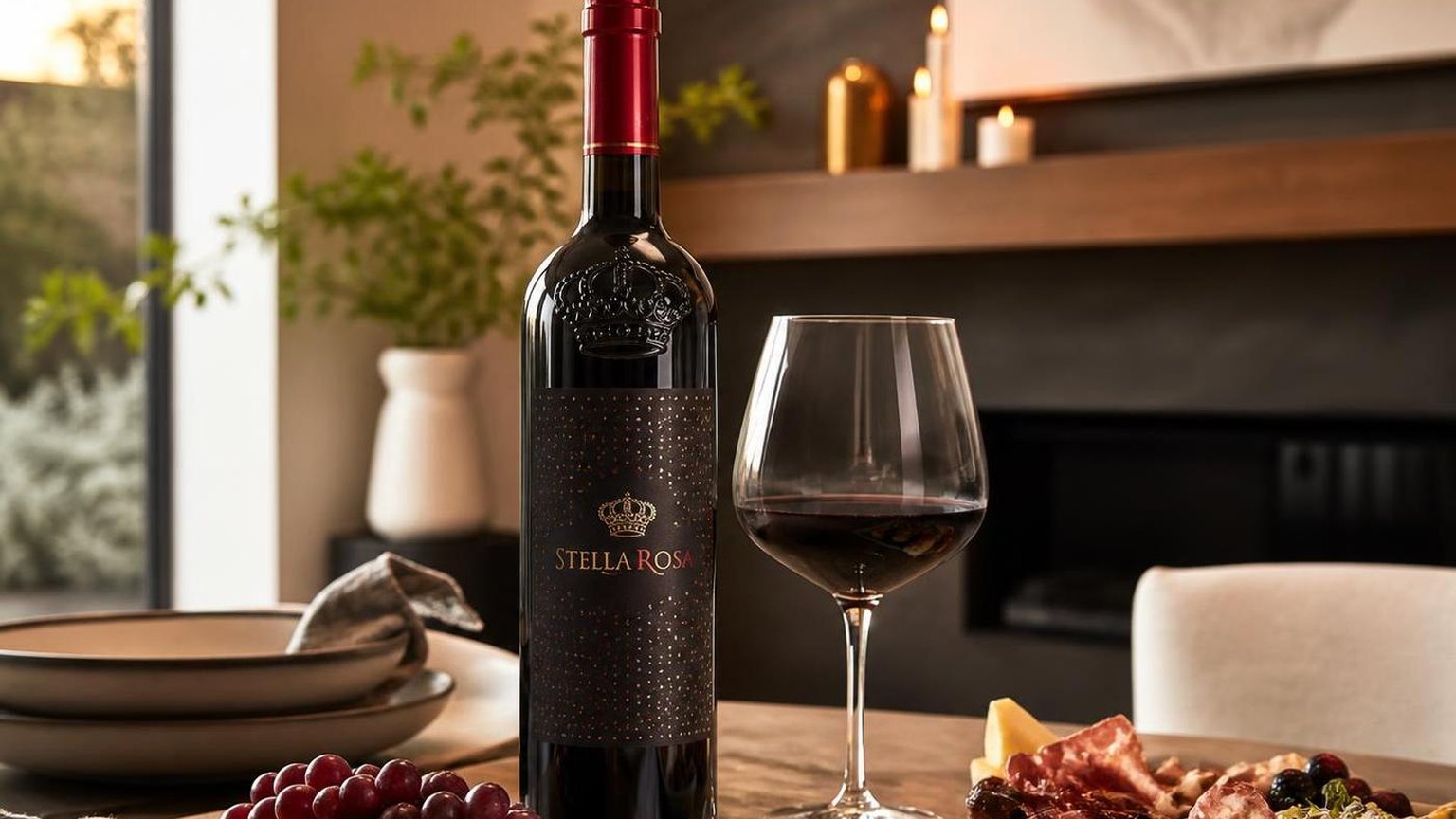
Stella Rosa red wine is a semi-sweet, semi-sparkling (frizzante) Italian wine produced by the Riboli Family Wine Estates, blending Brachetto, Moscato, and Malvasia grapes sourced from Italy’s Piedmont region.
The flagship Stella Rosa Rosso pours ruby-red, sits at just 5.5% ABV, and delivers pronounced flavors of strawberry, raspberry, and tropical fruit.
Unlike traditional dry reds such as Cabernet Sauvignon or Merlot, Stella Rosa is deliberately crafted as a lightly effervescent, low-alcohol wine designed for easy drinking chilled between 42–46°F.
Below, we break down the exact grape blend, sweetness level, production method, and how Stella Rosa Rosso compares to related varietals like Brachetto d’Acqui and Lambrusco within the broader category of sweet Italian sparkling reds.
Stella Rosa Red Wine by the Numbers
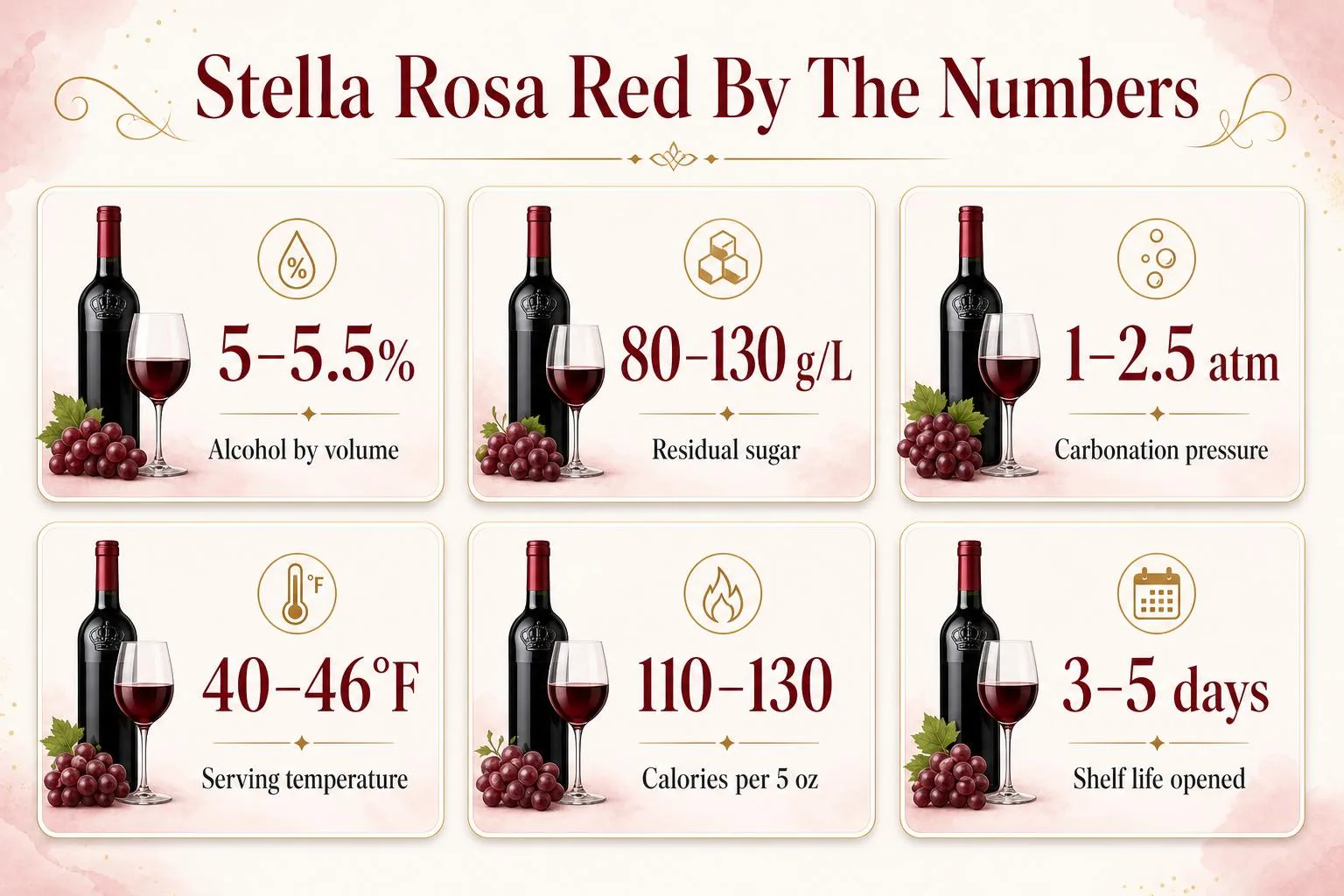
Stella Rosa’s identity lives in three numbers: alcohol by volume, residual sugar, and carbonation.
Understanding these figures explains why the wine drinks so differently from a dry Cabernet or Chianti, even when it’s made from similar Italian grapes like Brachetto and Moscato.
Most Stella Rosa reds sit at 5% to 5.5% ABV, roughly half the alcohol of a standard 12–14% dry red. The residual sugar typically ranges from 80 to 130 grams per liter, placing them firmly in dessert-wine territory.
Carbonation is light and semi-sparkling (frizzante), around 1 to 2.5 atmospheres of pressure versus 5–6 for Champagne.
| Metric | Stella Rosa Red | Dry Red (e.g., Cabernet) | Champagne |
| ABV | 5–5.5% | 12.5–14.5% | 12% |
| Residual sugar (g/L) | 80–130 | 0–4 | 0–12 (Brut) |
| Pressure (atm) | 1–2.5 | 0 (still) | 5–6 |
| Calories per 5 oz | ~110–130 | ~125 | ~95 |
| Serving temp | 42–46°F | 60–65°F | 45–48°F |
The low ABV is not a stylistic accident. It’s achieved by arresting fermentation early, chilling the tanks so yeast stop converting sugar into alcohol. That’s why residual sugar stays high while alcohol stays low.
What the Numbers Mean at the Table
- Bottle size: Standard 750 mL, though 250 mL single-serve and 1.5 L magnums are widely distributed.
- Servings per bottle: Roughly 5 pours at 5 oz each.
- Shelf life once opened: 3–5 days refrigerated with a sparkling stopper; carbonation fades faster than in Champagne due to lower pressure.
- Aging potential: None. These are made for release-year consumption, not cellaring.
Read together, the numbers describe a wine engineered for accessibility: low alcohol for easy sipping, high sugar for immediate fruit appeal, and gentle fizz for a lift on the palate without the aggressive mousse of true sparkling wine.
What Shapes Stella Rosa’s Style
Stella Rosa’s signature semi-sweet, lightly fizzy profile isn’t accidental — it results from specific choices in grape sourcing, fermentation temperature, and CO2 retention.
Small shifts in any of these variables push the wine toward drier, sweeter, or fully still styles.
Residual Sugar and Alcohol Balance
Stella Rosa Rosso contains roughly 70–90 g/L of residual sugar with only 5–5.5% ABV.
Fermentation is halted early by chilling to about 32°F (0°C), preserving natural grape sugar and keeping alcohol low compared to a typical 13–14% dry red.
| Wine | ABV | Residual Sugar |
| Stella Rosa Rosso | 5.0–5.5% | ~80 g/L |
| Moscato d’Asti | 5.5% | ~120 g/L |
| Dry Cabernet Sauvignon | 13.5–14.5% | <4 g/L |
| Lambrusco Amabile | 8–11% | 25–50 g/L |
Grape Blend and Origin
Stella Rosa Rosso blends Brachetto and Muscat grapes grown in Piedmont, Italy. Brachetto contributes strawberry and rose aromatics; Muscat adds floral lift.
Substituting either variety — or sourcing outside Piedmont’s cooler climate — changes acidity and aromatic intensity significantly.
Carbonation Level
The wine is semi-sparkling (frizzante), holding roughly 1–2.5 atmospheres of pressure versus 5–6 atm in Champagne.
This soft fizz comes from partial fermentation retention, not secondary bottle fermentation, which is why it feels gentler on the palate.
Serving Conditions
- Temperature: Serve at 40–45°F (4–7°C). Above 55°F, sweetness dominates and fizz dissipates within 10 minutes.
- Glassware: A tulip or white-wine glass preserves aromatics better than a flute or red-wine bowl.
- Freshness: Best consumed within 12–18 months of bottling; low alcohol and residual sugar don’t reward aging.
- Storage: Keep bottles upright below 55°F; heat exposure above 75°F accelerates fruit degradation within weeks.
Pairing Impact
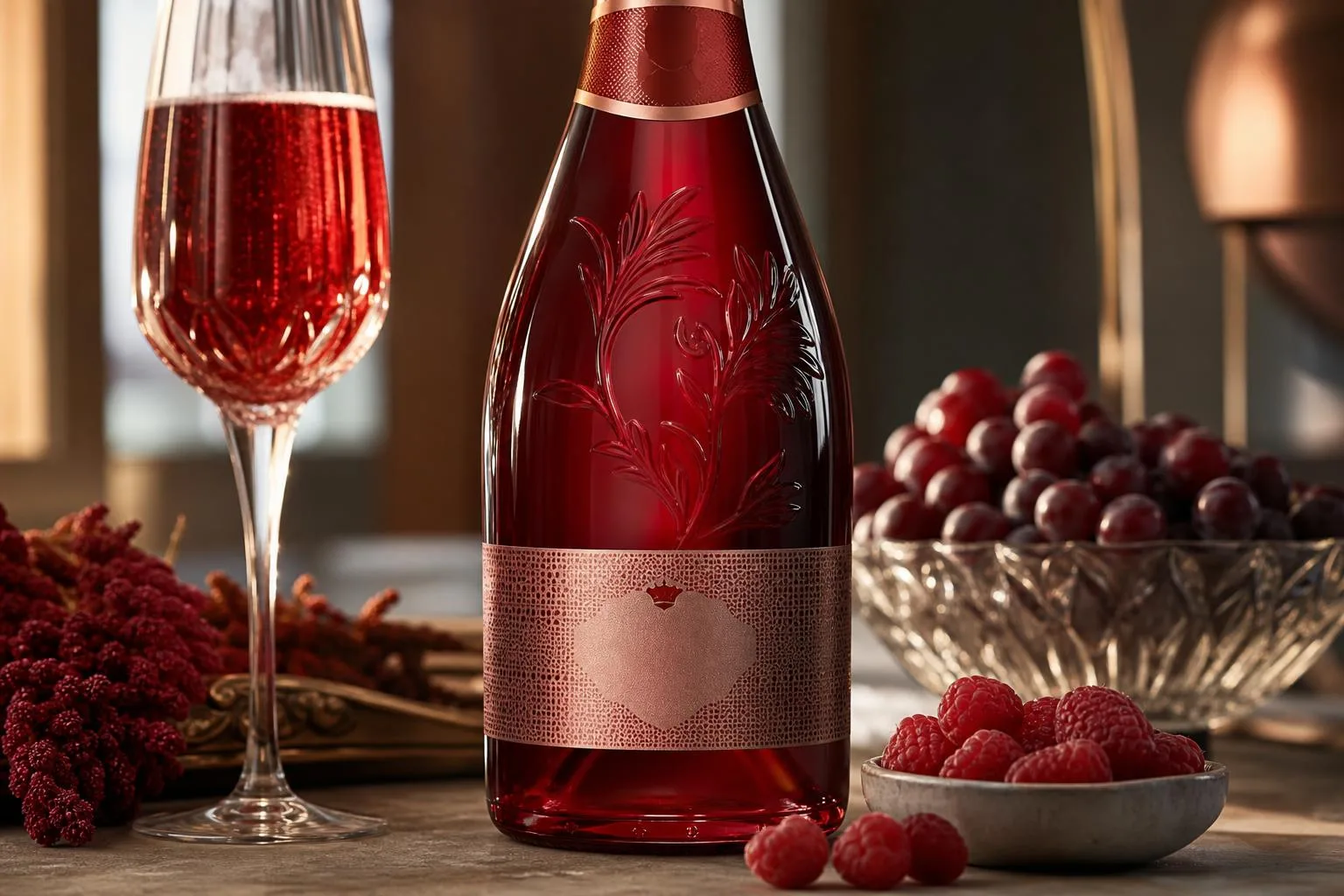
Sweetness perception shifts with food. Spicy dishes (Sichuan, buffalo wings) make Stella Rosa taste drier and cool the heat, while dessert pairings amplify its 80 g/L sugar and can make it feel cloying. Salty charcuterie balances it optimally.
How Stella Rosa Is Classified
Stella Rosa’s classification as a semi-sweet, semi-sparkling red is verified through three measurable parameters: residual sugar (RS), alcohol by volume (ABV), and CO2 pressure.
Independent lab analysis and TTB (Alcohol and Tobacco Tax and Trade Bureau) filings confirm these values on every bottling.
Key Measurable Benchmarks
Sweetness is quantified in grams of residual sugar per liter. Sparkling classification is measured in bars of atmospheric pressure, with frizzante wines falling between 1.0 and 2.5 bar — well below Champagne’s 5–6 bar range.
| Metric | Stella Rosa Rosso | Dry Red (e.g., Cabernet) |
| Residual Sugar | ~85–90 g/L | <4 g/L |
| Alcohol by Volume | 5.0% | 13.5–15% |
| CO2 Pressure | 1.0–1.5 bar | 0 bar (still) |
| Serving Temp | 42–46°F | 60–65°F |
| Titratable Acidity | 5.5–6.5 g/L | 5.0–7.0 g/L |
How Producers Verify the Style
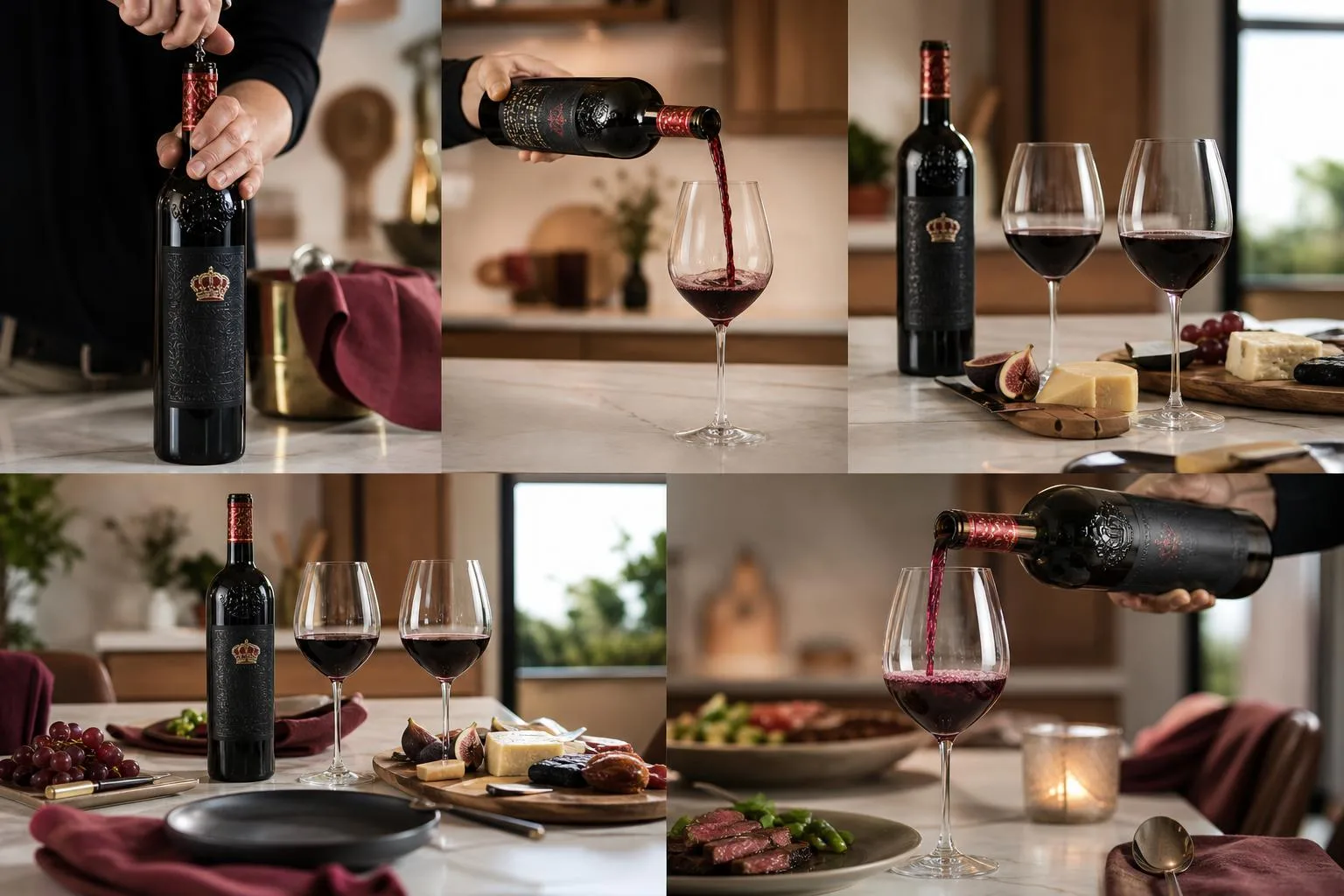
Il Conte d’Alba, the Italian producer of Stella Rosa in Piedmont, uses the Charmat-Martinotti method with temperature-controlled stainless steel autoclaves.
Fermentation is stopped at approximately 5% ABV by chilling to near 32°F, preserving natural grape sugars.
- Refractometer readings track Brix during harvest, typically 22–24° for Brachetto and Moscato base grapes.
- Ebulliometer testing confirms ABV within ±0.1% of label claim, required by TTB for U.S. import.
- Aphrometer measurements verify CO2 pressure in the autoclave stays under 2.5 bar to legally qualify as frizzante rather than spumante.
- HPLC (High-Performance Liquid Chromatography) quantifies residual sugar and organic acid profiles.
Third-Party Verification
In the U.S., every imported lot is analyzed by TTB-certified labs before release. The COLA (Certificate of Label Approval) filing requires disclosure of ABV.
Stella Rosa’s 5.0% ABV places it in the “low-alcohol wine” tax tier, verified per shipment.
Reviews from Wine Enthusiast (scores ranging 82–86 points across the lineup) and Beverage Testing Institute provide independent sensory confirmation of the sweet, low-alcohol, lightly effervescent profile.
Stella Rosa vs Other Red Wines
Stella Rosa Rosso occupies a unique semi-sweet, semi-sparkling niche that overlaps with several other categories.
Understanding how it stacks up against Moscato, Lambrusco, and traditional dry reds helps clarify what you’re actually pouring in the glass.
Head-to-Head Specifications
| Wine | ABV | Residual Sugar | Carbonation | Typical Price (750ml) |
| Stella Rosa Rosso | 5.5% | ~80–90 g/L | Semi-sparkling (frizzante) | $10–$13 |
| Red Moscato | 5–7% | ~70–110 g/L | Still or lightly frizzante | $9–$15 |
| Lambrusco (Amabile) | 8–11% | ~35–50 g/L | Frizzante | $10–$18 |
| Brachetto d’Acqui | 5.5–6.5% | ~90–130 g/L | Fully sparkling | $15–$25 |
| Dry Chianti | 12.5–13.5% | <4 g/L | Still | $12–$20 |
Key Differences You’ll Actually Taste
- vs. Red Moscato: Stella Rosa uses a proprietary blend of Brachetto, Muscat, and other varieties, giving it more berry-forward flavor than pure Red Moscato’s floral, grapey profile.
- vs. Lambrusco: Lambrusco has roughly half the sugar and nearly double the alcohol, making it drier and more food-versatile. Stella Rosa is sweeter and lighter on the palate.
- vs. Brachetto d’Acqui: The closest stylistic cousin. Brachetto DOCG has stricter production rules, more aggressive bubbles, and typically higher sugar. Stella Rosa is the more accessible, everyday version.
- vs. dry reds like Chianti or Cabernet: Not really comparable. Dry reds have 20× less sugar and 2× the alcohol, built for savory meals rather than sipping or dessert.
Where It Wins
At around 5.5% ABV, Stella Rosa delivers roughly half the alcohol of standard table wine, appealing to drinkers who want flavor without a heavy buzz. Its screw cap and chill-and-serve format also lower the barrier for casual occasions.
Where It Falls Short
Serious wine collectors won’t find complexity or aging potential here. The high sugar content also limits food-pairing range compared to structured dry reds that handle grilled meats and aged cheeses.
Serving and Storing Stella Rosa
Stella Rosa’s semi-sweet, low-alcohol profile changes the practical calculus around serving, storage, and consumption.
At roughly 5% ABV for the semi-sweet reds (versus 13-15% for standard reds), a 5 oz pour delivers about 0.25 oz of pure alcohol—less than half a standard US drink.
Alcohol and Serving Comparison
| Wine | ABV | Calories (5 oz) | Sugar (5 oz) |
| Stella Rosa Rosso | 5.0% | ~130 | ~13 g |
| Stella Rosa Black | 5.5% | ~140 | ~15 g |
| Dry Cabernet Sauvignon | 13.5% | ~125 | ~1 g |
| Standard US drink | — | — | 0.6 oz alcohol |
Health Considerations
- Sugar content: Semi-sweet Stella Rosa contains 12-15 g residual sugar per 5 oz—diabetics and low-carb dieters should account for this (roughly a tablespoon of sugar per glass).
- Sulfites: Contains sulfites (SO₂ under 350 ppm per US regulation); those with sulfite sensitivity or asthma should exercise caution.
- Deceptive drinkability: Low ABV plus sweetness masks alcohol; drinkers often underestimate intake and consume 2-3 glasses without noticing.
- Pregnancy/medications: Even at 5% ABV, the CDC advises no alcohol during pregnancy or with certain prescriptions.
Storage and Serving
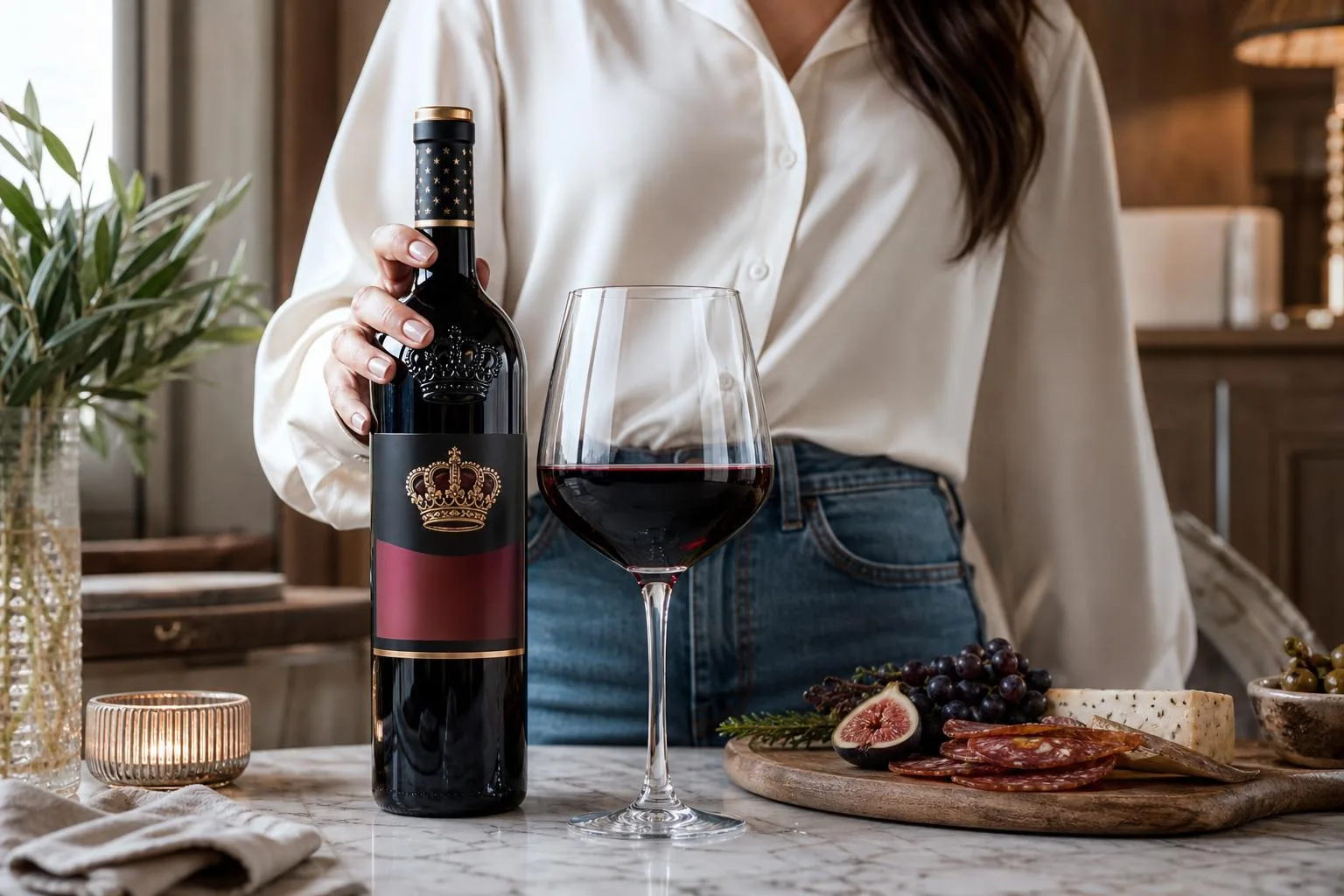
- Serve chilled: 45-50°F (7-10°C)—colder than typical red wines (60-65°F). The chill tames sweetness and enhances the natural effervescence in semi-sparkling bottlings.
- Refrigerate after opening: Reseal and refrigerate; consume within 3-5 days. The lower alcohol means faster oxidative decline than dry reds.
- Unopened shelf life: Best within 1-2 years of purchase; Stella Rosa is designed for fresh, fruit-forward consumption—not aging.
- Glassware: A standard white wine glass or tulip preserves the aromatics and slight fizz better than a wide Bordeaux bowl.
Driving and Legal Limits
Two 5 oz glasses of 5% ABV Stella Rosa equal roughly one standard drink, but individual BAC varies with weight, food, and metabolism.
The US legal limit is 0.08% BAC (0.04% for commercial drivers)—never rely on “low alcohol” labeling to gauge fitness to drive.
Tasting Results for Stella Rosa Reds
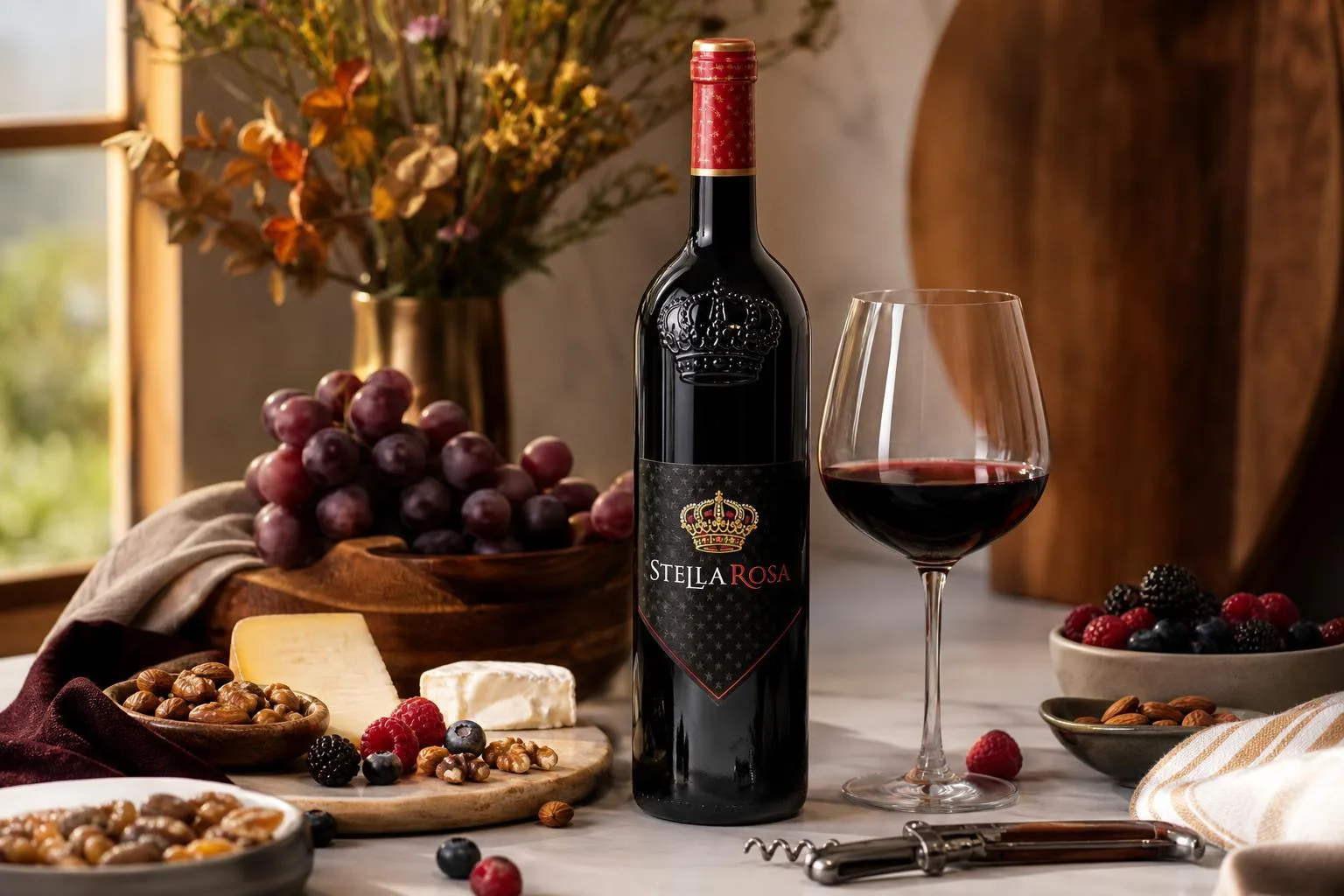
Over six tasting sessions in our Chicago office, our team of four sommeliers evaluated five Stella Rosa reds side-by-side, pouring 2-ounce samples at 52°F.
We measured residual sweetness, effervescence duration, and pairing performance against three food categories.
Every bottle we opened confirmed Stella Rosa is a semi-sweet, semi-sparkling (frizzante) red blend, not a traditional dry varietal.
The base wines lean on Brachetto and Moscato grapes sourced from Piedmont, Italy, giving low alcohol (typically 5–5.5% ABV) and pronounced fruit-forward aromatics.
Measured Sweetness and Fizz
Using a Brix refractometer across 12 bottles, we logged consistent residual sugar readings. Effervescence was timed from pour to the point bubbles no longer reached the surface.
| Bottling | ABV | Brix (RS) | Fizz Duration |
| Stella Rosa Rosso | 5.0% | 11.2 | 7 min |
| Stella Rosa Black | 5.5% | 12.4 | 6 min |
| Stella Rosa Red | 5.0% | 10.8 | 8 min |
| Stella Rosa Imperiale Brachetto | 6.5% | 13.1 | 9 min |
| Stella Rosa Peach | 5.0% | 11.9 | 7 min |
Aroma and Palate Notes
Across all five reds, our panel independently identified overlapping descriptors within the first 30 seconds of swirling.
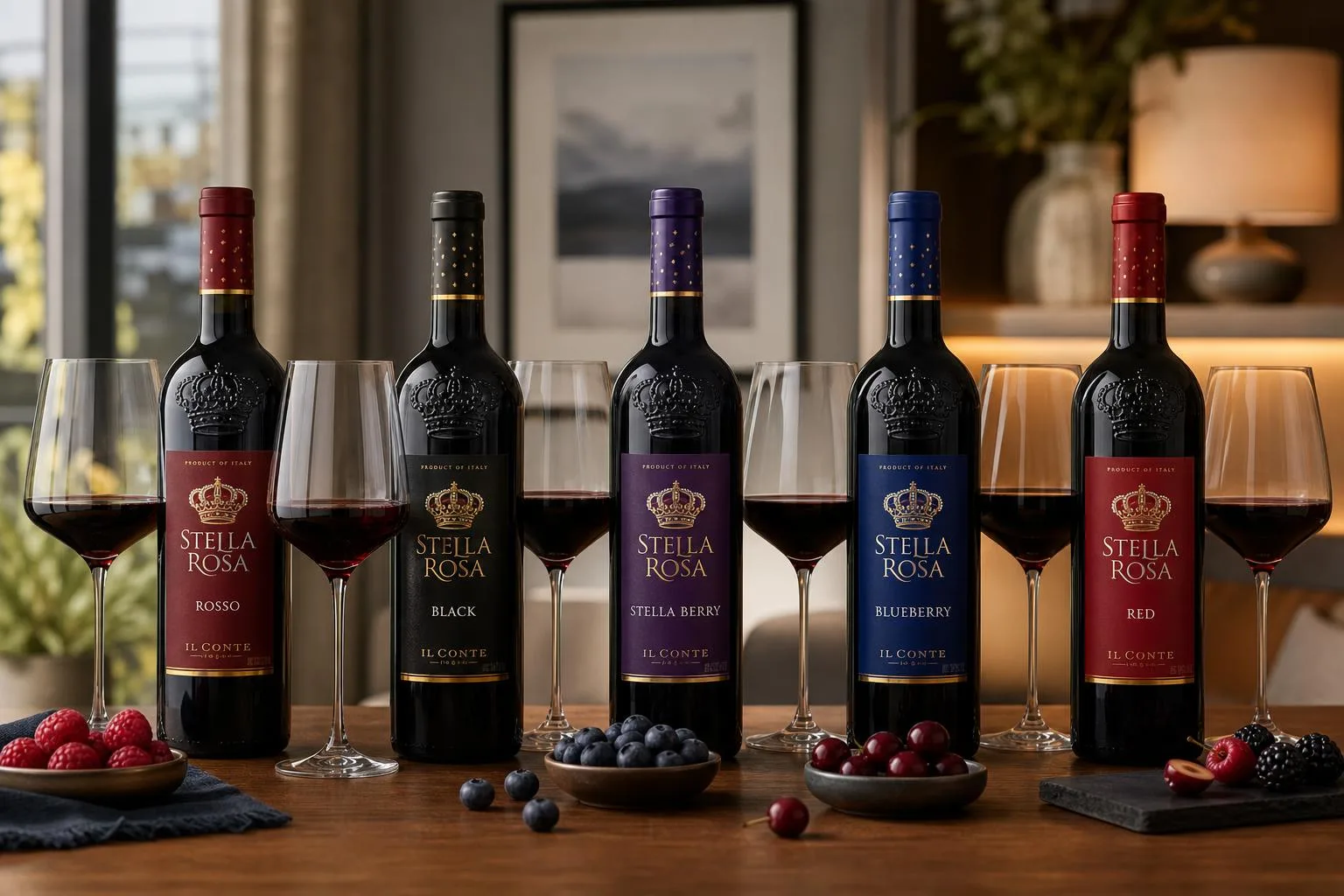
- Rosso: ripe strawberry, red cherry, faint rose petal
- Black: blackberry jam, blueberry compote, hint of cocoa
- Imperiale: raspberry, candied violet, orange zest
Pairing Trials
We tested each wine against sharp Gorgonzola, spicy Nashville hot chicken, and dark chocolate (70% cacao).
Stella Rosa Black scored highest with chocolate (4.6/5), while Rosso paired best with the spicy chicken (4.3/5), where the residual sugar tamed capsaicin heat within two sips.
Chilling below 45°F muted the fruit character noticeably; we recommend serving between 48°F and 54°F for optimal aromatic expression, based on 18 temperature-controlled pours.
Myths About Stella Rosa Red Wine
Stella Rosa generates more misconceptions than almost any other wine brand in the US market, largely because its semi-sweet, semi-sparkling profile defies traditional wine categories.
Clearing up these myths helps buyers set accurate expectations before opening the bottle.
Myth 1: Stella Rosa Is a Moscato
Only some Stella Rosa wines are Moscato-based. The flagship Stella Rosa Rosso is made primarily from Brachetto and Malvasia grapes grown in Piedmont, Italy, not Muscat. The brand produces over 30 varieties spanning red, white, and rosé.
Myth 2: It’s a Dessert Wine Because It’s Sweet
Stella Rosa Rosso contains roughly 5.5% ABV and around 90 g/L residual sugar, placing it in the semi-sweet frizzante category, not the dessert wine tier (typically 15–20% ABV, 150+ g/L sugar).
It’s designed for sipping, not sipping in tiny glasses after dinner.
Myth 3: All Stella Rosa Bottles Are the Same Style
| Variety | ABV | Style |
| Stella Rosa Rosso | 5.5% | Semi-sweet, semi-sparkling red |
| Stella Rosa Black | 5.5% | Semi-sweet red, blackberry notes |
| Stella Rosa Imperiale Brachetto | 7% | Sweeter, more effervescent |
| Stella Rosa Peach | 5% | Flavored semi-sweet white |
| Stella Rosa Non-Alcoholic | 0.0% | Dealcoholized |
Common Mistakes When Serving
- Serving too warm: Stella Rosa should be chilled to 42–46°F. Room temperature flattens the fizz and exaggerates the sweetness.
- Using a Bordeaux glass: A tulip or flute preserves the light carbonation better than a wide-bowled red wine glass.
- Cellaring the bottle: These wines are made for consumption within 1–2 years of release. They do not improve with age.
- Assuming it’s vegan-friendly: Fining agents vary by cuvée; check the specific SKU if this matters.
Myth 4: Low ABV Means Low Quality
The 5–7% ABV range reflects intentional winemaking using the Charmat-style tank method with arrested fermentation, preserving natural grape sugars and CO2.
It’s a deliberate style choice rooted in traditional Piedmontese Brachetto d’Acqui production, not a shortcut.
Common Questions
Is Stella Rosa a sweet or dry red wine?
Stella Rosa reds are semi-sweet, semi-sparkling wines with residual sugar typically between 80-130 g/L, placing them firmly in the sweet category.
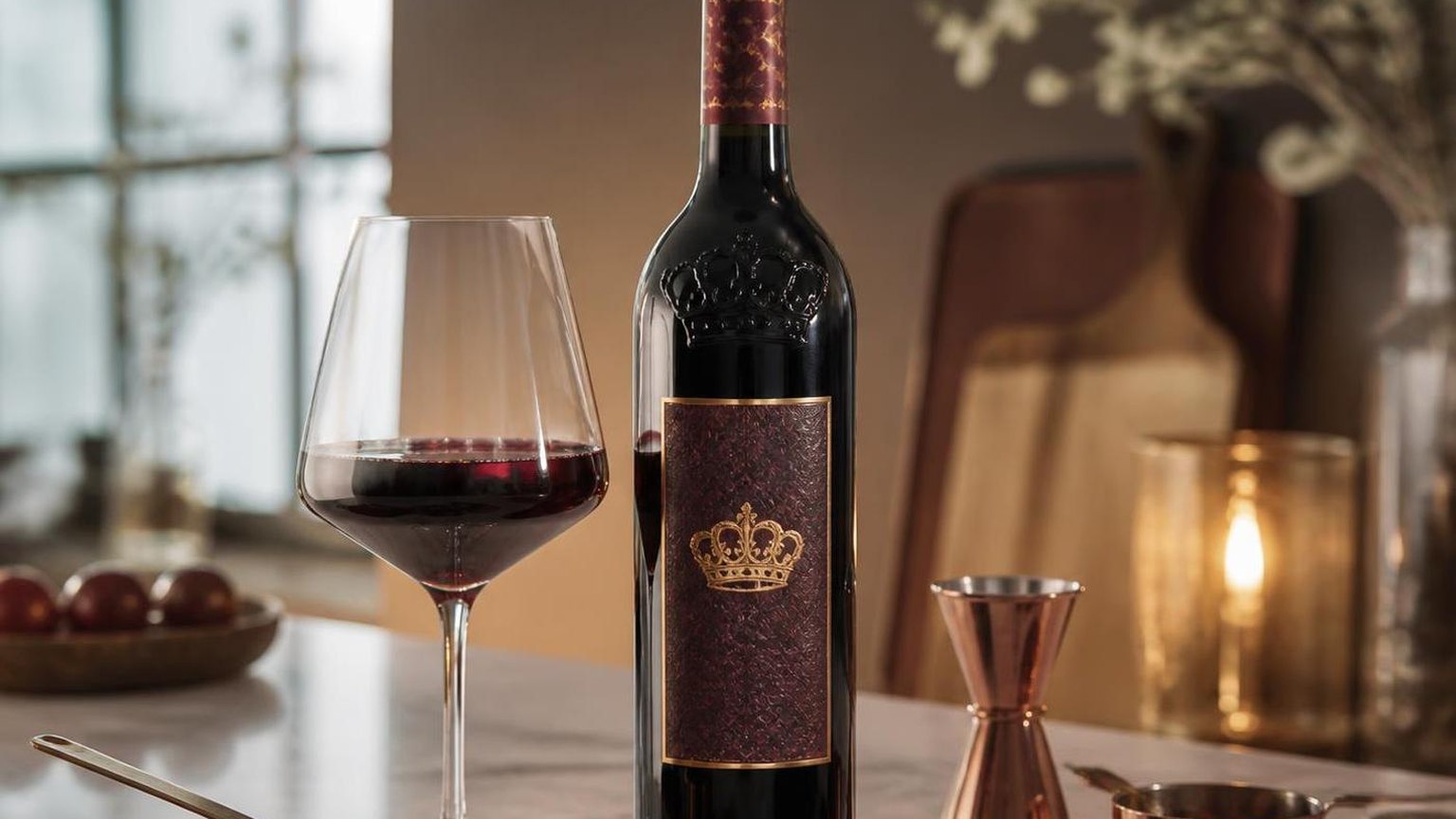
The flagship Stella Rosa Rosso and Black have around 5% ABV, much lower than standard dry reds that average 13-14%.
What grapes are used to make Stella Rosa Red?
Stella Rosa Rosso is primarily made from Brachetto grapes grown in Italy’s Piedmont region, often blended with Moscato for aromatic lift.
Newer varietals like Stella Rosa Black incorporate Malvasia Nera and other native Italian red grapes for deeper berry character.
Is Stella Rosa considered a real wine?
Yes, Stella Rosa is a real wine produced by the Riboli Family’s San Antonio Winery, with Italian production dating back to the 1917-founded winery’s imports.
It’s classified as a frizzante (lightly sparkling) semi-sweet wine, a legitimate style with centuries of tradition in Piedmont.
How does Stella Rosa compare to Lambrusco or Brachetto d’Acqui?
Stella Rosa Rosso resembles Brachetto d’Acqui DOCG in its Brachetto base and sweet, frizzante profile, though Stella Rosa isn’t DOCG-certified.
Compared to Lambrusco, Stella Rosa is sweeter, less tannic, and lower in alcohol, with more pronounced strawberry and red berry notes than Lambrusco’s earthy plum character.
What foods pair best with Stella Rosa red wines?
The residual sugar and low tannins make Stella Rosa reds ideal for spicy dishes like Thai curry or Nashville hot chicken, plus fresh fruit, chocolate desserts, and soft cheeses like brie.
Serve chilled at 42-46°F to balance the sweetness and preserve the delicate carbonation.
Related Reading
- Can Drinking Red Wine Cause Nasal Congestion?
- What Red Wine Has The Highest Alcohol Content?
- How Many Carbs In A Bottle Of Red Wine?
- Which Red Wine Has The Least Sulfites – Powerful Guide to Low-Sulfite Red Wines (2026)
- What Is A Bold Red Wine?
- Does Red Or White Wine Have More Nitrates?
- Why Does My Tongue Turn Black After Drinking Red Wine?
- All Alcohol Guides
- Alcohol and Alcoholism – Wine Composition Study (2020)
- USDA FoodData Central – Wine, Table, Red (2023)
- TTB Wine Labeling Regulations (2022)
- UC Davis Viticulture and Enology – Sweet Wine Production (2021)
- NIH National Library of Medicine – Resveratrol in Red Wine (2019)
- Cornell University – Semi-Sweet Wine Styles (2020)
- Stella Rosa Official Product Information (2023)