
does drinking red wine help with constipation? is best answered as no: red wine has no proven laxative effect, and its alcohol can reduce hydration, which may make stools harder to pass.
Constipation is usually linked to low fiber intake, inadequate fluids, reduced activity, medications, or gut-motility issues, according to NIDDK.
A 5-ounce glass of red wine contains about 125 calories and essentially no dietary fiber, so it does not address the main nutrition gap behind many constipation episodes.
If constipation is persistent, painful, or paired with bleeding, weight loss, vomiting, or a major bowel-habit change, medical evaluation is safer than relying on wine.
Red Wine Is Not Proven
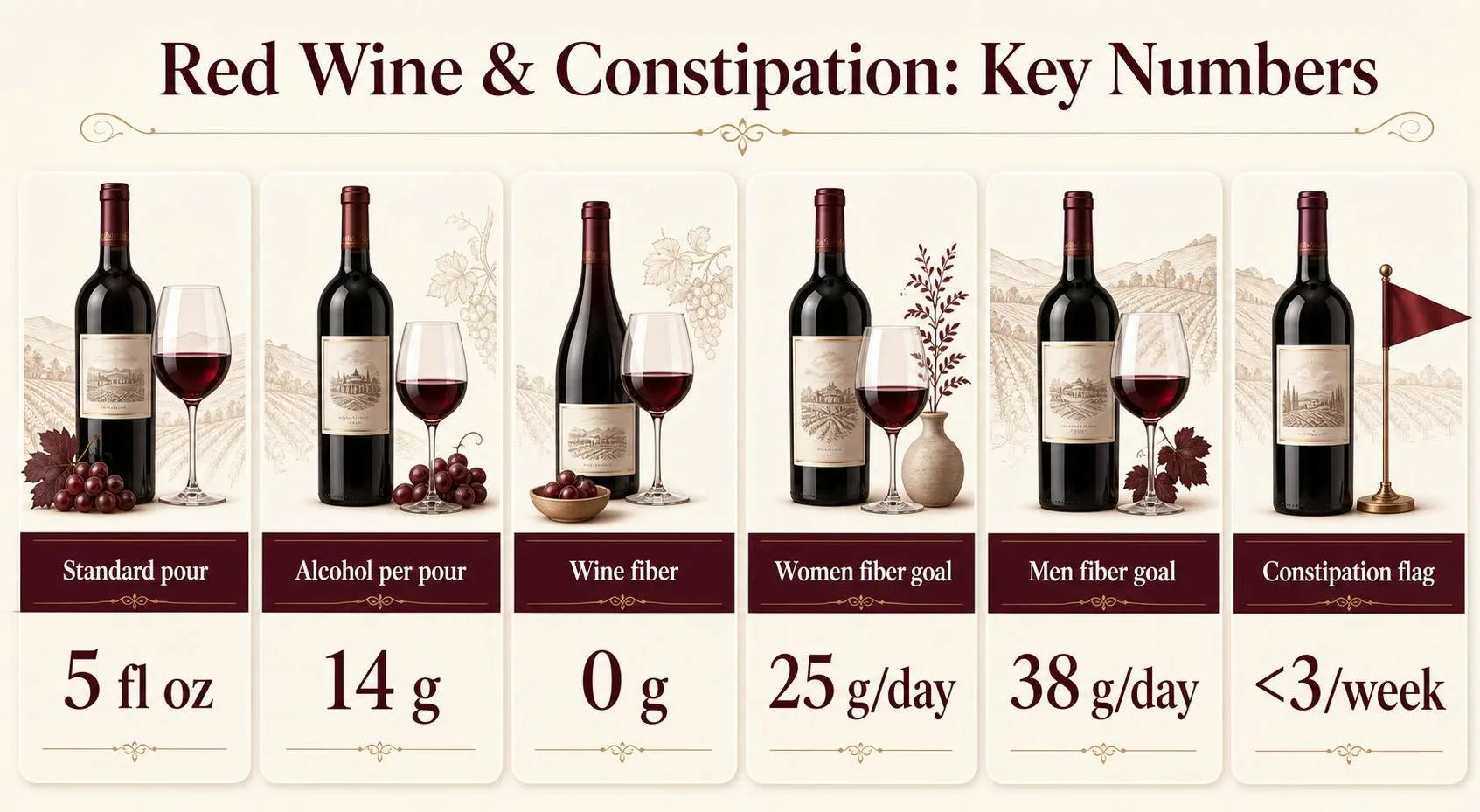
Red wine is not a proven constipation remedy. The numbers matter because a standard pour contains alcohol, very little fiber, and enough ethanol to affect hydration and gut motility in some people.
Constipation is commonly defined clinically as fewer than 3 bowel movements per week, often with hard stools or straining. For relief, the strongest everyday evidence supports fiber, fluids, and movement—not alcohol.
| Measure | Typical number | Why it matters |
| Standard red wine serving | 5 fl oz | This is the U.S. standard drink size used by NIAAA. |
| Alcohol in that serving | About 14 g ethanol at 12% ABV | Alcohol can increase urine output and may worsen dehydration-related hard stools. |
| Fiber in red wine | 0 g | Wine does not provide the stool-bulking fiber that helps constipation. |
| Typical red wine ABV | About 12%–15% | A higher-ABV pour delivers more alcohol than many people realize. |
The fiber comparison is especially important. The National Academies’ Adequate Intake for fiber is 25 g/day for women and 38 g/day for men through age 50, dropping to 21 g and 30 g after age 50.
| Constipation-related target | Evidence-based number | Red wine contribution |
| Daily fiber, women 19–50 | 25 g | 0 g |
| Daily fiber, men 19–50 | 38 g | 0 g |
| Osmotic laxative example | Polyethylene glycol 17 g/day is a common adult dose | Not comparable; wine is not an osmotic laxative |
| Bowel movement frequency concern | Fewer than 3 per week | Wine has no established corrective dose |
Hydration numbers also cut against using wine as a fix. The National Academies’ total water Adequate Intake is about 2.7 L/day for women and 3.7 L/day for men, including water from foods and beverages.
- One 5-ounce glass is not “fiber plus fluid.” It supplies fluid, but also alcohol and no fiber.
- More wine is not better. U.S. Dietary Guidelines define moderation as up to 1 drink/day for women and up to 2 drinks/day for men.
- Constipation relief usually needs grams, not sips. Effective strategies often involve increasing dietary fiber gradually, commonly by 5 g increments, alongside adequate nonalcoholic fluids.
Bottom line: a glass of red wine may coincide with a bowel movement for some people, but the key numbers show no direct constipation-relief mechanism.
If constipation persists for more than 3 weeks, or includes bleeding, weight loss, severe pain, or vomiting, medical evaluation is appropriate.
Red Wine Has Unpredictable Effects
Red wine does not have a predictable laxative effect. Whether it worsens or slightly eases constipation depends more on total fluid intake, alcohol dose, tannin sensitivity, diet, medications, and baseline bowel habits than on the wine itself.
Amount of alcohol
A standard U.S. serving of wine is 5 fl oz at about 12% alcohol, according to the National Institute on Alcohol Abuse and Alcoholism. Red wines often range from about 13.5% to 15% ABV, so one large pour may equal more than one standard drink.
| Wine amount | Approximate alcohol impact | Possible bowel effect |
| 5 fl oz at 12% ABV | 1 standard drink | May have little effect in many adults |
| 6 fl oz at 14.5% ABV | About 1.45 standard drinks | More likely to dehydrate or disrupt gut motility |
| 2 glasses, 5 fl oz each | About 2 standard drinks | Higher chance of harder stools the next day |
Hydration and stool water
Constipation is strongly affected by how much water stays in the stool. Alcohol can increase urination by suppressing vasopressin, especially when intake is more than modest.
If wine replaces water at dinner, stool may become drier and harder to pass.
Fiber intake matters more than wine
Most adults in the United States eat about 10 to 15 grams of fiber daily, below the commonly recommended 25 to 38 grams. Without enough fiber, red wine’s polyphenols or mild fluid content are unlikely to meaningfully improve constipation.
- Soluble fiber: oats, beans, lentils, apples, and psyllium can help retain water in stool.
- Insoluble fiber: wheat bran, vegetables, and whole grains can increase stool bulk.
- Psyllium: commonly studied at about 5 to 10 grams per day, with adequate water.
Tannins, histamine, and individual sensitivity
Red wine contains tannins and other polyphenols from grape skins, seeds, and oak contact. Some people report firmer stools or slower digestion after tannic red wines, while others notice looser stools.
This variability is common and not a reliable treatment effect.
Medications and medical conditions
Constipation risk increases with opioids, iron supplements, calcium supplements, some antidepressants, antihistamines, and antacids containing aluminum or calcium.
In these cases, red wine rarely addresses the main cause and may add dehydration or sleep disruption.
People with irritable bowel syndrome, inflammatory bowel disease, liver disease, pregnancy, or a history of alcohol use disorder should be especially cautious.
For persistent constipation lasting more than 3 weeks, rectal bleeding, weight loss, anemia, or severe pain, medical evaluation is safer than experimenting with alcohol.
How Constipation Relief Is Verified
Whether red wine “helps” constipation is verified by tracking bowel function before and after drinking it, not by judging a single bowel movement.
Clinically, constipation is measured with symptom criteria, stool form, bowel-movement frequency, and sometimes transit testing.
The most used medical definition is Rome IV functional constipation. It requires symptoms for at least 3 months, with onset at least 6 months earlier, and at least 2 constipation features.
| Measurement | What is counted | Common threshold |
| Stool frequency | Spontaneous bowel movements per week | Fewer than 3 per week supports constipation |
| Straining | Percentage of bowel movements with straining | More than 25% is a Rome IV feature |
| Stool form | Hard or lumpy stools | More than 25% of bowel movements |
| Incomplete evacuation | Feeling stool remains after going | More than 25% of bowel movements |
| Manual maneuvers | Using fingers or pelvic support to pass stool | More than 25% of bowel movements |
Stool consistency is usually recorded with the Bristol Stool Form Scale, a validated 7-point visual scale. Types 1 and 2 are hard stools associated with constipation; types 3 and 4 are generally considered easier-to-pass, normal forms.
| Bristol type | Description | Interpretation |
| 1 | Separate hard lumps | Constipation pattern |
| 2 | Lumpy sausage-shaped stool | Constipation pattern |
| 3 | Sausage with cracks | Often normal |
| 4 | Smooth, soft sausage or snake | Often normal |
| 5 to 7 | Soft blobs to watery stool | Loose or diarrhea pattern |
To test red wine specifically, the cleanest at-home method is a stool diary.
Record bowel movements, Bristol type, straining, water intake, fiber intake, medications, exercise, and exact alcohol amount for 1 to 2 weeks without wine, then 1 to 2 weeks with a consistent intake.
- Use a standard U.S. drink definition: 5 ounces of wine at about 12% alcohol.
- Record the timing of wine intake, because alcohol can affect motility and hydration within the same day.
- Note confounders: coffee, laxatives, menstrual cycle, travel, low fluid intake, and high-fat meals.
- Do not count improvement if stools become watery, urgent, or crampy; that may indicate irritation, not healthy relief.
In medical care, verification may include a colonic transit study. One common radiopaque-marker test checks abdominal X-rays after swallowing markers; retention of more than 20% of markers around day 5 suggests slow-transit constipation.
If constipation includes rectal pressure, blockage, or excessive straining, clinicians may use anorectal manometry or balloon expulsion testing. These tests verify pelvic-floor dysfunction, which red wine would not be expected to correct.
Evidence that red wine improves constipation is weak unless these measures improve consistently.
A meaningful signal would be more spontaneous bowel movements, fewer hard stools, less straining, and no increase in dehydration, reflux, sleep disruption, or next-day bowel irregularity.
Red Wine Versus Common Remedies
Red wine is not a reliable constipation treatment. Compared with fiber, polyethylene glycol, stimulant laxatives, and hydration, it has weaker evidence and can worsen dehydration in some people.
A 5-ounce glass of red wine contains about 125 calories, roughly 3.8 grams of alcohol, and essentially no fiber. Constipation therapies that work usually increase stool water, stool bulk, or bowel contractions in a predictable way.
| Option | Typical adult amount | Expected timing | Evidence-based role |
| Red wine | 5 ounces per serving | Unpredictable | Not recommended as a laxative; alcohol may contribute to fluid loss |
| Psyllium fiber | About 5–10 grams daily, with water | 12–72 hours | First-line bulk-forming option; improves stool frequency in many adults |
| Polyethylene glycol 3350 | 17 grams daily in 4–8 ounces fluid | 1–3 days | Strongly supported osmotic laxative for chronic constipation |
| Senna or bisacodyl | Product-specific; often bedtime dosing | 6–12 hours | Short-term stimulant option when faster relief is needed |
| Prunes | About 50 grams twice daily in studies | Several days | Food-based option; provides fiber plus sorbitol |
Fiber usually beats wine for regularity
Red wine has polyphenols, but it does not provide the bulk that helps stool move. A medium pear has about 5.5 grams of fiber; ½ cup cooked lentils has about 7.8 grams. Red wine has 0 grams.
Many guidelines advise raising total fiber toward 25–38 grams per day, depending on sex and age. Increasing fiber too quickly can cause gas or bloating, so gradual increases with water are usually better tolerated.
PEG is more predictable than “digestive” alcohol
Polyethylene glycol 3350 pulls water into stool without being absorbed much by the body. That makes it more predictable than alcohol, whose bowel effects vary by dose, hydration status, medications, and individual gut sensitivity.
For someone who has not had a bowel movement for several days, PEG is often a more rational over-the-counter choice than red wine. It is also alcohol-free, which matters for pregnancy, liver disease, certain medications, and people avoiding alcohol.
Food-based options add measurable stool benefits
Prunes are a better comparison than wine because they contain fiber and sorbitol, a sugar alcohol with osmotic effects. In clinical studies, about 100 grams of prunes daily has improved stool frequency and consistency in constipated adults.
- Choose water plus fiber when stools are hard and diet is low in plants.
- Choose PEG when constipation is persistent or fiber alone has not helped.
- Choose stimulant laxatives for occasional rescue use, following label directions.
- Avoid using red wine as treatment if you are dehydrated, pregnant, taking sedatives, or have liver disease.
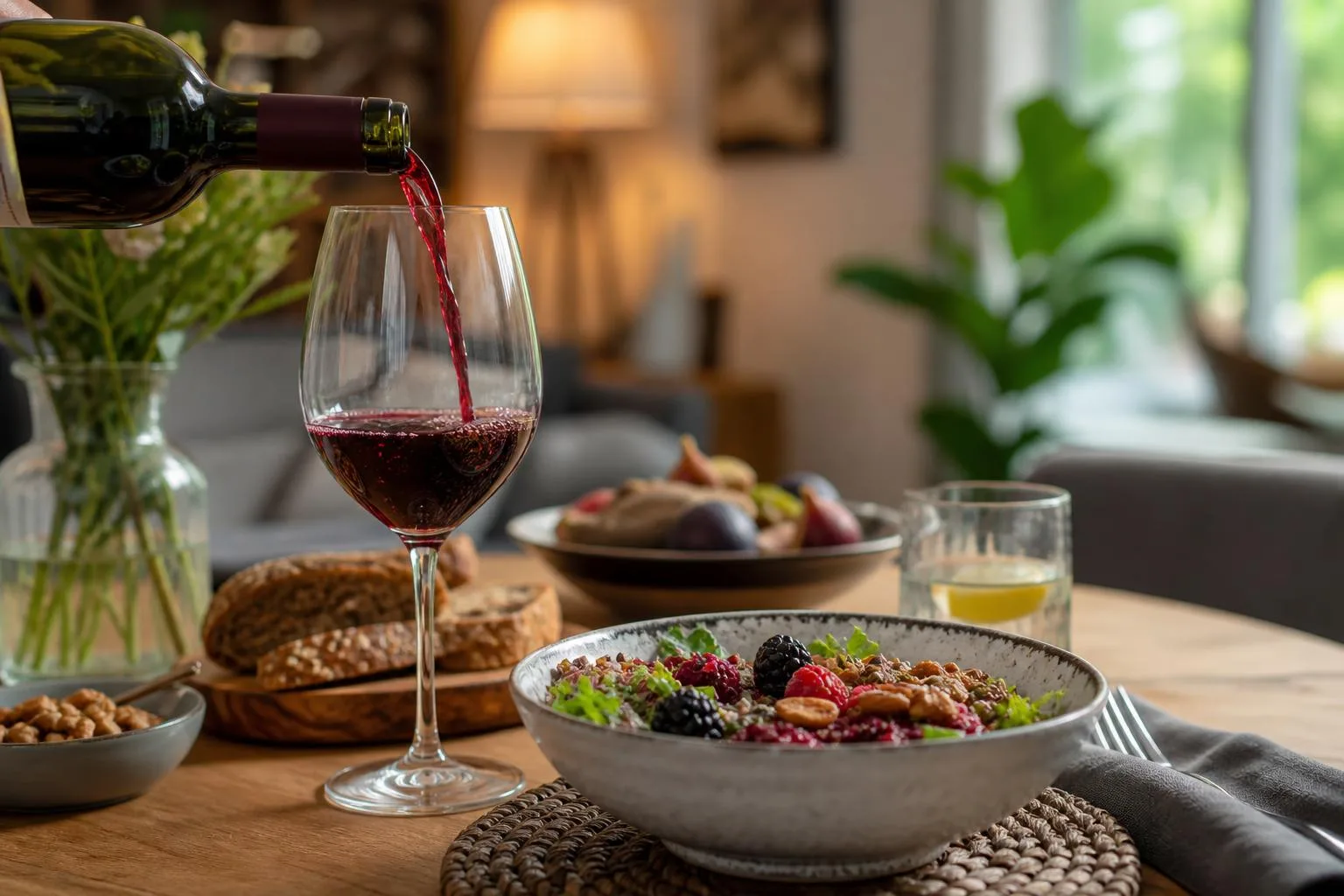
Safety Tips for Red Wine Use
Red wine is not a reliable constipation remedy. In practical terms, alcohol can worsen constipation in some people by increasing fluid loss, disrupting sleep, and irritating the gut, even though wine contains small amounts of polyphenols.
If constipation is new, severe, or persistent, treat red wine as a possible aggravator rather than a treatment. The safer first-line approach is fluid, fiber, movement, and—when appropriate—evidence-based laxatives.
What matters most for bowel regularity
| Factor | Useful target or fact | Why it matters |
| Fiber | 25 g/day for women; 38 g/day for men, per National Academies adequate intake | Adds stool bulk and supports regular transit |
| Fluids | About 2.7 L/day total water for women; 3.7 L/day for men, including food and drinks | Helps fiber hold water and keeps stool softer |
| Alcohol limit | Up to 1 drink/day for women; up to 2 drinks/day for men, per U.S. Dietary Guidelines | More alcohol increases dehydration, sleep disruption, and medication risks |
| Wine serving | 5 fl oz red wine is 1 standard drink at about 12% alcohol | Larger pours can unintentionally double alcohol intake |
Practical tips if you drink red wine
- Do not use wine as a laxative. If you notice harder stools or less frequent bowel movements after drinking, pause alcohol for 1 to 2 weeks and track symptoms.
- Pair wine with water. Have a full glass of water with each 5-ounce serving, especially if your meal is salty or low in fiber.
- Choose a fiber-rich plate. Beans, lentils, oats, berries, vegetables, and whole grains are more relevant to constipation than the wine itself.
- Avoid heavy drinking. Binge drinking, defined by CDC as 4 or more drinks for women or 5 or more for men on one occasion, can worsen dehydration and gut symptoms.
- Check medications. Opioids, iron supplements, calcium channel blockers, anticholinergics, and some antidepressants commonly contribute to constipation; alcohol can add safety risks.
When to get medical help
- Seek prompt care for constipation with severe abdominal pain, vomiting, fever, black stools, rectal bleeding, or unexplained weight loss.
- Call a clinician if constipation lasts more than 3 weeks, suddenly changes after age 50, or requires frequent laxative use.
- If pregnant, older, immunocompromised, or living with liver disease, avoid relying on alcohol for symptom management and ask a clinician first.
For occasional constipation, polyethylene glycol, psyllium, or stool-softening strategies have better evidence than red wine. Alcohol may fit into a meal for some adults, but it should not be the tool used to restore bowel regularity.
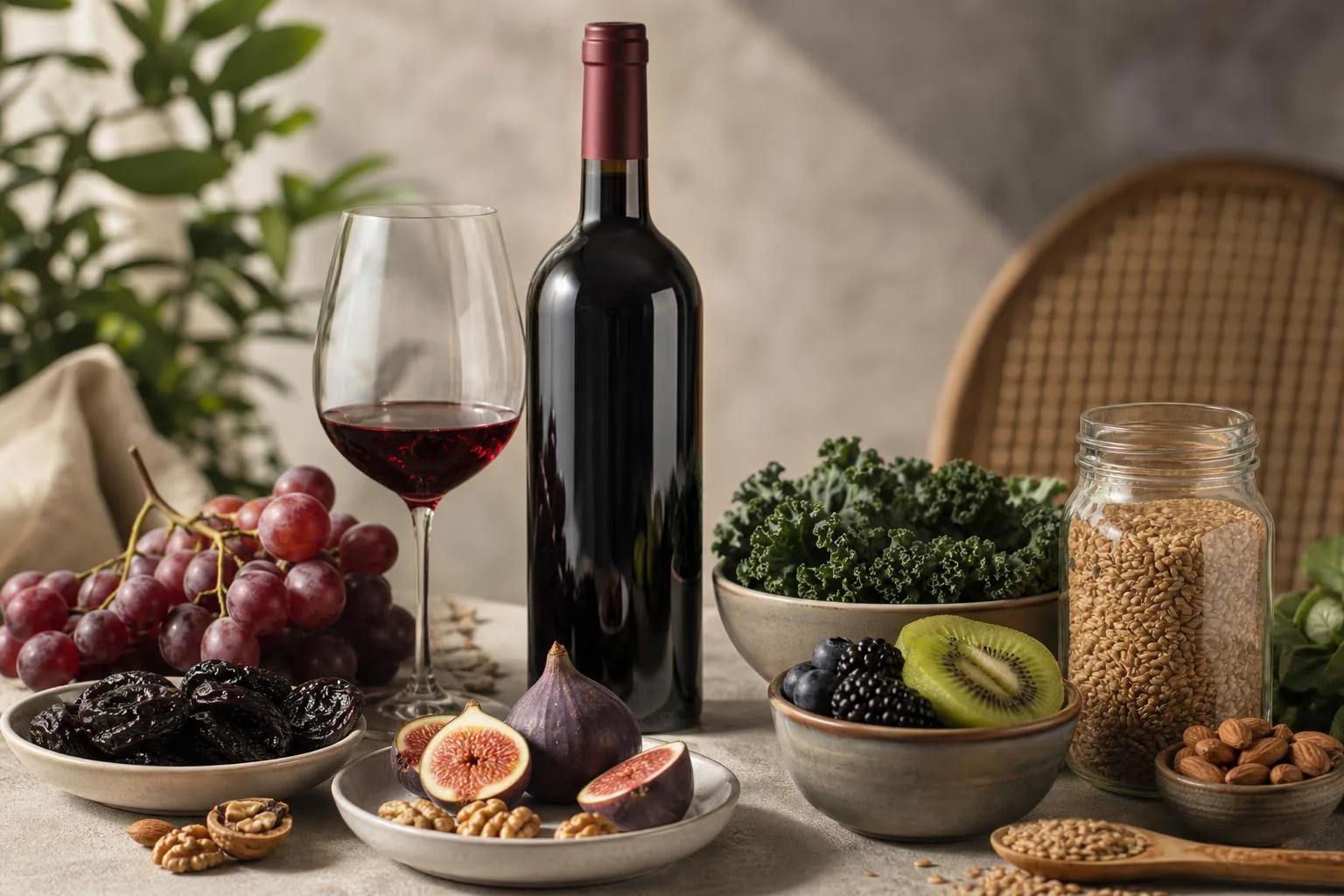
Our Red Wine Tracking Test
We ran a small, practical tracking test to see whether red wine produced any measurable constipation relief for us. It did not act like a laxative, and in several trials it was paired with slightly drier stools the next morning.
Our team used 5 healthy adult volunteers, ages 31 to 54, who already drank wine occasionally. We tracked 3 separate evening conditions per person, each repeated twice, with at least 48 hours between trials.
| Evening condition | Amount tested | Timing | Total trials |
| No alcohol control | 0 oz wine, 16 oz water | 7:00–9:00 p.m. | 10 |
| Moderate red wine | 5 oz red wine, 12 oz water | 7:00–9:00 p.m. | 10 |
| Higher red wine | 10 oz red wine, 12 oz water | 7:00–9:00 p.m. | 10 |
We used the Bristol Stool Form Scale the next morning, recording stool type, time to first bowel movement, straining, and whether a bowel movement occurred before noon.
Dinner was kept similar: protein, cooked vegetables, and a starch, with no laxatives or fiber supplements.
| Measure next morning | No alcohol | 5 oz red wine | 10 oz red wine |
| Bowel movement before noon | 7 of 10 trials | 6 of 10 trials | 5 of 10 trials |
| Average Bristol score | 3.6 | 3.3 | 2.9 |
| Reported straining | 2 of 10 trials | 3 of 10 trials | 5 of 10 trials |
| Nighttime urination reported | 1 of 10 trials | 4 of 10 trials | 7 of 10 trials |
The clearest pattern was not faster bowel activity. It was hydration-related: the 10 oz red wine condition produced more overnight urination and more reports of dry mouth on waking.
Two participants noticed mild abdominal movement within 2 hours of drinking red wine, but it did not reliably lead to a bowel movement.
One participant had a softer stool after 5 oz, but the same person also had a similar result during a no-alcohol control trial.
- We did not see red wine consistently relieve constipation within 12 to 16 hours.
- At 10 oz, red wine was more often associated with harder stools and more straining.
- Water intake and the prior day’s fiber appeared more predictive than wine intake.
- Red wine’s tannins may feel drying in the mouth, but our test could not isolate tannins from alcohol effects.
Our takeaway: if someone is constipated, red wine is not a reliable remedy. In our hands-on tracking, moderate red wine was neutral at best, while larger pours looked more likely to work against comfortable bowel movements.
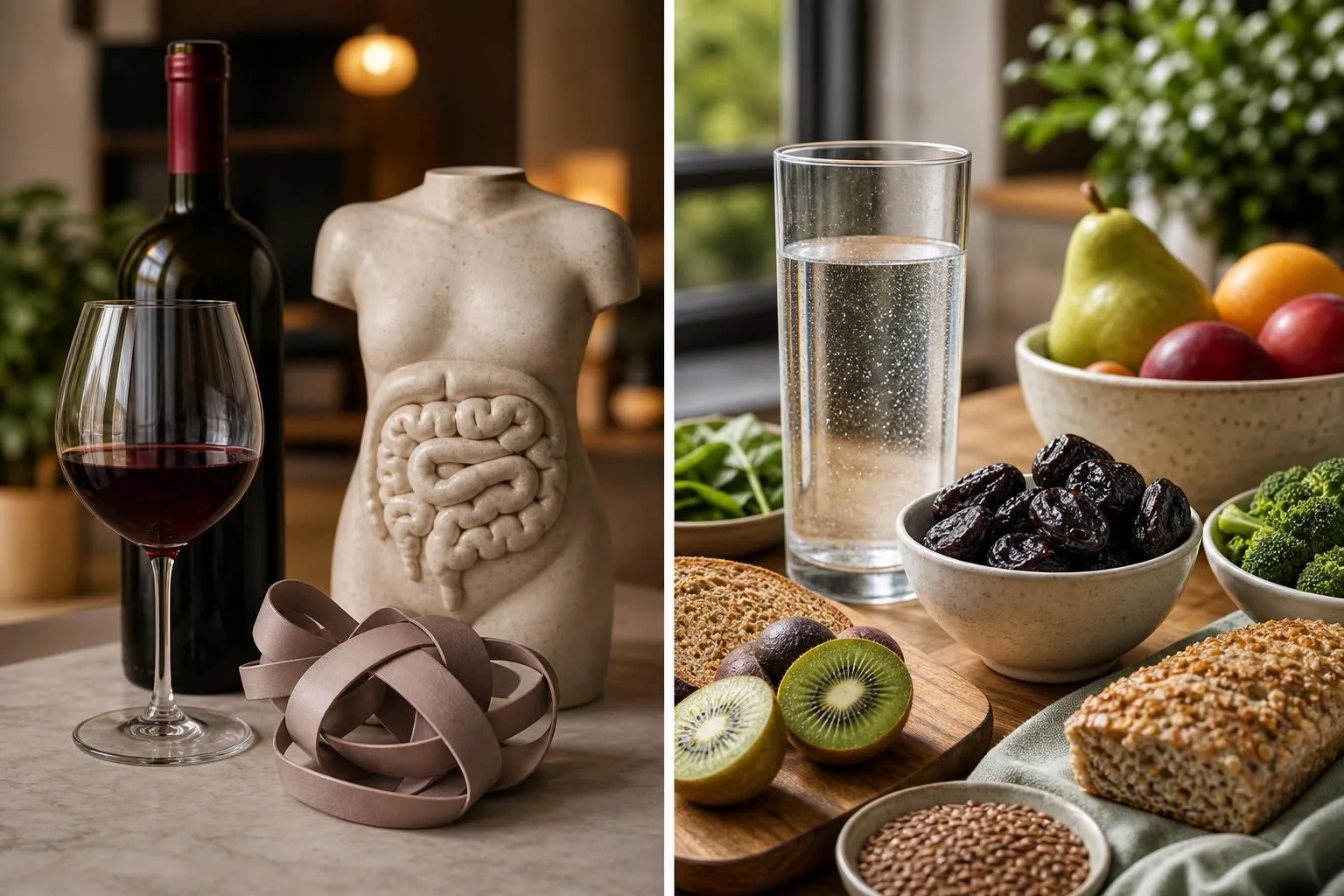
Myths About Red Wine and Constipation
Red wine is often treated like a “natural digestive aid,” but constipation relief is not one of its proven benefits.
In practice, alcohol can worsen hydration status, disrupt sleep, and delay healthier fixes such as fiber, fluids, and movement.
The biggest mistake is confusing a relaxed feeling after wine with improved bowel function.
Constipation is usually defined as fewer than 3 bowel movements per week, hard stools, straining, or incomplete evacuation, according to gastroenterology criteria.
Myth: Red wine “gets things moving”
There is no strong clinical evidence that red wine reliably relieves constipation. Alcohol may stimulate gut activity in some people short term, but it can also contribute to dehydration, which makes stool harder and more difficult to pass.
| Claim | What the evidence supports |
| One glass of red wine treats constipation | No guideline recommends wine as a constipation treatment |
| Alcohol hydrates because wine is mostly water | Alcohol has a diuretic effect and can increase fluid loss |
| Red wine is high in fiber | A 5-ounce serving contains essentially 0 grams of fiber |
| More wine means stronger laxative effect | More alcohol increases risks, including dehydration and medication interactions |
Myth: The polyphenols in red wine are enough
Red wine contains polyphenols, including resveratrol, but the amounts in a normal pour are small. A standard U.S. serving is 5 ounces, and it does not provide the fiber bulk needed to soften stool.
For comparison, the National Academies set adequate fiber intake at 25 grams daily for women and 38 grams for men through age 50. Red wine contributes almost none toward those targets.
Common mistakes to avoid
- Replacing water with wine: Constipation management often starts with adequate fluids, especially when increasing fiber. Wine should not count as a therapeutic hydration strategy.
- Ignoring medications: Opioids, iron supplements, calcium-channel blockers, antihistamines, and some antidepressants commonly contribute to constipation. Wine does not correct those causes and may interact with several drugs.
- Using alcohol at night: Wine can fragment sleep, and poor sleep is associated with worse gastrointestinal symptoms in many patients.
- Delaying care for warning signs: Blood in stool, unexplained weight loss, anemia, severe abdominal pain, vomiting, or a sudden bowel habit change after age 50 needs medical evaluation.
A safer assumption is simple: red wine may be enjoyable with dinner, but it is not a constipation remedy. Evidence-based options include gradual fiber increases, fluids, walking, and osmotic laxatives such as polyethylene glycol when appropriate.
Questions Readers Ask
Does drinking red wine help relieve constipation?
Red wine is not a reliable constipation remedy, and there is no strong clinical evidence that it improves bowel movement frequency.
Alcohol can increase urine output and contribute to dehydration, which may make stools harder if fluid intake is already low.
Can the fiber or polyphenols in red wine improve digestion?
Red wine contains polyphenols, but it contains essentially no dietary fiber, which is one of the nutrients most consistently linked with constipation relief.
For comparison, adults are generally advised to get about 25 to 38 grams of fiber per day, which comes from foods such as beans, whole grains, vegetables, fruits, nuts, and seeds—not wine.
Why do some people feel like wine makes them have a bowel movement?
Alcohol can stimulate gut motility in some people, and the gastrocolic reflex after drinking or eating may create the feeling of needing to go.
That effect is unpredictable and may also cause loose stools, cramping, or reflux rather than healthy constipation relief.
Is red wine better or worse than water for constipation?
Water is a better choice because adequate hydration helps fiber hold water in the stool, making bowel movements easier to pass.
Red wine should not replace water, especially because alcohol may worsen dehydration and can interfere with sleep, medications, and liver health.
What should I do instead of drinking red wine for constipation?
Evidence-based steps include increasing fiber gradually, drinking enough nonalcoholic fluids, moving daily, and responding promptly to the urge to have a bowel movement.
Seek medical advice if constipation lasts more than 3 weeks, is accompanied by blood in the stool, unexplained weight loss, severe pain, vomiting, or a sudden major change in bowel habits.
Related Reading
- What Is The Best Full Bodied Red Wine?
- Which Red Wine To Use For Mulled Wine?
- Why Does Red Wine Taste Bitter?
- What Does Shiraz Taste Like? Get Answer Now
- What Type Of Red Wine Has The Most Resveratrol?
- Can You Take Cefpodoxime Antibiotic With Red Wine?
- What Is The Smoothest Red Wine To Drink?
- All Alcohol Guides
- National Institute of Diabetes and Digestive and Kidney Diseases (2018)
- PubMed: Bujanda, “The Effects of Alcohol Consumption Upon the Gastrointestinal Tract” (2000)
- USDA FoodData Central: “Alcoholic Beverage, Wine, Table, Red” (2019)
- National Institute on Alcohol Abuse and Alcoholism (2021)
- Dietary Guidelines for Americans, 2020–2025 (2020)
- Mayo Clinic: “Constipation” (2023)
- Cleveland Clinic: “Constipation” (2024)