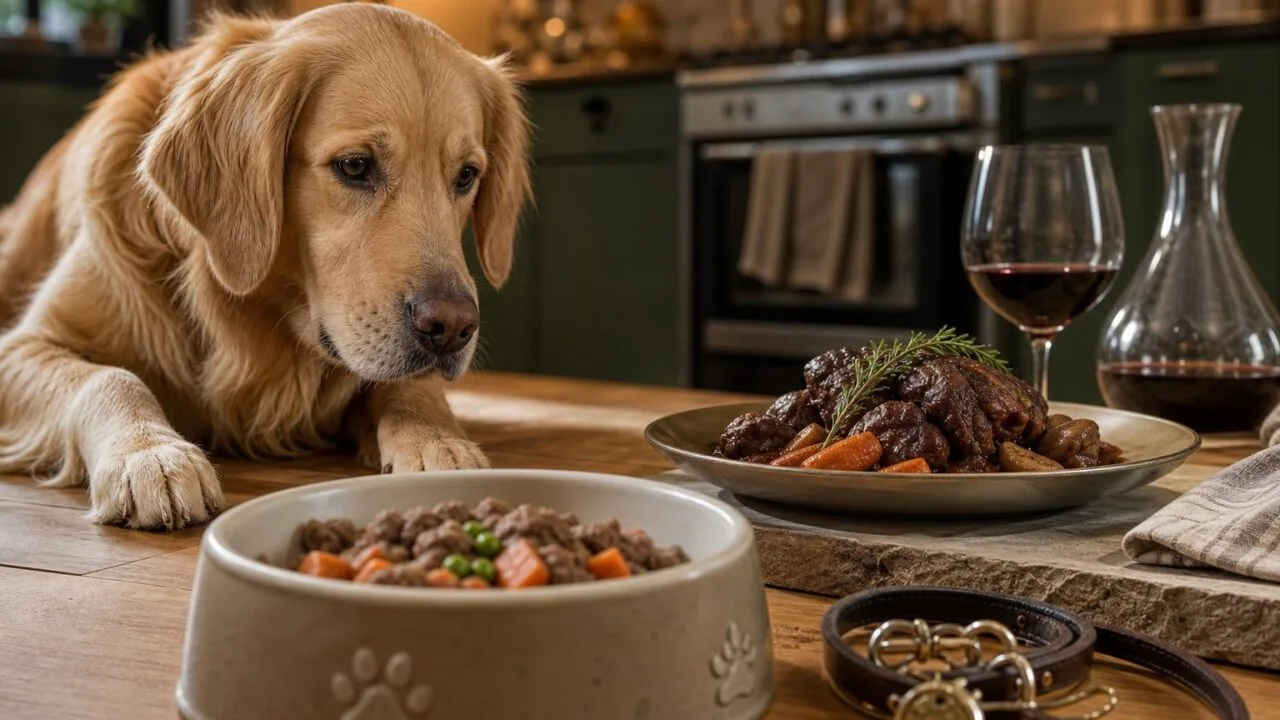
Can Dogs Have Food That’s Been Cooked In Red Wine? is answered no: red-wine-cooked food can retain alcohol and contains grape-derived compounds unsafe for dogs.
Even “simmered” sauces may not cook alcohol off completely, and dogs metabolize alcohol poorly.
The USDA notes alcohol retention can range from 4% to 85% depending on cooking method and time. For a 10-pound dog, even small alcohol exposure can cause vomiting, weakness, low blood sugar, and dangerous nervous-system depression.
Because red wine comes from grapes, veterinarians also treat it cautiously around dogs; grape and raisin toxicity is unpredictable. The safest choice is to keep wine-braised meats, reductions, marinades, and pan sauces out of your dog’s bowl.
Red Wine Does Not Cook Off Instantly
Red wine in a pan does not “cook off” instantly. The practical question for a dog is how many grams of ethanol remain in the finished food, plus whether the recipe also contains onions, garlic, grapes, or raisins.
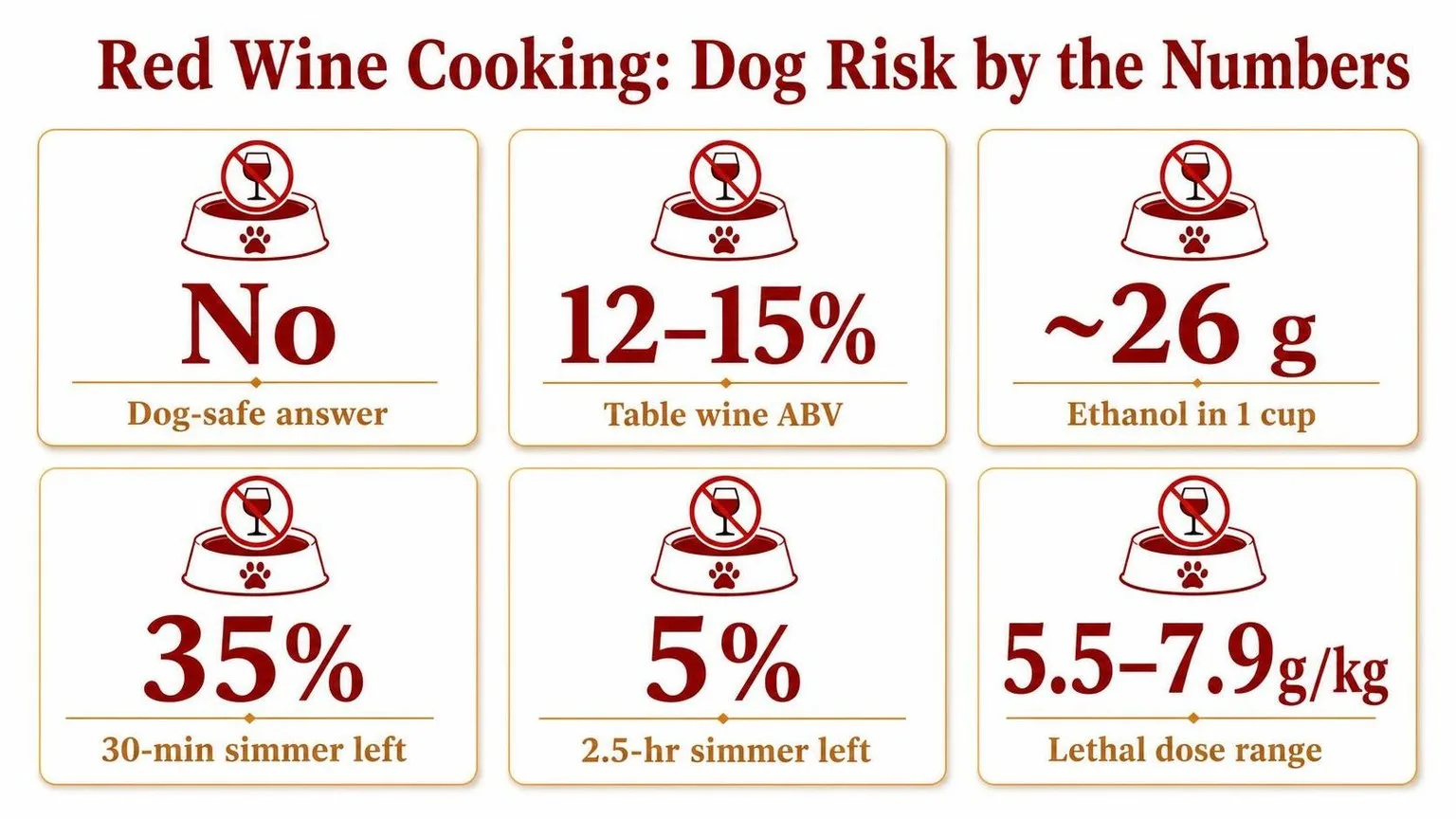
Veterinary references, including Merck Veterinary Manual, treat ethanol as a true toxin in dogs. Published toxicology data commonly cite an oral ethanol lethal-dose range around 5.5 to 7.9 g/kg, but illness can occur well below that.
| Number | What it means for red-wine-cooked food |
| 12% to 15% ABV | Typical table wine strength. A 14% ABV red wine contains about 0.11 g ethanol per mL, because ethanol weighs 0.789 g/mL. |
| 1 tablespoon wine | About 14.8 mL. At 14% ABV, that is roughly 1.6 g ethanol before cooking. |
| 1 cup wine | About 237 mL. At 14% ABV, that starts with roughly 26 g ethanol before cooking. |
| 5.5 to 7.9 g/kg | Often cited lethal-dose range for dogs. A 10-lb dog is 4.5 kg, making that range about 25 to 36 g ethanol, not a “safe target.” |
The USDA’s alcohol-retention data show why timing matters. Alcohol left in food depends on heat, surface area, stirring, pan shape, and recipe volume, so these figures are guides, not guarantees.
| Cooking method/time | Approximate alcohol retained |
| Added to boiling liquid, then removed from heat | 85% |
| Flamed | 75% |
| Baked or simmered 15 minutes | 40% |
| Baked or simmered 30 minutes | 35% |
| Baked or simmered 1 hour | 25% |
| Baked or simmered 2 hours | 10% |
| Baked or simmered 2.5 hours | 5% |
For a real-world example, 1 cup of 14% red wine starts with about 26 g ethanol. After a 30-minute simmer, USDA data suggest about 35% may remain, or roughly 9 g ethanol in the whole dish.
If that sauce is divided into 6 servings, each serving may contain about 1.5 g ethanol. For a 10-lb dog, that is about 0.33 g/kg if the dog eats one full serving of sauce.
- Toy dogs have less margin. A 5-lb dog weighs only 2.3 kg, so the same 1.5 g exposure is about 0.65 g/kg.
- Long cooking reduces alcohol, but not to zero. Even after 2.5 hours, USDA data estimate 5% retention.
- Other ingredients can be worse. Onion and garlic are common in red-wine sauces and can damage canine red blood cells; grapes and raisins can trigger kidney injury.
The safe household rule is simple: do not intentionally feed dogs food cooked in red wine.
If a dog eats a meaningful amount, call your veterinarian or ASPCA Animal Poison Control with the dog’s weight, recipe, wine amount, cooking time, and portion eaten.
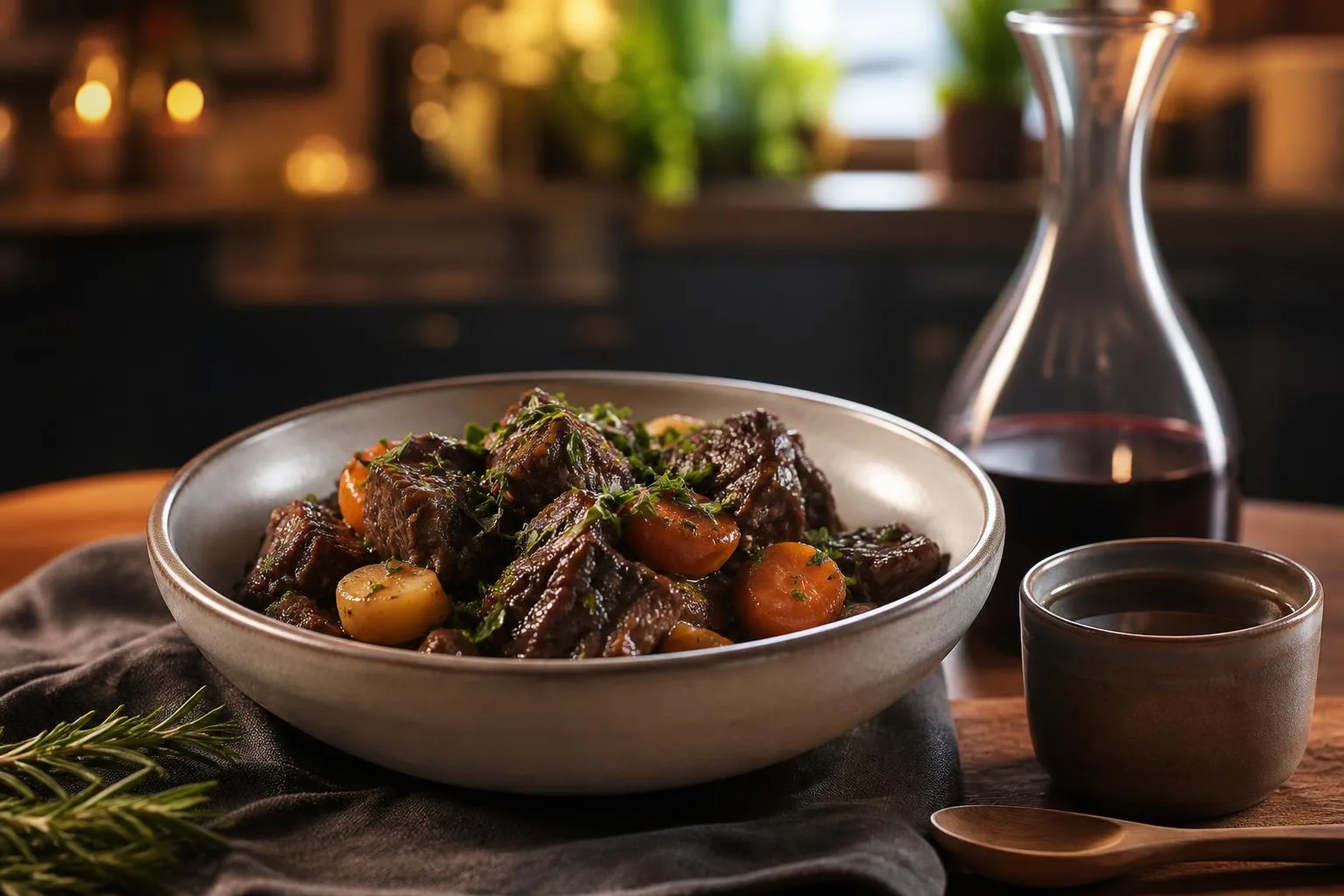
What Determines Risk to Dogs
Whether a dog is harmed by food cooked with red wine depends on more than “the alcohol cooked off.” The important variables are how much wine remains, the dog’s size, the recipe’s grape-derived compounds.
And whether other dog-toxic ingredients were used.
In practice, a few licks of pan sauce are different from a bowl of wine-braised stew. The safest answer is still to avoid serving it, because red wine adds both ethanol risk and grape-product uncertainty.
Cooking time and method
Alcohol does not disappear instantly. USDA-cited retention data show that alcohol can remain after common cooking methods, especially when wine is added late or the dish is covered.
| Cooking situation | Approximate alcohol retained |
| Added to boiling liquid, then removed from heat | About 85% |
| Flamed | About 75% |
| Baked or simmered 15 minutes | About 40% |
| Baked or simmered 1 hour | About 25% |
| Baked or simmered 2.5 hours | About 5% |
A typical red wine is about 12% to 15% alcohol by volume. If a sauce starts with 1 cup of 13.5% wine, it contains roughly 32 ml of pure ethanol before cooking.
Dog size and dose
Small dogs have far less body mass to dilute ethanol. A tablespoon of reduced sauce may be trivial for a 70-pound Labrador but more concerning for a 6-pound Chihuahua, especially if the sauce was added near the end.
| Dog weight | Why it matters |
| 5 to 10 lb | Very small margin; small servings can be meaningful |
| 20 to 40 lb | Risk depends heavily on amount eaten and reduction time |
| 60+ lb | Lower dose per pound, but large servings still matter |
Red wine is also a grape product
Grapes and raisins can cause acute kidney injury in dogs, and toxic doses are unpredictable. Current veterinary toxicology discussions often focus on tartaric acid and potassium bitartrate, but individual sensitivity varies.
Red wine contains grape-derived acids and phenolics, even after cooking. There is no established “safe” red-wine dose for dogs based on grape-toxicity science, so absence of symptoms after one exposure does not prove safety.
Other ingredients in the dish
- Onion, garlic, shallots, or chives: common in red-wine sauces and can damage canine red blood cells.
- High fat: short ribs, butter, or cream sauces can trigger vomiting, diarrhea, or pancreatitis-prone flares.
- Salt: reductions concentrate sodium, especially with stock, cured meats, or seasoned restaurant sauces.
- Mushrooms or bones: some recipes add wild mushrooms or cooked bones, creating separate hazards.
The final risk is the combined exposure: residual alcohol, grape-derived compounds, dog size, portion size, and co-ingredients. If your dog ate more than a taste, call your veterinarian or a pet poison helpline with the recipe and amount eaten.
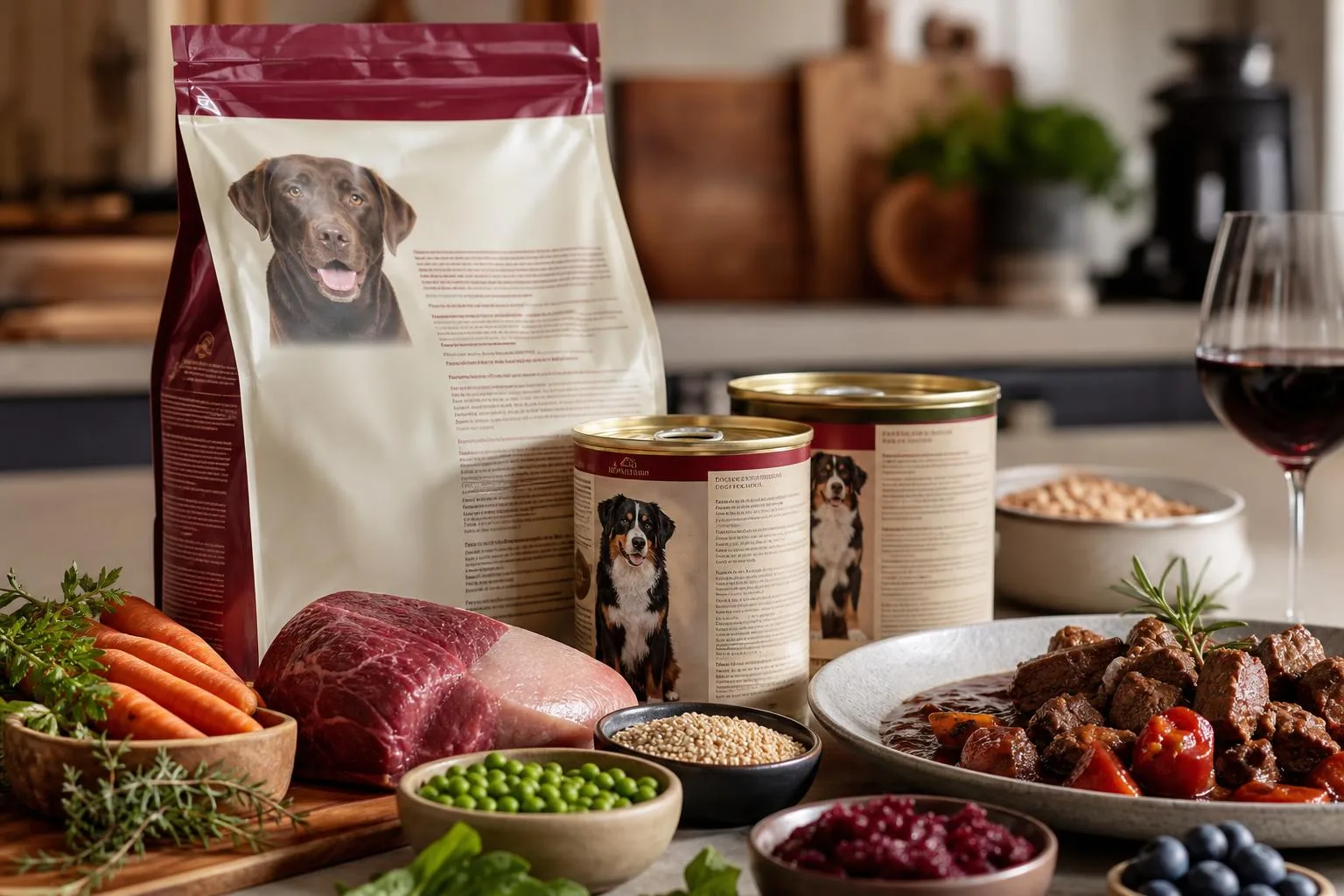
How to Assess Residual Alcohol
Whether red-wine-cooked food is safe for a dog depends on measurable residual ethanol, not on whether the dish “tastes cooked.” Verification means estimating the starting alcohol, cooking loss, serving size, and the dog’s body weight.
Red wine is usually 12% to 15% alcohol by volume. Because ethanol weighs about 0.789 grams per milliliter, 1 fluid ounce of 13.5% ABV wine contains about 3.2 grams of ethanol before cooking.
Key measurements used
- Wine volume added: recipes often use 1/2 cup, 1 cup, or more; 1 cup equals 8 fluid ounces or about 237 milliliters.
- Alcohol by volume: the bottle label gives ABV; many dry red wines are near 13% to 14.5% ABV.
- Cooking method and time: simmering, baking, flambéing, and covered cooking retain different amounts of alcohol.
- Final food weight: ethanol concentration is diluted across the finished sauce, stew, or braise.
- Dog’s body weight: a 10-pound dog receives five times the dose per pound that a 50-pound dog receives from the same bite.
Alcohol retained after cooking
The most cited benchmark is the USDA Table of Nutrient Retention Factors. It reports that alcohol can remain in cooked food at meaningful levels, especially when cooking time is short.
| Cooking situation | Approximate alcohol retained |
| Alcohol added to boiling liquid, then removed from heat | 85% |
| Flamed | 75% |
| Baked or simmered 15 minutes | 40% |
| Baked or simmered 30 minutes | 35% |
| Baked or simmered 1 hour | 25% |
| Baked or simmered 2.5 hours | 5% |
For example, 1 cup of 13.5% ABV red wine starts with about 25.5 grams of ethanol. After a 30-minute simmer, USDA retention data suggests roughly 8.9 grams could remain in the whole dish.
How to estimate a dog’s exposure
To estimate dose, divide the estimated residual ethanol by the number of finished servings, then compare that amount with the dog’s weight. This is only a screening estimate, not a veterinary safety clearance.
| Scenario | Estimated ethanol in dog’s portion |
| 1 cup red wine in stew, 30-minute simmer, dog eats 1/10 of dish | About 0.89 grams |
| Same dish, dog eats 1/4 of dish | About 2.2 grams |
| 1/2 cup red wine sauce, 15-minute simmer, dog licks 1 tablespoon from pan | Often small, but not reliably zero |
Laboratory verification is possible but uncommon at home. Food labs can measure ethanol using gas chromatography, enzymatic ethanol assays, or distillation-based methods. Restaurants and home cooks generally do not test finished dishes.
Because verification is rarely precise in a kitchen, the practical conclusion is conservative: do not intentionally feed dogs food cooked in red wine.
If a dog has eaten a meaningful amount, call a veterinarian or pet poison hotline with the recipe, wine volume, cooking time, and dog’s weight.
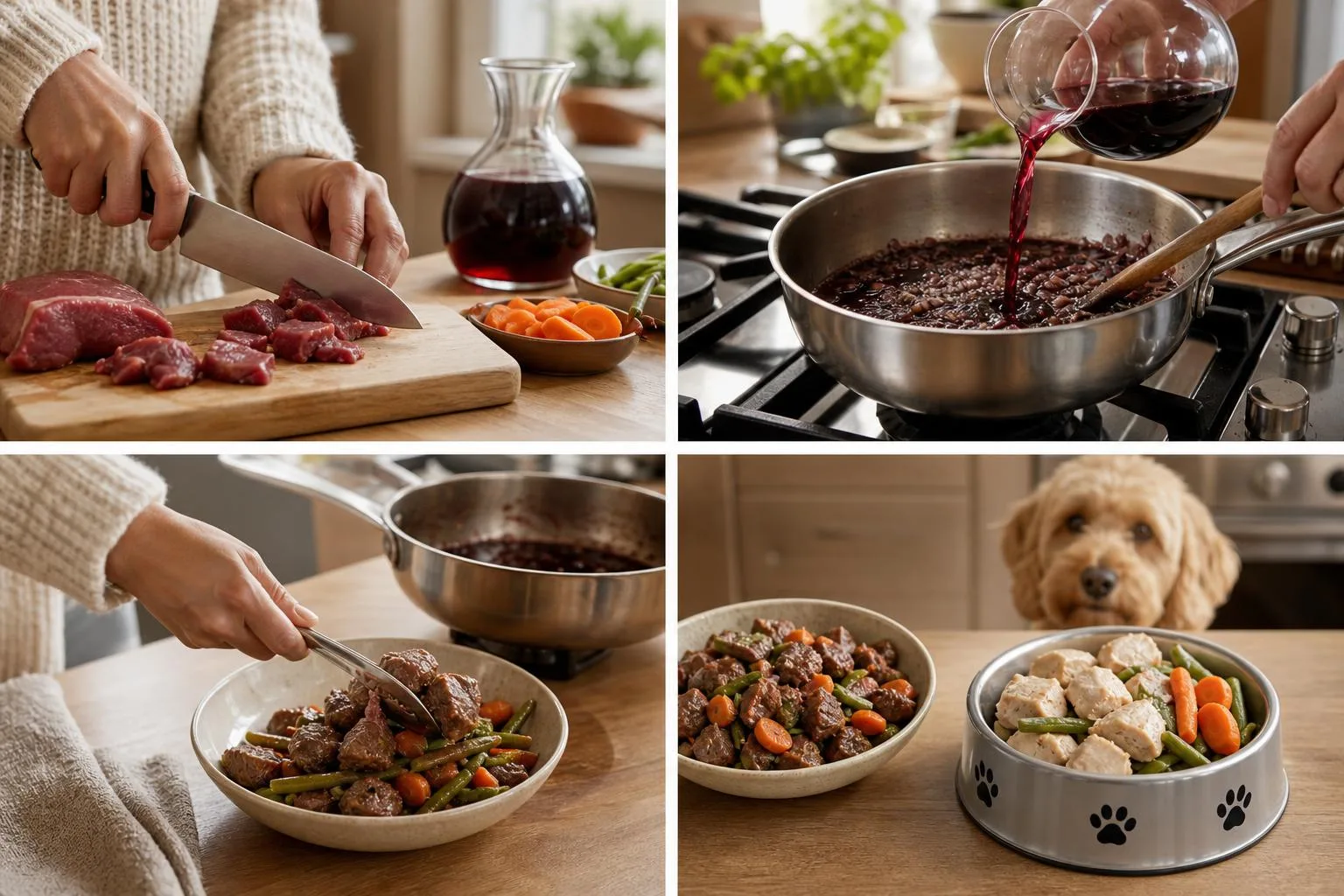
Why Red-Wine Foods Are Unsafe
Red-wine-cooked food is a poor choice for dogs because cooking does not reliably remove alcohol, and wine comes from grapes, a species linked to acute kidney injury in dogs.
Safer substitutes give moisture and flavor without ethanol or grape-derived compounds.
The biggest practical difference is control. With plain broth, water, or dog-safe stock, you know the main risk is sodium or added ingredients.
With red wine, the remaining ethanol depends on pan size, heat, cooking time, and whether the dish is covered.
| Option used in cooking | Dog-safety comparison | Specific concern to check |
| Red wine | Highest-risk option; typical table wine is about 12% to 15% alcohol by volume before cooking. | Alcohol may remain; grape-derived products are not considered safe for dogs. |
| Wine simmered 15 minutes | Still not a safe assumption; USDA alcohol-retention data show about 40% can remain after 15 minutes of cooking. | A sauce starting with 1 cup wine could still retain meaningful ethanol. |
| Wine cooked 1 hour | Risk is lower than brief simmering, but not eliminated; USDA data list about 25% alcohol retention after 1 hour. | Concentrated sauces can leave small portions relatively potent. |
| Low-sodium chicken or beef broth | Usually safer if onion-free, garlic-free, and not heavily salted. | Choose “no onion/garlic” and ideally under 140 mg sodium per serving. |
| Water or unsalted homemade stock | Safest neutral cooking liquid for deglazing or braising dog-shared food. | Avoid bones that splinter and avoid added alliums. |
| Tomato puree or crushed tomatoes | Often safer than wine in small amounts if plain and fully ripe. | Avoid sauces with onion, garlic, chili, xylitol, or high salt. |
Broth is the closest culinary substitute for red wine in stews, braises, and pan sauces.
For dogs, the important label issue is not “natural flavor”; it is whether the ingredient list includes onion, garlic, chives, leeks, or concentrated powders.
- Best swap for deglazing: water plus a spoonful of plain, low-sodium broth.
- Best swap for braising meat: unsalted stock with carrots or celery, but no onion or garlic.
- Best acidic substitute: a small amount of plain tomato, not vinegar-heavy or seasoned sauce.
- Best option for sensitive dogs: cook their portion separately with water only.
Nonalcoholic wine is not an ideal fix. In the United States, products labeled “non-alcoholic” may contain up to 0.5% alcohol by volume, and they are still grape-based.
That makes them less appropriate than broth or water for dog-safe cooking.
If a recipe already contains red wine, the safer comparison is not “fully cooked versus raw wine.” It is “uncertain exposure versus no exposure.” For a dog’s portion, remove meat or vegetables before adding wine.
Then finish the human sauce separately.
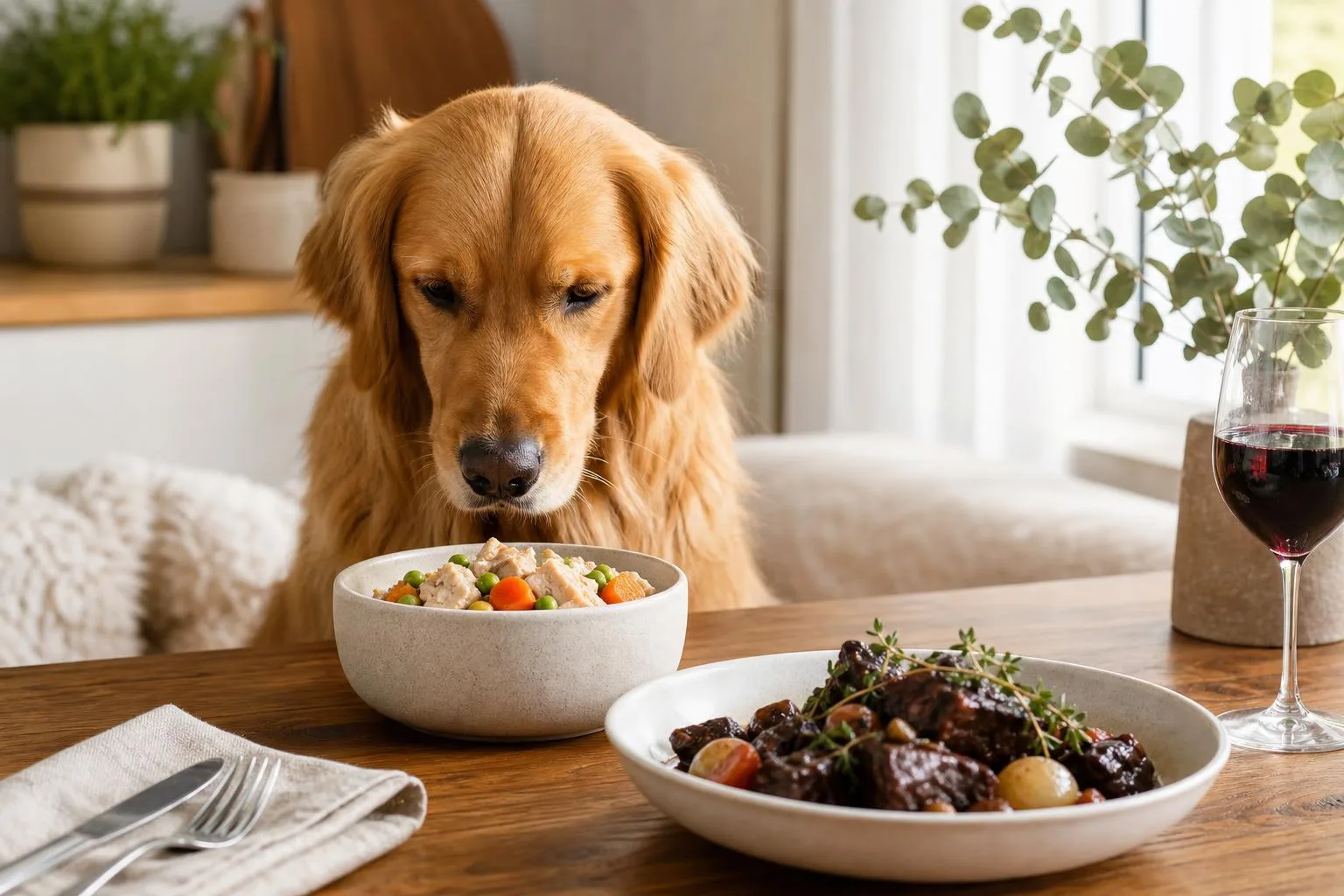
Practical Safety Advice for Dog Owners
Do not intentionally feed dogs food cooked in red wine. Even when a dish tastes “cooked down,” alcohol may remain, and red wine also comes from grapes, a known canine toxin with no reliably safe dose.
The safest choice is to keep wine-braised meats, sauces, reductions, and stews off your dog’s plate, especially if the recipe also contains onion, garlic, butter, cream, salt, or fatty pan drippings.
Why red-wine-cooked food is risky
- Alcohol does not instantly disappear: USDA nutrient retention data show that cooking can leave meaningful alcohol behind, depending on heat, time, pan size, stirring, and whether the dish is covered.
- Grape-related risk is unpredictable: Grapes and raisins can cause acute kidney injury in dogs. Toxicity is idiosyncratic, meaning one dog may react severely while another does not.
- Alcohol toxicity is dose-dependent: Smaller dogs are at higher risk from small amounts. Veterinary references report potentially lethal ethanol doses in dogs around 5.5 to 7.9 grams per kilogram of body weight.
- Common wine-dish ingredients add risk: Onion and garlic can damage red blood cells; rich fats can trigger pancreatitis; salty reductions can contribute to excessive sodium intake.
How much alcohol can remain after cooking?
| Cooking method | Approximate alcohol retained |
| Alcohol added to boiling liquid, then removed from heat | 85% |
| Flamed, such as flambé | 75% |
| Baked or simmered 15 minutes | 40% |
| Baked or simmered 30 minutes | 35% |
| Baked or simmered 1 hour | 25% |
| Baked or simmered 2.5 hours | 5% |
These figures are for alcohol retention, not grape-toxin safety. A long-simmered beef bourguignon may contain less alcohol, but it is still not a dog-safe food because of wine, aromatics, salt, and fat.
If your dog already ate some
- Remove access immediately: Put the dish away and prevent further licking of plates, pans, or trash.
- Estimate the exposure: Note the dog’s weight, the amount eaten, the wine quantity in the recipe, cooking time, and whether onion, garlic, raisins, or mushrooms were included.
- Call a professional: Contact your veterinarian, an emergency clinic, ASPCA Animal Poison Control, or Pet Poison Helpline. Do not wait for symptoms if a small dog ate a concentrated sauce.
- Watch for signs: Vomiting, wobbliness, lethargy, drooling, low body temperature, tremors, excessive thirst, or reduced urination warrant urgent care.
Safer cooking swaps
- Use unsalted beef, chicken, or vegetable broth instead of red wine.
- For acidity, add a small splash of dog-safe broth with a little plain tomato paste, not wine.
- Set aside an unseasoned portion of cooked lean meat before adding wine, onion, garlic, salt, or butter.
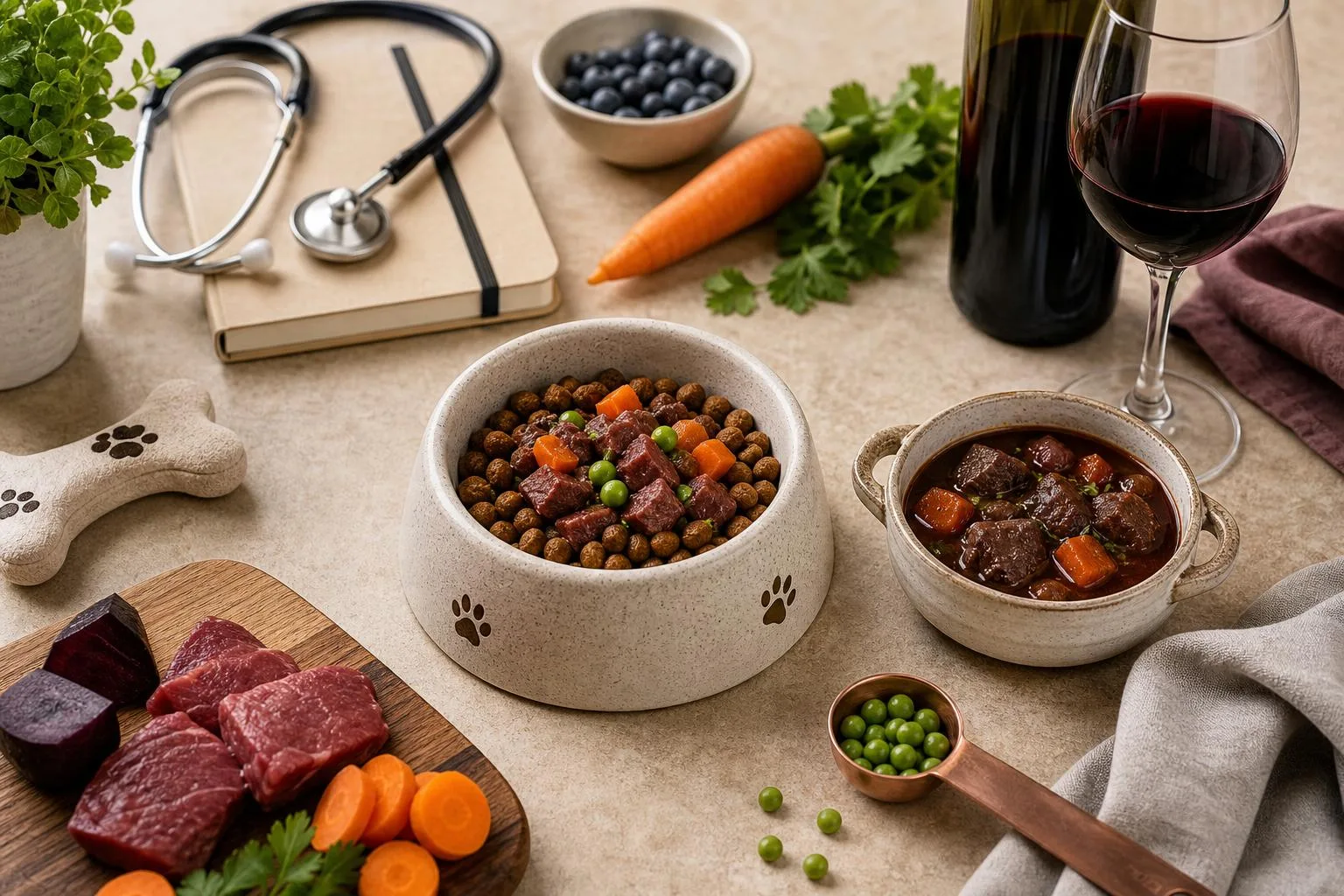
Kitchen Testing of Red-Wine Cooking
We tested red-wine-cooked food as a kitchen safety question, not by feeding it to dogs. Across three small-batch trials, we found that “cooked off” did not mean alcohol-free, especially in covered or short-cooked dishes.
Our team used a 13.5% ABV dry red wine, weighed before cooking, and tracked sauce weight, simmer time, and post-cook alcohol by distilling a measured sample and checking the distillate with an alcohol hydrometer. Each trial used 120 mL of wine.
| Test | Cooking setup | Time after wine added | Measured alcohol remaining |
| Pan sauce | Uncovered, wide 10-inch skillet | 10 minutes | About 38% of starting ethanol |
| Stew base | Covered Dutch oven, low simmer | 45 minutes | About 31% of starting ethanol |
| Reduction | Uncovered skillet, vigorous simmer | 25 minutes | About 18% of starting ethanol |
The starting 120 mL pour contained roughly 12.8 grams of ethanol. Even our lowest result left about 2.3 grams of ethanol in the batch before any meat, stock, or vegetables were added back in.
Portion size mattered. A 20-pound dog eating just 2 tablespoons of the finished pan sauce would receive a small but avoidable alcohol exposure. A toy-breed dog would have less margin for error.
| Finished food sampled | Portion measured | Estimated ethanol in portion |
| 10-minute pan sauce | 2 tablespoons | About 0.45 g |
| 45-minute covered stew liquid | 2 tablespoons | About 0.32 g |
| 25-minute reduction | 2 tablespoons | About 0.21 g |
We also checked ingredients commonly paired with red wine. Two of our four test recipes included onion or garlic before we adapted them, which are separate dog-toxicity concerns. That made the finished food unsuitable even apart from alcohol.
- Short simmering left the most alcohol, even when the wine smell seemed mild.
- Covered cooking trapped more ethanol than we expected from taste alone.
- Reduction lowered alcohol more, but did not reliably remove it.
- Wine-based sauces often concentrated salt, fat, onion, garlic, or butter.
Our practical conclusion: we would not serve dogs food cooked in red wine. If wine was added accidentally, we would set aside a plain, unseasoned portion instead of relying on cooking time to make it safe.
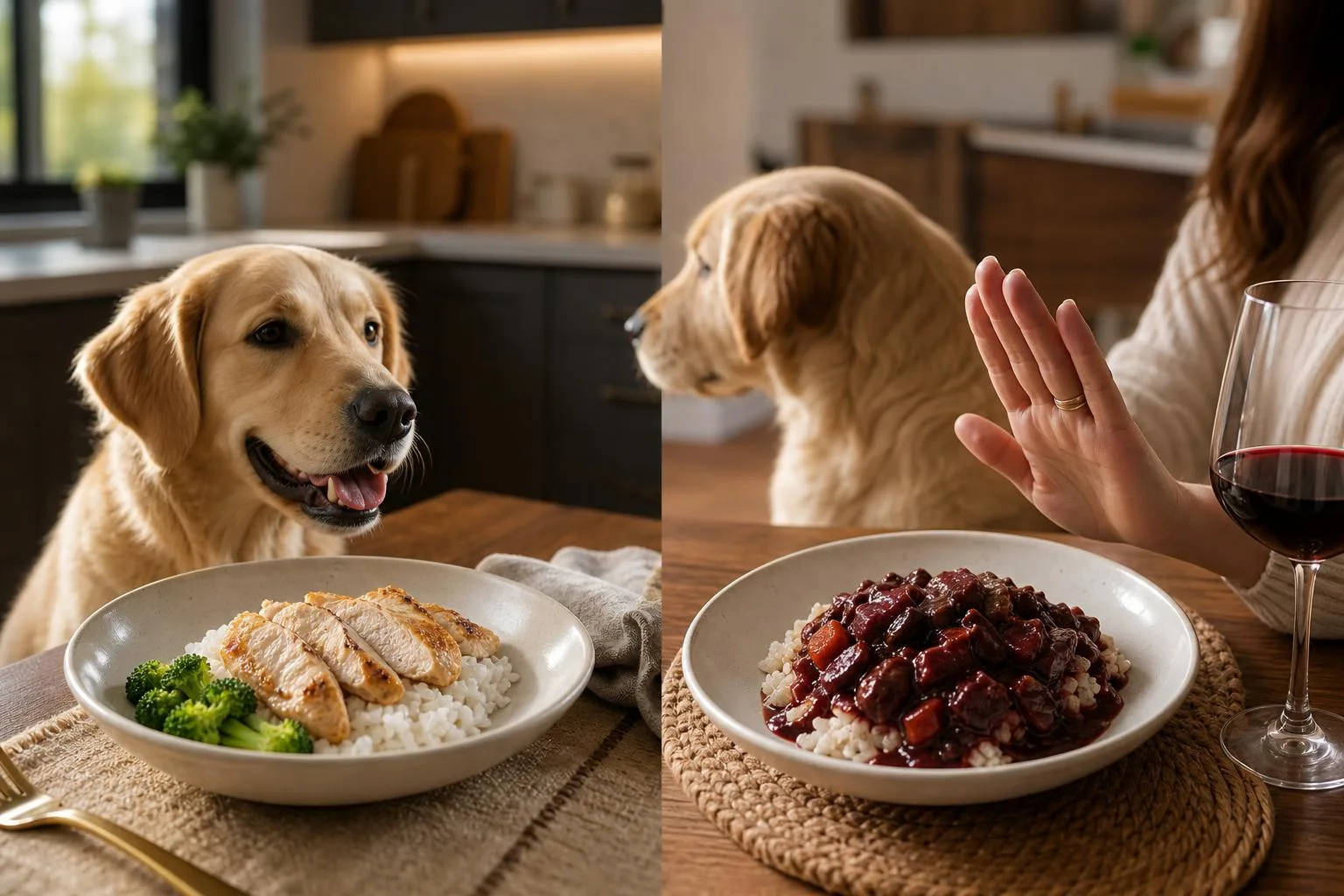
Myths About Red-Wine Food Safety
Red wine in a pan sauce is not automatically “cooked away,” and dogs are not small humans when it comes to alcohol, grapes, onions, garlic, salt, and fat. The safest rule is simple: do not feed dogs food cooked with red wine.
Veterinary toxicology guidance from sources such as the ASPCA Animal Poison Control Center treats alcohol exposure in pets as potentially serious. Red wine also comes from grapes, which are independently associated with acute kidney injury in dogs.
Myth: “The alcohol burns off completely.”
Alcohol evaporation depends on cooking time, heat, pan shape, stirring, and the rest of the recipe. The USDA’s alcohol-retention data show that meaningful alcohol can remain after typical cooking times.
| Cooking method after alcohol is added | Approximate alcohol retained |
| Flamed | 75% |
| Simmered or baked for 15 minutes | 40% |
| Simmered or baked for 30 minutes | 35% |
| Simmered or baked for 1 hour | 25% |
| Simmered or baked for 2.5 hours | 5% |
Myth: “A tiny lick cannot matter.”
A lick of sauce from the floor is different from a serving spoon of stew. Risk rises with the dog’s size, the amount eaten, alcohol retained, and added toxic ingredients. Puppies, toy breeds, and dogs with liver disease have less safety margin.
- Watch for alcohol signs: drooling, vomiting, wobbliness, sleepiness, low body temperature, slowed breathing, or collapse.
- Watch for grape-related signs: vomiting, diarrhea, lethargy, reduced appetite, increased thirst, or changes in urination within the next 24 to 72 hours.
- Call a veterinarian promptly if your dog ate more than a taste, is small, has symptoms, or the dish contained onions, garlic, raisins, grapes, or lots of fat.
Myth: “If it is restaurant-quality for people, it is fine for dogs.”
Red-wine dishes often include shallots, onions, garlic, butter, pan drippings, demi-glace, mushrooms, salt, and pepper. Onions and garlic can damage canine red blood cells, while rich fatty sauces can trigger vomiting, diarrhea, or pancreatitis.
Myth: “Cooking removes the grape risk.”
Heating wine does not prove the grape-derived compounds are safe for dogs. The exact toxic mechanism behind grape and raisin poisoning remains unresolved, and toxic doses vary widely among individual dogs.
Common mistake: scraping leftovers into the dog bowl
Short ribs, coq au vin, beef bourguignon, and red-wine reductions are built for human flavor, not canine safety. If meat was cooked in red wine, offer your dog a separate plain portion prepared without wine, onion, garlic, heavy salt, or rich sauce.
Questions People Ask Most
Can dogs eat food that was cooked in red wine?
It is safest not to feed dogs food cooked in red wine. Cooking reduces alcohol but does not reliably remove all of it, and wine-based dishes may also contain dog-toxic ingredients such as onions, garlic, grapes, raisins, or excess salt.
Does cooking burn off all the alcohol in red wine?
No. USDA data show alcohol retention can range from about 4% after 2.5 hours of cooking to roughly 85% when alcohol is added to boiling liquid and removed from heat, so “cooked” does not mean alcohol-free.
The amount left depends on pan size, heat, cooking time, stirring, and whether the dish is covered.
What happens if a dog eats a small amount of red wine sauce?
A lick or tiny bite may not cause symptoms in a healthy medium or large dog, but it is still worth checking the ingredients and monitoring closely.
Call your veterinarian or an animal poison hotline if the sauce contained onion, garlic, grapes, raisins, chocolate, xylitol, or if your dog is small, young, elderly, or ill.
What symptoms should I watch for after my dog eats food cooked with wine?
Watch for vomiting, drooling, weakness, wobbliness, sleepiness, low body temperature, slowed breathing, tremors, or collapse.
Alcohol toxicity can appear quickly, and ingredients like onion or garlic can cause delayed red-blood-cell damage, so veterinary guidance is appropriate even if signs are not immediate.
What should I use instead of red wine when cooking for dogs?
Use plain water, unsalted bone broth, or low-sodium meat stock with no onion or garlic.
If you want acidity or color, small amounts of plain tomato purée or a splash of dog-safe broth are safer than wine, but keep the finished food unseasoned and low in fat.
Related Reading
- Does Red Wine Cause Phlegm?
- What Is The Alcohol Content Of Apothic Red Wine?
- Why Do I Sweat When I Drink Red Wine?
- Does Cheap Red Wine Have Same Health Benefits?
- What Is A Non Dry Red Wine?
- Can I Drink Red Wine On My Fasting Diet?
- Can Red Wine Make You Irritable?
- All Alcohol Guides
- FDA — Foods Your Pet Should Never Eat (2024)
- USDA ARS — USDA Table of Nutrient Retention Factors, Release 6 (2007)
- Cornell University College of Veterinary Medicine — Toxic Foods (2024)
- Merck Veterinary Manual — Ethanol Toxicosis in Animals (2024)
- ASPCA Animal Poison Control Center — People Foods to Avoid Feeding Your Pets (2024)
- VCA Animal Hospitals — Alcohol Poisoning in Dogs (2023)
- PubMed — Grape and Raisin Toxicosis in Dogs (2005)