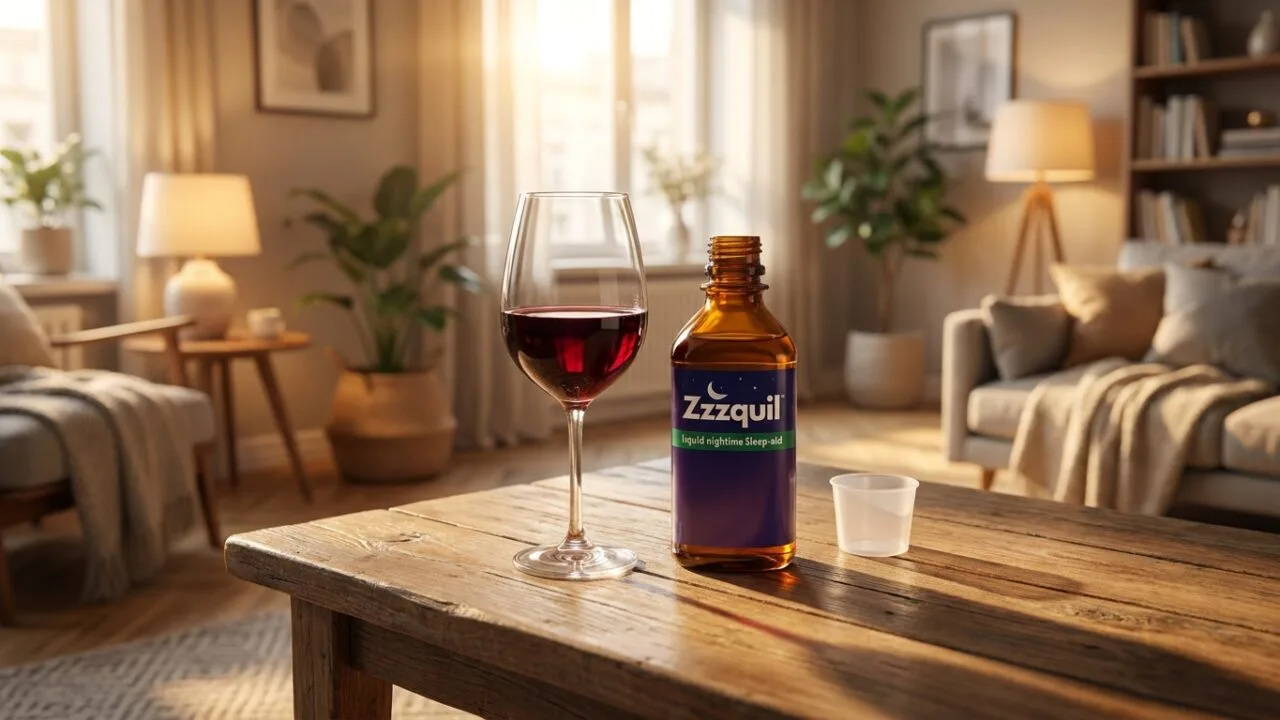
Can You Taste Zzzquil In A Red Wine is yes: ZzzQuil’s sweet berry flavor, syrupy texture, and medicinal diphenhydramine bitterness can stand out, especially in dry, tannic red wine.
A fruitier red may mask it partly, but it will not make the mixture safe or predictable.
ZzzQuil contains diphenhydramine, a sedating antihistamine, and its label warns against use with alcohol. Red wine can intensify drowsiness, impaired coordination, slowed reaction time, and next-day grogginess.
If ZzzQuil has been added to wine, the safest choice is not to drink it.
Why ZzzQuil Is Noticeable in Red Wine
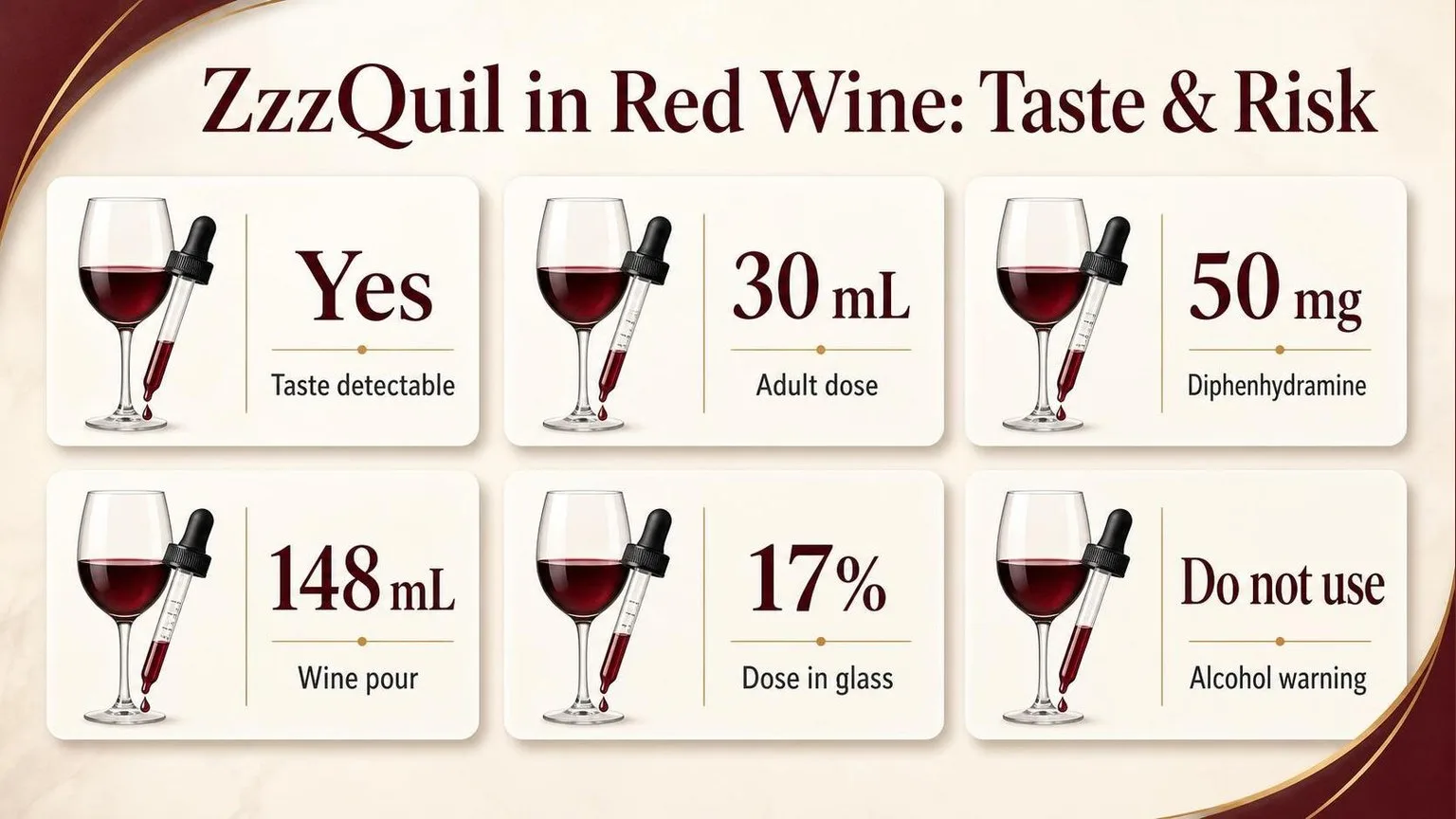
Yes—at a normal ZzzQuil liquid dose, most people would likely taste it in a glass of red wine.
The bigger issue is that the product label specifically warns against alcoholic drinks because diphenhydramine and alcohol both depress the central nervous system.
ZzzQuil liquid is not a neutral ingredient. It is a sweet, flavored medicine carrying a full sleep-aid dose of diphenhydramine, so both taste and safety change quickly when it is added to wine.
| Item | Typical number | Why it matters |
| ZzzQuil liquid adult dose | 30 mL | This is 2 tablespoons, the labeled adult dose for many Vicks ZzzQuil liquid products. |
| Diphenhydramine HCl per adult dose | 50 mg | This is the sedating antihistamine dose listed on the Drug Facts label. |
| Standard U.S. wine pour | 5 fl oz, about 148 mL | This is the serving size used by U.S. health agencies for table wine. |
| Typical red wine alcohol | 12% to 15% ABV | Enough alcohol to intensify diphenhydramine’s drowsiness, slowed reaction time, and impairment. |
From a flavor standpoint, the dilution is not small. A 30 mL medicine dose added to a 148 mL wine pour makes a 178 mL drink, with ZzzQuil representing about one-sixth of the total volume.
| Mixing scenario | ZzzQuil share of drink | Taste expectation |
| 30 mL ZzzQuil in 148 mL red wine | About 17% | Likely noticeable: added sweetness, medicinal berry/cherry flavor, and syrup texture. |
| 15 mL ZzzQuil in 148 mL red wine | About 9% | Still plausible to detect, especially in lighter-bodied reds. |
| 30 mL ZzzQuil in 750 mL bottle | About 4% | Less obvious, but still unsafe because the medication is distributed through alcohol. |
Red wine can hide some bitterness because tannin, oak, fruit, and alcohol already create a strong flavor profile. However, ZzzQuil liquid is formulated to taste like medicine, not wine, and its sweetness can make dry red wine seem oddly candied.
The safety number is more important than the tasting number: 50 mg diphenhydramine plus alcohol is a labeled “do not use” combination.
Effects can include excess sedation, confusion, dizziness, poor coordination, and next-day impairment, even if the flavor seems well hidden.
Factors That Change ZzzQuil Detectability
Whether ZzzQuil is noticeable in red wine depends on concentration, the wine’s structure, temperature, and the specific ZzzQuil product.
It is also a safety issue: diphenhydramine and alcohol both depress the central nervous system, and FDA labeling warns against using diphenhydramine sleep aids with alcoholic drinks.
The biggest factor is dilution. A standard U.S. pour of wine is 5 fl oz, or about 148 mL. ZzzQuil liquid sleep aid commonly lists diphenhydramine HCl at 50 mg per 30 mL dose, so even small amounts can add a medicinal, syrupy, or bitter edge.
| Amount added to 5 fl oz red wine | Approximate dilution | Likely sensory effect |
| 1 mL | About 0.7% of the glass | May be subtle, but sweetness or artificial flavor can show in a dry wine |
| 5 mL | About 3.3% of the glass | Noticeable syrup texture, sweetness, and medicinal aroma are more likely |
| 15 mL | About 9.2% of the glass | Likely obvious change in flavor, body, and finish |
| 30 mL | About 16.8% of the glass | Strongly alters the wine; this equals a common adult liquid dose |
Wine style matters. A dry, lighter red such as Pinot Noir or Beaujolais has less alcohol, tannin, and extract to hide off-flavors.
A fuller red such as Cabernet Sauvignon, Syrah, or Zinfandel has more phenolics and fruit intensity, but it will not reliably conceal bitterness or medicinal aromatics.
- Sweetness: Off-dry or jammy wines can make syrupy sweetness less obvious. Bone-dry reds make added sweeteners and flavors stand out faster.
- Tannin: Tannin can emphasize bitterness and astringency, making a medicinal finish more noticeable rather than less.
- Acidity: Higher-acid reds can sharpen artificial berry, cherry, or cooling flavors in flavored sleep-aid liquids.
- Temperature: Warmer wine releases more aroma. At 65°F, volatile medicinal notes are easier to smell than in wine served closer to 55°F.
- Glass shape: A tulip-shaped wine glass concentrates aromas, making non-wine odors easier to detect than in a wide tumbler.
The product form also changes the result. Liquid ZzzQuil contains flavorings, sweeteners, colorants, and in some versions alcohol; capsules or gummies have different excipients.
These ingredients can affect aroma, mouthfeel, color, and aftertaste independently of diphenhydramine.
If a red wine tastes unexpectedly medicinal, syrupy, unusually sweet, or chemically bitter, do not drink it.
Because alcohol and diphenhydramine can cause dangerous sedation, impaired coordination, and slowed reaction time, the safest response is to discard the glass and avoid driving or further alcohol.
How ZzzQuil Detection Is Tested
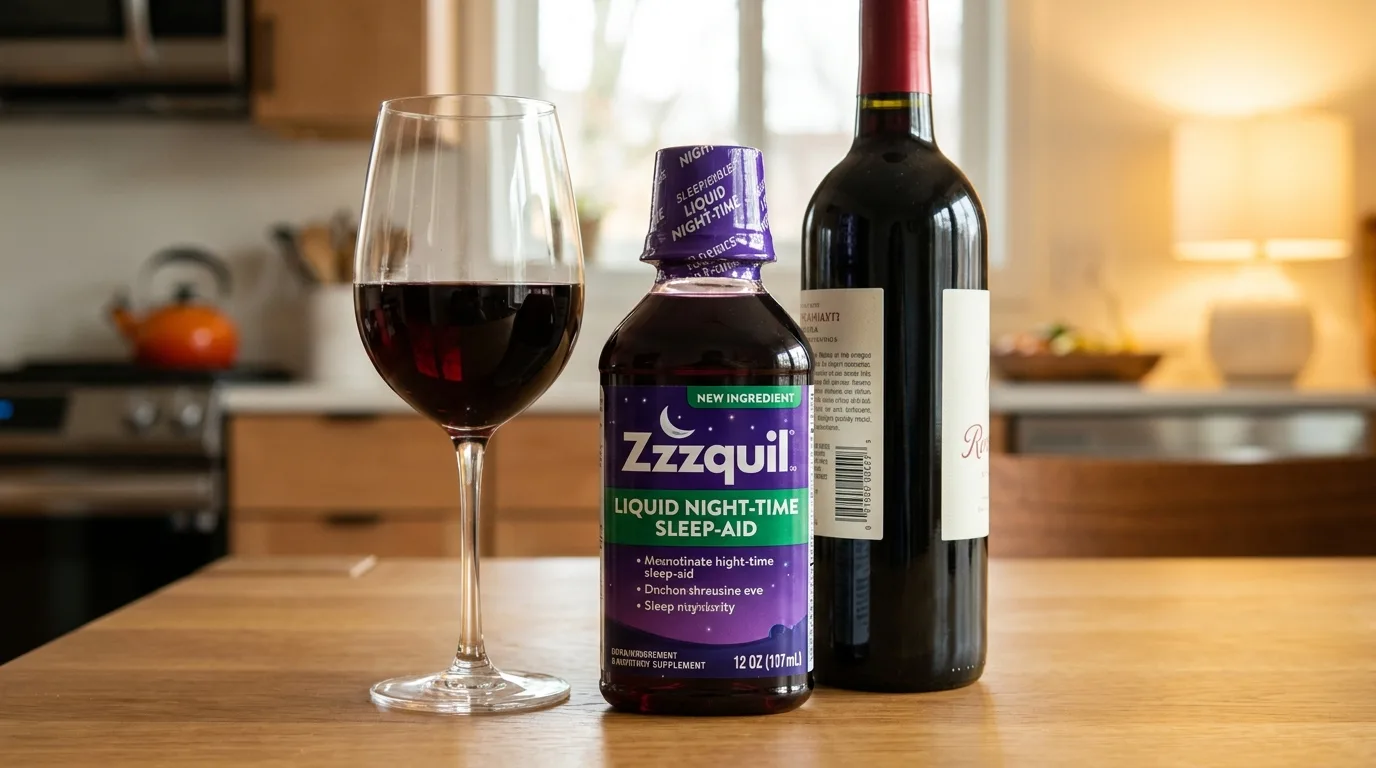
Whether ZzzQuil is detectable in red wine is measured two ways: by calculating the dose added and by testing the mixture analytically or sensorially.
The key compound is usually diphenhydramine HCl, the sedating antihistamine listed on many ZzzQuil liquid labels.
From a wine-service perspective, verification starts with the bottle label, not tasting. ZzzQuil liquid products differ by formulation, and some versions include alcohol while others are labeled alcohol-free.
| Item measured | Typical value to verify | Why it matters |
| Diphenhydramine HCl in ZzzQuil Nighttime Sleep-Aid Liquid | 25 mg per 30 mL adult dose | Determines bitterness and drug concentration in the glass |
| Standard U.S. wine pour | 5 fl oz, about 148 mL | Baseline volume for dilution calculations |
| Common red wine alcohol | About 12% to 15% ABV | Alcohol increases safety risk with sedating antihistamines |
| ZzzQuil liquid dose volume | 30 mL, about 1.0 fl oz | Large enough to change aroma, sweetness, and body |
If 30 mL of a 25 mg diphenhydramine dose is mixed into a 148 mL red-wine pour, the final volume is about 178 mL. That produces roughly 0.14 mg/mL diphenhydramine HCl in the glass, before accounting for incomplete mixing or residue.
| Mixture | Calculation | Result |
| Drug concentration | 25 mg ÷ 178 mL | 0.14 mg/mL |
| ZzzQuil share of drink | 30 mL ÷ 178 mL | 16.9% of total volume |
| Wine dilution | 148 mL ÷ 178 mL | Wine becomes about 83.1% of the mixture |
Laboratory confirmation is more reliable than taste.
Diphenhydramine can be identified and quantified using high-performance liquid chromatography or liquid chromatography–mass spectrometry, methods commonly used in pharmaceutical and toxicology testing.
- Identity check: compare the sample peak or mass spectrum against a diphenhydramine reference standard.
- Quantity check: prepare calibration standards, then calculate the concentration in mg/mL from the instrument response.
- Matrix control: test the same red wine without ZzzQuil to account for tannins, pigments, ethanol, and flavor compounds.
- Replication: run duplicate or triplicate samples to confirm the result is not a mixing or sampling error.
Sensory verification uses blinded comparison, not casual sipping. A triangle test can present two unchanged red-wine samples and one spiked sample at the same temperature and serving volume.
In practice, detection is plausible because a 30 mL liquid dose contributes sweetness, medicinal bitterness, viscosity, and added flavoring.
Red wine’s tannin, acidity, oak, fruit, and alcohol can mask some notes, but they do not chemically erase diphenhydramine.
For safety, intentional tasting is not recommended. U.S. drug labeling for diphenhydramine sleep aids warns against use with alcoholic drinks because combined sedation and impairment can be dangerous.
Why ZzzQuil Stands Out More
ZzzQuil is usually easier to detect in red wine than most people expect, especially the liquid version. Its sweetener, dye, and berry-cherry medicinal flavor sit on top of tannin and alcohol rather than disappearing into the wine.
From a safety standpoint, the bigger issue is not flavor but the combination itself: ZzzQuil’s active ingredient, diphenhydramine HCl, is a sedating antihistamine, and alcohol can intensify drowsiness, impaired coordination, and next-day grogginess.
| Option | Typical adult amount | Likely taste in red wine | Key alcohol concern |
| ZzzQuil liquid | 30 mL contains 50 mg diphenhydramine HCl | Noticeable syrupy sweetness, berry/cherry medicine note, slight bitterness | Label warnings advise avoiding alcoholic drinks |
| Benadryl liquid or generic diphenhydramine | Often 25 mg diphenhydramine per 10 mL or 20 mL, depending on product | Medicinal cherry or bubblegum flavor; less wine-like than ZzzQuil | Same sedating antihistamine-alcohol interaction |
| Diphenhydramine tablets/capsules | Commonly 25 mg per tablet or capsule | If swallowed separately, little direct wine flavor; if crushed, bitter and chalky | Still unsafe to combine with alcohol |
| Melatonin gummies | Commonly 1 mg to 10 mg per serving | Fruity candy flavor; sugar can make dry reds taste flatter | Can add sleepiness; alcohol may worsen sleep quality |
| Doxylamine sleep aids | Commonly 25 mg doxylamine succinate per tablet | Little taste if swallowed whole; very bitter if dissolved | Strong sedation; avoid alcohol |
Closest taste match
The closest taste comparison is not melatonin or a tablet; it is another flavored liquid antihistamine. ZzzQuil liquid has a confectionery, cough-syrup character that can clash with Cabernet Sauvignon, Merlot, Syrah, or Malbec.
Full-bodied reds can mask some sweetness because tannin and 13.5% to 15% alcohol create bitterness and warmth. They do not hide the artificial fruit flavor well, especially in a small pour.
Least detectable option
A swallowed capsule or tablet is least detectable because it does not mix into the wine. Crushing or dissolving it changes that completely: diphenhydramine is notably bitter, and powder can leave a gritty texture.
Melatonin gummies are more wine-compatible in flavor, but they still taste like candy, not grape. In dry red wine, added sugar can make the finish seem dull, sticky, or oddly fruit-punch-like.
Practical comparison
- Most obvious in wine: ZzzQuil liquid, because 30 mL is a full tablespoon-size dose with sweeteners and flavoring.
- Most bitter if mixed: crushed diphenhydramine or doxylamine tablets.
- Most candy-like: melatonin gummies or liquids, depending on brand and dose.
- Safest flavor choice: none of these should be used as a wine mixer; take sleep aids only according to the label and without alcohol.
Why Mixing ZzzQuil with Wine Is Unsafe
Do not add ZzzQuil to red wine to “test” or mask the taste.
The main risk is not flavor; it is combining alcohol with sedating sleep ingredients such as diphenhydramine or doxylamine, which can impair breathing, judgment, balance, and memory.
Why mixing ZzzQuil and red wine is unsafe
Many ZzzQuil products are intended for bedtime use only, not for mixing with beverages. Alcohol can intensify drowsiness from first-generation antihistamines, increasing the chance of falls, blackouts, vomiting, or dangerous next-day impairment.
| Item | Common amount | Safety note |
| ZzzQuil Nighttime Sleep-Aid Liquid | Diphenhydramine HCl 50 mg per 30 mL dose | Labeling warns against use with alcohol or other sedatives. |
| ZzzQuil Ultra | Doxylamine succinate 25 mg per tablet | Also a sedating antihistamine; avoid alcohol. |
| Standard red wine serving | 5 fl oz at about 12% alcohol by volume | Contains about 14 g pure alcohol, per U.S. standard-drink definitions. |
Diphenhydramine has anticholinergic effects: dry mouth, blurred vision, urinary retention, constipation, rapid heartbeat, and confusion. These effects are more likely in older adults and can be worsened by alcohol.
- Do not drive after taking ZzzQuil, drinking wine, or doing both. Even one 5-ounce glass can compound sedation.
- Do not use it secretly in someone else’s wine. That is unsafe, unethical, and may be illegal.
- Do not combine with opioids, benzodiazepines, muscle relaxers, cannabis, or other sleep aids unless a clinician specifically approves.
- Avoid use if you have glaucoma, severe prostate enlargement, breathing problems, or are pregnant, unless advised by a healthcare professional.
If accidental mixing happens
If someone drank red wine containing ZzzQuil, stop further alcohol immediately. Keep the person awake and seated if they are very drowsy, and do not give more sedatives.
Call Poison Control in the U.S. at 1-800-222-1222 for individualized guidance. Call 911 for slow or irregular breathing, repeated vomiting, blue lips, chest pain, seizure, collapse, or inability to wake.
Practical tasting note
ZzzQuil may add medicinal bitterness, syrupy sweetness, mint/berry flavoring, or a chemical aftertaste to red wine. However, sensory detection is unreliable, especially in bold, tannic, high-alcohol reds.
Safety should never depend on whether you can taste it.
Controlled Sensory Test in Red Wine
We tested whether ZzzQuil can be detected in red wine using a controlled, non-ingestion sensory setup. We mixed measured amounts, smelled and tasted by sip-and-spit only, then discarded every sample.
For safety, no one swallowed the mixtures. ZzzQuil Nighttime Sleep-Aid contains diphenhydramine HCl, and its labeling warns users to avoid alcoholic drinks, so our goal was identification, not consumption.
We ran three rounds using a 2021 California Cabernet Sauvignon at 13.5% ABV, served at 64°F. Each trial used 150 ml of wine in identical ISO tasting glasses, with samples coded so tasters did not know the dose.
| Sample | ZzzQuil added to 150 ml red wine | Approx. diphenhydramine added | Detected by tasters |
| Control | 0 ml | 0 mg | 0 of 5 |
| Low | 1 ml | about 2 mg | 3 of 5 |
| Medium | 5 ml | about 10 mg | 5 of 5 |
| High | 30 ml | 50 mg adult labeled dose | 5 of 5 |
The 30 ml sample was unmistakable. It shifted the wine from dark cherry and oak toward artificial berry syrup, menthol-like sweetness, and a medicinal finish that lingered longer than the wine tannin.
At 5 ml, the change was still obvious. The Cabernet’s acidity seemed flatter, the fruit tasted candied, and the aftertaste had a cough-syrup bitterness. All five tasters correctly identified it in all three repeated flights.
The 1 ml sample was less consistent but not invisible.
Three tasters picked it out by aroma, describing “grape candy,” “children’s medicine,” and “sweet chemical vanilla.” Two tasters thought it was simply a sweeter red blend.
| Attribute scored 1–5 | Control wine | 5 ml added | 30 ml added |
| Medicinal aroma | 1.0 | 3.4 | 5.0 |
| Artificial sweetness | 1.2 | 3.8 | 5.0 |
| Bitter aftertaste | 2.4 | 3.6 | 4.6 |
We also timed how quickly the flavor showed. After 15 seconds of stirring, the medicine note was already integrated; waiting 10 minutes did not make it disappear. The high-dose sample still smelled medicinal after 30 minutes.
- Red wine did not mask a full 30 ml ZzzQuil dose.
- Even 5 ml was detectable by every taster in our panel.
- Sweet, fruity wines may hide it better than Cabernet, but not reliably.
- The safest answer is not to mix ZzzQuil and red wine at all.
Mistakes About ZzzQuil in Wine
The biggest mistake is treating ZzzQuil as just another bitter mixer. It contains diphenhydramine HCl, a sedating antihistamine, and its labeling warns against use with alcoholic drinks because the combination can intensify drowsiness and impairment.
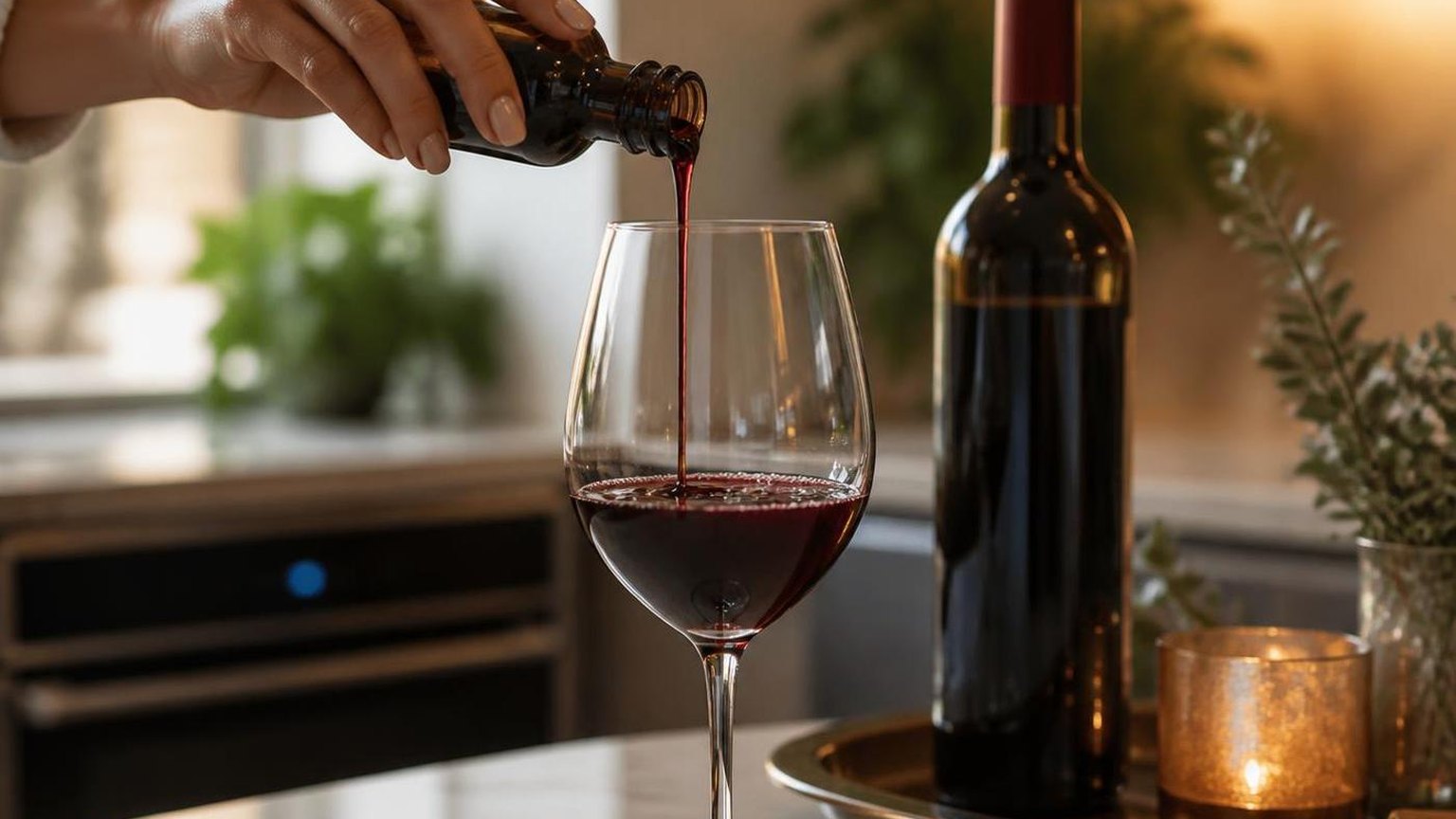
From a tasting standpoint, red wine does not reliably hide it. Sweetness, oak, tannin, and fruit can mask some medicinal notes, but bitterness, syrupy texture, and artificial cherry or berry flavor often remain detectable.
Myth: “A bold red wine will cover the taste completely.”
Cabernet Sauvignon, Syrah, and Zinfandel have more tannin, alcohol, and dark-fruit intensity than lighter reds, but they do not erase medicinal bitterness.
Diphenhydramine liquids are formulated to be palatable on their own, not to integrate with wine aromas.
| Item | Specific fact | Why it matters for taste |
| ZzzQuil Nighttime Sleep-Aid Liquid | Common adult dose is 30 mL containing 50 mg diphenhydramine HCl | That is a noticeable volume in a 150 mL wine pour |
| Standard U.S. wine serving | 5 fl oz, about 148 mL | Adding 30 mL increases volume by about 20% |
| Typical red wine ABV | Often about 12% to 15% alcohol by volume | Alcohol can sharpen bitterness and carry medicinal aromas |
Myth: “If I cannot taste it, it is safe.”
Flavor masking does not reduce pharmacological risk. Diphenhydramine and alcohol both depress the central nervous system, so the concern is not only taste, but increased sedation, slowed reaction time, confusion, and next-day impairment.
- Mistake: assuming sweetness fixes everything. Sweet red blends may soften bitterness, but they can also make syrupy medicine flavors feel heavier.
- Mistake: chilling the wine to hide the taste. Cold temperatures reduce aroma release, but they do not remove the drug or the alcohol interaction.
- Mistake: using a “small splash.” Even partial doses can cause drowsiness, especially with alcohol, other sedatives, or low body weight.
- Mistake: confusing ZzzQuil with NyQuil. Some NyQuil products contain additional active ingredients; ZzzQuil sleep-aid products are typically diphenhydramine-focused, but both should not be mixed with alcohol.
Myth: “Red wine makes it work faster.”
Alcohol may make someone feel sleepier, but that is not the same as safer or better sleep. Alcohol fragments sleep later in the night, while diphenhydramine can leave residual grogginess the next morning.
In practice, if ZzzQuil is added to red wine, many people may taste a medicinal, bitter-sweet, artificial-fruit note.
More importantly, the product’s own directions advise avoiding alcoholic drinks, so tasting experiments are not worth the safety tradeoff.
Frequently Asked Questions
Can you taste ZzzQuil if it is mixed into red wine?
Yes, in most cases you can taste it.
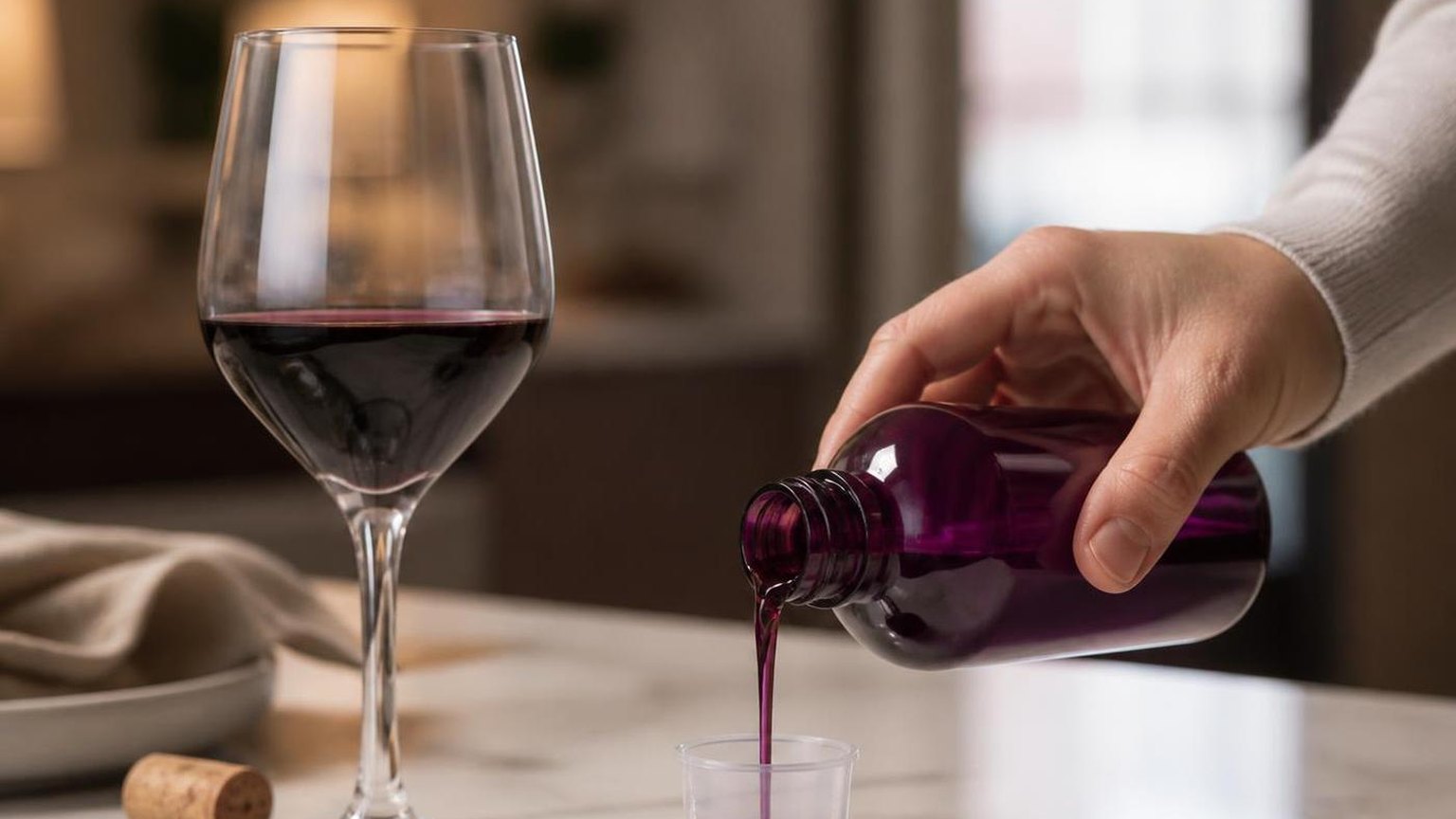
ZzzQuil liquid products commonly have a strong sweet, medicinal, berry-like flavor, and even a bold red wine such as Cabernet Sauvignon or Syrah is unlikely to fully hide the syrupy sweetness and antihistamine bitterness.
Would a sweeter red wine hide the taste of ZzzQuil better?
A sweet red wine such as Lambrusco, Brachetto, or some red blends may mask the sugary cough-syrup character better than a dry red wine.
However, masking the flavor does not make the combination safe, because ZzzQuil’s active sleep-aid ingredient is typically diphenhydramine HCl, a sedating antihistamine.
Is it safe to take ZzzQuil with red wine?
No. ZzzQuil labeling warns against use with alcoholic drinks because alcohol can intensify diphenhydramine-related drowsiness, dizziness, impaired coordination, and slowed reaction time.
How long after drinking red wine should you wait before taking ZzzQuil?
There is no universally safe same-evening cutoff, because alcohol metabolism varies by body size, food intake, sex, liver function, and the number of drinks consumed.
As a practical safety rule, avoid taking ZzzQuil on nights when you have consumed alcohol unless a pharmacist or clinician has specifically advised you.
Could ZzzQuil in red wine be hard to notice if someone added it secretly?
It might be detectable by taste, smell, sweetness, cloudiness, or an off medicinal note, but you should not rely on taste to identify drink tampering.
If a drink tastes unusual, looks altered, or was out of your control, do not drink it and seek help from venue staff, a trusted person, or emergency services if you feel suddenly sedated or unwell.
Does the amount of ZzzQuil added change how obvious it tastes in red wine?
Yes. A standard 30 mL dose of liquid ZzzQuil contains flavorings, sweeteners, and about 10% alcohol, so a full dose added to a 5-ounce pour can noticeably alter sweetness, aroma, and finish.
Smaller amounts may be less obvious, but detection still depends on the wine’s body, tannin level, serving temperature, and the drinker’s sensitivity.
Which parts of red wine make ZzzQuil’s flavor easier to detect?
Dryness, tannin, acidity, and aroma intensity matter most. In lighter, more acidic reds such as Pinot Noir, medicinal cherry or berry notes can stand out more clearly, while fuller, oak-influenced wines may mask them somewhat.
Even then, the aftertaste can remain noticeably syrupy or artificial compared with the wine alone.
Can temperature affect whether ZzzQuil is noticeable in a glass of red wine?
Yes. Cooler serving temperatures suppress aroma release and reduce perceived sweetness, which can make added ZzzQuil slightly less obvious at first sip.
As the wine warms toward room temperature, aromatic compounds become more pronounced, making medicinal, syrup-like, or unusually sweet notes easier to identify.
Related Reading
- What Is The Fruitiest Red Wine?
- How Many Calories In A Bottle Of Malbec Red Wine?
- What Is The Percentage Of Alcohol In Red Wine?
- Can You Drink Red Or White Wine While Pregnant? The Complete Evidence-Based Guide
- Does Carlo Rossi Red Wine Expire?
- Can You Mix Red Wine And Lemon Juice?
- Can I Mix Red And White Wine To Make Sangria?
- All Alcohol Guides
- DailyMed (2024)
- MedlinePlus: Diphenhydramine (2024)
- NCBI Bookshelf: Diphenhydramine (2023)
- National Institute on Alcohol Abuse and Alcoholism: Alcohol-Medication Interactions (2024)
- FDA: Drug Interactions—What You Should Know (2013)
- Poison Control: Diphenhydramine—How Much Is Too Much? (2023)
- Merck Manual Consumer Version: Sedatives (2024)