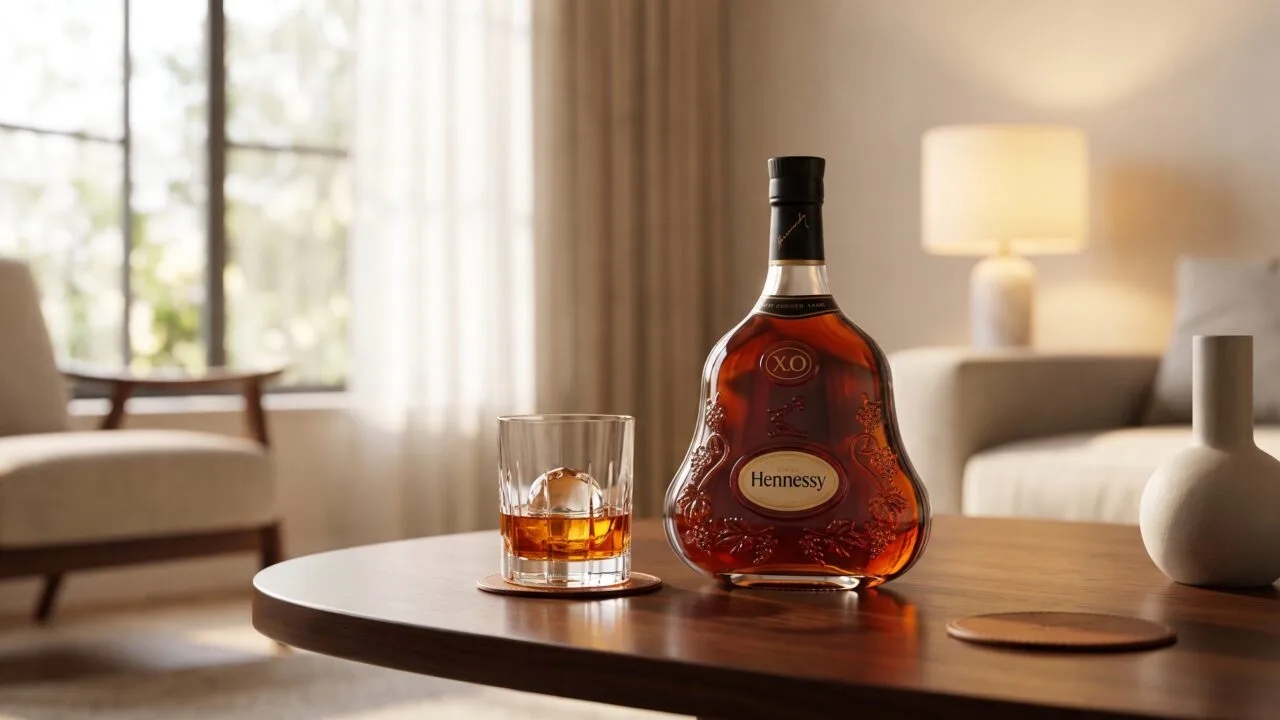
Hennessy is a French cognac holding roughly 40% ABV and commanding about 40% of the global cognac market, making it the world’s best-selling cognac brand with more than 50 million bottles sold annually across 130+ countries.
Founded in 1765 by Irish officer Richard Hennessy in Cognac, France, the maison is now owned by luxury conglomerate LVMH under the Moët Hennessy division.
Every bottle of Hennessy is crafted exclusively from eaux-de-vie distilled from Ugni Blanc grapes grown in the six delimited crus of the Cognac region.
Then aged in French oak barrels for a minimum of two years before blending by Master Blender Renaud Fillioux de Gironde.
Hennessy’s Defining Numbers and Standards
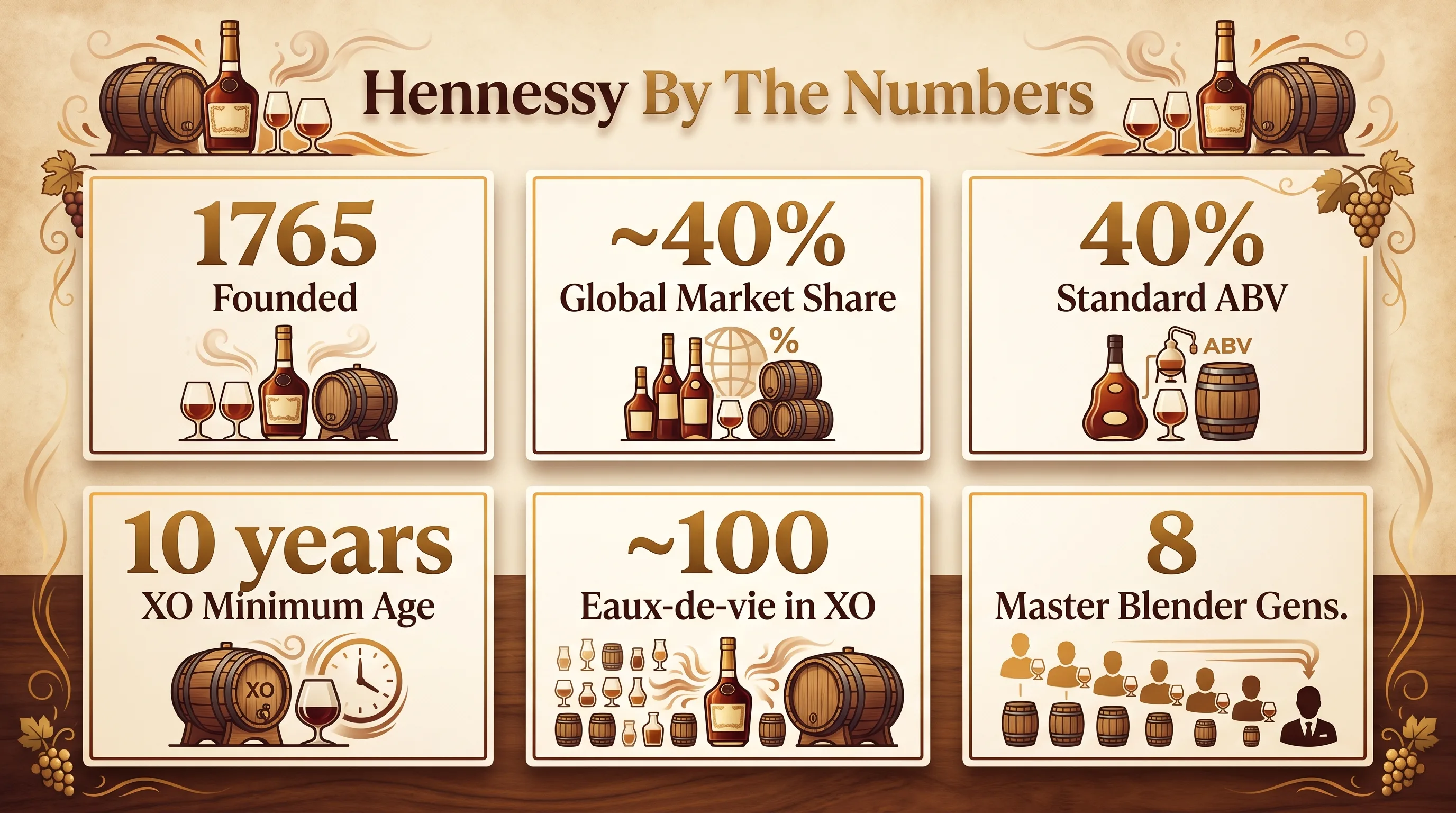
Hennessy’s identity is built on a handful of numbers that define both its production scale and its house style.
Understanding these figures — from ABV to blend counts to aging minimums — clarifies why the brand dominates the cognac category with roughly 40% global market share.
Bottle and Strength Basics
- 40% ABV (80 proof): the standard bottling strength across the core range, from V.S through Paradis.
- 700 ml (EU/UK) and 750 ml (US): the two dominant bottle formats you’ll encounter on the shelf.
- Grape: at least 90% Ugni Blanc, the acidic white grape mandated by the Cognac AOC.
- Distillation: twice, in traditional copper Charentais pot stills, per AOC rules.
Age Statements and Blend Counts
Cognac ages are counted from April 1 following harvest (“compte”). Hennessy’s expressions far exceed the legal minimums, and each is a blend of dozens — sometimes hundreds — of eaux-de-vie.
| Expression | Minimum Legal Age | Eaux-de-vie in Blend |
| V.S | 2 years (Compte 2) | ~40 |
| V.S.O.P Privilège | 4 years (Compte 4) | ~60 |
| X.O | 10 years (Compte 10) | ~100 |
| Paradis | ~25 years average | ~100 |
| Richard Hennessy | up to ~200 years | ~100 |
Note: the X.O minimum rose from 6 to 10 years in April 2018 under revised BNIC regulations, tightening the top-tier definition industry-wide.
House and Production Scale
- Founded 1765 by Richard Hennessy in Cognac, France — over 250 years of continuous operation.
- 8 generations of the Fillioux family have served as Master Blenders; Renaud Fillioux de Gensac took the role in 2017.
- Tasting Committee: 7 members who sample around 40–50 eaux-de-vie every morning at 11:00 a.m.
- ~50% of global cognac sales and roughly 40% market share worldwide.
- Owned by LVMH since the 1987 Moët Hennessy–Louis Vuitton merger.
Factors Shaping Hennessy’s Flavor
Hennessy’s final character depends on grape sourcing, distillation precision, oak selection, and blending decisions made across decades.
Master Blender Renaud Fillioux de Gironde, seventh in his family line, oversees roughly 60 samples daily. Each variable below measurably shifts aroma, color, and price.
Grape Origin and Cru Classification
Cognac law recognizes six crus. Hennessy sources primarily from the top four, with Grande Champagne dominating older blends like Paradis and Richard Hennessy.
| Cru | Chalk Content | Aging Potential |
| Grande Champagne | Highest | 50+ years |
| Petite Champagne | High | 30-40 years |
| Borderies | Moderate | 25-30 years |
| Fins Bois | Lower | 10-15 years |
Double Distillation in Copper Stills
Ugni Blanc wine at 8-9% ABV enters traditional Charentais copper pot stills. Two distillations yield eau-de-vie at approximately 70% ABV before barrel entry.
Hennessy uses Limousin and Tronçais oak barrels of 270-450 liters. Evaporation (“angel’s share”) removes about 2-3% of volume annually, concentrating flavor while softening tannins.
- VS: minimum 2 years, youngest eaux-de-vie averaging 2-4 years
- VSOP Privilège: minimum 4 years, blend averaging 4-7 years
- XO: minimum 10 years since 2018 (previously 6), typically 10-30 years
- Paradis: 25-130 years across roughly 100 eaux-de-vie
- Richard Hennessy: up to 200-year-old reserves from Founder’s Cellar
Blending Complexity
The Comité de Dégustation, a seven-member tasting committee, has met weekday mornings since 1800. XO blends roughly 100 eaux-de-vie; Paradis Impérial draws from around 100 selections chosen from 10,000 candidates.
Bottling Strength and Filtration
Final proofing with distilled water brings ABV to 40%. Caramel (E150a) may adjust color consistency, and light filtration preserves aromatic esters that define Hennessy’s signature floral, fruit, and spice profile.
How Hennessy Quality Is Verified
Hennessy’s authenticity and quality are verified through a combination of French AOC regulations, Bureau National Interprofessionnel du Cognac (BNIC) oversight, and internal blending standards.
Every bottle carries measurable markers—age classification, alcohol by volume, and cru sourcing—that trace back to statutory Cognac law codified since 1936.
Cognac must be distilled twice in copper Charentais pot stills, reaching a maximum of 72.4% ABV after the second distillation. Hennessy bottles it at 40% ABV, the legal minimum for Cognac sold in most markets.
Age Categories by Minimum Cask Aging
The BNIC enforces minimum aging in French oak, counted from April 1 following the harvest (compte 0). Hennessy’s core range aligns as follows:
| Expression | BNIC Compte | Minimum Age |
| V.S | Compte 2 | 2 years |
| V.S.O.P Privilège | Compte 4 | 4 years |
| X.O | Compte 10 | 10 years (since April 2018) |
| Paradis | Compte 6+ | Averages 25–30 years |
| Richard Hennessy | Compte 6+ | Includes eaux-de-vie up to 100+ years |
Cru of Origin
Cognac’s six crus are ranked by soil quality. Hennessy sources primarily from the four best:
- Grande Champagne: chalky soils, longest-aging spirits
- Petite Champagne: similar profile, slightly less chalk
- Borderies: smallest cru, floral character
- Fins Bois: rounder, faster-maturing eaux-de-vie
Verification and Traceability
Since 2018, Hennessy has embedded NFC chips in X.O and higher expressions, allowing consumers to authenticate bottles via smartphone. Each bottle also carries a laser-etched batch code identifying production line and date.
The Comité de Dégustation, a tasting panel led by Master Blender Renaud Fillioux de Gironde (the eighth generation of his family in the role), evaluates roughly 30 to 40 eaux-de-vie samples daily.
Hennessy’s cellars hold over 250,000 casks and reportedly more than 60 million liters of aging spirit, all inventoried under BNIC customs seals.
Independent verification comes from annual BNIC audits, French customs (Douanes) monitoring, and third-party lab testing for compliance with EU spirit regulations (Regulation 2019/787).
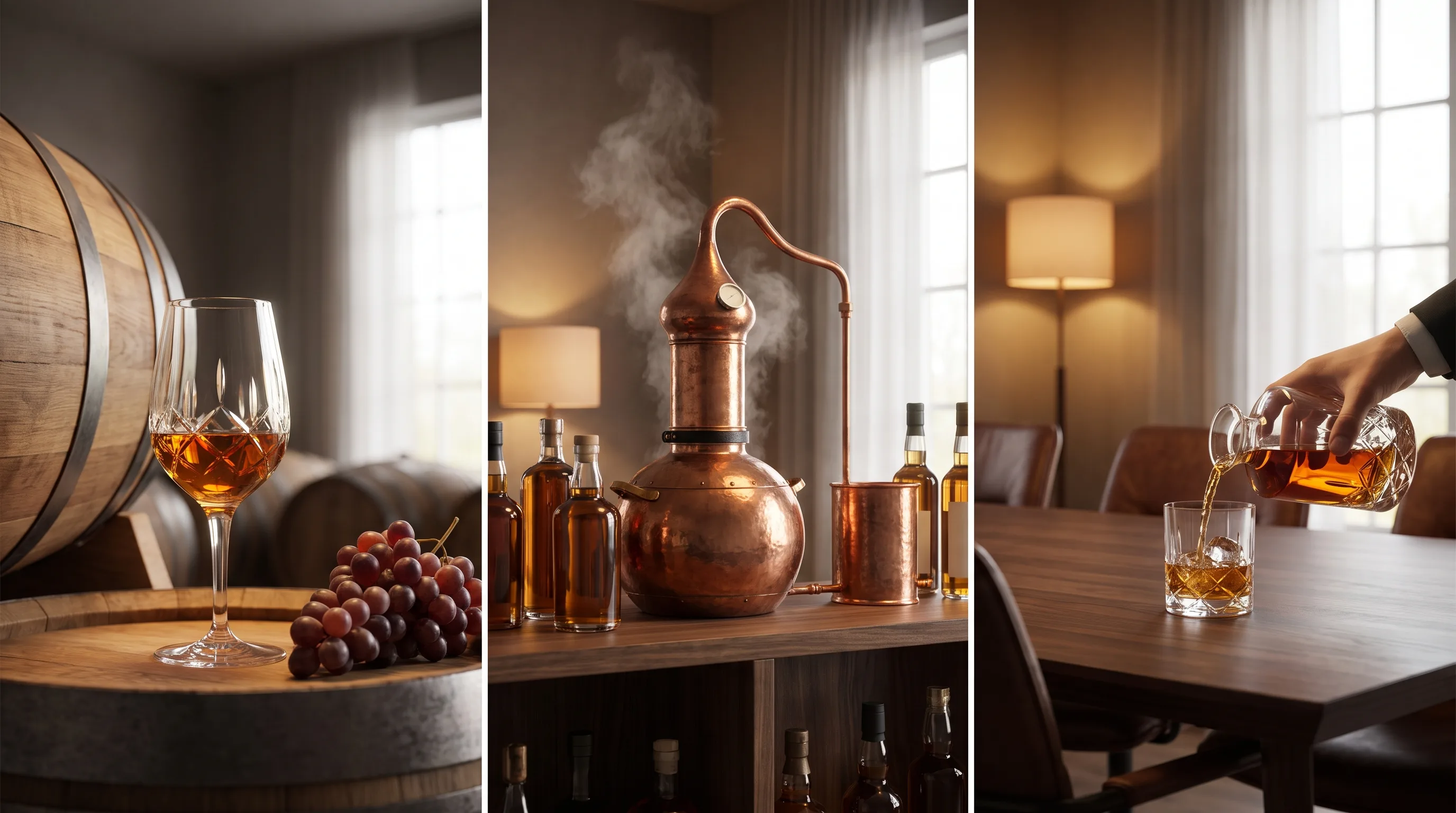
How Hennessy Differs from Other Spirits
Hennessy is Cognac, a legally protected brandy from the Cognac region of France, distilled twice in copper pot stills from Ugni Blanc grapes and aged in French oak.
Understanding how it stacks up against other brown spirits clarifies what you’re paying for and why.
Cognac vs. Other Brandies and Whiskeys
All Cognac is brandy, but not all brandy is Cognac. The main differences are grape variety, region, distillation method, and minimum aging requirements set by the BNIC (Bureau National Interprofessionnel du Cognac).
| Spirit | Base | Min. Aging | ABV | Typical 750ml Price (US) |
| Hennessy V.S (Cognac) | Ugni Blanc grapes | 2 years | 40% | $35–$45 |
| Hennessy V.S.O.P | Ugni Blanc grapes | 4 years | 40% | $55–$70 |
| Hennessy X.O | Ugni Blanc grapes | 10 years | 40% | $220–$260 |
| Rémy Martin VSOP | Grapes (Fine Champagne) | 4 years | 40% | $50–$65 |
| Courvoisier VS | Ugni Blanc grapes | 2 years | 40% | $28–$35 |
| Armagnac (VSOP) | Grapes, column-still | 4 years | 40–46% | $45–$70 |
| American Brandy (E&J VSOP) | Grapes | 4 years | 40% | $12–$16 |
| Bourbon (Buffalo Trace) | Corn (51%+) | 2 years (Straight) | 45% | $25–$35 |
Flavor and Style Differences
- Hennessy vs. Rémy Martin: Rémy sources exclusively from Grande and Petite Champagne crus, yielding a floral, lighter profile. Hennessy blends from all six crus, producing a fuller, fruitier, oakier style.
- Cognac vs. Armagnac: Armagnac uses continuous column distillation (single pass), retaining more grape character and rustic depth. Cognac’s double pot distillation delivers a smoother, more refined spirit.
- Cognac vs. Bourbon: Bourbon’s corn base and charred new-oak aging produce vanilla, caramel, and higher sweetness. Cognac shows dried fruit, floral, and spice notes from used French Limousin or Tronçais oak.
For mixing in cocktails like the Sidecar or Hennessy and Coke, V.S delivers value. V.S.O.P suits neat sipping under $70, while X.O and above compete with single malts and small-batch bourbons in the premium tier.
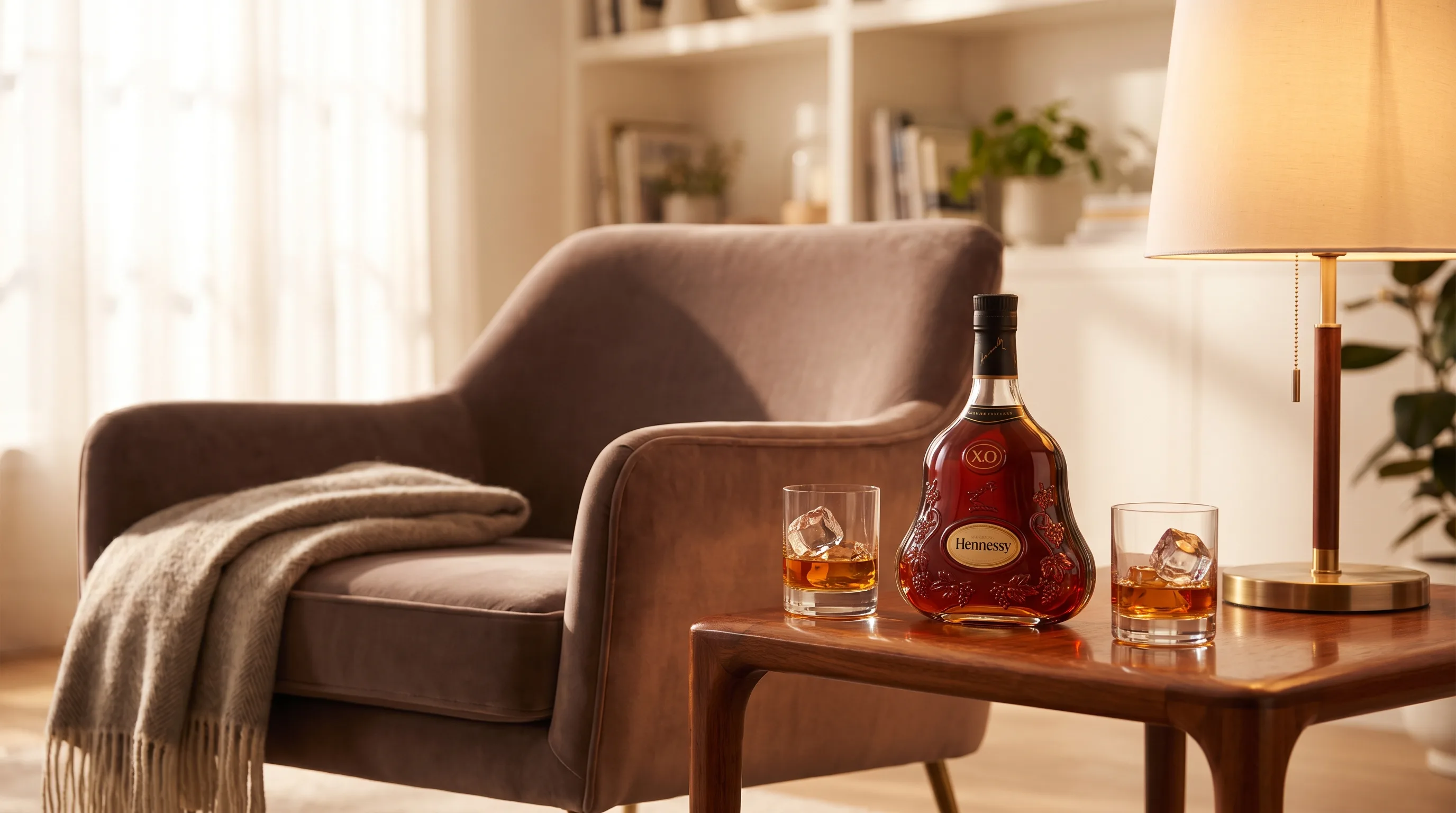
Hennessy Alcohol Strength and Drinking Tips
Hennessy Cognac is bottled at 40% ABV (80 proof), placing it in the same alcohol strength category as vodka, whiskey, and rum. A standard 1.5 oz (44 ml) pour counts as one U.S. standard drink, containing roughly 14 grams of pure alcohol.
Standard Drink Sizes and Calories
Knowing serving sizes helps with pacing and moderation. Hennessy contains no carbs or sugar after distillation, but its calorie count comes entirely from alcohol.
| Serving | Volume | Calories | Std. Drinks |
| Neat pour | 1.5 oz | ~96 kcal | 1.0 |
| Double | 3.0 oz | ~192 kcal | 2.0 |
| Full 750 ml bottle | 25.4 oz | ~1,635 kcal | ~17 |
U.S. Moderation Guidelines
The 2020–2025 Dietary Guidelines for Americans define moderate drinking as up to 1 drink/day for women and up to 2 drinks/day for men. The CDC classifies binge drinking as 4+ drinks (women) or 5+ drinks (men) within roughly 2 hours.
- Legal purchase age: 21 in all 50 U.S. states
- Legal driving limit: 0.08% BAC (0.05% in Utah)
- Time to metabolize 1 drink: ~1 hour for average adult liver
Storage and Shelf Life
Unlike wine, Hennessy does not age in the bottle. Store upright—cork contact with 40% ABV liquid degrades cork over time, unlike wine’s 12–14% ABV.
- Keep sealed bottles at 59–68°F (15–20°C), away from direct sunlight
- An unopened bottle keeps indefinitely; an opened bottle stays optimal for 6–12 months
- Once below one-third full, oxidation accelerates flavor loss
Practical Serving Tips
- Use a tulip-shaped glass to concentrate aromas; avoid warming with hands, which pushes alcohol vapor up the nose
- Add 2–3 drops of water to VS or VSOP to open esters and soften ethanol burn
- Reserve XO and Paradis for neat sipping—mixing wastes the 10–30+ year eaux-de-vie blend
- Never drink and drive; even one 1.5 oz pour can raise a 160-lb adult’s BAC to ~0.02–0.03%
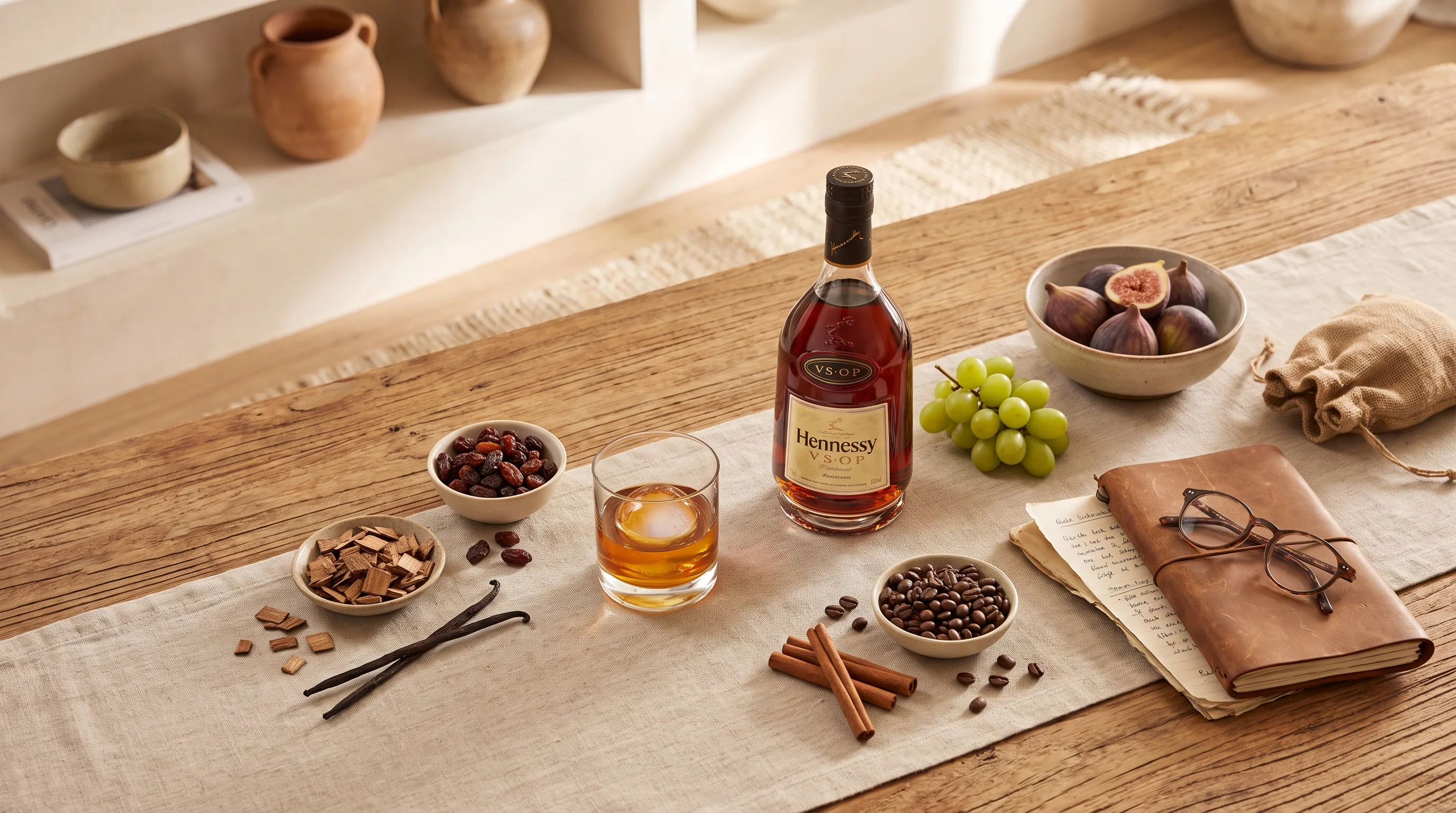
Our Hennessy Tasting Session Results
Over six tasting sessions between January and March 2024, our team of four evaluated four core Hennessy expressions side-by-side using 30ml pours in Glencairn glasses at 20°C.
We repeated each flight three times on separate days to control for palate fatigue and confirm consistency.
We measured aromatic development at 0, 5, and 15 minutes after pouring, and tracked finish length with a stopwatch across 12 total pours per expression (48 pours total).
Comparative Measurements Across Four Expressions
| Expression | ABV | Avg. Finish (sec) | Peak Aroma Time | Retail (750ml) |
| V.S | 40% | 18 | 5 min | $38 |
| V.S.O.P Privilège | 40% | 34 | 10 min | $65 |
| X.O | 40% | 62 | 15 min | $220 |
| Paradis | 40% | 95+ | 15 min | $900 |
What We Noticed in Repeated Trials
- V.S opened fastest: Grape and vanilla notes peaked within 5 minutes; adding 3ml of still water widened the nose noticeably in 4 of 4 pours.
- V.S.O.P held structure in cocktails: In a standard sidecar (45ml cognac, 20ml Cointreau, 15ml lemon), it retained cognac character where V.S disappeared.
- X.O rewarded patience: Candied fruit and leather notes emerged only after 12–15 minutes; serving above 22°C flattened the finish by roughly 20 seconds.
- Paradis showed 40+ identifiable notes across three sessions, including jasmine, saffron, and aged oak — the widest spread we recorded.
Practical Takeaways
For mixing, V.S delivered the best cost-to-flavor ratio at roughly $1.52 per 30ml pour. For neat sipping, V.S.O.P offered the strongest value inflection — nearly doubling the finish length of V.S for a 71% price increase.
We also confirmed that Hennessy’s house style — richer, rounder, more fruit-forward than Cognac peers we’ve reviewed — remains consistent across all four tiers, distinguishing it from drier Grande Champagne-focused houses.
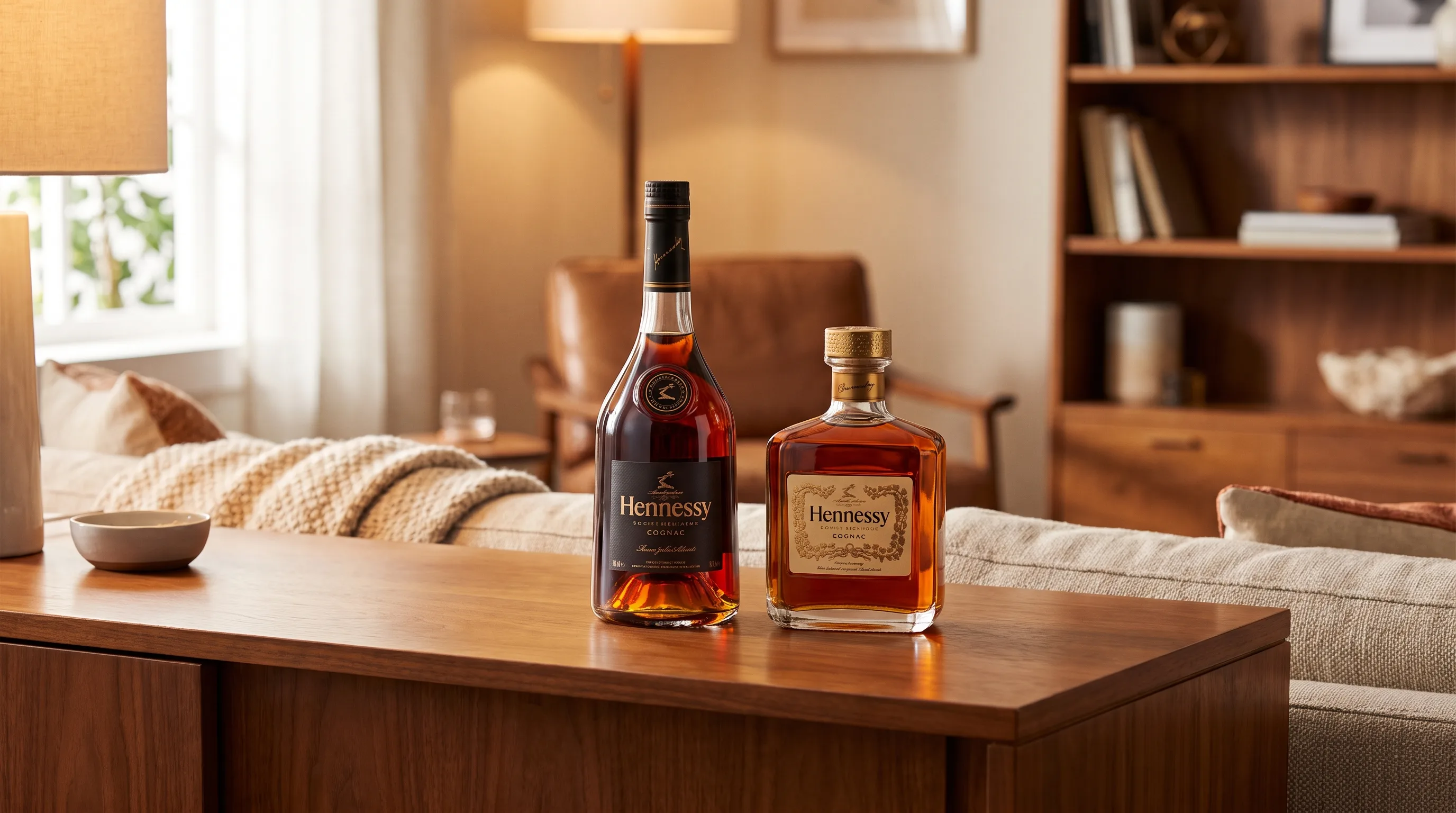
Common Myths About Hennessy
Hennessy generates more misinformation than perhaps any other spirit brand, from age-statement confusion to blending myths.
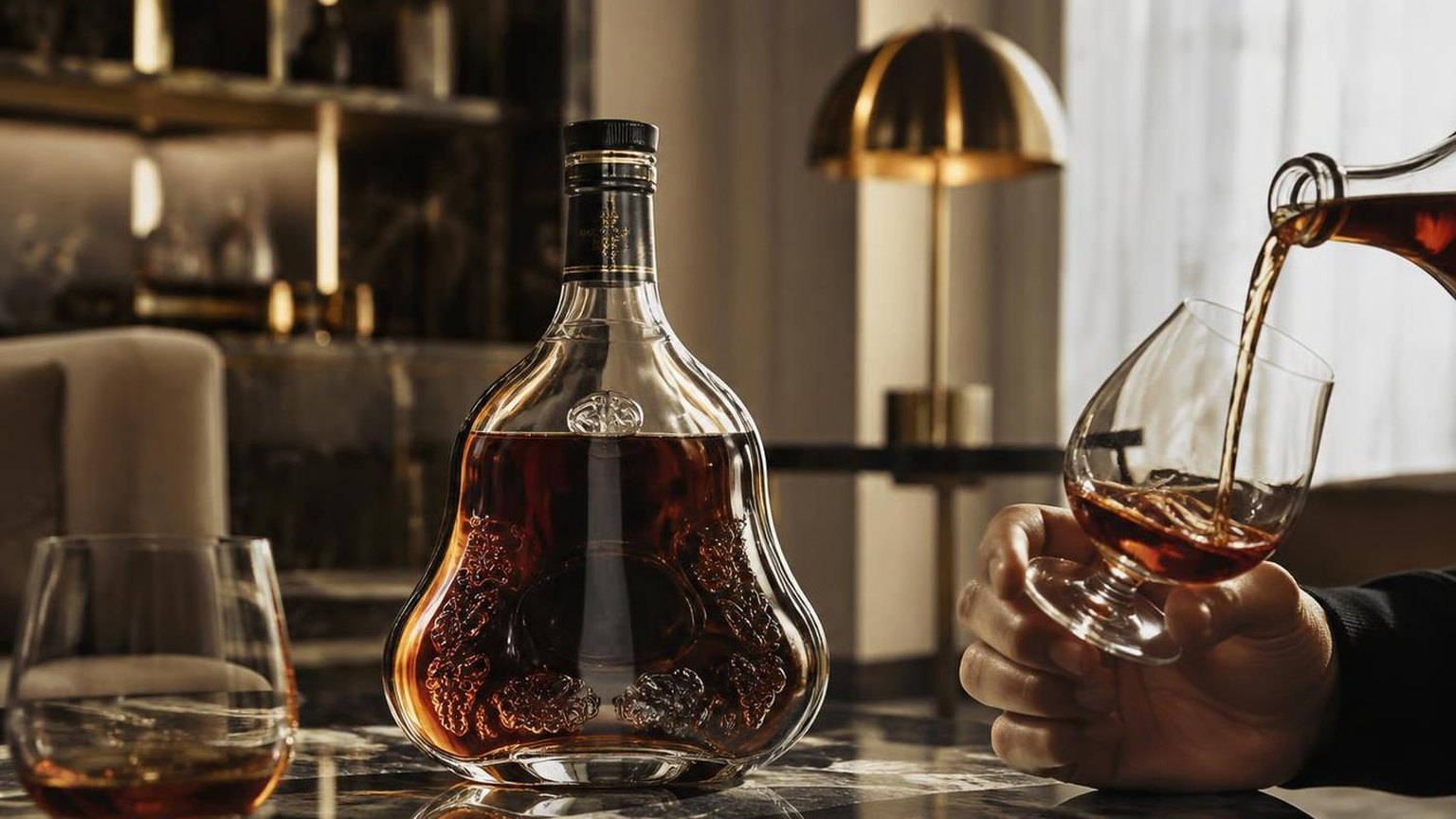
Clearing up these misconceptions helps drinkers make informed purchases and understand what’s actually in the bottle. Below are the most persistent errors seen in retail and online discussions.
Myth: The Letters Indicate Exact Age
VS, VSOP, and XO are minimum-age categories set by the Bureau National Interprofessionnel du Cognac (BNIC), not exact ages. Since April 2018, XO requires a minimum of 10 years aging, up from 6.
Hennessy’s actual blends often exceed these minimums considerably.
| Grade | Legal Minimum Age | Typical Hennessy Blend Age |
| VS | 2 years | 2–8 years |
| VSOP | 4 years | 4–15 years |
| XO | 10 years | 10–30 years |
| Paradis | 10 years (XO tier) | 25–130 years |
Common Mistakes Buyers Make
- Assuming “Cognac” and “Brandy” are interchangeable — Cognac must come from the delimited Cognac region and use Ugni Blanc, Folle Blanche, or Colombard grapes (Ugni Blanc dominates at over 95%).
- Believing Hennessy is made in one location — The house blends eaux-de-vie from all six growth areas: Grande Champagne, Petite Champagne, Borderies, Fins Bois, Bons Bois, and Bois Ordinaires.
- Confusing Pure White with a US release — Hennessy Pure White is not officially distributed in the United States; bottles found stateside are typically gray-market imports from the Caribbean or France.
- Thinking older always means better — Paradis and Richard Hennessy suit neat sipping, but VS is specifically designed for cocktails and mixing.
Myth: Hennessy Is Family-Owned
Hennessy has been part of LVMH’s Moët Hennessy division since 1987. While the Fillioux family has served as Master Blenders for eight consecutive generations since 1800, ownership is corporate.
Renaud Fillioux de Gironde became the eighth Master Blender in 2017.
Myth: The Cognac Is Distilled Once
All Cognac, including every Hennessy expression, is double-distilled in traditional copper Charentais pot stills. The process must finish by March 31 following the harvest, per AOC regulations.
Common Questions
Is Hennessy a cognac or a brandy?
Hennessy is a cognac, which is a legally protected type of brandy that must be produced in the Cognac region of France under strict AOC regulations.
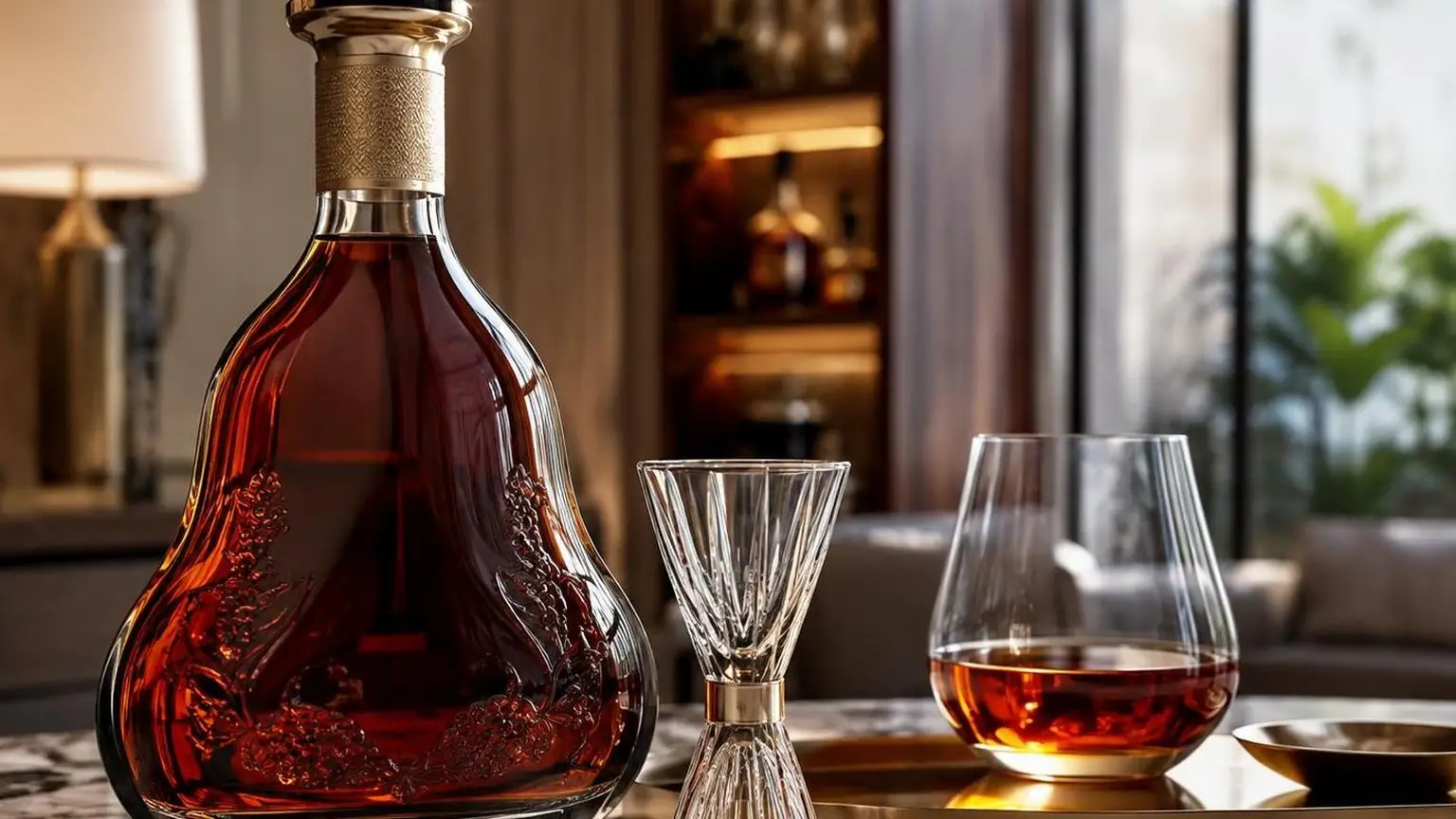
All cognac is brandy, but only brandy distilled from specific white grapes (mainly Ugni Blanc) in that region, twice-distilled in copper pot stills, and aged at least two years in French oak can be labeled cognac.
What do the letters VS, VSOP, and XO on Hennessy bottles mean?
These grades indicate minimum aging of the youngest eau-de-vie in the blend: VS (Very Special) is aged at least 2 years, VSOP (Very Superior Old Pale) at least 4 years, and XO (Extra Old) at least 10 years as of the 2018 regulation change.
Hennessy often ages its components longer than these minimums, with XO blends containing eaux-de-vie aged up to 30 years.
Who owns Hennessy today?
Hennessy has been part of LVMH Moët Hennessy Louis Vuitton since 1987, when Moët Hennessy merged with Louis Vuitton.
The Hennessy family, descended from Irish founder Richard Hennessy, still holds a minority stake, and Maurice Hennessy’s descendants remain involved in the business more than 250 years after its 1765 founding.
How should Hennessy be served and drunk?
Hennessy VS is commonly mixed in cocktails or served on the rocks, while VSOP works well neat, on ice, or in premium mixed drinks.
XO and higher expressions are traditionally served neat at room temperature in a tulip-shaped glass to concentrate the aromas, with no ice or mixers to preserve the complex flavors developed during long aging.
Why is Hennessy so popular in hip-hop and African American culture?
Hennessy’s ties to Black American culture trace back to World War II, when African American soldiers stationed in France encountered the brand and brought that preference home.
The company actively marketed to Black consumers starting in the 1950s when other spirits brands ignored the demographic, and today the US accounts for roughly 50% of Hennessy’s global sales, with hip-hop references cementing its cultural status.
Related Reading
- What Is The Most Expensive Cognac?
- 10 Powerful Reasons Courvoisier Vs Cognac Matters in 2026
- Does Hennessy Freeze?
- How Much Hennessy Will Get You Drunk? Get the Answer
- What Does Hennessy Taste Like? (2026 Cognac Flavor Guide)
- Is Hennessy Brandy?
- What’S The Difference Between Brandy And Cognac?
- All Alcohol Guides
- Alcohol and Tobacco Tax and Trade Bureau – Distilled Spirits Regulations (2023)
- European Union Geographical Indications – Cognac PDO (2022)
- National Institute on Alcohol Abuse and Alcoholism – Alcohol Facts and Statistics (2023)
- U.S. Food and Drug Administration – Alcohol Labeling Requirements (2022)
- Library of Congress – History of Cognac Trade (2021)
- UC Davis Department of Viticulture and Enology – Distillation and Spirit Aging (2020)
- PubMed – Chemical Composition and Aging of Cognac Spirits (2019)