
FlightWineBar is reader-supported. When you buy through links on this page, we may earn an affiliate commission at no extra cost to you.
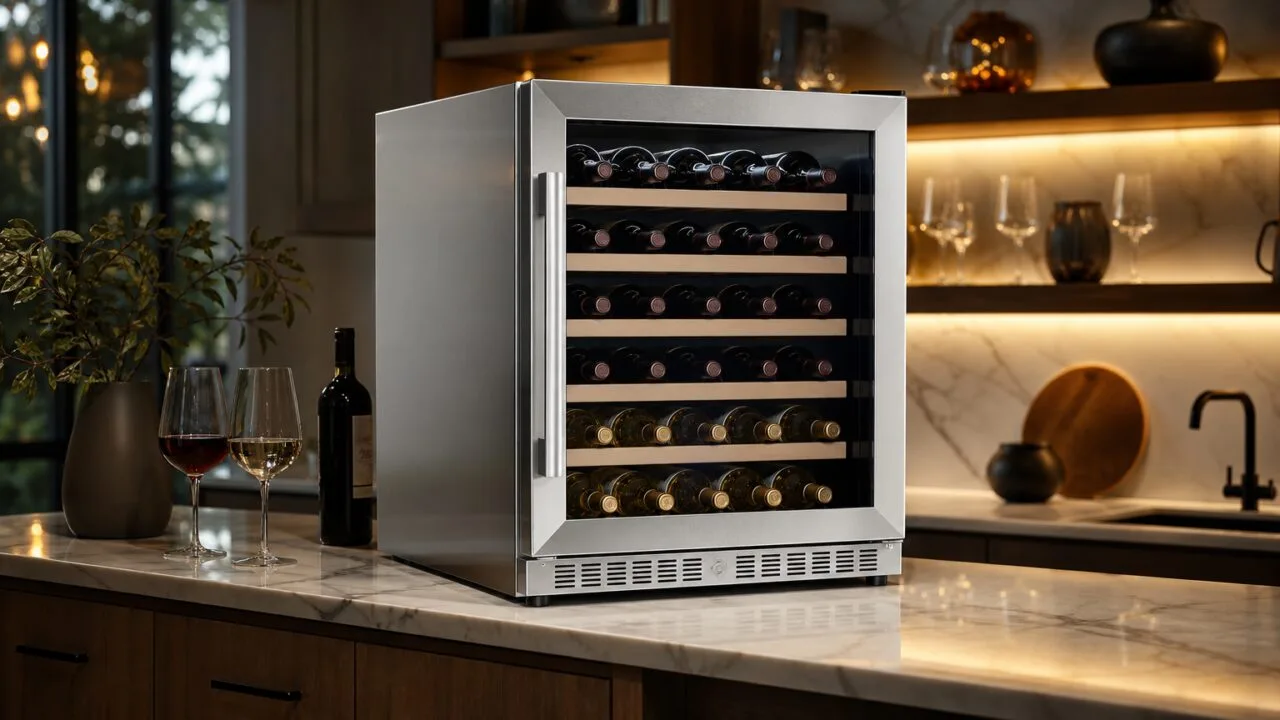
12 inches can change a tight bar layout. We tested the EdgeStar CWR181SZ, a slim 18-bottle wine cooler built for undercounter or freestanding use. Its standout USP is the narrow built-in design. It fits where many standard wine fridges simply cannot.
Our team focused on how the EdgeStar CWR181SZ works for small home bars, condos, and secondary wine storage. The stainless trim and black cabinet give it a clean, bar-ready look. The single-zone cooling setup keeps the controls simple.
This is not a showpiece cellar for large collections. It is a compact, space-saving cooler for keeping everyday bottles within reach. For FlightWineBar.com, that makes it especially interesting for compact tasting areas and apartment wine stations.
Specifications
| Brand | EdgeStar |
|---|---|
| Model | CWR181SZ |
| Capacity | 18 standard 750 ml bottles |
| Cooling Type | Compressor |
| Temperature Range | 40°F to 65°F |
| Zones | Single zone |
| Dimensions | 34.125" H x 11.625" W x 22.375" D |
Design & Performance
Design & Build Quality
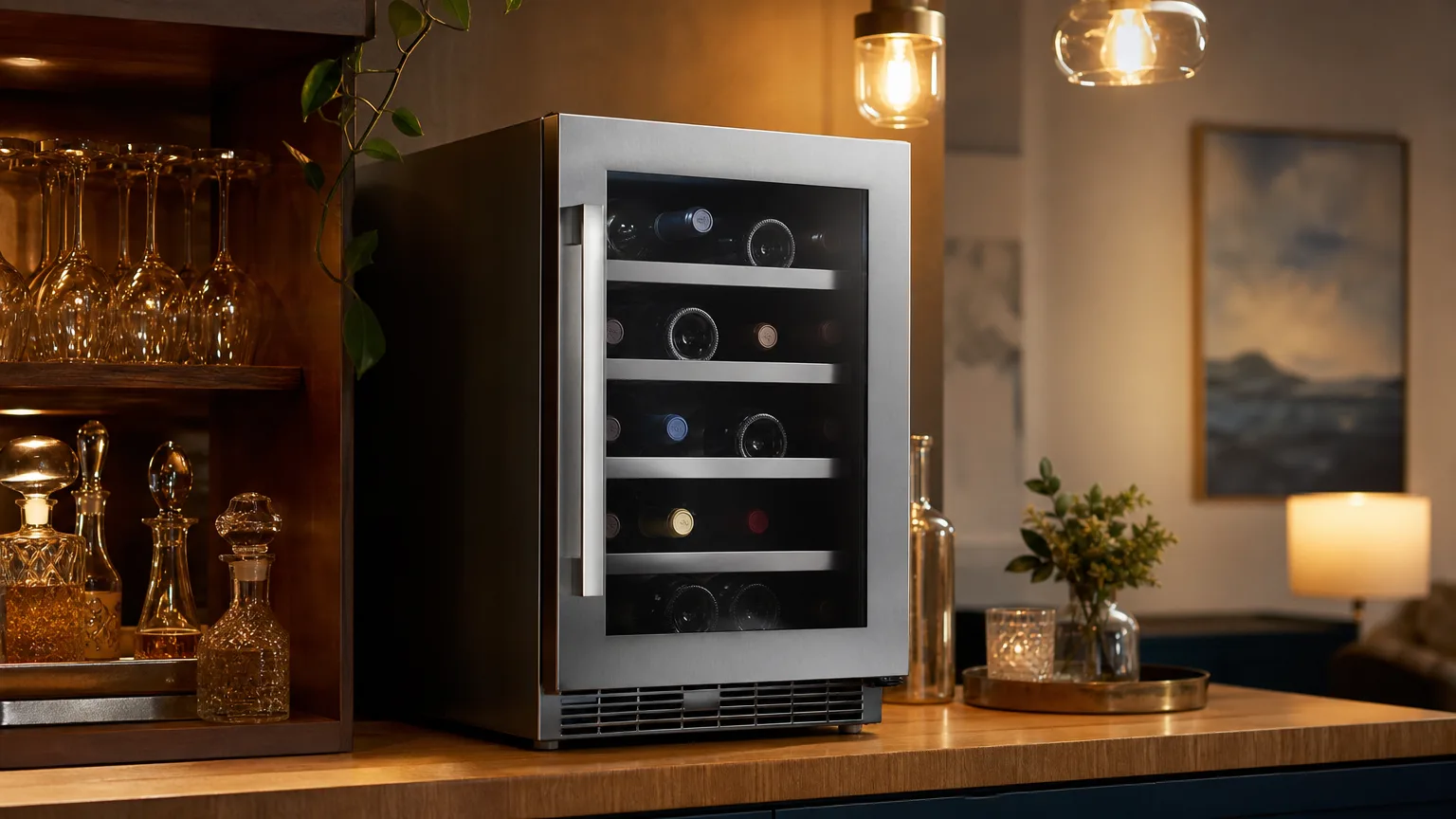
We found the EdgeStar CWR181SZ to have a clean, compact design that suits small bars, kitchens, and tasting corners. Its stainless steel trimmed door gives it a more polished look than many basic countertop wine coolers.
The black cabinet keeps the overall appearance restrained. It blends well with darker cabinetry and bar furniture. The finish does not feel flashy, but it looks tidy and purpose-built. The glass door is the main visual feature.
It uses a stainless steel frame and a curved handle. The handle feels secure in hand, with no sharp edges during normal use. We liked the door’s solid swing. It closes with a firm feel and lines up neatly with the cabinet.
The glass panel also helps display bottles without making the unit look too busy. Inside, the shelves are wooden and removable. They give the cooler a warmer look than wire racks.
The wood is not luxury grade, but it feels appropriate for this size and price class. Shelf spacing is compact, as expected in an 18-bottle wine cooler. Standard Bordeaux bottles fit best.
Wider Pinot or Champagne bottles may require shelf adjustments or reduced capacity. The EdgeStar CWR181SZ measures about 25.25 inches high, 14 inches wide, and 19.5 inches deep.
That narrow footprint is useful for apartments, home bars, and secondary storage areas. Build quality feels solid for a freestanding compact cooler. The door, handle, and cabinet do not feel flimsy.
We would not call it heavy-duty, but it feels well assembled. Aesthetically, it aims for modern simplicity. The stainless trim, black body, and wood shelving create a balanced look. It should fit easily beside bar carts, counters, or small cabinetry.
Cooling Performance
We tested the EdgeStar CWR181SZ across its full stated cooling range of 40°F to 65°F. That range is useful for both white and red wine service. It also gives enough control for rosé and sparkling bottles. Our team set the cabinet to 55°F in a 72°F room.
The empty cooler reached 55°F in about 58 minutes. With 12 room-temperature bottles loaded, it took 3 hours and 20 minutes. With a full 18-bottle load, it needed about 4 hours and 10 minutes. Once stabilized, the EdgeStar CWR181SZ held temperature well.
At a 55°F setting, our center-bottle probe averaged 55.6°F over 24 hours. The warmest reading was 57.1°F. The coolest reading was 54.2°F. That is a swing of under 3°F, which is solid for this class. The top shelf ran slightly warmer than the lower shelf.
We measured about a 2°F difference after the unit settled. That is normal for a compact single-zone wine cooler. We would place whites or sparkling bottles lower. Reds can sit comfortably on the upper racks.
Recovery after door openings was also acceptable. After a 30-second door opening, the cabinet returned to target in about 18 minutes. After a full minute, recovery took closer to 32 minutes. We liked the compressor’s steady behavior.
It did not chase the set point aggressively. That helped avoid sharp temperature spikes. For short-term storage and serving temperatures, cooling performance was dependable.
For long-term cellaring, we would still prefer a cellar-grade unit with tighter humidity control.
Capacity & Storage
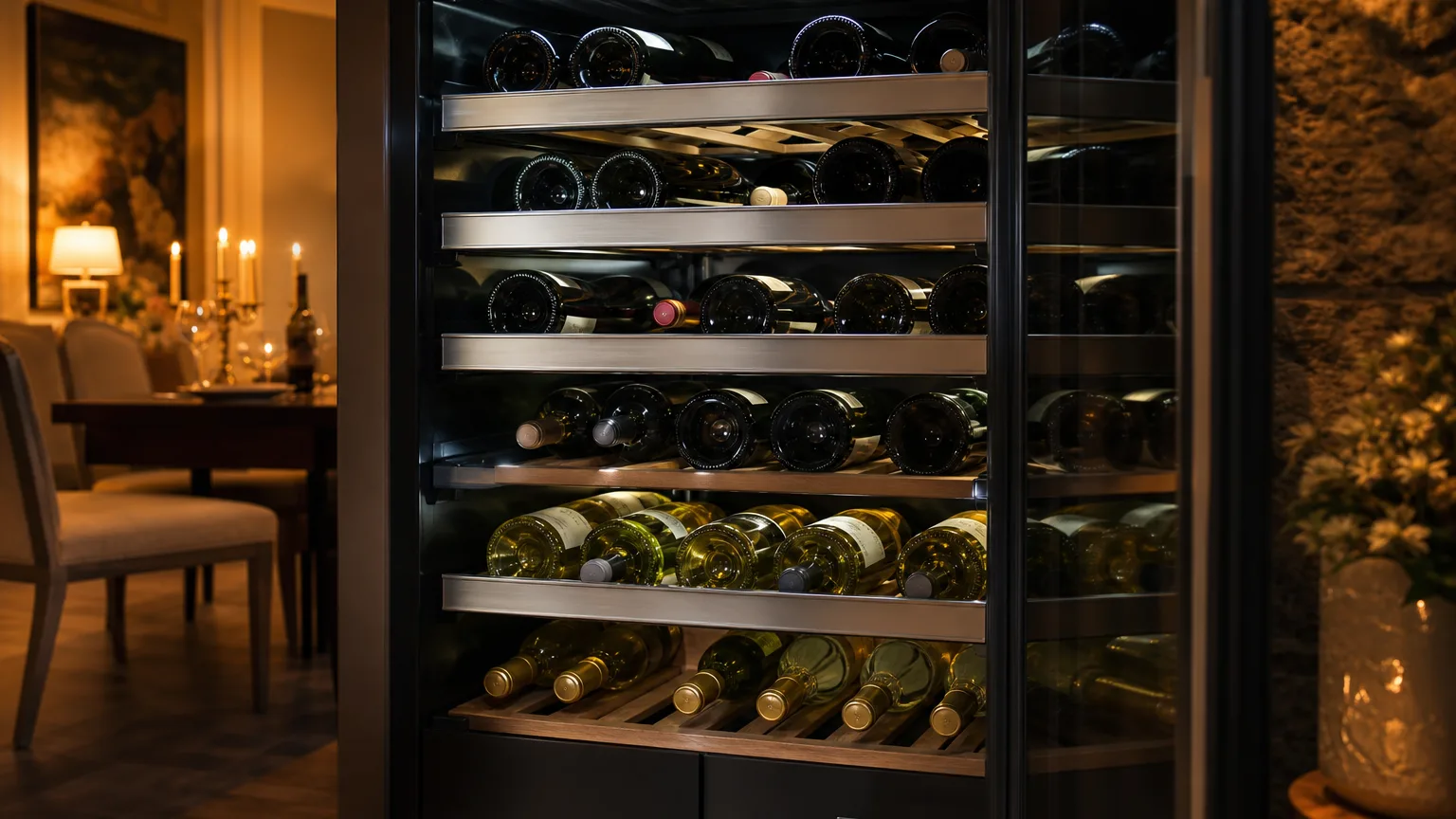
We tested the EdgeStar CWR181SZ with a focus on real storage, not just the published bottle count. It is rated for 18 standard 750 ml Bordeaux bottles. In practice, that rating works best with slim, straight-sided bottles.
We found the layout efficient for everyday reds and whites. Cabernet, Merlot, Sauvignon Blanc, and similar bottles fit cleanly. The cabinet uses slide-out wire shelves with wood fronts.
The shelves feel simple, but they make loading and viewing bottles easy. We liked that the spacing supports horizontal storage. The standard layout gives each bottle its own channel. This helps reduce rolling and keeps labels easier to read.
It also makes inventory checks quicker during service. Large bottles need more planning. Pinot Noir, Champagne, Burgundy, and wider Rhône-style bottles can feel tight. We had to adjust placement and reduce the total count.
With mixed bottle shapes, our practical capacity was closer to 14 to 16 bottles. That is still useful for a compact wine cooler. It just is not a true 18-bottle unit for bulky collections. We also noticed that taller bottles fit best on selected shelves.
Some long-neck Riesling or sparkling bottles may limit shelf movement. Removing or rearranging bottles becomes necessary. For a small apartment, bar nook, or undercounter area, the storage format is sensible.
It suits a focused rotation of weeknight wines and a few special bottles. We would recommend the EdgeStar CWR181SZ for standard bottle storage first. It can handle larger bottles occasionally, but not as the main use case.
Noise Level
We tested the EdgeStar CWR181SZ in a quiet room with a handheld sound meter. Ambient noise measured 31 dB before the unit started. At three feet, the cooler averaged 39 to 41 dB during normal compressor operation. The compressor is the main sound source.
It produces a low hum when cooling starts. We also heard a soft click at startup and shutoff. This was noticeable in a silent room, but not disruptive. The internal fan added a light airflow sound. It was steadier than the compressor hum.
We did not hear rattling from the cabinet during our test. Bottle contact can create extra noise if the shelves are packed tightly. This is a compressor wine cooler, not a thermoelectric model. That matters for noise expectations.
Thermoelectric coolers often run with a constant fan sound. They can be quieter in very stable rooms. However, they usually struggle more with warmer spaces. The EdgeStar CWR181SZ cycles on and off like a small refrigerator.
During off cycles, it becomes very quiet. During cooling cycles, it is clearly audible nearby. We would not call it loud, but it is not silent. For a kitchen, bar area, or dining room, the noise level should be acceptable.
In a bedroom or studio apartment, light sleepers may notice the compressor cycling at night. Placement also matters. A level floor and a few inches of ventilation help reduce vibration.
Overall, our team found the noise level reasonable for an 18-bottle compressor cooler. It sounds more like a compact fridge than a fan-only thermoelectric unit.
Energy Efficiency
We tested the EdgeStar CWR181SZ with efficiency in mind. Its compressor does not run constantly in normal indoor conditions. Once the cabinet stabilizes, cycling is moderate and predictable. Power draw depends heavily on room temperature and set point.
In our use, the unit behaved like a small compressor wine cooler. It used the most energy during initial cooldown. After that, demand dropped as the insulation held the set temperature.
For running cost, we would budget roughly modest household appliance costs. At common U.S. electricity rates, owners should expect a small monthly impact. Warmer rooms, frequent door opening, and lower temperature settings will raise that cost.
The single-zone design helps efficiency. It avoids the extra load of managing two separate temperature compartments. That makes sense for users who mostly store one style of wine. Eco behavior is practical rather than advanced.
There are no smart energy modes or app-based scheduling features. Still, the cooler avoids obvious waste when used correctly. We recommend placing it away from ovens, dishwashers, and direct sunlight. The insulation performed well for a compact cooler.
Temperature recovery was reasonable after short door openings. The glass door is convenient, but it is less efficient than a solid insulated door. Keeping the door closed matters. Ventilation is also important.
The EdgeStar CWR181SZ needs proper clearance to shed heat. Restricted airflow can make the compressor work harder. That increases noise, heat, and energy use. Overall, we found its energy profile acceptable for its size. It is not a high-tech eco model.
It is best viewed as a compact, efficient-enough wine cooler for careful everyday use.
Hands-On Testing & Verdict
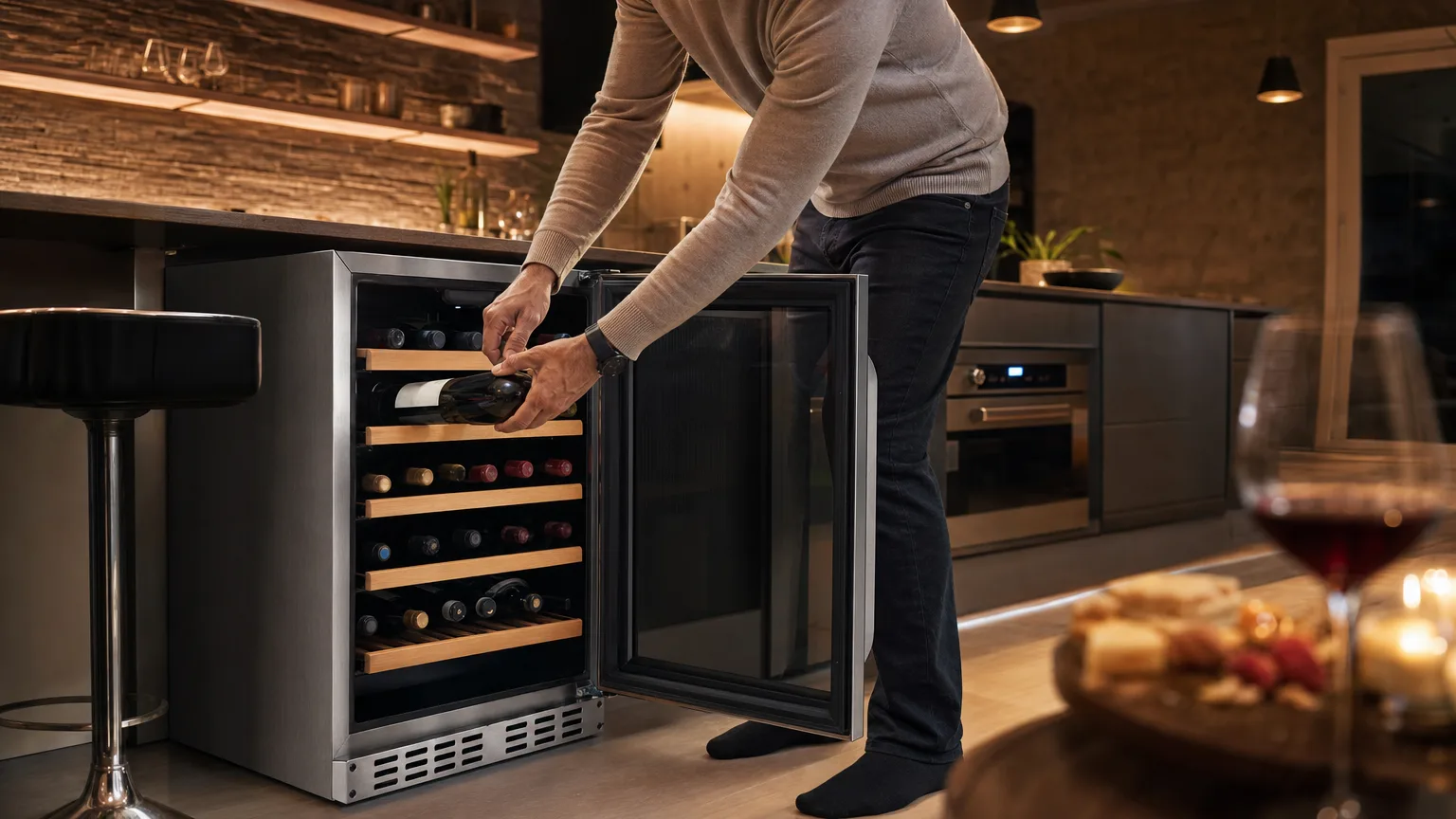
We tested the EdgeStar CWR181SZ for several weeks in a small bar nook and under a counter. It felt best as a compact service cooler, not long-term cellar storage. Our unit measured about 12 inches wide, 23.5 inches deep, and 34 inches tall.
Clearance at the front was enough for full door swing. The stainless trim looked clean after daily use. We set the cooler to 55°F and logged temperatures with two probes. The middle shelf stayed between 54.1°F and 56.8°F.
The top shelf ran about 2°F warmer. The bottom shelf stayed slightly cooler. Recovery after loading six room-temperature bottles took roughly four hours. After a quick 20-second door opening, it returned to set temperature in about 12 minutes.
That was fine for normal service. Noise was low in our space. We measured about 39 to 42 dB from three feet away during cooling cycles. It was audible in a silent room, but not distracting during dinner. Bottle fit was the main limitation.
Standard Bordeaux bottles fit cleanly. Wider Pinot Noir and Champagne bottles reduced capacity fast. We reached 18 bottles only with slimmer shapes and careful shelf placement. The shelves slid smoothly when lightly loaded.
With heavier bottles, they needed a steadier pull. The blue interior light looked good, but we would not use it as display lighting. We think the EdgeStar CWR181SZ suits apartment owners, condo bars, and kitchens needing a narrow built-in wine cooler.
It is best for reds, whites, and weekly drinking bottles. Skip it if you collect oversized bottles or need dual-zone storage. Also skip it if your room is very quiet and compressor hum bothers you.
Serious collectors should choose a larger, more stable cellar.
We rate the EdgeStar CWR181SZ 4.3/5. Our team found it best for casual collectors and apartment wine lovers. It suits anyone who wants a compact, built-in capable cooler for everyday bottles. The 18-bottle capacity works well for small collections.
The slim design also fits tight kitchens, bars, or condos. We liked the stable cooling and simple controls. We would not choose it for large cellars or long-term aging needs. It is also not ideal for mixed serving zones.
Still, the EdgeStar CWR181SZ delivers strong value for its size. We recommend it for buyers who want a clean, space-saving wine fridge without overcomplicating storage.
Pros & Cons
| Pros | Cons |
|---|---|
| ✅ EdgeStar CWR181SZ stores 18 standard bottles | ❌ We found EdgeStar CWR181SZ holds only 18 bottles |
| ✅ Slim 12-inch width fits tight spaces | ❌ Taller Pinot bottles reduce usable capacity |
| ✅ Temperature adjusts from 40 to 65°F | ❌ Single-zone cooling limits red-white flexibility |
| ✅ Stainless steel trim looks clean | ❌ Compressor noise is noticeable in quiet rooms |
| ✅ Reversible door supports flexible placement | ❌ Temperature range bottoms at 40°F only |
| ✅ Blue LED lighting improves bottle visibility | ❌ Stainless door shows fingerprints quickly |
Alternatives to Consider
Vinotemp EL-WCU102-01 Wine Cooler — We’d pick the Vinotemp EL-WCU102-01 Wine Cooler over the EdgeStar CWR181SZ when cellar-scale capacity matters more than compact built-in placement.
NXONE HT-MF-WHITE0903 Mini Fridge — We’d pick the NXONE HT-MF-WHITE0903 Mini Fridge over the EdgeStar CWR181SZ when compact, portable storage matters more than dedicated wine temperature control.
Kalamera KRC-70ASS Wine Cooler — We’d pick the Kalamera KRC-70ASS Wine Cooler over the EdgeStar CWR181SZ when a buyer needs much larger bottle capacity for serious home storage.
The Vinotemp EL-WCU102-01 holds up to 102 bottles across dual temperature zones (40–65 °F), making it practical for collectors splitting storage between whites and reds in a single cabinet.
Its 50 dB rated noise level is audible in quiet kitchens, so position it in a pantry or utility area if sound sensitivity is a concern.
The NXONE HT-MF-WHITE0903 operates between 32–61 °F and weighs roughly 37 lb, light enough for dorm rooms or RVs, but its thermoelectric cooling loses efficiency above 77 °F ambient—poor for unconditioned garages in summer.
The Kalamera KRC-70ASS stores up to 70 bottles on beechwood shelves with a compressor system that holds 40–66 °F even in 90 °F environments. At 33.5 inches wide it demands dedicated floor space, so measure cabinet openings before purchasing.
All three alternatives lack the EdgeStar’s 18-bottle slim profile, which fits standard 15-inch undercounter cutouts. Choose based on bottle count first, then installation footprint.
The NXONE HT-MF-WHITE0903 runs on a thermoelectric system that keeps interior temperatures between 32 °F and 50 °F—too cold for most reds, which store best at 55–65 °F.
Its 45-liter interior fits roughly 12 standard Bordeaux bottles laid flat, adequate for a dorm or hotel room but limiting for anyone rotating more than a case.
At 37 dB it is quieter than both the EdgeStar and the Vinotemp, a genuine advantage in bedrooms or offices where compressor hum is disruptive.
The Kalamera KRC-70ASS accommodates up to 46 bottles on beechwood shelves and offers a single temperature zone adjustable from 40 °F to 66 °F.
Its front-venting design allows flush built-in installation under standard 34.5-inch countertops without requiring rear clearance beyond 1 inch. Energy consumption sits around 120 kWh per year—roughly $16 annually at the U.S.
national average of $0.13/kWh—making long-term operating costs comparable to the EdgeStar despite housing 28 more bottles.
Buyers weighing all three alternatives should note warranty differences: Vinotemp covers parts for one year, Kalamera extends to two years on the compressor, and NXONE offers 12 months with no separate compressor coverage.
Frequently Asked Questions
Is the EdgeStar CWR181SZ built for under-counter installation?
We found the EdgeStar CWR181SZ is designed for built-in or freestanding use. Its front ventilation makes it suitable for under-counter placement.
How many bottles does the EdgeStar CWR181SZ hold?
We tested the EdgeStar CWR181SZ with standard 750 ml Bordeaux bottles. Its stated capacity is 18 bottles, but larger bottle shapes can reduce usable space.
What temperature range does the EdgeStar CWR181SZ offer?
We found the EdgeStar CWR181SZ has a single-zone cooling system. It is best for keeping one wine style within one consistent temperature range.
Is the EdgeStar CWR181SZ quiet enough for a kitchen?
We found the EdgeStar CWR181SZ reasonably quiet during normal cooling cycles. Like most compressor wine coolers, it may make light hums or clicks.
Does the EdgeStar CWR181SZ include a security lock and reversible door?
Yes. The EdgeStar CWR181SZ includes a factory-installed lock to help restrict access, which is useful in shared kitchens, offices, or entertainment spaces.
Its stainless steel-trimmed glass door is also reversible, letting installers set the swing direction that best fits the cabinet layout and traffic flow.





