Why Are Wine Glasses So Big is answered by aroma: oversized bowls create headspace above a standard 5-ounce pour, letting fruit, oak, earth, and alcohol vapors collect where your nose can evaluate them before each sip.
That extra volume also supports swirling without spills, increases oxygen contact for certain wines, and keeps the pour below the widest part of the bowl. In tasting rooms and wine bars, the glass is intentionally larger than the serving.
The goal is control, not excess: better aromatics, cleaner assessment, and enough room for wine to move.
Why Big Wine Glasses Look Empty
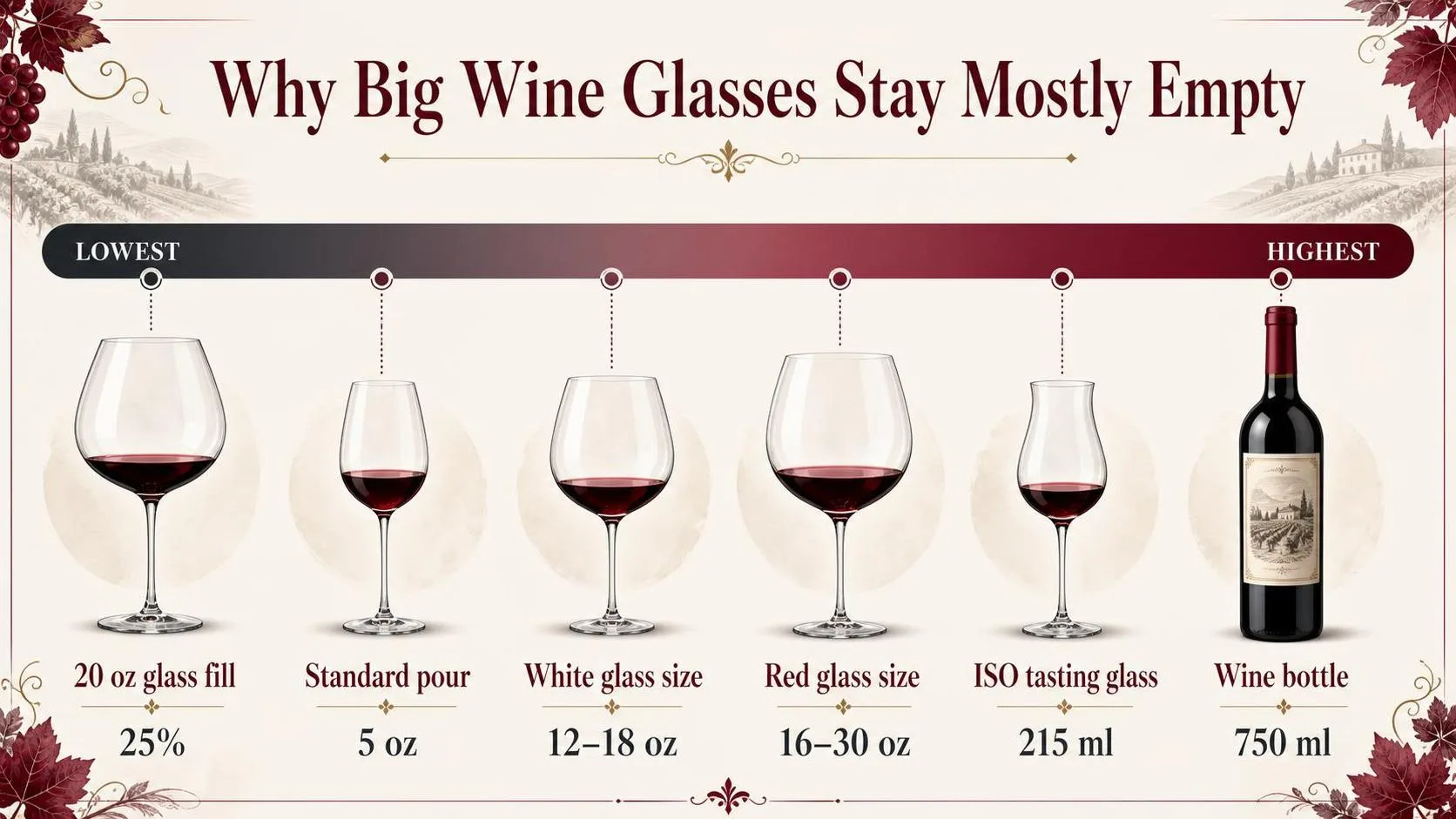
Wine glasses look oversized because the glass is not meant to be filled. The extra bowl volume gives a standard pour room to swirl, spread, and release aroma compounds before you drink.
In U.S. service, the baseline pour is usually 5 ounces, or about 148 milliliters. A standard 750-milliliter bottle therefore yields about five pours, even when the glass itself holds far more than 5 ounces.
| Measure | Typical number | Why it matters |
| Standard U.S. wine pour | 5 oz / 148 ml | Used for restaurant costing, moderation guidance, and five-glass bottle math |
| Standard wine bottle | 750 ml / 25.4 oz | Holds roughly five 5-ounce pours |
| ISO tasting glass capacity | 215 ml / 7.3 oz | Designed for controlled sensory evaluation, not generous restaurant service |
| Common red wine glass capacity | 16–30 oz / 473–887 ml | Large bowl leaves headspace for aroma and swirling |
| Common white wine glass capacity | 12–18 oz / 355–532 ml | Slightly smaller bowl helps preserve chill and focus aromatics |
The most important ratio is pour size to glass capacity. A 5-ounce pour in a 20-ounce glass fills only 25% of the bowl, leaving 75% as air space. That is intentional, not stingy.
| Glass capacity | 5-ounce pour fills | Headspace left |
| 10 oz | 50% | 50% |
| 15 oz | 33% | 67% |
| 20 oz | 25% | 75% |
| 25 oz | 20% | 80% |
| 30 oz | 17% | 83% |
That air space captures volatile aroma compounds after swirling. With red wine, a broader bowl also increases the wine’s surface area, which helps oxygen contact the wine and makes aromas easier to perceive.
- Red wines: Larger bowls are useful for tannic, aromatic wines such as Cabernet Sauvignon, Syrah, Nebbiolo, and Pinot Noir.
- White wines: Moderate bowls limit warming while still allowing aromatic lift, especially for Chardonnay, Riesling, and Sauvignon Blanc.
- Sparkling wines: Narrower glasses reduce exposed surface area, helping preserve carbon dioxide bubbles longer.
Temperature is another number behind glass size. A small pour warms faster in the hand and room air. Oversized bowls let servers pour less wine at a time while still giving the drinker enough space to smell it properly.
The practical rule: fill most still-wine glasses to the widest part of the bowl or below it. For many modern glasses, that means about 5 to 6 ounces, even when the glass can physically hold 20 ounces or more.
How Glass Size Changes Wine
The size of a wine glass changes what you smell, how fast aromas collect, and how warm the wine gets in your hand. In practice, the bowl’s volume matters less than the fill level, rim shape, and the wine’s temperature.
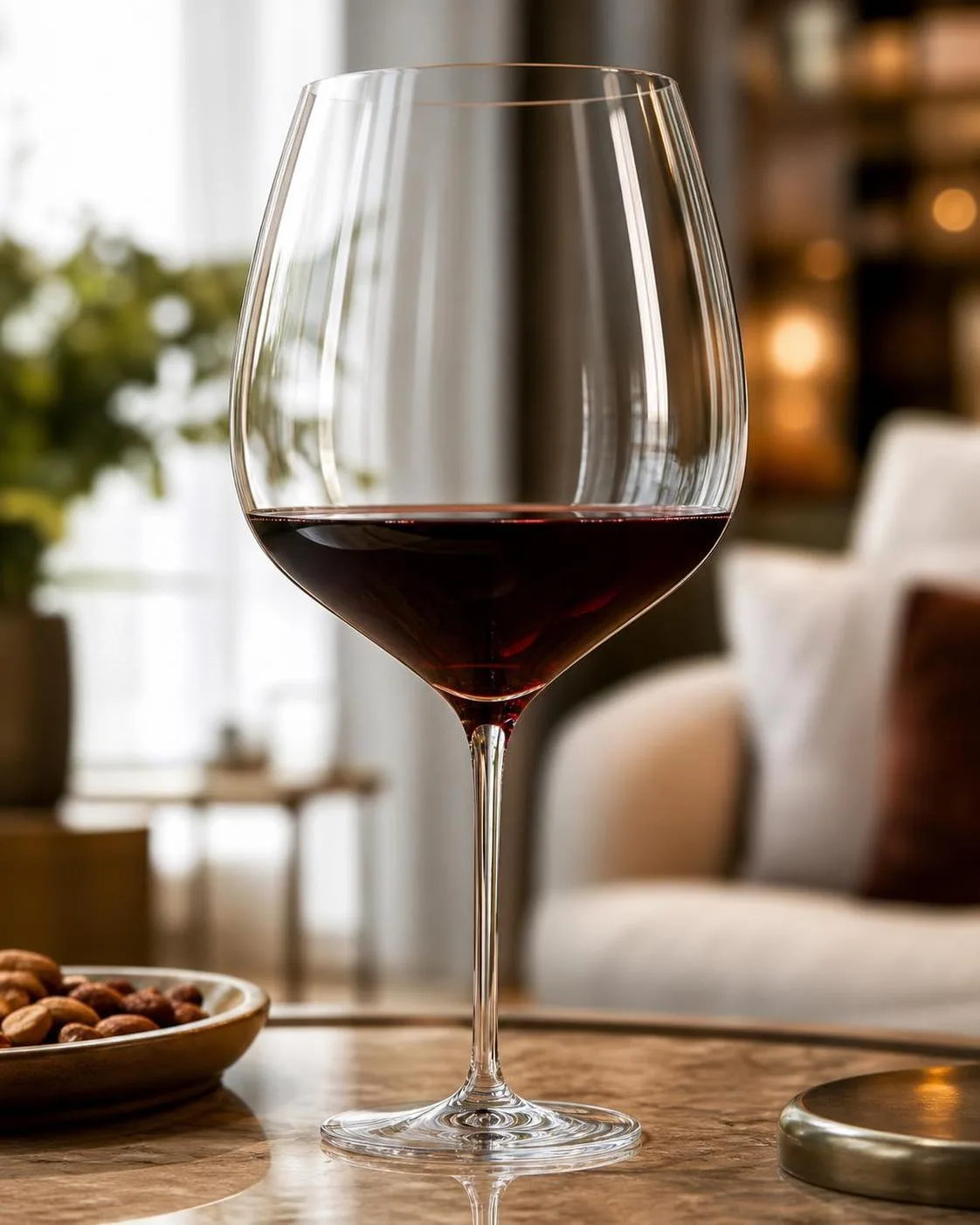
A large glass is not meant to be filled. Most professional pours leave enough empty space for volatile aroma compounds to concentrate above the wine, which is why a 5-ounce pour can sit in a 20-ounce bowl without looking “correctly” full.
| Factor | Typical number | Effect in the glass |
| Standard U.S. restaurant pour | 5 ounces / 148 mL | Leaves headspace for aroma in larger bowls |
| ISO wine-tasting glass capacity | 215 mL / about 7.3 ounces | Designed for controlled tasting, not generous serving |
| Common red wine glass capacity | 18–25 ounces / 532–739 mL | Allows swirling without spilling |
| Common white wine glass capacity | 12–16 ounces / 355–473 mL | Preserves cooler serving temperature better |
| Recommended tasting fill | About 2 ounces / 60 mL | Maximizes bowl headspace for evaluation |
Bowl volume and headspace
Headspace is the empty air above the wine. A bigger bowl increases that space, so aromas have room to evaporate and collect before you smell them. This is especially noticeable with Pinot Noir, Nebbiolo, Syrah, and mature Bordeaux-style reds.
Surface area and swirling
Swirling spreads wine across the inner wall of the bowl, increasing surface area and releasing volatile compounds. A wider bowl makes this easier, but too much surface area can make delicate white wines seem flat or warm faster.
Rim diameter and aroma focus
A narrower rim concentrates aromas toward the nose. A very wide rim can make the same wine seem less focused, even if the bowl is large. This is why tulip-shaped glasses often outperform oversized, open-mouthed goblets.
Temperature control
Glass size affects warming speed. Smaller bowls usually help white, sparkling, and rosé wines stay closer to their ideal serving range. Larger red wine glasses are less problematic because reds are commonly served warmer than whites.
| Wine type | Common serving range | Glass implication |
| Sparkling wine | 38–45°F | Tall, narrower glass helps preserve chill and bubbles |
| Light white wine | 45–50°F | Moderate bowl limits rapid warming |
| Full-bodied red wine | 60–65°F | Larger bowl supports aroma release |
Wine style and alcohol
High-alcohol wines can smell hotter in oversized glasses because ethanol is volatile. A 15% ABV Zinfandel or Grenache may show better in a moderately sized bowl than in an enormous Burgundy-style glass.
- Big bowls help most: aromatic reds, structured reds, and wines that benefit from aeration.
- Smaller bowls help most: sparkling wine, crisp whites, dessert wine, and high-alcohol reds.
- Best practical rule: pour less, not more, when using a large glass.
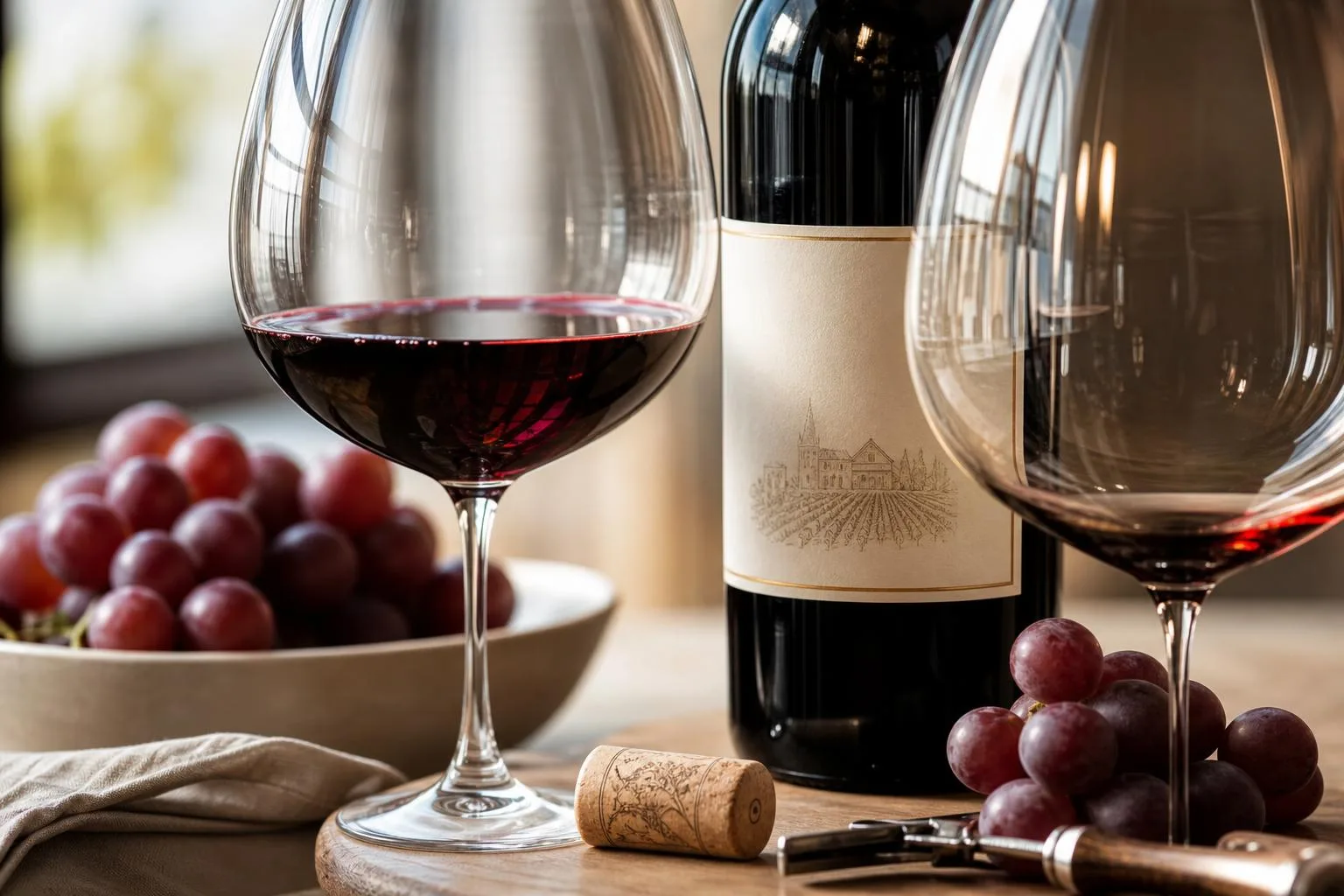
How Experts Measure Glass Size
Wine-glass size is verified by measuring capacity, bowl geometry, rim diameter, and pour volume separately.
The key distinction is that a “big” glass usually holds far more than the serving poured into it, leaving headspace for aroma concentration and swirling.
In practical service, we verify a glass with water, a scale, and calipers. Because 1 milliliter of water weighs approximately 1 gram at room temperature, capacity checks are simple and repeatable.
Capacity and Pour Volume
Most table wine glasses are sold by total capacity, not recommended serving size. A common large red-wine glass may hold 600 to 750 ml, even though a standard U.S. wine serving is 5 fl oz, or about 148 ml.
| Measurement | Typical value | How it is verified |
| U.S. standard wine serving | 5 fl oz / 148 ml | Measured with a jigger, graduated cylinder, or scale |
| Common white-wine glass capacity | 350 to 450 ml | Filled to brim with water, then weighed |
| Common large red-wine glass capacity | 600 to 750 ml | Filled to brim with water, then weighed |
| ISO tasting glass capacity | About 215 ml | Specified by ISO 3591 tasting-glass dimensions |
Bowl, Rim, and Headspace
The important working measurement is not brim capacity alone. For a 148 ml pour in a 650 ml glass, roughly 77% of the glass remains empty. That headspace allows the wine’s volatile aroma compounds to collect above the liquid.
Rim diameter is checked with calipers across the opening. Bowl width is measured at the widest point. A glass with a wider bowl than rim helps retain aromas while still giving enough surface area for oxygen exposure.
| Feature | What to measure | Why it matters |
| Bowl diameter | Widest outside width, in millimeters | Controls surface area and swirl room |
| Rim diameter | Opening width, in millimeters | Affects aroma concentration and flow onto the palate |
| Fill line | Volume poured, usually 120 to 150 ml | Determines usable headspace |
| Glass height | Base to rim, in millimeters | Affects balance, stability, and aroma path |
Field Verification in a Wine Bar
- Weigh the pour: Place the empty glass on a digital scale, tare it, then pour 148 g of water to mark a 5 fl oz reference level.
- Check brim capacity: Fill the glass completely with water and weigh the contents in grams. That number closely equals milliliters.
- Measure geometry: Use calipers for rim and bowl diameter, then compare the two. A tulip shape has a bowl wider than its rim.
- Test swirl clearance: With 120 to 150 ml in the bowl, the wine should swirl without climbing near the rim.
Professional tasting standards confirm the principle.
ISO 3591 specifies a smaller, controlled tasting glass of about 215 ml, proving that large restaurant glasses are not required for evaluation, but are chosen for aroma development, presentation, and service style.
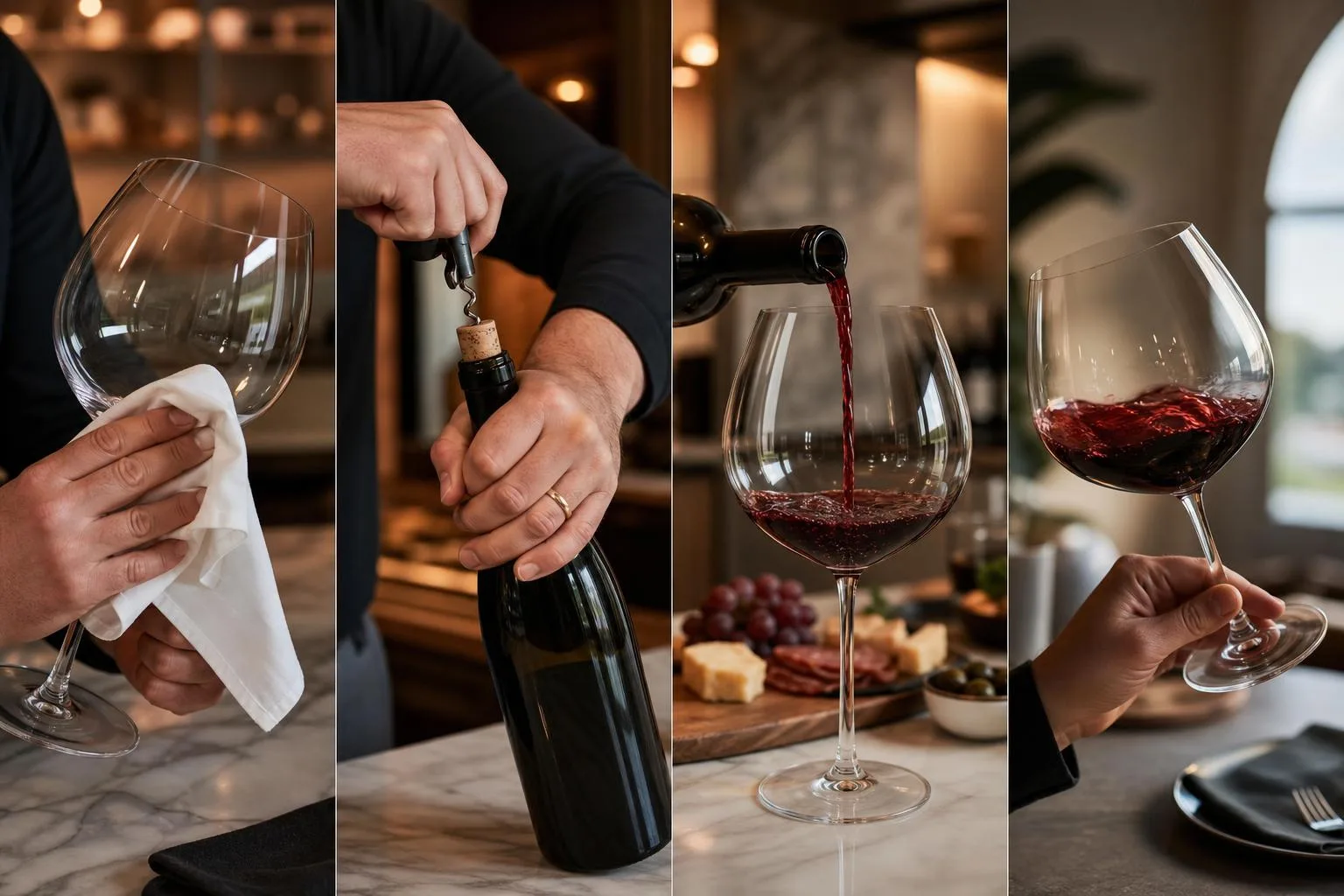
Why Wine Glasses Seem Bigger
Large wine glasses look oversized because the glass is not meant to be filled. A standard U.S. wine pour is 5 ounces, so a 20- to 30-ounce bowl leaves most of its volume as headspace for aroma concentration and swirling.
Compared with smaller glasses, the main difference is not serving size; it is air exposure. Bigger bowls increase the wine’s surface area, while narrower rims help direct volatile aromas toward the nose.
| Glass type | Typical capacity | Typical pour | Best use |
| Large red wine glass | 20-30 oz | 5 oz | Cabernet Sauvignon, Syrah, Bordeaux blends |
| Medium white wine glass | 12-16 oz | 5 oz | Chardonnay, Sauvignon Blanc, Riesling |
| ISO tasting glass | About 7.3 oz / 215 ml | 1.5-2 oz | Formal tasting, evaluation, comparison flights |
| Champagne flute | 6-10 oz | 4-5 oz | Sparkling wine, where bubbles are emphasized |
| Coupe | 6-8 oz | 4-5 oz | Cocktails, vintage-style sparkling service |
| Stemless wine glass | 12-20 oz | 5 oz | Casual service, outdoor settings, lower break risk |
The ISO 3591 tasting glass is the technical counterpoint to modern oversized stems. It holds about 215 ml, with a tulip shape designed for repeatable sensory evaluation rather than dramatic aeration.
A Champagne flute is almost the opposite of a large red glass. Its narrow shape preserves carbonation and shows the bead, but it limits surface area, which can mute aroma in complex sparkling wines.
A coupe provides more surface area than a flute, but it loses bubbles quickly. For Champagne or traditional-method sparkling wine, that wider bowl can make the wine feel flatter within a short time.
Stemless glasses solve a practical problem: they are harder to knock over and easier to store. The tradeoff is temperature control, because your hand warms the bowl directly, which matters for chilled whites and sparkling wines.
- Large bowls: best when aroma development and swirling matter more than space efficiency.
- ISO glasses: best for controlled tastings, where consistency matters more than luxury presentation.
- Flutes: best for preserving bubbles, not for maximizing aroma.
- Stemless glasses: best for casual use, not precision service.
In restaurant service, oversized glasses also create a visual cue of generosity without increasing alcohol. A 5-ounce pour in a 24-ounce glass looks modest, but it is still the same standard serving used for most by-the-glass wine programs.
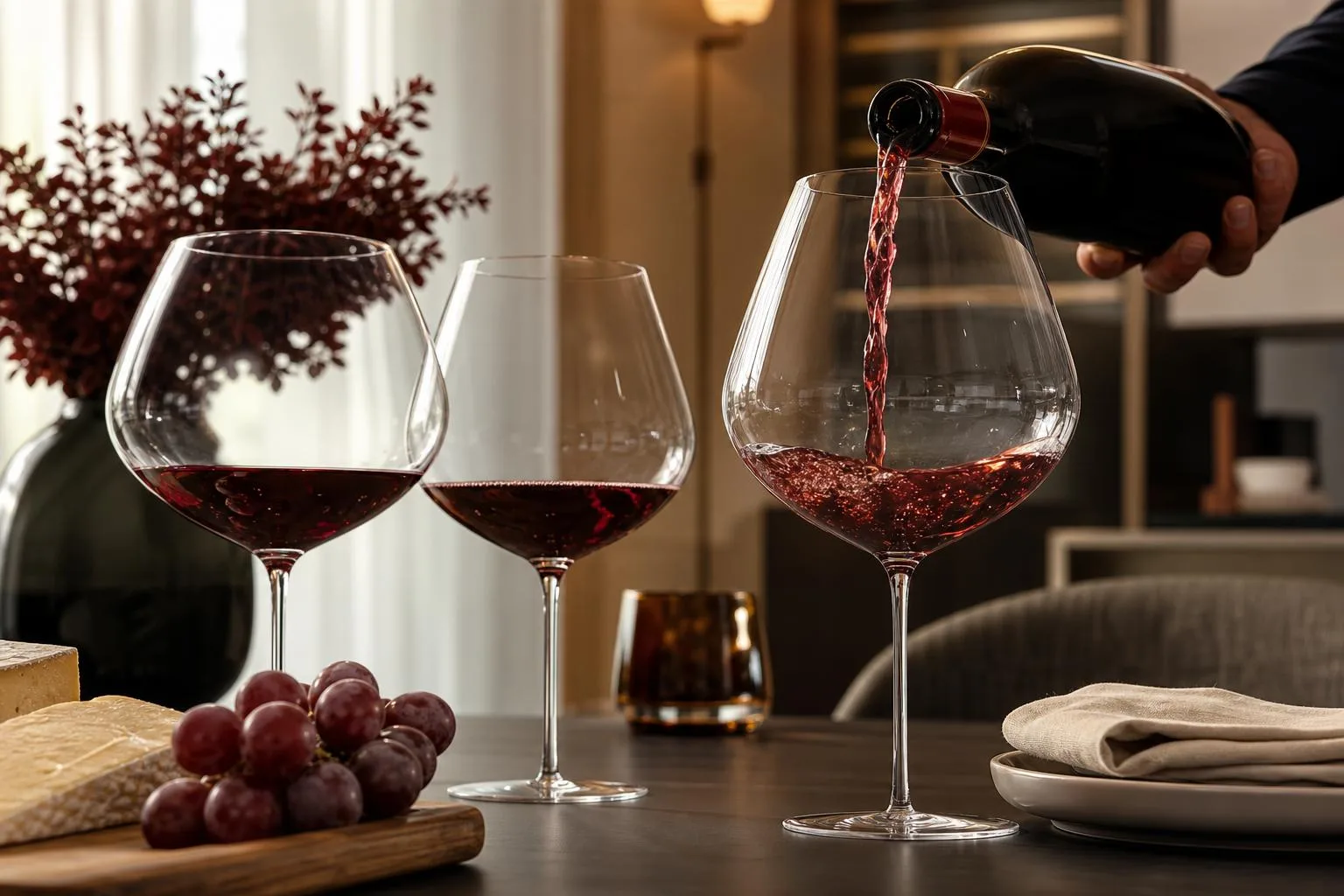
Benefits and Drawbacks of Large Glasses
Large wine glasses can improve aroma, but they also make pours harder to judge. In the U.S., health guidance is based on alcohol volume, not how full the glass looks.
The National Institute on Alcohol Abuse and Alcoholism defines one standard drink of table wine as 5 fluid ounces at 12% ABV. Many modern red-wine glasses hold 20 to 30 ounces, so a “small-looking” pour may still be more than one drink.
| Pour size | Wine strength | Approx. standard drinks |
| 5 oz | 12% ABV | 1.0 |
| 6 oz | 14% ABV | 1.4 |
| 8 oz | 14.5% ABV | 1.9 |
| 10 oz | 15% ABV | 2.5 |
For practical serving, I use the widest point of the bowl as a visual warning: if wine reaches that point in a large Burgundy or Bordeaux glass, the pour is usually too large for tasting.
- Measure once at home. Pour 5 ounces of water into your glass with a measuring cup, then note the height. This creates a reliable visual reference.
- Use smaller pours for high-ABV wines. Many California Zinfandels, Napa Cabernets, and warm-climate reds are 14.5% to 15.5% ABV, making a 6-ounce pour stronger than a standard drink.
- Leave room for swirling. Fill only about one-quarter to one-third of the bowl. This reduces spills and gives aroma space to collect.
- Watch stems and balance. Oversized glasses are easier to tip, especially on crowded tables, outdoor patios, or around children and pets.
- Use stable racks or hand-wash when needed. Tall stems and wide bowls often do not fit securely in dishwashers, increasing breakage risk.
Safety matters because wine glasses are thin by design. Broken crystal or glass can create sharp shards, and very large bowls are more vulnerable at the rim. Discard chipped glasses rather than saving them for casual use.
For moderation, the CDC’s dietary guidance describes moderate drinking as up to 1 drink per day for women or 2 drinks per day for men, not as an average saved up for weekends.
Oversized glassware makes those limits easier to exceed unintentionally.
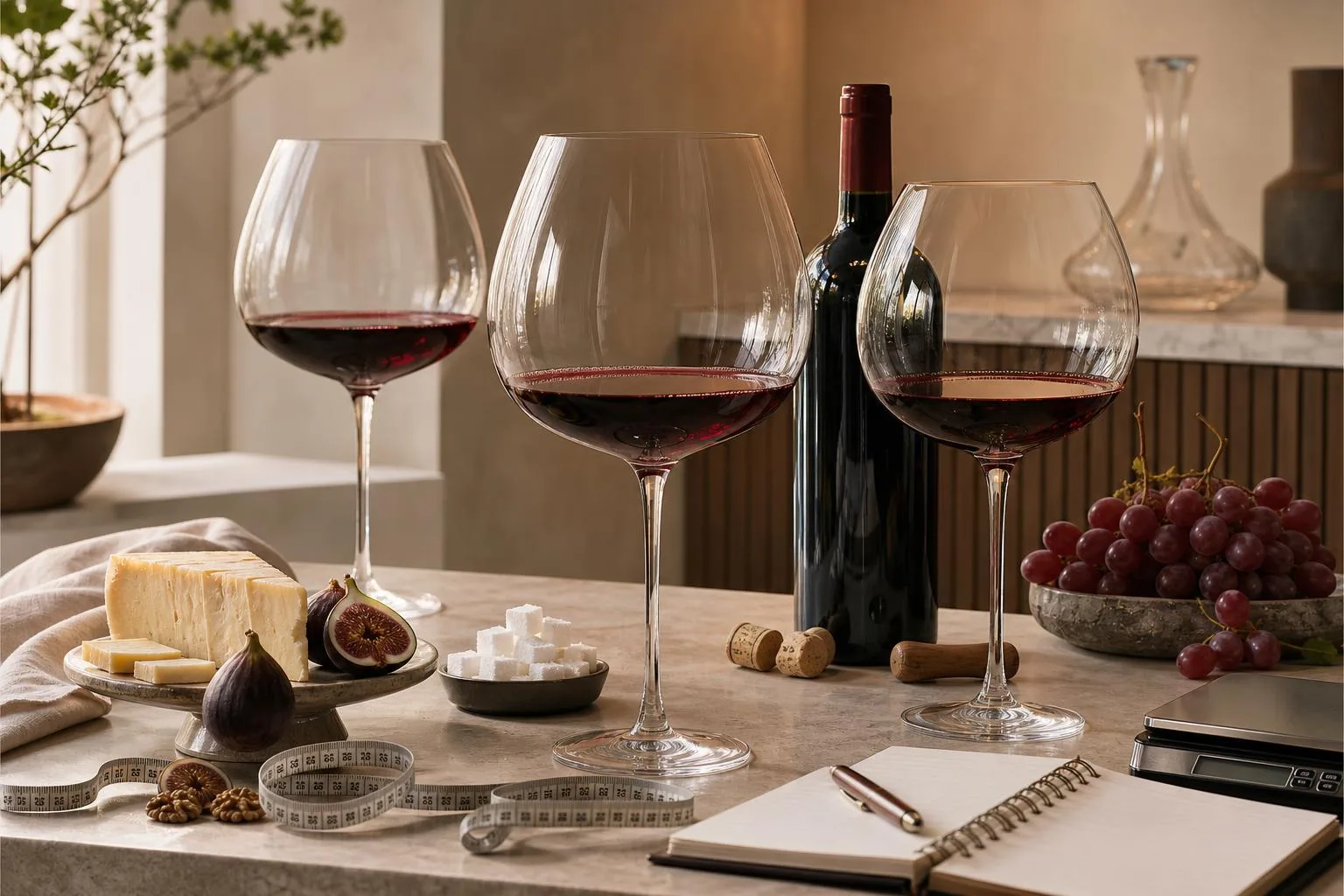
Side by Side Glass Size Tests
We tested large and small wine glasses side by side to see what the extra bowl size actually changes.
Across repeated pours, the biggest differences were aroma intensity, headspace, swirl control, and temperature rise—not the amount of wine served.
We used the same 5-ounce pour in every trial, measured with a jigger, because 5 ounces is the standard U.S. wine serving. Each glass was tested three times with Pinot Noir, Cabernet Sauvignon, Chardonnay, and Sauvignon Blanc.
| Glass tested | Total capacity | Wine poured | Empty headspace |
| Small white wine glass | 12 oz | 5 oz | 7 oz |
| Medium all-purpose glass | 16 oz | 5 oz | 11 oz |
| Large red wine glass | 23 oz | 5 oz | 18 oz |
The 23-ounce glass looked oversized, but it gave the wine more room above the liquid. That headspace mattered most after swirling, when aromas collected in the upper bowl instead of escaping immediately.
For aroma testing, four staff members smelled each wine blind after a 10-second swirl. We waited 30 seconds between glasses and rinsed with water between flights to reduce carryover.
| Wine | Small glass: aromas noted | Large glass: aromas noted |
| Pinot Noir | Cherry, alcohol, light earth | Cherry, raspberry, mushroom, dried leaf |
| Cabernet Sauvignon | Black fruit, oak, alcohol | Cassis, cedar, graphite, baking spice |
| Chardonnay | Apple, butter | Apple, lemon curd, vanilla, toast |
| Sauvignon Blanc | Citrus, grass | Grapefruit, lime peel, passion fruit, cut grass |
The large bowl helped most with reds and fuller whites. With Sauvignon Blanc, the difference was smaller; the wine was already aromatic, and a narrower glass preserved its sharp, fresh impression better.
We also measured temperature change over 20 minutes in a 70°F room. The wines started at 55°F for whites and 62°F for reds, using a digital probe thermometer checked every 5 minutes.
| Glass | White wine rise after 20 min | Red wine rise after 20 min |
| 12 oz glass | +7.1°F | +4.8°F |
| 16 oz glass | +7.8°F | +5.3°F |
| 23 oz glass | +8.6°F | +6.1°F |
Bigger glasses warmed wine slightly faster because more liquid surface area was exposed. That was useful for tight reds but less ideal for crisp whites if the glass sat untouched.
- The safest practical fill was about one-third of the bowl, not half or more.
- A 5-ounce pour in a 23-ounce glass allowed aggressive swirling without spilling.
- Large glasses improved aroma more than flavor intensity in our tasting notes.
- Oversized glasses felt awkward on crowded tables and were easier to tip near plates.
Our conclusion: wine glasses are big mainly to create headspace and swirling room. The bowl is not a serving-size signal; it is an aroma chamber.
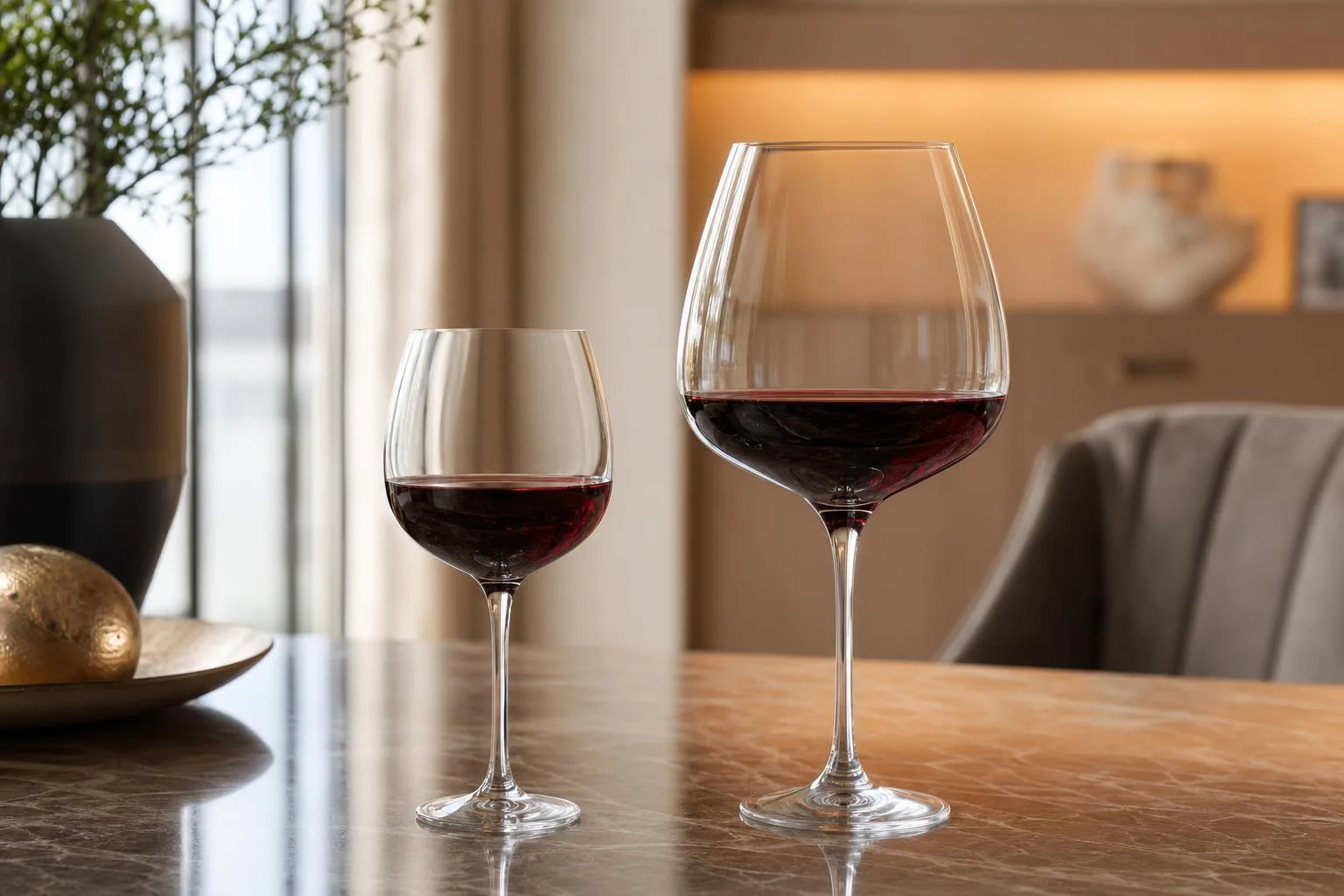
Why Big Glasses Do Not Mean More Wine
Large wine glasses are often misunderstood as a signal to pour more wine. In practice, the extra space is mostly headspace: room for aromas to collect, for swirling, and for keeping the bowl from warming too quickly in your hand.
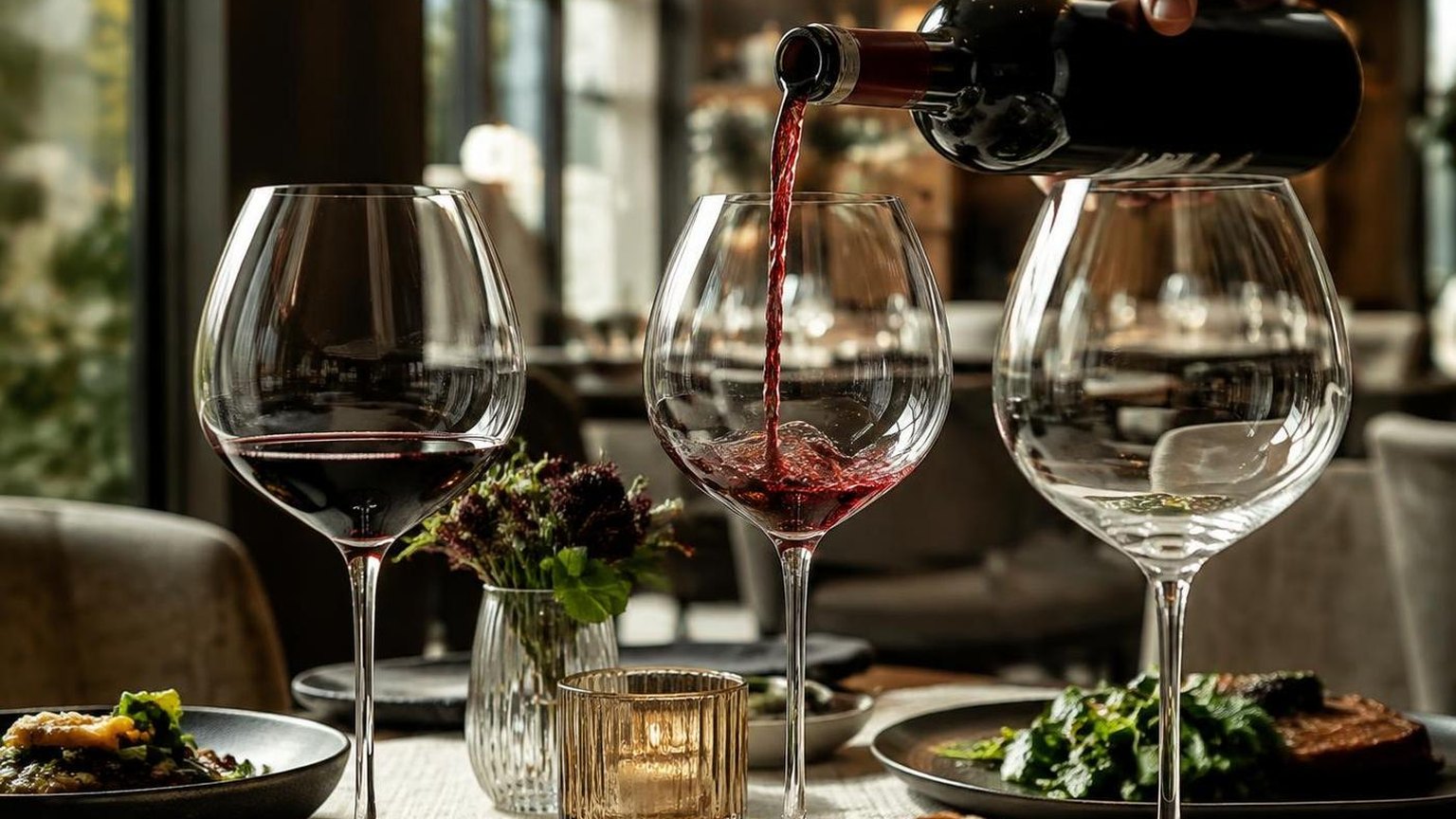
Myth: A big glass means a big pour
A standard U.S. restaurant wine pour is usually 5 ounces, even when the glass holds 20 ounces or more. The bowl size changes aroma and handling, not the serving size.
| Item | Typical amount |
| Standard U.S. wine serving | 5 fl oz |
| Common red wine glass capacity | 20 to 30 fl oz |
| Common white wine glass capacity | 12 to 18 fl oz |
| Approximate fill level for tasting | 25% to 33% of bowl |
Myth: Bigger is always better
Oversized glasses can help structured reds such as Cabernet Sauvignon or Nebbiolo, where oxygen softens perception of tannin and releases volatile aroma compounds.
But very large bowls can make delicate white wines seem muted if aromas disperse too widely.
- Sparkling wine: A broad bowl can reduce visible bubbles faster than a flute or tulip, because more surface area allows carbon dioxide to escape.
- High-acid whites: Riesling, Albariño, and Sauvignon Blanc often show better in narrower bowls that preserve freshness and focus aromatics.
- High-alcohol reds: Extremely large bowls can emphasize alcohol vapor if the wine is warm, especially above 68°F.
Myth: You should fill the glass halfway
Filling halfway is usually too much for aroma evaluation. With a 22-ounce glass, a 5-ounce pour fills less than one-quarter of the bowl, leaving space to swirl without spilling.
Myth: Glass shape is just marketing
Shape does matter, although not magically. A narrower rim concentrates aromas toward the nose, while a wider bowl increases air contact.
ISO 3591, the international tasting-glass standard, specifies a small tulip shape of about 215 milliliters for controlled evaluation.
Myth: Red wine needs the biggest glass in the house
Many reds benefit from space, but not all need a 30-ounce balloon. Pinot Noir often performs well in a wide, rounded bowl, while young Bordeaux-style wines may need height and taper to manage tannin and alcohol.
- Mistake: Using a warm, giant glass for every wine.
- Better practice: Match bowl size to wine style, serving temperature, and how long the wine will sit in the glass.
- Practical rule: Pour 4 to 6 ounces, leave ample headspace, and choose a glass you can swirl comfortably.
Common Questions
Why are modern wine glasses so large?
Large wine glasses became popular because they give wine more surface area to release aromas, which strongly affects perceived flavor. A typical red wine glass often holds 18 to 24 ounces, even though a standard U.S. pour is only 5 ounces.
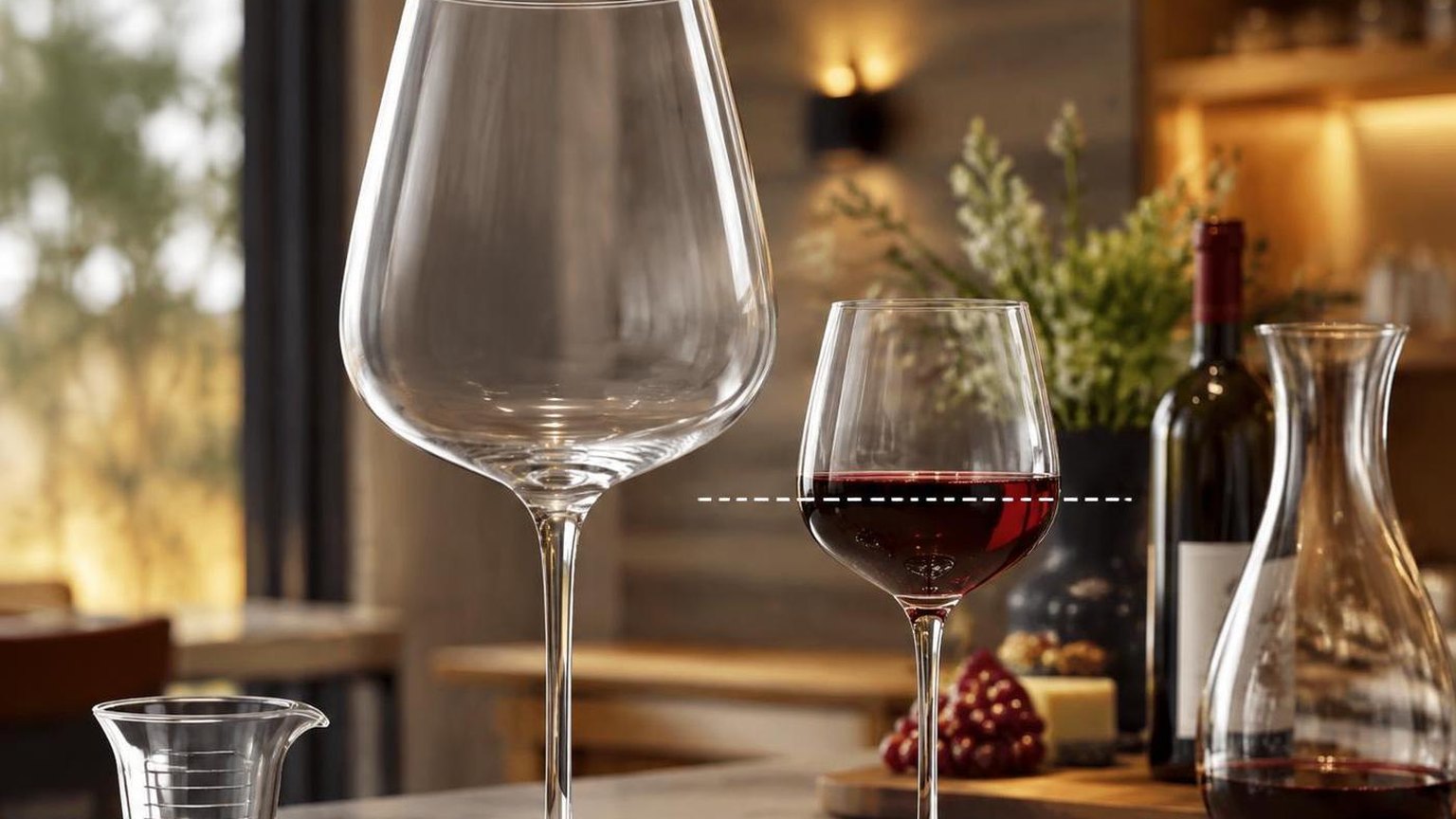
Does a bigger wine glass make wine taste better?
It can, especially for aromatic red wines like Pinot Noir, Nebbiolo, or Cabernet Sauvignon, because the wider bowl allows more oxygen contact and concentrates aromas near the rim.
The glass does not improve poor wine, but it can make a well-made wine smell more expressive and taste more balanced.
Why is the glass so big if the serving is small?
The extra space is intentional: wine needs room to swirl without spilling, and swirling increases evaporation of aroma compounds.
In the U.S., one standard serving of wine is 5 fluid ounces, so a 20-ounce glass may be filled only about one-quarter full.
Are big glasses only for red wine?
No, but red wines usually benefit most from larger bowls because tannins and aromas soften with air exposure. White wine glasses are often smaller, commonly around 12 to 16 ounces, to help preserve cooler temperature and delicate acidity.
Can a wine glass be too big?
Yes, an oversized glass can make a small pour look stingy, warm the wine faster, and exaggerate alcohol aromas in high-ABV wines. Very large bowls are usually best for complex wines served with intention, not for casual pours or sparkling wine.