
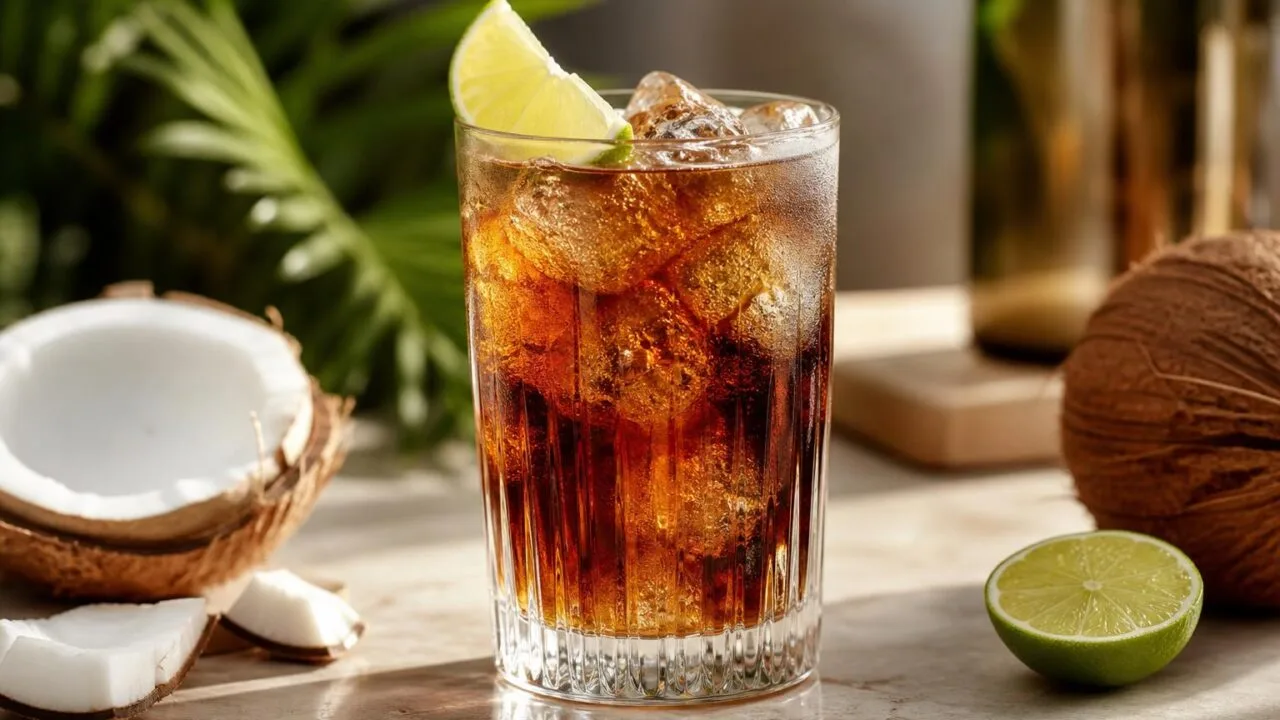
What Is Coconut Rum And Coke Called is commonly called a Malibu and Coke when it’s made with Malibu coconut rum and cola.
In bars, the same two-ingredient highball may also be ordered as coconut rum and Coke, especially if the rum brand is not Malibu.
The drink is a simple built cocktail: coconut-flavored rum poured over ice, topped with cola, and usually served in a highball or rocks glass.
Most versions use 1.5 ounces of coconut rum with 4 to 6 ounces of cola, giving it a sweet, tropical profile with familiar caramel-cola depth.
Common Name: Malibu and Coke
A coconut rum and Coke is most commonly called a Malibu and Coke when made with Malibu Coconut Rum. If lime juice is added, many bartenders describe it as a coconut Cuba Libre, though the classic Cuba Libre is rum, cola, and lime.
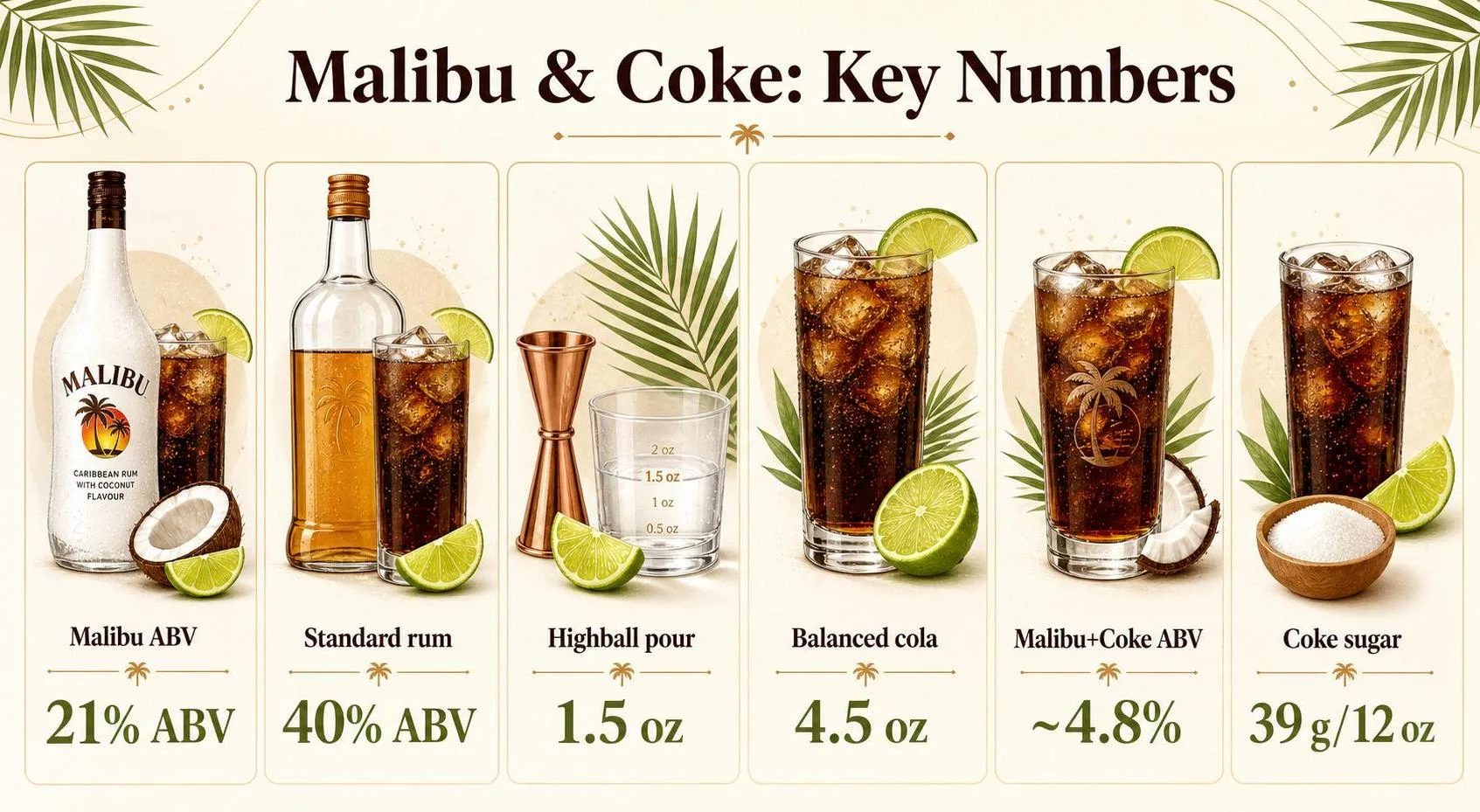
The name depends less on a formal cocktail registry and more on what is in the glass. The numbers below explain why a Malibu and Coke drinks lighter than a standard rum and Coke.
| Drink or ingredient | Typical number | Why it matters |
| Malibu Original Coconut Rum | 21% ABV | It is much lower in alcohol than standard 40% ABV rum. |
| Standard rum in the U.S. | Usually 40% ABV / 80 proof | This is the common strength used in a traditional rum and Coke. |
| Typical highball pour | 1.5 oz spirit | This is the common U.S. single mixed-drink measure. |
| Typical cola amount | 4 to 6 oz | More cola makes the drink sweeter and less spirit-forward. |
Using a 1.5 oz pour, the alcohol difference is significant. Malibu at 21% ABV contributes about 0.315 oz of pure alcohol. A 40% ABV rum contributes about 0.60 oz of pure alcohol.
| Build | Spirit alcohol | Approximate drink ABV with 5 oz Coke |
| 1.5 oz Malibu + 5 oz Coke | 0.315 oz pure alcohol | About 4.8% ABV |
| 1.5 oz 40% rum + 5 oz Coke | 0.60 oz pure alcohol | About 9.2% ABV |
That is why a Malibu and Coke often feels closer to a beer-strength highball than a classic rum and Coke. Ice dilution can push the final ABV lower, especially if the drink sits for several minutes.
Cola also changes the numbers. A 12 oz can of Coca-Cola Classic contains 39 g sugar and 34 mg caffeine, according to Coca-Cola’s U.S. nutrition information. If you use 5 oz, that is roughly 16 g sugar and 14 mg caffeine.
- 2 ingredients: coconut rum and cola equals a Malibu and Coke-style drink.
- 3 ingredients: coconut rum, cola, and lime makes it closer to a coconut Cuba Libre.
- 1:3 ratio: 1.5 oz coconut rum to about 4.5 oz cola is a balanced starting point.
- 21% versus 40% ABV: this is the main reason coconut rum versions taste softer.
Names for Coconut Rum and Cola
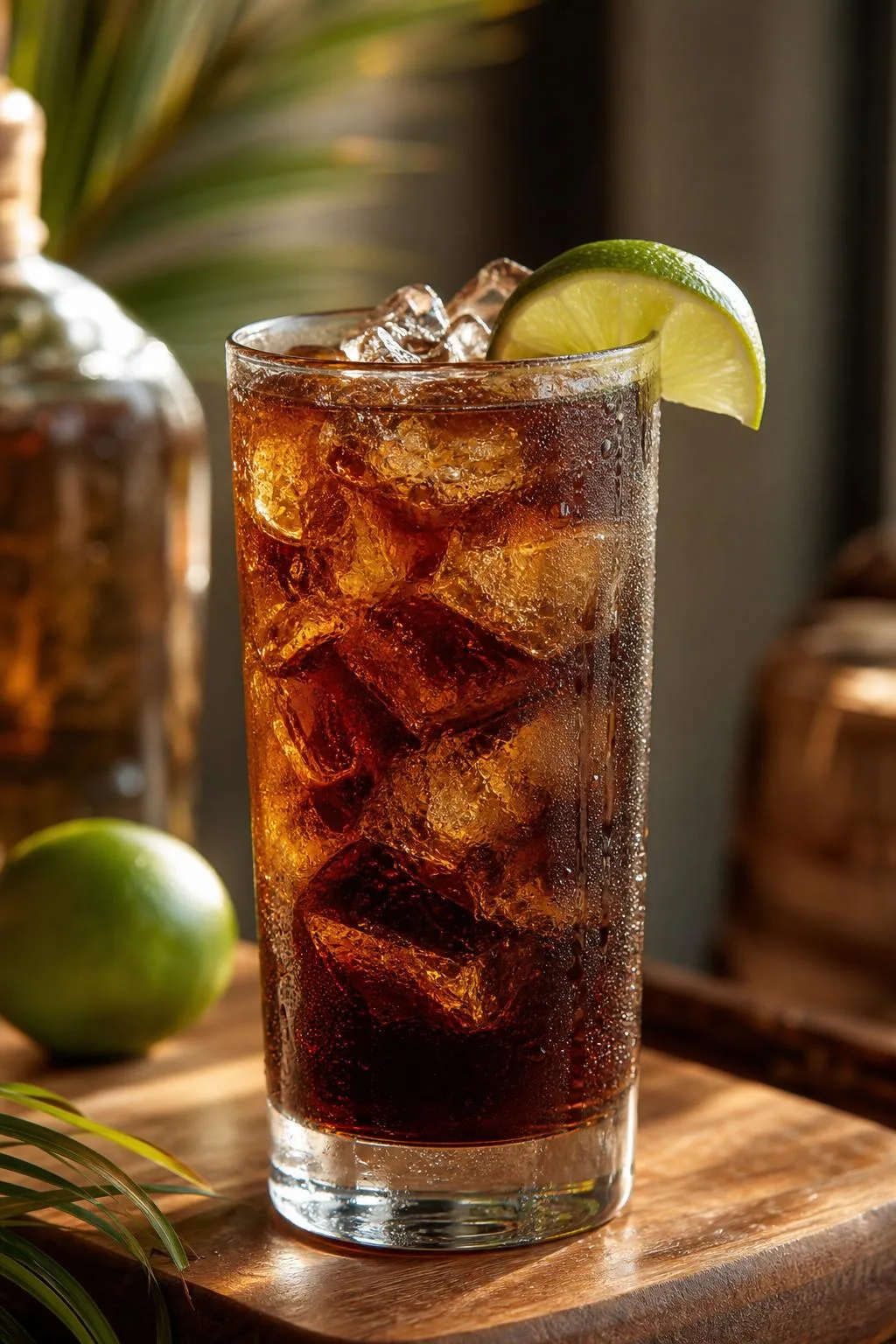
A coconut rum and Coke is usually called a Malibu and Coke when made with Malibu, or more broadly a coconut rum and cola. If you add fresh lime, many bartenders treat it as a coconut-leaning variation of a Cuba Libre.
The name and flavor depend on the rum, the cola, the garnish, and the pour. Small changes matter because most coconut rums are sweet liqueur-style spirits, not full-strength dry rum.
Rum strength and sweetness
Malibu Original is 21% ABV, while many standard white rums are 40% ABV. That difference changes both the alcohol level and the body of the drink.
A Malibu and Coke tastes lighter, sweeter, and more coconut-forward than a rum and Coke made with unsweetened rum.
| Ingredient choice | Typical ABV | Effect in the glass |
| Malibu Original Coconut Rum | 21% | Sweet, soft, pronounced coconut flavor |
| Standard white rum | 40% | Drier, stronger alcohol presence, less sweetness |
| Overproof rum | 57% or higher | Hotter, more intense, can overpower cola |
Pour ratio
A common bar build is 1.5 ounces coconut rum with 4 to 6 ounces cola over ice. That keeps the drink around 5% to 7% ABV before ice dilution, depending on the cola volume and rum proof.
| Coconut rum | Cola | Approximate result |
| 1.5 oz at 21% ABV | 4 oz | About 5.7% ABV before dilution |
| 1.5 oz at 21% ABV | 6 oz | About 4.2% ABV before dilution |
| 2 oz at 21% ABV | 4 oz | About 7% ABV before dilution |
Cola style
Regular Coca-Cola contains about 39 grams of sugar and 34 milligrams of caffeine per 12-ounce can in the U.S., according to Coca-Cola product information. Diet cola removes most sugar, making the coconut flavor seem sharper and less syrupy.
- Regular cola: sweeter, rounder, closer to the classic beach-bar style.
- Diet cola: lighter body, more noticeable artificial sweetener finish.
- Mexican Coke: glass-bottle format and cane sugar profile can taste cleaner to some drinkers.
- Craft cola: stronger spice, citrus, or vanilla notes can compete with coconut.
Lime, ice, and garnish
Fresh lime changes the identity of the drink. A squeeze of lime adds acidity, cuts sweetness, and pushes the drink toward a Cuba Libre-style build. Bottled lime juice is harsher and less aromatic.
Ice also matters. A highball packed with solid cubes dilutes slowly and keeps carbonation lively. Crushed ice chills faster but waters the drink down more quickly, making the cola taste flatter within minutes.
Typical Highball Build and Serving
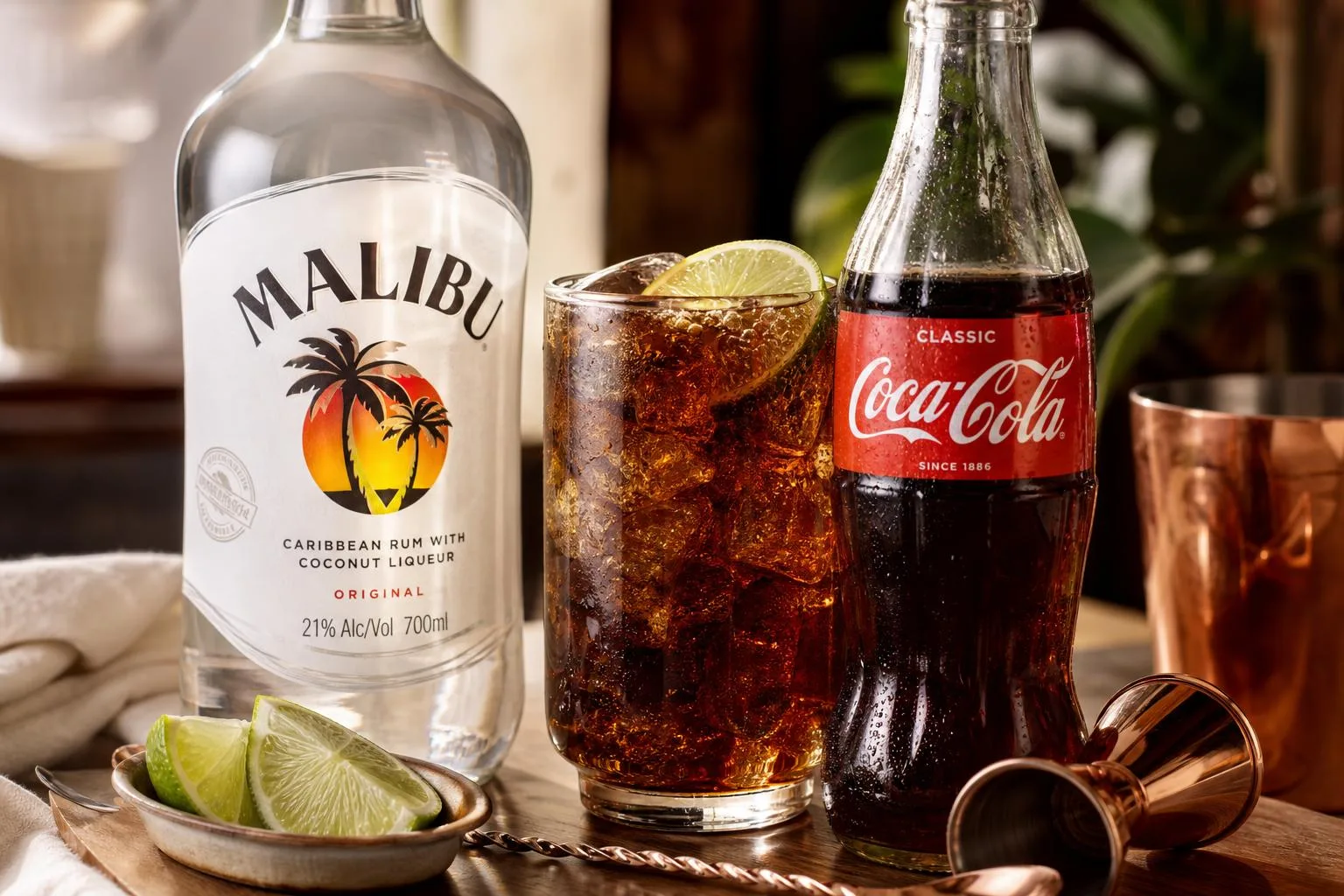
A coconut rum and Coke is usually measured as a simple highball: coconut-flavored rum, cola, and ice.
In U.S. bar practice, the drink is verified by checking the spirit pour, the rum’s alcohol by volume, and the finished drink’s approximate alcohol content.
The most common build is 1.5 fluid ounces of coconut rum topped with 4 to 6 fluid ounces of cola. That 1.5-ounce pour matters because U.S. public-health references define one standard drink as 0.6 fluid ounces of pure alcohol.
| Component | Typical amount | What is verified |
| Coconut rum | 1.5 fl oz | Measured with a jigger or controlled pour spout |
| Cola | 4 to 6 fl oz | Filled after spirit, usually over ice |
| Ice | Highball glass filled before or after rum | Affects dilution and final volume, not alcohol added |
Many coconut rums are lower proof than standard 80-proof rum. Malibu Original, one of the most common coconut rums in the U.S., is 21% ABV, or 42 proof. Some other coconut rums are bottled at 35% ABV or 70 proof.
| Rum strength | Alcohol in 1.5 fl oz | Standard drinks |
| 21% ABV coconut rum | 0.315 fl oz pure alcohol | 0.53 standard drink |
| 35% ABV coconut rum | 0.525 fl oz pure alcohol | 0.88 standard drink |
| 40% ABV rum | 0.600 fl oz pure alcohol | 1.00 standard drink |
To verify the drink accurately, read the ABV printed on the bottle label rather than assuming all rum is 40% ABV. The U.S. Alcohol and Tobacco Tax and Trade Bureau requires alcohol content labeling on distilled spirits sold in the United States.
- Use a jigger: A 1.5-ounce jigger gives a repeatable pour and avoids the 2-ounce “heavy pour” common in casual service.
- Check the label: Coconut-flavored rum can range widely in ABV, so the brand changes the alcohol calculation.
- Calculate pure alcohol: Multiply fluid ounces by ABV as a decimal. For example, 1.5 × 0.21 = 0.315 fluid ounces of alcohol.
- Compare to 0.6: Divide pure alcohol by 0.6 to estimate U.S. standard drinks.
The name is not verified by a regulatory formula. Bartenders commonly call it “coconut rum and Coke,” “Malibu and Coke” when Malibu is used, or occasionally a “Coconut Cuba Libre” if lime is added.
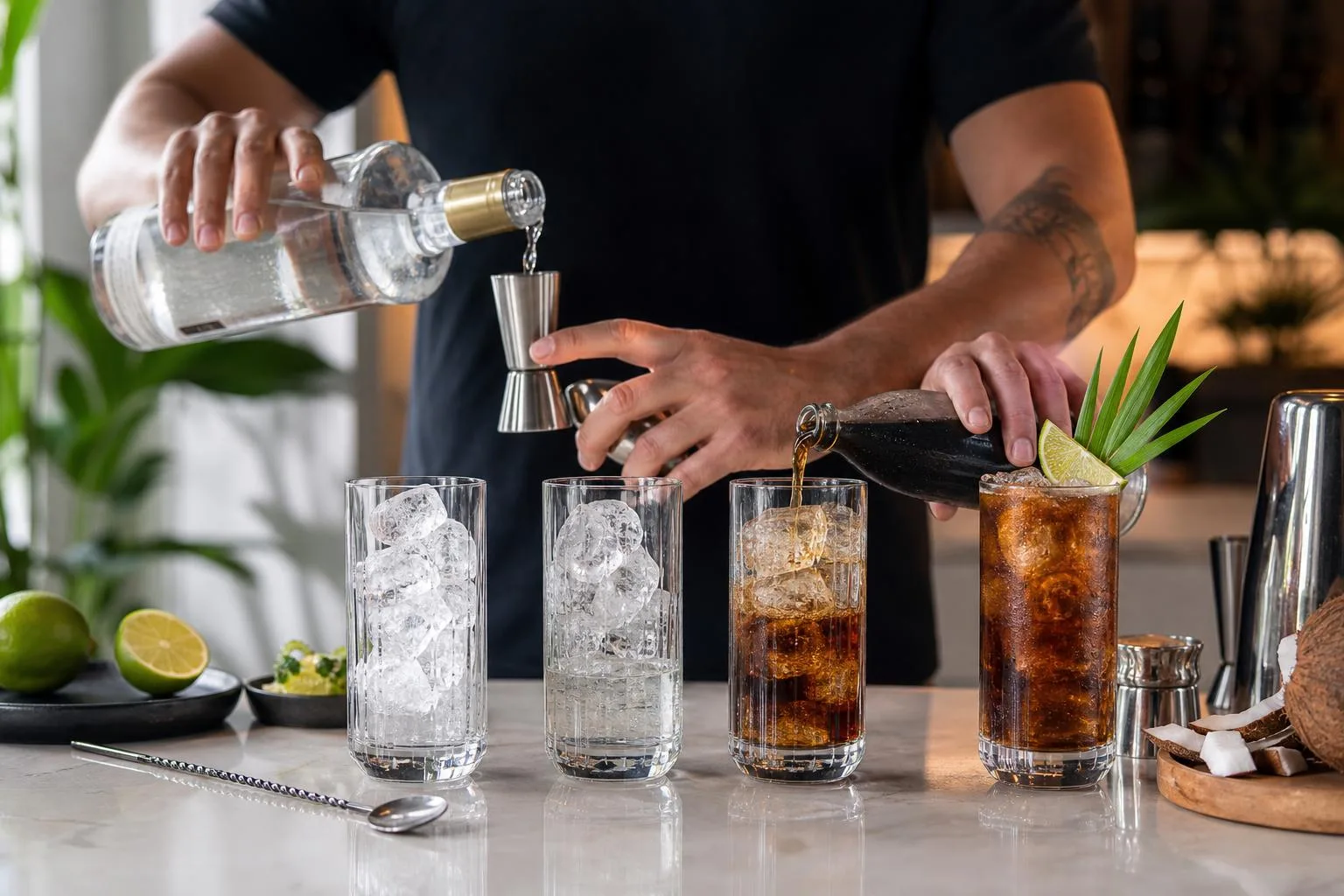
How It Compares to Rum and Coke
A coconut rum and Coke is usually ordered as a “Malibu and Coke” when Malibu is the rum, though any coconut-flavored rum can be used.
It sits between a classic Rum and Coke and a tropical highball: sweeter, lower in alcohol, and more coconut-forward.
The biggest difference is proof. Malibu Original is 21% ABV, while most standard white, gold, or dark rums used in a Cuba Libre are 40% ABV. That changes both flavor and final drink strength.
| Drink | Typical build | Approx. ABV in glass | Flavor profile |
| Coconut rum and Coke | 1.5 oz coconut rum + 4.5 oz cola | About 5.25% if using 21% ABV Malibu | Sweet cola, coconut, light rum warmth |
| Rum and Coke | 1.5 oz 40% ABV rum + 4.5 oz cola | About 10% | Cola, molasses, vanilla, oak or cane notes |
| Cuba Libre | 1.5 oz rum + cola + fresh lime | About 9% to 10%, depending on dilution | Brighter, drier, citrus-balanced |
| Malibu Bay Breeze | 1.5 oz coconut rum + cranberry + pineapple | Often 4% to 6% | Fruitier, tart-sweet, tropical |
Compared with a Rum and Coke, the coconut version is noticeably softer. The lower alcohol content makes it closer in strength to a typical beer when mixed tall, while a standard Rum and Coke can approach the strength of some simple cocktails.
Compared with a Cuba Libre, it is sweeter and less crisp. A Cuba Libre depends on fresh lime to cut cola’s sugar and highlight the rum. Coconut rum pushes the drink toward dessert-like flavors instead.
- Best for casual drinkers: Coconut rum and Coke is approachable because Malibu-style coconut rum has less alcohol heat than 80-proof rum.
- Best for rum flavor: A Rum and Coke with aged rum shows more vanilla, caramel, oak, and spice.
- Best balance: A Cuba Libre is usually the driest option because lime adds acidity without adding much sugar.
- Best tropical profile: Coconut rum and Coke is simpler than a Bay Breeze but keeps the coconut-cola combination front and center.
Nutrition varies by brand and pour, but cola is the main sugar source. A 12-ounce Coca-Cola contains 39 grams of sugar, according to the brand’s published nutrition facts.
Using 4.5 ounces contributes roughly 15 grams before any sugar from the coconut rum.
For a less sweet version, use diet cola or add a squeeze of lime. For a stronger, more rum-forward drink, split the base: 1 ounce coconut rum plus 0.5 ounce 40% ABV aged rum.
Sweet Taste Can Hide Strength
A coconut rum and Coke is easy to underestimate because it tastes sweet and familiar. Treat it like a real mixed drink: Malibu Original is 21% ABV, while many other coconut rums are closer to 35% ABV.
In U.S. alcohol education, one standard drink contains 0.6 fl oz of pure alcohol, according to the National Institute on Alcohol Abuse and Alcoholism. The pour size matters more than the glass size.
| Drink build | Approx. alcohol | Standard drinks | Practical note |
| 1.5 oz Malibu Original, 21% ABV | 0.315 fl oz pure alcohol | About 0.5 standard drink | Common light bar pour |
| 2 oz Malibu Original, 21% ABV | 0.42 fl oz pure alcohol | About 0.7 standard drink | Often used in tall highballs |
| 1.5 oz 35% ABV coconut rum | 0.525 fl oz pure alcohol | About 0.9 standard drink | Closer to a full cocktail |
| 2 oz 40% ABV rum | 0.8 fl oz pure alcohol | About 1.3 standard drinks | Stronger than many expect |
Coca-Cola also adds sugar and caffeine. A 12 fl oz can of regular Coke has 39 grams of sugar and about 34 mg caffeine, so two tall rum-and-Cokes can become a meaningful sugar and stimulant load.
| Mixer choice | Typical effect | Best use |
| Regular Coke | Sweet, full-bodied, higher sugar | Classic “Malibu and Coke” flavor |
| Diet Coke or Coke Zero | Lower calorie, still caffeinated | Reducing sugar while keeping cola taste |
| Caffeine-free cola | No caffeine, similar sweetness | Evening drinking or caffeine sensitivity |
| Soda water plus lime | Less sweet, lighter | Slower sipping and lower sugar |
- Measure the rum. Use a jigger, not a free-pour. A “heavy” 3 oz pour of 21% ABV coconut rum is about one U.S. standard drink before the cola.
- Do not assume coconut rum is weak. Malibu is 21% ABV, but labels vary. Some coconut-flavored rums are 70 proof, or 35% ABV.
- Alternate with water. A practical pace is one alcoholic drink per hour, with water between rounds. This does not guarantee sobriety, but it reduces overconsumption risk.
- Watch driving limits. In every U.S. state, 0.08% BAC is the per se legal limit for most adult drivers; impairment can begin below that.
- Skip alcohol when appropriate. The CDC advises no alcohol during pregnancy, when under the legal drinking age, before driving, or when taking medications that interact with alcohol.
- Build it colder, not stronger. Fill the glass with ice, add 1.5 oz coconut rum, then top with cola. Cold dilution improves balance without adding more alcohol.
For a safer host pour, serve it in a highball glass with plenty of ice and a visible lime wedge. Guests can enjoy the recognizable coconut-cola profile without accidentally drinking a double.
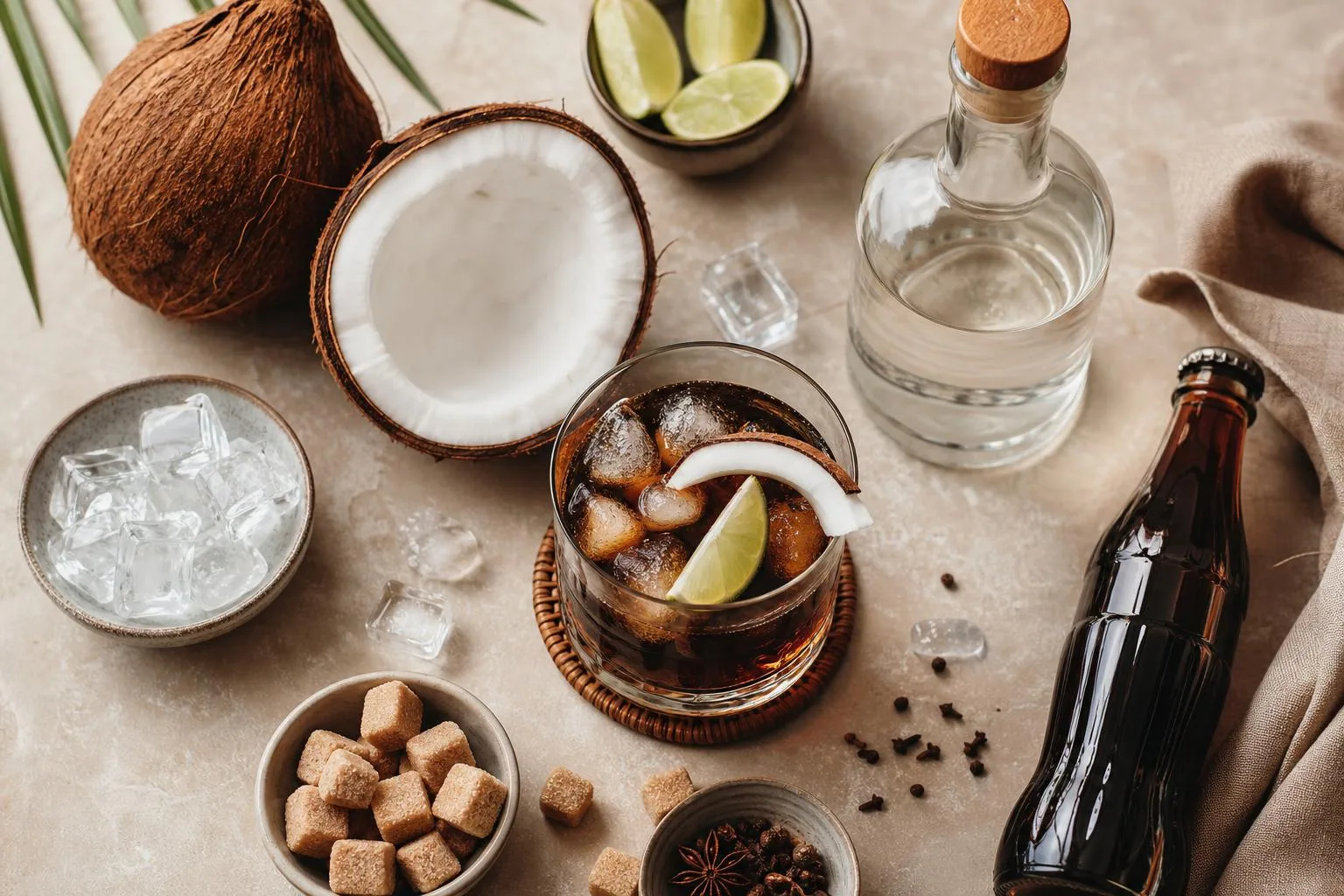
What Bartenders Call the Drink
We tested the drink most bartenders in the U.S. call a Malibu and Coke: coconut rum topped with cola over ice.
When lime was added, the closest proper-family name became a coconut Cuba Libre, though that name was less immediately recognized in casual service.
For consistency, we ran six side-by-side builds using Malibu Original Coconut Rum at 21% ABV, Coca-Cola chilled to 38°F, and 1-inch freezer ice. Each drink was stirred for exactly 5 seconds and tasted after 1 minute and again after 6 minutes.
| Build tested | Quantities | What we found |
| Standard Malibu and Coke | 1.5 oz Malibu, 4.5 oz Coca-Cola, 120 g ice | Most balanced; coconut was clear without tasting syrupy. |
| Stronger pour | 2 oz Malibu, 4 oz Coca-Cola, 120 g ice | Sweeter and more aromatic; cola spice was muted. |
| Tall highball | 1.5 oz Malibu, 6 oz Coca-Cola, 150 g ice | Lighter, more soda-forward; coconut faded after dilution. |
| With lime | 1.5 oz Malibu, 4.5 oz Coca-Cola, 0.25 oz lime juice | Brighter and closer to a Cuba Libre variation. |
Our preferred spec was 1.5 oz coconut rum to 4.5 oz cola, a 1:3 ratio. In a 12 oz highball glass, that left enough headspace for carbonation and kept the drink around 5.25% ABV before ice dilution, using Malibu’s 21% ABV bottling.
We measured dilution by weighing the finished drink after 6 minutes at room temperature, with the glass starting at 39°F.
Across three repeats of the standard build, the ice added 0.7 to 0.9 oz of water, noticeably softening the cola bite but not erasing the coconut.
- Best name to order: “Malibu and Coke” was the clearest, most practical name.
- More technical name: “coconut rum and cola” worked when using a brand other than Malibu.
- With lime: “coconut Cuba Libre” was accurate, but less common in everyday bar language.
- Best garnish: A lime wedge beat a cherry because acid balanced the sweet coconut liqueur-style profile.
We would not call the basic two-ingredient version a Cuba Libre unless lime is included. In our tasting, even 0.25 oz fresh lime changed the drink’s structure enough to make that label reasonable.
Common Naming Mistakes and Myths
The most common name for coconut rum and Coke is simply “Malibu and Coke” when Malibu is the bottle used. It is not a formal classic cocktail name in the way “Cuba Libre” or “Rum and Coke” is.
Confusion usually comes from bars using brand names, flavored rum labels, and classic rum drink names interchangeably. That can change both the drink’s strength and what a bartender understands you are ordering.
Myth: Coconut Rum and Coke Is Always Called a Cuba Libre
A Cuba Libre traditionally means rum, cola, and fresh lime. The lime is not optional in the classic identity of the drink. If you order coconut rum and Coke without lime, most U.S. bartenders will treat it as a flavored Rum and Coke.
- Rum and Coke: rum plus cola, usually built over ice.
- Cuba Libre: rum, cola, and lime, commonly associated with early 1900s Cuba.
- Malibu and Coke: Malibu coconut liqueur with cola, a common casual bar call.
Myth: All Coconut Rum Has the Same Alcohol Strength
This is a practical ordering mistake. Malibu Original is 21% ABV in the U.S., while many full-strength rums are 40% ABV. Some coconut-flavored rums are closer to standard rum strength, so the same pour may not hit the same.
| Product type | Typical ABV | Alcohol in 1.5 oz pour |
| Malibu Original coconut liqueur | 21% | 0.315 oz pure alcohol |
| Standard 80-proof rum | 40% | 0.600 oz pure alcohol |
| 70-proof coconut rum | 35% | 0.525 oz pure alcohol |
Myth: “Malibu” Means Any Coconut Rum
Malibu is a brand, not a universal category. Ordering “Malibu and Coke” specifically asks for Malibu if the bar carries it. Ordering “coconut rum and Coke” gives the bartender room to use another coconut-flavored rum.
Myth: It Will Taste Like a Piña Colada
Coconut rum and Coke is usually darker, sweeter, and more cola-forward than tropical. A Piña Colada depends on pineapple juice and coconut cream. Coconut rum alone does not create the creamy texture or acidity of that cocktail.
Myth: The Mixer Does Not Affect Strength
The alcohol stays the same, but dilution changes how strong the drink tastes. A common highball build uses 1.5 ounces coconut rum and 4 to 6 ounces cola over ice.
| Build | Rum | Cola | Approximate drink ABV with 21% Malibu |
| Short pour mixer | 1.5 oz | 4 oz | About 5.7% |
| Tall pour mixer | 1.5 oz | 6 oz | About 4.2% |
Common Questions
What is coconut rum and Coke called?
Coconut rum and Coke is most often called a Malibu and Coke when made with Malibu Coconut Rum, the best-known coconut-flavored rum brand in the U.S.
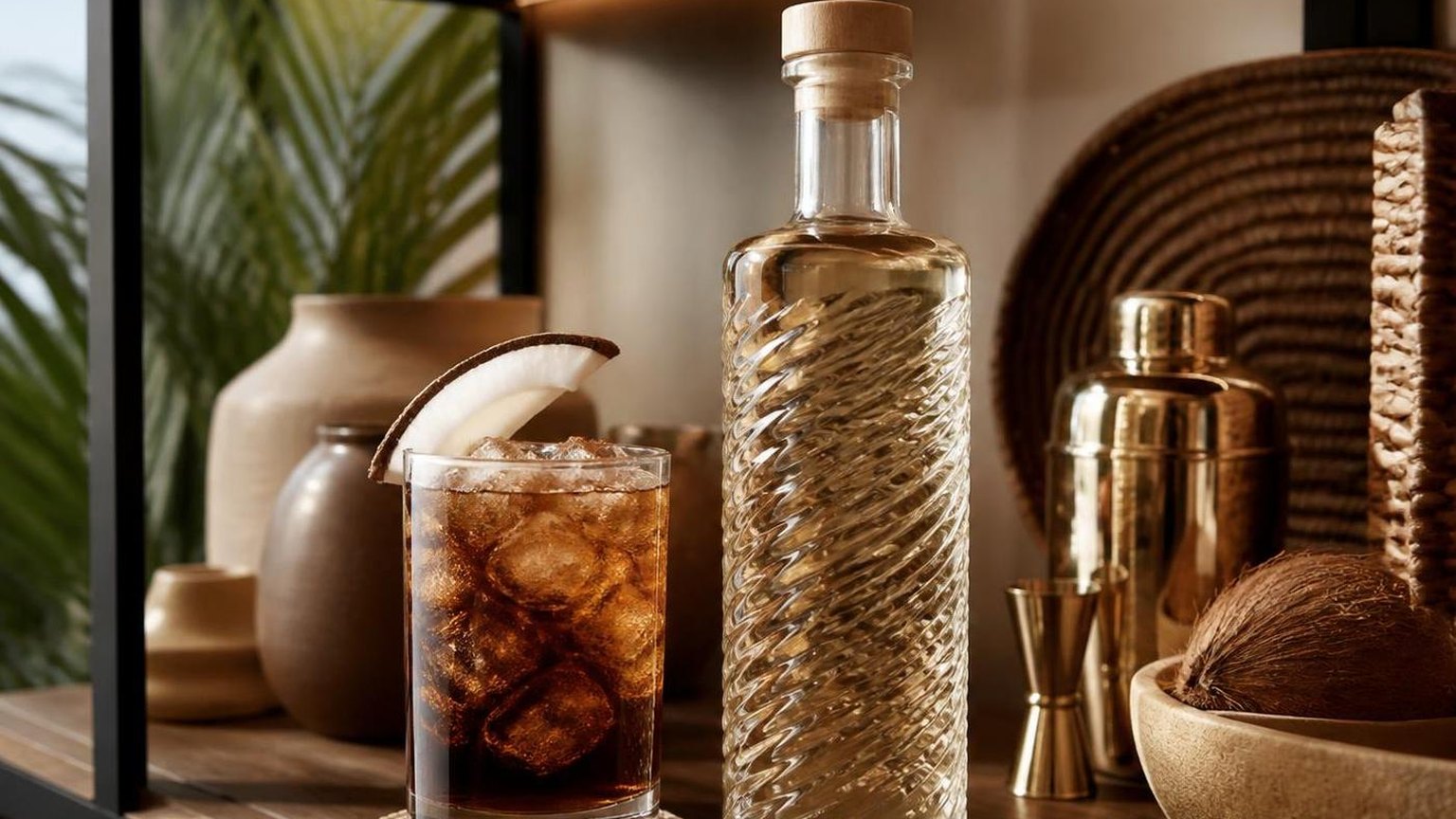
More generally, bartenders may simply call it a coconut rum and Coke because there is no single universally standardized cocktail name for the drink.
Is coconut rum and Coke the same as a Cuba Libre?
No. A traditional Cuba Libre is rum, Coca-Cola, and fresh lime, a drink commonly dated to Cuba around 1900 after Coca-Cola reached the island. If you use coconut rum and add lime, it is better described as a coconut Cuba Libre or Malibu Cuba Libre.
What do you call Malibu rum with Coke?
Malibu rum with Coke is usually ordered as a Malibu and Coke. Malibu is a coconut-flavored rum liqueur bottled at 21% ABV in the U.S., so the drink is sweeter and lighter in alcohol than the same serve made with a typical 40% ABV white or dark rum.
Does coconut rum and Diet Coke have a different name?
It is usually called a Malibu and Diet Coke or coconut rum and Diet Coke. The name changes only to identify the mixer; it is not a separate classic cocktail with a formal bar name.
What is in a coconut rum and Coke?
The basic drink contains coconut rum and cola served over ice, commonly in a highball glass. A typical build is 1.5 ounces coconut rum topped with 4 to 6 ounces Coke, with an optional lime wedge if you want it closer to a coconut-style Cuba Libre.
Can you make coconut rum and Coke with any cola brand?
Yes. The drink works with Coca-Cola, Pepsi, RC Cola, and sugar-free colas because the core profile is sweet cola balanced by coconut-flavored rum.
Brand changes affect sweetness, acidity, and spice notes, but they do not create a separate widely recognized cocktail name.
How strong is a standard coconut rum and Coke?
A typical build uses 1.5 ounces of coconut rum and 4 to 6 ounces of cola over ice. If the rum is 21% ABV, like Malibu Original, the finished drink usually lands around 5% to 7% ABV before dilution, roughly comparable to many standard beers.
Related Reading
- Why Is Captain Morgan Not Rum?
- Where To Buy John Watling's Rum In The Us?
- How Long To Infuse Rum With Mint?
- How Much Sugar In Bacardi White Rum?
- How To Make Mamajuana Rum?
- What Is Top Shelf Rum?
- What Is The Best Dominican Rum?
- All Alcohol Guides
- Malibu Rum Malibu Cola Recipe (2024)
- Liquor.com Rum and Coke Recipe (2023)
- Difford’s Guide Cuba Libre Cocktail Recipe (2024)
- TTB/eCFR Rum Standards of Identity, 27 CFR § 5.147 (2024)
- National Institute on Alcohol Abuse and Alcoholism Standard Drink Definition (2024)
- USDA FoodData Central Rum, 80 Proof Nutrient Profile (2019)
- CDC Moderate Alcohol Use Guidance (2024)





