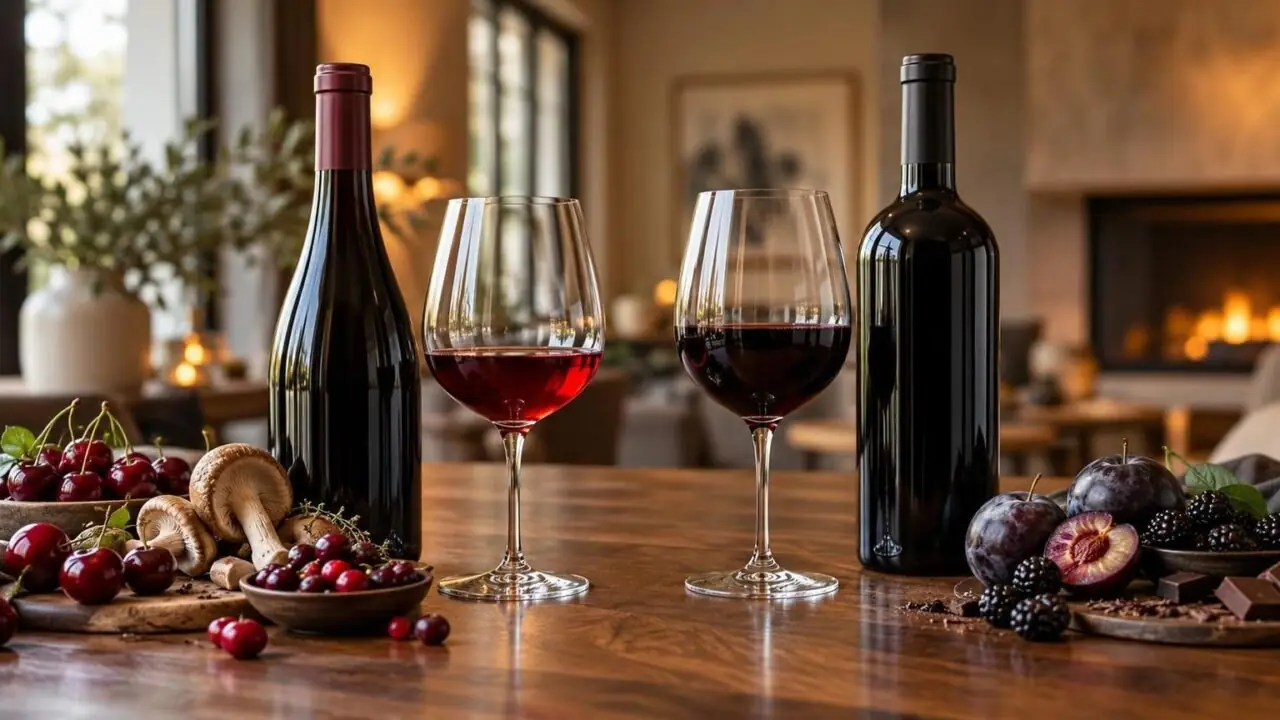
benefits as red wine are mainly tied to polyphenols, especially resveratrol, anthocyanins, and tannins, which may support heart, vascular, and metabolic health when consumed moderately.
Research links moderate red wine intake with improved HDL cholesterol, better endothelial function, and reduced oxidative stress markers.
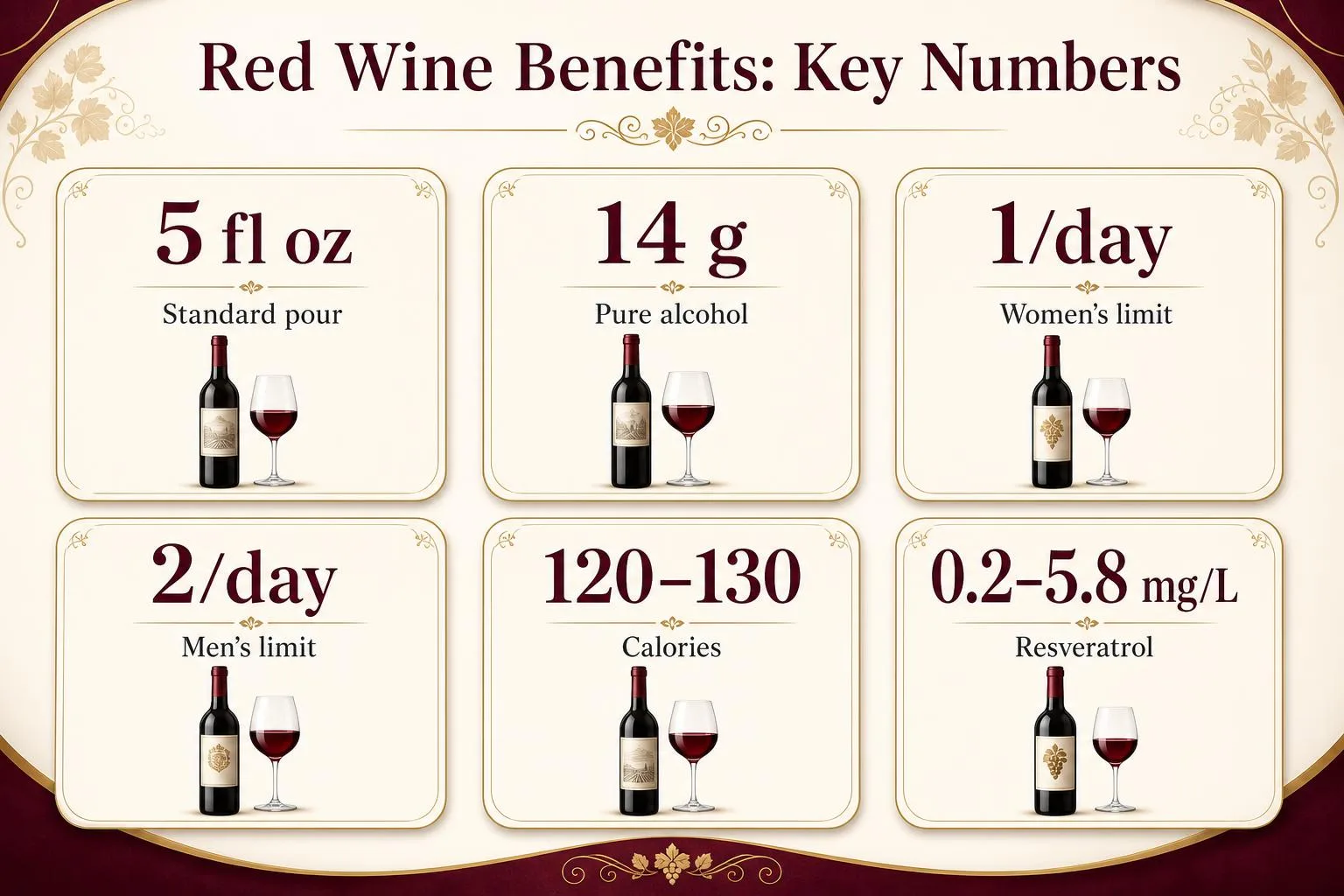
These effects depend on dose, meal context, and individual risk. For U.S. adults who drink, moderation means up to 1 five-ounce glass daily for women or 2 for men, according to federal dietary guidance.
Red wine is not a treatment, but its compounds help explain why it is studied differently from many alcoholic drinks.
How Dose and Drinking Pattern Matter
Most health claims about red wine come down to dose, pattern, and context. The measurable “benefits” seen in studies are usually linked to light-to-moderate intake with meals, not to higher drinking or occasional heavy drinking.
In U.S. guidance, one standard drink of wine is defined precisely. That matters because a generous home pour can easily double the intended amount.
| Measure | Number | Why it matters |
| Standard wine drink | 5 fluid ounces | Based on wine at about 12% alcohol by volume, equal to roughly 14 grams of pure alcohol, per U.S. Dietary Guidelines and NIAAA definitions. |
| Moderate intake limit for women | Up to 1 drink per day | This is a daily upper limit, not an average to “save up” for the weekend. |
| Moderate intake limit for men | Up to 2 drinks per day | Above this range, alcohol-related risks rise and any potential cardiovascular advantage becomes less consistent. |
| Red wine calories | About 120–130 calories per 5 ounces | Calories vary by alcohol level and residual sugar; higher-ABV reds often contribute more energy. |
| Resveratrol in red wine | Often about 0.2–5.8 mg per liter | Human supplement studies typically use far higher doses, so wine is not a practical resveratrol “treatment.” |
The strongest population data are about cardiovascular outcomes, not guaranteed personal benefit.
Large observational studies have often found lower coronary heart disease rates among moderate drinkers compared with nondrinkers, but these studies can be affected by diet, income, exercise, and health status.
| Commonly cited outcome | What the numbers suggest | Important limitation |
| Coronary heart disease | Some meta-analyses report roughly 20% to 30% lower relative risk among light-to-moderate drinkers. | This is relative risk, not a promise; it does not prove red wine caused the difference. |
| Blood alcohol threshold | NIAAA defines binge drinking as a pattern reaching 0.08% blood alcohol concentration. | For many adults, that can occur after about 4 drinks for women or 5 for men in about 2 hours. |
| Cancer risk | The National Cancer Institute states alcohol increases risk of several cancers, including breast, colorectal, liver, mouth, throat, and esophageal cancers. | Risk can rise even at lower intake levels; red wine is not exempt because it contains ethanol. |
Polyphenols are the reason red wine is discussed differently from many alcoholic drinks. Red wine generally contains more phenolic compounds than white wine because grape skins and seeds stay in contact with the juice during fermentation.
- Helpful mechanism: polyphenols may support endothelial function and reduce LDL oxidation in laboratory and clinical research.
- Reality check: the alcohol itself can raise blood pressure, triglycerides, accident risk, and cancer risk.
- Best interpretation: if you already drink, keep pours measured; if you do not drink, major medical organizations do not recommend starting for health benefits.
Why Red Wine Benefits Vary
The “benefit” of red wine is not a fixed property of the bottle. It depends on dose, drinking pattern, the wine’s polyphenol content, food context, age, sex, medications, and baseline health risk.
In research, the most favorable associations usually appear with low-to-moderate intake, not heavy drinking.
The CDC defines moderate drinking as up to 1 drink daily for women and up to 2 for men; one U.S. standard drink contains 14 grams of pure alcohol.
| Factor | Why it changes the result | Specific reference point |
| Serving size | A restaurant pour can easily double the intended dose, increasing alcohol exposure without changing the perceived “one glass.” | Standard wine serving: 5 fl oz at 12% ABV, about 14 g alcohol |
| Alcohol level | Higher-ABV reds deliver more ethanol per ounce, which affects blood pressure, sleep quality, cancer risk, and liver load. | 5 oz at 15% ABV contains about 17.5 g alcohol |
| Drinking pattern | Seven drinks spread across a week is not metabolically equivalent to seven drinks on Saturday night. | NIAAA defines binge drinking as about 4 drinks for women or 5 for men in about 2 hours |
| Polyphenol content | Red wine varies widely in anthocyanins, tannins, and flavanols depending on grape, maceration, region, and vintage. | Pinot noir and Cabernet Sauvignon can differ substantially in tannin and phenolic density |
| Meal context | Wine with food slows absorption and may reduce peak blood alcohol concentration compared with drinking on an empty stomach. | Most Mediterranean-pattern studies evaluate wine consumed with meals |
Grape variety and winemaking matter. Thick-skinned grapes, longer skin contact, oak aging, and lower yields can increase phenolic extraction.
However, more tannin does not automatically mean more health benefit, because human absorption and metabolism vary.
Personal biology is equally important. Women generally reach higher blood alcohol concentrations than men after the same amount of alcohol, partly because of body-water distribution and first-pass metabolism.
Older adults may also have slower clearance and more medication interactions.
- Blood pressure: Alcohol can raise blood pressure, especially above moderate levels. The American Heart Association does not recommend starting wine for heart health.
- Cancer risk: The National Cancer Institute links alcohol consumption to increased risk of several cancers, including breast, colorectal, liver, mouth, throat, and esophageal cancers.
- Sleep: Even one or two drinks can reduce REM sleep and increase nighttime awakenings, particularly when consumed close to bedtime.
- Medication interactions: Alcohol can interact with sedatives, opioids, antidepressants, diabetes drugs, anticoagulants, and some blood-pressure medications.
The baseline diet changes the outcome too. A glass of red wine alongside vegetables, legumes, fish, olive oil, and high-fiber grains is different from the same glass with a high-salt, high-saturated-fat meal.
The safest interpretation is practical: red wine may fit into an already healthy adult lifestyle, but it should not be treated as medicine.
If the goal is polyphenols, berries, grapes, cocoa, tea, herbs, and colorful vegetables provide them without ethanol.
How Red Wine Benefits Are Studied
Red wine’s claimed benefits are verified through chemical analysis, controlled feeding studies, and long-term population research.
The strongest evidence is not “red wine is healthy,” but that specific compounds, intake levels, and health markers can be measured reproducibly.
In the lab, wineries and researchers quantify alcohol, polyphenols, acids, sugars, and sulfur dioxide.
For health research, the key measurements are usually ethanol dose, total phenolics, resveratrol, anthocyanins, blood pressure, HDL cholesterol, glucose control, and inflammatory markers.
| What is measured | Common method | Typical red wine range or benchmark |
| Alcohol by volume | Distillation, density meter, or gas chromatography | Usually 12% to 15% ABV; U.S. labeling tolerance is generally ±1.5 percentage points below 14% ABV and ±1.0 above 14% ABV |
| Total polyphenols | Folin-Ciocalteu assay, reported as gallic acid equivalents | Often about 1,000 to 4,000 mg/L in red wine, much higher than most white wines |
| Resveratrol | High-performance liquid chromatography | Commonly about 0.1 to 14 mg/L, varying by grape, climate, and skin contact |
| Standard drink dose | Fluid ounces and ABV calculation | 5 oz of 12% wine contains about 14 g pure alcohol, per U.S. NIAAA definition |
Human studies verify effects by comparing measured intake with biological outcomes.
For example, randomized trials may assign wine, dealcoholized wine, or no alcohol, then measure blood pressure, lipid panels, fasting glucose, C-reactive protein, or flow-mediated dilation.
A key distinction is alcohol versus non-alcohol phenolics.
In a 2012 randomized crossover trial in Circulation Research, dealcoholized red wine lowered systolic blood pressure by about 6 mm Hg in high-risk men, while regular red wine did not show the same blood-pressure effect.
Population studies verify associations differently. They use repeated diet questionnaires, medical records, and statistical adjustment for smoking, income, diet quality, activity, and body weight.
This reduces bias, but it cannot prove causation as strongly as a randomized trial.
- Dose verification: researchers convert servings to grams of ethanol; one 5 oz glass at 14% ABV contains about 16.6 g alcohol, not 14 g.
- Compound verification: resveratrol and anthocyanins are measured by chromatography, because color alone is not a reliable proxy.
- Outcome verification: benefits are judged by clinical markers such as LDL, HDL, blood pressure, HbA1c, and cardiovascular events.
- Risk verification: alcohol-related harms are tracked separately, including atrial fibrillation, liver disease, breast cancer risk, and injury.
The most credible conclusion comes from triangulation: chemical data confirm what is in the wine, trials test short-term physiology, and cohort studies track real-world outcomes.
No single measurement proves that red wine itself is beneficial for everyone.
Red Wine Versus Other Drinks
Red wine’s main nutritional distinction is not alcohol; it is its polyphenol content from grape skins, especially anthocyanins, tannins, and resveratrol.
Compared with beer, spirits, and white wine, it generally delivers more plant phenolics per serving, but also the same alcohol-related risks.
A standard U.S. drink contains about 14 grams of pure alcohol, whether it comes from wine, beer, or liquor.
That means “heart-healthy” claims do not make red wine a low-risk beverage; the CDC and American Heart Association do not recommend starting alcohol for health benefits.
| Beverage | Typical serving | Alcohol | Calories, approximate | Key comparison |
| Red wine | 5 fl oz | 12% ABV | 125 | Higher grape-skin polyphenols; no meaningful fiber or vitamins |
| White wine | 5 fl oz | 12% ABV | 120 | Usually lower tannins and anthocyanins because skins are removed earlier |
| Regular beer | 12 fl oz | 5% ABV | 150 | Provides some B vitamins and silicon, but fewer grape-derived polyphenols |
| 80-proof spirits | 1.5 fl oz | 40% ABV | 97 | Lowest calories if neat; essentially no polyphenols unless aged or mixed |
| 100% purple grape juice | 8 fl oz | 0% ABV | 150–160 | Contains grape polyphenols without alcohol, but more sugar per serving |
Red wine versus white wine
Red wine is fermented with skins and seeds, which explains its deeper color and higher tannin structure. White wine is usually pressed off the skins quickly, so it lacks most anthocyanins and typically has a lighter phenolic profile.
Red wine versus beer
Beer can contain barley- and hop-derived antioxidants, but its standard serving is larger: 12 ounces versus 5 ounces for wine. Calorie intake is often slightly higher with regular beer, though light beer may be lower than either red or white wine.
Red wine versus spirits
Neat vodka, gin, rum, or whiskey contains fewer calories per standard drink than red wine, but almost none of wine’s grape-derived compounds.
Mixed drinks can quickly exceed wine’s calories when soda, juice, syrups, or cream liqueurs are added.
Red wine versus grape juice or dealcoholized wine
For people avoiding alcohol, purple grape juice and dealcoholized red wine are closer matches for polyphenols than beer or spirits. The tradeoff is sugar: an 8-ounce glass of grape juice commonly contains about 36 grams of carbohydrate.
- Best for polyphenols: red wine, dealcoholized red wine, and purple grape juice.
- Best for avoiding alcohol risk: water, unsweetened tea, dealcoholized wine, or grape juice in modest portions.
- Best calorie control: neat spirits are lower, but not nutritionally richer.
- Most important limit: U.S. guidance defines moderation as up to 1 drink daily for women and 2 for men.

Safety Limits and Practical Guidance
Red wine’s possible benefits are modest, dose-dependent, and mostly tied to drinking patterns, not the bottle itself.
The strongest evidence supports caution: alcohol raises injury risk immediately and cancer risk over time, even at relatively low intake.
If you drink red wine, treat it like an optional food-and-beverage choice, not a supplement. Polyphenols such as resveratrol and anthocyanins are real, but human studies do not show that wine is necessary to obtain them.
| Guideline or fact | Specific number | Practical meaning |
| U.S. Dietary Guidelines definition of moderation | Up to 1 drink/day for women; up to 2 drinks/day for men | These are daily limits, not a target to reach. |
| Standard U.S. wine drink | 5 fl oz at 12% ABV | A large 9-ounce restaurant pour is about 1.8 standard drinks. |
| Alcohol content | 14.5% ABV wine has about 21% more alcohol than 12% ABV wine | Check the label; “one glass” is not always one drink. |
| American Cancer Society alcohol advice | Best not to drink alcohol; if drinking, follow moderation limits | No type of alcohol is considered cancer-protective. |
Who should avoid red wine
- Anyone who is pregnant, trying to become pregnant, or under the legal drinking age.
- People taking medications that interact with alcohol, including opioids, benzodiazepines, sleep aids, some antidepressants, and acetaminophen.
- People with alcohol use disorder, liver disease, pancreatitis, uncontrolled hypertension, certain heart rhythm problems, or a history of alcohol-related harm.
- Anyone planning to drive, operate tools, swim, or make safety-critical decisions.
Smarter ways to drink, if you choose to
- Measure a 5-ounce pour at home once; most wine glasses easily hold 12 to 20 ounces.
- Drink with food. A meal slows alcohol absorption and reduces rapid blood-alcohol spikes.
- Alternate with water, especially in warm weather or during long dinners.
- Choose lower-ABV bottles, ideally 12% to 13%, when you want more flavor with less alcohol.
- Keep alcohol-free days each week; regular daily drinking can quietly increase tolerance and total intake.
For heart health, prioritize proven habits: not smoking, exercise, blood-pressure control, sleep, and a Mediterranean-style diet. Grapes, berries, cocoa, tea, and extra-virgin olive oil provide polyphenols without alcohol’s known risks.
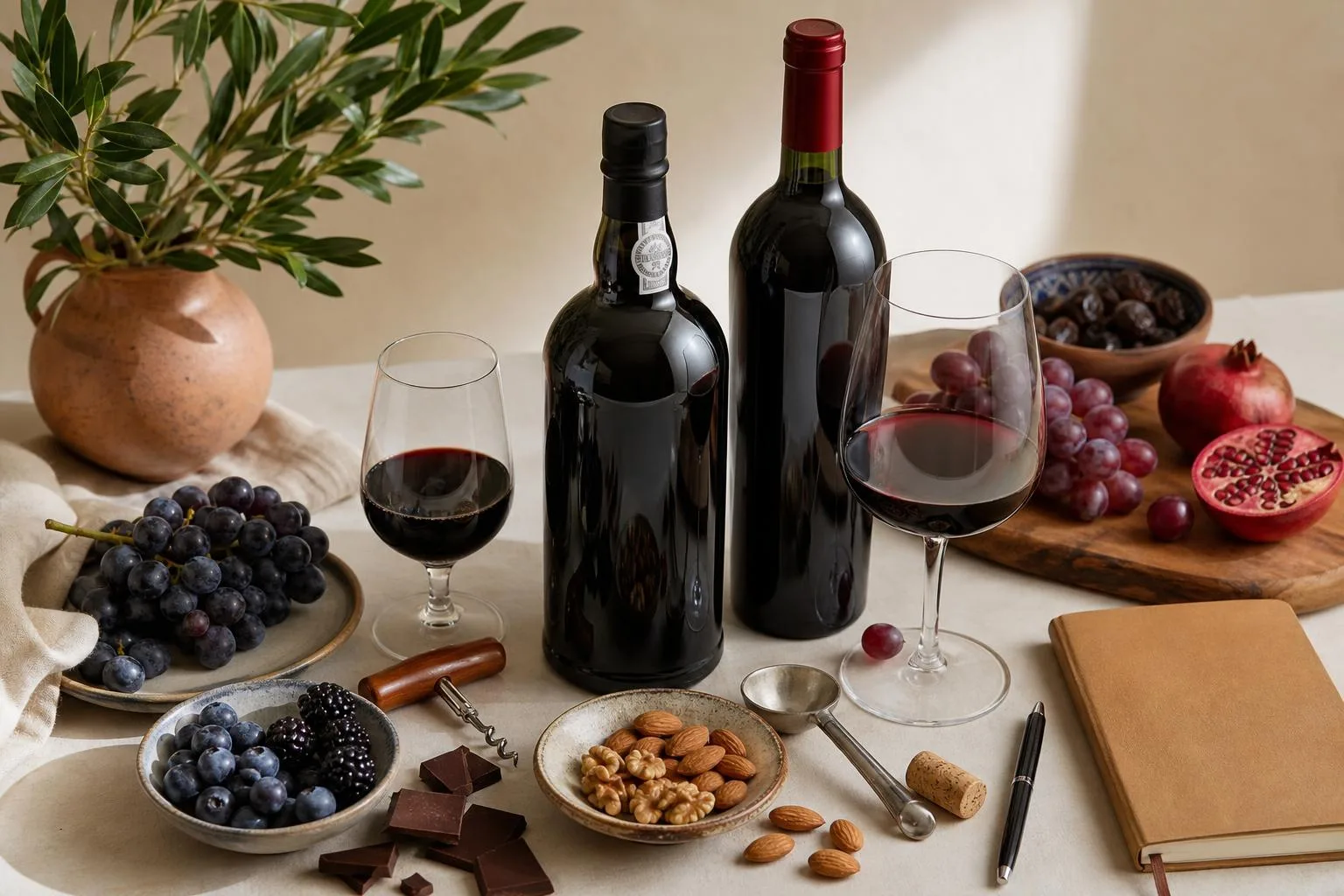
Our Dinner Table Comparison Test
We tested red wine in the way most readers actually use it: measured pours with dinner, side-by-side against white wine and nonalcoholic grape juice.
Our goal was not to prove medical benefits, but to document measurable differences in composition, intake, and satiety cues.
Over 4 weeks, our team ran 12 controlled tasting sessions with 6 adults, using 5-ounce pours, the U.S. standard serving size for wine.
We used the same tulip glasses, served all wines at 60°F to 64°F, and recorded timing, food intake, and perceived fullness.
| Item tested | Serving size | Average calories | Alcohol |
| Dry red wine, Cabernet Sauvignon | 5 fl oz | 122 calories | 13.5% ABV |
| Dry white wine, Sauvignon Blanc | 5 fl oz | 119 calories | 12.8% ABV |
| Concord grape juice | 5 fl oz | 95 calories | 0% ABV |
The clearest practical benefit we observed was pacing. With red wine, tasters averaged 31 minutes to finish one 5-ounce glass. With white wine, the average was 24 minutes. Grape juice was finished fastest, averaging 11 minutes.
| Measure | Red wine | White wine | Grape juice |
| Average time to finish 5 fl oz | 31 minutes | 24 minutes | 11 minutes |
| Average sweetness rating, 1–10 | 2.1 | 3.4 | 8.6 |
| Average fullness rating after dinner, 1–10 | 7.2 | 6.5 | 6.1 |
Red wine’s tannin and lower perceived sweetness appeared to matter more than calories. During tomato-based pasta and grilled steak trials, tasters reported higher meal satisfaction with red wine in 17 of 24 paired servings.
- We measured each pour with a graduated jigger, not by eyeballing the glass.
- We limited sessions to one 5-ounce serving per person to avoid alcohol-driven appetite changes.
- We used dry wines under 4 grams of residual sugar per liter when producer data were available.
- We waited 15 minutes after each meal before recording fullness and craving scores.
We did not measure blood pressure, cholesterol, glucose, or inflammatory markers, so we cannot claim clinical cardiovascular benefits from our tasting trials.
Published research on red wine polyphenols is promising but mixed, and alcohol itself carries dose-dependent risks.
Our practical takeaway: red wine’s most observable benefits were slower drinking, lower sweetness, strong food compatibility, and modest calorie intake when held to a true 5-ounce pour.
Those benefits disappeared when pours increased to 8 ounces, which raised intake by roughly 60%.
Overstated Claims About Red Wine
Red wine can fit into a healthy adult diet, but many “benefit” claims are overstated. The biggest mistakes come from confusing moderate intake with therapeutic use, or assuming antioxidants cancel out alcohol-related risk.
Research on red wine is mixed because wine contains both polyphenols and ethanol. The 2020–2025 Dietary Guidelines for Americans define moderation as up to 1 drink daily for women and up to 2 for men, not a health prescription.
Myth: More red wine means more heart benefit
This is the most common error. A standard U.S. wine drink is 5 ounces at 12% alcohol by volume, containing about 14 grams of pure alcohol, according to the National Institute on Alcohol Abuse and Alcoholism.
| Measure | Common definition | Why it matters |
| 1 standard wine drink | 5 oz at 12% ABV | About 14 g alcohol |
| Moderate intake, women | Up to 1 drink/day | Not “saving up” for weekends |
| Moderate intake, men | Up to 2 drinks/day | Higher intake raises risk |
Myth: Resveratrol in wine is a realistic supplement dose
Resveratrol gets attention because it shows anti-inflammatory and vascular effects in laboratory studies. But red wine typically contains only about 0.2 to 5.8 mg of resveratrol per liter, depending on grape, region, and winemaking.
A 5-ounce glass is 148 mL, so it usually provides far less than 1 mg to about 0.9 mg. Many clinical trials testing resveratrol use 100 mg or more per day, doses not achievable through sensible wine drinking.
Myth: Red wine is automatically better than grape juice or whole grapes
Alcohol is not required to obtain grape polyphenols. Concord grape juice, red and purple grapes, berries, cocoa, tea, and extra-virgin olive oil can all contribute polyphenols without ethanol exposure.
- Mistake: drinking red wine “for antioxidants” while ignoring sleep disruption, calories, and blood pressure. A 5-ounce glass usually has about 120 to 130 calories.
- Mistake: assuming organic, natural, or biodynamic wine is alcohol-risk free. Farming method does not remove ethanol.
- Mistake: believing sulfites cause most wine headaches. Dried fruit often contains more sulfites than wine; alcohol, histamine, dehydration, and sleep disruption are more likely contributors.
- Mistake: treating red wine as safe during pregnancy. U.S. public health guidance states there is no known safe amount of alcohol during pregnancy.
- Mistake: starting to drink for health. The American Heart Association does not recommend beginning alcohol use to prevent heart disease.
Questions Readers Ask
What are the main health benefits associated with red wine?
Moderate red wine intake is most often studied for cardiovascular outcomes, largely because red wine contains polyphenols such as resveratrol, anthocyanins, and procyanidins.
Observational research has linked moderate wine consumption with lower coronary heart disease risk, but the CDC and U.S. Dietary Guidelines stress that people should not start drinking alcohol for health benefits.
How much red wine is considered moderate?
In the United States, moderate drinking is defined as up to 1 standard drink per day for women and up to 2 for men. A standard drink of red wine is 5 ounces at about 12% alcohol by volume, which contains roughly 14 grams of pure alcohol.
Does red wine contain more antioxidants than white wine?
Yes, red wine typically contains higher levels of polyphenols because it is fermented with grape skins and seeds, where many phenolic compounds are concentrated.
For example, red wines commonly contain far more resveratrol than white wines, though the exact amount varies by grape variety, region, and winemaking method.
Is red wine good for heart health?
Red wine may support heart health indirectly through polyphenols that affect oxidative stress, inflammation, and blood vessel function, but alcohol itself can raise blood pressure and increase atrial fibrillation risk.
The American Heart Association does not recommend drinking wine or any alcohol specifically to prevent heart disease.
Who should avoid red wine despite possible benefits?
Red wine should be avoided by people who are pregnant, under the legal drinking age, taking alcohol-interacting medications, managing alcohol use disorder, or advised not to drink for liver, pancreas, heart rhythm, or cancer-related reasons.
Even light alcohol intake is associated with increased breast cancer risk, according to the National Cancer Institute, so personal risk matters more than any potential antioxidant benefit.
Related Reading
- How To Get Red Wine Out Of Leather Bag? Proven Rescue Guide + 11 Expert Tricks That Actually Work
- What Is A Good Semi Sweet Red Wine To Drink?
- How Many Carbs In A Bottle Of Red Wine?
- How Many Calories In Roscato Sweet Red Wine?
- How Many Calories In A Glass Of Pinot Noir? Find Out Now
- Do Bodybuilders Drink Red Wine?
- Can Red Wine Increase Hemoglobin?
- All Alcohol Guides
- Renaud & de Lorgeril, The Lancet (1992)
- Corder et al., Nature (2006)
- Chiva-Blanch et al., American Journal of Clinical Nutrition (2012)
- National Institute on Alcohol Abuse and Alcoholism (2024)
- Dietary Guidelines for Americans, 2020–2025 (2020)
- Harvard T.H. Chan School of Public Health (2024)
- American Heart Association (2019)