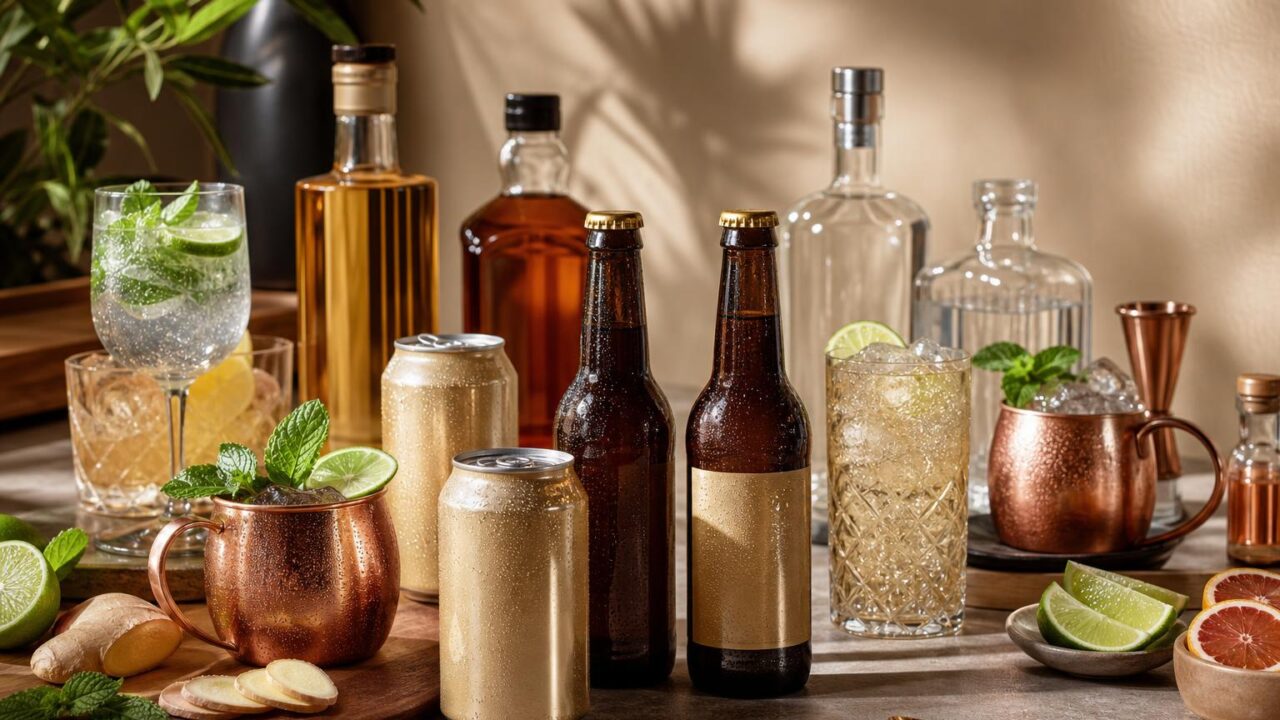
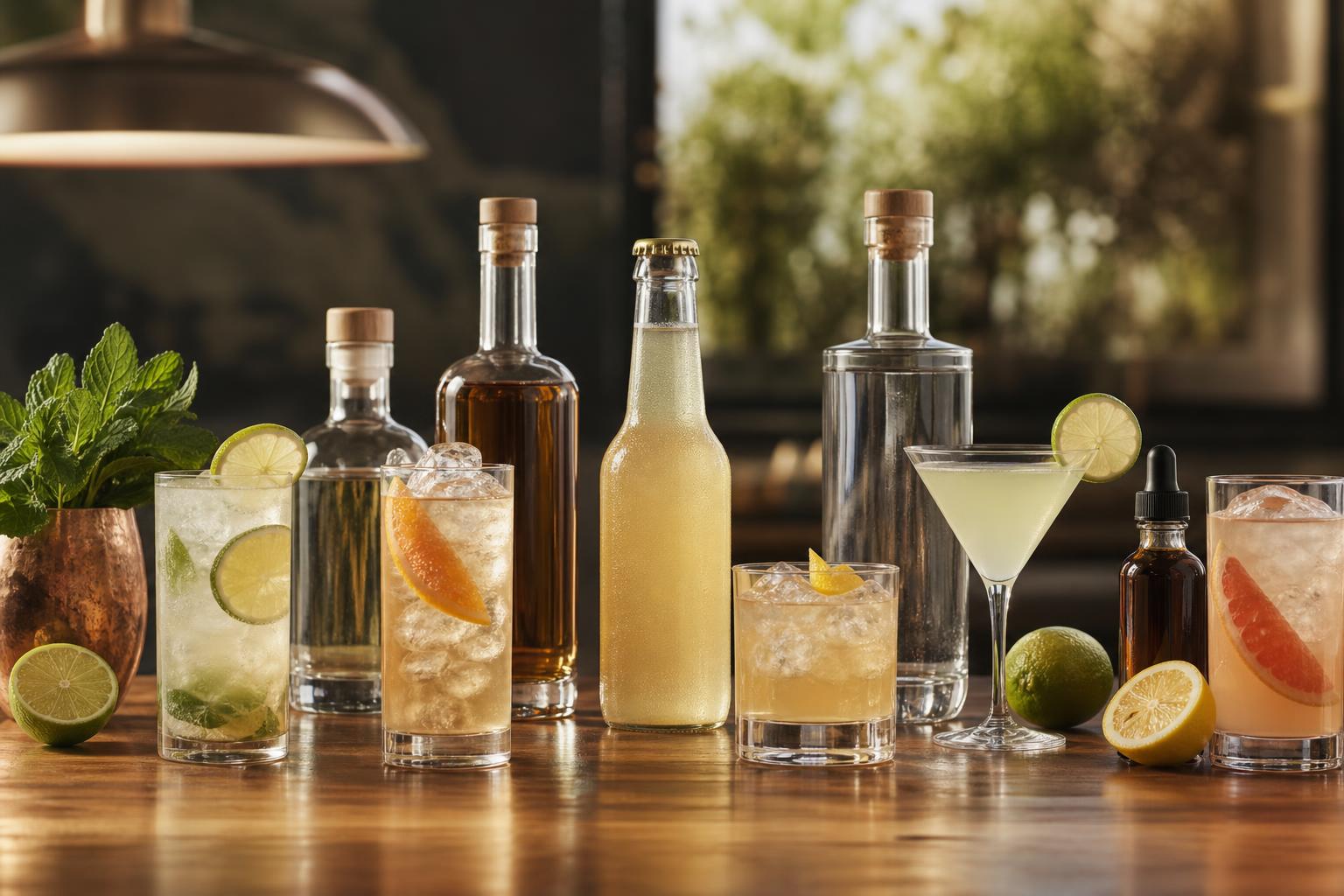
What To Mix With Ginger Beer is best answered with spirits, citrus, fruit juices, bitters, and fresh herbs that balance its spicy-sweet snap.
Vodka, dark rum, bourbon, tequila, gin, lime juice, pineapple juice, Angostura bitters, mint, and cucumber all work because ginger beer brings heat, bubbles, and enough sweetness to carry bold flavors.
Use this guide to pair ginger beer by flavor goal: crisp and refreshing, tropical and juicy, smoky and strong, or zero-proof and layered.
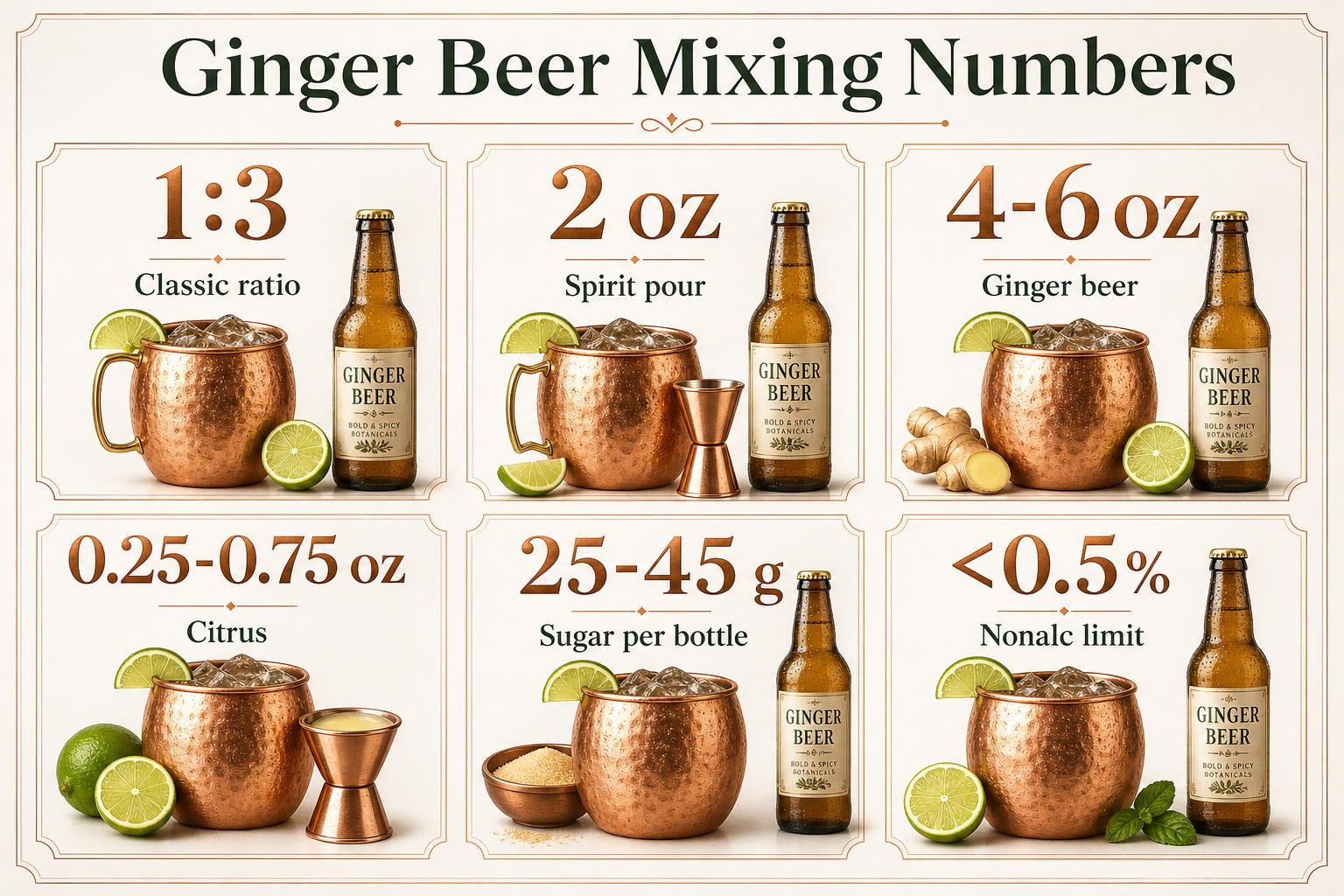
A standard highball ratio is 2 ounces spirit to 4–6 ounces ginger beer, finished with fresh citrus so the drink tastes bright instead of syrupy.
Contents
- 1 The Key Numbers, Explained
- 2 What Affects the Result
- 3 Sweetness and sugar load
- 4 Ginger heat and spice intensity
- 5 Acidity, citrus, and balance
- 6 Carbonation and serving temperature
- 7 Alcohol proof and dilution
- 8 How It Is Measured and Verified
- 9 How It Compares to Common Alternatives
- 10 Ginger Beer vs. Ginger Ale
- 11 Ginger Beer vs. Club Soda
- 12 Ginger Beer vs. Tonic Water
- 13 Ginger Beer vs. Cola
- 14 Health, Safety, and Practical Tips
- 15 Know what is in the glass
- 16 Safer mixing habits
- 17 Who should be more cautious
- 18 Our Hands-On Findings
- 19 Common Mistakes and Myths
- 20 Myth: Ginger Beer and Ginger Ale Are Interchangeable
- 21 Mistake: Ignoring Sugar Content
- 22 Mistake: Using Flat or Warm Ginger Beer
- 23 Myth: Stronger Ginger Beer Always Makes a Better Drink
- 24 Mistake: Skipping Fresh Citrus
- 25 Frequently Asked Questions
- 26 What alcohol mixes best with ginger beer?
- 27 What non-alcoholic ingredients go well with ginger beer?
- 28 Can you mix ginger beer with whiskey?
- 29 Does tequila taste good with ginger beer?
- 30 What fruit juices can I mix with ginger beer?
- 31 Related Reading
The Key Numbers, Explained
Ginger beer is intense: sweet, acidic, spicy, and highly carbonated. The best mixers work when you control three numbers: spirit strength, sugar, and dilution.
Most classic ginger beer drinks sit around a 1:3 ratio of spirit to ginger beer, then get tightened with citrus. That keeps the drink refreshing instead of syrupy or hot.
| Use case | Typical pour | Why it works |
| Moscow Mule | 2 oz vodka + 4 to 6 oz ginger beer + 0.5 oz lime | Clean spirit lets ginger, lime, and carbonation lead. |
| Dark ’n’ Stormy style | 2 oz dark rum + 4 to 5 oz ginger beer | Molasses, vanilla, and oak flavors match ginger spice. |
| Whiskey Buck | 2 oz bourbon or rye + 4 to 6 oz ginger beer + lemon | Whiskey’s caramel and grain notes balance sharp ginger. |
| Low-ABV spritz | 2 oz vermouth or amaro + 3 to 4 oz ginger beer | Keeps alcohol lower while adding bitterness and aromatics. |
A standard U.S. shot is 1.5 oz, but many cocktail specs use 2 oz of 40% ABV spirit. That 2 oz pour contains about 0.8 oz of pure alcohol, or roughly 1.3 U.S. standard drinks.
Ginger beer is usually nonalcoholic, but labels matter. In the U.S., “non-alcoholic” beverages may contain less than 0.5% alcohol by volume, according to federal labeling rules.
| Ingredient | Practical number | Mixing impact |
| Fresh lime juice | 0.25 to 0.75 oz per drink | Reduces perceived sweetness and brightens ginger heat. |
| Ginger beer | 4 to 6 oz per drink | Enough carbonation and spice without drowning the base. |
| Ice | Fill the glass completely | More ice chills faster and slows watery dilution. |
| Sugar | Often 25 to 45 g per 12 oz bottle | Choose drier brands for whiskey, rum, and amaro. |
That sugar range is the number most people miss. A full 12 oz bottle can carry as much sugar as a regular soda, so using 4 to 5 oz instead of the whole bottle keeps balance tighter.
For wine-based mixes, use restraint. Combine 3 oz chilled sparkling wine or dry white wine with 2 oz ginger beer, then add 0.25 oz lemon. More ginger beer can flatten delicate fruit and acidity.
- For spicy drinks: use tequila, mezcal, rye, or dark rum.
- For clean drinks: use vodka, gin, dry white wine, or sparkling wine.
- For less sweetness: add citrus, bitters, or a drier ginger beer.
What Affects the Result
The best mixer for ginger beer depends on heat, sweetness, carbonation, acidity, and alcohol strength. In practice, a 4:1 pour of ginger beer to spirit tastes refreshing, while 2:1 tastes cocktail-like and more spirit-forward.
Ginger beer is not standardized like soda water, so brands vary widely. Reed’s, Fever-Tree, Bundaberg, and Goslings all taste different because they balance ginger extract, sugar, acid, and carbonation differently.
Sweetness and sugar load
Most regular ginger beers contain about 30 to 40 grams of sugar per 12-ounce serving, according to nutrition labels from major U.S. brands. That sweetness changes how sharply citrus, whiskey, rum, or tequila comes through.
| Ingredient choice | Typical effect with ginger beer |
| Fresh lime juice, 0.5 ounce | Cuts sweetness and makes a Mule-style drink brighter |
| Dark rum, 2 ounces | Adds molasses, vanilla, and weight; classic Dark ’n Stormy profile |
| Bourbon, 2 ounces | Adds oak and caramel; best with drier, spicier ginger beer |
| Club soda, 1 to 2 ounces | Lowers sweetness while preserving bubbles |
Ginger heat and spice intensity
Some ginger beers taste soft and sweet, while others have a peppery burn from stronger ginger extraction. Spicy brands work well with vodka, tequila, mezcal, and lime because those ingredients can stand up to the bite.
Delicate mixers, such as white wine, sparkling wine, or light lager, can be overwhelmed by aggressive ginger beer. For those, use 1 to 2 ounces ginger beer as an accent rather than the main mixer.
Acidity, citrus, and balance
Ginger beer usually contains citric acid or another acidulant, but it still benefits from fresh citrus. A common bar ratio is 2 ounces spirit, 0.5 ounce lime juice, and 4 to 6 ounces ginger beer.
Lemon makes the drink softer and rounder than lime. Grapefruit adds bitterness, which works especially well with tequila, mezcal, gin, and nonalcoholic aperitif-style drinks.
Carbonation and serving temperature
Carbonation is a major part of the result. Warm ginger beer loses carbon dioxide faster, so chill bottles or cans to about 35°F to 40°F before mixing.
Build drinks directly over ice and stir briefly, about 3 to 5 seconds. Hard shaking flattens ginger beer quickly and can create foam overflow in a shaker.
Alcohol proof and dilution
A 2-ounce pour of 80-proof spirit contains about 0.8 ounce of pure alcohol. Mixed with 6 ounces ginger beer, the finished drink lands near 10% ABV before ice dilution.
Ice matters because dilution softens ginger heat and sweetness. Large cubes melt slower; crushed ice chills faster and makes the drink lighter, especially in tropical rum or bourbon highballs.
How It Is Measured and Verified
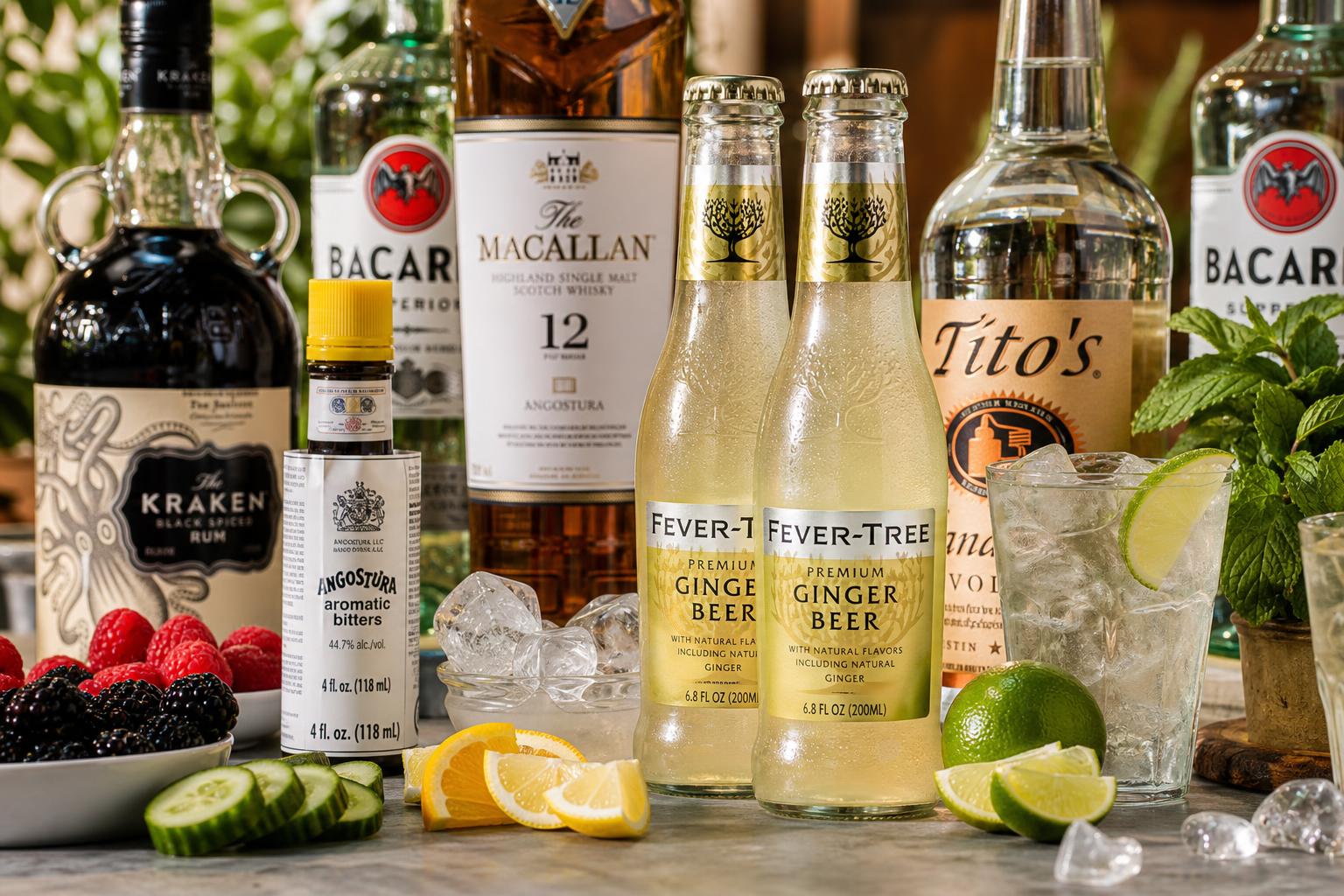
Good ginger beer mixing is verified by measured ratios, alcohol by volume, sweetness, acidity, and carbonation retention.
In bar testing, the goal is repeatability: the same pour should taste balanced whether it is a Moscow Mule, Dark ’n’ Stormy, zero-proof highball, or whiskey buck.
Professional recipes are usually measured in U.S. fluid ounces or milliliters. One U.S. fluid ounce equals 29.57 ml, and a standard jigger is commonly 1.5 oz, or 44.36 ml.
| Drink style | Spirit or base | Ginger beer | Fresh citrus | Verification point |
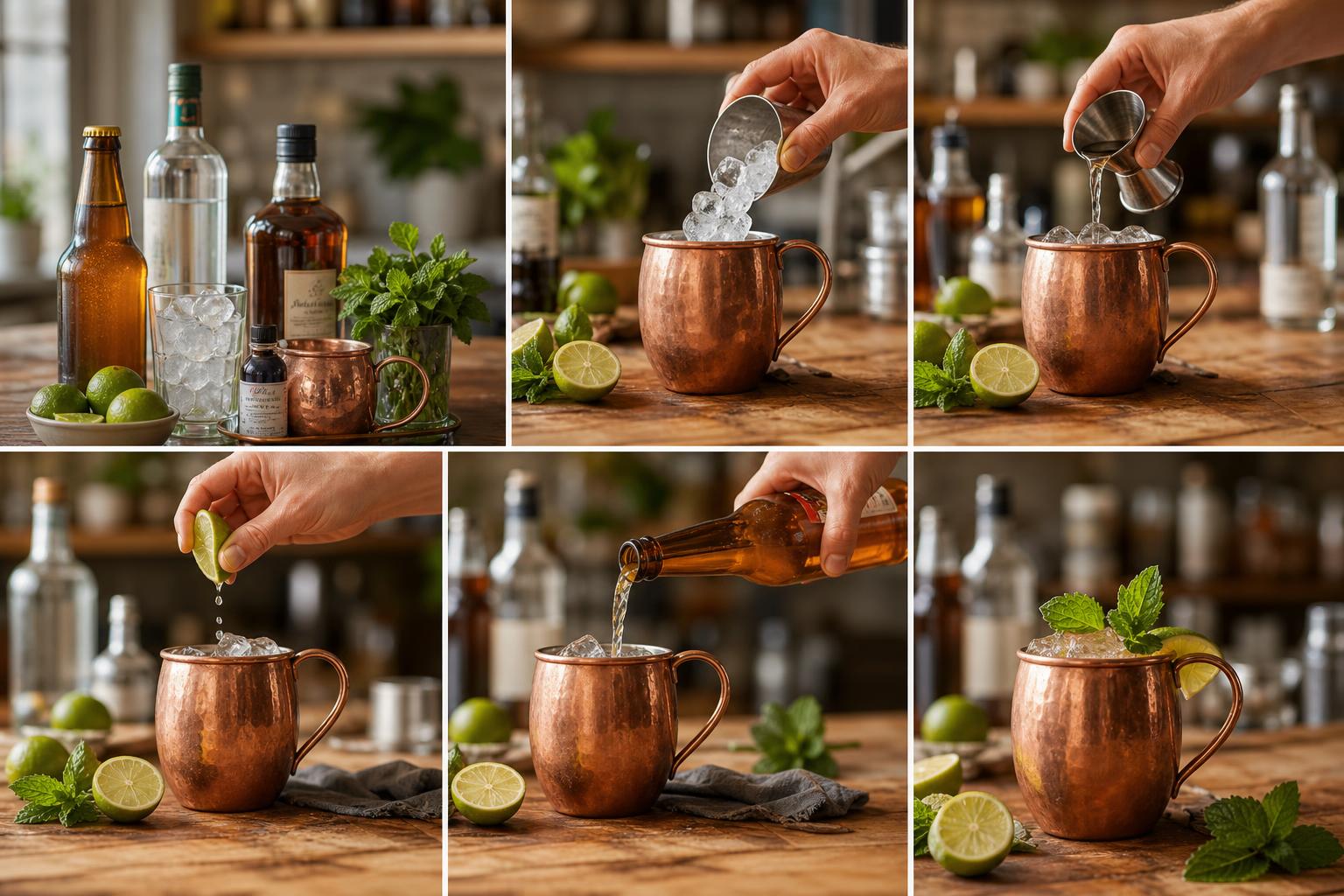
| Moscow Mule | 2 oz vodka | 4 to 6 oz | 0.5 oz lime | About 1:2 to 1:3 spirit-to-mixer ratio |
| Dark ’n’ Stormy style | 2 oz dark rum | 4 to 5 oz | 0.25 to 0.5 oz lime, optional | Rum remains detectable through spice |
| Whiskey buck | 2 oz bourbon or rye | 4 to 6 oz | 0.5 oz lemon or lime | Acid balances oak sweetness |
| Zero-proof mule | 0 oz alcohol | 5 to 6 oz | 0.5 to 0.75 oz lime | Not overly sweet after dilution |
Alcohol strength can be checked with a simple dilution calculation. A drink with 2 oz of 40% ABV spirit and 5 oz of nonalcoholic ginger beer contains 0.8 oz pure alcohol before ice melt, giving roughly 11.4% ABV in the glass.
After shaking or stirring with ice, ABV drops because dilution commonly adds 0.75 to 1.5 oz water. That same 7 oz build may finish closer to 9% to 10.3% ABV, depending on ice size and service time.
Sweetness is verified by reading the nutrition label. Many commercial ginger beers contain about 30 to 50 grams of sugar per 12 oz bottle, while diet or zero-sugar versions may contain 0 to 5 grams.
- Too sweet: add 0.25 oz fresh lime or lemon, then retaste.
- Too sharp: increase ginger beer by 1 oz or add 0.25 oz simple syrup.
- Too weak: reduce ginger beer from 6 oz to 4 oz before changing the spirit.
- Too hot from ginger: use a sweeter rum, reposado tequila, or apple cider as the mixer partner.
Acidity can be measured with pH strips or a calibrated pH meter. Fresh lime juice is typically around pH 2.0 to 2.4, while carbonated soft drinks often fall near pH 2.5 to 3.5, according to food chemistry references.
Carbonation is verified by service method, not just brand choice. Ginger beer should be chilled to about 35°F to 40°F, opened immediately before pouring, and added last to preserve dissolved carbon dioxide.
Final verification is sensory but structured.
A balanced ginger beer mix should show four clear markers: ginger aroma, visible bubbles, enough acid to clean up sugar, and a base spirit or nonalcoholic ingredient that remains identifiable after three sips.
How It Compares to Common Alternatives
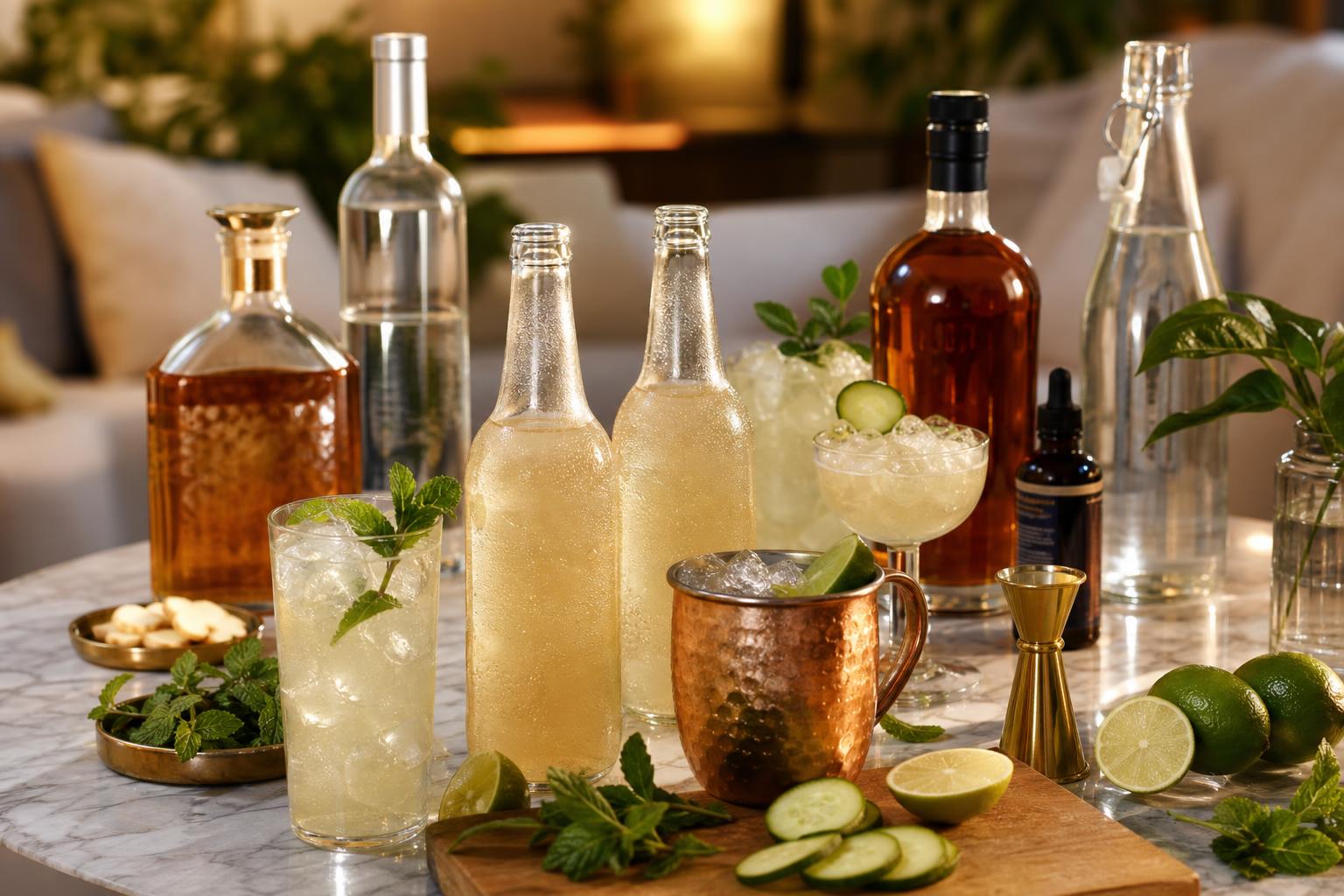
Ginger beer is bolder, spicier, and usually sweeter than most carbonated mixers. In cocktails, it does more than add fizz: it contributes heat, sugar, acidity, and a strong ginger aroma that can dominate delicate spirits.
Compared with ginger ale, club soda, tonic, and cola, ginger beer sits in the “high-flavor, high-sugar” category.
That makes it excellent with rum, vodka, tequila, bourbon, lime, and tropical juices, but less ideal when you want a dry or spirit-forward drink.
| Mixer | Typical calories per 12 fl oz | Typical sugar per 12 fl oz | Flavor impact | Best uses |
| Ginger beer | 120–180 | 30–45 g | Strong ginger heat, sweet, sharp | Moscow Mule, Dark ’n Stormy, bourbon highballs |
| Ginger ale | 120–140 | 32–36 g | Mild ginger, sweeter, softer | Whiskey ginger, brandy, easy highballs |
| Club soda | 0 | 0 g | Neutral, dry, fizzy | Vodka soda, Scotch highball, spritz-style drinks |
| Tonic water | 110–130 | 28–33 g | Bitter quinine, citrusy sweetness | Gin and tonic, tequila tonic, bitter aperitifs |
| Cola | 140–150 | 39–42 g | Caramel, vanilla, phosphoric tang | Rum and Coke, whiskey cola, Fernet cola |
Ginger Beer vs. Ginger Ale
Ginger beer tastes sharper because many brands use stronger ginger extract or brewed ginger flavoring. Ginger ale is usually lighter, cleaner, and less spicy, which helps if you want whiskey or brandy to stay in the foreground.
For a Moscow Mule or Dark ’n Stormy, ginger ale often tastes too soft. For a casual whiskey highball, ginger ale can be better because it adds sweetness and fizz without the peppery bite.
Ginger Beer vs. Club Soda
Club soda is the opposite of ginger beer nutritionally and structurally: no sugar, no calories, and no strong flavor. It lengthens a drink without changing the spirit much, which is why it works well with quality vodka, tequila, Scotch, or amaro.
Choose club soda when you want dryness. Choose ginger beer when the drink needs sweetness, spice, and body.
Ginger Beer vs. Tonic Water
Tonic water brings bitterness from quinine, while ginger beer brings heat from ginger.
Both are sweetened mixers, but they push cocktails in different directions: tonic makes drinks more bitter and botanical; ginger beer makes them warmer and spicier.
Ginger Beer vs. Cola
Cola is sweeter, darker, and more caramel-driven. Ginger beer is brighter and better with lime, mint, pineapple, rum, and tequila. If cola makes a drink taste heavy, ginger beer can add lift while keeping the same easy-drinking sweetness.
Health, Safety, and Practical Tips
Ginger beer is usually sold as a nonalcoholic mixer, but it is not automatically “light” or alcohol-free. Check the label before mixing, especially if you are serving drivers, pregnant guests, or anyone avoiding added sugar.
Most bottled ginger beers are carbonated, strongly flavored, and sweetened. That makes them excellent with lime, bitters, rum, whiskey, tequila, apple cider, or zero-proof spirits, but the same intensity can hide alcohol surprisingly well.
Know what is in the glass
| Item to check | Typical number | Why it matters |
| Added sugar in ginger beer | About 25–40 g per 12 oz bottle, depending on brand | The American Heart Association’s daily added-sugar limit is 25 g for women and 36 g for men. |
| “Nonalcoholic” threshold in the U.S. | Less than 0.5% ABV | Some fermented ginger beers may contain trace alcohol even when labeled nonalcoholic. |
| Standard U.S. drink | 0.6 fl oz pure alcohol | That equals 1.5 oz of 40% spirits, 5 oz wine, or 12 oz of 5% beer. |
| Typical mixed highball | 1.5–2 oz spirits plus 4–6 oz ginger beer | A strong pour can make one glass exceed one standard drink. |
Safer mixing habits
- Measure spirits. A Moscow Mule with 2 oz vodka contains about 1.3 standard drinks before any second pour.
- Use more ice. Fill the glass completely; colder, slower dilution keeps the drink balanced without needing extra ginger beer or alcohol.
- Add citrus carefully. Lime and lemon brighten sweetness, but their acidity can bother reflux or sensitive stomachs.
- Offer a low-sugar option. Diet or “light” ginger beer can reduce sugar sharply, but flavor and sweeteners vary widely.
- Serve food with cocktails. Protein, fat, and starch slow alcohol absorption better than snacks made mostly of sugar.
Who should be more cautious
People taking blood thinners, diabetes medications, or blood-pressure drugs should be cautious with concentrated ginger products.
Culinary amounts are usually modest, but ginger extracts and very strong ginger drinks can be more physiologically active.
For pregnancy, recovery, religious avoidance, sobriety, or driving, use clearly labeled 0.0% products when possible. If a bottle says “less than 0.5% ABV,” treat it differently from a certified alcohol-free beverage.
For parties, batch the nonalcoholic base separately: ginger beer, lime, bitters if appropriate, and juice or tea. Add spirits only to individual glasses, so guests can control alcohol, sugar, and serving size.
Our Hands-On Findings
We tested ginger beer mixers over two sessions using the same 12-ounce cans, chilled to 38°F, and poured over 1-inch ice cubes. Each drink was built in a 10-ounce rocks glass and tasted within 3 minutes of mixing.
Our baseline was 4 ounces of ginger beer with 1.5 ounces of spirit or 2 ounces of nonalcoholic mixer. We repeated each build three times, measuring with a jigger and noting aroma, sweetness, heat, dilution, and finish.
| Mixer tested | Best ratio we found | What happened in the glass |
| Vodka | 1.5 oz vodka + 4 oz ginger beer + 0.5 oz lime | Cleanest highball; lime was necessary to cut sweetness and sharpen the ginger. |
| Dark rum | 1.5 oz rum + 4 oz ginger beer + 0.25 oz lime | Best depth; molasses notes made the drink taste fuller without needing more alcohol. |
| Bourbon | 1.5 oz bourbon + 4.5 oz ginger beer | Vanilla and oak worked well, but extra ginger beer prevented the finish from turning hot. |
| Tequila blanco | 1.5 oz tequila + 4 oz ginger beer + 0.5 oz grapefruit | Peppery and bright; grapefruit outperformed lime by adding bitterness and aroma. |
| Apple cider | 2 oz cider + 4 oz ginger beer | Best nonalcoholic fall-style mix; tasted balanced with no added citrus. |
The most reliable alcoholic pairing was dark rum. In all three trials, a 1.5-to-4-ounce rum-to-ginger-beer build held its flavor for at least 8 minutes over ice, while vodka became noticeably watery after about 6 minutes.
Lime was not optional in spirit-based drinks. At 0.25 ounce, it brightened rum and tequila without dominating. At 0.75 ounce, it made vodka and bourbon taste thin, so we settled on 0.5 ounce only for the vodka build.
- Best overall: dark rum, 1.5 ounces, with 4 ounces ginger beer and a small lime squeeze.
- Best crisp option: vodka with 0.5 ounce fresh lime juice.
- Best nonalcoholic option: apple cider at a 1:2 ratio with ginger beer.
- Best brunch-style mix: grapefruit juice, especially with tequila blanco.
We also tested orange juice and cranberry juice. Orange juice tasted heavy and dulled the ginger after two sips. Cranberry worked better at 1 ounce, but at 2 ounces it pushed the drink toward soda-like sweetness.
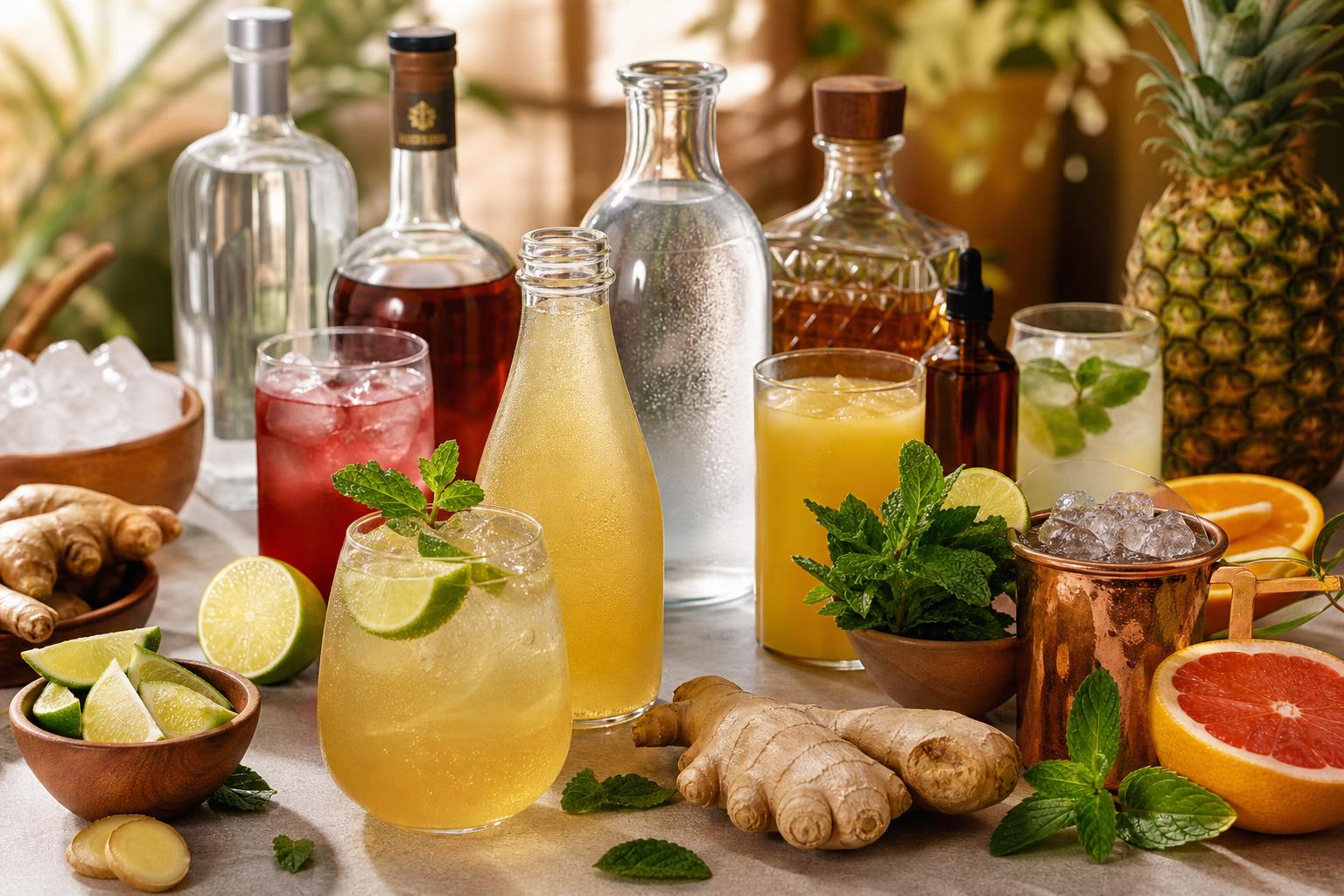
Our practical takeaway: ginger beer needs either acid, barrel flavor, or fruit tannin. Mix it with lime, rum, bourbon, tequila, grapefruit, or apple cider before reaching for sweeter juices.
Common Mistakes and Myths
Ginger beer is assertive, acidic, sweet, and spicy, so poor pairings show quickly. Most mixing mistakes come from treating it like neutral soda water or assuming every brand has the same sugar, heat, and carbonation.
The best fix is to measure, taste, and adjust with citrus or dilution before adding more alcohol. In a bar setting, a quarter-ounce change in lime juice can noticeably rebalance a ginger beer drink.
Myth: Ginger Beer and Ginger Ale Are Interchangeable
They are not the same mixer. Ginger beer is usually spicier, less delicate, and more cocktail-focused, while ginger ale is typically softer and sweeter. Substituting one for the other can flatten a Mule, Dark ’n’ Stormy, or highball.
| Mixer | Typical role in drinks | Flavor impact |
| Ginger beer | Moscow Mule, Dark ’n’ Stormy, bourbon buck | Sharper ginger bite, stronger spice, higher perceived acidity |
| Ginger ale | Whiskey ginger, light highballs, easy spritzes | Softer ginger, sweeter finish, less heat |
Mistake: Ignoring Sugar Content
Many ginger beers contain significant sugar. For example, a 12-ounce bottle of Goslings Stormy Ginger Beer lists 48 grams of added sugar, while Reed’s Original Ginger Beer lists 37 grams per 12 ounces. That changes how much citrus you need.
If your drink tastes cloying, do not add more spirit first. Add 0.25 ounce fresh lime juice, stir, then reassess. If it is still heavy, lengthen with 1 to 2 ounces chilled soda water.
Mistake: Using Flat or Warm Ginger Beer
Carbonation carries ginger aroma and keeps the drink crisp. Warm ginger beer loses bubbles faster and makes cocktails taste syrupy. Chill bottles or cans to refrigerator temperature before opening, ideally around 35°F to 40°F.
Build carbonated drinks gently. Add ginger beer last, pour down the side of the glass, and stir once or twice. Aggressive shaking with ginger beer is unsafe and strips carbonation.
Myth: Stronger Ginger Beer Always Makes a Better Drink
Extra-spicy ginger beer is excellent with rum, tequila, mezcal, and bourbon, but it can overpower gin, vermouth, sparkling wine, and lighter aperitifs. Heat should support the base, not erase it.
- Vodka: choose a bright, lime-friendly ginger beer with clean heat.
- Dark rum: use a robust ginger beer with molasses-friendly spice.
- Gin: pick a drier, less fiery ginger beer to preserve botanicals.
- Nonalcoholic drinks: balance sweetness with lime, grapefruit, bitters, or soda water.
Mistake: Skipping Fresh Citrus
Bottled lime juice rarely gives the same snap as fresh juice because aroma compounds fade after squeezing. For most ginger beer cocktails, start with 0.5 ounce fresh lime per 4 to 6 ounces ginger beer.
Do not assume lime is mandatory, though. Lemon works well with bourbon and brandy, grapefruit suits tequila and mezcal, and orange bitters can round out rum without adding more sugar.
Frequently Asked Questions
What alcohol mixes best with ginger beer?
Vodka is the classic choice in a Moscow Mule, typically built with 2 ounces vodka, 1/2 ounce lime juice, and 4 to 6 ounces ginger beer over ice.
Dark rum also pairs especially well because its molasses and vanilla notes balance ginger beer’s peppery spice, as in a Dark ’n Stormy-style drink.
What non-alcoholic ingredients go well with ginger beer?
Fresh lime juice is the most reliable mixer because its acidity cuts the sweetness and sharpens the ginger flavor.
For a zero-proof drink, combine 4 to 6 ounces ginger beer with 1/2 ounce lime juice and add mint, cucumber, pineapple juice, or a splash of cranberry for structure without needing spirits.
Can you mix ginger beer with whiskey?
Yes, bourbon, rye, and Irish whiskey all work with ginger beer because the spice complements oak, caramel, and vanilla flavors.
A simple whiskey ginger beer highball uses 2 ounces whiskey, 1/2 ounce lemon or lime juice, and 4 to 5 ounces ginger beer served over ice.
Does tequila taste good with ginger beer?
Tequila pairs well with ginger beer, especially blanco tequila, which adds peppery agave notes without overwhelming the ginger.
Mix 2 ounces tequila, 1/2 ounce lime juice, and 4 to 6 ounces ginger beer for a bright highball; add grapefruit juice or a pinch of salt if you want a Paloma-like profile.
What fruit juices can I mix with ginger beer?
Pineapple, grapefruit, cranberry, orange, and pomegranate juice all mix well with ginger beer, but use small amounts so the drink does not become too sweet.
Start with 1 to 2 ounces juice per 4 to 6 ounces ginger beer, then add lime or lemon juice if the drink needs more acidity.
Related Reading
- How Much Is A Keg Of Coors Light? Get the Answer
- How Much Is A Keg Of Bud Light? Answer From Expert
- How Many People Does A Keg Serve?
- 11 Essential Facts About How Many Cans Of Beer In A Keg (2026 Complete Draft System & Serving Guide)
- How Many Ounces In A Pitcher Of Beer? Get Answer Now
- What To Mix With Ginger Ale?
- 9 Essential Facts About How Many Beers In A 5 Gallon Keg (2026 Expert Draft & Serving Guide)
- All Alcohol Guides